

Weather Guard Lightning Tech

Trends in the Wind Industry 2024: It’s complicated
What’s harder to predict than how the wind will blow? Well, money, people and technology come to mind. So, these aren’t predictions; they’re trends in the wind industry that we’re watching, and ones that you’ll probably want to watch, too, as 2024 unfolds.
Big Money Moves: Tax Credits, Asset Reallocation, Service Shifts
The Inflation Reduction Act (IRA) and Investment Tax Credit (ITC) are still impacting wind development. As we wrote this article it appeared that the US would set a new onshore installation record, and many peripheral projects and technologies related to large developments are still emerging.
Federal tax credits and some state programs continue to drive repowering projects and new investments in transmission lines projects. Thanks to the Grid Resilience and Innovation Partnership (GRIP), funding is available through the US Department of Energy’s Grid Deployment Office – at least for the moment.
Obviously, the investment is good for the general economy, as are the jobs, even if the majority of them are temporary. And the end result of repowering is even better for energy consumers and the environment: repowering projects typically result in fewer turbines, producing more power for the grid.
Ultimately, how much progress Federal dollars can power the US wind industry in 2024 will be determined by the people in charge of some very large projects, as Power magazine noted in an insightful article.
…macroeconomic forces only increase the importance of a project’s ability to utilize the energy tax credits in the Inflation Reduction Act.
While making the most of government aid is key for wind developers, the importance of asset management cannot be ignored.
When will we know about the Siemens Effect?
Siemens’ staggering losses took on a life of their own in 2023, and how the industry may change has yet to be fully seen. It’s likely that fewer turbine models will be introduced and supported by manufacturers in the future, but so far no OEMs have made definitive statements regarding that.
Even with Siemens’ equipment problems and subsequent restructuring, Weather Guard Chief Commercial Officer Joel Saxum pointed out that the company is still projecting to break even by 2026.
Big company profitability vs. small company profitability: which is more attractive?
IntelStor insight from Phil Totaro
Decisions coming from the top at the largest OEMs also show that service models are changing in significant ways. How wind industry owners and operators respond will be driven, in large part, by how the insurance industry reacts. While independent service providers (ISPs) have, in recent years, proven to provide the best value for owners, the bottom line will always be the deciding factor.
Service agreements are changing:
How will insurers’ prices change as the exposure changes?
Data, Analytics, Technology
Most wind asset owners have no shortage of technology, or data. Advances in robotics, and notably, sensors, have improved many aspects of turbine operations, particularly blade maintenance. Additionally, many technologies – like virtual reality for tech training – can improve safety outcomes, as PES Wind Director Stefann Perrigot pointed out in a recent interview.
Data is good, but insight is better
AI may have been the poster child of 2023, as it was expected to grow 38% annually through 2030. While any automation that improves AEP is always welcome, and we are seeing AI built into new drone applications, it’s just not going to make people obsolete in the wind business.
The fact remains that building blades remains a mostly manual process; and the need for qualified wind techs to maintain equipment is as strong as ever.
Is the Wind Industry placing greater value on people?
As 2023 drew to a close, there were hints of a possible shift in the human resources landscape.
Clearly, we’ve seen more awareness of the tremendous need for wind techs, and efforts are underway to develop the workforce. In its article on clean energy projects in 2024, Pew Trust noted that there has been an increase in on- and offshore tech training programs.
The undeniably good news is that wind techs are (finally) getting some of the recognition that they deserve. Bloomberg recently identified wind turbine technician as the hottest job in the US, at an average of about $80,000 a year, with no college degree needed. It also dubbed the job “fully remote” and hinted at an exciting life of travel. Well, that may be a glamorous description, but it’s true the job is unlike any other.
We interviewed Alex Pucacco, wind industry engineer and author of “Where the Wind Takes you: Adventures of a Wind Turbine Engineer,” in November. You can hear what he had to say here.
Appealing to workers with long-term opportunities such as promotions and comprehensive benefits would be a significant improvement. Certainly, the general skills and aptitude that wind techs need – and that they further develop while working in the industry – are transferrable to other professions in the energy sector.
Where will the US find Wind Technicians?
The Complete Guide to Wind Turbine Technician Jobs, Salary and More
Repowering the Wind Workforce: Rangel Renewables is Meeting Surging Industry Demand
New Efficiencies
The US DOE is encouraging what it calls the “nascent business model” of agrivoltaics. We fully expect to see more of it in the US, and it’s about time. The concept of dual- or multipurpose land is not new in Europe; in fact, it’s becoming quite common to see solar and battery storage, or solar and wind, working on the same farms that support livestock.
Last year, we highlighted a number of US wind farms on land that is still working farmland, and we applaud those land owners for their willingness to try new things. It’s worth noting that it’s often a very profitable choice.
Why Wyoming’s governor is promoting clean energy

Recently we discussed how in Germany (and elsewhere), operators are finding that innovative uses of land, such as placing data centers inside concrete towers, can significantly improve efficiencies and overcome some issues like grid bottlenecks. Our take: bring it on!
Multi-use projects can work offshore, too. Aquaculture projects – like growing kelp and raising fish in offshore wind sites – are underway around the globe. Learn more about Aquaculture here.
At left, what an AquaWind aquaculture cage and the associated fish feeding silo might look like. Find out more about related Atlantic basin projects at AquaWind.eu [Photo credit: AquaWind
Worldwide, Weather Extremes are the new norm
One thing that was clear in 2023: even the newest wind turbine blades aren’t ready for the amount of lightning strikes that we’re seeing. Owners and operators have known for some time that they aren’t getting the lightning protection they need, but understanding just why it isn’t working as advertised is complicated. And costly, which is why the insurance industry is taking a more active interest.
Counting the cost of lightning protection
Unfortunately, the proposed new IEC standards probably aren’t what the industry needs. Listen to A Lightning Expert’s Opinion on the New IEC Lightning Standards for an overview of the latest attempts to improve things – and less expensive steps that owners can take to protect their equipment.
If you have questions about blade health and lightning protection, contact us. We understand how lightning affects wind farms – all over the world – and how aerodynamics are specific to your blades, and your environment. StrikeTape, a proven, easy-to-install retrofit, is currently protecting more than 10,000 blades from lightning.
See StrikeTape specs here or schedule a consultation now.
Small companies continue to drive changes
The most interesting innovations usually come from small, young companies. Also typical: those small businesses and service providers move faster than industry giants. Although it can be difficult to keep up with the pace of growth, partnerships, mergers and acquisitions, we try.
Countless small companies – and some larger ones, particularly from the oil and gas industry – are working to build the necessary vessels and auxiliary products and services that will support the growing offshore market, for example.
We are grateful for opportunity to have worked with many of those businesses and to help them spread the word about their products in 2023.
Check out Monday’s News Flash each week for the latest business info, financial moves, and M&A news. Listen to the Uptime Podcast to hear about new technology and business models.
Where is the Wind Industry Headed in 2024? Find out!
We haven’t really begun to dive into what to think about the potentially huge shifts that could loom – across the entire industry – if Europe (or even the US?!) were to change their stance on Chinese OEMs…but that will certainly be a topic of conversation in 2024.
Stay on top of all the wind energy news with the Uptime Wind Energy Podcast. And please contact us with your comments and questions. We love learning from others in the industry!
More wind industry articles worth reading in 2024
Overview of Cop28
Will solar and wind prices fall in 2024?
How much will States advance clean energy projects in 2024?
Where will you promote your wind business in 2024?
Below, the top trade shows PES Wind focuses on, according to director Stefann Perrigot. Listen to the entire interview here and be sure to say hello when you see us at an upcoming trade show!
- Husum Wind Energy, Germany https://husumwind.com/en/
- Offshore Energy Exhibition & Conference https://oeec.biz/
- Wind Europe event in Bilbao https://windeurope.org/annual2024/
- I P F in New Orleans https://oceantic.org/oceantic-event/2024-ipf/exhibit-at-ipf/
- RenewableUK Global Offshore Wind https://tethys.pnnl.gov/events/renewableuk-global-offshore-wind-2024
- Wind Energy, Hamburg https://www.windenergyhamburg.com/

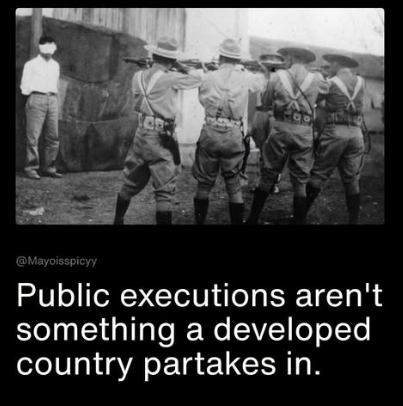 The United States seems set on propelling itself backwards.
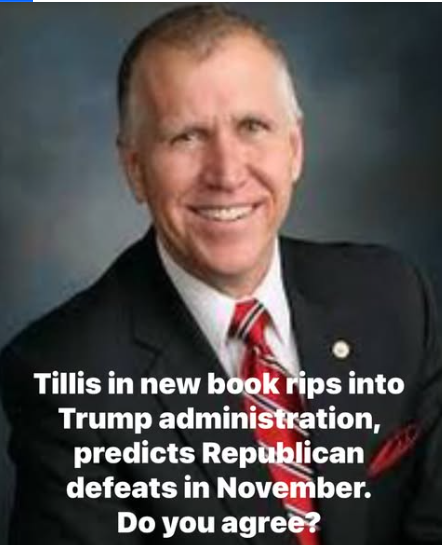 Maybe, as they say, “Hell has a special place reserved in it” for people like Thom Tillis, Republican Senator from North Carolina, who enabled Trump to rape and destroy the United States.
That was until it became clear to Tillis that he could jump ship, write a scathing book about the president, get all over mainstream news promoting it, and go on to enjoy another chapter of political success.
That we Americans are so stupid that we accept this blatant hypocrisy and criminality is sad proof that we’re not the people we were 20 years ago. Maybe what many people are saying are correct: we deserved what we got.
Here’s a short video from Elle Cordova that reminds us that science is something of a rarity in human history.
The great tyrants of history have done their best to cause the people they ruled to reject science, simply to ensure the masses are ignorant, terrified, superstitious, and thus easily controlled.
The current political administration is particularly engrossed in the rejection of science. I wonder why.



-
Climate Change1 year ago
Guest post: Why China is still building new coal – and when it might stop
-

 Greenhouse Gases2 years ago
嘉宾来稿:满足中国增长的用电需求 光伏加储能“比新建煤电更实惠”
-
Greenhouse Gases1 year ago
Guest post: Why China is still building new coal – and when it might stop
-

 Climate Change2 years ago
嘉宾来稿:满足中国增长的用电需求 光伏加储能“比新建煤电更实惠”
-

 Renewable Energy12 months ago
Sending Progressive Philanthropist George Soros to Prison?
-
Climate Change2 years ago
Bill Discounting Climate Change in Florida’s Energy Policy Awaits DeSantis’ Approval
-
Greenhouse Gases1 year ago
嘉宾来稿:探究火山喷发如何影响气候预测
-

 Climate Change2 years ago
Analysis: China’s CO2 falls 1% in Q2 2024 in first quarterly drop since Covid-19