Connect with us

Published

on

Have you ever seen a sleek, brown-and-white bird hover above the ocean, fold its wings and drop into the water like a cannonball, only to surface seconds later with a fish in its grip? If so, you have probably seen an osprey.

A water-loving bird of prey

Ospreys are birds of prey, also known as raptors. Birds of prey are carnivorous predators that actively hunt and feed on other animals. However, unlike most birds of prey, the osprey’s diet consists of approximately 99% live fish, including catfish, trout and mackerel. Because of their feeding habits, ospreys, also called sea hawks, have unique traits that make them elite hunters of the sea.

Structure and hunting

When ospreys spot a fish, they dive from nearly 100 feet in the air. During the dive, they close their nostrils, called nares, to prevent water from entering.

Ospreys are the only birds of prey that can dive feet-first into water, allowing them to form a streamlined shape that helps them pierce the surface and protect their heads. Their dense, oily feathers act like a wetsuit, keeping them water-resistant during dives.

Once they make contact with prey, they use their reversible outer toes and barbed foot pads, called spicules, to grip the slippery scales of the fish.

After securing their catch, ospreys use their nearly six-foot wingspan to generate the lift needed to carry fish that can weigh nearly as much as they do out of the water.

Finally, once airborne, the osprey rotates the fish to point headfirst, an aerodynamic adjustment that reduces wind resistance on the flight back to the nest.

This specialized anatomy allows ospreys to catch a fish in approximately one out of every four dives.

Get Ocean Updates in Your Inbox

Sign up with your email and never miss an update.

This field is hidden when viewing the form

Name(Required)


By providing your email address, you consent to receive emails from Ocean Conservancy.
Terms & Conditions and Privacy Policy

This field is hidden when viewing the form
Email Opt-in: Selected(Required)

Habitat and breeding

Because of their dependence on fish, ospreys always live within sight of water. They typically build their nests atop dead trees or man-made structures along harbors and bays, such as channel markers, duck blinds and utility poles.

Both parents help construct the nest. These large structures, sometimes exceeding 300 pounds, are built with sticks and lined with materials like moss and seaweed.

Ospreys breed across every continent except Antarctica, inhabiting ocean coastlines, saltwater marshes, lagoons, estuaries, river mouths and even coral reefs.

Osprey pairs incubate an average of three eggs for roughly one month before they hatch. Chicks then remain in the nest for about 55 days before fledging, the stage in a bird’s life when it develops its feathers and wings enough to leave the nest and fly for the first time.

Why are ospreys important for our ocean?

Ospreys serve as living indicators of ocean health. Because they sit at the top of the marine food chain, they are highly sensitive to pollution and changes in fish populations. A decline in osprey nesting success can signal pollution, overfishing or habitat degradation.

That is why at Ocean Conservancy, we are working to address the ocean’s biggest threats, from plastic pollution to the climate crisis. But we cannot do this work alone. We need advocates like you to protect ospreys and all marine wildlife. Please take action and help us defend our ocean today.
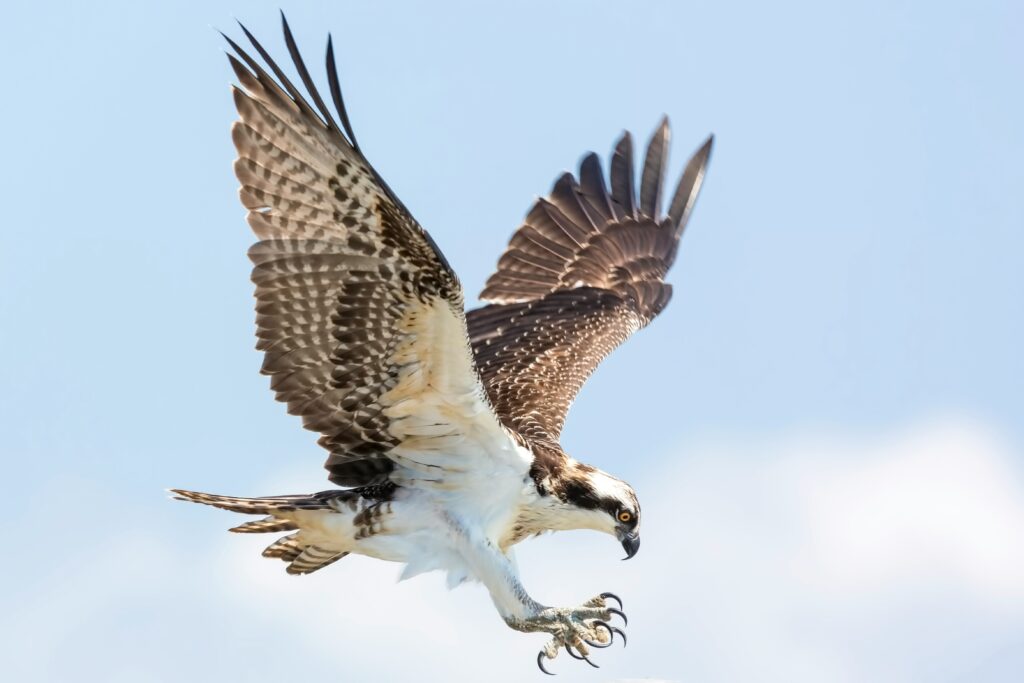
an osprey coming in for a landing

The post Osprey: The Ocean’s Most Specialized Bird of Prey appeared first on Ocean Conservancy.

Osprey: The Ocean’s Most Specialized Bird of Prey

Continue Reading

Ocean Acidification

Leben und arbeiten an Bord eines Forschungsschiffs

Published

on

Für mich ist es meine erste Seereise, das erste Mal länger als nur einen Tag auf dem Meer. Und ja, die Labradorsee ist vielleicht nicht unbedingt der einfachste Ort für den Einstieg. Wie viele andere wurde ich in der ersten Nacht ordentlich seekrank. Die starken Bewegungen der Maria S. Merian bei diesen rauen Bedingungen waren anfangs wirklich herausfordernd. Doch nach ein paar anstrengenden Stunden, viel Schlaf und einigen wetterbedingten Arbeitspausen gewöhnte man sich langsam an das ständige Schaukeln und der Bord Alltag konnte beginnen.

Wie beschreibt man das Leben auf einem Forschungsschiff für jemanden, der das noch nie erlebt hat?

Grundlegendes zuerst – das tägliche Leben an Bord:

Essen:
Für Verpflegung ist bestens gesorgt: Frühstück gibt es um 7:30 Uhr, Mittagessen um 11:30 Uhr und Abendessen bereits um 17:30 Uhr. Zusätzlich steht rund um die Uhr ein kleiner Kühlschrank mit Snacks bereit, niemand muss hier hungrig bleiben.

Schlaf:
Guter Schlaf ist zwar nicht immer garantiert, aber man lernt schnell, sich anzupassen. Die meisten Wissenschaftler schlafen in Zweierkabinen mit eigener Nasszelle. Wer Nachtschicht hat, lebt ohnehin in einem anderen Rhythmus. Ein hilfreicher Tipp von einem erfahrenen Seebären: Einfach eine Decke unter eine Seite der Matratze legen, um eine kleine Kuhle zu formen so rollt man nicht ständig hin und her. Mein persönlicher Trick: auf dem Bauch schlafen und sich mit Ellbogen und Knien stabilisieren. So kann man selbst bei starkem Seegang und 11 Windstärken erstaunlich gut schlafen, fast „wie in Mamas Arm“, wie Sascha sagen würde.

Freizeit an Bord:
Allein ist man hier selten, und das ist auch gut so. In den Laboren ist eigentlich immer etwas los, besonders im CTD-Labor, das schnell zum sozialen Mittelpunkt wird. Unser Fahrtleiter Fehmi hat sich vorgenommen, einen neuen CTD-Rekord aufzustellen, was uns viel Zeit dort verbringen lässt, zur Freude der einen und zur Herausforderung für unsere Chemiker.

Kaffee am Morgen. Foto: Julia Pelle

Abends trifft man sich häufig im Hangar oder in der Messe, um gemeinsam den Tag mit einem Feierabendgetränk ausklingen zu lassen. Ein Highlight ist unser „Echtzeit-Werwolf“-Spiel: Vor ein paar Tagen wurden die Rollen verteilt, und seitdem wird jede Nacht jemand „eliminiert“. Tagsüber wird dann gemeinsam diskutiert und abgestimmt. Aktuell schlagen sich die „Schiffbewohner“ ziemlich gut – nach drei Tagen sind bereits drei Werwölfe enttarnt. Wir bleiben gespannt für wen es heute der letzte Sonnenaufgang war.

Sport und Ausgleich:
Wer sich bewegen möchte, kann den kleinen Sportraum Richtung Bug nutzen, ausgestattet mit Gewichten, Fahrrad, Rudergerät und sogar einem Laufband (auch wenn das bei Seegang durchaus Mut erfordert). Alle drei Tage gibt es außerdem ein Zirkeltraining unter Anleitung von Sven, unserem Chief Engineer. Danach lädt die Sauna zur wohlverdienten Entspannung ein.

Arbeiten auf dem Schiff:
Auch wenn man es sich anders vorstellt: Den Großteil der Zeit verbringt man tatsächlich im Inneren des Schiffs. Das liegt vor allem an den oft rauen Wetterbedingungen. Gearbeitet wird in verschiedenen Laboren oder, wenn möglich, an Deck zum Auswerfen und Einholen der Verankerungen sowie Gliedern.

Sarah und Matti bei der Vorbereitung einer Boje für eine Verankerung
Neele, Sascha und Christian beim Anschrauben der Geräte an der Mooring. Foto: Eleanor Frajka-Williams

Im Chemielabor werden Proben analysiert, während in anderen Bereichen Geräte vorbereitet, Daten ausgewertet und die nächsten Schritte geplant werden. Ein zentraler Bestandteil ist die Arbeit mit der CTD, also das Messen von Leitfähigkeit, Temperatur und Tiefe im Wasser.

Natürlich läuft nicht immer alles reibungslos. Wenn beim Aussetzen einer Verankerung ein Gerät nicht funktioniert, muss die gesamte Konstruktion wieder eingeholt, repariert und neu ausgebracht werden. In solchen Momenten ist gute Stimmung entscheidend, meine Empfehlung: einfach mal spontan Macarena tanzen. Das kann Wunder bewirken.

Trotz der intensiven Arbeit ist es genau diese Mischung aus Teamarbeit, gemeinsamen Herausforderungen und spontanen Momenten, die das Leben an Bord so besonders macht. Das gemeinsame Rätseln im CTD-Labor und die Planung unter wechselnden Wetterbedingungen, all das schweißt zusammen.

Nach drei Wochen wird das Schiff mehr als nur ein Arbeitsplatz, es wird zu einem kleinen, schwimmenden Zuhause auf Zeit.

Life and Work on Board a Research Vessel

This is my (Julia Pelle) first sea voyage, my first time spending more than just a day out on the ocean. And yes, the Labrador Sea might not be the easiest place to start. Like many others, I got properly seasick on the first night. The movement of the Maria S. Merian in such rough conditions were definitely challenging at first. But after a few exhausting hours, plenty of sleep, and some weather-related work delays, I gradually got used to the constant motion. Just like that, everyday life on board began.

So how do you describe life on a research vessel to someone who has never experienced it?

Let’s start with the basics, the daily routine on board:

Food:
Catering is excellent: breakfast is served at 7:30 a.m., lunch at 11:30 a.m., and dinner as early as 5:30 p.m. In addition, there is a small fridge stocked with snacks available 24/7 so no one goes hungry.

Sleep:
Good sleep is not always guaranteed, but you quickly learn to adapt. Most scientists share double cabins with a shared bathroom. Those on night shifts naturally switch their day and night. A helpful tip from an experienced sailor: place a blanket under one side of your mattress to create a small dip this helps keep you from rolling around. My personal trick is to sleep on my stomach and stabilize myself with elbows and knees. That way, even in strong winds and heavy seas, I can sleep surprisingly well almost “like being held by your mom,” as Sascha would say.

Free time on board:
You are rarely alone here and that’s a good thing. There is almost always something going on in the labs, especially in the CTD lab, which quickly becomes a social hub. Our chief scientist, Fehmi, is aiming to break a new CTD record, which means we spend a lot of time there to the delight of some and the challenge of our chemists.

In the evenings, people often gather in the hangar or the mess room to wind down with a drink after work. One highlight is our “real-time Werewolf” game: roles were assigned a few days ago, and since then, one person is “eliminated” each night. During the day, everyone debates and votes. So far, the “ship community” is doing quite well after three days, three werewolves have already been identified. We’re curious to see for whom today’s sunrise will be the last.

Sports and relaxation:
For those who want to stay active, there is a small gym near the bow, equipped with weights, a bike, a rowing machine, and even a treadmill though using it in rough seas requires a bit of courage. Every three days, there is also a circuit training session led by Sven, our Chief Engineer. Afterwards, the sauna offers a perfect way to relax.

Working on the ship:
Even though you might imagine otherwise, most of the time is actually spent inside the ship, mainly due to the often harsh weather conditions. Work takes place in various laboratories or, when possible, on deck deploying and recovering moorings and equipment.

Sarah and Matti are starting up the oxygen monitors, while Neele and Julia are attaching the buoyancy chambers to a mooring. Photo: Julia Pelle
Photo: Eleanor Frajka-Williams

In the chemistry lab, samples are processed, while in other labs instruments are prepared, data is analysed, and plans for the coming days are made. A central part of the work is the CTD, which measures conductivity, temperature, and depth in the water.

Of course, things don’t always go smoothly. If a device fails while deploying a mooring, the entire setup has to be recovered, repaired, and redeployed. In moments like these, keeping a good mood is essential my recommendation: just dance the Macarena. It works surprisingly well.

Despite the demanding workload, it is exactly this mix of teamwork, shared challenges, and spontaneous moments that makes life on board so special. Figuring things out together in the CTD lab and planning around constantly changing weather conditions. All of this brings people closer together.

After three weeks, the ship becomes more than just a workplace it turns into a small, floating home.

Leben und arbeiten an Bord eines Forschungsschiffs

Continue Reading

Ocean Acidification

MSM142 – Wer sind wir und warum sind wir im Frühling hier?

Published

on

English version below

Für viele Menschen war es schwer zu verstehen, warum man im Frühjahr so weit nach Norden in die Labradorsee reist, um dort Forschung zu betreiben. Das Leben an Bord ist anstrengend und wird durch die harschen und schnell wechselnden Wetterbedingungen zusätzlich erschwert, was besonders den Einsatz unserer Forschungsgeräte kompliziert macht.

Worum geht es also bei unserer Expedition?

Diese Forschungsreise verfolgt zwei Hauptziele: die Untersuchung kleinräumiger Strukturen im Ozean und die Beobachtung großräumiger Meeresströmungen.

In den letzten Jahren haben Wissenschaftler erkannt, dass kleinräumige Strukturen im Ozean, wie Wirbel und Fronten, eine sehr wichtige Rolle spielen. Sie können starke Veränderungen in Temperatur und Salzgehalt verursachen, aber auch in anderen Eigenschaften wie Chlorophyll und dem Export von Kohlenstoff. Während dieser Fahrt nutzen wir eine Reihe von Instrumenten, um diese Strukturen detailliert zu beobachten und besser zu verstehen, wie sie funktionieren.

Das zweite Ziel besteht darin zu untersuchen, wie sich die Meeresströmungen im Atlantik im Laufe der Zeit verändern. Ein zentraler Bestandteil davon sind Langzeitbeobachtungen am 53°N-Observatorium. Dort betreiben wir sieben Verankerungen, lange Kabel, die am Meeresboden befestigt und mit Instrumenten ausgestattet sind, welche Temperatur, Salzgehalt, Sauerstoff und Strömungsgeschwindigkeit messen. Alle zwei Jahre bergen wir diese Verankerungen, sammeln die Daten ein und setzen sie anschließend erneut aus, damit die Messungen fortgeführt werden können.

Eine solche Expedition benötigt lange Vorbereitungszeit und einiges an Organisation auf See, deshalb habe ich unserem Chef-Wissenschaftler einige Fragen gestellt:

Wann haben die Vorbereitungen für die Expedition begonnen? Und wie lief das ab?

Der Antrag für diese Forschungsreise wurde bereits 2023 eingereicht. Darin wurden die Motivation, die Forschungsfragen und der Plan beschrieben, die Reise 2025 durchzuführen. Letztendlich wurde sie dann für 2026 angesetzt.

Die detaillierten Vorbereitungen begannen ungefähr ein Jahr im Voraus, also etwa im April 2025. Die Planung einer Forschungsreise umfasst mehrere Schritte. Wir müssen die Logistik organisieren, entscheiden, wer Teil des wissenschaftlichen Teams sein wird, und die wissenschaftlichen Arbeiten planen, die wir durchführen möchten. Und natürlich gehört auch eine ganze Menge Papierkram dazu 😉

Wann entstand die Idee, die Expedition im Frühling und nicht wie üblich im Sommer durchzuführen?

Die Idee entstand bei einem Projektantrag, den ich 2022 geschrieben habe. Er beinhaltete eine Forschungsfahrt zur Untersuchung kleinräumiger Ozeanstrukturen und ihrer Verbindung zur Frühjahrsblüte in der Labradorsee. Da wir speziell an der Frühjahrsblüte interessiert waren, war es wichtig, zu dieser Jahreszeit hier zu sein.

Das bedeutete, die Reise im Frühling zu planen, obwohl uns bewusst war, dass die Bedingungen schwieriger sein können als im Sommer. Aber wenn ich es noch einmal machen müsste, würde ich vorher einen Wetterbericht suchen, der einen deutlich ruhigeren März und April verspricht.

Hier sieht man in der Wasserfarbe sehr schön den Unterschied zwischen einer Region im Sea Bloom links und rechts außerhalb. Foto: Eleanor Frajka-Williams
Foto: Julia Pelle

Was findest Du daran am interessantesten?

Hier draußen mitten im Ozean zu sein und die Daten, die wir sammeln, in Echtzeit zu betrachten. Es hat etwas ganz Besonderes, wenn die Messungen hereinkommen und man weiß, dass man den Ozean genau in diesem Moment beobachtet.

Wie werden die Entscheidungen zwischen Dir und dem Kapitän getroffen – in Bezug auf Wetter, Forschung und Sicherheit? Wann treffen Ihr euch? Und wie oft?

Von Anfang an haben wir vereinbart, etwa 36 Stunden im Voraus zu planen, angesichts des Umfangs der Arbeiten und der oft schwierigen Wetterbedingungen. Falls nötig, passen wir den Plan anschließend an.

Wir treffen uns jeden Morgen, ohne feste Uhrzeit, um gemeinsam den Wetterbericht anzuschauen und zu entscheiden, was machbar ist und was nicht. Bisher hat dieses Vorgehen sehr gut funktioniert. Gelegentlich mussten wir Arbeiten kurzfristig abbrechen, aber wir konnten uns immer anpassen, ohne viel wertvolle Forschungszeit zu verlieren.

Läuft die Expedition bisher wie geplant? Falls nicht, worin unterscheidet sie sich?

Die Daten, die wir bisher gesammelt haben, haben meine Erwartungen bereits übertroffen besonders angesichts der schwierigen Wetterbedingungen. Wir konnten sehr viel erreichen, und das liegt vor allem an der hervorragenden Zusammenarbeit zwischen der Schiffscrew und dem wissenschaftlichen Team an Bord.

Alle waren sehr flexibel und unterstützend, was es uns ermöglicht hat, uns schnell anzupassen und die verfügbare Zeit bestmöglich zu nutzen.

Tipp Nummer 1 für die Arbeit bei 10 Beaufort und 6 Meter hohen Wellen?

Immer eine Hand fürs Schiff und eine für die Wissenschaft 😉

Unser Wissenschaftsteam. Foto: Julia Pelle

MSM142 – Who are we and why are we here in spring

For many people, it was difficult to understand why one would travel so far north to the Labrador Sea in spring to conduct research. Life on board is exhausting and made more challenging by harsh and rapidly changing weather conditions, which especially complicate the deployment of our research equipment.

So what is our cruise about?

This research cruise has two main goals: studying small-scale ocean features and monitoring large-scale ocean currents.

In recent years, scientists have realised that small-scale features in the ocean such as eddies and fronts play a very important role. They can create strong changes in temperature, salinity, and also in other properties like chlorophyll and carbon export. During this cruise, we use a range of instruments to observe these features in detail so we can better understand how they work.

The second goal is to study how ocean currents in the Atlantic are changing over time. A key part of this is long-term observations at the 53°N observatory. There, we maintain seven moorings long cables anchored to the seafloor and equipped with instruments that measure temperature, salinity, oxygen, and current velocity. Every two years, we recover these moorings to collect the data and then redeploy them to continue the measurements.

Such a cruise needs a long time of preparation and organisation during the cruise, so I asked our Chef Scientist a few questions:

When did you start preparing for the cruise? And how was that going?

The proposal for this cruise was submitted in 2023, which includes motivation and the research questions, with the plan to carry it out in 2025. In the end, it was scheduled for 2026. The detailed preparation really started about a year in advance, around April 2025.

Planning a research cruise involves several steps. We have to organise the logistics, decide who will be part of the science team, and plan the scientific work we want to carry out. And, of course… quite a bit of paperwork 😉

When did you come up with the idea to have the cruise in spring, and not as usually in summer?

The idea goes back to a proposal I was writing in 2022. It included a cruise to study small-scale ocean features and how they are connected to the spring bloom in the Labrador Sea.

Since we were specifically interested in the spring bloom, it was important to be here at that time of year. That meant planning the cruise in spring, even though we knew that the conditions can be more challenging than in summer. But if I would have to do it again, I would look in the weather forecast in advance for a much calmer March and April.

Here you can see the difference in water color inside of the sea bloom (left) and outside of it (right). Photo: Eleanor Frajka-Williams
Photo: Julia Pelle

What do you find the most interesting about it?

Being here, in the middle of the ocean, and looking in real-time at the data we are collecting. There is something quite special about the measurements coming in and knowing you are observing the ocean as it happens.

How are the decisions made between you and the captain, in terms of weather, research and safety? When do you meet? And how often?

From the beginning, we agreed to plan about 36 hours ahead, given the scope of the work and the often-challenging weather conditions. We then adjust the plan if needed.

We meet every morning, without a fixed time, to look at the weather forecast and decide together what can be done or not.

So far, this approach has worked very well. We have occasionally had to stop operations at short notice, but we have always managed to adapt without losing much valuable science time.

Is the cruise as you have planned it so far? If not, how does it differ?
The data we’ve collected so far has already exceeded my expectations, especially given the challenging weather conditions. We’ve been able to achieve a lot, and this is mainly thanks to the excellent collaboration between the ship’s crew and the scientific team on board.

Everyone has been very flexible and supportive, which has allowed us to adapt quickly and make the most of the time available.


Number 1 Tipp for working at 10bft and 6 meters waves?

Always keep one hand for the ship, and one for the science 😉

Our scientific team. Photo: Julia Pelle

MSM142 – Wer sind wir und warum sind wir im Frühling hier?

Continue Reading

Ocean Acidification

Launching our 25th Year with a New Logo and Brand

Published

on

On May 5, 2026, we held an Open House at our office. We used this event as the official start of our 25th year! This milestone feels both impossible and completely inevitable—because once we start something, we’re persistent… one might even refer to our co-founder Dianna Schulte and I as stubborn.

As we approached this year, we thought about how to usher in this new chapter. We started with our brand and conducted a survey of members and volunteers to gather feedback on what was working and what wasn’t. One thing came out loud and clear: while people loved our original logo (thank you, Michael Yoon, for this design!), many thought it didn’t fully capture all we do as an organization, particularly our beach cleanups, which have grown tremendously since we founded the organization. We embarked on a process with local designer Elissa von Letkemann to create a new logo and brand that reflects our current and future work and positions us for the next 25 years and beyond.

The new logo is “intentionally hopeful, beautiful, specific to the New England coast and its waters, and formal…

It represents love and hope, as well as the seriousness of the work. As the organization celebrates its 25th year of critical research and dedicated leadership, this new logo represents a thoughtful evolution from the original, respecting the past while bringing the brand into the present.”

– Designer Elissa von LetKemann

We are introducing the logo now will be doing a thoughtful rollout of the new brand in the coming weeks. We are also excited to announce that we’ll be launching a new website and merchandise soon.

The Need for the Work Grows

The need for our work has grown. The Gulf of Maine is one of the fastest-warming bodies of water on the planet. That means marine life is changing where it goes, when it arrives, what it eats, and how it survives. When big decisions are on the table—offshore development, changing shipping patterns, emerging uses of the ocean—we need long-term science to understand real trends, not just snapshots.

Experiential learning matters more than ever. Many schools have fewer resources for hands-on science, and many young people are hungry for meaningful, real-world work. Blue Ocean Society fills that gap—by getting people outside, into the field, and connected to the Gulf of Maine.

Our whale and marine life studies produce information that decision-makers, researchers, and the public rely on—especially for endangered species. In fact, we are the only organization doing consistent, systematic local monitoring and data collection of whales and other marine wildlife in our region year after year—the kind of long-term dataset you can’t recreate once it’s missing. And even if we could magically solve every conservation challenge tomorrow, new people are born every day who still need to learn why the ocean matters and how to protect it, right at home.

Imagine if we weren’t here. No consistent local monitoring. Fewer hands on the beaches. Fewer chances for a kid—or a college intern—or a curious visitor—to fall in love with the Gulf of Maine and take action to protect it. I don’t want to find out what that would look like. I want us here for at least 25 more years.

To everyone who has been part of this journey—thank you. We are grateful for the community we have built over the last 25 years.

Over the last year, we’ve made big strides: we completed a major upgrade at the Blue Ocean Discovery Center with engaging exhibits; we expanded beach cleanup programs and partnerships; and we’ve grown our whale research—adding more effort outside the traditional season than we were doing even 10 years ago.

So, I invite you to ride along with us this year. If you’re already a donor—thank you, and I hope you’ll consider renewing or increasing your support. If you’ve never volunteered—come try a beach cleanup, help at the Blue Ocean Discovery Center, or join us in the field.

And if you’re able to give—give in a way that feels meaningful to you, whether that’s a one-time gift, a monthly donation, or introducing us to a business that wants to sponsor work that truly matters. The ocean connects all of us. Let’s make sure the Gulf of Maine has champions for the next 25 years—and beyond.

Launching our 25th Year with a New Logo and Brand

Continue Reading

Trending

Copyright © 2022 BreakingClimateChange.com