

Most baby items contain a lot of plastic: Plastic rattles, plastic bottles, polyester clothes – and yes, plastic diapers.
But plastic materials can emit phthalates which can potentially disrupt the endocrine system and be detrimental to human health. Phthalates are mainly used as plasticizers added to polyvinyl chloride (PVC) plastics for a softening effect.
This post was sponsored by Kudos. All thoughts and opinions are my own; for more information, please see my disclosure policy.
For babies, phthalates can lurk in items like teethers, squeeze toys or bath books. And the problem lies when baby goes to suck or chew on these items, or puts their hands in their mouth after handling them. Even just crawling on the floor where dust and synthetic carpet fibers are can increase exposure.
Babies are especially sensitive to harmful chemicals because their bodies and brains are still developing. According to a recent study, children’s exposure to phthalates adversely affected their levels of reproductive hormones, anogenital distance and thyroid function.
Unfortunately plastic can be hard to avoid with a newborn, especially with disposable diapers needing plastic to be efficient. And being a new parent is already hard enough without tacking on shame or guilt.
However, there are steps you can take to reduce baby’s plastic exposure. You don’t have to do all of these, but even trying just one non toxic swap helps!
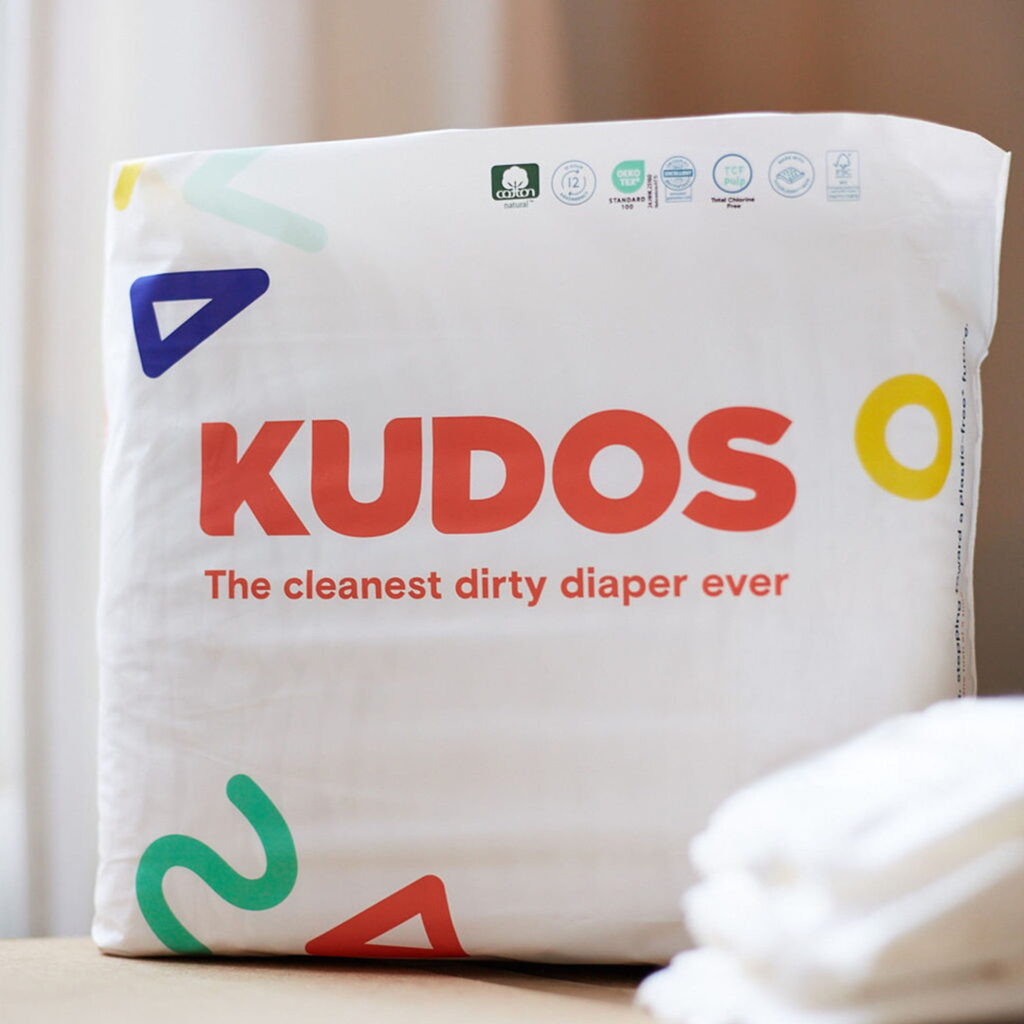
rethink your diapers
Many diaper components are made up of plastic, giving it that waterproof quality mothers need to get through the day.
Reusable cloth diapers are a great option, but they’re not always accessible due to how expensive they are. Plus, not everyone has a laundry machine in their homes, making washing them more challenging. And if you utilize daycare, some centers may not accept cloth diapers due to concerns about sanitation and storage space.
Disposables tend to be cheaper and easier to find, but they’re not all created equal. It’s best to prioritize brands that minimize the amount of plastic in their products.
That’s where Kudos comes in, the first disposable diaper brand with a 100% cotton liner. To be clear, Kudos still have plastic in them (like all disposable diapers), but they’re the first to switch out the plastic topsheet (i.e. that inner liner of the diaper) for cotton. The liner matters because it’s the part touching your baby’s most sensitive area.
Their U.S. sourced cotton is dry processed without water, chemicals, or process heat. This ensures it’s breathable and hypoallergenic for baby.
Best of all, Kudos was designed by a mom (and an MIT engineer) who understands no one wants their baby exposed to harsh chemicals. For that reason, the brand’s diapers are made without lotions, fragrances, natural latex, parabens, and phthalates.
On top of this, Kudos are OEKO-TEX STANDARD 100 certified, use FSC certified wood pulp for their cores, and are Totally Chlorine Free (TCF).
Lets break down why each of those matter:
- OEKO TEX STANDARD 100 certified means every component of the product has been tested for harmful substances, and found safe for human health.
- FSC certified wood pulp means the wood pulp Kudos sources for the core of their diapers comes from sustainably managed forests.
- Totally Chlorine Free (TCG) means there is no chlorine used to bleach the diapers (a process done to make diapers appear whiter and cleaner). Chlorine bleaching leaves behind toxic residue or chemical by-products called dioxins which the World Health Organization (WHO) warns can harm children’s reproductive and immune systems.
Plus, Kudos diapers are designed for strong overnight performance with award-winning and patented DoubleDry absorbency. Aka, two absorption layers instead of the usual one, allowing for 12+ hour absorbency! Comfort without sacrificing efficiency.
RELATED: 7 Best Non Toxic Diapers For Babies

be selective with toys
Many baby toys, from rattles to activity toys, are made from plastic. Most babies explore the world by putting things in their mouths, so it’s important to prioritize plastic-free toys when possible.
If you can, choose toys made from wool, natural fabrics, or natural rubber when possible. Some examples include cotton plushies, wooden play blocks, and natural rubber teethers. For plushies, just make sure the insides are also stuffed with natural materials (like cotton or wool), instead of plastic foams.
For tummy time, try to use non toxic tummy time mats and play gyms. Even just using a soft natural fiber blanket works. Lalo and Lorena Canals both create play rugs and mats made with polyester-free materials.
For when baby gets a little older, it’s also a good idea to rethink other art supplies too. Many crayons, paints and markers contain plastic and other synthetic ingredients. Try to look into beeswax crayons and plant-based paints when possible.
You can make edible fingerpaint for six month olds using cornflour and natural food coloring. That way, if baby gets any in their mouth, it’s no problem!
Woodlark also has some wonderful natural DIYs safe for kids, like homemade chalk and naturally dyed playdough. These DIYs are suitable for slightly older children, so it can be good to save for later down the line.
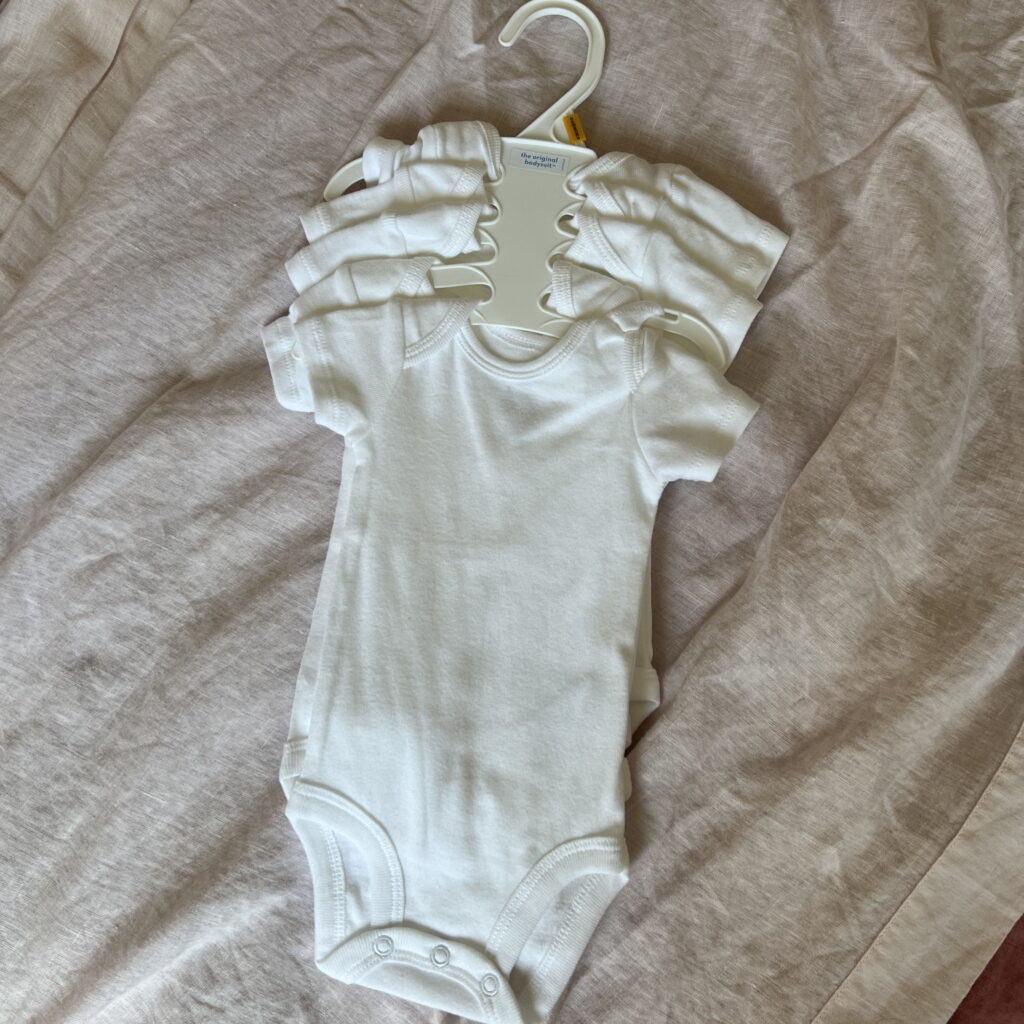
choose natural fibers
Many baby clothes are made from synthetic fabrics like polyester, rayon blends, and fleece. These are man-made materials, aka plastic, and not natural fibers.
Whenever possible, opt for better fiber options, such as organic cotton, hemp and wool. Check thrift stores and clothing swaps to cut down on costs and give clothes a second life (babies grow fast after all).
Train yourself to look for certifications like GOT (Global Organic Textile Standard) and OEKO-TEX, as this ensures fewer chemicals were used to treat the clothes.
Try to avoid confusing labels such as cotton blends (usually a mix of polyester and cotton), soft touch/ultra soft (refers to finishing processes), and bamboo (heavily processed through chemicals).
Obviously, people are going to gift baby a ton of clothes. So if you can’t fully avoid synthetics, make sure to wash it before first wear using gentle, fragrance-free detergent. And immediately replace once the fabric tears or shows signs of break down.
This also pertains to rugs and baby blankets: Whenever possible, try to choose natural fibers like cotton or wool over synthetic materials. This will further reduce baby’s exposure to microplastics.
don’t heat up plastic
A new study shows that plastic baby bottles, when heated or shaken, release microplastics into the liquid. Because of this, bottle-fed infants around the world may be consuming more than 1.5 million particles of microplastics per day on average.
Consider switching to glass baby bottles if you can. If that’s not an option, rethink your bottle preparation routine. Try heating up formula in a glass container, letting it cool, then transferring it to a plastic bottle.
Avoid using the microwave to heat up both breastmilk and formula, as this can lead to pockets of superheated water next to the plastic, triggering more microplastics to shed.
If you’re up to solids, consider making your own baby food and storing them in upcycled glass jars you can reheat without issue. Just steam or boil fruits and vegetables, then puree them in a blender before transferring them to airtight containers (ideally glass).
For your sanity, you can also consider freezing homemade baby food in silicone molds, then reheating on the stove in a pot. Souper Cubes makes 100% FDA food-grade silicone molds and their ‘cookie tray’ is perfect for freezing breastmilk or solids in small increments. Their lids are also BPA-free.
So, how are you reducing baby’s plastic exposure? Let me know in the comments!
And, a huge thank you to Kudos for sponsoring this post. Be sure to visit Kudos.com to get their hands on their 100% plastic-liner free diapers!
The post Tips For Reducing Plastic Exposure With a Baby appeared first on Going Zero Waste.

Doorframes decorated with fresh pine garlands are downright magical. But they sure cost a pretty penny.
Why spend all that money when you can make your own for free (or at a discount)? Not to mention, you’ll have way more fun getting creative and making it your own.

I’m all about slowing down and getting crafty during the holidays. After all, is it really the gifts we remember every year, or the memories we make with people we love?
Speaking of, it’s even better if you invite friends or family to help make a DIY garland! Put on some Christmas tunes, grab some hot cocoa, and it’s a Christmas memory you’ll be talking about for years.
Pine is also zero waste decor because it’s all compostable at the end of the season. Here’s how to make a DIY garland you’ll never forget.
materials you’ll need:
- Evergreens (you can get these while foraging, at a local nursery, or some from your own tree)
- 22-gauge floral wire (or dyed green twine)
- Heavy duty scissors
- Gloves (to protect your hands)
step 1 – measure your space
Where do you want your garland to hang? Above a doorway? A window? A fireplace? Measure the space so you know how long the garland will need to be. This will give you a better idea of how much pine you’ll need to bring your vision to life.
step 2 – find your pine
Now’s the time to decide if you want to forage or buy your pine. Faser Fir is a great option when it comes to garlands because of how sturdy the pine is, but any Fir will hold up great.
If you’re planning on foraging, try renting a book from the library that identifies the different types of native pine near you. This will help familiarize you on what to look for and what kind of effect different pines will have for your garland.
Generally, pines, firs, boxwoods and cedars make for good indoor decoration because they dry out more slowly.
Fraser fir, red pine, eastern white pine, and western red cedar are some great choices. You can use a mix of them to achieve a whimsical effect.
It’s a good idea to know how to identify different pine if foraging outdoors. Bring a reusable bag, gloves and heavy duty scissors with you while foraging. Be aware some pine trees are spikey and their needles can hurt! And never take too much off one plant.
If foraging isn’t for you, try hitting up a local nursery. They will likely have excess pine they’ll be happy to sell you for your garland. Christmas tree lots will often have a bunch of leftover greens they’ll likely part with for free too.
When in doubt, trimming some off your own tree works too (just be careful not to leave any bald spots).

step 3 – organize
Now’s the fun part – once you have all the evergreens you want, you’ll want to lay it out before you in the style of your choosing. The beauty of foraging for pine is that everything won’t be uniform – so embrace the imperfection.
You’ll want to make sure the sturdiest pieces are in the center. And make sure to pick which pine goes on the end – something with the right drip is always good. And don’t be afraid to prune them as needed.
When you have a structure you like, start layering and lining up your pieces properly. Then use the floral wire to secure them in place. You can also use dyed green twine if you’d like to compost the whole thing without hassle of removing the wire. But note that twine may be less subtle compared to wire.
Also, you’ll want to secure each end with a knot so nothing unravels. To make it easier to mount your garland, create loops with your wire or twine. Do this by simply making a loop and twisting the base until the loop is securely closed.
You can also add decorative elements if you wish, like upcycled ribbons, dried citrus, pinecone, and winter berries. It’s good to add these to any gaps you discover to help fill it in.
step 4 – hanging and display
Now you’ll want to mount your garland. You should set your hooks first (try two for single doorways, three for double, and four for triple width doorways).
Once your hooks are set in place, mount your garland using the loops you created earlier. Or, just by the wire you find – letting things shape naturally.
Don’t be afraid to add to it as needed. If you notice any gaps, this is a good time to fill them with more pine or decorative elements. And if you’d like, you can even entwine some battery operated string lights into the garland for added wow.
Have you ever made a DIY garland before? Drop your tips in the comments!
The post Easy DIY Garland: Step-By-Step Instructions appeared first on Going Zero Waste.
For 15 years, Toronto showed North America what a green roof mandate could build. Its 2009 bylaw, the first on the continent to both require green roofs and set a construction standard for them, produced more than 1,200 green roofs across the city. On November 3, 2025, the Ontario government revoked the provision of the City of Toronto Act that allowed the bylaw, with no advance notice or phase-out period.
That reversal represents the state of green roof policy in 2026. It’s a time of backlash against environment-minded construction practices. Housing-cost pressure is pushing some governments to loosen or drop requirements, while other cities keep adding them, and most of the newer laws let owners choose solar panels, vegetation, or both.
For building owners, advocates, and homeowners, the practical question now is which roof, under which local rule, delivers the most value for a specific building.
What Are Green Roofs?
A green roof, also called a living roof or ecoroof, is a roofing system that supports living plants. Sod roofs have existed since at least the Middle Ages. The modern version is engineered: Toronto’s definition calls for, at minimum, a root repellent layer, a drainage system, a filtering layer, a growing medium, and plants, all installed over a waterproof membrane.
Today’s ecoroof systems fall into two broad families. Extensive roofs use a few inches of lightweight media and hardy, drought-tolerant plants such as sedums. Intensive roofs, on the other hand, use deeper soil that can hold grasses, shrubs, and even trees. The difference is the price: the Environmental Protection Agency noted in January 2025 on a page now removed that a simple extensive roof without public access can cost one-tenth to one-third as much as an intensive roof built for public access.
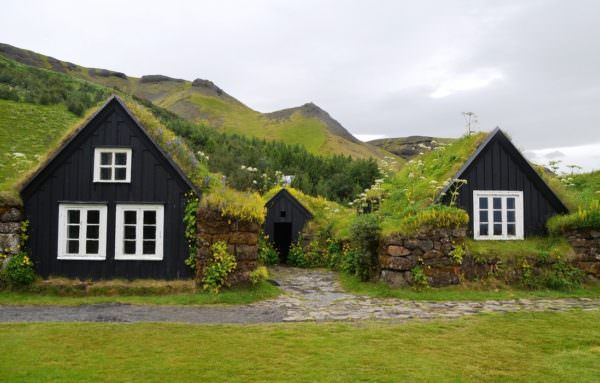
A modern green roof involves more than just plants. It needs high-quality waterproofing and protection against root damage, a drainage system, filter cloth, and a lightweight growing medium. The plants may be small, drought-tolerant ones like sedums, or larger grasses. The system can be modular or site-built, and depending on the planting medium depth, may even resemble a natural meadow or a garden with shrubs and trees.
Project Drawdown ranks green roofs and cool roofs as #73 in their list of solutions to global warming, with an anticipated 0.77 gigaton reduction in carbon dioxide by 2050. If green roofs cover 30% of roof space by 2050 and cool roofs cover 60%, approximately 407 billion square feet of efficient roofing would be in place globally.
A 2024 study published in Nature Cities reports that Seoul’s city-wide green roof implementation could reduce building energy use intensity by up to 7.7%. Another comprehensive 2024 study in Nature Urban Sustainability projected that by 2100, green and cool roofs could reduce HVAC use by up to 71.72% in six cities studied. A 2023 meta-analysis found that green roofs reduce rooftop surface temperatures by an average of 30°C during summer months.
A U.S. General Services Administration study that was removed from its website following the Trump Administration’s anti-green guidance estimated that the heating and cooling savings from green roofs on commercial and public buildings paid back the cost of installation in about 6.2 years.
Residential and Commercial Applications
Green roofs on private residences are very efficient. Despite the high cost of design and installation, which has slowed their adoption as a standard roofing option, they can provide lifetime savings.
Single-family homes accounted for less than 2 percent of green roofs in the U.S. in 2015. Multifamily homes, on the other hand, provide economies of scale that can justify the expense (and sometimes have the square footage to trigger green roof requirements), accounting for 22 percent of green roof projects. That still leaves the vast majority of green roofs to industrial and commercial buildings.
But private homeowners need not despair. Many of the incentives for green roof construction are also available for single-family residences.
Several impressive green roof installations have been completed in recent years:
Will’s Garden at Carle Foundation Hospital is a 2023 Award of Excellence winner that features a therapeutic garden in Urbana, Illinois. The immersive, wheelchair-accessible rooftop included significant technical achievements that allow the plants to grow in only six inches of media.
Construction began on the LXK Office and Residential Campus in Berlin. A designed development, it includes green rooftops and terraces.
Kö-Bogen II, in Düsseldorf, Germany, is a commercial complex features one of Europe’s largest green façades with over 30,000 hornbeam plants that provide a “green heart” and “urban mountain” in the city.
The Vancouver Convention Centre’s six-acre living roof remains the largest in Canada.
The California Academy of Sciences in San Francisco features 1.7 million plants in its living roof.
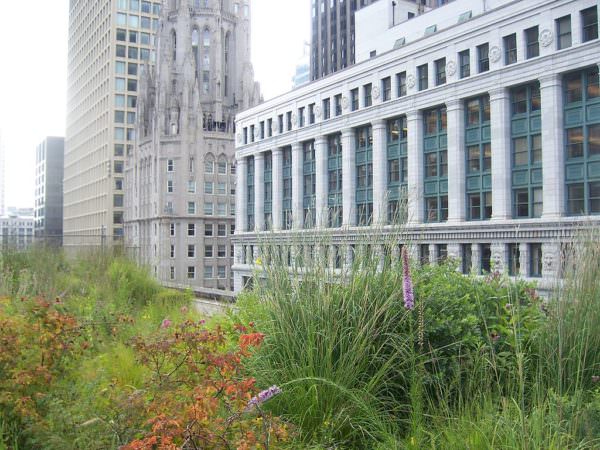
Chicago City Hall’s green roof remains one of the most studied examples, with more than 20,000 plants from 150 species.
Toronto’s Mandate Ends, Its Lessons Remain
Toronto’s bylaw applied to new commercial, institutional, and multi-unit residential developments with more than 2,000 square meters of floor area. Developers who could not fit the required coverage into a floor plan could pay $200 CAD per square meter in fees for the missing ecoroof. The city now advises building applicants that the bylaw is no longer applicable law under the Ontario Building Code.
The repeal followed Bill 17, the Protect Ontario by Building Faster and Smarter Act, which passed on June 3, 2025, after a rapid review process.
The province argued the law bars municipal requirements that go beyond the building code, including Tier 1 of the Toronto Green Standard; city staff disputed that reading, and a builders’ group was already suing the city over the standard. Green Roofs for Healthy Cities founder Steven Peck cited an analysis by local green roof companies that put the added cost at between $1 and $2.50 CAD per square foot of condominium living space, against units selling for $800 to $1,200 CAD per square foot.
Green roofs remain legal and voluntary in Toronto. The city published updated Eco-Roof Incentive Program terms in November 2025, so owners of existing buildings should check whether funding is available.
Where the Rules Stand in 2026
The most aggressive North American ecoroof requirements are concentrated in a handful of U.S. cities, and nearly all of them now treat solar as a qualifying or companion option. The summary below draws on city sources and a 2026 Roofing Brief roundup of mandates by city.
| Jurisdiction | What it requires | Applies to | Status, Nov. 2026 |
|---|---|---|---|
| New York City | Local Laws 92 and 94 (2019): a “sustainable roofing zone” of green roof, solar, or both | New buildings and full roof replacements | In effect |
| San Francisco | Better Roofs Ordinance (2017): 15% of roof as solar or 30% as living roof; SoMa needs 15% solar plus 50% living roof | Most new construction of 10 or fewer occupied floors | In effect |
| Denver | Green Buildings Ordinance (2019): cool roof plus one green option; the green-roof path means 60% vegetation (new) or 18% (existing) | New buildings, additions, and roof permits at 25,000 sq. ft. or more | In effect |
| Portland, Ore. | Central City 2035 ecoroof standard (effective July 2018) | Buildings of 20,000 net sq. ft. or more in the Central City | In effectSolar allowed as an alternative for residential projects since March 2024 |
| Cambridge, Mass. | Article 22 (2021): green roof and/or solar on 80% of available roof, or a per-square-foot payment | Most new buildings over 25,000 sq. ft. | In effect2026 payment is $64.29/sq. ft. of vegetated roof not built |
| Somerville, Mass. | Late 2023 ordinance: vegetation on 80% of available roof area | New mid-rise and high-rise buildings and major renovations, outside the Affordable Housing overlay | In effect |
| Toronto | Green Roof Bylaw (2009): 20% to 60% of available roof, scaled by building size | New buildings over 2,000 square meters | RepealedNo longer in effect since Nov. 3, 2025; Eco-Roof grants for existing buildings remain open |
| France | Climate and Resilience and APER laws: solar or vegetation on a share of the roof | Covered nonresidential new builds, extensions, and heavy renovations | 40% since July 1, 202650% from July 1, 2027; a bill that passed the Senate in Feb. 2026 and awaits National Assembly action would drop the green option |
San Francisco’s 2017 ordinance gives owners a choice between solar and a living roof rather than requiring living roofs outright. Denver’s current ordinance, adopted in 2019, replaced the voter-approved 2017 measure and pairs a cool roof requirement with a menu of compliance options. Portland’s ecoroof standard took effect in July 2018, and the plan was re-adopted in July 2020 after a court challenge.
Portland loosened, Massachusetts tightened. Portland’s Housing Regulatory Relief package, effective March 1, 2024, kept the ecoroof requirement while permitting solar panels as an alternative for buildings with residential uses. On the other side of the country, Cambridge requires green or solar coverage on 80% of available roof area for most new buildings over 25,000 square feet, and developers who build less pay a unit contribution that reaches $64.29 per square foot of vegetated roof in 2026. Neighboring Somerville went further at the end of 2023, requiring 80% vegetated coverage on new mid-rise and high-rise buildings and significant renovations.
France raised its bar, then reopened the debate. French law requires covered nonresidential buildings to put solar or vegetation on part of their roofs, and the share rose from 30% to 40% on July 1, 2026, and will reach 50% on July 1, 2027. A pending bill to align French law with EU rules would, in its Article 45, remove the vegetation option and require solar alone; legislators who object note that the EU buildings directive itself asks member states to account for green roofs.
Vancouver is still writing guidance. The city published a Rain City Green Roof Best Practices Guide in February 2026 and updated its rainwater management requirements in January 2026, but local advocates note that a mandate the council voted to explore in 2018 has not arrived.
Incentives Look Generous, but Few Owners Use Them
New York State extended New York City’s green roof property tax abatement in June 2026. The law, signed June 26, 2026, runs the program through June 30, 2031, at $10 per square foot citywide and $15 per square foot in designated community districts, capped at $200,000 per application and $4 million citywide per year. The application deadline moved to March 15, 2030.
Uptake has been the problem. A 2024 analysis of city Department of Finance records found that only two buildings had received the abatement, which helps explain why lawmakers keep raising the rate. The city’s Department of Environmental Protection runs a separate, rolling grant for green roof retrofits of at least 3,500 square feet on private property; a deputy commissioner told the City Council in 2025 that the pr