

火山喷发对科学家及其气候模型构成了根本性挑战。
众所周知,剧烈的火山喷发会导致地表气温突然下降,多次喷发则会在几十年乃至几个世纪的时间尺度上影响气候变率。
当火山喷发将二氧化硫注入平流层时,会形成气溶胶,从而阻挡阳光到达地球表面。
与人类对气候变化的影响不同,后者发生缓慢且可以在各种社会经济情景下被纳入气候模型进行考量。火山喷发具有突发性,这给气候预测带来了挑战。
目前科学家尚无法预测火山喷发的发生时间、地点以及二氧化硫的排放量。
那么,在进行未来气候预测时,如何考虑火山喷发对气候的影响呢?

在我们最近发表于《通讯-地球与环境》(Communications Earth & Environment)的研究中,我们表明火山喷发对全球气温预测的不确定性产生了重大影响。
我们的研究结果发现,如果将偶发的火山喷发纳入气候预测,突破《巴黎协定》所设定的1.5C升温上限的时间会略有延迟,但与此同时,未来几十年也将出现更多快速升温和降温的时期。
气候预测中的火山强迫
气候科学家将火山喷发对气候的影响——主要是通过释放出二氧化硫气体进入大气——称为“火山强迫”(volcanic forcing)。
当前的气候模型在进行未来预测时采用一个恒定的火山强迫值,该值是根据1850年至今的历史平均强迫值计算得出的。
国际耦合模式比较计划(CMIP)也是如此,这项全球模型工作为政府间气候变化专门委员会(IPCC)发布的重要评估报告提供基础数据。
然而,这种方法存在显著局限。
首先,历史平均强迫值无法表示火山爆发的偶发性。
大规模火山喷发呈零星分布——有时好多事件集中发生在某几个十年内,有时两个事件之间则可能相隔上百年。
此外,与数千年尺度的记录相比,从1850年至今的参考时期中,发生过的大规模喷发事件 ——指排放超过3太克(Tg)二氧化硫的喷发事件——相对较少。
最后,早期国际耦合模式比较计划气候模型中所使用的火山强迫重建数据并未包含排放量少于3太克二氧化硫的中小规模喷发。
这是因为这些喷发在1980年卫星时代开始之前大多未被探测到。然而,这些体量较小但发生频率更高的喷发事件,在长期火山强迫中贡献了30%至50%。
采取新方法
传统上,气候科学家认为气候预测中主要存在三种不确定性来源:内部变率、模型不确定性和情景不确定性。
其中,“内部”变率是指气候系统内部自然产生的波动,如厄尔尼诺现象;模型不确定性是指不同气候模型之间结果的差异;情景不确定性则涉及未来几十年全球可能的发展路径。
我们的研究结果表明,火山喷发应被明确视为气候预测中第四个重要的不确定性来源。
为了探究在考虑火山强迫不确定性的情况下,气候预测会发生怎样的变化,我们的研究采用了一种概率方法,这一方法建立在Bethke等人于2017年提出的研究基础之上。
为此,我们构建了“随机强迫情景”,其本质是1000种延续至本世纪末的火山活动可能时间线预测。
这些情景基于冰芯中记录的过去1.15万年火山活动历史,以及卫星观测和地质证据。每个情景都呈现了不同的喷发强度、地点、时间和频率的组合。
(在数学中,“随机”系统是指结果包含随机性或不确定性的系统,因此不可预测;这与“确定性”系统相对,后者的结果可以通过初始条件和一套规则或方程完全预测。)
随后,我们利用2015至2100年期间的随机火上强迫和历史平均火山强迫模拟气候预测,研究共享社会经济路径(SSPs)中三种不同排放情景下的升温变化:低排放情景(SSP1-1.9)、与现行气候政策相符的中等排放情景(SSP2-4.5)、非常高排放情景(SSP5-8.5)。
在这一步中,我们使用了一种称为FaIR的简化气候模型,也称“模拟器”。
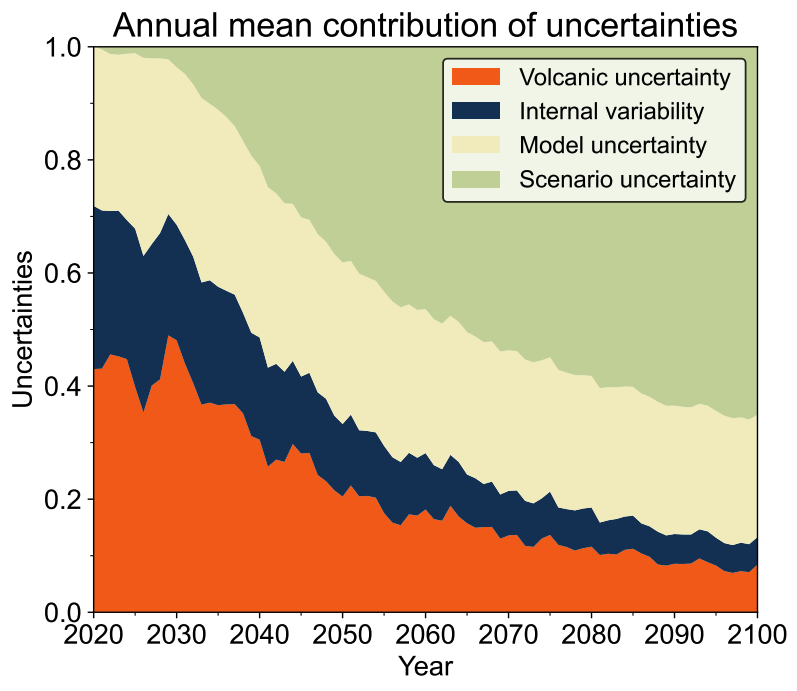
通过模拟1000种不同的火山未来情况,我们发现在21世纪未来时期火山喷发所引起的气候不确定性,可能超过同期气候系统本身的内部变率。
我们还发现,到2030年代,火山喷发可能占全球气温预测总不确定性的三分之一以上。
下图中能看到这些结果。图中展示了不同来源对总不确定性的影响。火山为橙色、内部变率为深蓝色、气候模型响应为黄色,未来人类排放情景为绿色。
对1.5C临界值的意义
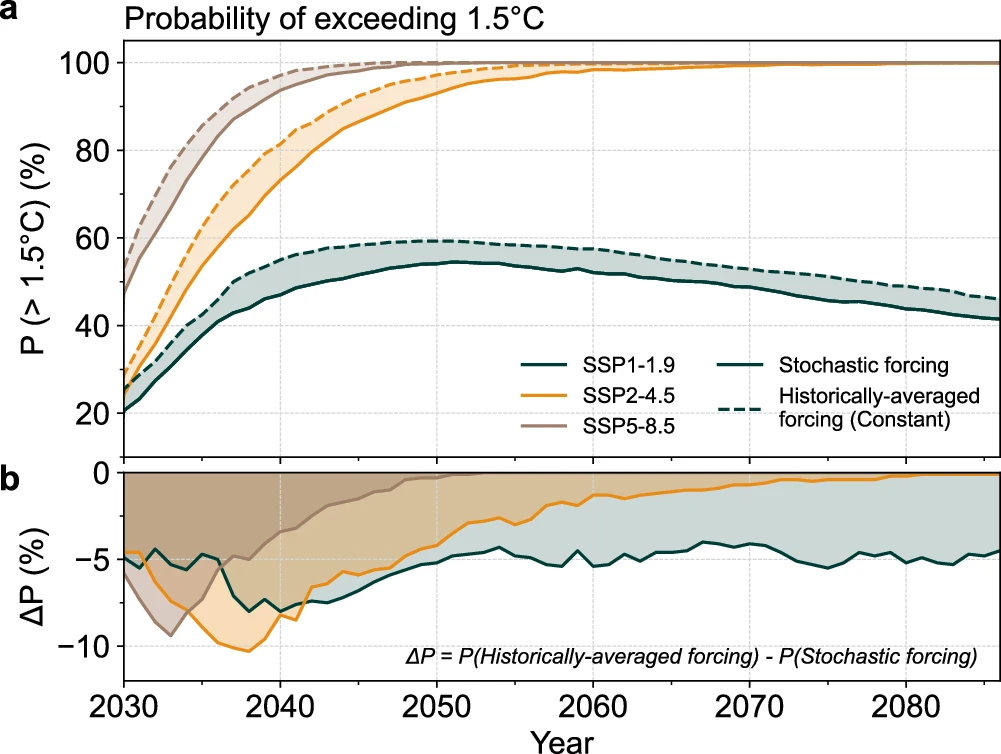
我们的模拟结果表明,在气候预测中纳入可能的火山活动时间线后,短期内突破《巴黎协定》设定的1.5C升温上限的概率略有下降。
根据不同的排放情景,相较于使用恒定火山强迫的预测,模拟发现超过1.5C升温上限的概率下降了4%至10%。
尽管这一结果听起来似乎令人鼓舞,但未来的火山活动并不能在长期缓和由人类引起的全球变暖。
1815年坦博拉火山的喷发事件就是一个强有力的例证。这次喷发使全球气温平均下降了约0.8C,带来了“无夏之年”,导致欧洲、北美和中国大范围的作物歉收和饥荒。
火山喷发带来的降温效应是短暂的,通常只持续几年,其并不会改变由人类排放所导致的长期变暖趋势。
我们的研究发现,即使考虑多种可能的未来火山活动,在除了最低排放路径以外的所有情景中,全球变暖仍将在几十年内超过1.5C。
即便21世纪火山活动频繁,其对全球变暖的抵消作用也仅占很小一部分——这意味着减排对于实现长期气候目标仍然至关重要。
下方图表展示了在三种排放情景下,使用随机火山强迫(实线)与恒定火山强迫(虚线)时超过1.5C的概率(上图),以及两种强迫方式之间的概率差异(下图)。
十年尺度的气温变率
我们的研究提供的另一个重要发现是:一旦将火山强迫的变率纳入考虑,将更有可能出现极端温暖和寒冷的十年期。
在中等排放情景下,我们发现出现负向十年期趋势——即全球表面温度在某个十年内平均下降——的概率增加了10%到18%。
与此同时,出现极端温暖十年期的概率也随之增加,这反映出火山强迫的变率会同时提高变暖和变冷极端事件发生的可能性。
这一结果凸显了火山喷发如何在十年时间尺度上对全球气温趋势带来显著的波动。
迈向更完善的气候预测
了解火山对气候的影响,对于全面评估农业、基础设施和能源系统在未来所面临的风险至关重要。
使用全面的地球系统模型运行数千种火山情景并不切实际,因为这需要极高的计算资源。但与此同时,当前的方法也存在上文提到的显著局限。
不过,在未来的气候模型工作中,仍有折中方案可行。
即将开展的下一阶段气候建模实验——即CMIP7情景模式比较计划——可以采用更具代表性的“平均”火山强迫基线,这一基线纳入了历史记录中常被遗漏的小型喷发事件的影响。这一偏差现已在用于下一代气候模型模拟的历史火山强迫数据集中得到纠正。
此外,建模团队还应额外运行包含高频和低频未来火山活动的情景,以全面捕捉火山不确定性对气候预测的影响范围。
虽然人类导致的温室气体排放仍是气候变化的主导因素,但若能妥善考虑火山活动的不确定性,将有助于我们获得更全面的未来气候图景及其对社会的潜在影响。

The post 嘉宾来稿:探究火山喷发如何影响气候预测 appeared first on Carbon Brief.

Drought and heatwaves occurring together – known as “compound” events – have “surged” across the world since the early 2000s, a new study shows.
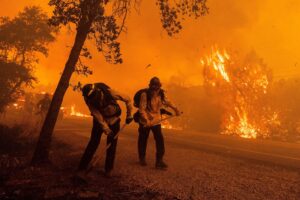
Compound drought and heat events (CDHEs) can have devastating effects, creating the ideal conditions for intense wildfires, such as Australia’s “Black Summer” of 2019-20 where bushfires burned 24m hectares and killed 33 people.
The research, published in Science Advances, finds that the increase in CDHEs is predominantly being driven by events that start with a heatwave.
The global area affected by such “heatwave-led” compound events has more than doubled between 1980-2001 and 2002-23, the study says.
The rapid increase in these events over the last 23 years cannot be explained solely by global warming, the authors note.
Since the late 1990s, feedbacks between the land and the atmosphere have become stronger, making heatwaves more likely to trigger drought conditions, they explain.
One of the study authors tells Carbon Brief that societies must pay greater attention to compound events, which can “cause severe impacts on ecosystems, agriculture and society”.
Compound events
CDHEs are extreme weather events where drought and heatwave conditions occur simultaneously – or shortly after each other – in the same region.
These events are often triggered by large-scale weather patterns, such as “blocking” highs, which can produce “prolonged” hot and dry conditions, according to the study.
Prof Sang-Wook Yeh is one of the study authors and a professor at the Ewha Womans University in South Korea. He tells Carbon Brief:
“When heatwaves and droughts occur together, the two hazards reinforce each other through land-atmosphere interactions. This amplifies surface heating and soil moisture deficits, making compound events more intense and damaging than single hazards.”
CDHEs can begin with either a heatwave or a drought.
The sequence of these extremes is important, the study says, as they have different drivers and impacts.
For example, in a CDHE where the heatwave was the precursor, increased direct sunshine causes more moisture loss from soils and plants, leading to a drought.
Conversely, in an event where the drought was the precursor, the lack of soil moisture means that less of the sun’s energy goes into evaporation and more goes into warming the Earth’s surface. This produces favourable conditions for heatwaves.
The study shows that the majority of CDHEs globally start out as a drought.
In recent years, there has been increasing focus on these events due to the devastating impact they have on agriculture, ecosystems and public health.
In Russia in the summer of 2010, a compound drought-heatwave event – and the associated wildfires – caused the death of nearly 55,000 people, the study notes.
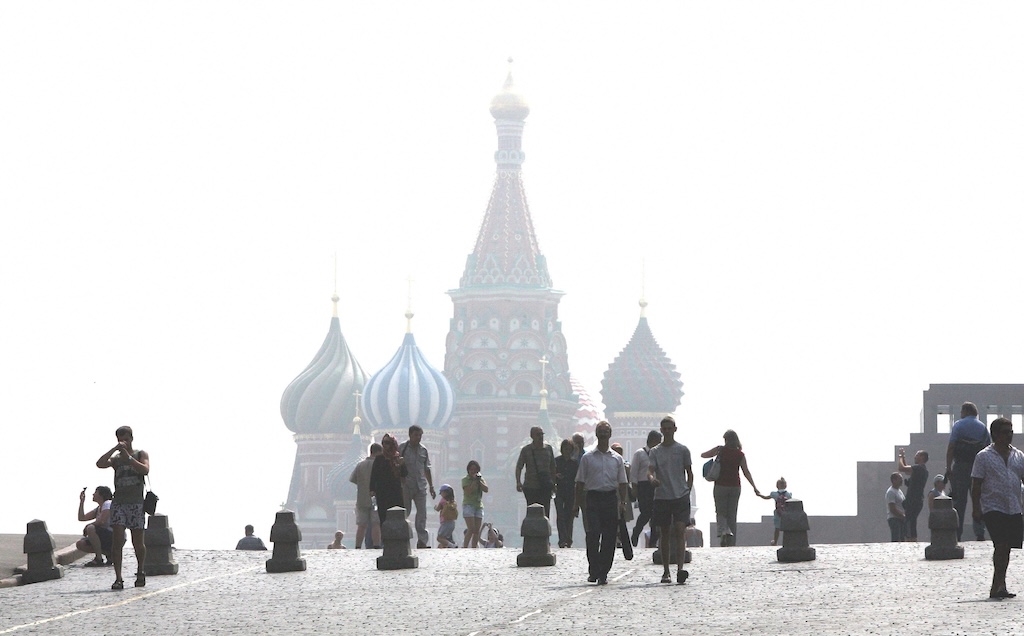
The record-breaking Pacific north-west “heat dome” in 2021 triggered extreme drought conditions that caused “significant declines” in wheat yields, as well as in barley, canola and fruit production in British Columbia and Alberta, Canada, says the study.
Increasing events
To assess how CDHEs are changing, the researchers use daily reanalysis data to identify droughts and heatwaves events. (Reanalysis data combines past observations with climate models to create a historical climate record.) Then, using an algorithm, they analyse how these events overlap in both time and space.
The study covers the period from 1980 to 2023 and the world’s land surface, excluding polar regions where CDHEs are rare.
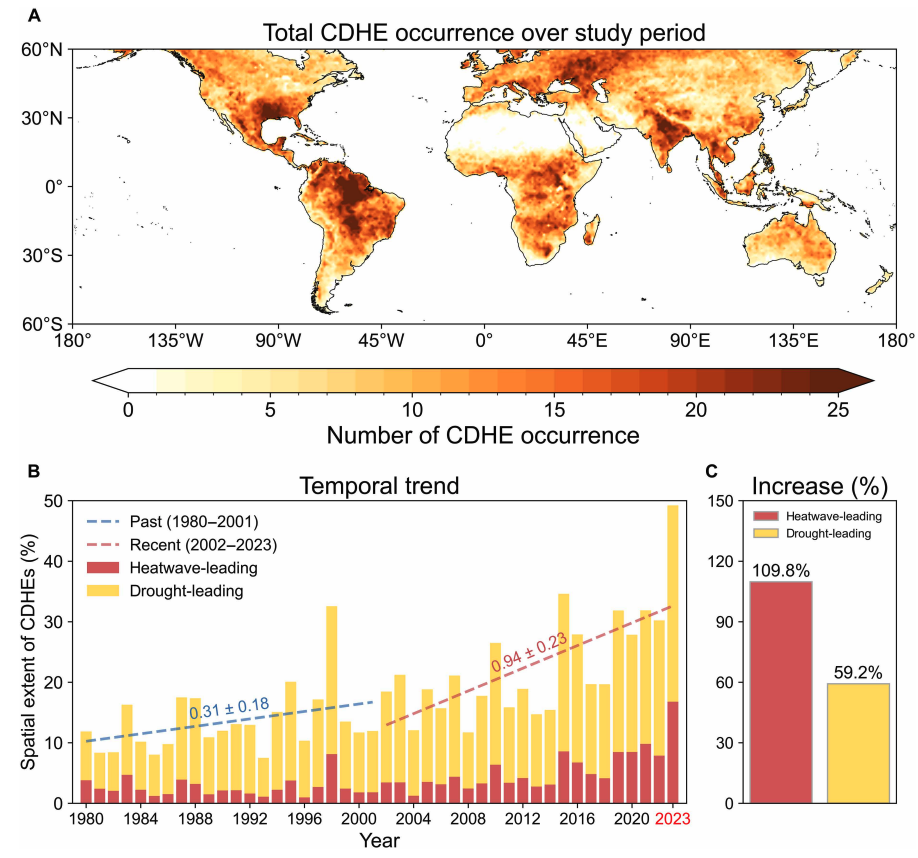
The research finds that the area of land affected by CDHEs has “increased substantially” since the early 2000s.
Heatwave-led events have been the main contributor to this increase, the study says, with their spatial extent rising 110% between 1980-2001 and 2002-23, compared to a 59% increase for drought-led events.
The map below shows the global distribution of CDHEs over 1980-2023. The charts show the percentage of the land surface affected by a heatwave-led CDHE (red) or a drought-led CDHE (yellow) in a given year (left) and relative increase in each CDHE type (right).
The study finds that CDHEs have occurred most frequently in northern South America, the southern US, eastern Europe, central Africa and south Asia.
Threshold passed
The authors explain that the increase in heatwave-led CDHEs is related to rising global temperatures, but that this does not tell the whole story.
In the earlier 22-year period of 1980-2001, the study finds that the spatial extent of heatwave-led CDHEs rises by 1.6% per 1C of global temperature rise. For the more-recent period of 2022-23, this increases “nearly eightfold” to 13.1%.
The change suggests that the rapid increase in the heatwave-led CDHEs occurred after the global average temperature “surpasse[d] a certain temperature threshold”, the paper says.
This threshold is an absolute global average temperature of 14.3C, the authors estimate (based on an 11-year average), which the world passed around the year 2000.
Investigating the recent surge in heatwave-leading CDHEs further, the researchers find a “regime shift” in land-atmosphere dynamics “toward a persistently intensified state after the late 1990s”.
In other words, the way that drier soils drive higher surface temperatures, and vice versa, is becoming stronger, resulting in more heatwave-led compound events.
Daily data
The research has some advantages over other previous studies, Yeh says. For instance, the new work uses daily estimations of CDHEs, compared to monthly data used in past research. This is “important for capturing the detailed occurrence” of these events, says Yeh.
He adds that another advantage of their study is that it distinguishes the sequence of droughts and heatwaves, which allows them to “better understand the differences” in the characteristics of CDHEs.
Dr Meryem Tanarhte is a climate scientist at the University Hassan II in Morocco, and Dr Ruth Cerezo Mota is a climatologist and a researcher at the National Autonomous University of Mexico. Both scientists, who were not involved in the study, agree that the daily estimations give a clearer picture of how CDHEs are changing.
Cerezo-Mota adds that another major contribution of the study is its global focus. She tells Carbon Brief that in some regions, such as Mexico and Africa, there is a lack of studies on CDHEs:
“Not because the events do not occur, but perhaps because [these regions] do not have all the data or the expertise to do so.”
However, she notes that the reanalysis data used by the study does have limitations with how it represents rainfall in some parts of the world.
Compound impacts
The study notes that if CDHEs continue to intensify – particularly events where heatwaves are the precursors – they could drive declining crop productivity, increased wildfire frequency and severe public health crises.
These impacts could be “much more rapid and severe as global warming continues”, Yeh tells Carbon Brief.
Tanarhte notes that these events can be forecasted up to 10 days ahead in many regions. Furthermore, she says, the strongest impacts can be prevented “through preparedness and adaptation”, including through “water management for agriculture, heatwave mitigation measures and wildfire mitigation”.
The study recommends reassessing current risk management strategies for these compound events. It also suggests incorporating the sequences of drought and heatwaves into compound event analysis frameworks “to enhance climate risk management”.
Cerezo-Mota says that it is clear that the world needs to be prepared for the increased occurrence of these events. She tells Carbon Brief:
“These [risk assessments and strategies] need to be carried out at the local level to understand the complexities of each region.”



The post Heatwaves driving recent ‘surge’ in compound drought and heat extremes appeared first on Carbon Brief.
Heatwaves driving recent ‘surge’ in compound drought and heat extremes
Greenhouse Gases
DeBriefed 6 March 2026: Iran energy crisis | China climate plan | Bristol’s ‘pioneering’ wind turbine
Welcome to Carbon Brief’s DeBriefed.
An essential guide to the week’s key developments relating to climate change.
This week
Energy crisis
ENERGY SPIKE: US-Israeli attacks on Iran and subsequent counterattacks across the Middle East have sent energy prices “soaring”, according to