Connect with us

Published

on

BMW

BMW widened its lead over Mercedes-Benz in the global electric vehicle market in 2025, selling more than 2.5 times as many fully electric cars as its longtime German rival. The growing gap highlights not only BMW’s strong execution but also the mounting pressure on Mercedes-Benz to reset its EV strategy amid weak demand and regional headwinds.

While both automakers faced a challenging macro environment, their electric vehicle performance moved in sharply different directions. BMW accelerated, especially in Europe. Mercedes, by contrast, lost momentum in key markets such as China and North America, forcing difficult product and portfolio decisions.

BMW’s EV Strategy Delivers Scale and Stability

BMW ended 2025 with 442,072 fully electric vehicle deliveries, including more than 105,000 electric Minis, marking a 3.6% increase from the previous year. Over the same period, Mercedes delivered 168,800 battery-electric vehicles, a 9% year-on-year decline. The contrast underscored BMW’s growing dominance in the premium EV segment.

More broadly, the BMW Group delivered 2.46 million vehicles across all powertrains in 2025, slightly higher than the previous year.

  • Electrified vehicles—including plug-in hybrids—reached 642,087 units, up 8.3%, and accounted for 26% of total group sales. This balance between combustion engines, hybrids, and EVs continued to shield BMW from abrupt demand swings.

BMW executives described electrified models as the company’s strongest growth driver. Demand proved especially resilient in Europe, where supportive regulations, charging infrastructure, and consumer incentives remained relatively stable compared to other regions.

bmw EV sales
Source: BMW

Jochen Goller, member of the Board of Management of BMW AG, responsible for Customer, Brands, Sales, said,

“In 2025, in a challenging environment, the BMW Group sold more vehicles than in the previous year. Our electrified vehicles were in particularly high demand. Europe reported especially strong growth, with battery-electric vehicles accounting for about a quarter of total sales, and BEVs and PHEVs combined reaching a share of over 40% across the region. We remain fully on track to meet our EU CO₂ fleet target for 2025. 

Europe Anchors BMW’s Electric Momentum

Europe emerged as the backbone of BMW’s electric success in 2025. Fully electric deliveries surged 28.2% across the region, with battery-electric vehicles representing roughly one-quarter of BMW’s total European sales. When plug-in hybrids are included, electrified vehicles exceeded 40% of sales in several major markets.

This performance also helped BMW stay on track to meet its EU fleet CO₂ targets, a growing priority as emissions rules tighten further later this decade. The company’s ability to scale EV sales without sacrificing profitability reinforced confidence in its multi-powertrain strategy.

Meanwhile, BMW’s British subsidiary Mini reached a notable milestone. The brand delivered its 100,000th fully electric Mini, and more than one in three Minis sold in 2025 featured a battery-electric drivetrain. This success demonstrated that smaller, urban-focused EVs continue to resonate strongly with European buyers.

Warning Signs Emerge in the U.S. Market

Despite strong annual results, BMW’s fourth-quarter performance revealed emerging challenges. Global EV deliveries fell 10.5% year over year in the final quarter, reflecting broader softness in consumer demand.

The United States stood out as a weak spot. BMW’s BEV sales in the U.S. plunged 45.5% in Q4, falling to just 7,557 vehicles. For the full year, U.S. electric deliveries dropped 16.7%, underscoring the impact of high interest rates, uneven incentives, and lingering infrastructure concerns.

Even so, BMW’s diversified geographic exposure helped offset U.S. weakness. Strong European demand and early interest in upcoming models provided confidence heading into 2026.

bmw
Source: BMW

Neue Klasse Signals BMW’s Next Growth Phase

BMW’s outlook received an additional boost from early demand for its upcoming Neue Klasse platform. The first modern model under this architecture, the electric iX3, generated strong initial orders across Europe.

In fact, customer reservations already cover nearly all of BMW’s planned European production for the model in 2026. The Neue Klasse platform is central to BMW’s long-term strategy, combining new battery technology, improved efficiency, and a software-first vehicle architecture.

By 2027, BMW expects to launch or update more than 40 models across various drive options, reinforcing its belief that flexibility—not a single-technology bet—offers the safest path through an uncertain transition.

In this context, Goller further noted,

“Especially in Europe, 2026 will be marked by the NEUE KLASSE. At the same time, we will be introducing several new models this year, such as the BMW X5, BMW 3 Series, and BMW 7 Series. In total, the BMW Group will launch more than 40 new and revised vehicles with various drive options by 2027.” 

Mercedes Faces Structural EV Headwinds

Mercedes-Benz entered 2025 under pressure, and conditions worsened as the year progressed. Global car sales fell 8% in the first nine months, with particularly sharp declines in China (-27%) and North America (-17%). Trade tensions and tariffs further complicated the picture.

The car maker delivered 168,800 BEVs, down 9%. Mercedes achieved higher total electrified sales, including plug-in hybrids (PHEVs), at 368,600 units, flat year-over-year.

Mercedes Benz EV
Source: Mercedes

In the United States, Mercedes paused orders for its EQS and EQE sedans and SUVs mid-year, citing unfavorable market conditions. As per reports, customer feedback highlighted design concerns and price sensitivity, particularly as competitors introduced newer platforms and faster charging capabilities.

As a result, Mercedes decided to phase out the EQE sedan and SUV by 2026, only four years after launch. The move marked a rare admission that parts of its first-generation EV strategy failed to connect with buyers.

Mercedes Bets on a Reset, Not a Retreat

Rather than scaling back electrification, Mercedes is attempting a reset. The company plans an aggressive product offensive, with 18 new or refreshed models in 2026 alone and 25 new models globally over three years.

However, Merc’s electric CLA boosted demand. It’s a new 800-volt EV architecture, starting with the upcoming electric CLA and GLC. Mercedes claims the new CLA can add up to 325 kilometers of range in just 10 minutes, with charging speeds reaching 320 kW. The company hopes these improvements will directly address earlier criticisms around charging and efficiency.

CEO Ola Källenius has described the coming period as the most intense launch cycle in Mercedes’ history. Still, execution risks remain high, particularly as competition intensifies and EV demand growth moderates in some markets.

Sustainability Becomes a Competitive Divider

Beyond sales volumes, sustainability strategies increasingly shape long-term competitiveness. BMW continues to position electrification as the biggest lever for emissions reductions while maintaining optionality across technologies, including hydrogen and efficient combustion engines.

The company aims to cut CO₂e emissions across its value chain by 90% by 2050, using 2019 as a baseline. Interim targets include a 40 million-ton reduction by 2030 and a 60 million-ton reductionby 2035. BMW has already mandated renewable energy use across its battery supply chain and sourcing contracts, including Tier-n suppliers.

Mercedes, meanwhile, is pursuing its “Ambition 2039” plan, targeting a net carbon-neutral new vehicle fleet across the full lifecycle. The company plans to reduce CO₂ emissions per passenger car by up to 50% within the next decade, while increasing renewable energy use in production to 100% by 2039.
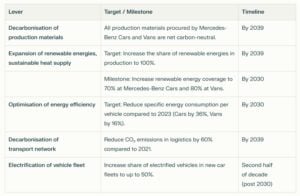
Mercedez benz climate

Both automakers recognize that as EV adoption rises, emissions reductions must increasingly come from manufacturing and supply chains, not just vehicle usage.

The Gap Widens, but the Race Continues

By the end of 2025, BMW had clearly established itself as the premium EV leader among Germany’s luxury brands. Its combination of steady electrification, regional balance, and early success with next-generation platforms set it apart.

Mercedes, however, is not conceding the race. Its upcoming models and platform overhaul could still narrow the gap, especially if global EV demand rebounds. For now, though, BMW’s lead remains firmly intact—and the pressure on Stuttgart continues to build.

The post BMW Outpaces Mercedes 2.5x in EV Sales, Proving Electrification Is the Emissions Lever appeared first on Carbon Credits.

Continue Reading

Carbon Footprint

JPMorgan’s Carbon Bet Marks a Turning Point for the Removal Market

Published

on

JPMorgan’s Carbon Bet Marks a Turning Point for the Removal Market

JPMorgan Chase has signed two major carbon removal agreements this month. The first one involves a purchase of 60,000 metric tons of durable carbon dioxide removal (CDR) over ten years from climate startup Graphyte. The deal uses biomass-based technology that converts agricultural and timber waste into stable carbon blocks stored underground.

In parallel, JPMorgan has also secured 85,000 tons of forest-based carbon removal credits through improved forest management projects. These credits, marketed by Anew Climate, come from U.S. forest projects managed by Aurora Sustainable Lands.

They aim to extend harvest cycles, boost forest health, and enhance long-term carbon storage. The approach helps maintain higher carbon stocks in working forests while supporting biodiversity and sustainable timber production.

Taylor Wright, Head of Operational Sustainability at JPMorgan Chase, noted:

“We were excited to add credits from the Little Bear Forestry Project to our carbon removal portfolio. The dynamic baselining provides meaningful evidence that these credits meet a high threshold for quality, supporting our interests as both a buyer and as a steward of market integrity.”

Carbon Removal Still Small, But Growing Fast

The agreements are part of a broader push by the bank to expand its carbon removal portfolio. While the total volume is small compared to global emissions, the deals highlight a shift in corporate climate strategies.

Companies are now focusing more on durable carbon removal, not just emission reductions. JPMorgan’s mix of engineered and nature-based solutions also reflects a growing trend toward portfolio diversification in carbon removal sourcing.

Carbon removal remains a small but critical part of climate action. The United States emits about 5 billion tons of CO₂ per year, showing how limited current removal volumes still are.

However, long-term demand is expected to grow sharply. The Intergovernmental Panel on Climate Change estimates that by 2100, the world might need to remove 100 to 1,000 gigatons of CO₂. By mid-century, annual removal should reach about 10 gigatons per year.

IPCC carbon removal pathway

Today’s market is far from that scale. Most carbon removal deals are measured in thousands or hundreds of thousands of tons. But these early contracts are seen as critical. They help build supply, reduce costs, and attract investment into new technologies.

JPMorgan’s latest deals fit this pattern. Together, the 60,000-ton biomass contract and 85,000-ton forest-based agreement provide long-term demand signals across different removal pathways. This helps scale both emerging engineered solutions and more established nature-based approaches.

Turning Waste Into Permanent Carbon Storage

Graphyte’s process, known as “carbon casting,” uses natural carbon capture through plants. Biomass absorbs CO₂ through photosynthesis. The material is then dried, compressed, and sealed to prevent decomposition. This allows the carbon to remain stored for long periods.

The company uses waste materials such as crop residues and timber byproducts. This reduces the need for new land use and lowers overall costs. The process also uses relatively low energy compared to other removal methods.

Projects linked to the JPMorgan deal include facilities in Arkansas and Arizona. These projects also provide added benefits. For example, using forest thinning residues can help reduce wildfire risk and support land restoration.

This reflects a broader trend in carbon markets. Buyers are increasingly looking for projects that deliver both carbon removal and environmental co-benefits. The bank’s forest-based deal reinforces this trend by supporting improved forest management practices that enhance carbon storage while maintaining productive landscapes.

JPMorgan’s $1 Trillion Net Zero Strategy and Climate Finance Push

JPMorgan’s carbon removal investments are part of a wider climate strategy. The bank has committed to facilitating $1 trillion in climate and sustainable development financing by 2030. It has already deployed about $309 billion between 2021 and 2024 toward this goal.

JPMorgan $1 trillion green investment
Source: JPMorgan

In addition to financing, the bank is building a diversified carbon removal portfolio. Since 2023, it has signed deals to cut hundreds of thousands of tons of CO₂. This includes a plan for up to 800,000 tons of carbon removal through long-term contracts.

The company aims to match its unabated operational emissions with durable carbon removal by 2030.

JPMorgan is also investing in a range of technologies. These include direct air capture, bio-oil sequestration, biomass storage, and forest-based removal. Its latest forest deal shows a continued commitment to high-quality, nature-based removals that meet stricter standards for durability and verification.

JPMorgan carbon removal portfolio
Source: JPMorgan disclosures

This diversified approach helps reduce risk while supporting different pathways to scale. Compared to many financial institutions, JPMorgan remains an early mover. Most large buyers in carbon removal are still technology companies, particularly Microsoft.

Microsoft Pullback Shakes Market Confidence

However, Microsoft, the largest buyer of carbon removal credits, has reportedly paused new purchases.

The tech giant has played a dominant role in the market. It accounts for up to 90% of global carbon removal purchases and has contracted more than 45 million tons of CO₂ removal to date. In 2025 alone, the company signed agreements for 45 million tons, doubling its 2024 volume and far exceeding any other buyer.

However, reports suggest the company may be adjusting the pace of new deals. This shift does not mean the end of carbon removal demand, but it signals a transition.

The market can no longer rely on a single dominant buyer. In this context, JPMorgan’s continued activity—across both engineered and nature-based deals—shows how new buyers are stepping in to support market stability.

Top buyers of carbon removals 2025

Market Trends: From Cheap Offsets to High-Durability Carbon Credits

The carbon market is evolving quickly. Traditional carbon credits often focus on avoiding emissions, such as protecting forests. However, there is growing demand for removal-based credits that physically take CO₂ out of the atmosphere.

Corporate net-zero goals drive this shift. Many companies now face limits on how much they can reduce emissions directly. Carbon removal is becoming necessary to address remaining emissions.

At the same time, supply remains limited. High-quality removal credits are scarce. This keeps carbon prices high, especially for engineered solutions.

Early buyers like JPMorgan are helping shape the market. Long-term contracts provide price signals and encourage project development. They also help define standards for quality and verification.

Another key trend is the focus on durability. Buyers prefer solutions that store carbon for decades or centuries, rather than short-term offsets.

Early-Stage Market, High-Stakes Growth

Despite growing momentum, carbon removal is still in its early stages. Current volumes are small compared to global needs. Policy support is also limited in many regions.

However, corporate demand is rising. Deals like JPMorgan’s show how private sector investment is driving the market forward.

The combination of long-term contracts, new technologies, and climate finance is expected to accelerate growth. Over time, this could help bring down costs and expand supply.

For now, the focus remains on building scale. Each new agreement adds to a growing pipeline of projects. These projects will play a key role in meeting long-term climate targets.

JPMorgan’s latest purchases may be modest in size. But together, they reflect a larger shift. Carbon removal is moving from early experimentation to a more structured and investable market, supported by a broader mix of buyers and solutions.

The post JPMorgan’s Carbon Bet Marks a Turning Point for the Removal Market appeared first on Carbon Credits.

Continue Reading

Carbon Footprint

Microsoft Hits Pause on All Carbon Removal Purchases: A Major Shift in Corporate Climate Strategy

Published

on

Microsoft Hits Pause on All Carbon Removal Purchases: A Major Shift in Corporate Climate Strategy

Microsoft has temporarily halted all new carbon removal purchases as it reviews its broader climate strategy. The move affects direct air capture, biochar, and other engineered carbon removal solutions supported by its $1 billion Climate Innovation Fund, launched in 2020. It could delay hundreds of millions of dollars in planned investments across the carbon removal sector.

The pause was first reported by Heatmap News, in which a company spokesperson said that Microsoft is not indefinitely halting all of its purchases. Rather, she stated:

“We continually review and assess our carbon removal portfolio along with market conditions for the optimal balance on our path to carbon negative.”

Microsoft has been one of the largest corporate buyers of high-quality carbon removal credits. Its decision signals a shift in how major companies evaluate carbon offsets and removal technologies.

The review focuses on whether current solutions can deliver reliable, long-term emissions reductions at scale. It also reflects growing scrutiny of corporate net-zero claims from regulators, investors, and climate groups.

Impact on Carbon Removal Market Pricing

Microsoft’s pause is expected to have an immediate impact on the voluntary carbon market (VCM). The company has played a leading role in scaling demand for engineered carbon removal credits.

These credits are more expensive than traditional offsets. Microsoft has typically paid between $100 and $600 per metric ton of CO₂ removed, compared with $5 to $15 per ton for many nature-based or avoidance credits.

Industry estimates suggest that Microsoft’s pause could significantly reduce demand in the engineered carbon removal market. The tech giant has accounted for as much as 80% to 90% of global purchases of carbon removals, as data from CDR.fyi shows below.

Top 10 carbon removal purchases cdr.fyi data
Source: CDR.fyi database

Several suppliers are directly exposed. Companies such as Climeworks and Carbon Engineering have signed multi-year agreements with Microsoft worth a combined $200 million to $300 million. These deals helped fund the early deployment of direct air capture facilities.

The broader voluntary carbon market has already seen price pressure. According to the Ecosystem Marketplace, average prices for carbon credits vary widely depending on quality. Premium removal credits trade at a steep premium due to limited supply and higher verification standards.

Microsoft’s exit, even if temporary, may accelerate a correction in these high prices. It may also reduce near-term funding for early-stage carbon removal technologies.

Microsoft’s Net-Zero Targets Face a Reality Check

Microsoft has some of the most ambitious climate goals in the corporate sector. The company aims to become carbon negative by 2030 and remove all the carbon it has emitted since its founding by 2050.

To support this, the tech giant has committed significant capital to carbon removal. By 2025, it had invested more than $750 million in carbon removal projects and contracted roughly 45 million tonnes of removals.

microsoft carbon removal contracts 2023-2025

The current review is examining whether these investments can scale fast enough to meet long-term targets. Key concerns include:

  • The permanence of carbon storage, especially for geological projects
  • The high cost of engineered removal compared to direct emissions cuts
  • The limited capacity of current technologies to deliver millions of tons annually

Many removal methods are still in early stages. Direct air capture, for example, currently removes only a small fraction of global emissions. The International Energy Agency estimates that global carbon removal capacity remains well below what is needed to meet net-zero scenarios by mid-century.

Microsoft is also reviewing how carbon removal fits into its broader decarbonization strategy. This includes aligning removal purchases with renewable energy investments and operational emissions reductions

SEE MORE:

Broader Big Tech Climate Strategy Shifts

Microsoft’s move reflects a broader shift across the technology sector. Other major companies, including Amazon, Meta, and Google, have slowed their carbon removal purchases in recent quarters.

Instead, many are focusing more on reducing emissions directly. This includes expanding renewable energy use, improving energy efficiency, and redesigning supply chains.

This trend aligns with updated guidance from the Science Based Targets initiative (SBTi). The SBTi emphasizes that companies should prioritize emissions reductions across Scope 1, 2, and 3 before relying on carbon removal.

Under this framework, carbon removal is treated as a solution for residual emissions that cannot be eliminated. This approach reduces reliance on offsets and increases pressure on companies to decarbonize core operations.

At the same time, regulatory scrutiny is increasing. In the United States, the U.S. Securities and Exchange Commission has proposed new climate disclosure rules. These rules would require companies to provide more detailed reporting on emissions and climate-related risks.

This is pushing companies to strengthen verification standards for carbon credits and avoid reputational risks linked to low-quality offsets.

A Turning Point for Carbon Removal Investment Models

Microsoft’s decision may signal a broader shift in how companies support carbon removal technologies. Instead of buying credits directly, some firms are exploring new funding models.

These include advance market commitments, where companies guarantee future demand, and direct investments in technology development. These approaches can provide more stable funding while reducing reliance on spot market purchases.

The technology sector has been a major driver of carbon removal demand. Since 2022, it has accounted for about 40% of high-quality removal credit purchases. Between 2020 and 2025, major tech companies committed billions of dollars to carbon removal initiatives.

total cdr sales cdr.fyi data
Source: image from CDR.fyi

If large buyers step back, developers may face funding gaps in the short term. However, this could also push the industry to improve cost efficiency and scalability.

Current removal costs remain high. Direct air capture can exceed $500 per ton, though companies aim to reduce this below $100 per ton over time. Achieving this will require technological advances, economies of scale, and supportive policy frameworks.

What It Means for Carbon Markets and Climate Goals

Microsoft’s pause marks a key moment for the VCM. It highlights the growing demand for higher standards, better verification, and clearer climate impact.

In the short term, the decision may slow growth in the premium carbon removal segment. Prices could soften, and some projects may face delays or funding challenges.

However, the long-term impact could be positive. Stronger scrutiny may lead to more reliable and transparent carbon removal solutions. This would help build trust in the market and attract new investment.

For companies, the message is clear. Net-zero strategies must focus first on reducing emissions. Carbon removal remains important, but it must be credible, scalable, and cost-effective.

For the carbon removal sector, the challenge is to prove that its technologies can deliver on these expectations. If successful, it will play a critical role in global climate efforts.

The International Energy Agency and other bodies have made it clear that carbon removal will be essential to achieving net-zero emissions by 2050. The question is not whether it is needed, but how fast it can scale.

As the sector evolves, companies that can deliver verified, permanent, and affordable carbon removal solutions are likely to lead the next phase of expansion.

The post Microsoft Hits Pause on All Carbon Removal Purchases: A Major Shift in Corporate Climate Strategy appeared first on Carbon Credits.

Continue Reading

Carbon Footprint

Radisson Hotel Group Ramps Up Net Zero Push by 2030: How Does it Compare with Marriott and Accor?

Published

on

Radisson Hotel Group Ramps Up Net Zero Push by 2030: How Does it Compare with Marriott and Accor?

Radisson Hotel Group has raised its climate ambition in the hospitality sector. The group now targets 100 verified net-zero hotels by 2030 across its global portfolio. This move builds on its existing science-based net zero commitment by 2050, approved under the Science Based Targets initiative (SBTi).

Radisson defines verified net-zero hotels as properties that cut operational emissions completely. This is done through energy transition and efficiency upgrades. while using limited offsets only for any remaining emissions.

The company has already launched early examples of this model in Manchester (UK) and Oslo (Norway). These hotels were upgraded through full operational redesigns instead of new construction. The goal is to scale this approach across multiple regions and hotel types.

Radisson Hotel Group CEO Federico J. González Tejera remarked during the release: 

“At Radisson Hotel Group, sustainability ultimately starts with people. It is about delivering for our guests, creating value for our owners, and supporting the communities where we operate. Verified Net Zero Hotels are an important step in our net zero transformation, setting a new standard for how hospitality can reduce its environmental impact while continuing to support people, destinations, and economic activity.”

How Net Zero Hotels Work in Practice

Radisson’s net zero model follows a structured decarbonization system developed with industry partners. It is designed to measure, reduce, and gradually eliminate emissions across hotel operations.

The process involves several steps:

  • measuring carbon fully,
  • switching to renewable electricity,
  • electrifying heating and cooking, and
  • upgrading efficiency in water, waste, and energy use.

Over time, the goal is to reduce reliance on carbon offsets and focus on real emissions cuts.

The Manchester and Oslo hotels show how this works in practice. Both properties switched to renewable electricity, removed fossil fuel systems, and added low-carbon changes. These include electrified kitchens and waste reduction programs.

Radisson Hotel group verified net zero steps
Source: Radisson Hotel Group

Radisson says these pilot hotels cut emissions by about 60%. This shows that significant reductions are possible in existing buildings.

Big Targets, Real Progress: Radisson’s Carbon Cuts

Radisson has set measurable climate targets aligned with global climate frameworks. The company aims to reduce Scope 1 and Scope 2 emissions by 46% by 2030, compared with a 2019 baseline. It also targets a 28% reduction in Scope 3 emissions by 2030, which includes supply chain and outsourced activities.

The group has already made measurable progress. By 2023, Radisson achieved a 35% reduction in carbon footprint per square metre compared to 2019 levels. Over the past decade, it has also improved energy and water efficiency by around 30% across operations.

The company works in over 100 countries and manages more than 1,500 hotels. This makes its decarbonization effort one of the biggest in the global hospitality sector.

Industry Shift: Hotels Move Toward Low-Carbon Operations

The hotel industry is increasingly under pressure to reduce emissions. Hospitality is energy-intensive because of heating, cooling, laundry, food services, and continuous building operations.

global hotel ghg emissions forecast
Source: Sustainable Hospitality Alliance report

Hospitality accounts for ~1% of global carbon emissions and ~7.8% of water use worldwide. The sector’s energy intensity averages 200-800 kBtu/sq ft annually, with heating/cooling consuming 50-60% of total energy.

Emissions breakdown by source:

  • Building energy: 60-70% (HVAC, lighting, hot water)
  • Food/beverage supply chains: 20-25%
  • Waste management: 10-15%

Hotels are now focusing on electrification and using renewable energy. They are also upgrading efficiency to cut their carbon footprint and journey toward net positive hospitality

Radisson is joining a trend toward verified net-zero hotels. These hotels need to cut emissions and get third-party checks. This approach reduces uncertainty in sustainability claims and improves transparency for investors and customers.

Independent verification systems are now widely used to confirm emissions reductions. They help make sure that net zero claims are credible and comparable across the industry.

The standard third-party verification:

  • Green Key/SGS: Verify WTTC Hotel Sustainability Basics (12 criteria)
  • TÜV Rheinland: Certifies Radisson’s net zero hotels
  • Cornell Hotel Sustainability Index: Benchmarks 1,307 global markets

The Net Zero Race in Hospitality: Radisson vs Marriott vs Accor

Radisson Hotel Group, Marriott International, and Accor Hotels all follow long-term net-zero goals. However, their timelines and strategies differ.

  • Radisson Hotel Group

Radisson Hotel Group aims for net zero across Scope 1, 2, and 3 emissions by 2050. It has a near-term target to cut Scope 1 and 2 emissions by 46.2% by 2030 (2019 base year) and reduce Scope 3 emissions by 27.5%.

Radisson has also launched “Verified Net Zero” hotels powered by 100% renewable electricity and low-waste operations. It is adding energy-saving upgrades. This includes LED lighting, smart heating and cooling systems, and building retrofits throughout its portfolio. It also pushes waste reduction programs, including food waste tracking and recycling systems in many hotels.

  • Marriott International

Marriott International also targets net zero across its value chain by 2050, with science-based approval. It plans to reduce Scope 1 and 2 emissions by 46.2% and Scope 3 emissions by 27.5% by 2030 (2019 baseline). It is investing in large-scale renewable electricity procurement through long-term power purchase agreements.

Marriott is also improving building efficiency with smart energy management systems across thousands of properties. Marriott is also promoting low-carbon supply chains. They are working with suppliers to reduce packaging and use more sustainable materials.

  • Accor

Accor also targets net zero by 2050, with a strong focus on operational efficiency and procurement reform. It is upgrading hotels with energy-efficient systems and expanding renewable electricity use across its brands.

Accor is also reducing food-related emissions by increasing plant-based menu options and cutting food waste. However, it provides less detailed interim emission reduction percentages than Radisson and Marriott. It focuses more on operational efficiency and engaging suppliers to make progress.

Radisson vs Marriott vs Accor net zero
Data from company reports

Overall, all three groups are moving toward net zero, but Radisson and Marriott show more defined short-term emissions targets. In contrast, Accor focuses more on operational changes and supply chain improvements.

ESG and Sustainable Hospitality: Green Travel Is No Longer Optional

Sustainability is becoming a stronger factor in travel decisions. More guests now prefer hotels that show clear environmental performance and use verified sustainability systems.

Corporate travel buyers are also adding ESG requirements to hotel contracts. This includes emissions reporting, renewable energy use, and waste reduction commitments. As a result, sustainability is becoming a competitive factor in hotel selection.

The global hospitality sector is adopting structured plans for decarbonization. This includes energy efficiency upgrades and using renewable electricity. Digital tracking of emissions is also becoming more common, especially for large hotel groups.

Radisson’s net-zero hotels are part of this shift. Sustainability-focused hotels can boost guest engagement and enhance brand positioning. This is backed by industry case studies. These strategies help hotels stand out in competitive markets.

The Hard Truth About Scaling Net Zero Hotels

Scaling net-zero hotels globally is complex. One major challenge is the cost of retrofitting existing buildings. Many hotels require major upgrades to heating, cooling, and kitchen systems to reduce emissions.

Another challenge is uneven access to renewable electricity across regions. Some markets still rely heavily on fossil fuels. This limits emissions reductions, even when hotels switch to cleaner operations.

Supply chain emissions also remain difficult to control. These include food sourcing, construction materials, and outsourced services. Tracking and reducing Scope 3 emissions requires coordination across many suppliers.

Finally, implementation varies by country due to differences in regulation, infrastructure, and energy systems. This creates uneven progress across global hotel portfolios.

Can Net Zero Become the New Hotel Standard?

Radisson’s plan to reach 100 net-zero hotels by 2030 marks a significant step in hospitality decarbonization. If achieved, it would create one of the largest verified net-zero hotel networks globally.

The strategy also supports its long-term goal of achieving net zero emissions across its entire value chain by 2050, aligned with global climate targets.

Future progress relies on quicker electrification of hotel operations, broader access to renewable energy, better ESG reporting, and ongoing investment in low-carbon technologies.

If done right, net-zero hotels could be the norm in global hospitality within the decade. This would change how hotels run and compete in international travel.

The post Radisson Hotel Group Ramps Up Net Zero Push by 2030: How Does it Compare with Marriott and Accor? appeared first on Carbon Credits.

Continue Reading

Trending

Copyright © 2022 BreakingClimateChange.com

