

We handpick and explain the most important stories at the intersection of climate, land, food and nature over the past fortnight.
This is an online version of Carbon Brief’s fortnightly Cropped email newsletter.
Subscribe for free here.
Key developments
Amazon updates
RECORD-LOW LOSS: Amazon deforestation rates have fallen to their lowest level since 2019, according to a report covered by Agence France-Presse. The newswire called the figures “good news” for president Luiz Inácio Lula da Silva, but said the rate of deforestation is still “breathtaking”, with five trees felled every second, on average. Separately, a report from Rainforest Foundation Norway found that the “currently anticipated growth in Brazilian beef production may lead to deforestation of ~57,000km2 in the Amazon by 2034”.
ROAD AND RAIL: The Brazilian government will invest $75m into a new highway “cutting through the Amazon rainforest”, reported Deutsche-Welle. The Associated Press said the administration also announced an environmental protection plan to “safeguard the forest from potential impacts from the highway”, but added that environmentalists still fear the move “could speed up Amazon deforestation”. Separately, Inside Climate News reported on a Brazilian supreme court ruling that has brought a 965km railway through the Amazon “one step closer to reality”.
BANNED IMAGES: Mongabay reported that “Brazil’s Congress has passed a bill prohibiting environmental agencies from using satellite images to restrict the commercial use of illegally deforested lands”. According to the outlet, supporters say that “satellite-only enforcement infringes upon farmers’ right to a fair defense”, while critics argue that the bill will “weaken environmental protection” and “create unsafe conditions” for Brazil’s federal environmental police. Separately, the Brazilian government has committed more than $600m (£446m) to “foster ecological investment in the Amazon region”, according to the Associated Press.
El Niño forecast and extreme heat
‘SUPER’ STRESSED: The predicted “super” El Niño event would add stress to an “already dysfunctional and fragile global food system”, wrote the University of Sussex’s Prof Benjamin Selwyn in a commentary in the Conversation. He added that “El Niño alters rainfall, shifts jet streams and raises global temperatures”, all of which could damage harvests this summer. Reuters noted that the forecast for the phenomenon is “particularly worrying”, due to the predicted strength of the event and the contribution of climate change.
HEAT BURDEN: “Scorching temperatures” in India have “disrupted daily life across several northern states”, said the Washington Post. The outlet added: “Some farmers have switched to nighttime work to avoid scorching temperatures as a heatwave grips large parts of India.” The heatwave is also affecting Nepal, as high temperatures have “added burdens to public health, education, agriculture, livestock, environment, employment and public infrastructure”, reported Nepal News.
‘MIND-BOGGLING’ HEAT: Meanwhile, a “heat dome” over western Europe broke UK temperature records for the month of May. Carbon Brief summarised how the “mind-boggling” heatwave was covered in both national and international press. Agence France-Presse wrote that parts of Italy approved rules limiting work in conditions “with prolonged exposure in the sun” during the hottest part of the day. The newswire added: “Farmers reported accelerated harvests as temperatures went beyond 30C across the region.”
News and views
- SNAKEBITE DANGER: “The risk of snakebites is increasing across the world as reptiles shift their habitats to cope with rising temperatures and growing human pressures,” according to new research covered in the Guardian. It added that human-snake interactions are “forecast to become more pronounced”.
- RICE RISK: “Several parts” of China are experiencing heavy rains early this year, “raising risks for agriculture and disaster management”, wrote Bloomberg. This includes “key grain-producing provinces”, as well as areas that grow rice, vegetables and fruit, added the outlet.
- DATA DROUGHT: Chile’s Quilicura wetland, just north of Santiago, is drying up as “datacentres have drained water from drought-stricken wetlands, consuming billions of litres annually”, said the Guardian. It noted that the area is home to Latin America’s “largest concentration of datacentres”.
- ACCOUNTING TRICK: A group of scientists have called on the Irish government to reject a proposal that would allow the livestock to use a metric called GWP* to measure methane emissions, reported Inside Climate News. According to the outlet, they warned that this “accounting trick” would “downplay” the industry’s emissions. (See Carbon Brief’s explainer on GWP* for more information.)
Spotlight
Three key findings on the state of carbon dioxide removal
This week, Carbon Brief unpacks three key findings from the third edition of the “state of carbon dioxide removal” report.
Global carbon dioxide removal (CDR) will need to increase fourfold by 2050 if the world is to have a chance of limiting global warming to 1.5C by 2100, said a new report.
Nearly all pathways to meeting the Paris Agreement’s highest ambition of keeping global temperatures to 1.5C above pre-industrial levels in 2100 involve CDR techniques – ranging from tree-planting to sucking CO2 from air with machines.
This is in addition to steep and immediate emissions cuts.
Scientists expect carbon emissions to push warming beyond 1.5C in the decade ahead, meaning that the target can only be achieved via large-scale CDR.
Here, Carbon Brief pulled out three key findings from the third state of CDR report.
‘Novel’ CDR is small, but growing
The report said that, at present, “99.9%” of existing CDR is conventional, land-based techniques, such as tree-planting and ecosystem restoration.
The world currently removes 2.2bn tonnes of CO2 (GtCO2) per year, equivalent to around 5% of gross global CO2 emissions.
The largest contributors to removing CO2 from the atmosphere are China, the US, the EU, Brazil and Russia, largely through tree-planting (afforestation) and forest restoration (reforestation).
“Novel” CDR, such as biochar and direct air capture, currently removes just 2m tonnes of CO2 annually at present, according to the report.
These methods have been growing at a rate of 40% per year – which is “insufficient for the scale-up required to meet the Paris temperature goal”, said the report.
Current ambition will not lead to net-zero
The report examined several scenarios where global temperature rise is limited to “well below” 2C by 2100, including a current ambition scenario and a highest-possible ambition scenario.
The current ambition scenario was based on “nationally determined contributions”, or NDCs, which countries submit periodically to the UN Framework Convention on Climate Change (UNFCCC).
Under this scenario, the report projected a total of 5.9GtCO2 of CDR by 2050 and 12GtCO2 by 2100. This scenario would result in end-of-century warming of 1.7-2.7C.
Importantly, the report said, current ambition does not result in the world reaching net-zero CO2 levels, “meaning that global temperatures would continue to rise” – albeit more slowly – beyond 2100.
Under the highest-possible ambition scenario, CDR scales up to 8.8GtCO2 by mid-century and 15.3GtCO2 by the end of the century. This results in global temperatures peaking at 1.7-1.8C around 2050 and the world achieving net-zero emissions around that time.
Reducing emissions now lowers the need for future CDR
While many countries include some amount of CDR in their NDCs, there is currently a large gap between the amount of CDR pledged and the amount that will be needed to limit global temperature rise to 1.5C by the end of the century, said the report.
This quantity is referred to as the “CDR gap” – the difference between what is pledged and what is needed.
The size of the CDR gap is dependent on both the pledges made by countries and the choice of the “benchmark” scenario against which they are measured.
Current NDCs and other country submissions to the UNFCCC total 2.5GtCO2 per year of removals in 2030 and 3.6GtCO2 per year in 2050. Using the highest-ambition scenario as a benchmark, this gives a CDR gap of 0.3GtCO2 in 2030 and 5.2GtCO2 in 2050, according to the report.
By comparison, a 10-year delay in implementing ambitious emissions reductions will result in the need to remove at least an additional 150GtCO2 from the atmosphere, compared to the most ambitious scenario.
This Spotlight is adapted from Carbon Brief’s Q&A on the state of CDR report. You can read the article in full here.
Watch, read, listen
‘DEVASTATING’ DATA: Grist reported on a proposed Utah datacentre that could be “devastating” to the ecology of the Great Salt Lake – the largest saline lake in the world.
ECO-OIL: The Times explained how a new synthetic oil, grown in a lab in north-west England, could be used as a substitute for palm oil.
EL NIÑO IMPACTS: An interactive piece from BBC News described how the forecasted “super” El Niño could impact global climate and weather in the coming months.
‘BATTERY COWS’: The Guardian covered work from the Bureau of Investigative Journalism that found a “huge rise” in factory-style dairy farming of “battery cows” in the UK.
New science
- Greenhouse gas emissions from rice paddies have doubled globally over the past six decades | Nature Food
- Climate change will shift the timing and location of hailstorms – increasing the risk of damage to winter crops, such as wheat, but decreasing the risk to summer crops, such as maize | Nature Climate Change
- Wind turbines in western Europe put more than 100m migratory birds “at risk” of collision annually, but this number can be lowered through limiting energy production at strategic times | Nature Sustainability
In the diary
- 2-5 June: UN expert meeting on food and agriculture | Rome
- 5 June: World environment day
- 8-18 June: Subsidiary body meetings of the UNFCCC | Bonn, Germany
- 15-19 June: Meeting of the parties to the UN Convention on the Law of the Sea | New York City
- 16-18 June: Our Ocean Conference | Mombasa, Kenya
Cropped is researched and written by Dr Giuliana Viglione, Aruna Chandrasekhar, Daisy Dunne and Orla Dwyer. Please send tips and feedback to cropped@carbonbrief.org
The post Cropped 3 June 2026: Highway through the Amazon | El Niño impact | State of CO2 removal appeared first on Carbon Brief.
Cropped 3 June 2026: Highway through the Amazon | El Niño impact | State of CO2 removal

Next week, diplomats from around the world will descend on Yerevan, Armenia, to negotiate a series of decisions under the UN Convention on Biological Diversity (CBD).
Between 19 and 30 October, 196 parties will gather to hammer out the precise wording of the dozens of legal texts that make up the decisions under the Conference of the Parties (COP) to the CBD.
This year’s summit is particularly significant, as it marks the halfway point between the agreement of the Kunming-Montreal Global Biodiversity Framework and the deadline for achieving its targets.
The CBD has found that countries are currently not on track to meet 22 out of the framework’s 23 targets.
During the fortnight, delegates will also be negotiating decisions relating to the two supplemental protocols to the CBD: the Cartagena Protocol, which covers biosafety; and the Nagoya Protocol, which covers access and benefit-sharing for the use of genetic resources.
(The Cartagena and Nagoya Protocols, which are each governed by a “meeting of the parties”, or “MOP”, have fewer parties than the CBD as a whole, with 173 and 141, respectively.)
Carbon Brief is tracking the progress of countries towards consensus on dozens of negotiating texts using the interactive table below.
The tracker includes texts from the COP, as well as the MOPs for the Cartagena and Nagoya protocols. It also includes draft decisions from the most recent subsidiary body meetings, as these form the starting point for the negotiations in Yerevan.
The CBD has three subsidiary bodies: the subsidiary body on scientific, technical and technological advice (SBSTTA), the subsidiary body on implementation (SBI) and the subsidiary body on article 8(j) and other provisions (SB8J).
SB8J focuses on issues related to the Indigenous peoples and local communities. It was established at COP16 in Cali, Colombia, in 2024.
The first two columns of the interactive tracker list the topic of each agenda item and the relevant body, with subsequent columns including dates, page counts and links to the original documents.
The table is searchable and can be sorted using the arrows in the header.
Areas of disagreement in UN draft texts are denoted by square brackets. Counting the brackets in a particular iteration of a text therefore gives a sense of how far parties are from reaching consensus.
The bracket column is colour-coded, with dark green indicating a low number of brackets and red indicating a high number of brackets remaining.
Texts can also present parties with choices using “options” or alternatives (“alt”), which are counted together in the sixth column of the table.
The key discussions in Yerevan will centre around two agenda items in particular. The first is the global review, which will assess progress towards the GBF and make recommendations for accelerating action.
The second is finance, which can be separated into two parts: resource mobilisation and the financial mechanism. On resource mobilisation, biodiverse global south countries are likely to push for an increased amount of international finance for conservation.
Disagreement over the creation of the financial mechanism led to the suspension of COP16 in Cali in October 2024, as parties failed to find agreement on the mobilisation of finance before the end of the summit.
Global south countries want the establishment of a separate financial mechanism under the control of the CBD; global north countries largely prefer to maintain the existing mechanism, which sits under the Global Environment Facility.
At the resumed session of COP16 in Rome in early 2025, countries agreed on a roadmap that would lead to the establishment of a permanent mechanism.
related
Analysis: Lula presidency saved at least 20,000km2 of Brazilian Amazon since 2022
Why land-use emissions have fallen by a third this century – in six charts
Analysis: 84% of nations miss deadline to identify ‘nature-harming’ subsidies by 2025
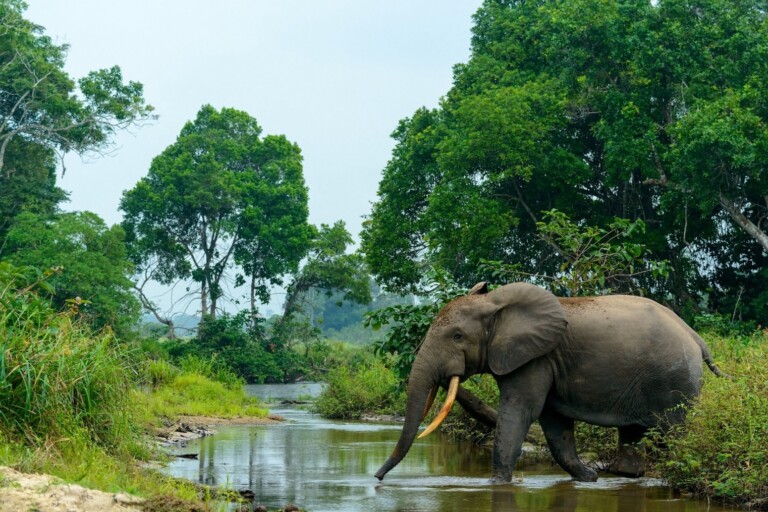
UK withdraws millions in funding from world’s second-largest rainforest in Congo
The post Interactive: Tracking negotiating texts at the COP17 biodiversity summit appeared first on Carbon Brief.
Interactive: Tracking negotiating texts at the COP17 biodiversity summit
A beacon of love
On an outer island of Fiji, two thousand nautical miles from Sydney, is a shining light of hope and resilience for our troubled world.
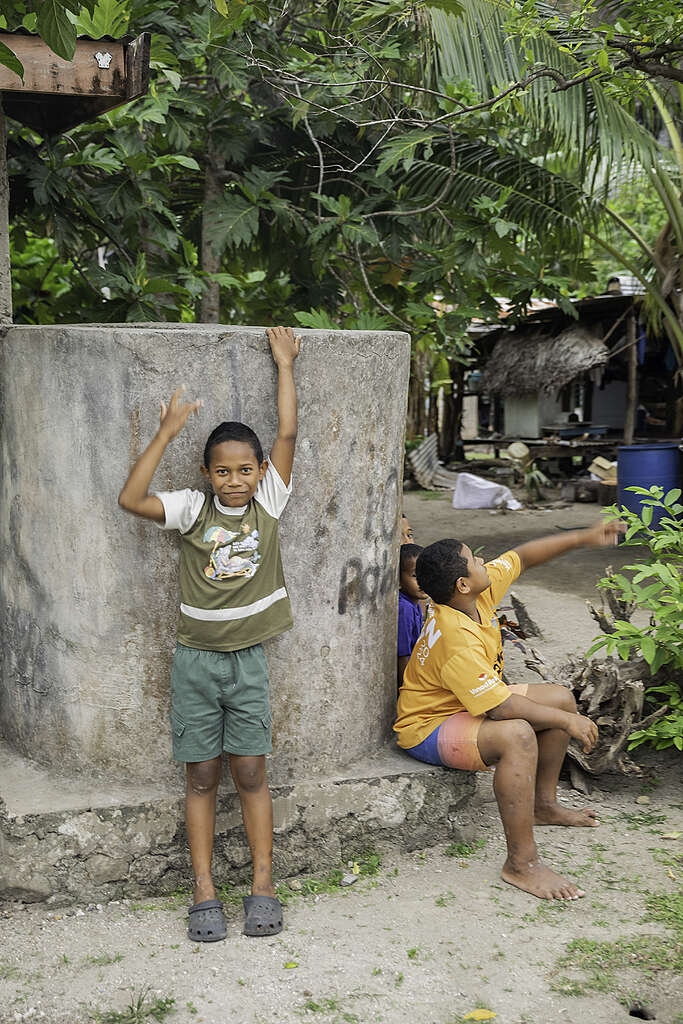
The island of Kioa is home to a Tuvaluan community who migrated from their atoll of Vaitupu in the late 1940s. It is a land of warm hearts, big smiles, and deep cultural roots; a place where the sound of a conch still summons the island together, where islanders paddle out to fish in carved outrigger canoes, and healthy happy children walk barefoot to school.
Here, culture is life. Kioans live sustainably through their traditional knowledge and practices. The island is alive with song, dance and the rhythms of a life tied to the tides, the winds, and the seasons.
Facing the future
Greenpeace has been lucky to have a relationship with Kioa for a number of years now, and we are continually learning from this remarkable community.
Last week, as part of our Voyaging Oceania project, we returned to the island. Our purpose was twofold —- to carry messages from the island to leaders gathering in Nadi this week for the Pacific Pre-COP, and to support the Kioa community in their efforts to improve water security for the island.
Unlike Tuvalu itself, with its eight atolls, Kioa is a mountainous, forested and richly fertile island. It will remain habitable far into the future. Kioans did not initially migrate from Vaitupu due to climate change, but the move was prophetic. They now have a lifeboat.
However, even Kioa faces challenges on our rapidly warming planet, in particular when it comes to water. Climate change is shifting once reliable rainfall patterns. On top of this, the island is already feeling the effect of this year’s intensifying El Niño event, which for Fiji means reduced rainfall and prolonged dry spells.
Right now, fresh water has to be carefully rationed, and is only available for a few hours a day. During last week’s visit aboard our campaigning ship Oceania, Greenpeace was privileged to work with the Kioa community on a new solar-powered water distribution project for the island.
Designed and led by the island, the project involves using a solar pump to move water from a reliable source to a storage tank and then using gravity to distribute the water around the village.
It was a lesson in how local knowledge and ingenuity can be the backbone of today’s climate solutions. To build a dam around the source, the local community knew the exact spot where they could gather gravel at low tide to mix with the cement. They took only what was needed, knowing that all resources must be carefully conserved. Kioa has no roads and no machinery, and it was an all-of-island effort to carry the materials up to the project site, including many heavy bags of sand and rock.
Such projects truly bring to life the vision of a resilient, locally-led, fossil fuel free Pacific.