

Despite multi-billion-dollar energy transition deals agreed with wealthy nations and development banks in 2022, coal use in Indonesia and Vietnam will continue to grow until at least 2030, the International Energy Agency (IEA) forecasts.
In its annual coal report, the Paris-based agency estimates that coal use will rise 4.5% a year between 2025 and 2030 in Southeast Asia, with Indonesia, Vietnam and the Philippines largely responsible for the increase. Coal-heavy India is also set for a 3.3% rise this decade.
Growth in these nations will offset large declines in coal use in developed countries and a smaller fall in China, the IEA said, causing global coal demand to plateau and edge down only slightly by 2030.
For this year, the report finds that global coal demand is set to rise by 0.5%, reaching a record 8.85 billion tonnes. In the US, higher natural gas prices and policy measures slowing the retirement of coal plants lifted consumption, which had been on a downward trend for the previous 15 years, it notes.
Big banks’ lending to coal backers undermines Indonesia’s green plans
When burned, coal’s planet-heating emissions are far larger than other fossil fuels like oil and gas. Quickly reducing the use of coal is critical to meet climate goals, experts say, and countries agreed to phase it down at the COP26 climate summit in Glasgow in 2021.
A group of donor nations launched Just Energy Transition Partnerships (JETPs) in 2021 and 2022 to help accelerate a transition away from coal in key countries like South Africa, Vietnam and Indonesia.
But responding to a question from Climate Home News, Keisuke Sadamori, the IEA’s director of energy markets and security, told a press briefing this week that the JETPs in Indonesia and Vietnam had so far failed to “bend the curve”.
Fabby Tumiwa, head of the Institute for Essential Services Reform (IESR) who advised the Indonesian government on the JETP deal, said the country’s JETP is “stalling” partly because the wealthy country partners have not funded the early retirement of coal-fired power plants.
A draft Indonesian energy plan seen by Climate Home News in August 2023 said Indonesia would retire a sixth of its coal-fired power plant capacity by 2030.
But, after a row over finance with rich nations, that target was dropped from the final version published later that year. Instead, the plan said Indonesia would start shutting down coal plants before their scheduled closure no earlier than 2035.
Tumiwa told Climate Home News that the lack of international funding for early retirement has made it harder for JETP partner countries – including Germany, Japan and the UK – to ask Indonesia to stop building new coal-fired power plants.
-
Big banks’ lending to coal backers undermines Indonesia’s green plans
Foreign banks involved in Indonesia’s $20-billion Just Energy Transition Partnership have also funded companies working on coal power expansion, a TBIJ and Climate Home News investigation reveals -
Indonesia turns traditional Indigenous land into nickel industrial zone
Indonesia supplies the EV industry with critical battery materials but the sector’s rapid expansion is infringing the rights of Indigenous peoples -
Indonesia delays coal closure plans after finance row with rich nations
After its pleas for grants not loans fell mostly on deaf ears, Indonesia has watered down its plans to shut coal power plants early


Even beyond 2030, early closures look in doubt. Recently, PLN cancelled a plan to shut down the Cirebon-1 coal-fired power plant seven years early in 2035, citing the high cost of compensating the plant’s owner – despite promised financial support from the Asian Development Bank under its Energy Transition Mechanism.
Think-tank IESR argues that the health benefits from shutting down the polluting plant early would outweigh the financial costs, and that keeping the plant open is a sign that the government’s commitment to the energy transition is weakening.
Indonesia’s Chief Economic Minister Airlangga Hartarto said earlier this month that the Cirebon-1 plant is less polluting than others in Indonesia so it would be better to shut down those dirtier, older facilities first.
“Captive” coal growing
Tumiwa said another flaw in the JETP was its focus on coal power stations that provide electricity to the grid rather than “captive” coal power plants which directly power nearby industrial facilities including nickel and aluminium smelters.
By the time those working on the JETP realised that captive coal accounted for a significant chunk of capacity, it was too late to change the JETP’s design, Tumiwa said.
The IEA report said that coal use in Indonesia and Vietnam will rise mainly because of expanding electricity demand driven by economic and population growth. In Indonesia, in particular, the use of coal in industries like nickel and aluminium is increasing, the report added. In Vietnam, the power-hungry manufacturing sector has driven the surge in coal consumption.
In both countries, JETP funding for clean energy has trickled in only slowly. Indonesia’s JETP, which promised to mobilise $20 billion by 2027, has delivered $3 billion so far, mostly as concessional loans. Japan has been by far the largest donor, providing almost $2 billion. In Vietnam, only three projects have progressed to funding arrangements, totaling less than $1 billion.
The IEA report said discussions have “intensified” in Indonesia around energy security, affordability and orderly transition pathways. The country has large reserves of relatively cheap coal and the country’s state-owned electricity company PLN has encouraged investment in coal mining and transportation.
Vietnam has also watered down its plans to shut coal plants and has imprisoned environmental campaigners. In May, European governments announced loans for a transmission line and two hydropower plants under the JETP, but no plans for early coal plant closures.
The post Indonesia and Vietnam set for surge in coal use this decade despite transition deals appeared first on Climate Home News.
Indonesia and Vietnam set for surge in coal use this decade despite transition deals

Next week, diplomats from around the world will descend on Yerevan, Armenia, to negotiate a series of decisions under the UN Convention on Biological Diversity (CBD).
Between 19 and 30 October, 196 parties will gather to hammer out the precise wording of the dozens of legal texts that make up the decisions under the Conference of the Parties (COP) to the CBD.
This year’s summit is particularly significant, as it marks the halfway point between the agreement of the Kunming-Montreal Global Biodiversity Framework and the deadline for achieving its targets.
The CBD has found that countries are currently not on track to meet 22 out of the framework’s 23 targets.
During the fortnight, delegates will also be negotiating decisions relating to the two supplemental protocols to the CBD: the Cartagena Protocol, which covers biosafety; and the Nagoya Protocol, which covers access and benefit-sharing for the use of genetic resources.
(The Cartagena and Nagoya Protocols, which are each governed by a “meeting of the parties”, or “MOP”, have fewer parties than the CBD as a whole, with 173 and 141, respectively.)
Carbon Brief is tracking the progress of countries towards consensus on dozens of negotiating texts using the interactive table below.
The tracker includes texts from the COP, as well as the MOPs for the Cartagena and Nagoya protocols. It also includes draft decisions from the most recent subsidiary body meetings, as these form the starting point for the negotiations in Yerevan.
The CBD has three subsidiary bodies: the subsidiary body on scientific, technical and technological advice (SBSTTA), the subsidiary body on implementation (SBI) and the subsidiary body on article 8(j) and other provisions (SB8J).
SB8J focuses on issues related to the Indigenous peoples and local communities. It was established at COP16 in Cali, Colombia, in 2024.
The first two columns of the interactive tracker list the topic of each agenda item and the relevant body, with subsequent columns including dates, page counts and links to the original documents.
The table is searchable and can be sorted using the arrows in the header.
Areas of disagreement in UN draft texts are denoted by square brackets. Counting the brackets in a particular iteration of a text therefore gives a sense of how far parties are from reaching consensus.
The bracket column is colour-coded, with dark green indicating a low number of brackets and red indicating a high number of brackets remaining.
Texts can also present parties with choices using “options” or alternatives (“alt”), which are counted together in the sixth column of the table.
The key discussions in Yerevan will centre around two agenda items in particular. The first is the global review, which will assess progress towards the GBF and make recommendations for accelerating action.
The second is finance, which can be separated into two parts: resource mobilisation and the financial mechanism. On resource mobilisation, biodiverse global south countries are likely to push for an increased amount of international finance for conservation.
Disagreement over the creation of the financial mechanism led to the suspension of COP16 in Cali in October 2024, as parties failed to find agreement on the mobilisation of finance before the end of the summit.
Global south countries want the establishment of a separate financial mechanism under the control of the CBD; global north countries largely prefer to maintain the existing mechanism, which sits under the Global Environment Facility.
At the resumed session of COP16 in Rome in early 2025, countries agreed on a roadmap that would lead to the establishment of a permanent mechanism.
related
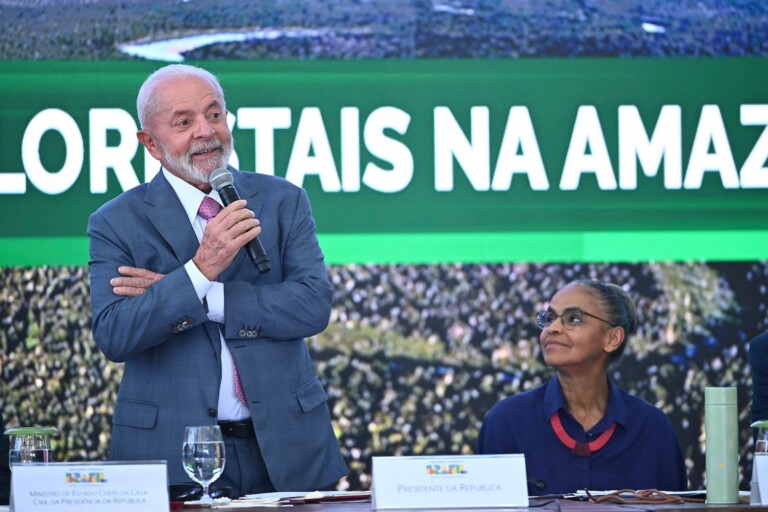
Analysis: Lula presidency saved at least 20,000km2 of Brazilian Amazon since 2022
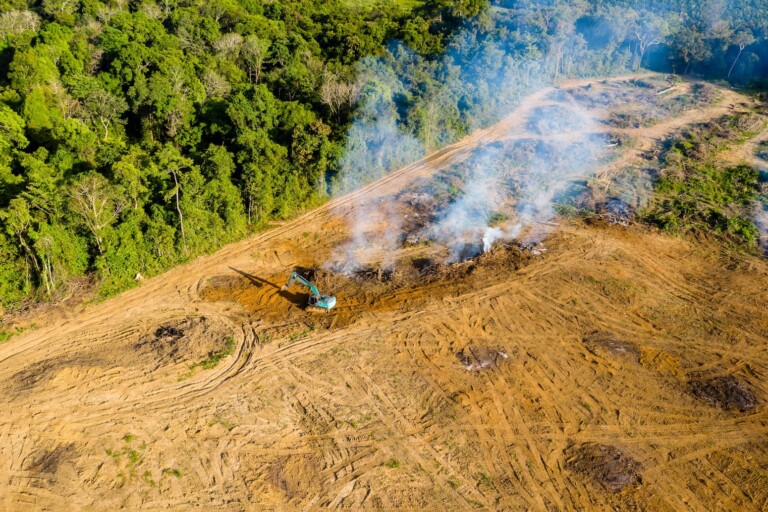
Why land-use emissions have fallen by a third this century – in six charts

Analysis: 84% of nations miss deadline to identify ‘nature-harming’ subsidies by 2025
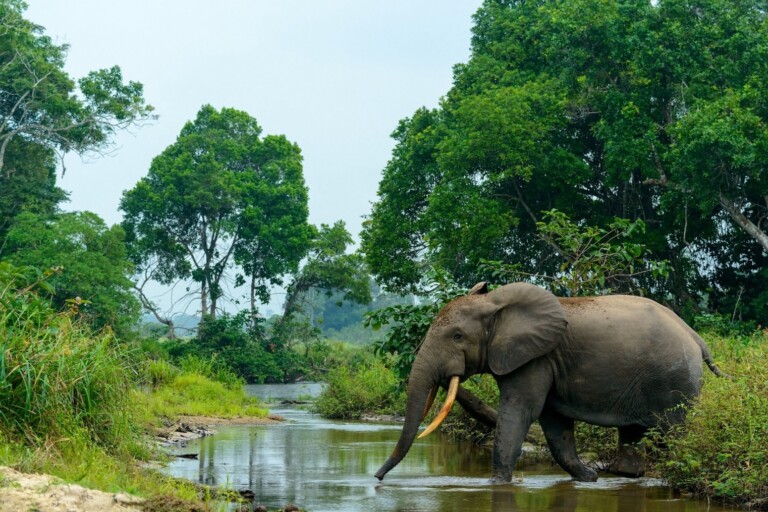
UK withdraws millions in funding from world’s second-largest rainforest in Congo
The post Interactive: Tracking negotiating texts at the COP17 biodiversity summit appeared first on Carbon Brief.
Interactive: Tracking negotiating texts at the COP17 biodiversity summit
A beacon of love
On an outer island of Fiji, two thousand nautical miles from Sydney, is a shining light of hope and resilience for our troubled world.
The island of Kioa is home to a Tuvaluan community who migrated from their atoll of Vaitupu in the late 1940s. It is a land of warm hearts, big smiles, and deep cultural roots; a place where the sound of a conch still summons the island together, where islanders paddle out to fish in carved outrigger canoes, and healthy happy children walk barefoot to school.
Here, culture is life. Kioans live sustainably through their traditional knowledge and practices. The island is alive with song, dance and the rhythms of a life tied to the tides, the winds, and the seasons.
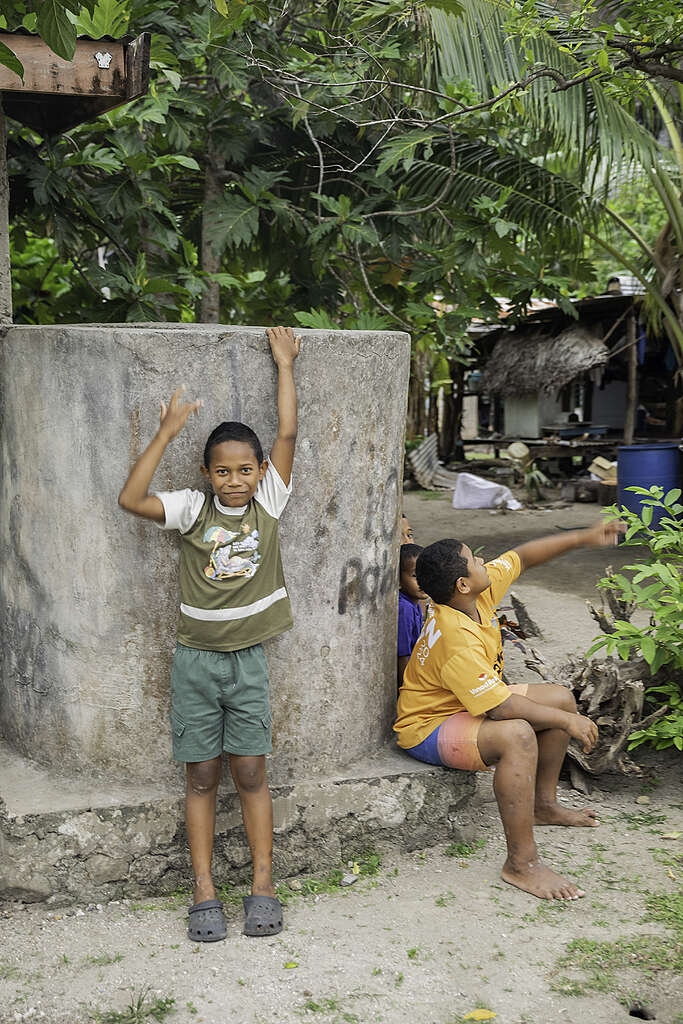
Facing the future
Greenpeace has been lucky to have a relationship with Kioa for a number of years now, and we are continually learning from this remarkable community.
Last week, as part of our Voyaging Oceania project, we returned to the island. Our purpose was twofold —- to carry messages from the island to leaders gathering in Nadi this week for the Pacific Pre-COP, and to support the Kioa community in their efforts to improve water security for the island.
Unlike Tuvalu itself, with its eight atolls, Kioa is a mountainous, forested and richly fertile island. It will remain habitable far into the future. Kioans did not initially migrate from Vaitupu due to climate change, but the move was prophetic. They now have a lifeboat.
However, even Kioa faces challenges on our rapidly warming planet, in particular when it comes to water. Climate change is shifting once reliable rainfall patterns. On top of this, the island is already feeling the effect of this year’s intensifying El Niño event, which for Fiji means reduced rainfall and prolonged dry spells.
Right now, fresh water has to be carefully rationed, and is only available for a few hours a day. During last week’s visit aboard our campaigning ship Oceania, Greenpeace was privileged to work with the Kioa community on a new solar-powered water distribution project for the island.
Designed and led by the island, the project involves using a solar pump to move water from a reliable source to a storage tank and then using gravity to distribute the water around the village.
It was a lesson in how local knowledge and ingenuity can be the backbone of today’s climate solutions. To build a dam around the source, the local community knew the exact spot where they could gather gravel at low tide to mix with the cement. They took only what was needed, knowing that all resources must be carefully conserved. Kioa has no roads and no machinery, and it was an all-of-island effort to carry the materials up to the project site, including many heavy bags of sand and rock.
Such projects truly bring to life the vision of a resilient, locally-led, fossil fuel free Pacific.