

Welcome to Carbon Brief’s DeBriefed.
An essential guide to the week’s key developments relating to climate change.
This week
US-China meet
ENERGY TALKS: Trump administration officials have raised the prospect of China buying more US oil in response to the disruption caused by the Iran war, following two days of talks between the leaders of the superpowers in Beijing, said Reuters. On Thursday, US treasury secretary Scott Bessent told CNBC the nations had discussed China “buying more US energy”, adding that production from Alaska would be a “natural” for China. The Hong Kong-based South China Morning Post reported that Trump and Xi also agreed that the strait of Hormuz must remain open to “support the free flow of energy”.
CLIMATE ‘COOPERATION’: Ahead of the talks, the Communist party-affiliated People’s Daily published an article saying that addressing climate change requires “coordinated efforts and cooperation” between China and the US. State-run newspaper China Daily said that US-China cooperation on energy security and climate governance is “essential” because the two countries have “considerable influence over international institutions”. However, an article in Legal Planet said that the Trump-Xi meeting had no climate agenda, adding that the two countries are now moving in “radically different directions”.
El Niño extremes
‘SUPERCHARGED’: From wildfires to heatwaves and flooding, scientists have warned that the El Niño weather pattern could “amplify climate extremes” in 2026, reported Climate Home News. There is an 82% chance of a “very strong” El Niño forming this year, according to the average of four weather forecasters cited by the Times. The Independent added that the phenomenon could be “supercharged” by another weather pattern – a positive Indian Ocean Dipole – raising the risks of fire, drought risks and other extreme weather events.
WORLD ON FIRE: Global fire outbreaks hit a “record high” in Africa, Asia and elsewhere this year, reported Reuters, with conditions expected to worsen to the “highest in recent history” if a strong El Niño “kicks in”. More than 150m hectares of land were damaged by fires from January to April – 20% more than the previous record – according to data compiled by the World Weather Attribution (WWA) research group cited by the newswire.
Around the world
- ETHIOPIA EVS: Electric vehicles now account for 8% of Ethiopia’s car fleet as “soaring prices and fuel shortages compel” African countries to switch to “cleaner and cheaper transport”, according to the Associated Press.
- UK AID CUT: The UK has halved its most recent contribution to the UN’s Green Climate Fund (GCF) as part of a government “shift from development aid to military spending”, according to Climate Home News. The UK is no longer the top donor to the GCF following the move, said Carbon Brief.
- TORT RETORT: Reuters reported that the New Zealand government plans to amend a key climate law, to prevent courts from holding private companies liable for climate harms. This would apply to “both current and future proceedings”, the newswire said, including a current case against six major emitters.
- RENEWABLE SECURITY: Military alliance NATO is “openly backing renewables and other non-fossil fuel sources of energy as key to the alliance’s security” despite US scepticism, reported Politico. The outlet covered a NATO-backed study that highlighted how imported fuels have been used as a “bargaining chip” in conflicts.
- NO INDIAN ‘LOCKDOWN’: India’s oil-and-gas minister “dismissed concerns of any imminent lockdown-like restrictions” after prime minister Narendra Modi “urged citizens” to adopt fuel-saving measures amid a global energy crisis, reported the Economic Times.
One billion barrels
The volume of oil the world has lost over the past two months since Iran began its blockade of the strait of Hormuz following attacks by the US and Israel, according to Saudi Aramco CEO Amin Nasser, quoted in Reuters.
Latest climate research
- Antarctic sea ice levels have plummeted to “record-low anomalies” since 2015, with researchers calling it “one of the largest present-day climatic shifts in the Earth system” | Science Advances
- Rainfall reductions in the southern Amazon will occur at progressively lower levels of deforestation as the planet warms, indicating that “climate change amplifies the sensitivity of rainfall to forest loss” | Global Ecology and Biogeography
- Economic inequality adds more than 100,000 deaths to the total toll from heat and cold in Europe | Nature Health
(For more, see Carbon Brief’s in-depth daily summaries of the top climate news stories on Monday, Tuesday, Wednesday, Thursday and Friday.)
Captured
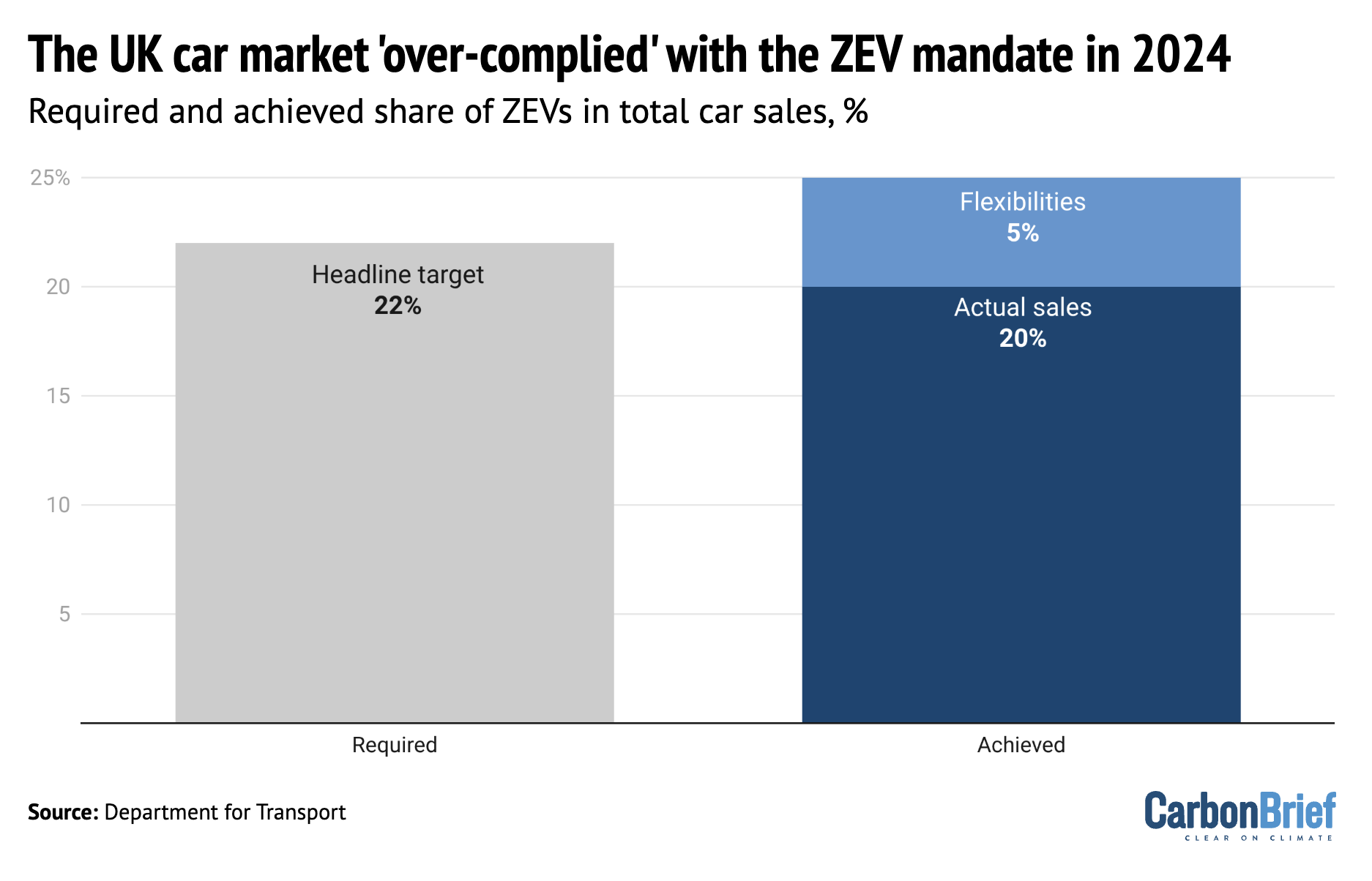
Contrary to claims by the UK car industry that demand is not high enough to meet the UK government’s sales targets for “zero emissions vehicles” (ZEVs), a new Carbon Brief factcheck found it has actually “overcomplied” with its mandate. The chart above shows the required (left) and achieved (right) share of ZEVs in total UK car sales in 2024, the latest figures available. “Flexibilities” (in light blue) include the sale of lower-emission petrol cars.
Spotlight
Chennai’s gig workers race against the heat
This week, Carbon Brief visits one of India’s first air-conditioned lounges designed to help gig workers deal with extreme heat.
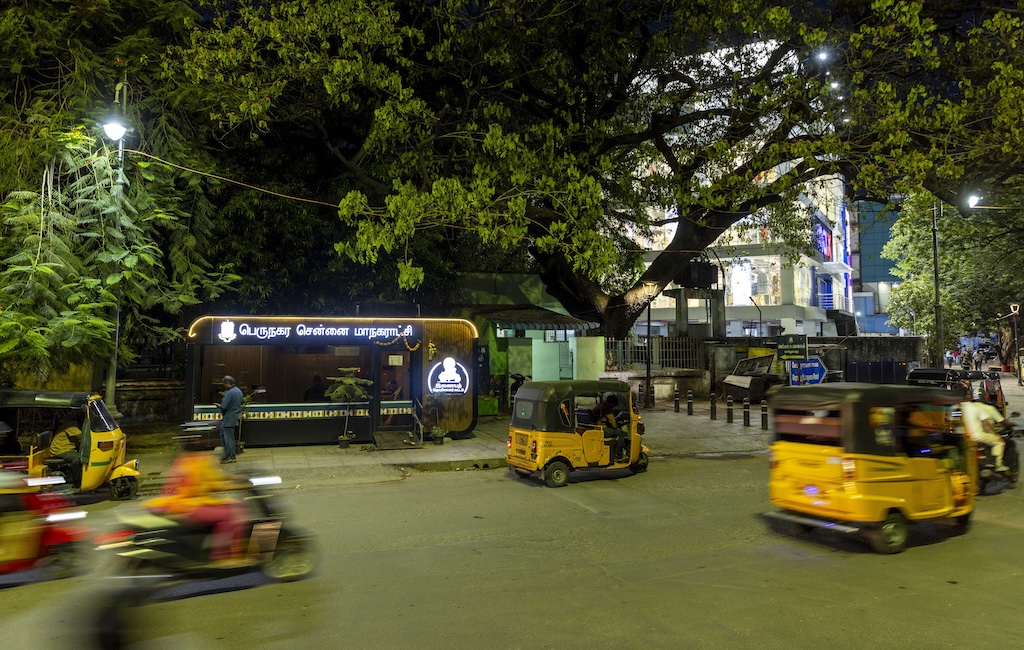
On a single day in late April, 20 of the world’s hottest cities were all in India.
Chennai was not on the list this time, but is no stranger to high temperatures. In the south-eastern coastal capital of Tamil Nadu, extreme humidity and heat are inescapable facts of life.
“The heat is by no means manageable, but we have no choice but to deal with it,” said Mohammed S, a 29-year-old grocery platform delivery worker, speaking to Carbon Brief.
Last year, Chennai became India’s first ever city to roll out air-conditioned lounges for millions of gig workers, like Mohammed, navigating India’s increasingly hotter cities.
Lounge access
In the dense shopping district of T Nagar – recognised as an “urban heat island” – studded with silk sari and jewellery shops, an unassuming oblong container-like structure stands out.
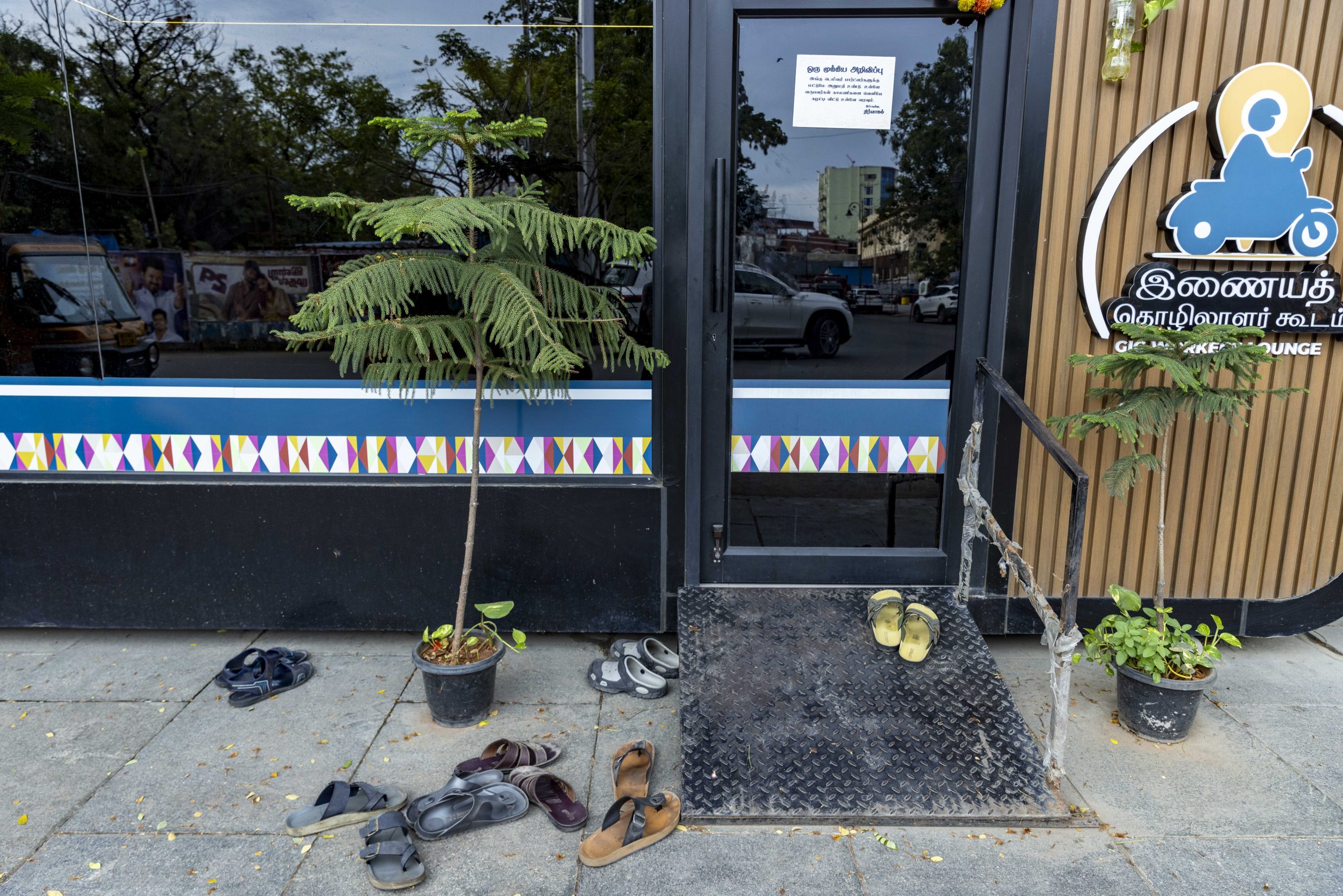
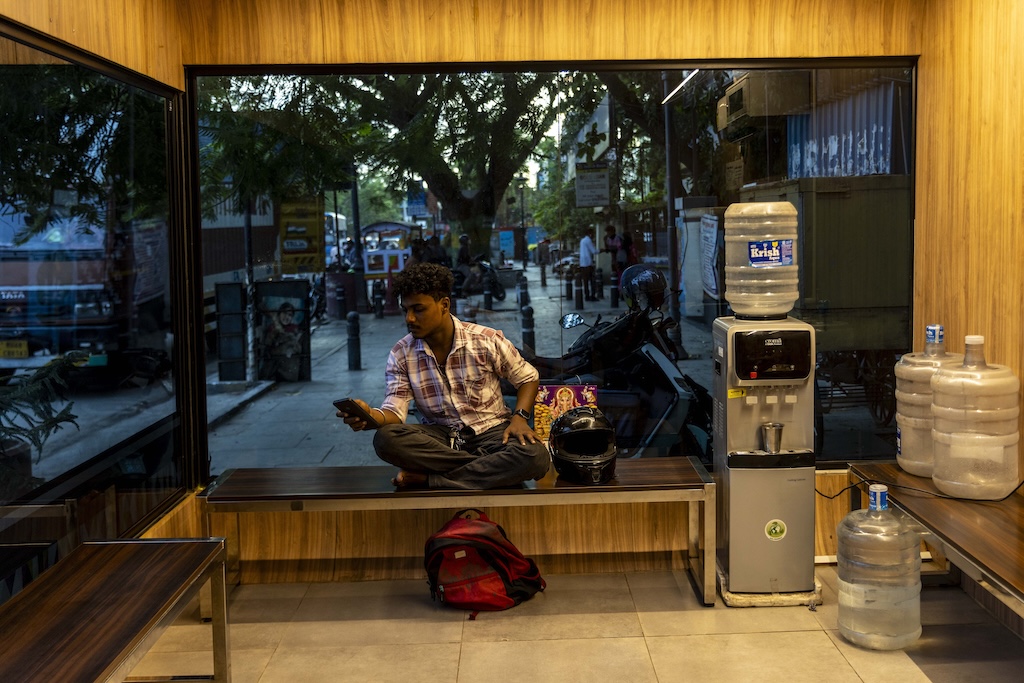
Through the building’s tinted windows, workers wearing synthetic jerseys emblazoned with food delivery app logos are stretched out on wooden benches meant to seat 25 people.
The lounge has charging points for phones, a water cooler and a unisex toilet. It might not seem like much, but workers tell Carbon Brief that it has made a “huge difference” to their lives – even on a day when the air conditioner stopped working.
“Before this, life was very difficult,” said Mohammed. He continued:
“We would park our [electric] bikes and try to find a tree to sleep under, stop for tea and tea shop owners would tell us we couldn’t sit there for more than 10 minutes, try to rest in a building’s stairwell and be chased away, then try to find shade under a flyover. Now we can sit in the AC and avoid the worst of the heat.”
Dinesh, 27, said his day starts at dawn before the sun is up, picking up packages from companies in north Chennai – another critical heat hotspot.
For the next seven hours, there is no “off point” or breaks for Dinesh as apps rush deliveries.
Some of Chennai’s gig workers told Carbon Brief they try to avoid the worst of afternoon temperatures from noon to 3pm, but for many – especially migrant workers – sitting back in the lounge is not a choice they can afford. One of them explained:
“If you don’t have cash to cover your bills or have to send money back home, you head out into the heat for a 12-hour shift and hope for the best.”
Feeling ‘gear’
In Chennai, heat might be normalised, but it has its own vocabulary. Speaking to Carbon Brief, the city’s gig workers, auto rickshaw drivers and fish sellers used an all-encompassing term – “gear” – to describe their symptoms, including dizziness, exhaustion and nausea.
Last summer, researchers offered Delhi’s gig workers a Rs 200 (roughly £2) cash transfer on the first day of a heatwave, to provide them with a means to achieve “real-time” adaptation to heat risk. Workers who received a cash transfer reported fewer heat-related symptoms, according to the study.
Asked if they would accept similar incentives to stay home on 40C days, workers in the T Nagar lounge expressed disbelief. Dinesh – who also trains technicians on how to repair air conditioners to support his income – told Carbon Brief:
“They [the apps] offer us incentives to go out in the heat when there are fewer riders.”
Barring a few, none of the dozens of outdoor workers Carbon Brief spoke to had an air conditioner at home or in their hostels, making the lounge the only place they could cool down.
Watch, read, listen
THE BIG ‘LOSER’: Writing in Foreign Affairs, Princeton University’s Prof Benjamin Bardlow argued that Beijing “may emerge from the war in Iran as its winner – and Washington its ultimate loser”.
CARBON ‘KINGPIN’: A new podcast by Drilled followed Bruce Rastetter – a corn ethanol “kingpin-turned-carbon entrepreneur” from Iowa – now promoting biofuels and carbon-capture projects in Brazil.
OPEC ‘DRAMA KINGS’: An episode of the Polycrisis podcast, titled “Gulf drama kings”, dug into the UAE’s announcement that it was quitting oil producers’ cartel OPEC, asking whether this reflected “doom” for the group, geopolitical tensions, or “different beliefs” about the future of oil.
Coming up
- 17 May: Cape Verde election
- 17-22 May: 13th session of the World Urban Forum, Baku, Azerbaijan
- 20-21 May:Copenhagen climate ministerial
Pick of the jobs
- Greenpeace, communications and engagement co-head (climate) | Salary: £63,756-£67,644. Location: London
- Global Witness, deputy director of campaigns (one-year contract) | Salary: £75,886. Location: London
- Karolinska Institute, research assistant in climate attribution and health | Salary: Unknown. Location: Stockholm, Sweden
- Greenpeace South Asia, climate researcher | Salary: Unknown. Location: Colombo, Sri Lanka
DeBriefed is edited by Daisy Dunne. Please send any tips or feedback to debriefed@carbonbrief.org.
This is an online version of Carbon Brief’s weekly DeBriefed email newsletter. Subscribe for free here.


The post DeBriefed 15 April 2026: Trump-Xi talk energy | ‘Supercharged’ El Niño | India’s first ‘heat lounges’ appeared first on Carbon Brief.

Saturday, 17 October 2026
7.18 AM AWST
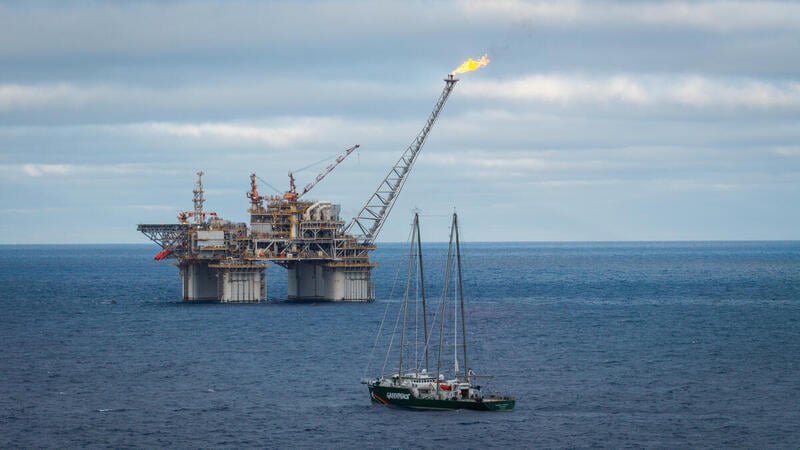
Hi folks! We’re joining you live from the Rainbow Warrior where we will be providing you with updates as our four activists continue scaling and occupying Woodside’s gas platform. The activists are peacefully protesting against Woodside’s latest gas expansion plans, the Browse project, which would see up to 57 toxic wells drilled at Scott Reef.
“Right now our activists are scaling Woodside’s massive Floating Production Unit. They are scaling the South-East pillar and the underside of the Helideck. They’ll be setting up camp soon and have plenty of provisions with them – so stick around!”
5:45 AM AWST
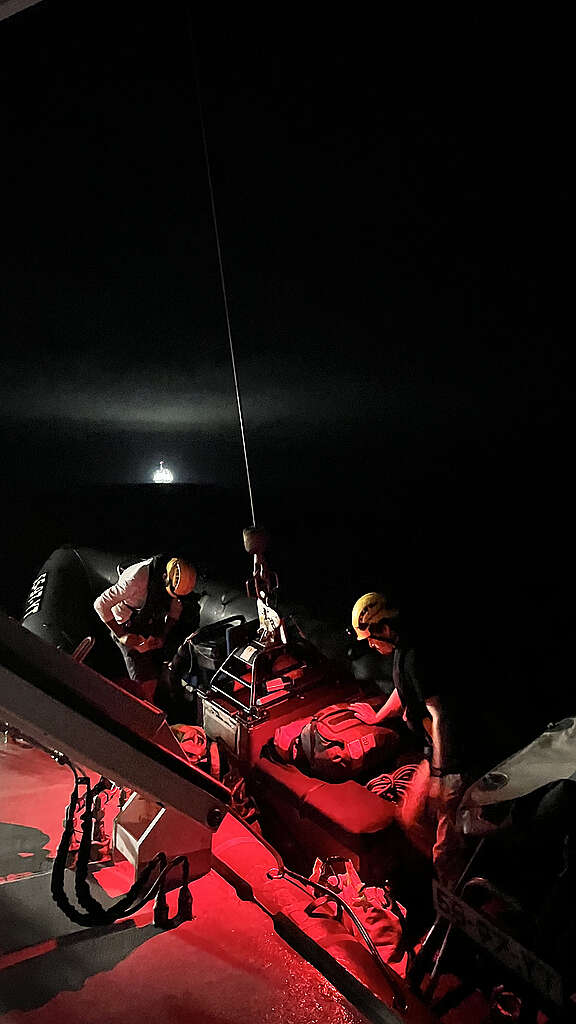
Our RHIBS are in the water! We’ve deployed our four activists and our ship crew on our small fast boats, headed to the gas platform. We’re carrying crew and equipment, plenty of food, all of our safety climbing gear, some big banners, cameras and a whole lot of heart… someone even has something to read after they get settled in.
5:26 AM AWST
Before sunrise activists prepared to launch RHIBS from the Rainbow Warrior.
Looking for a front seat view?
You can follow along with the Live Rainbow Warrior bow cam here!
Looking for more?
Follow us on Instagram for a peek behind the scenes and hear from our Rainbow Warrior crew.
Live blog: Greenpeace activists occupy Woodside gas project to save Scott Reef
Climate Change
Greenpeace activists climb and occupy Woodside’s Scarborough gas project calling on the Australian government to “Stop Woodside’s Dirty Gas” and “Save Scott Reef”
PERTH, Saturday 17 October 2026 — Four Greenpeace Australia Pacific activists are scaling and occupying a Floating Production Unit at Woodside’s Scarborough gas project off the coast of Western Australia, displaying banners reading: “Stop Woodside’s Dirty Gas. Save Scott Reef.”
- Photos and video available here and here. More will be uploaded throughout the day.
- Content and live updates will be uploaded to a live blog and to Instagram
Early this morning at 05:45 AWST, Greenpeace Australia Pacific activists launched from the Rainbow Warrior, Greenpeace’s flagship vessel, scaling and attaching themselves to a Floating Production Unit (FPU), a key piece of gas processing infrastructure at the Scarborough gas field over 200km off the coast of Exmouth.
Woodside has since confirmed it has initiated a temporary shut down of the FPU.
Greenpeace Australia Pacific is occupying the gas platform in peaceful protest of Woodside’s plans to drill for oil and gas at Scott Reef as part of its Browse proposal.
David Ritter, CEO at Greenpeace Australia Pacific, said: “Greenpeace Australia Pacific is taking action today to expose the unacceptable risk to Scott Reef posed by Woodside’s plans.
“Australians love our oceans. Woodside’s reckless Browse gas proposal would turn the magnificent Scott Reef into an industrial gas zone. Woodside wants to drill up to 57 toxic wells around Scott Reef, Australia’s largest oceanic reef, home to nesting green sea turtles, and endangered species like pygmy blue whales and the dusky sea snake; it is a place like nowhere else on Earth.
“Woodside has an alarming track record of oil spills, incidents and environmental neglect, and can’t be trusted with our oceans. From whaling in Albany in the seventies, to Woodside’s threat to Scott Reef today, there’s more than fifty years of history, of Greenpeace taking action off WA’s coasts to protect our oceans.
“There’s no future in new gas projects. Our future is in secure homegrown renewable energy, green industry and exports, where communities and places like Scott Reef are protected — there’s no future in dirty gas shipped offshore.
“The prospect of drilling for oil or gas on the Great Barrier Reef would be considered absolute madness today, but that is exactly the decision before the government: save Scott Reef or risk its destruction at the hands of a gas corporation.”
From aboard the Floating Production Unit, Dr Chris Holden, Greenpeace Australia Pacific activist said: “As a doctor, when I see new fossil fuel projects like Woodside’s Browse project being put forward, I can’t help but think about the impact this is going to have on the health of our communities and planet, and feel a sense of duty to act.
“Not only will this project do irrevocable harm to nature at Scott Reef, it will have a terrible impact on our climate, putting all of our lives at risk.
“On the Rainbow Warrior I’m carrying a copy of the 2025 Lancet countdown report, which warns that health impacts of climate change are worsening, with millions dying needlessly each year due to fossil fuel dependence, growing emissions, and failure to adequately adapt.
“With warnings like this from the leading global health professionals, our government simply can’t allow fossil fuel projects like Woodside’s Browse project to go ahead. It is their duty to do what is in the best interest of our communities.”
Almost half a million people have signed a petition calling on the government to Save Scott Reef and Woodside’s Browse gas project.
-ENDS-
Notes:
- Dial-in, SimSat and Zoom interviews with Geoff Bice, WA Campaign Lead at Greenpeace Australia Pacific, currently aboard the Rainbow Warrior, can be organised separately
Media contact:
Greenpeace Australia Pacific media team on +61 406 231 892 or +61 407 581 404
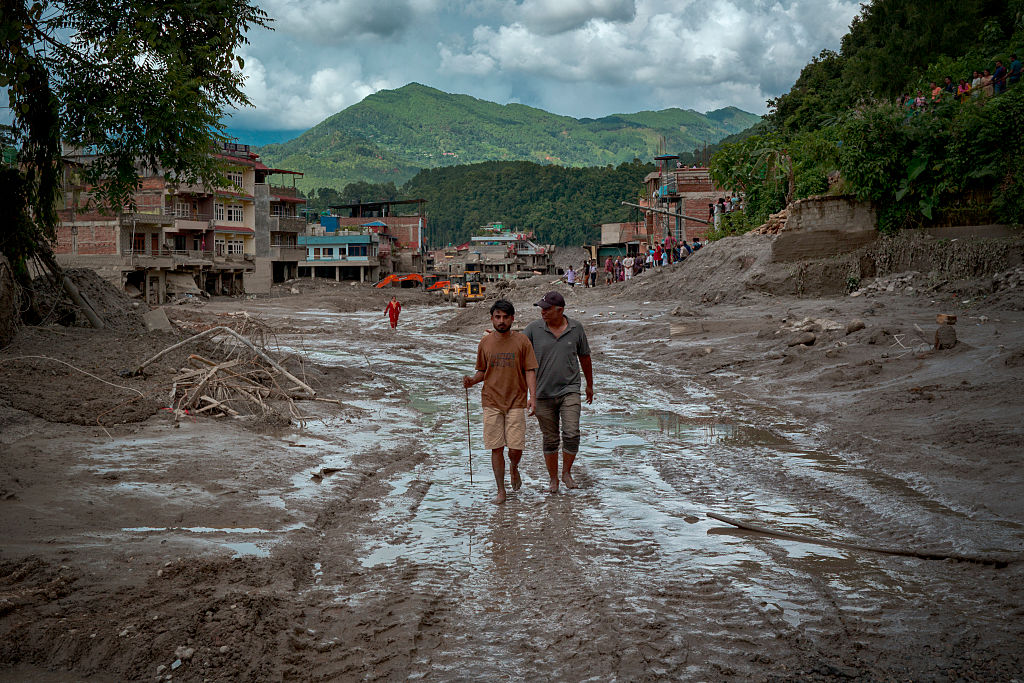
The board of the Fund for Responding to Loss and Damage (FRLD) will decide on Thursday on whether to “provisionally set aside” $20 million for Nepal to deal with some of the effects of the climate-driven flood it suffered in August.
The motion, seen by Climate Home News, has been drafted by a group of board members from both developed and developing countries and so is likely to pass easily at the fund’s first-ever extraordinary board meeting on October 22.
It invites the government of Nepal to submit a proposal for how to use the money, with the board then deciding at one of its regular board meetings whether to approve the proposal or not.
While Nepali officials have described $20 million as merely “symbolic” in the face of the $4.8 billion estimated costs of recovery and reconstruction, it would be the first time the new FRLD – agreed in 2022 months after devastating floods in Pakistan – has set aside money for a specific disaster.
Until now the fund has only taken requests through a single call for proposals, launched at COP30 in Belém last November, that gave countries six months to submit requests.
Most of the 180 projects the FRLD is currently considering are designed to help countries avoid damage from future climate disasters, for example by strengthening responses to floods in Bangladesh and Lagos.
The draft decision says Nepal’s proposal will serve as a pilot for how funding requests can be submitted outside of the fund’s current timetable. That could let governments seek funds quickly after a climate disaster strikes, rather than waiting for the next call.
This arrangement would set the fund apart from other United Nations funds designed for climate adaptation or cutting emissions like the Green Climate Fund.
Climate campaigners from Fill the Fund said the draft decision is “a real step forward” as it is “the first time this Fund has moved to respond to a specific disaster”.
Too little, too late
The FRLD was agreed by governments at COP27, set up and operationalised at COP28 in 2023 but has yet to award any money. The 180 funding requests it is currently considering would cost around $2.8 billion, but it only has $350 million to allocate.
The United Nations Secretary-General António Guterres has described the amount of money available in the fund as “ridiculously small” and Fill the Fund said $20 million “is a meaningful signal but it is a drop against an ocean of need”.