

We handpick and explain the most important stories at the intersection of climate, land, food and nature over the past fortnight.
This is an online version of Carbon Brief’s fortnightly Cropped email newsletter. Subscribe for free here. This is the last edition of Cropped for 2025. The newsletter will return on 14 January 2026.
Key developments
UN talks face headwinds
GLOBAL OUTLOOK: A major new report calling for joint action on climate change and biodiversity was published this month at the UN Environment Assembly talks in Nairobi, Kenya, the Associated Press reported. The newswire said that more than 300 scientists from 83 countries contributed to the latest UN Environment Programme (UNEP) global environment outlook report.
‘SHARP DIVISIONS’: However, for the first time ever, countries failed to agree on a “summary for policymakers” to be published alongside the outlook, according to Agence France-Presse. It said that “sharp divisions” prevented countries reaching consensus on the high-level political summary, with “major oil producers Saudi Arabia and the US oppos[ing] references to phasing out fossil fuels”. The newswire added that UNEP chief Inger Andersen called the lack of a summary “regrettable”, but said the “integrity of the report” remained.
NEW AGREEMENTS: Separate to the report, negotiators in Nairobi were also tasked with agreeing on 15 resolutions and two decisions on a wide range of environmental topics, from plastics to the impact of artificial intelligence, forcing them to “work throughout the day and into the night” towards the end of the summit, according to the Earth Negotiations Bulletin (ENB). In the end, countries adopted 11 resolutions, including on protecting coral reefs from climate change, the global management of wildfires and the preservation of glaciers, a second ENB report said.
TURKISH INFLUENCE: Climate Home News reported that Turkey, the country co-hosting the COP31 climate summit next year alongside Australia, “sought to weaken language on climate change in several draft resolutions” being discussed at the talks. The publication said that the nation, often working alongside Saudi Arabia, “pushed to dilute wording on the climate crisis, the science of melting glaciers and the role of young and Indigenous people”. A separate Climate Home News story said that countries agreed to a first-of-its-kind resolution on addressing the environmental effects of AI, but failed to include a reference to examining its “life cycle” impacts.
‘Deadly’ Asia floods
‘NOT NORMAL’: Climate change made the rainfall behind the “deadly” floods and landslides in parts of south Asia earlier this month more likely to occur and more intense, a World Weather Attribution study covered by the Hindustan Times found. Deforestation and rapid urbanisation also contributed to the extreme flooding that killed more than 1,600 people in several countries, including Sri Lanka, Malaysia and Thailand, the newspaper said. The Guardian noted that while monsoon rains often bring flooding, scientists said this level of intensity was “not normal”.
FOREST LOSS: Mongabay looked at how deforestation contributed to the “catastrophic” impacts from Cyclone Senyar, which caused floods and landslides in Sumatra, Indonesia. The outlet said that “decades of deforestation, mining, plantations and peat drainage left watersheds unable to absorb intense rainfall”. Indonesian environmental group WALHI told the Associated Press that deforestation “stripped away natural defences that once absorbed rainfall and stabilised soil”. Gus Irawan Pasaribu, a local government leader in Tapanuli, told Reuters: “If our forests were well-preserved…it would not have been this terrible.”
NATURE IMPACTS: A separate Mongabay article reported on the “extensive” damage caused by Cyclone Ditwah to Sri Lanka’s “biodiversity-rich” central highlands earlier this month. The outlet said that initial assessments have shown disastrous impacts of flooding and landslides in places such as the Knuckles mountain range, a “Unesco-listed biodiversity hotspot”. Meanwhile, the floods that hit Indonesia were an “extinction-level disturbance” for the Tapanuli orangutan – the world’s rarest great ape, scientists told the Guardian.
Spotlight
Building a bird sanctuary at a London reservoir
In this Spotlight, Carbon Brief visits a radical conservation project aiming to reverse a decline in water birds at a Victorian reservoir in north London.
“I’d recommend bringing wellies! It’s very muddy.”
Those were the instructions of Ben MacMillan, an ecologist at the Canal & River Trust, a charity responsible for looking after the UK’s waterways, including canals, reservoirs and towpaths.
On a damp and grey Tuesday morning, he guided Carbon Brief round the back of a playing fields car park in Hendon, north London, past a metal fence reading “no entry” and across ground covered by several inches of mud to the unlikely site of a radical new conservation effort.
The site is at a degraded wetlands on the northern edge of the Welsh Harp reservoir, a large human-made lake capable of holding 400 Olympic-sized swimming pools of water, first established by the Victorians in the 1830s.
In the 1950s, the reservoir was declared one of the UK’s “sites of special scientific interest”, due to its ability to host an unusually large number of species, including breeding waterbirds, such as silvery-grey common terns and elegant great-crested grebes.
Despite the designation, little was done to protect the site from various threats, including the spread of invasive species, increasing urbanisation and pollution from major roads. The reservoir is bordered on one side by the M1, the main motorway from London to northern England, and by the North Circular, part of central London’s busy ring-road, on another.
In the 1980s, a conservation project led by ecologist Leo Batten transformed the site to create new refuges for breeding birds.
However, for the past 40 years, the reservoir has fallen into “mismanagement”, according to MacMillan – with devastating consequences for its wildlife.
In 2022, just two tern chicks were successfully fledged at the reservoir, compared to 44 in 2000, MacMillan said. Great-crested grebe nests have also dropped from 55 in 1987 to 27 in 2022.
Redesigning the landscape
The dramatic decline has spurred the start of a new £400m restoration project, called “wings on water”, which began in October 2025 and will continue for the next three years.
Headed by MacMillan, the project is making radical changes to the landscape of the site in order to create new habitats and breeding spots for its water birds.
MacMillan has contracted the services of restoration specialists Ebsford Environmental, who have used diggers to create a network of channels across the site.
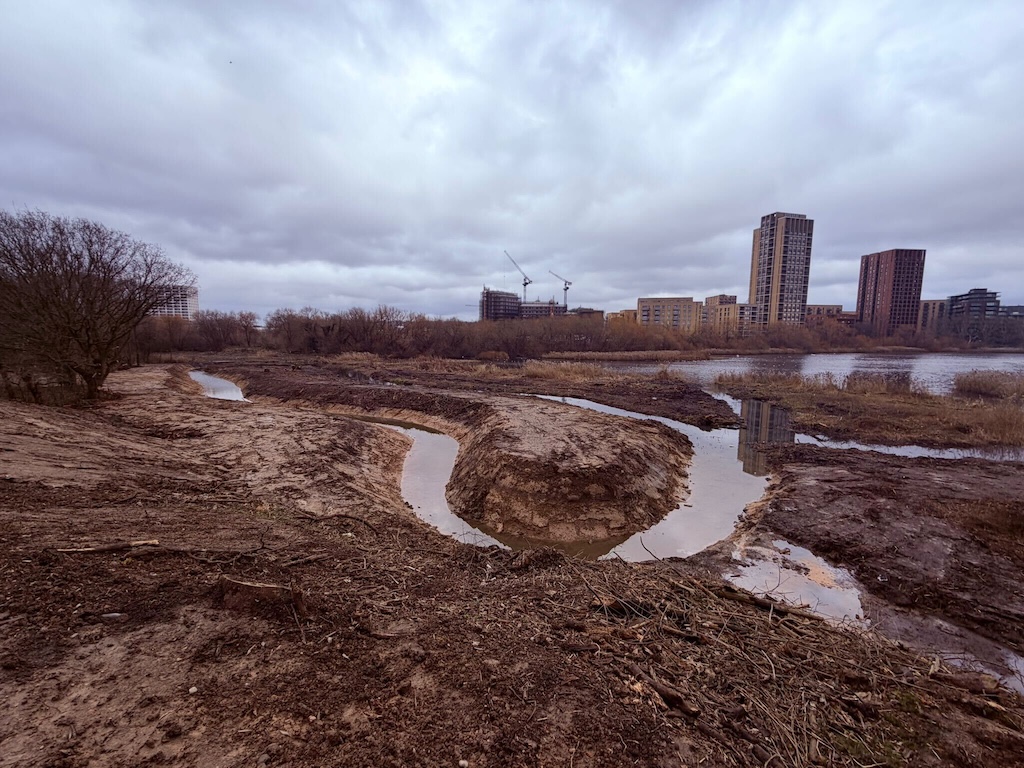
These channels have uncovered a series of islands that can offer birds a safe place to breed, away from predators such as urban foxes and mink, MacMillan said.
As well as dredging the landscape, MacMillan also plans to introduce new micro-ecosystems, such as wildflower meadows, that will eventually form a “patchwork” capable of supporting a wide range of species.
“It’s all about creating a diversity of habitat,” he said. “It might take five or 10 years to develop, but eventually we’ll end up with an amazing complex mosaic of habitats.”
While MacMillan is “very happy” with the progress being made, the project has some issues to contend with.
One of the recently dug channels is contaminated by toxic silt, poisoned by the runoff of petrol from the nearby major roads. If the petrol seeps out of the silt, it could coat the feathers of birds, negatively affecting their health, MacMillan said.
Ninja turtle legacy
The site is also home to a number of invasive species, each with their own impacts.
One animal causing a particular nuisance are red-eared terrapins, a type of omnivorous shelled reptile, similar in appearance to a turtle, that are native to the US.
“They link back to the 1990s Teenage Mutant Ninja Turtle craze,” MacMillan explained. “People bought loads of them. Then they thought: ‘Oh, these are getting a bit big now’ – and decided to release them in their local park.”
Terrapins have a life span of around 40 years, meaning many released on a whim 30 years ago have now established themselves in waterway habitats across the UK.
While terrapins feed on plants, they have also been seen taking chicks and eggs from nesting birds, MacMillan said:
“In an ideal world, we would move them on. But in practice, it’s very difficult to actually catch them.”
As well as restoring the site for the good of birds, the project also aims to improve access to nature for the local community.
The team plans to install a new boardwalk and viewing platform for the public, which they aim to open next year.
“It should provide a really nice space for people to take a walk in a green space, while being able to spot some breeding birds, in a very urbanised area,” MacMillan said.
News and views
NATURE CASH: The ‘Cali Fund’ – which could generate billions of dollars each year for conservation – recently received its first donation of just $1,000, Carbon Brief reported. On 19 November, nine months after the fund launched, UK start-up TierraViva AI put forward the contribution. The company’s chief executive told Carbon Brief that this was an “ice-breaker” aimed to encourage others to pay in. One expert described the contribution as a good “first step”, but said it is now “time for larger actors to step forward”. Large companies in sectors such as pharmaceutical, cosmetic, biotechnology, agribusiness and technology could contribute to the fund.
FARMING LOSSES: UK crop farmers lost more than £800m in 2025 due to poor harvests and “record heat and drought”, the Guardian reported, based on analysis from the Energy and Climate Intelligence Unit (ECIU). Farmers recorded one of the worst harvests on record this year, with production of wheat, oats, spring and winter barley and oilseed rape dropping 20% below the 10-year average. Three of the five worst harvests have occurred since 2020, the newspaper added, quoting the ECIU’s Tom Lancaster: “The evidence suggests that climate impacts are what’s actually driving issues of profitability.” Meanwhile, BBC News reported that the UK government “roll[ed] back” certain nature protection requirements for housing developers in England.
CLIMATE FINANCE: Biodiversity, conservation and anti-desertification programmes in Africa have struggled to fill a “funding vacuum” since the US froze its development aid earlier this year, according to Mongabay. Experts and observers told the outlet they are “increasingly concerned” about the funding gap that “neither Europe nor billionaire philanthropists seem ready to fill”. Amhed Moustapha Mfokeu, a Cameroonian expert in climate finance, told Mongabay that the closure of the US Agency for International Development (USAID) “created a significant gap in funding for climate-related projects”.
SAVING SOILS: Around 70% of countries do not prioritise soil restoration in their national climate plans, a new report covered by EFEVerde found. The report, from the International Union for the Conservation of Nature’s world commission on environmental law and other groups, said that healthier soils can absorb more carbon and help to limit global warming, the outlet noted. Praveena Sridhar from the Save Soil movement wrote in Earth.org that the recent COP30 climate talks in Brazil “regarded [soils] as a sub-component of the agricultural machine, instead of the foundation to agriculture and many other components of terrestrial life”.
TRADE DEAL: The European parliament voted in favour of including measures to “protect European farmers” in a potential trade deal with South American countries, Bloomberg reported. The outlet said the EU is “rushing” this week to finalise the Mercosur deal, which has been negotiated over the past 25 years and aims to boost trade between the EU and Argentina, Brazil, Uruguay and Paraguay. Reuters reported that France and Italy want to delay the vote, with France trying to “form a blocking minority” against the agreement.
XMAS CHEER: Christmas tree farmers in Canada are adapting to climate change impacts such as warmer weather, CBC News reported. Michael Cormack, who owns a tree farm near Toronto, told the outlet: “This year in July, we were averaging over 29C. So we had trees from two to three years ago that just died…Four years ago, we had a tornado here that wiped out a bunch of our stuff.” The outlet also addressed the age-old question of whether a real or artificial christmas tree is more “eco-friendly”, with one tree researcher saying that a real tree bought from a “local farmer” tends to be a lower-emission choice, or re-using an artificial tree for a long time.
Watch, read, listen
KOLAHOI GLACIER: A retreating glacier in Kashmir is “transforming landscapes and communities”, the Guardian said.
FISHY: DeSmog investigated accusations that the world’s largest salmon producer has wielded a “charm offensive” in the Scottish Highlands to distract from its “noisy” and “polluting” fish farms.
LIVING UNDER THREAT: The Associated Press reported on the “steep risks” environmental activists face in Colombia – the “deadliest country in the world” for environmental defenders.
BAMBOO BARRIER: Rivercane – a species of bamboo – could help protect the southern US from future floods, Grist reported.
New science
- Hard coral cover in Caribbean reefs has reduced by almost half since 1980 | Global Coral Reef Monitoring Network and International Coral Reef Initiative
- Three decades of Amazon forest data shows “higher tree mortality during intense droughts” | Nature
- Vertebrate species could face unsuitable conditions across 10-52% of their range by 2100 due to climate and land-use changes | Global Change Biology
In the diary
- 15-19 December: 70th meeting of the Global Environment Facility council | Virtual
Cropped is researched and written by Dr Giuliana Viglione, Aruna Chandrasekhar, Daisy Dunne, Orla Dwyer and Yanine Quiroz. Ayesha Tandon also contributed to this issue. Please send tips and feedback to cropped@carbonbrief.org
The post Cropped 17 December 2025: ‘Deadly’ Asia floods; Boosting London’s water birds; UN headwinds appeared first on Carbon Brief.
Cropped 17 December 2025: ‘Deadly’ Asia floods; Boosting London’s water birds; UN headwinds

Next week, diplomats from around the world will descend on Yerevan, Armenia, to negotiate a series of decisions under the UN Convention on Biological Diversity (CBD).
Between 19 and 30 October, 196 parties will gather to hammer out the precise wording of the dozens of legal texts that make up the decisions under the Conference of the Parties (COP) to the CBD.
This year’s summit is particularly significant, as it marks the halfway point between the agreement of the Kunming-Montreal Global Biodiversity Framework and the deadline for achieving its targets.
The CBD has found that countries are currently not on track to meet 22 out of the framework’s 23 targets.
During the fortnight, delegates will also be negotiating decisions relating to the two supplemental protocols to the CBD: the Cartagena Protocol, which covers biosafety; and the Nagoya Protocol, which covers access and benefit-sharing for the use of genetic resources.
(The Cartagena and Nagoya Protocols, which are each governed by a “meeting of the parties”, or “MOP”, have fewer parties than the CBD as a whole, with 173 and 141, respectively.)
Carbon Brief is tracking the progress of countries towards consensus on dozens of negotiating texts using the interactive table below.
The tracker includes texts from the COP, as well as the MOPs for the Cartagena and Nagoya protocols. It also includes draft decisions from the most recent subsidiary body meetings, as these form the starting point for the negotiations in Yerevan.
The CBD has three subsidiary bodies: the subsidiary body on scientific, technical and technological advice (SBSTTA), the subsidiary body on implementation (SBI) and the subsidiary body on article 8(j) and other provisions (SB8J).
SB8J focuses on issues related to the Indigenous peoples and local communities. It was established at COP16 in Cali, Colombia, in 2024.
The first two columns of the interactive tracker list the topic of each agenda item and the relevant body, with subsequent columns including dates, page counts and links to the original documents.
The table is searchable and can be sorted using the arrows in the header.
Areas of disagreement in UN draft texts are denoted by square brackets. Counting the brackets in a particular iteration of a text therefore gives a sense of how far parties are from reaching consensus.
The bracket column is colour-coded, with dark green indicating a low number of brackets and red indicating a high number of brackets remaining.
Texts can also present parties with choices using “options” or alternatives (“alt”), which are counted together in the sixth column of the table.
The key discussions in Yerevan will centre around two agenda items in particular. The first is the global review, which will assess progress towards the GBF and make recommendations for accelerating action.
The second is finance, which can be separated into two parts: resource mobilisation and the financial mechanism. On resource mobilisation, biodiverse global south countries are likely to push for an increased amount of international finance for conservation.
Disagreement over the creation of the financial mechanism led to the suspension of COP16 in Cali in October 2024, as parties failed to find agreement on the mobilisation of finance before the end of the summit.
Global south countries want the establishment of a separate financial mechanism under the control of the CBD; global north countries largely prefer to maintain the existing mechanism, which sits under the Global Environment Facility.
At the resumed session of COP16 in Rome in early 2025, countries agreed on a roadmap that would lead to the establishment of a permanent mechanism.
related
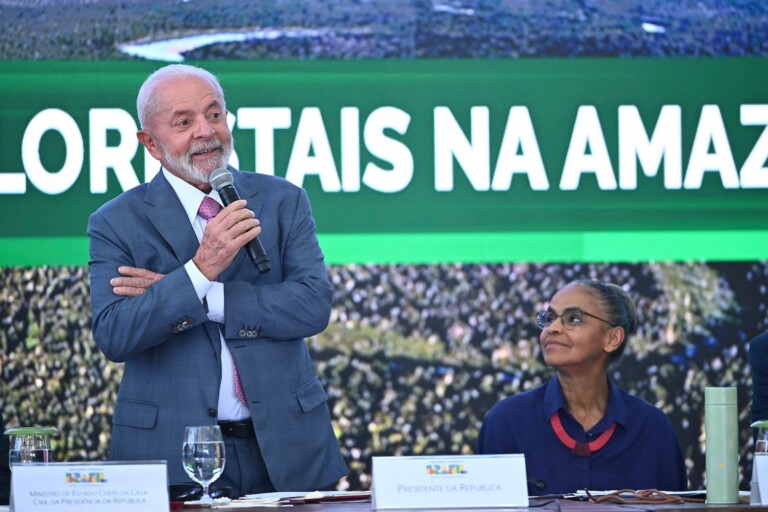
Analysis: Lula presidency saved at least 20,000km2 of Brazilian Amazon since 2022
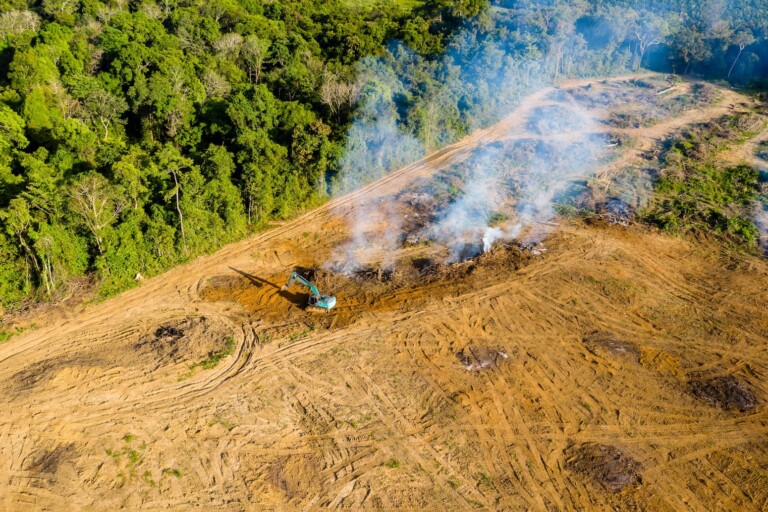
Why land-use emissions have fallen by a third this century – in six charts
Analysis: 84% of nations miss deadline to identify ‘nature-harming’ subsidies by 2025
UK withdraws millions in funding from world’s second-largest rainforest in Congo
The post Interactive: Tracking negotiating texts at the COP17 biodiversity summit appeared first on Carbon Brief.
Interactive: Tracking negotiating texts at the COP17 biodiversity summit
A beacon of love
On an outer island of Fiji, two thousand nautical miles from Sydney, is a shining light of hope and resilience for our troubled world.
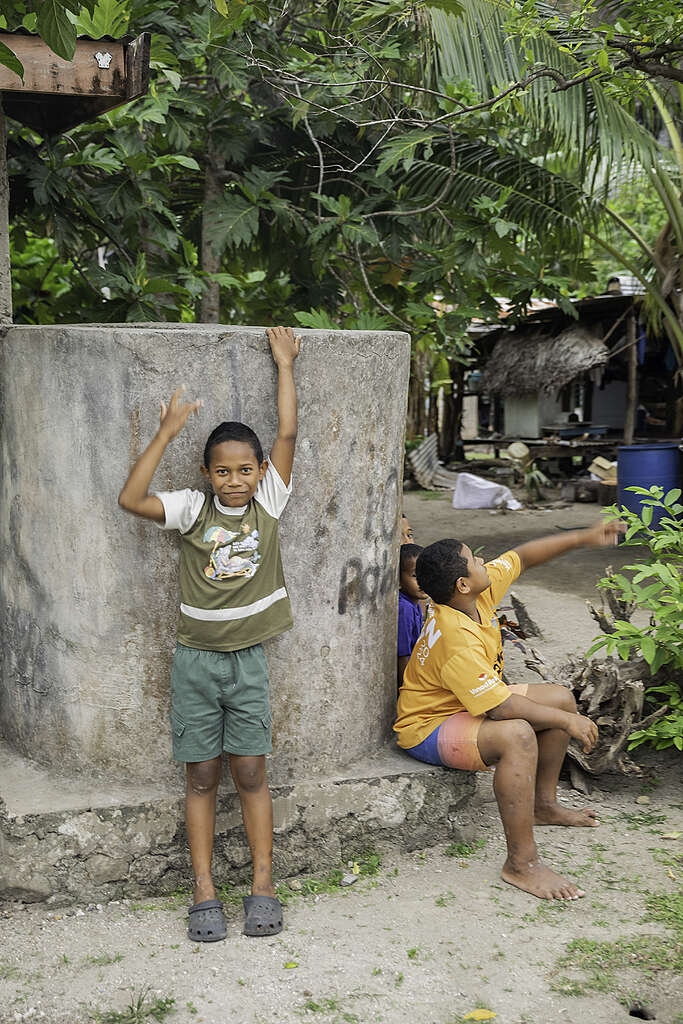
The island of Kioa is home to a Tuvaluan community who migrated from their atoll of Vaitupu in the late 1940s. It is a land of warm hearts, big smiles, and deep cultural roots; a place where the sound of a conch still summons the island together, where islanders paddle out to fish in carved outrigger canoes, and healthy happy children walk barefoot to school.
Here, culture is life. Kioans live sustainably through their traditional knowledge and practices. The island is alive with song, dance and the rhythms of a life tied to the tides, the winds, and the seasons.
Facing the future
Greenpeace has been lucky to have a relationship with Kioa for a number of years now, and we are continually learning from this remarkable community.
Last week, as part of our Voyaging Oceania project, we returned to the island. Our purpose was twofold —- to carry messages from the island to leaders gathering in Nadi this week for the Pacific Pre-COP, and to support the Kioa community in their efforts to improve water security for the island.
Unlike Tuvalu itse