
Connect with us

Published

on

Google Pledges $50M to Fight Superpollutants by 2030: A Near-Term Climate Game Changer

Google has announced a new climate finance commitment. The company pledged $50 million by 2030 to fund projects that aim to eliminate superpollutants. These are greenhouse gases (GHGs) that heat the atmosphere much faster than carbon dioxide (CO₂) .

Google said it will work alongside other corporations in a collective effort called the Superpollutant Action Initiative. In total, participating companies have committed $100 million to this cause.

Short-lived GHGs include methane, fluorinated gases like hydrofluorocarbons (HFCs), and black carbon. These gases trap heat in the atmosphere far more effectively than CO₂ in the short term, making them a key target for near-term climate action.

Randy Spock, Google’s Carbon Credits and Removals Lead, stated:

“As we continue to support superpollutant elimination projects, we’ll ensure our impact is catalytic and accurately measured and pave the way for additional companies and governments to follow. Since common superpollutants like methane are shorter lived than CO2, taking action against them helps address near-term rather than long-term warming, complementing our ongoing carbon removal efforts.”

What Are Superpollutants and Why They Matter

Superpollutants are greenhouse gases with high global warming potential (GWP). This means that each ton of these gases can trap much more heat in the atmosphere than a ton of CO₂.

Methane (CH₄), for example, warms the planet about 80 times more than CO₂ over a 20-year period. Other short-lived GHGs, such as HFCs used in refrigeration, can be thousands of times more potent per ton than CO₂.

Unlike CO₂, which can stay in the atmosphere for centuries, many short-lived GHGs break down much faster. Reducing them can deliver significant cooling benefits in the near term due to their high potency and short lifespan.

Scientists say that superpollutants, like methane and black carbon, cause almost half of all global warming observed so far. 
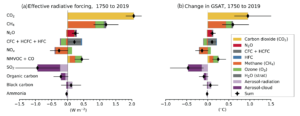
superpollutants planet warming effect
Source: IPCC

How Google’s Bold Pledge Fits Into Broader Climate Goals

Google will spend $50 million to fund projects that remove short-lived GHGs worldwide by 2030. The company plans to back initiatives that make a real difference for the climate. It also aims to help more companies and governments take similar steps.

The pledge focuses on both methane and fluorinated gases, which come from sources such as:

  • landfills and waste operations
  • refrigeration and air-conditioning systems
  • industrial leaks and fuel systems

This funding boosts the tech giant’s climate work. It includes buying carbon removal and investing in clean energy.
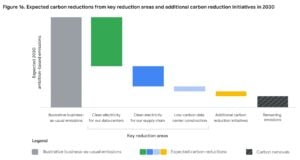
google net zero
Source: Google

The company aims to reach net‑zero emissions across all operations and its supply chain by 2030. This includes running on carbon‑free energy 24/7 and cutting emissions from data centers, offices, and supply chains.

By 2024, Google’s data centers ran on an average of 64% carbon‑free energy, even as electricity use grew 27% due to AI and other services. The company has also avoided 44 million tonnes of CO₂-equivalent emissions since 2011 through renewable energy and efficiency measures.

Google clean energy emission reductions
Source: Google

In 2024, Google added 2.5 GW of clean energy from new projects and signed contracts for 8 GW more, the largest annual total in its history. These projects include geothermal and nuclear SMRs in Asia and the U.S.

The $50 million superpollutant pledge complements these efforts. Reducing superpollutants gives fast climate benefits while Google continues long-term CO₂ reductions and clean energy expansion.

Partnership Power: Corporates Team Up for Global Impact

Google is not acting alone. A group of top global companies, including Amazon, Salesforce, Autodesk, Figma, JPMorgan Chase, and Workday, launched the Superpollutant Action Initiative with Google. They will invest $100 million through 2030 to reduce superpollutants.

The initiative will fund high-impact projects worldwide that cut these short-lived but potent pollutants. The goal is to deliver climate, health, and economic benefits while accelerating progress where it’s most needed.

The tech giant has also signed partnerships with third‑party organizations that focus on reducing these planet-warming GHGs.

In 2025, Google teamed up with Recoolit and Cool Effect. Their goal is to cut over 25,000 tons of superpollutants by 2030. These partnerships focus on capturing and destroying harmful gases. This includes HFCs from cooling systems in Indonesia and methane from landfills in Brazil.

Recoolit, an Indonesian company, has partnered with Google. They will sell 250,000 carbon credits. These credits come from destroying refrigerant gases found in HVAC systems.

Moreover, Google and its partners backed a project with Vaulted Deep. This project aims to permanently remove 50,000 tonnes of CO₂ and methane emissions. They use technology that injects organic waste underground for storage.

The tech giant’s partnerships aim to reduce superpollutants. They also strengthen the science behind measuring and certifying these efforts.

Near‑Term Impact, Long‑Term Strategy

Climate scientists emphasize that reducing the pollutants can produce rapid climate benefits. Because these gases are potent but short‑lived, cutting them can slow warming quickly, within years rather than decades.

Analysts and climate assessments show that cutting methane quickly can slow warming. Some studies suggest that strong reductions could lower global temperature rise by about 0.4–0.5 °C by 2050. This is compared to a scenario without these cuts.
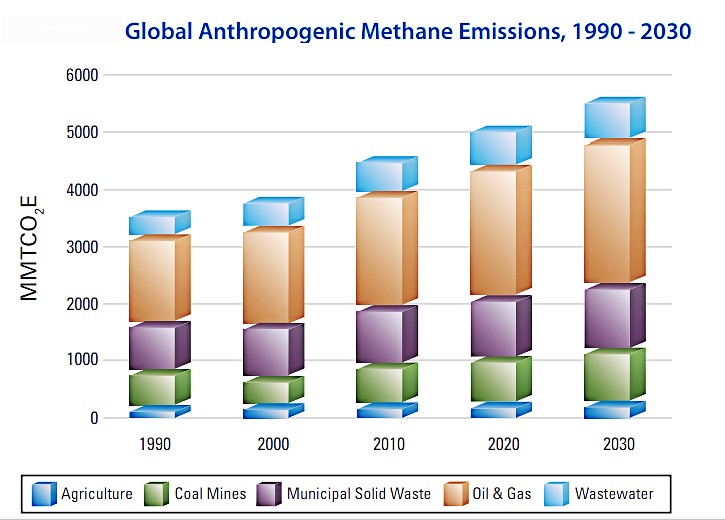
global methane emissions projections 2030
Source: Global Methane Initiative

A peer-reviewed study found that cutting global methane by 40% by 2050 could lower warming by about 0.4 °C by mid-century. Bigger reductions might push this down to 0.5 °C during that time.

Superpollutant mitigation also has public health benefits. Methane and black carbon contribute to ground‑level ozone and air pollution, which can cause respiratory and cardiovascular issues. Cutting them can improve local air quality while also addressing climate change.

Google and its partners plan to track and report the impact of funded projects regularly. The Superpollutant Action Initiative will work with scientists and research groups. They aim to create global plans to boost action.

Markets and Money: Carbon Credits Meet Corporate Action

Google’s pledge comes at a time of rising corporate climate commitments worldwide. Many companies are boosting their spending on carbon credits. They are also investing in carbon removal technologies and emissions measurement tools.

Durable carbon removal credits CDR purchases 2024

Many corporate climate efforts aim to cut CO₂ emissions. However, superpollutants are now in the spotlight. Reducing them can quickly improve the climate, while also supporting long-term CO₂ strategies.

Compliance systems like emissions trading schemes now also recognize the role of powerful greenhouse gases beyond carbon dioxide.

Google teaming up with big companies shows that corporate collaboration on climate issues is increasing. This group aims to scale funding and knowledge sharing on superpollutants at a global level.

A Tactical Move for Near‑Term Climate Impact

Google’s $50 million pledge to reduce the GHGs through 2030 highlights a growing focus on near-term climate action.

Superpollutants, though short-lived, have outsized warming effects that make them a critical target for climate mitigation. Google and its partners fund elimination projects and work with experts and non-profits. They aim to speed up progress on global warming beyond what CO₂ reductions can achieve alone.

This initiative also reflects corporate climate strategy trends. As markets for carbon credits and climate solutions expand, companies are committing capital and resources beyond traditional carbon focus areas. In doing so, they aim to bring scalable, measurable progress in areas that can deliver both immediate and long-lasting climate benefits.

The post Google Pledges $50M to Fight Superpollutants by 2030: A Near-Term Climate Game Changer appeared first on Carbon Credits.

Continue Reading

Carbon Footprint

Mastercard Beats 2025 Emissions Targets as Revenue Rises 16%, Breaking the Growth vs Carbon Trade-Off

Published

on

Mastercard Beats 2025 Emissions Targets as Revenue Rises 16% and Net-Zero Plan Gains Momentum Toward 2040

Mastercard says it has exceeded its 2025 emissions reduction targets while continuing to grow its global business. The company reduced emissions across its operations even as revenue increased strongly in 2025.

The update comes from Mastercard’s official sustainability and technology disclosure published in 2026. It confirms progress toward its long-term goal of net-zero emissions by 2040, covering its full value chain.

The results are important for the financial technology sector. Digital payments depend heavily on data centers and cloud systems, which are energy-intensive and linked to rising global emissions.

Breaking the Pattern: Emissions Fall While Revenue Rises

In 2025, Mastercard surpassed its interim climate targets compared with a 2016 baseline. The company reported a 44% reduction in Scope 1 and Scope 2 emissions, beating its target of 38%. It also achieved a 46% reduction in Scope 3 emissions, far exceeding its 20% target.

At the same time, Mastercard recorded 16% revenue growth in 2025. This shows that emissions reductions continued even as the business expanded. Mastercard Chief Sustainability Officer Ellen Jackowski and Senior Vice President of Data and Governance Adam Tenzer wrote:

“These results reflect a comprehensive approach built on renewable energy investment and procurement, supply chain engagement, and embedding environmental sustainability into everyday business decisions.”

The company also reported a 1% year-on-year decline in total emissions, marking the third consecutive year of emissions reduction. This is important because digital payment networks usually grow with higher computing demand.

Mastercard says this trend reflects improved efficiency across its operations, better infrastructure use, and increased reliance on cleaner energy sources.

Mastercard 2024 GHG emissions
Source: Mastercard

The Hidden Footprint: Why Data Centers Drive Mastercard’s Emissions

A large share of Mastercard’s emissions comes from its digital infrastructure. According to the company’s sustainability report, data centers account for about 60% of Scope 1 and Scope 2 emissions. Technology-related goods and services make up roughly one-third of Scope 3 emissions.

This reflects how modern financial systems operate. Digital payments, fraud detection, and AI-based analytics require a large-scale computing infrastructure.

Global data centers already consume about 415–460 TWh of electricity per year, equal to roughly 1.5%–2% of global electricity demand. This number is expected to rise as AI usage expands.

Mastercard’s challenge is similar to that of other digital companies. Higher transaction volume usually leads to greater computing needs. This can raise emissions unless we improve efficiency.

To manage this, the company is focusing on renewable energy procurement, hardware consolidation, and more efficient software systems.

Carbon-Aware Technology Becomes Core to Operations

Mastercard is integrating sustainability directly into its technology systems rather than treating it as a separate reporting function. Since 2023, the company has developed a patent-pending system that assigns a Sustainability Score to its technology infrastructure. This system measures environmental impact in real time.

It tracks factors such as:

  • Energy use in kilowatt-hours,
  • Regional carbon intensity of electricity,
  • Server utilization rates,
  • Hardware lifecycle efficiency, and
  • Data processing location.

This allows engineers to design systems with lower carbon impact.

The company also uses carbon-aware software design. This means computing workloads can be adjusted to reduce energy use when carbon intensity is high in certain regions.

This approach reflects a wider trend in the technology and financial sectors. More companies are now including carbon tracking in their main infrastructure choices. They no longer see it just as a reporting task.

Powering Payments: Mastercard’s Net-Zero Playbook

Mastercard has committed to reaching net-zero emissions by 2040, covering Scope 1, Scope 2, and Scope 3 emissions across its value chain. The target is aligned with science-based climate pathways and includes operations, suppliers, and technology infrastructure.

To achieve this, the company is focusing on four main areas.

  • Increasing renewable energy use in operations

Mastercard already powers its global operations with 100% renewable electricity. This covers offices and data centers in multiple regions.

The company has also achieved a 46% reduction in total Scope 1, 2, and 3 emissions compared to its 2016 baseline. It continues to use renewable energy purchasing to maintain this progress.

In 2024, Mastercard procured over 112,000 MWh of renewable electricity, supporting lower emissions from its global operations.

  • Improving energy efficiency in data centers

Data centers account for about 60% of Mastercard’s Scope 1 and 2 emissions. To reduce this, Mastercard is upgrading servers, cutting unused computing capacity, and improving workload efficiency. It also uses real-time monitoring to reduce energy waste.

These improvements helped keep operational emissions stable in 2024, even as computing demand increased. Efficiency gains combined with renewable energy use supported this outcome.

  • Working with suppliers to reduce emissions

Around 75%–76% of Mastercard’s total emissions come from its value chain. This includes cloud providers, technology partners, and hardware suppliers.

To address this, Mastercard works with suppliers to set emissions targets and improve reporting. More than 70% of its suppliers now have their own climate reduction goals.

  • Upgrading and consolidating hardware systems

Mastercard is reducing emissions by improving its hardware systems. It decommissions unused servers, consolidates infrastructure, and shifts to more efficient cloud platforms.

Technology goods and services account for about one-third of Scope 3 emissions. By reducing unnecessary hardware and extending equipment life, Mastercard lowers both energy use and manufacturing-related emissions while maintaining system performance.

Renewable energy procurement is central to its strategy. It’s crucial for powering data centers, as they account for most of their operational emissions.

Mastercard works with suppliers because a large part of emissions comes from the value chain. This includes technology manufacturing and cloud services. By 2025, the company exceeded several short-term climate goals. This shows early progress on its long-term net-zero path.

mastercard emissions vs growth

ESG Pressure Hits Fintech: The New Rules of Digital Finance

Mastercard’s results come during a period of rising ESG pressure across the financial sector. Banks, payment networks, and fintech companies must now disclose emissions. This is especially true for Scope 3 emissions, which cover supply chain and digital infrastructure impacts.

Several global trends are shaping the industry:

  • Growing regulatory focus on climate disclosure,
  • Rising investor demand for ESG transparency,
  • Expansion of digital payments and cloud computing, and
  • Increased energy use from AI and data processing.

Data centers are becoming a major focus area because they link financial services to energy consumption. In Mastercard’s case, they are the largest source of operational emissions.

At the same time, financial institutions are expected to align with net-zero targets between 2040 and 2050. This depends on regional regulations and climate frameworks. Mastercard’s early progress places it ahead of many peers in meeting short-term emissions goals.

Decoupling Growth From Emissions

One of the most important signals from Mastercard’s 2025 results is the separation of business growth from emissions.

The company achieved 16% revenue growth while reducing total emissions by 1% year-on-year. This marks a continued pattern of emissions decline alongside business expansion.

Mastercard attributes this to improved system efficiency, renewable energy use, and better infrastructure management. In simple terms, the company is processing more transactions without a matching rise in emissions.

This trend is important because digital payment systems normally scale with computing demand. Without efficiency gains, emissions would typically rise with business growth.

Looking ahead, demand will continue to grow. Global payments revenue is projected to reach around $3.1 trillion by 2028, according to McKinsey & Company, growing at close to 10% annually.

global payments revenue 2028 mckinsey
Source: McKinsey & Company

Global data center electricity demand might double by 2030. This rise is mainly due to AI workloads, says the International Energy Agency. Mastercard’s results show that tech upgrades can lower the carbon impact of digital finance. This is true even as global usage rises.

The Takeaway: Fintech’s Proof That Growth and Emissions Can Split

Mastercard’s 2025 sustainability performance shows measurable progress toward its net-zero goal. At the same time, major challenges remain. Data centers continue to be the largest emissions source, and global digital activity is still expanding rapidly due to AI and cloud computing.

Mastercard’s approach shows how financial technology companies are adapting. Sustainability is no longer a separate goal. It is becoming part of how digital systems are designed and operated.

The next test will be whether these efficiency gains can continue to outpace the rapid growth of global digital payments and AI-driven financial systems.

The post Mastercard Beats 2025 Emissions Targets as Revenue Rises 16%, Breaking the Growth vs Carbon Trade-Off appeared first on Carbon Credits.

Continue Reading

Carbon Footprint

China’s $8.4B Orbital Data Center Push Sets Up Space-Based AI Showdown With SpaceX

Published

on

China’s $8.4B Orbital Data Center Push Sets Up Space-Based AI Showdown With SpaceX

China is backing a Beijing-based startup called Orbital Chenguang with about 57.7 billion yuan ($8.4 billion) in credit lines to build space-based data centers, according to media reports. The funding comes from major state-linked banks and signals one of the largest known investments in orbital computing infrastructure.

The move highlights a growing global race to build computing systems in space. It also puts China in direct competition with companies like SpaceX, which is exploring space-based data infrastructure, too.

Orbital Chenguang Builds State-Backed Space Computing System

Orbital Chenguang is a startup in Beijing supported by the Beijing Astro-future Institute of Space Technology. This institute works with the city’s science and technology authorities.

The company has received credit line support from major Chinese financial institutions, including:

  • Bank of China,
  • Agricultural Bank of China,
  • Bank of Communications,
  • Shanghai Pudong Development Bank, and
  • CITIC Bank.

These are credit lines, not fully deployed cash. But the scale shows strong institutional backing.

The project is part of a wider national strategy focused on commercial space, AI infrastructure, and advanced computing systems.

China’s state space contractor, CASC (China Aerospace Science and Technology Corporation), has shared plans under its 15th Five-Year Plan. These include ideas for large-scale space computing systems, aiming for gigawatt power.

Space Data Center Plan Targets 2035 Gigawatt Capacity

According to Chinese media reports, Orbital Chenguang plans to build a constellation in a dawn-dusk sun-synchronous orbit at 700–800 km altitude. The long-term target is a gigawatt-scale space data center by 2035.

The development plan is divided into phases:

  • 2025–2027: Launch early computing satellites and solve technical barriers.
  • 2028–2030: Link space-based systems with Earth-based data centers.
  • 2030–2035: Scale toward large orbital computing infrastructure.

The design relies on continuous solar energy and natural cooling in space. These features could reduce reliance on land-based power grids and cooling systems.

China has proposed two satellite constellations to the International Telecommunication Union (ITU). These plans include a total of 96,714 satellites. This shows China’s long-term goals for space infrastructure and spectrum control.

The AI Energy Crunch Pushing Computing Into Orbit

The push into orbital data centers is closely linked to rising AI demand. Global data centers consumed about 415–460 terawatt-hours (TWh) of electricity in 2024, equal to roughly 1.5%–2% of global power use. This figure is rising quickly due to AI workloads.

Some industry projections show demand could exceed 1,000 TWh by 2026, nearly equal to Japan’s total electricity consumption.

data center power demand AI 2030 Goldman

AI systems require massive computing power, which increases energy use and cooling needs. In many regions, electricity supply—not hardware—is now the main constraint on AI expansion.

China’s strategy aims to address this by moving part of the computing load into space, where solar energy is more stable and continuous.

Carbon Impact: Earth vs Space Computing Trade-Off

Data centers already create a large carbon footprint. In 2024, they emitted about 182 million tonnes of CO₂, based on global electricity use of roughly 460 TWh and an average carbon intensity of 396 grams of CO₂ per kWh. This is according to the International Energy Agency report, as shown in the chart below.

global data centers emissions 2035 IEA
Source: IEA

Future projections show even faster growth. The sector could generate up to 2.5 billion tonnes of CO₂ emissions by 2030, driven by AI expansion. This is where orbital systems come in. They aim to reduce emissions during operation by using:

  • Continuous solar energy,
  • Passive cooling in vacuum conditions, and
  • Reduced dependence on fossil-fuel grids.

However, space systems also introduce new emissions. Rocket launches used about 63,000 tonnes of propellant in 2022, producing CO₂ and atmospheric pollutants. Lifecycle studies suggest that over 70% of emissions from space systems typically come from manufacturing and launch activities.

In addition, hardware in orbit often has a lifespan of only 5–6 years, which increases replacement cycles and launch frequency. This creates a key trade-off:

  • Lower operational emissions in space, and
  • Higher lifecycle emissions from launches and manufacturing.

Research suggests that, in some scenarios, orbital computing could produce up to 10 times higher total carbon emissions than terrestrial systems when full lifecycle impacts are included.

Orbital data center infographic. Environmental impact of orbital and terrestrial data centers

China’s Expanding Space-Tech Ecosystem

Orbital Chenguang is not operating alone. Several Chinese companies are working on similar in-orbit computing systems, including ADA Space, Zhejiang Lab, Shanghai Bailing Aerospace, and Zhongke Tiansuan.

These firms are developing satellite-based computing and AI processing systems. This shows that orbital computing is not a single project. It is part of a broader national push across government, industry, and research institutions.

China’s space strategy combines commercial space growth with national technology planning. It aims to build integrated systems that connect satellites, cloud computing, and terrestrial networks.

The Space-AI Arms Race: China vs SpaceX vs Google

China is not alone in exploring space-based computing. Companies in the United States are also developing orbital data infrastructure concepts. These include early-stage research and private sector projects by firms such as SpaceX and Google.

SpaceX is building one of the largest satellite networks through its Starlink constellation, with thousands of satellites already in orbit. While its main goal is global internet coverage, the network also creates a foundation for future edge computing in space. The company’s reusable rockets, including Starship, are designed to lower launch costs, which is a key barrier to scaling orbital data infrastructure.

Google, through its cloud division, has been investing in space data and satellite analytics. It partners with Earth observation firms to process large volumes of data using cloud-based AI tools. This work could extend to hybrid systems where data is processed closer to where it is generated, including in orbit.

Other players are also entering the field. Amazon is developing Project Kuiper, a satellite internet network that could support future space-based computing layers. Microsoft has launched Azure Space, which connects satellites directly to cloud computing services and supports real-time data processing.

Government agencies are also involved. NASA and the U.S. Department of Defense are funding research into orbital computing, edge processing, and secure data transmission in space. These efforts aim to reduce latency, improve data security, and enable faster decision-making for both civilian and defense applications.

Together, these developments show that space-based computing is moving beyond theory. While still early-stage, both public and private sector efforts are building the foundation for future data centers and processing systems in orbit.

However, these systems face major challenges:

  • High launch costs,
  • Heat and thermal control issues,
  • Limited data transmission bandwidth, and
  • Hardware durability in space.

Despite these challenges, interest is growing because AI demand is rising faster than Earth-based infrastructure can scale. The competition is now moving toward who can solve energy and computing limits first—on Earth or in space.

Market Outlook: AI, Energy, and Space Infrastructure Converge

The global data center industry is entering a period of rapid expansion. Electricity demand from data centers could double by 2030, driven mainly by AI workloads and cloud computing growth. Power supply is becoming a limiting factor in many regions.

At the same time, the global space economy is expanding into a multi-hundred-billion-dollar industry, supported by satellites, communications, and emerging technologies like orbital computing.

  • Orbital data centers sit at the intersection of three major trends: rapid AI growth, rising energy constraints, and expansion of space infrastructure. 

China’s $8.4 billion credit-backed push through Orbital Chenguang signals confidence in this convergence. However, key barriers remain, such as high cost of launches, engineering complexity, short satellite lifespans (5-6 years), and regulatory uncertainty in orbital systems.

Because of these limits, orbital data centers are unlikely to replace Earth-based systems in the near term. Instead, they may form a hybrid system where some workloads move to space while most remain on Earth.

Space Is Becoming the Next Data Center Frontier

China’s investment in Orbital Chenguang marks one of the most significant moves yet in the emerging field of space-based computing. Backed by major Chinese banks, municipal science institutions, and national space contractors like CASC, the project shows how seriously China is treating orbital infrastructure.

The strategy connects AI growth, energy demand, and climate pressures into a single long-term vision. But the trade-offs are complex. Orbital data centers may reduce operational emissions, but they also introduce high lifecycle carbon costs and major technical challenges.

The global race is now underway. With companies like SpaceX, Google, and Chinese tech firms exploring similar ideas, space is becoming a new frontier for digital infrastructure. The outcome will depend on whether orbital systems can scale efficiently—and whether their carbon benefits can outweigh the emissions cost of building them.

The post China’s $8.4B Orbital Data Center Push Sets Up Space-Based AI Showdown With SpaceX appeared first on Carbon Credits.

Continue Reading

Carbon Footprint

GM Bets $625 Million on Nevada Lithium Clay: What It Signals for the Next U.S. Project

Published

on

Disseminated on behalf of Surge Battery Metals.

When General Motors (GM) committed $625 million to develop Thacker Pass in Nevada, it did more than fund a lithium project. It established a new model for how automakers secure critical minerals, and in doing so, it reshaped how investors should evaluate the next generation of U.S. lithium assets.

This was not a passive investment. It was a fully structured supply chain partnership, combining equity, long-term offtake, and pricing strategy into a single agreement. 

For investors watching Nevada’s clay lithium sector, the implication is clear: the first project has been validated – now the market is looking for what comes next.

A Landmark Deal and a New Partnership Model

GM’s $625 million investment in Lithium Americas remains one of the largest commitments by an automaker into upstream battery materials. The structure of the deal matters as much as its size. 

GM secured exclusive access to Phase 1 production, locking in long-term supply from Thacker Pass, which is expected to produce around 40,000 tonnes per year of battery-grade lithium carbonate. That output alone could support hundreds of thousands to up to 1 million EVs annually.

More importantly, the agreement evolved into a joint venture structure, with GM ultimately taking a 38% ownership stake in the project while securing long-term offtake rights. This started as a TopCo equity investment but changed into a JV. 

John Evans, LAC CEO, said in an interview on the GM agreement:

“They view this as an investment as much as they do a hedge to ensure that they get low-cost lithium. They want to run this JV as a business.”

A key highlight of the Thacker Pass deal is GM’s offtake agreement, which now serves as a template for a world-class OEM arrangement. GM must purchase at least 20% of its North American lithium demand, with the option to increase to 100%. 

The floor price is “meaningfully above” the August 2024 low (~$10,000/t) but below current prices (~$21,000/t), as noted by Evans. GM was given an effective discount at higher price levels, lightly structured when prices at that time were at ~$60,000/t.

GM provides rolling three-year forecasts, with the next year’s volume fixed, allowing Lithium Americas to commit remaining volume to third parties. The agreement covers up to three years of contracted volume at a time. 

GM Moves Upstream: From Automaker to Lithium Investor

The GM–Thacker Pass agreement highlights a shift in the lithium market. Automakers are moving upstream, directly into mining, to secure supply, manage costs, and reduce geopolitical risk. This approach is driven by both market forces and policy, with the U.S. pushing for domestic sourcing of critical minerals to support EV supply chains.

Key elements of this emerging model include:

  • Equity participation in the mining project,
  • Long-term offtake agreements tied to production, and
  • Structured pricing mechanisms to manage volatility.

Thacker Pass sits at the center of that strategy. It is widely recognized as the largest known lithium resource in the United States, and with construction underway, it is moving from concept to execution.

Breaking the Clay Lithium Barrier

For years, sedimentary clay lithium has carried a persistent discount in the market. Unlike brine operations in South America or hard-rock mining in Australia, clay deposits had never been proven at a commercial scale. The uncertainty around processing, recovery rates, and operating costs limited investor confidence.

Thacker Pass is now changing that, with construction underway, production targeted later this decade, and processing planned using sulfuric acid leaching at an industrial scale. Once operational, it will mark the first large-scale commercial validation of clay lithium extraction.

In resource markets, once a new extraction method is proven, capital follows. Financing improves, development timelines accelerate, and the entire category begins to reprice. This is exactly what happened in Chile’s brine sector decades ago. Clay lithium in Nevada may now be entering a similar phase.

Why This Matters for Investors

GM’s investment provides a real-world benchmark for what a bankable lithium project looks like in today’s market. It demonstrates that:

  • OEMs are willing to invest upstream
  • Long-term offtake agreements can anchor financing
  • Domestic lithium supply is now a strategic priority

It also answers a key question that has held back the sector: Will major industrial players commit to clay lithium at scale? The answer is now yes.

The Next Project in the Queue: NNLP

With Thacker Pass moving forward, investor focus naturally shifts to the next project capable of attracting similar strategic interest. That brings attention to Surge Battery Metals’ Nevada North Lithium Project (NNLP), a structurally aligned next-tier candidate. 

NNLP is not competing with Thacker Pass as a first mover; it is emerging as a next-generation project within a now-validated category.

NNLP stands out based on core project metrics that directly impact economics. Its average lithium grade of 3,010 ppm is significantly higher than Thacker Pass Phase 1 material, which ranges from 1,500 to 2,500 ppm. Higher grades typically translate into more efficient recovery and lower processing intensity per tonne. 

Surge lithium clay comparison

The project also benefits from near-surface mineralization and a low strip ratio of approximately 1.16:1. This may reduce mining complexity and indicate efficient material movement. 

From a cost perspective, NNLP’s estimated operating cost of around $5,243 per tonne LCE compares favorably to LAC’s Thacker Pass guidance of roughly $6,200 per tonne.

Beyond geology, NNLP aligns with the same development framework that defines Thacker Pass. The project has secured a strategic partnership with Evolution Mining, funding up to C$10 million toward the Pre-Feasibility Study (PFS), while Fluor Corporation, the engineering firm involved in Thacker Pass, is leading the PFS at NNLP. 

Surge joint venture evolution mining

Leadership expertise also matters: Steffen Ball, a key member of the team, previously led battery raw material sourcing strategies at major automakers. These include Nissan North America and Ford Motor Company, aligning with the type of OEM agreements now seen in GM–Thacker Pass.

Scale, Market Tailwinds, and Second-Wave Opportunities

Scale is critical to attract major OEM partners. NNLP outlines a 42-year mine life with average annual production of approximately 86,300 tonnes of lithium carbonate equivalent. That output positions it to support long-term anchor offtake agreements, similar in structure to what GM secured at Thacker Pass.

Market fundamentals continue to support these developments:

  • Global lithium demand is projected to more than double by 2030.
  • EV production is scaling rapidly across major markets.
  • Governments are prioritizing domestic supply chains for critical minerals.

Even with recent lithium price volatility, long-term fundamentals remain intact. GM’s investment reflects a forward-looking strategy: secure supply today to avoid constraints tomorrow. 

Thacker Pass carries the burden of being first, proving the process, building infrastructure, and validating the economics of clay lithium. This creates opportunities for projects that follow, like NNLP, which benefit from reduced technical uncertainty, clearer financing pathways, and a market that now understands clay lithium.

First Project Validated, Next Project Poised to Follow

GM’s $625 million investment was not just a bet on one project. It was a commitment to a new supply chain model for lithium—one that integrates mining, manufacturing, and long-term demand into a single structure. Thacker Pass is now proving that model, and NNLP is positioned to fit within it.

With higher grades, favorable mining characteristics, strong development partners, and the right scale, NNLP aligns with the criteria that attracted one of the world’s largest automakers to Nevada clay lithium in the first place. 

For investors, the takeaway is straightforward: the first project is being built, the template is established, and the next project in the queue is becoming easier to identify.

DISCLAIMER 

New Era Publishing Inc. and/or CarbonCredits.com (“We” or “Us”) are not securities dealers or brokers, investment advisers, or financial advisers, and you should not rely on the information herein as investment advice. Surge Battery Metals Inc. (“Company”) made a one-time payment of $75,000 to provide marketing services for a term of three months. None of the owners, members, directors, or employees of New Era Publishing Inc. and/or CarbonCredits.com currently hold, or have any beneficial ownership in, any shares, stocks, or options of the companies mentioned.

This article is informational only and is solely for use by prospective investors in determining whether to seek additional information. It does not constitute an offer to sell or a solicitation of an offer to buy any securities. Examples that we provide of share price increases pertaining to a particular issuer from one referenced date to another represent arbitrarily chosen time periods and are no indication whatsoever of future stock prices for that issuer and are of no predictive value.

Our stock profiles are intended to highlight certain companies for your further investigation; they are not stock recommendations or an offer or sale of the referenced securities. The securities issued by the companies we profile should be considered high-risk; if you do invest despite these warnings, you may lose your entire investment. Please do your own research before investing, including reviewing the companies’ SEDAR+ and SEC filings, press releases, and risk disclosures.

It is our policy that information contained in this profile was provided by the company, extracted from SEDAR+ and SEC filings, company websites, and other publicly available sources. We believe the sources and information are accurate and reliable but we cannot guarantee them.

CAUTIONARY STATEMENT AND FORWARD-LOOKING INFORMATION

Certain statements contained in this news release may constitute “forward-looking information” within the meaning of applicable securities laws. Forward-looking information generally can be identified by words such as “anticipate,” “expect,” “estimate,” “forecast,” “plan,” and similar expressions suggesting future outcomes or events. Forward-looking information is based on current expectations of management; however, it is subject to known and unknown risks, uncertainties, and other factors that may cause actual results to differ materially from those anticipated.

These factors include, without limitation, statements relating to the Company’s exploration and development plans, the potential of its mineral projects, financing activities, regulatory approvals, market conditions, and future objectives. Forward-looking information involves numerous risks and uncertainties and actual results might differ materially from results suggested in any forward-looking information. These risks and uncertainties include, among other things, market volatility, the state of financial markets for the Company’s securities, fluctuations in commodity prices, operational challenges, and changes in business plans.

Forward-looking information is based on several key expectations and assumptions, including, without limitation, that the Company will continue with its stated business objectives and will be able to raise additional capital as required. Although management of the Company has attempted to identify important factors that could cause actual results to differ materially, there may be other factors that cause results not to be as anticipated, estimated, or intended.

There can be no assurance that such forward-looking information will prove to be accurate, as actual results and future events could differ materially. Accordingly, readers should not place undue reliance on forward-looking information. Additional information about risks and uncertainties is contained in the Company’s management’s discussion and analysis and annual information form for the year ended December 31, 2025, copies of which are available on SEDAR+ at www.sedarplus.ca.

The forward-looking information contained herein is expressly qualified in its entirety by this cautionary statement. Forward-looking information reflects management’s current beliefs and is based on information currently available to the Company. The forward-looking information is made as of the date of this news release, and the Company assumes no obligation to update or revise such information to reflect new events or circumstances except as may be required by applicable law.


Disclosure: Owners, members, directors, and employees of carboncredits.com have/may have stock or option positions in any of the companies mentioned: .

Carboncredits.com receives compensation for this publication and has a business relationship with any company whose stock(s) is/are mentioned in this article.

Additional disclosure: This communication serves the sole purpose of adding value to the research process and is for information only. Please do your own due diligence. Every investment in securities mentioned in publications of carboncredits.com involves risks that could lead to a total loss of the invested capital.

Please read our Full RISKS and DISCLOSURE here.

The post GM Bets $625 Million on Nevada Lithium Clay: What It Signals for the Next U.S. Project appeared first on Carbon Credits.

Continue Reading

Trending

Copyright © 2022 BreakingClimateChange.com

