


Carbon removal is moving beyond pilot projects. A new agreement between JPMorgan Chase and Charm Industrial shows how the sector is entering a new phase. The deal combines carbon removal credit purchases with financing support, helping expand future supply while reducing project risk.
Under the agreement, JPMorgan will purchase 61,500 metric tons of carbon removal credits from Charm Industrial. The bank will also provide financing support to help the company grow its operations.
The deal highlights a broader trend. Large financial institutions are starting to view carbon removal not only as a climate tool but also as a market with long-term growth potential.
As net-zero deadlines approach, demand for high-quality carbon removal credits is rising. Companies are looking for solutions that deliver measurable climate benefits and long-term carbon storage.
Taylor Wright, Head of Operational Sustainability at JPMorganChase, remarked:
“Our initial purchase with Charm marked an important step as we expanded our ambition in carbon removal and refined how we assess quality and deliver real impact across our portfolio. This new purchase—bringing our total to 90,000 tons—together with financial support from our business, reflects how our portfolio has matured over time and Charm’s track record of delivering measurable, durable outcomes across its projects.”
Carbon Removal Becomes a Bigger Part of Net Zero
Carbon dioxide removal (CDR) is different from traditional carbon offsets. Many offsets focus on avoiding emissions. Carbon removal takes carbon dioxide out of the atmosphere and stores it for the long term.
Most climate experts agree that emissions cuts alone will not be enough to meet global climate goals. According to the Intergovernmental Panel on Climate Change (IPCC), most pathways that limit warming to 1.5°C require large-scale carbon removal.
Today, the novel technological market remains small. Global demand for these engineered carbon removals is still below 10 million metric tons per year, according to CDR.fyi.
However, the State of Carbon Dioxide Removal Report shows that total global removals—mostly from forestry—already sit at 2.2 billion tons. Looking forward, IPCC climate pathways project that total global demand will need to reach billions of tons annually by mid-century to meet net-zero targets.
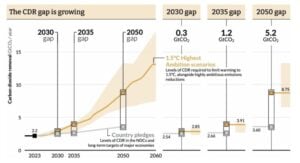
That growth is expected to come from sectors such as aviation, steel, cement, and shipping. These industries are difficult to fully decarbonize and will likely need carbon removal to address remaining emissions. Thus, investors and financial institutions are paying closer attention to the sector.
Inside JPMorgan’s Growing Climate Strategy
The agreement also fits JPMorgan’s broader climate strategy. The bank has committed to aligning key parts of its financing portfolio with net-zero emissions by 2050. It has also set emissions reduction targets across sectors including power generation, oil and gas, aviation, shipping, and automotive manufacturing.
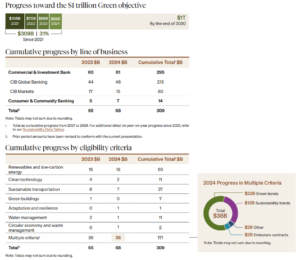
In addition, JPMorgan has pledged to finance and facilitate more than $2.5 trillion toward sustainable development initiatives by 2030. That includes $1 trillion dedicated to climate action and green solutions. Carbon removal is becoming an important part of those efforts.
Many companies can reduce most of their emissions through clean energy, efficiency improvements, and new technologies. However, some emissions are likely to remain. Carbon removal is expected to help address these residual emissions.
The structure of the JPMorgan-Charm deal is also notable. Instead of only purchasing carbon credits, the bank is helping support future production capacity. This approach gives developers access to capital while helping buyers secure future carbon removal supply.
Peter Reinhardt, CEO and Co-Founder of Charm Industrial, stated:
“JPMorganChase is helping build the infrastructure for a permanent carbon removal industry. Having a sophisticated, mission-aligned financial institution come back for a second, larger purchase while also stepping up with growth capital is exactly the kind of validation that tells us we’re on the right path.”
Charm’s Way: Turning Farm Waste Into Permanent Carbon Storage
Charm Industrial uses a process known as biomass carbon removal and storage. The company collects agricultural waste, including crop residues that would otherwise decompose or be burned. It converts this material into a carbon-rich bio-oil through a process called fast pyrolysis.
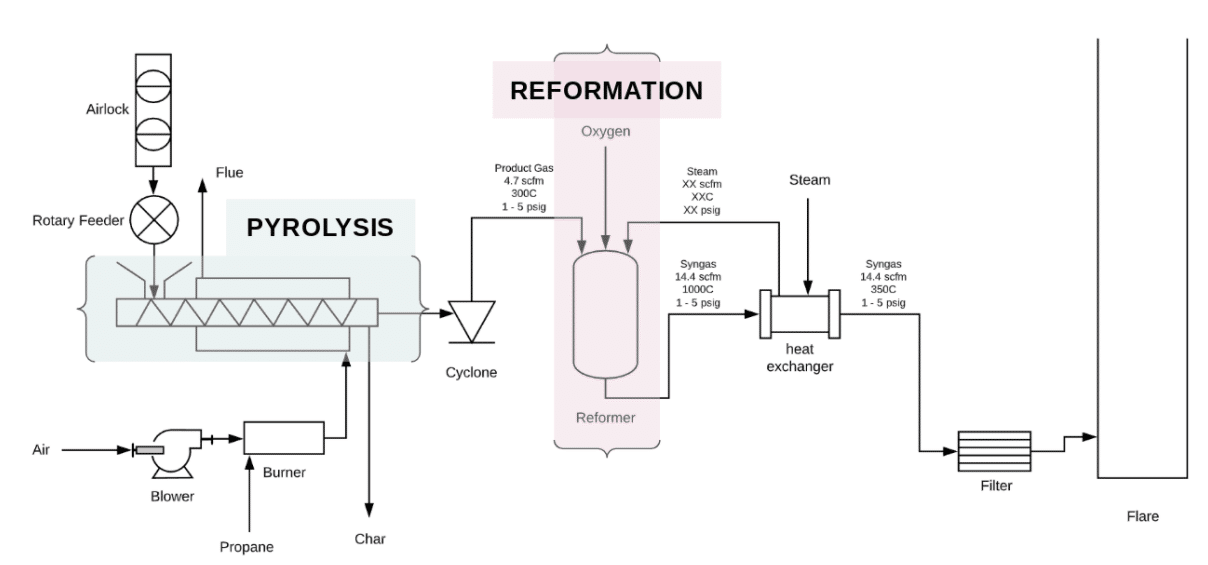
The bio-oil is then injected deep underground for long-term storage. This method is designed to keep carbon locked away for hundreds or even thousands of years.
One advantage is that the process can use existing energy infrastructure. Storage wells, transportation systems, and other equipment already used in the energy sector can often be adapted for carbon storage.
Charm has become one of the leading companies in the sector. The company says it has already delivered more than 150,000 metric tons of carbon removal to customers, making it one of the world’s largest suppliers of durable carbon removal credits.
While the technology continues to develop, many experts see biomass carbon removal as one of the more mature engineered carbon removal pathways available today.
The Carbon Removal Supply Crunch Is Emerging
Corporate demand for carbon removal continues to increase. Technology companies have been among the biggest buyers. Many have net-zero goals and are looking for ways to address emissions that cannot be eliminated through renewable energy or operational improvements.
Programs such as Frontier have also helped accelerate the market. The initiative, backed by major technology companies, commits funding to help scale carbon removal technologies.
Yet, supply remains limited. Novel or engineered solutions contribute only 0.1%, roughly 2.2 million metric tons, to the physical supply.
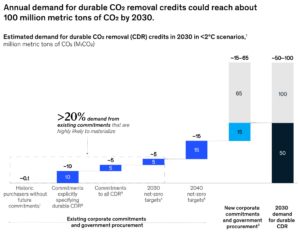
Analysts at McKinsey estimate global demand for carbon removals could reach 100 million metric tons per year by 2030 and grow 100-fold by 2050. Current delivery volumes are only a small fraction of that level. CDR.fyi data shows only 1.5 million metric tons were delievered as of June 2026.
This gap between supply and demand is pushing buyers to sign long-term agreements years before credits are delivered. That trend is creating new opportunities for financing and investment.
Why Capital Could Unlock the Next Wave of Growth
One of the most important aspects of the JPMorgan-Charm agreement is the financing component.
Carbon removal projects often need large upfront investments. Companies must build infrastructure, secure storage sites, and establish monitoring systems before generating significant revenue.
New financing models are helping address this challenge. These include:
- Long-term carbon removal purchase agreements,
- Advance market commitments,
- Project financing backed by future credit deliveries, and
- Blended finance structures that combine different sources of capital.
The approach resembles the early growth of renewable energy. Long-term power purchase agreements helped wind and solar developers secure financing and expand rapidly.
Many industry observers believe carbon removal could follow a similar path. The involvement of a major institution like JPMorgan suggests the market is beginning to mature.
From Climate Niche to Investable Market
The JPMorgan-Charm Industrial agreement shows how climate finance is evolving. Companies are no longer focused only on buying carbon credits. Increasingly, they are investing in the systems needed to produce those credits at scale.
Most net-zero pathways still require large amounts of carbon removal to balance emissions from hard-to-abate industries. The challenge now is building enough capacity to meet future demand.
Technology is advancing. Corporate demand is growing. Financing is becoming more available. Together, these trends are helping move carbon removal from a niche climate solution toward a larger and more established market.
The post JPMorgan Backs Carbon Removal Growth With New Charm Industrial Deal appeared first on Carbon Credits.

EU carbon credit claims changed on 27 September 2026, the day the Directive (EU) 2024/825 began to apply across the European Union. The change is narrow. It changes how a company can talk about the credits it buys. A product can no longer be called neutral on the strength of compensation alone; however, every specific, evidenced statement about what a company measured, reduced, and funded stays fully available.

The post Promoting Improved Cooking Practices in Nigeria appeared first on Terrapass.

UNEP: Opportunity has ‘been lost’ to meet 1.5C warming limit without ‘overshoot’

UN sets steep emission cuts to reverse 1.5C overshoot by end of century

Turkish giant sponsoring COP31 cut climate goals then cashed in on oil boom
-
Climate Change1 year ago
Guest post: Why China is still building new coal – and when it might stop
-

 Greenhouse Gases2 years ago
嘉宾来稿:满足中国增长的用电需求 光伏加储能“比新建煤电更实惠”
-
Greenhouse Gases1 year ago
Guest post: Why China is still building new coal – and when it might stop
-

 Climate Change2 years ago
嘉宾来稿:满足中国增长的用电需求 光伏加储能“比新建煤电更实惠”
-

 Renewable Energy12 months ago
Sending Progressive Philanthropist George Soros to Prison?
-
Climate Change2 years ago
Bill Discounting Climate Change in Florida’s Energy Policy Awaits DeSantis’ Approval
-
Greenhouse Gases1 year ago
嘉宾来稿:探究火山喷发如何影响气候预测
-

 Climate Change2 years ago
Analysis: China’s CO2 falls 1% in Q2 2024 in first quarterly drop since Covid-19