

On a sultry afternoon in Tomé-Açu, the agricultural heart of northern Brazil, farmer Zé Maria Pantoja strolls beneath the canopy of his 50 hectares of forested land. Tall açaí palms and hulking Brazil nut trees tower overhead, while cacao and cupuaçu bushes crowd the leaf-strewn ground below; the air thick with the scent of tropical growth and alive with bird chatter.
Three decades ago, this plot in the Amazon Basin state of Pará was a failing pepper monoculture owned by Zé Maria’s father. When Zé Maria proposed replanting it as a diverse forest of crops, his father balked. “Pepper had to be pepper, cacao was cacao… It would never work to plant them together,” Zé Maria recalls.
Today, that once-barren land is a technicolour abundance of cacao pods, açaí berries, Brazil nuts, passion fruit and cassava. Instead of a single annual pepper harvest, Zé Maria brings in different crops year-round – a shift he says has doubled production and income, reshaping his family’s prospects. Even his father has come around: “Today everything is fine. He agrees with it, and I know he is happy about it,” Zé Maria says.
Zé Maria has built what is known as an “agroforestry” system – integrating diverse trees and crops on the same land. It is approach rooted in Indigenous farming knowledge and practised in different forms around the world for millennia.
By blurring the line between farm and forest, agroforestry can store carbon, rebuild soils and habitat, and diversify farm incomes – making it a compelling route to decarbonise agriculture without hollowing out rural communities.
-
This Australian coal community is co-designing its own green future
The mining town of Collie offers a promising example of how to survive – and even thrive – amid the global transition to net-zero emissions -
How Belém launched the Just Transition mechanism
COP30’s headline win – the creation of the first global Just Transition mechanism – did not materialise overnight. Born out of years of work, it flourished during two weeks of civil society alignment in one of the few negotiating tracks that gained momentum


In recent years, Zé Maria has partnered with Belterra, a Brazilian agroforestry enterprise set up in 2019. Belterra has provided technical support and seedlings to help farmers expand and connected them to markets – helping to prove that a family farm in the Amazon can be both profitable and ecologically sustainable. In 2023, Belterra was selected as an Earthshot Prize finalist for its approach.
Across the tropics, where deforestation and land degradation drive a large share of emissions, agroforestry is being touted as a rare climate solution that can also be a livelihood strategy – as long as it is built with the people who farm the land. According to Marcelo Ferronato, president of Brazilian environmental NGO Ecoporé, “agroforestry is the best option the world has to support climate, the environment and farmers all at once.”


The problem: A broken rural model
Brazil’s rural development has long been driven by clearing forest for cattle and commodity crops – a frontier model that rewarded extraction and land concentration. In the Amazon Basin, official policy encouraged settlers to convert “unproductive” forest into ranches and farms.
The result has been vast forest loss. Over the past half-century, more than 700,000 km² of Amazon rainforest has been deforested, with a further 6% heavily degraded. Scientists warn the Amazon may tip into irreversible die-back if it loses around 20% of its forest cover; estimates put losses already near 17%. Around 63% of Brazil’s roughly 160 million hectares of pasture, meanwhile, are degraded – an area roughly the size of Egypt left infertile and overrun with weeds.

The social dynamics are equally corrosive. Brazil has one of the most unequal land distributions on Earth: just 2.8% of landowners control over 56% of arable land, while the poorest 50% of small farms own only 2.5%. With weak land registries, opportunists can grab land by clear-cutting it; local leaders who resist have faced threats, violence and even murder.
Brazil is an extreme case, but not a unique one. Across the tropics, commodity monocultures and extensive cattle systems are major drivers of deforestation, while degraded farmland spreads as soils are mined and abandoned. Globally, agriculture – livestock and crops – has devoured roughly 50% of habitable land and left over one billion hectares of fields degraded.
Agroforestry – an ancient solution with modern science
Agroforestry – often categorised as ‘regenerative agriculture’ – mixes woody perennials with crops or livestock in designs intended to imitate natural ecosystems. By replacing monocultures with polycultures, agroforests can restore soil health, conserve water and support biodiversity – while keeping land in production.
Integrating trees into farms also turns fields into carbon sinks. The UN climate body estimates that, if scaled up to its potential globally, agroforestry could sequester 1.8–4.1 gigatonnes of CO₂ every year – roughly 4-10% of annual global emissions.

And agroforestry can also boost livelihoods. Trial sites in Zambia integrating Faidherbia albida trees yielded 88–190% more maize than sites without trees, while diversified harvests can spread risk and create multiple income streams.
Belterra’s model: Business meets regeneration
A former environmental official in Pará, Valmir Ortega left government in 2019 to set up Belterra. He established a private company, Belterra Agroflorestas, alongside a sister non-profit, the Belterra Institute. The company focuses on projects that can return revenue; the institute works with smaller subsistence farmers, including Indigenous and Quilombola communities, who are too small to make any discernible margins.
Belterra Agroflorestas works through two basic arrangements: smallholder partnerships and landowner leases. In smallholder partnerships, farmers contribute land and labour (and sometimes co-investment), while Belterra provides capital and knowhow – seedlings, inputs, training and market access – under a revenue-sharing agreement. Belterra’s agronomists help the farmer design a crop mix so the system can start paying back quickly (often with fast-growing staples such as cassava and banana) while longer-term crops like cacao, açaí and timber establish.
In the landowner leasing model, Belterra partners with owners of degraded pasture that has become unprofitable. Belterra rents the land, establishes an agroforest, and returns it after a defined period (often 10–20 years), earning revenue from the produce in the meantime.
Deep in the Amazon, forest protection cash must vie with glitter of illegal gold
But establishing agroforests isn’t cheap: Belterra estimates upfront investment of around US$10,000 per hectare over the first three years. To finance this, it uses blended capital – philanthropic and public funding to absorb early risk, and longer-term private finance to support scale.
Belterra says projects can become cash-positive after around three years once early yielding crops begin producing. It also models that a mature agroforest can generate roughly US$7,000–$20,000 per hectare a year in gross harvest revenue at year 10. By contrast, a small producer who raises cattle might earn only 1,000 to 2,000 reais (US$185-$371) per hectare per year, Ferronato notes.
The catch is time. Trees take years to bear, and agroforestry can face a long delay before the main returns arrive. Belterra tries to bridge that gap by frontloading support and intercropping fast-growing food crops early. “The farmer needs food and income in year one,” Ortega says.
Belterra also sells carbon credits as an additional revenue stream. Belterra estimates that each hectare will sequester 250–300 tonnes of carbon over a 25 to 30-year cycle – which it aggregates and certifies for sale, helping repay investors and reward farmers. Overall Belterra’s existing projects will sequester 500,000-600,000 tonnes of carbon.

Scaling with corporates: the supply chain shift
Belterra isn’t only working from the bottom up. Large companies are increasingly looking to integrate agroforestry into supply chains and climate strategies – bringing capital, procurement and, potentially, scale.
It has worked with agribusiness behemoth Cargill and Brazil’s cosmetics brand Natura on agroforestry approaches linked to supply-chain emissions, and with other buyers seeking ‘insetting’ – cutting emissions within their own sourcing rather than purchasing offsets from external projects.
But Belterra’s most high-profile tie-up is a 2023 agreement with US e-commerce giant Amazon, which committed 90 million reais (US$18m) to fund agroforestry in Pará. The initial three-year pilot aims to restore 3,000 hectares of degraded land by planting native trees alongside cash crops such as cacao, working with around 1,000 producers. Amazon says it expects to claim around 750,000 tonnes of carbon credits over 30 years, certified under Verra’s ABACUS standard.
“Agroforestry is right at the top of our list of scalable, catalytic climate solutions,” says Jamey Mulligan, Amazon’s head of carbon neutralisation science and strategy. “It’s a nascent space that needs nurturing, like the solar industry pre-2008.”


In the Acará municipality of Pará, that partnership shows up as the Carbon Sequestration Producers Association: 16 farming families managing their own agroforestry plots across a now-verdant mix of açaí, cacao, andiroba and more. The association aggregates dispersed agroforests so smallholders can access carbon finance collectively – without surrendering land, autonomy or crop choices. For Amazon it offers scale and traceability; for farmers it offers bargaining power and a bridge through the years before trees mature.
If the deals work, corporates can supply finance and reliable demand, while farmers get training, stable markets and a viable alternative to cattle or soy on degraded land. The risk, critics warn, is that agroforestry becomes a green fig leaf – which is why who controls the land and the terms of trade matters.
A just transition grown from the ground
There is vast potential in scaling up agroforestry across the world. In Brazil, for example, the size of the agroforestry market is predicted to roughly double to $9.7 billion by 2032.
Globally, there are currently around 1.2 billion people practicing some form of agroforestry on roughly 1 billion hectares of land – from shade-grown coffee in Asia to alley-cropping in Africa. “We did a survey and found agroforestry systems in 83 countries, comprising over 1,000 tree species and roughly 300 crops,” says Susan Cook-Patton, lead reforestation scientist for The Nature Conservancy (TNC). “There’s a lot of agroforestry out there and a lot of potential to expand.”
Agroforestry’s promise goes beyond crops and carbon. Done well, it can bridge decarbonisation, biodiversity and livelihoods – but it only becomes part of a just transition if it strengthens, rather than erodes, the rights and incomes of the people on the ground, experts say.

For Zé Maria, the approach has worked well. His abundant agroforest now earns enough to send his daughter to college and buy a small apartment in the city – opportunities his parents could hardly imagine.
His success has inspired neighbours to adopt similar methods, and he credits those who taught him. They say it’s a two-way process.
Emanuel Oliveira, agricultural consultant for Belterra – which has partnered with Zé Maria for three years now – smiles as he describes the farmer’s influence. “We’ve learned so much from him; he’s like a professor to me,” says Oliveira. “We pass on the lessons to other farmers, and we often bring them here to learn directly from him.”
This is an abridged version of original reporting by Oliver Gordon for JUST Stories – a global project from the Institute for Human Rights and Business dedicated to finding and telling stories of people working together to advance just transitions.
The post A just agricultural transition takes root in Brazil appeared first on Climate Home News.

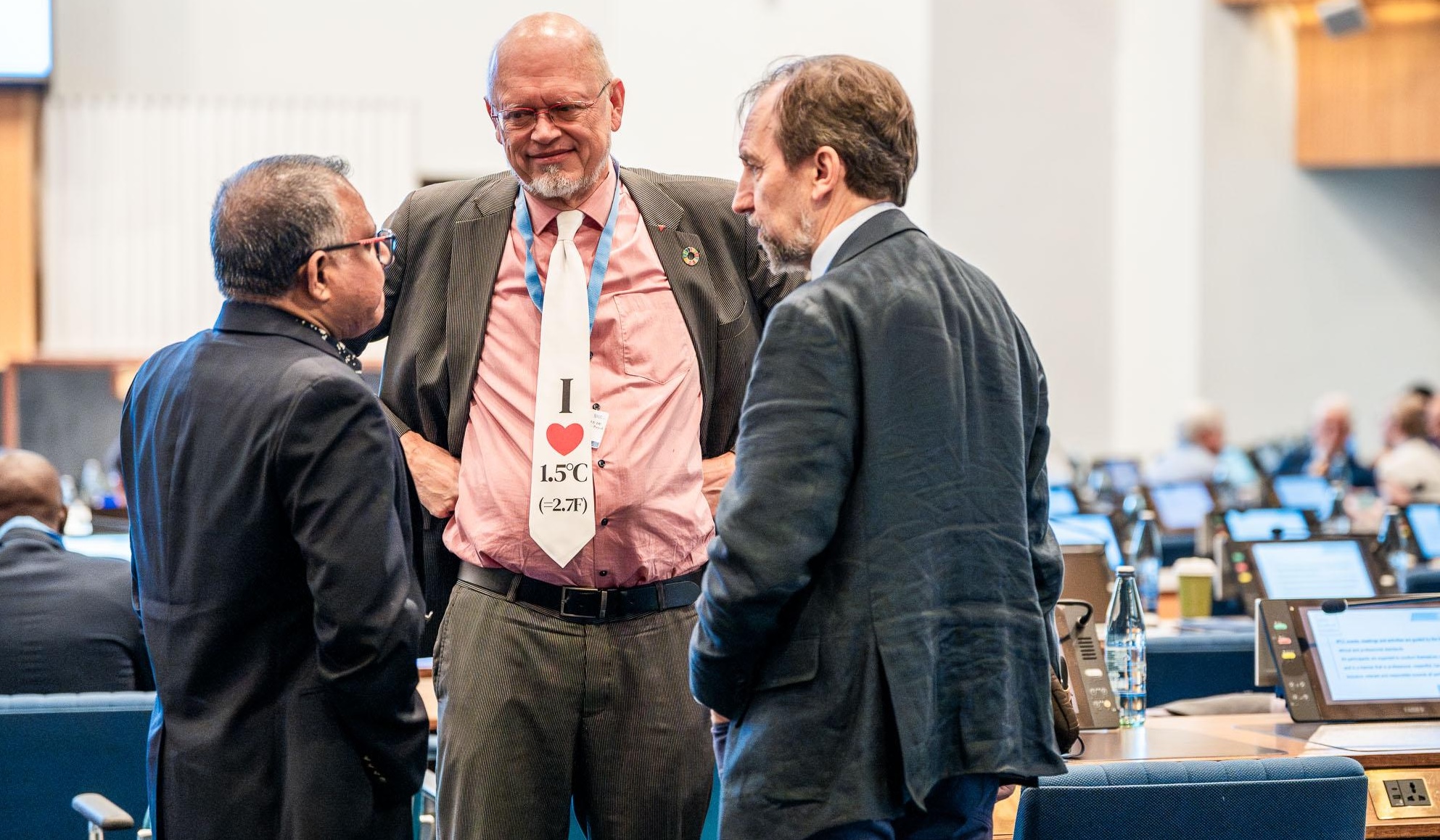
Scientists have vowed to keep working on the next flagship set of reports for the Intergovernmental Panel on Climate Change (IPCC), after a political row over the timeline for their release saw its latest session suspended on Friday evening without agreement.
During the weekend, government officials and scientists alike expressed disappointment over the inability to reach a compromise before some delegates from developing countries and small island states had to leave the week-long meeting in Ethiopia to catch flights home.
The disagreement – which has persisted since early 2024 – turns on whether the three key parts of the AR7 assessment should all be published before the conclusion of the UN’s next Global Stocktake of global climate action, which is due to be completed in late 2028.
The IPCC issued a statement after the close of the session, saying that “key agenda items” – the timelines for the three AR7 reports, as well as the IPCC budget – remain open and under discussion. It said the IPCC’s plenary session and its deliberations on the pending agenda “will resume at the earliest opportunity”, giving no further details of when.
IPCC Chair Jim Skea told delegates in closing remarks that recent months had been some of the most turbulent for the climate science panel and that, if there were stronger words than “profound disappointment” he would use them, according to a summary published by the Earth Negotiators Bulletin (ENB). IPCC discussions happen behind closed doors.
IPCC scientists remained committed
In an open letter, issued on Monday, a group of nearly 120 scientists – from a total of 664 AR7 authors – said they “stand committed to continue working to deliver the AR7 reports in a manner that is rigorous, timely and inclusive, in line with our mandate to be policy-relevant”.
“An assessment that arrives after the decisions it is meant to inform cannot serve its purpose,” they emphasised. “The second Global Stocktake in 2028 is such a decision point, and the world should not have to face it without the IPCCʼs latest assessment.”
Europe, small islands and the least developed countries, plus many Latin American and developed nations, want the IPCC to meet this deadline, arguing that the findings from the UN climate science body are irreplaceable in the UN climate policy-making process.
However, around a dozen developing countries plus Russia have argued that the reports should come later in order to allow for greater research input from the Global South – something that, in their view, would make the findings fairer. They also claim that a shorter timeline would put excessive pressure on experts.
-
Who shapes climate science? The equity question facing the IPCC
Early completion of the next global climate science assessment reports risks excluding research from the Global South, which is key to ensuring the findings are fair -
Governments that support climate science must stand firm against naysayers
The IPCC is meeting to decide the timing of its next major report, as some countries try to delay it and weaken the case for faster emissions cuts


The most vocal of this group at last week’s meeting were India and Saudi Arabia, according to the ENB summary and a developed country diplomat. Critics see this push for a longer timeline as an excuse to deprive government decision-makers of the latest science and ease pressure on emerging economies to raise their ambition, particularly on cutting emissions.
Commenting on last week’s meeting, France’s ambassador for climate negotiations Benoît Faraco said a broad coalition of developed and developing countries from all five continents, “united in their support for science and the timeline proposed by scientists”, had withstood pressure “from a few countries” seeking to slow down the process of adopting the IPCC reports.
He added that France would not back down and would “continue to fight tirelessly for science, protect the integrity of information, and convince our partners that without the best available scientific data, we will be less effective in tackling climate change and protecting our populations”.
Inclusivity proposal stalled
In a bid to unlock a solution for the AR7 timeline, countries discussed ways to improve the inclusivity of the IPCC’s work. One option put on the table was for the IPCC to expand its funding for delegates from developing countries to attend some or all of its sessions from one to two participants, according to the ENB summary and a delegate speaking to Climate Home News.
That would increase the costs for the IPCC to complete AR7 by up to a quarter, according to an assessment shared by the secretariat. The panel’s budget is under severe strain and its officials have warned that, without additional voluntary contributions, it risks running out of money before it can deliver on this assessment cycle.
Climate Home News understands that some of the IPCC’s traditional donors – which mainly include European countries, Japan and Australia – indicated a willingness to support funding for an additional developing country participant. But without an agreement over the budget or the timeline for the reports, that option was ultimately not adopted.
‘Disappointed and worried’
The three reports are managed by working group