

One of my goals when moving into our house was to source the majority (75%, give or take) of our furniture secondhand. It hasn’t necessarily been quick or easy to buy secondhand furniture for an entire home. But it has been worth the effort thus far both in terms of cost savings and the uniqueness of the pieces.
We also sold a few of our used furniture items when moving out of our apartment because there were some pieces that we didn’t need anymore. For example, we had counter stools in our apartment but the house we were moving into had no countertop to sit at.
Below I’m sharing my perspectives on the top places to buy and sell secondhand furniture shopping secondhand furniture.
I started shopping secondhand because of the reduced environmental impact (check out my full guide to sustainable furniture here), but I also like to save money! And sometimes secondhand (particularly vintage) furniture can be pretty unaffordable. So that is a significant criteria in the ranking of this list.
There are also a couple of sources that I’ve scoured and considered but haven’t actually purchased from yet. (I’ll share why below.)
In these cases I will refer to reviews and my own in-depth research. (I’ve spent way too much time searching for used furniture!!) And if or when I do purchase from these sources, I’ll be sure to add in my personal reviews alongside the other user reviews.
Where to Give Away or Find Furniture for Free
In case you want to give away or find furniture for free, I’ll quickly share some ideas before getting into the paid options.
To find free furniture, try “stooping”. This is where you find furniture people put out on the curb. I’ve also found furniture (like a desk and ottoman) near our apartment complex’s dumpster. It’s sometimes unbelievable what people throw away, especially when they’re moving in a hurry.
I’d also suggest checking your local Buy Nothing group. Though I will say in my experience, it can be a pain to sift through so many low quality posts (like partially used coloring books and cleaning products).
In terms of giving away furniture, I generally would not recommend leaving your pieces on the curb if you want to ensure it’s getting a second life. I’ve also seen furniture that’s left outside get destroyed by rain and what was yesterday’s perfectly good furniture is today’s trash. (It’s a bit heartbreaking to be honest.)
Instead I’d recommend to list it in a Buy Nothing group; share it on a app like Craigslist, NextDoor, or Facebook Marketplace; or coordinate a furniture pickup/drop-off with a nearby charity that sells used furniture.
Alright now let’s get into buying and selling used furniture!
Secondhand Furniture Apps, Sources, and Stores Ranked (with Pros & Cons)
With any kind of listing like this, there are going to be points of subjectivity so I’m detailing the pros and cons from my vantage point alongside the listings so you can determine which one is right for you, based on what you are looking for.
For me price and the ability to find specific types of items are important. I’m willing to sacrifice some convenience (i.e. I don’t need something delivered to me; I’m ok picking it up) for a good find. That might not be true for you, so be sure to look at the details of each to decide your own pick for buying (or selling) secondhand furniture for your space.
Note that there are a few affiliate links in here, which means we’ll earn a commission if you choose to purchase through our links at no additional cost to you. As always, our recommendations are made independently and vetted for sustainability.
1. Marketplace

Pros for Buyers:
- Easy-to-use platform for searching and buying
- Vast selection updated frequently
- You can find great prices and negotiate prices
- I’ve bought from so many amazing, friendly sellers
- Many sellers have been willing to help lift (though not all are able to, so you might want to ask first if you require assistance)
Cons for Buyers:
- Not convenient: usually requires pick-up
- Some listings are for new items and ads can mimic actual listings
- Some sellers aren’t as easy to communicate with
Pros for Sellers
- Very easy to use
- Popular items can get sold quickly
- Low effort (no shipping or packing required)
Cons for Sellers
- Buyers may negotiate down significantly
- You can get spam messages
- You may have to give out your address to strangers
As much as I genuinely do not want to give a Facebook-run platform the top spot, the selection on Facebook Marketplace is unbeatable when it comes to buying secondhand furniture. It’s probably also the best place to find secondhand deals online (I say “online” because you can browse through the app, though you do typically have to pick up the furniture).
Search Selection
You also can sell your used furniture quite quickly on the platform. I was able to sell the counter stools mentioned above within 24 hours of listing them!
Because so many people already use the site, there is a ton of volume of listings and it’s regularly updated. You can truly find anything and everything you’re looking for, and it’s a far better user experience than Craigslist in my opinion.
I’ve found that most sellers upload quite a few clear photos of the item and a decent number of listings (though certainly not all) also include solid descriptions so you have a good idea of what you’re buying.
It’s also incredibly easy to find what you’re looking for. Even when I search for specific terms like “MCM brown leather chair” or “MCM TV stand” there were many search results, and the search results were quite accurate. In fact the latter search led to the find pictured above!
What About Price?
Prices ranges vastly, as you might expect. Some people genuinely give you a great deal and others are clearly just trying to get however much they can. I’d recommend taking some time to get an understanding of the “going price” on an item before committing. I also sometimes ask the brand so I can look up how much that item costs new, if the seller has not shared that information. And if something feels like it’s priced too high, know that negotiating is very normal on the platform! They might say no, but there are a lot of options, so don’t let that deter you.
As a seller this means you will get people negotiating you down on price too. If you’re selling an in-demand good quality item, though, and you’re selling at a fair price you should be able to find a buyer willing to pay the listed price. In fact for the counter stools I sold on here, I got offers above asking price.
I also hypothesize that part of the reason for the great response to the used stools was because I posted the listing on a Saturday morning, rather than a weekday.
The Pick-Up Process
Something you may be uncomfortable with is going to other people’s houses or having others come to your house to pick up the used furniture. Here are some ways to navigate this:
- Coordinate a porch pick-up. I purchased a rug from a seller who left the rug on their porch and I paid via Venmo. To be honest, I might be nervous as a seller taht the item could get taken without payment. But it worked quite well as a buyer.
- Suggest a pickup spot. This would require more effort on the seller’s side instead of just having the buyer pick-up at your place, but you might feel safer with this option.
- Opt for delivery. Some sellers offer free delivery or delivery for a fee, especially for large furniture items that buyers may not be able to pick up by themselves. As a buyer, you can always ask a seller (especially if the person is a frequent seller or small business) if they have delivery options.
If you prefer to avoid online searching completely, check out the next recommendation on this list. And if you want delivery, I suggest skipping ahead to #4 and #5.
2. Estate Sales

Pros for Buyers:
- There are some incredible, unique finds
- You can see the items in-person before purchasing
- You could have the option to buy an entire room’s worth of coordinating furniture
- You can find great deals if you go towards the end of the sale (especially the last day)
Cons for Buyers:
- Not as easy to find specific items
- Not convenient: sales are only on specific days and sometimes you have to wait in line
- Some items could be expensive on first day
- You have to lift the furniture yourself (it’s typical for sellers / estate sale companies to say they can’t help you for liability reasons)
Pros for Sellers:
- Liquidate all of your furniture at once when moving
- Convenient: no packing or shipping required
- It’s typical to hire an estate sale company, so it takes out a lot of the work
Cons for Sellers:
- You open up your home to crowds of people and have to publish your address online
- If you work with an estate sale company, they may take a decent portion of sales and you won’t have control of the prices
I have to come to LOVE estate sales! I find out about estate sales through EstateSales.net. My husband and I have found a Weber grill, wall mirror (pictured above), desk, plant stand, and more through local estate sales.
While there are some fabulous finds and good prices (more on that in a moment) shopping secondhand furniture at estate sales does require more work than Marketplace. That’s why it’s ranked number two on this list.
How Do Estate Sales Work?
First, you have to search for estate sales near you through a site like EstateSales.net. When you see one that looks like it’s selling items you like, you can find out the dates of the sale and when the sale gets closer, see the address as well.
If you find an in-demand item you love, you may have to go to the estate sale right when it opens. Sometimes there may even be a line if there are a lot of popular items. In this case you’ll have to put your name on a list typically and they will call in people one-by-one or in groups. Since many estate sales start on weekdays, like a Thursday or Friday, it might not always be possible for you to do this.
If there is an item that is less in demand, or you just want to browse the estate sale in general for deals, it’s best to go on the later days or last day of the sale. The later days of a sale are also typically on the weekend.
Expect to lift the furniture yourself (most estate sales specify that they will not help you). Some sales will let you claim an item (if you pay for it) so you can arrange a pick-up later that day or on the next day.
Be prepared that some estate sales can be picky how they take payment (i.e. cash only, no card; Venmo but not PayPal.. etc.) so be sure to check in the description of the sale before going!
My Experiences with Estate Sales
I purchased the mirror pictured above at a nearby estate sale along with the matching desk and an open-shelving storage unit at half off, since I went on the second day. So instead of paying $250 total, I paid $125. At that particular sale they were not going to let me pick it up later so it was a bit stressful! But it all worked out in the end.
I have been really happy with those purchases. They were unique finds that met the aesthetic I was going for in my office and I could get them at unbeatable prices. And as always with buying secondhand furniture, you have a great feeling afterwards that you saved furniture from the landfill.
The biggest con to estate sales for me is that I just can’t go to as many as I would like to because these sales often start on the weekdays (Thursdays or Fridays).
What is it Like to Sell Secondhand Furniture at an Estate Sale?
It is typical to hire a company to help you with your estate sale since it is a lot of work to price and photograph all of the items in a limited time. It is important to do your due diligence on the company to make sure it’s a good fit and you get what you want out of the sale, whether that priority is getting rid of all your stuff or making top dollar on your valuable pieces.
I’ve heard from people who have not had the best experiences with their estate sale companies. But there are also some quality estate sale companies out there.
And I will add that I’ve seen a range of professionalism on the buyer side. Some have been very helpful and organized while at one sale, the “cashier” was reading in a book and acted annoyed when I tried to ask a question!
You can find companies through EstateSales.net.
3. OfferUp

Pros for Buyers:
- Easy to use
- You can search for specific furniture
- You can find great prices and negotiate
Cons for Buyers:
- Some sellers can become unresponsive
- Not as many options as Facebook Marketplace
- Ads for new products can look similar to listings
Pros for Sellers:
- Easy to use
- Convenient if buyer comes to your place to pick up
- The selling timeline can be quite fast
Cons for Sellers:
- There are fewer buyers on OfferUp compared to Facebook Marketplace
- People may negotiate your listing down price significantly
OfferUP is an app to sell and buy secondhand furniture that I used a lot in the beginning.
My Best Purchase on OfferUp
We have found some incredible deals, like a barely used blue velvet MCM-style sofa that was originally over $3,000 that we bought for $800. This was my absolute favorite find in all of my secondhand furniture shopping! Despite the material (velvet) being a total pain to keep clean, I will love this beautiful couch until it is literally falling apart.
Another great purchase was the counter stools that I eventually sold on Marketplace. The counter stools were never used and we were able to buy them for half off since the person who originally bought them could no longer return them. They were perfect for our MCM-meets-contemporary aesthetic!
My Experiences Buying on OfferUp
My experiences with sellers have been pretty good thus far. The only bad experience I had was with the pickup of our coffee table. We ended up waiting over an hour in a parking lot because the seller got caught in a bad traffic jam. This was a bit out of their control but it’s worth noting because these sorts of things can happen with pickups so expect the unexpected!
There aren’t as many options on OfferUp as there are on Marketplace, but there are some finds on there that aren’t listed elsewhere, so I like to check both apps.
Similar to Marketplace, it can be annoying to see so many ads and fast furniture product listings among the used furniture listings. Unfortunately some of the ads have gotten very low quality on OfferUp to the point of borderline (if not outright) spam. So be mindful to not click on the wrong image when browsing the app!
The reason OfferUp is still listed as number three on my list despite these cons is because of the prices. There are some great deals and if you pickup the furniture you do not have to pay for shipping. Even if a local seller offers delivery, it is typically much less than the delivery of a furniture retailer that is shipping the furniture from farther away.
In terms of the pickup process, it’s quite similar to other local apps, like Marketplace so reference those tips above if you want them.
My Experiences Selling on OfferUp
As a seller, I sold a futon very quickly on OfferUp but had challenges selling the counter stools pictured above. When I put those very same counter stools on Marketplace, they sold the same day. After that experience I have been pretty much exclusively selling on Marketplace, but if you’re not getting any bites on there, OfferUp can be another solid option.
4. AptDeco

Pros for Buyers:
- Convenient: get the furniture shipped to you!
- Great selection of quality and in-demand brands at lower prices
- Find brands that aren’t as easy to find on apps like OfferUp or Facebook Marketplace
- Strong search functionality
Cons for Buyers:
- Shipping fees can be high (and some users have complained about unexpectedly higher shipping prices)
- Cannot see item in-person before purchasing
- Quality and damage disputes not honored after 24 hours
Pros for Sellers:
- Convenient: AptDeco’s professional team disassembles and picks up the furniture for you
- You won’t need to give out your address or meet up with buyers in-person
Cons for Sellers:
- AptDeco takes a significant share of the selling price
- AptDeco lowers earnings for sellers the longer an item takes to sell
AptDeco has become a popular spot to sell and buy secondhand furniture online. I have browsed this site many times but I have not yet purchased from the site due to the high shipping fees. (As I mentioned, price tends to come above convenience for me at this point.)
Options and Searchability
From what I’ve experienced with searching for furniture on this site, the search functionality works quite well and there are a good number of results from popular brands like West Elm, Pottery Barn, and CB2. These are brands you don’t typically see many pieces from on apps like OfferUp or Marketplace!
There are also many filters you can use, like condition, color, material, dimensions, and brand.
Prices
I’ve seen the secondhand items sell for up to 75% off retail price with items that have a lot of use and wear to as little as 12% off retail price for new-in box items from stores moving inventory out. So you can find some fantastic deals on brands that rarely, if ever, go on sale.
Shipping Costs
The biggest thing to watch out for on AptDeco is the cost of shipping. Because AptDeco started and is headquartered in New York, a lot of the furniture sold on the site is shipping from New York or New Jersey.
I calculated the shipping cost to Chicago on some pieces selling from New York, and the shipping was between $300 – $400. That is in line with what brands like West Elm quote me for new furniture too, but still it can feel like a big expense if you’re accustomed to finding used furniture in store.
One nice feature on AptDeco’s site is you can filter to “Near” your zip code (the default is “Any”). When I tried out that feature I saw some pieces available for local pickup and delivery options under $200.
AptDeco does tell you, though, that shipping costs are estimates based on location and the final shipping cost may increase for larger items.
AptDeco’s Reviews
AptDeco has over 38,000 customer reviews and an average rating of 4.6 stars. One recent 5-star reviewer wrote “Great delivery service. Put it exactly where I needed it and were very careful not to damage anything in the surrounding area.” Others had mixed reviews, with one reviewer sharing “Delivery team was awesome very quick and efficient as well as careful. The couch had some bleaching marks that were not described as well as damage to the legs that was not captured in photos.”
5. Kaiyo

Pros for Buyers:
- Find furniture from premium brands that don’t often go on sale for less
- Convenience: get furniture delivered to you
- Kaiyo offers free shipping over certain amount to select areas
- Good search functionality and a lot of filters to choose from
Cons for Buyers:
- Shipping fees can be high
- Cannot see item in-person before purchasing
Pros for Sellers:
- Convenient: Kaiyo’s team disassembles and picks up the furniture for you
- You won’t need to give out your address or meet up with buyers in-person
Cons for Sellers:
- Kaiyo takes significant cut of the selling price
- One user reported online that Kaiyo did not take their pieces with “low resale value”
Kaiyo is another online furniture reseller where you can sell and buy secondhand furniture. They sell popular premium brands like Article, Crate & Barrel, Restoration Hardware, and Ethan Allen. Kaiyo even specifies that they do not take fast furniture items. You won’t find any particleboard here!
Similar to AptDeco, you can search specific types of furniture you’re looking for and can filter by many criteria including color, price, size, condition, and style.
Prices
Depending on the condition and how in-demand an item is, the prices can vary widely. For the best deals, head to Kaiyo’s Clearance section where items sell for up to 85% off retail price.
The secondhand furniture website also has a “Like New” section where you can buy secondhand furniture in excellent condition. This is an ideal option for you you like the idea of buying secondhand furniture for a lighter impact on the environment, but you’re not as comfortable with well-used pieces. The deals won’t be as significant for these lightly or unused pieces, but can still lead to significant savings compared to new.
Shipping
What sets Kaiyo apart from AptDeco is their $99 flat-rate delivery fee for buyers in white-glove service areas. At the time of publishing, that’s the greater New York City area, Philadelphia, Baltimore, and Washington DC. metro areas. And for orders over $899, shipping is free in these areas.
When I experimented with checking out with a leather chair, they were going to charge me about $360 for shipping to Chicago. This is in line with what AptDeco was quoting as well, so shipping to other areas outside of those Northeastern cities seems comparable.
Kaiyo’s Reviews
…are nowhere to be found on their site! This is why Kaiyo ranks lower than AptDeco. AptDeco has posted all of their reviews transparently on their website, which I really appreciate.
My Final Thoughts On Buying and Selling Secondhand Furniture
Overall when it comes to buying or selling secondhand furniture, there is no single “best” place, but there is a “best for you” place. It all comes down to your priorities.
Looking for convenience (and willing to pay a bit more for it)? A furniture resale site is probably your best bet.
Are you willing to sacrifice some time and convenience to get the best price? An app like Facebook Marketplace, OfferUp, or NextDoor is probably the way to go. You might even find free furniture by stooping or in a Buy nothing group.
Are you looking for unique vintage items? Estate sales and curated online vintage sites are going to be the best resources for this.
I hope that sharing my experiences and curating reviews above can help you sort out which option(s) are most suitable for what you’re looking for!
The post 5 Best Places to Buy and Sell Used Furniture appeared first on Conscious Life & Style.

Just like fashion has been overrun by fast fashion, home goods and furniture have similarly seen a rapid decline in quality. Rugs are no exception.
And similar to fashion, these cheap goods come at a high cost — namely, to the planet and to people. In fact carpet and rug production is rampant with exploitation.
On the other hand, fair trade rugs present the best of what a rug can bring to your home: artistry, craftsmanship, and heritage.
The brands featured in this guide are partnering with (and fairly paying!) skilled artisans who are using generations-old — and sometimes even centuries-old — techniques. These artisans are sustaining long lines of crafts, preserving their cultural diversity, and celebrating the richness of their time-honored crafts.
There’s simply no replacement for a timeless, quality artisan-made rug — they’re like pieces of art you can lay out on your floor or hang on your walls.
So, enjoy browsing through this guide to sustainable rug brands listed out below and best of luck on your search for the right fair trade rug!
Where to Find Ethical and Fair Trade Rugs
Note that this guide includes affiliates and partners. As always, brands must meet high standards for ethics and sustainability to be featured and all opinions are my own.
1. Obakki
Best for: warm-hued handwoven wool rugs
Categories: Area Rugs, Runners, Accent Rugs
Obakki partners with artisan weavers primarily in Oaxaca, Mexico — including individual makers like José — who hand-dyes and weaves rugs on a traditional pedal loom using locally sourced sheep’s wool and natural dyes derived from native plants. The brand also works with Rrres Design Studio, a Latin American studio dedicated to preserving traditional Oaxacan weaving techniques, and sources handwoven textiles from artisan communities beyond Mexico as well, including Morocco.
Each rug is made from 100% wool with no synthetic dyes or backing. Most pieces are made-to-order with a 4-8 week production window, shipped directly from the artisan partners.
Price Range: $460 – $4,159
Conscious Qualities: Natural Fibers, Natural Dyes, Craft Preservation

2. Kiliim
Best for: modern wool kilim rugs
Categories: Area Rugs, Accent Rugs
If you’re well-versed in rug terminology, you may recognize that this brand’s name looks similar to the word kilim.
Kiliim’s rug are made using authentic kilim rug craftsmanship by artisans in Egypt coming from generations of kilim artisans. To ensure ethical production and to support the preservation of this heritage craft, Kiliim pays living wages to all artisans.
Price Range: $95 – $4,812
Conscious Qualities: Ethical Production, Heritage Craft Preservation, Natural Fibers
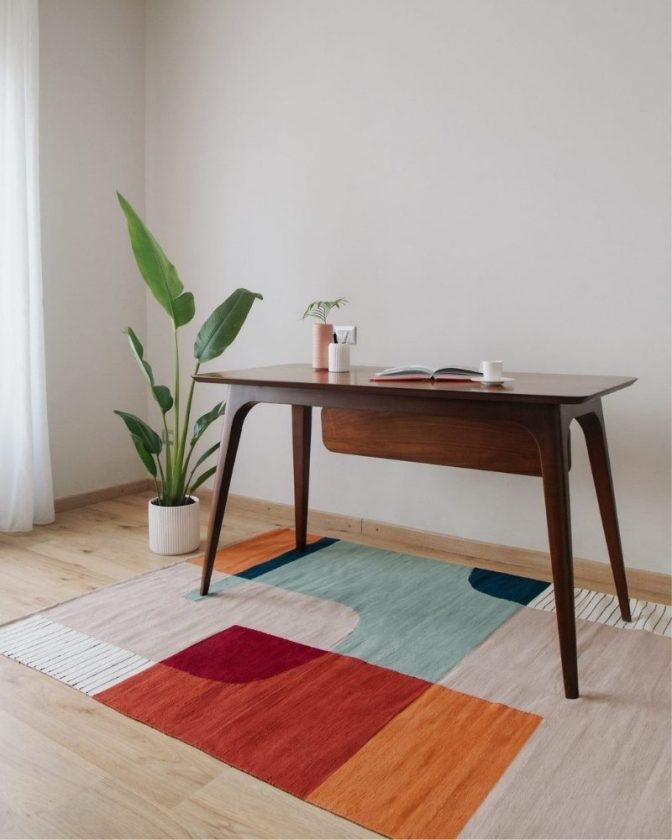
3. Urban Natural
Best for: browsing fair trade rugs in lots of styles and sizes
Categories: Outdoor, Area Rugs, and Accent Rugs
This natural home and lifestyle retailer has a beautifully curated selection of sustainably-made rugs crafted with materials like jute, sisal, wool, and cotton.
Several brands on Urban Natural are also ethically hand-loomed or hand-knotted, such as Loloi — a GoodWeave partner — and Jaipur Living — a brand that partners with thousands of local artisans to sustain heritage crafts.
Price Range: $259 – $9,755
Conscious Qualities: Eco-Conscious Materials

4. LOOMY
Best for: pet-friendly and performance rugs
Categories: Area Rugs, Accent Rugs, Runners, Outdoor Rugs
Founded by a weaver, LOOMY is dedicated to crafting beautiful artisan-made rugs that will last for decades to come.
LOOMY partners with highly-skilled artisan weavers who craft quality rugs made from eco-minded materials like banana silk, jute, and recycled cotton, plus performance options made from 100% recycled polyester built to withstand whatever life brings you.
Price Range: $298 – $8,298
Conscious Qualities: Natural Fibers, Craft Preservation, Vintage Options

5. West Elm
Best for: fair trade rugs in on-trend mainstream styles
Categories: Area Rugs, Accent Rugs
West Elm is bringing ethical rugs to a broader market with their collection of Fair Trade Certified wool and cotton rugs. While I recommend browsing the smaller shops listed above first, West Elm is supporting the movement to responsibly-made, fair trade rugs.
Price Range: $$$
Conscious Qualities: Fair Trade production, Majority Natural Materials

6. Jubi
Best for: Modern rugs in vibrant prints
Categories: Accent Rugs, Circle Rugs, Runners
Jubi is a Brooklyn studio founded by textile designer Cassie Dagostino. Every rug is handmade from New Zealand wool by fourth-generation weaving families in Bhadohi, India using traditional techniques. Each rug is made-to-order, meaning no excess stock. Since everything is made to order, expect between 3 and 7 weeks for your rug, depending on the technique used.