

How to share the bill for climate change fairly will once again top the priority list for African government negotiators at COP30 in Belém, a year after the so-called “Finance COP” in Baku left them feeling short-changed.
As floods, droughts and related food insecurity threaten years of development gains across the continent, African countries say richer nations must step up with finance solutions that help them become more resilient to climate disasters – and transition to cleaner energy – without adding to their hefty debt loads.
Several African countries have lowered ambition for cutting emissions in their latest national climate plans (known as NDCs), citing a lack of funding that has hampered climate action.
For Africa’s climate negotiators, the challenge is not just about money, but making sure the reality of how they are experiencing global warming is recognised with practical solutions as the world strives for net zero emissions by mid-century.
Carlos Lopes, an economist from Guinea-Bissau, who is COP30’s special envoy for Africa, told Climate Home News he expects African countries to “go to the formal negotiations and denounce issues of climate injustice and claim what we believe is the compensation that is required to repair it”.
The goal, he said in an interview, is to change the narrative “to make sure that Africans are not going to be treated as if they were just the vulnerable crowd, the people that are suffering, the ones that need to be helped”.
With COP30 – billed by the Brazilian host government as the “implementation COP” – kicking off on Monday, here are some of the key themes African negotiators are focused on:
Debt-free finance
In Baku, developing countries failed to secure a promise of $1.3 trillion in annual financial support from rich donor governments, as they had proposed. Instead a new goal of $300 billion a year by 2035 was agreed, a sum poorer nations say falls far short of meeting their rising needs.
“We had fairly uncomfortable results in Baku,” Richard Muyungi, the Tanzanian chair of the African Group of Negotiators (AGN), told journalists in the run-up to this year’s COP30 summit.
-
Roadmap to $1.3 trillion seeks to tip climate finance scales but way forward unclear
A new report shows how the world could deliver a big funding boost for developing nations by 2035, yet lacks a firm plan to implement its ideas -
World leaders get behind climate action at first COP in the Amazon
Government heads urged political unity on efforts to tackle climate change while criticising President Trump and others who are undermining that push -
Five big questions hanging over COP30
From insufficient emissions-cutting plans to a shortfall in adaptation finance, here’s our guide to the thorny issues facing the UN climate summit in Belém


African governments are hoping the “Baku to Belém Roadmap” – released ahead of COP30 but not formally part of the talks – will be put into practice, boosting the provision of climate cash from both public and private sources to $1.3 trillion a year by 2035.
To avoid heaping more debt on the continent, the bulk of the money should be grant-based resources, as opposed to loans, Muyungi said.
“[Developed countries must] be mindful of the fact that Africa is not ready to take additional burden in terms of financing,” he said, recalling the UN climate convention principle that countries that caused the climate crisis have a greater responsibility to meet the finance gap.
Africa’s debt has more than doubled in the past decade, with high interest repayments, long-term borrowing time-frames, global inflation, disasters and perceived risks fuelling the rising burden. The African Development Bank estimates that Africa’s total external debt had risen to $1.15 trillion by the end of 2023, with debt servicing reaching $163 billion in 2024, up sharply from $61 billion in 2010.
Unlocking adaptation cash to boost resilience
Adaptation is set to be a major theme of COP30 and African negotiators are aiming to unlock cash to implement their national adaptation plans (NAPs) and adopt metrics for adaptation progress that are tailored to Africa’s specific circumstances.
These metrics were narrowed down at June’s mid-year climate talks in Bonn and in the months since. This is seen as a crucial step for Africa and other developing countries because it will allow them to show how adaptation projects are being implemented on the ground – potentially drawing in more money to build the resilience of local people, economies and infrastructure.
Discussions on finalising a set of around 100 indicators are due to take place in Belém.
COP30 needs to adopt indicators that “reflect Africa’s and vulnerable countries’ realities”, demonstrate progress towards more predictable finance and put adaptation on a par with emissions reduction efforts, said Mohamed Adow, founder of the Nairobi-based think-tank Power Shift Africa.

African negotiators also want to see national adaptation plans becoming a reality on the ground.
So far, more than 20 African countries have submitted their NAPs, detailing measures to cope with climate stresses and disasters. South Africa, for instance, plans to roll out a National Disaster Management Framework, to build the capacity of its emergency response departments, such as health and fire.
But these adaptation strategies are still largely on paper, said AGN head Muyungi. “We have been given resources for the preparation of these plans, but the true implementation of what we need is not given attention,” he lamented.
Benefits for Congo Basin from the TFFF forest fund?
The Congo Basin is home to the world’s second-largest rainforest, yet the region received only 4% of international forest-related financing between 2017 and 2021, according to the World Wildlife Fund (WWF).
That means African delegates in Belém are eager to hear more about the Tropical Forest Forever Facility (TFFF), an investment-driven forest protection initiative launched last week by COP30 host Brazil.
Felix Tshisekedi, president of the Democratic Republic of Congo, told the pre-COP leaders’ summit that his country is keen to collaborate with other partners to ensure the TFFF is a success.
Explainer: what is the TFFF, Brazil’s COP30 rainforest fund?
Muyungi said questions remain about how the fund will work, however.
“How Africa will benefit from this is still debatable – but we have requested that we get engaged to ensure that we understand how this fund can help the continent,” he said.
In a position paper released ahead of the climate summit, African civil society groups said COP30 must recognise the Congo Basin “as a vital global climate asset and ensure equitable finance flows to its protection and sustainable management”.
Africa-led initiatives such as the Great Green Wall and the 100 million-hectare African Forest Landscape Restoration Initiative (AFR100) must also be supported to strengthen nature-based solutions, they added.
On Friday, Reuters reported that several European donor nations had signed up to a $2.5 billion plan to save the Congo rainforest, launching a conservation scheme that could be seen as a rival to the TFFF.
A just transition made for Africa
After negotiations on a Just Transition Work Programme (JTWP) stalled at COP29, activists want to see the issue back in focus at COP30 via a proposed Belém Action Mechanism – a framework to ensure climate action fosters social justice and equity in job creation and finance so that communities and workers reliant on coal mines or oil refineries are not left behind in the global shift to cleaner sources of energy.
Again, securing measures that reflect African concerns will be key, said Muyungi.
“The agenda here is to ensure that just transition is not about e-mobility, it’s not about the hydrogen economy, it’s about ensuring that Africa gets what it needs to be part of the world. Energy accessibility is one of the key priority issues in the just transition,” he said, noting that 600 million Africans still have no access to a reliable power supply.
In his statement at last week’s leaders’ summit in Belém, Ghana’s environment minister, Emmanuel Armah-Kofi Buah, said the shift to clean energy “must not leave vulnerable communities behind”, adding that workers in traditional industries need to be protected, with their voices guiding “our decisions as a bridge and not a cliff”.
And as the world transitions to clean energy, fuelling demand for minerals critical to supply chains, resource-rich African countries are pushing to ensure they reap direct benefits.
COP30 could confront “glaring gap” in clean energy agenda: mining
Civil society groups, in an open letter, urged delegates in Belém to put human rights, environmental protection and equity in mineral value chains at the forefront of COP30 discussions.
“We need to ensure that these critical minerals are indeed helping the continent to move from where we are to go to a better world,” Muyungi said.
Africa’s COP30 envoy Lopes said African countries want to ensure that discussions at COP30 on critical minerals focus on how those resources “should be used to power Africa’s transition” rather than those of other countries, and how the shift to clean energy can support their development more broadly.
Loss and damage payouts for climate impacts
Between 2020 and 2030, loss and damage costs in Africa are estimated to range between $280 billion-$440 billion a year, depending on the level of warming and severity of extreme weather events including storms, droughts, flooding and rising seas, according to the African Development Bank.
In its new climate plan, South Africa says climate impacts in the country have exceeded the limits of adaptation and it is now facing “irreplaceable loss” as climate change damages cultural heritage sites, erodes indigenous knowledge systems, shrinks farmlands, reduces economic growth and worsens health through problems like heat-driven illness. The plan calls for international support to help it cope.
At COP30, where the new global Fund for Responding to Loss and Damage (FRLD) was due to put out its first call for proposals on Monday, African civil society groups want to see the fund provide grants to help climate-vulnerable nations on the continent with both sudden and slow-onset crises such as losses caused by rising seas or desertification.
Loss and damage fund will launch call for proposals at COP30
In the case of climate disasters, mechanisms for rapid emergency response and disbursement of money should also be established, they said. Those could include direct cash transfers to affected populations and budget support for national and local governments.
Africa COP30 envoy Lopes, who has previously held positions at the United Nations and African Union, said loss and damage must be addressed on “a tragedy-emergency basis”, adding that Africa needs a fund that is “efficient” and can “change the reality of an emergency as fast as possible”.
After the FRLD was launched to great fanfare two years ago at the COP28 talks in Dubai, there were hopes for quick results, he noted, but so far little has materialised and the fund – which currently has only around $400 million in its coffers – has received no significant new donations.
“It’s one more instance where climate justice is being shortchanged with words that continue to over-promise and under-deliver,” Lopes said.
The post What do African countries want from COP30? appeared first on Climate Home News.

Next week, diplomats from around the world will descend on Yerevan, Armenia, to negotiate a series of decisions under the UN Convention on Biological Diversity (CBD).
Between 19 and 30 October, 196 parties will gather to hammer out the precise wording of the dozens of legal texts that make up the decisions under the Conference of the Parties (COP) to the CBD.
This year’s summit is particularly significant, as it marks the halfway point between the agreement of the Kunming-Montreal Global Biodiversity Framework and the deadline for achieving its targets.
The CBD has found that countries are currently not on track to meet 22 out of the framework’s 23 targets.
During the fortnight, delegates will also be negotiating decisions relating to the two supplemental protocols to the CBD: the Cartagena Protocol, which covers biosafety; and the Nagoya Protocol, which covers access and benefit-sharing for the use of genetic resources.
(The Cartagena and Nagoya Protocols, which are each governed by a “meeting of the parties”, or “MOP”, have fewer parties than the CBD as a whole, with 173 and 141, respectively.)
Carbon Brief is tracking the progress of countries towards consensus on dozens of negotiating texts using the interactive table below.
The tracker includes texts from the COP, as well as the MOPs for the Cartagena and Nagoya protocols. It also includes draft decisions from the most recent subsidiary body meetings, as these form the starting point for the negotiations in Yerevan.
The CBD has three subsidiary bodies: the subsidiary body on scientific, technical and technological advice (SBSTTA), the subsidiary body on implementation (SBI) and the subsidiary body on article 8(j) and other provisions (SB8J).
SB8J focuses on issues related to the Indigenous peoples and local communities. It was established at COP16 in Cali, Colombia, in 2024.
The first two columns of the interactive tracker list the topic of each agenda item and the relevant body, with subsequent columns including dates, page counts and links to the original documents.
The table is searchable and can be sorted using the arrows in the header.
Areas of disagreement in UN draft texts are denoted by square brackets. Counting the brackets in a particular iteration of a text therefore gives a sense of how far parties are from reaching consensus.
The bracket column is colour-coded, with dark green indicating a low number of brackets and red indicating a high number of brackets remaining.
Texts can also present parties with choices using “options” or alternatives (“alt”), which are counted together in the sixth column of the table.
The key discussions in Yerevan will centre around two agenda items in particular. The first is the global review, which will assess progress towards the GBF and make recommendations for accelerating action.
The second is finance, which can be separated into two parts: resource mobilisation and the financial mechanism. On resource mobilisation, biodiverse global south countries are likely to push for an increased amount of international finance for conservation.
Disagreement over the creation of the financial mechanism led to the suspension of COP16 in Cali in October 2024, as parties failed to find agreement on the mobilisation of finance before the end of the summit.
Global south countries want the establishment of a separate financial mechanism under the control of the CBD; global north countries largely prefer to maintain the existing mechanism, which sits under the Global Environment Facility.
At the resumed session of COP16 in Rome in early 2025, countries agreed on a roadmap that would lead to the establishment of a permanent mechanism.
related
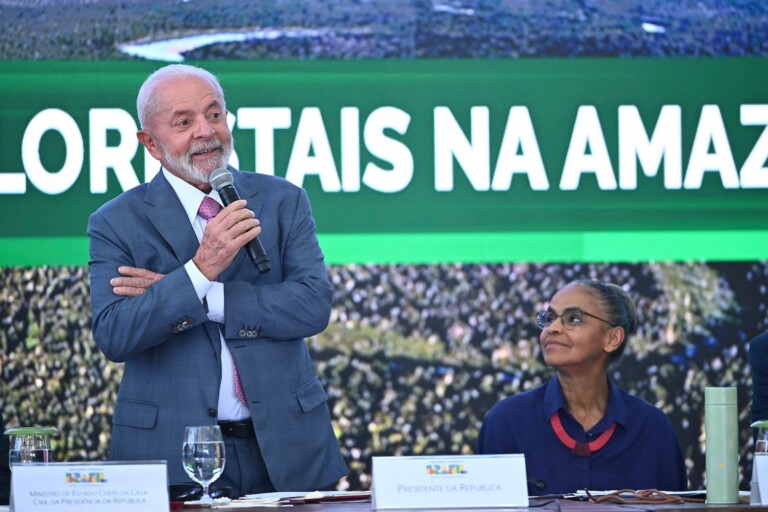
Analysis: Lula presidency saved at least 20,000km2 of Brazilian Amazon since 2022
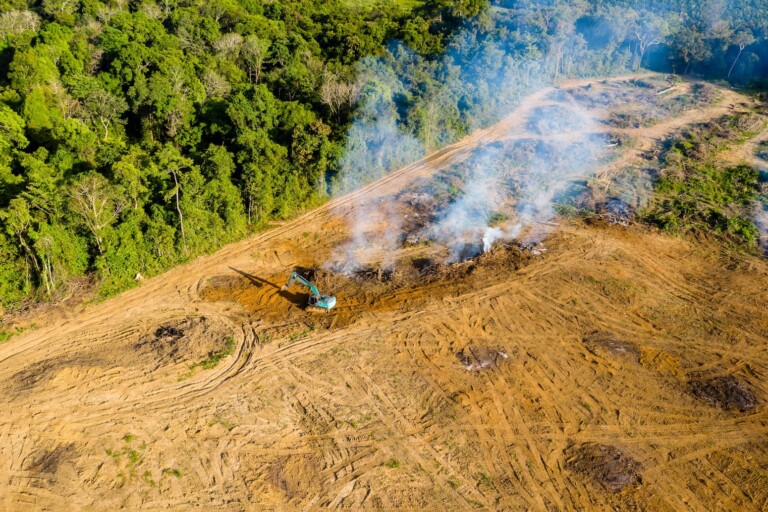
Why land-use emissions have fallen by a third this century – in six charts

Analysis: 84% of nations miss deadline to identify ‘nature-harming’ subsidies by 2025
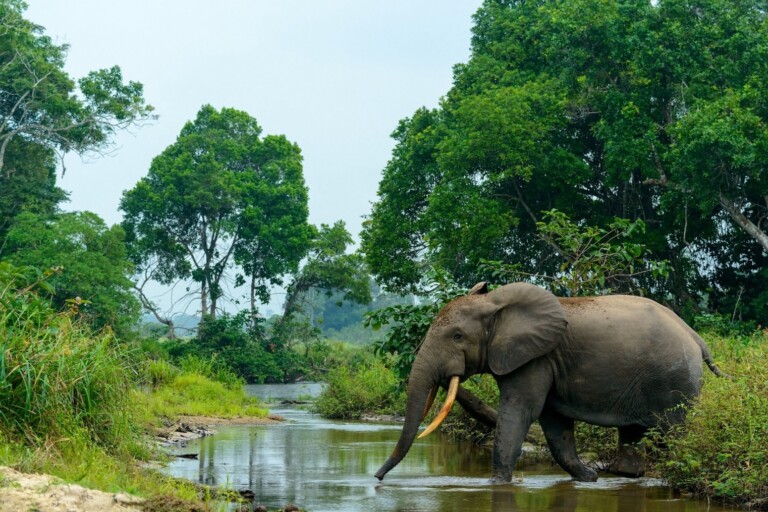
UK withdraws millions in funding from world’s second-largest rainforest in Congo
The post Interactive: Tracking negotiating texts at the COP17 biodiversity summit appeared first on Carbon Brief.
Interactive: Tracking negotiating texts at the COP17 biodiversity summit
A beacon of love
On an outer island of Fiji, two thousand nautical miles from Sydney, is a shining light of hope and resilience for our troubled world.
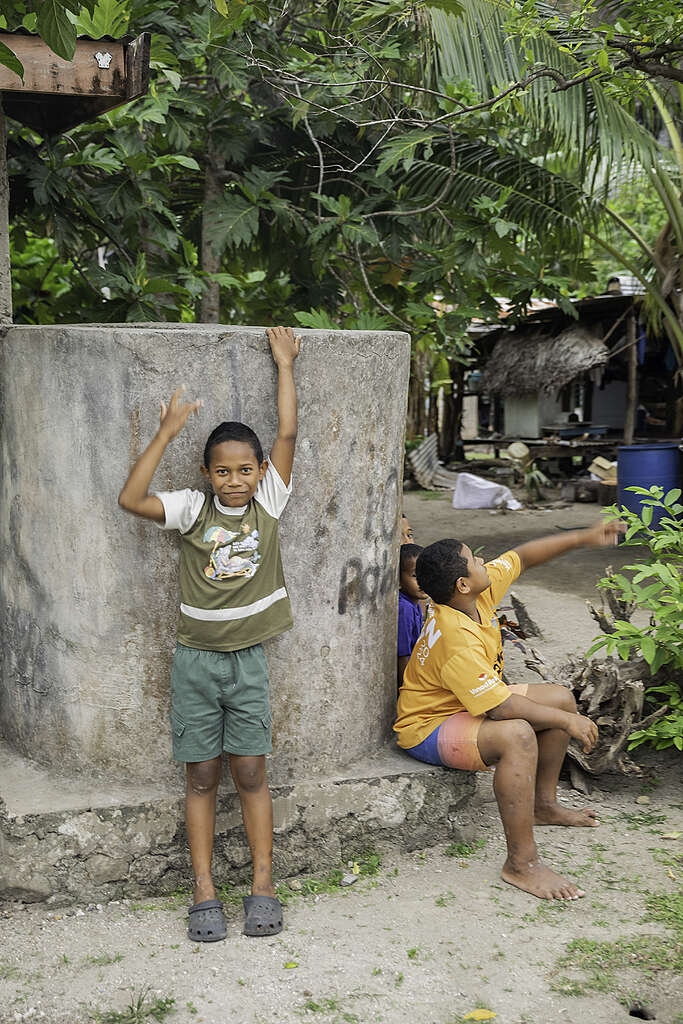
The island of Kioa is home to a Tuvaluan community who migrated from their atoll of Vaitupu in the late 1940s. It is a land of warm hearts, big smiles, and deep cultural roots; a place where the sound of a conch still summons the island together, where islanders paddle out to fish in carved outrigger canoes, and healthy happy children walk barefoot to school.
Here, culture is life. Kioans live sustainably through their traditional knowledge and practices. The island is alive with song, dance and the rhythms of a life tied to the tides, the winds, and the seasons.
Facing the future
Greenpeace has been lucky to have a relationship with Kioa for a number of years now, and we are continually learning from this remarkable community.
Last week, as part of our Voyaging Oceania project, we returned to the island. Our purpose was twofold —- to carry messages from the island to leaders gathering in Nadi this week for the Pacific Pre-COP, and to support the Kioa community in their efforts to improve water security for the island.
Unlike Tuvalu itself, with its eight atolls, Kioa is a mountainous, forested and richly fertile island. It will remain habitable far into the future. Kioans did not initially migrate from Vaitupu due to climate change, but the move was prophetic. They now have a lifeboat.
However, even Kioa faces challenges on our rapidly warming planet, in particular when it comes to water. Climate change is shifting once reliable rainfall patterns. On top of this, the island is already feeling the effect of this year’s intensifying El Niño event, which for Fiji means reduced rainfall and prolonged dry spells.
Right now, fresh water has to be carefully rationed, and is only available for a few hours a day. During last week’s visit aboard our campaigning ship Oceania, Greenpeace was privileged to work with the Kioa community on a new solar-powered water distribution project for the island.
Designed and led by the island, the project involves using a solar pump to move water from a reliable source to a storage tank and then using gravity to distribute the water around the village.
It was a lesson in how local knowledge and ingenuity can be the backbone of today’s climate solutions. To build a dam around the source, the local community knew the exact spot where they could gather gravel at low tide to mix with the cement. They took only what was needed, knowing that all resources must be carefully conserved. Kioa has no roads and no machinery, and it was an all-of-island effort to carry the materials up to the project site, including many heavy bags of sand and rock.
Such projects truly bring to life the vision of a resilient, locally-led, fossil fuel free Pacific.