Connect with us

Published

on

Top 5 Carbon Stocks to Watch in 2025

The transition to a low-carbon economy is not just a trend—it’s a must. With climate change accelerating, companies are under increasing pressure to reduce their carbon footprints. Major tech companies, such as Meta, Apple, and Netflix, have committed to achieving net-zero emissions by 2030, while mining and energy giants like Barrick, Newmont, and ExxonMobil are following suit. For investors, this evolving trend presents a unique opportunity to invest in carbon stocks and support innovative companies focused on carbon reduction and capture.

Why Carbon Stocks Are Gaining Traction in 2025

Carbon stocks are becoming increasingly popular as people and organizations alike strive to meet climate goals. These stocks represent companies that focus on reducing or offsetting carbon emissions. They are drawing attention not only for their environmental benefits but also for their potential financial returns. 

With governments and corporations prioritizing carbon reduction technologies and emissions offsets, the market for carbon-related solutions is poised for rapid growth.

In 2025, here are the top five carbon stocks worth keeping on your radar.

1. Brookfield Renewable Partners (BEP): A Leader in Clean Energy

Brookfield Renewable Partners (BEP) is one of the world’s largest publicly traded renewable energy companies. With a clear focus on clean, renewable energy, BEP distinguishes itself from many of its competitors by operating as a pure-play renewable energy company. This means that its portfolio consists exclusively of renewable sources of power generation, unlike other companies that often combine renewable energy with fossil fuel assets.

Global Portfolio and Capacity

As of 2024, BEP’s diversified portfolio encompasses over 35,000 megawatts of operating capacity across various renewable energy sources:

  • Hydroelectric Plants: 229 facilities
  • Wind Farms: 105 installations
  • Solar Power Plants: 88 sites
  • Energy Storage Facilities: 700 megawatts of capacity

This extensive array of assets spans multiple regions, including North America, South America, Europe, and Asia, underscoring BEP’s commitment to global renewable energy development.
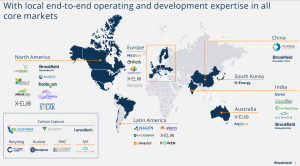
Brookfield Renewable Partners global operations

Financial Performance, Growth, and Expansion Plans

In the third quarter of 2024, BEP reported Funds From Operations (FFO) of $278 million, equating to $0.42 per unit. This represents an 11% increase compared to the same period in the prior year, highlighting the company’s robust financial health and operational efficiency. 

Over the past 5 years, BEP has maintained an average dividend yield of around 5%. Since its inception over two decades ago, it has reached over $109 billion in assets under management globally. 

The company is actively pursuing an ambitious growth strategy, with a development pipeline poised to add 11,000 megawatts of capacity. This expansion represents a 46% increase over the current operating capacity, with plans to execute these developments over the next 3 years.

Successful realization of this pipeline could enable the renewable energy company to significantly scale its power generation capabilities. Here’s what BEP’s development and growth plans look like, highlighting its 10.5 GW partnership with Microsoft:
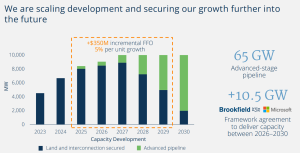
Brookfield Renewable Partners growth plan
Source: Company presentation

Positioning in the Transition to Clean Energy

As corporations worldwide strive to achieve net-zero carbon emissions, the demand for renewable energy sources is escalating. BEP’s exclusive focus on carbon-free energy positions it as a preferred partner for companies seeking to reduce their carbon footprints.

For investors seeking exposure to the renewable energy sector with a preference for established companies demonstrating stable growth and reliable returns, Brookfield Renewable Partners represents a compelling option.

2. Aker Carbon Capture ASA (AKCCF): Pioneering Carbon Capture Solutions

Aker Carbon Capture (AKCCF) is a Norwegian company specializing in carbon capture technology. Leveraging its expertise from the Aker Group, a global leader in offshore engineering, Aker Carbon Capture has developed modular carbon capture systems that are both cost-effective and scalable.

One of the company’s standout innovations is the “Just Catch” modular carbon capture plant. It is designed to meet the needs of mid-sized industries like cement, biomass, and waste-to-energy. This plant reduces the time and cost typically associated with custom-built carbon capture facilities.

Aker has also developed a proprietary amine solvent, a technology that efficiently captures CO₂ from industrial emissions. This solvent is highly stable, has low degradation rates, and minimizes energy consumption, making it a cost-effective solution for industries looking to reduce their carbon footprint. 

The technology has been successfully deployed in real-world projects, such as the CO₂ capture pilot at the Norcem cement plant in Brevik, Norway.

Aker Carbon Capture is also undergoing a joint venture with SLB to form SLB Capturi, which will further accelerate the development of large-scale carbon capture technologies. The carbon capture company partnered with Microsoft last year to capture and store carbon at pulp and paper mills.

Financial Performance, Key Projects, and Outlook

As of the third quarter of 2024, ACC ASA reported a net loss of NOK 47 million. The company maintained a robust financial position with NOK 4.5 billion in cash and an equity standing at NOK 5.5 billion.

ACC ASA is involved in several significant carbon capture projects including:

  • Heidelberg Materials Brevik CCS Project (Norway): Captures 400,000 tonnes of CO₂ annually.
  • Ørsted’s BECCS Project (Denmark): Deploying five Just Catch units to capture up to 500,000 tonnes of CO₂.
  • Twence Project (Netherlands): Captures 100,000 tonnes of CO₂ annually for use in local agriculture.

With a solid financial foundation and strategic partnerships, ACC ASA is well-positioned to expand its carbon capture solutions globally. The aim is to contribute significantly to the reduction of industrial CO₂ emissions and support the transition to a low-carbon economy.

3. LanzaTech Global, Inc. (LNZA): Turning Emissions into Valuable Products

LanzaTech Global, Inc. (LNZA) is a pioneering carbon recycling company that transforms waste carbon emissions into sustainable fuels and chemicals through innovative biotechnology using gas fermentation. Through this process, industrial emissions—rich in carbon monoxide and carbon dioxide—are converted into ethanol and other chemicals.
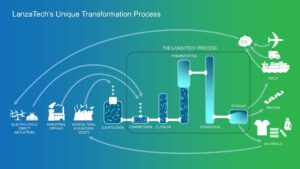
lanzatech carbon conversion process
Source: LanzaTech website

The company uses proprietary microbes engineered to thrive in industrial gas streams, such as those found in steel mills and refineries. These microbes consume waste gases, turning them into useful products. 

The ethanol produced can serve as a building block for various products, including jet fuel, plastics, and synthetic fibers.

Financial Performance and Strategic Development

In the third quarter of 2024, LanzaTech reported revenue of $9.9 million, a decrease from $17.4 million in the second quarter and $19.6 million in the third quarter of 2023. This decline was primarily due to a timing delay in a LanzaJet sublicensing event, which was expected to generate about $8.0 million in licensing revenue.

LanzaTech has been actively expanding its technological capabilities and market reach:

  • CirculAir Initiative: In June 2024, LanzaTech and its subsidiary LanzaJet introduced CirculAir, a commercially viable solution designed to convert waste carbon and renewable power into sustainable aviation fuel (SAF). 
  • Project Drake: LanzaTech advanced Project Drake, a 30-million-gallon sustainable aviation fuel project, furthering its commitment to large-scale SAF production.

Key Projects and Partnerships

The carbon recycling company has engaged in several significant projects and collaborations, including:

  • Technip Energies Collaboration: Received U.S. Department of Energy funding to commercialize CO₂-to-ethylene technology.
  • Eramet Partnership: Developing a Carbon Capture, Utilization, and Storage (CCUS) project in Norway.
  • LanzaJet Initiative: Introducing CirculAir, a technology to produce sustainable aviation fuel (SAF).

Additionally, LanzaTech is developing a novel biocatalyst to directly convert CO₂ to ethanol at 100% carbon efficiency, leveraging affordable, renewable hydrogen. This transformative technology aims to produce biofuels and feedstocks for valuable products using carbon-free renewable energy, water, and CO₂.

With a solid financial foundation bolstered by recent capital raises and strategic partnerships, LanzaTech is well-positioned to expand its carbon recycling solutions globally, creating sustainable products from waste carbon.

4. Occidental Petroleum Corporation (OXY): Carbon Capture with Enhanced Oil Recovery

Occidental Petroleum (OXY) is a major player in the oil and gas industry. However, in recent years, the company has been transforming itself into a leader in carbon management solutions. 

Occidental has embraced Direct Air Capture (DAC) technology, which removes CO₂ directly from the atmosphere. In partnership with Carbon Engineering, Occidental is constructing the world’s largest DAC facility in Texas, a groundbreaking project that will play a significant role in achieving global emission reduction targets.
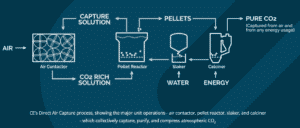
Carbon Engineering DAC tech

Financial Performance

In the third quarter of 2024, Occidental reported net income attributable to common stockholders of $964 million, or $0.98 per diluted share. The company has scheduled the announcement of its fourth-quarter 2024 financial results for February 18, 2025.

Carbon Capture Initiatives

Occidental is actively investing in DAC technology through its subsidiary, 1PointFive. The company’s flagship DAC facility, named STRATOS, is under construction in the Permian Basin.

STRATOS is designed to extract 500,000 metric tons of atmospheric CO₂ annually, laying the foundation for commercial-scale DAC deployment. The facility will begin operations in the summer of 2025, with live power anticipated to come online in December 2024.

Occidental plans to integrate the captured CO₂ into enhanced oil recovery (EOR) processes, injecting the CO₂ into aging oil fields to extract additional oil while effectively sequestering the CO₂ underground.

This approach creates a closed-loop system that both boosts oil production and reduces atmospheric carbon.

Additionally, Occidental is developing a project to transport and store CO₂ captured from Velocys’ planned Bayou Fuels biomass-to-fuels project in Natchez, Mississippi, in secure geologic formations.

The Bayou Fuels project converts waste woody biomass into transportation fuels, and applying CO₂ capture and storage can make the facility a net-negative carbon dioxide emitter.

Occidental’s approach is an example of how traditional energy companies are evolving to embrace sustainability. By combining its existing expertise in oil extraction with innovative carbon capture methods, Occidental is paving the way for a future where fossil fuel extraction can coexist with carbon reduction technologies.

5. Equinor ASA (EQNR): Leading the Way in Carbon Storage and Capture

Equinor, formerly known as Statoil, is a Norwegian energy giant that has diversified its portfolio to include renewable energy sources like wind power. It has also been at the forefront of carbon capture, utilization, and storage (CCUS) technologies for over 25 years. 

Their extensive experience includes operating the world’s first dedicated CO₂ storage site at the Sleipner field since 1996 and the Snøhvit field since 2008. The image from the company’s presentation below shows its overall performance in the latest report.

Equinor ASA overall performance

Moreover, Equinor is a key player in the Northern Lights project, a pioneering initiative in Norway aimed at developing a large-scale CCS infrastructure.

The Northern Lights project focuses on capturing CO₂ from industrial sources, transporting it via ships, and securely storing it beneath the North Sea seabed. This project is a crucial step in addressing the complexities of CCS, and Equinor is positioning itself as a facilitator of this transformative technology. 

What makes the Northern Lights project particularly noteworthy is its open-source infrastructure. It allows other companies to use the storage facilities. This collaborative model could accelerate the widespread adoption of CCS technology across Europe and beyond.

Equinor Northern Lights project

Financial Performance

Equinor reported Q3 2024 operating income of $6.89 billion, down 13% from $7.93 billion in Q3 2023, missing forecasts. Adjusted net income after tax was $2.04 billion, with net income at $2.29 billion. Earnings per share reached $0.79. Lower oil prices and production declines drove the decrease in profit.

Other Key Projects and Developments

  • Bayou Bend CCS Project: Equinor has acquired a 25% interest in Bayou Bend CCS LLC, positioning it to be one of the largest carbon capture and storage projects in the United States.
  • UK Carbon Storage Initiatives: Equinor, in collaboration with BP and TotalEnergies, has secured investment into Britain’s carbon capture projects, directly supporting 2,000 jobs in the northeast of England.

Strategic Partnerships, Technological Innovations, and Outlook

Equinor has signed an agreement with French gas grid operator GRTgaz to develop a CO₂ transport system that will carry captured CO₂ from French industrial emitters to offshore storage sites in Norway.

The Norwegian energy giant operates the Technology Centre Mongstad, the world’s largest and most flexible plant for testing and improving CO₂ capture technologies. This facility plays a crucial role in advancing CCUS solutions to decarbonize industries and the energy system.

In December 2024, Equinor secured over $3 billion in financing for its Empire Wind 1 offshore project in the U.S. Scheduled to become fully operational by 2027, the project will deliver clean energy to 500,000 New York homes, advancing the company’s renewable energy ambitions.

Equinor has decades of experience in offshore oil and gas exploration, and its deep-rooted knowledge of energy infrastructure is key to its success in developing large-scale CCS solutions. With the potential to store the equivalent of 1,000 years of Norwegian CO₂ emissions beneath the seabed, Equinor’s initiatives are pivotal in supporting global climate goals.

Conclusion: The Future of Carbon Stocks

As more companies declare their commitment to net-zero goals and seek innovative solutions to reduce carbon emissions, carbon stocks are becoming attractive to investors. The top carbon stocks or companies mentioned in this article—Brookfield Renewable Partners, Aker Carbon Capture, LanzaTech, Occidental Petroleum, and Equinor—are leading the charge in decarbonizing industries and creating sustainable solutions for a carbon-constrained world.

By investing in these carbon stocks, investors not only support the transition to a cleaner, more sustainable future but also position themselves to benefit from the growth of the green economy.

As we move closer to 2030 and beyond, carbon stocks will become an increasingly important part of investment portfolios aiming to align financial returns with environmental impact.

The post Top 5 Carbon Stocks to Watch in 2025 appeared first on Carbon Credits.

Continue Reading

Carbon Footprint

Climate Impact Partners Unveils High-Quality Carbon Credits from Sabah Rainforest in Malaysia

Published

on

The voluntary carbon market is changing. Buyers are no longer focused only on large volumes of cheap credits. Instead, they want projects with strong science, long-term monitoring, and clear proof that carbon has truly been removed from the atmosphere. That shift is drawing more attention to high-integrity, nature-based projects.

One project now gaining that spotlight is the Sabah INFAPRO rainforest rehabilitation project in Malaysia. Climate Impact Partners announced that the project is now issuing verified carbon removal credits, opening access to one of the highest-quality nature-based removals currently available in the global market.

Restoring One of the World’s Richest Rainforest Ecosystems

The project is located in Sabah, Malaysia, on the island of Borneo. This region is home to tropical dipterocarp rainforest, one of the richest forest ecosystems on Earth. These forests store huge amounts of carbon and support extraordinary biodiversity. Some dipterocarp trees can grow up to 70 meters tall, creating habitat for orangutans, pygmy elephants, gibbons, sun bears, and the critically endangered Sumatran rhino.

However, the forest within the INFAPRO project area was not intact. In the 1980s, selective logging removed many of the most valuable tree species, especially large dipterocarps. That caused serious ecological damage. Once the key mother trees were gone, natural regeneration became much harder. Young seedlings also had to compete with dense vines and shrubs, which slowed the forest’s recovery.

To repair that damage, the INFAPRO project was launched in the Ulu-Segama forestry management unit in eastern Sabah.

  • The project has restored more than 25,000 hectares of logged-over rainforest.
  • It was developed by Face the Future in cooperation with Yayasan Sabah, while Climate Impact Partners has supported the project and helped bring its credits to market.

Why Sabah’s Carbon Removals are Attracting Attention

What makes Sabah INFAPRO different is not only the size of the restoration effort. It is also the way the project measured carbon gains.

SABAH MALAYSIA RAINFOREST
Source: face the future

Many forest carbon projects issue credits in annual vintages based on year-by-year growth estimates. Sabah INFAPRO followed a different path. It used a landscape-scale monitoring system and waited until the forest moved through its strongest natural growth period before issuing removal credits.

  • This approach gives the credits more weight. Rather than relying mainly on short-term annual estimates, the project measured carbon sequestration over a longer period. That helps show that the forest delivered real, sustained, and measurable carbon removal.

The scientific backing is also unusually strong. Since 2007, the project has maintained nearly 400 permanent monitoring plots. These plots have allowed researchers, independent auditors, and technical specialists to observe the full growth cycle of dipterocarp forest recovery. The result is a large body of field data that supports carbon calculations and strengthens confidence in the credits.

In simple terms, buyers are not just being asked to trust a model. They are being shown years of direct forest monitoring across the project landscape.

Strong Ratings Support Market Confidence

Independent assessment has also lifted the project’s profile. BeZero awarded Sabah INFAPRO an A.pre overall rating and an AA score for permanence. That places the project among the highest-rated Improved Forest Management, or IFM, projects in the world.

The rating reflects several important strengths. First, the project has very low exposure to reversal risk. Second, it has a long and stable operating history. Third, its measured carbon gains align well with peer-reviewed ecological research and independent analysis.

These points matter in today’s market. Buyers have become more cautious after years of debate over the quality of some forest carbon credits. As a result, they now look more closely at durability, transparency, and third-party validation. Sabah INFAPRO’s rating helps answer those concerns and makes the project more attractive to companies looking for credible carbon removal.

The project is also registered with Verra’s Verified Carbon Standard under the name INFAPRO Rehabilitation of Logged-over Dipterocarp Forest in Sabah, Malaysia. That adds another level of market recognition and verification.

A Wider Model for Rainforest Recovery

Sabah INFAPRO also shows why high-quality nature-based projects are about more than carbon alone. The restoration effort supports broader ecological recovery in one of the world’s most important rainforest regions.

Climate Impact Partners said it has worked with project partners to restore degraded areas, run local training programs, carry out monthly forest patrols, and distribute seedlings to support rainforest recovery beyond the project boundary. These efforts help strengthen the wider landscape and expand the project’s environmental impact.

That broader value is becoming more important for buyers. Companies increasingly want projects that support biodiversity, ecosystem health, and local engagement, along with carbon removal. Sabah INFAPRO offers that mix, making it a stronger fit for the market’s shift toward higher-integrity credits.

Why IFM is Getting More Attention in the Carbon Market

The project’s launch also fits a wider shift in the voluntary carbon market. Improved Forest Management refers to practices that help existing forests store more carbon or avoid emissions through better stewardship. Unlike afforestation or reforestation, which involve creating or replanting forests, IFM focuses on improving the way current forests are managed.

These practices can help forests grow older, become more diverse, and stay healthier under climate stress. They can also support timber production in some cases by improving harvest cycles rather than stopping forest use altogether.

Because IFM projects often operate over very long periods, sometimes 100 years or more, they can generate lasting climate benefits. Still, buyers must be careful. Quality varies widely across projects, and strong due diligence remains essential.

IFM CARBON CREDITS

That is why Sabah INFAPRO is drawing attention. Although IFM supply has grown in recent years, truly high-quality carbon removal credits within the category remain limited.

Nature-Based Carbon Removal Still Leads the Market

Nature-based carbon removal continues to dominate the spot market, as reported by Carbon Direct. In 2025, about 95% of all carbon dioxide removal credits issued in the voluntary carbon market came from nature-based pathways. Only 5% came from higher-durability pathways such as biochar or BECCS.

This shows two things at once. First, nature-based carbon removal still plays the leading role in today’s market. Second, high-durability removal technologies are still at an early stage of deployment.

Demand Side: 

Within nature-based credits, supply conditions differ sharply by project type.

  • Afforestation, reforestation, and revegetation, known as ARR, have remained tight. Over the past four years, ARR issuances and retirements have stayed close to a 1:1 ratio, while annual issuance has held nearly flat at around 7 million to 8 million metric tons. That has left limited ARR inventory available for spot buyers.
  • IFM has followed a different path. Issuances have grown about 2.5 times since 2023, making it one of the biggest growth areas in nature-based carbon credits. Even so, the supply of top-tier IFM carbon removal credits remains much smaller than headline volumes suggest.

Supply Side: 

At the same time, buyer behavior is shifting. Demand has moved away from many older REDD+ projects and toward IFM, ARR, agriculture-based projects, and other credit types viewed as more credible or better aligned with corporate climate goals.

Retirements have dipped slightly, but that does not necessarily mean interest is fading. Buyer participation has remained steady. What changed is the purchasing strategy. Companies are becoming more selective about what they buy, when they buy, and how much they are willing to pay for quality.

Meanwhile, long-term nature-based offtakes and purchase commitments have risen above 90 million tons of future delivery. Most of those commitments are concentrated in ARR projects. That trend shows both how tight ARR supply is today and how seriously buyers are trying to secure future volume.

FOREST carbon credits

Against that backdrop, Sabah INFAPRO enters the market at the right time. It offers a rare mix of long-term monitoring, strong scientific backing, high biodiversity value, and verified removals. For buyers looking for high-quality nature-based carbon removal, this Malaysian rainforest project may become an important benchmark.

The post Climate Impact Partners Unveils High-Quality Carbon Credits from Sabah Rainforest in Malaysia appeared first on Carbon Credits.

Continue Reading

Carbon Footprint

Bitcoin Falls as Energy Prices Rise: Why Crypto Is Now an Energy Market Story

Published

on

Bitcoin Falls as Energy Prices Rise: Why Crypto Is Now an Energy Market Story

Bitcoin’s recent drop below $70,000 reflects more than short-term market pressure. It signals a deeper shift. The world’s largest cryptocurrency is becoming increasingly tied to global energy markets.

For years, Bitcoin has moved mainly on investor sentiment, adoption trends, and regulation. Today, another force is shaping its direction: the cost of energy.

As oil prices rise and electricity markets tighten, Bitcoin is starting to behave less like a tech asset and more like an energy-dependent system. This shift is changing how investors, analysts, and policymakers understand crypto.

A Global Power Consumer: Inside Bitcoin’s Energy Use

Bitcoin depends on mining, a process that uses powerful computers to verify transactions. These machines run continuously and consume large amounts of electricity.

Data from the U.S. Energy Information Administration shows Bitcoin mining used between 67 and 240 terawatt-hours (TWh) of electricity in 2023, with a midpoint estimate of about 120 TWh.

Bitcoin Mining Annual Energy Use (TWh)

Other estimates place consumption closer to 170 TWh per year in 2025. This accounts for roughly 0.5% of global electricity demand. Recently, as of February 2026, estimates see Bitcoin’s energy use reaching over 200 TWh per year.

That level of energy use is significant. Global electricity demand reached about 27,400 TWh in 2023. Bitcoin’s share may seem small, but it is comparable to the power use of mid-sized countries.

The network also requires steady power. Estimates suggest it draws around 10 gigawatts continuously, similar to several large power plants operating at full capacity. This constant demand makes energy costs central to Bitcoin’s economics.

When Oil Rises, Bitcoin Falls

Bitcoin mining is highly sensitive to electricity prices. Energy is the highest operating cost for miners. When power becomes more expensive, profit margins shrink.

Recent market movements show this link clearly. As oil prices rise and inflation concerns persist, energy costs have increased. At the same time, Bitcoin prices have weakened, falling below the $70,000 level.

bitcoin price below $70000
Source: Coindesk

This is not a coincidence. Studies show a direct relationship between Bitcoin prices, mining activity, and electricity use. When Bitcoin prices rise, more miners join the network, increasing energy demand. When energy costs rise, less efficient miners may shut down, reducing activity and adding selling pressure.

This creates a feedback loop between crypto and energy markets. Bitcoin is no longer driven only by demand and speculation. It is now influenced by the same forces that affect oil, gas, and power prices.

Cleaner Energy Use Is Growing, but Fossil Fuels Still Matter

Bitcoin’s environmental impact depends on its energy mix. This mix is improving, but it remains uneven.

A 2025 study from the Cambridge Centre for Alternative Finance found that 52.4% of Bitcoin mining now uses sustainable energy. This includes both renewable sources (42.6%) and nuclear power (9.8%). The share has risen significantly from about 37.6% in 2022.

Despite this progress, fossil fuels still account for a large portion of mining energy. Natural gas alone makes up about 38.2%, while coal continues to contribute a smaller share.

bitcoin electricity by source
Source: Cambridge Centre for Alternative Finance (CCAF)

This reliance on fossil fuels keeps emissions high. Current estimates suggest Bitcoin produces more than 114 million tons of carbon dioxide each year. That puts it in line with emissions from some industrial sectors.

The shift toward cleaner energy is real, but it is not complete. The pace of change will play a key role in how Bitcoin fits into global climate goals.

Bitcoin’s Climate Debate Intensifies

Bitcoin’s growing energy demand has placed it at the center of ESG discussions. Its impact is often measured through three key areas:

  • Total electricity use, which rivals that of entire countries.
  • Carbon emissions are estimated at over 100 million tons of CO₂ annually.
  • Energy intensity, with a single transaction using large amounts of power.

bitcoin environmental footprints
Source: Digiconomist

At the same time, the industry is evolving. Mining companies are adopting more efficient hardware and exploring new energy sources. Some operations use excess renewable power or capture waste energy, such as flare gas from oil fields.

These efforts show progress, but they do not fully address the concerns. The gap between Bitcoin’s energy use and its environmental impact remains a key issue for investors and regulators.

Bitcoin Is Becoming Part of the Energy System

Bitcoin mining is now closely integrated with the broader energy system. Operators often choose locations based on access to cheap or excess electricity. This includes areas with strong renewable generation or underused energy resources.

This integration creates both opportunities and challenges. On one hand, mining can support energy systems by using power that might otherwise go to waste. It can also provide flexible demand that helps stabilize grids.

On the other hand, it can increase pressure on local electricity supplies and extend the use of fossil fuels if cleaner options are not available.

In the United States, Bitcoin mining could account for up to 2.3% of total electricity demand in certain scenarios. This highlights how quickly the sector is scaling and how closely it is tied to national energy systems.

Energy Markets Are Now Key to Bitcoin’s Future

Looking ahead, the connection between Bitcoin and energy is expected to grow stronger. The network’s computing power, or hash rate, continues to reach new highs, which typically leads to higher energy use.

Electricity will remain the main cost for miners. This means Bitcoin will continue to respond to changes in energy prices and supply conditions. At the same time, governments are starting to pay closer attention to crypto’s environmental impact, which could shape future regulations.

Bitcoin annual carbon emissions to 2100
Source: Qin, S. et al. Bitcoin’s future carbon footprint. https://doi.org/10.48550/arXiv.2011.02612

Some forecasts suggest Bitcoin’s energy use could rise sharply if adoption increases, potentially reaching up to 400 TWh in extreme scenarios. However, cleaner energy systems could reduce the carbon impact over time.

Bitcoin is no longer just a financial asset. It is also a large-scale energy consumer and a growing part of the global power system.

As a result, understanding Bitcoin now requires a broader view. Energy prices, electricity markets, and carbon trends are becoming just as important as market demand and investor sentiment.

The message is clear. As energy markets move, Bitcoin is likely to move with them.

The post Bitcoin Falls as Energy Prices Rise: Why Crypto Is Now an Energy Market Story appeared first on Carbon Credits.

Continue Reading

Carbon Footprint

LEGO’s Virginia Factory Goes Big on Solar as Net-Zero Push Speeds Up

Published

on

The LEGO Group is giving its new Virginia factory a major clean energy upgrade. The company plans to build a large on-site solar park at LEGO Manufacturing Virginia in Chesterfield County. At the same time, it will add thousands of rooftop solar panels across the site.

Together, these projects mark a big step toward LEGO’s goal of covering 100% of the facility’s yearly electricity needs with renewable energy. The move also shows how the toy giant is tying factory expansion to its wider climate strategy.

A Big Solar Build for a Big Factory

The company announced that its Virginia site is one of its biggest investments in the U.S, having more than 28 MWp of on-site solar capacity in total. Now it is also becoming one of its most important clean energy projects.

  • Construction on the solar park should begin in summer 2026. The ground-mounted system will include more than 30,700 solar panels and deliver 22 megawatt-peak (MWp) of capacity.
  • The solar park will spread across nearly 80 acres at the Chesterfield factory site. On top of that, LEGO plans to install 10,080 rooftop solar panels, adding another 6.11 MWp.

Thus, it is a core part of how the company wants this factory to operate from the start.

Lego also said the solar build is a major milestone in its effort to source renewable energy for the plant’s annual needs. That matters because the factory is being designed as a long-term manufacturing hub, not just a packaging or distribution site.

Jesus Ibañez, General Manager of LEGO Manufacturing Virginia, said:

“We’re proud of the progress we continue to make. These initiatives are key to increasing our use of renewable energy and support our ongoing commitment towards more sustainable operations.”

Using Mass Timber for Low- Carbon Factory 

The solar park is only one part of the Virginia story. LEGO is also trying to reduce the site’s footprint through the building design itself.

Construction is moving ahead on schedule after the main factory reached its steel topping-out milestone in October 2025. The site’s office space, built with mass timber, is expected to top out later in spring 2026. Mass timber matters because it is a renewable material and can store carbon, unlike many traditional building materials that come with heavier emissions.

Focuses on Energy, Waste, and Better Materials

LEGO also wants the facility to earn LEED Platinum certification once completed. That target covers energy, water, and waste performance. The company further said the Virginia site shares the same goal as all LEGO operations: zero waste to landfill.

In simple terms, it wants almost all factory waste to be reused, recycled, composted, or sent to non-landfill treatment.

These details matter because clean power alone does not make a factory sustainable. Companies also need smarter materials, better energy use, and stronger waste systems. LEGO seems to be taking that broader route here.

Long-Term Impact: Jobs and Local Growth

The Virginia factory is not just about energy. It is also a major job project.

More than 500 people already work across the factory under construction and LEGO’s temporary packing facility. That number is expected to rise to about 900 by the end of 2026 as the company gets ready to run highly automated molding and packing equipment.

The overall investment in the site and regional distribution center is more than $1.5 billion. The full campus covers 340 acres and includes 13 buildings with roughly 1.7 million square feet of space. LEGO has said the site is expected to create more than 1,700 jobs over 10 years.

The company is also trying to build stronger local ties while construction continues. In February 2026, LEGO announced more than $1.3 million in grants for eight nonprofit groups in the Greater Richmond area. Since 2022, it has provided more than $3.5 million in local grants through the LEGO Foundation.

So, the Virginia site is becoming more than a factory. It is shaping up as a long-term regional base for manufacturing, jobs, and community funding.

Is LEGO’s Net-Zero Plan Still A Work in Progress? 

The company has committed to reaching net-zero greenhouse gas emissions by 2050 across its full value chain. The Virginia solar project also fits into LEGO’s bigger climate plan.

It also has near-term targets validated by the Science Based Targets initiative, aiming to cut absolute Scope 1 and 2 emissions by 37% by 2032 from a 2019 baseline, and reduce Scope 3 emissions by the same amount. Those targets align with the 1.5°C pathway.

However, the toy maker’s emissions rose in 2024 as consumer sales grew faster than expected. Its greenhouse gas emissions are approximately 144,400 metric tons of CO₂‑equivalent (around 144.4 million kg CO₂e) globally.

carbon emissions

The company noted that higher product demand pushed carbon emissions 3.9% above target, even as it increased spending on more sustainable manufacturing. This means that when a business grows fast, cutting emissions gets harder, not easier.

Even so, LEGO says it remains committed to its climate goals and is investing in local solutions at each factory rather than using a one-size-fits-all model. That approach makes sense because every site has different energy systems, weather, and infrastructure options.

Renewable Growth Spreads Across Global Sites

The company also expanded renewable energy projects at other locations in 2024. It added 6.64 MWp of solar capacity across operations globally, a 43% increase from the previous year.

  • In Kladno, Czech Republic, it expanded rooftop solar by 1.5 MWp, bringing total capacity there to 2.5 MWp.
  • In Billund, Denmark, it added 4.4 MWp, bringing the site’s total solar capacity to 5.5 MWp.

It also cut Scope 1 emissions in Billund by moving 11 buildings from natural gas to district heating, saving about 1,064 tonnes of CO2e each year. Meanwhile, LEGO launched a geothermal project in Hungary and upgraded heat-recovery systems in Jiaxing, China, to reduce gas use.

Progress in Waste Reduction

  • In 2024, its manufacturing sites generated a total of 25,859 tonnes of waste, which was 7.6% below the target of 28,000 tonnes.

As a remedy for this situation, factories in Denmark, China, and Mexico improved moulding processes to recover more raw materials and cut waste. These efforts reduced scrap by more than 160 tons, helped by digital tools that identified materials for reuse and improved efficiency.

Additionally, in the Czech Republic, it also introduced more circular packing methods. The factory reused 39% of cardboard tube cores from suppliers and tested returnable inbound packaging, cutting waste by more than 39 tons a year.

lego waste reduction
Source: Lego

Of course, none of this solves LEGO’s full emissions challenge overnight. Scope 3 emissions across the supply chain will still be the harder part.

However, taken together, these efforts show a company trying to clean up its manufacturing footprint piece by piece. The Virginia project stands out because of its scale, but it is part of a wider pattern. Even though it is still under construction, it already shows what modern industrial planning can look like: on-site renewables, lower-carbon materials, waste reduction, and job creation in one package.

But this project gives LEGO something important: a real, visible step forward. And in climate action, visible progress matters.

The post LEGO’s Virginia Factory Goes Big on Solar as Net-Zero Push Speeds Up appeared first on Carbon Credits.

Continue Reading

Trending

Copyright © 2022 BreakingClimateChange.com
