Connect with us

Published

on

Weather Guard Lightning Tech
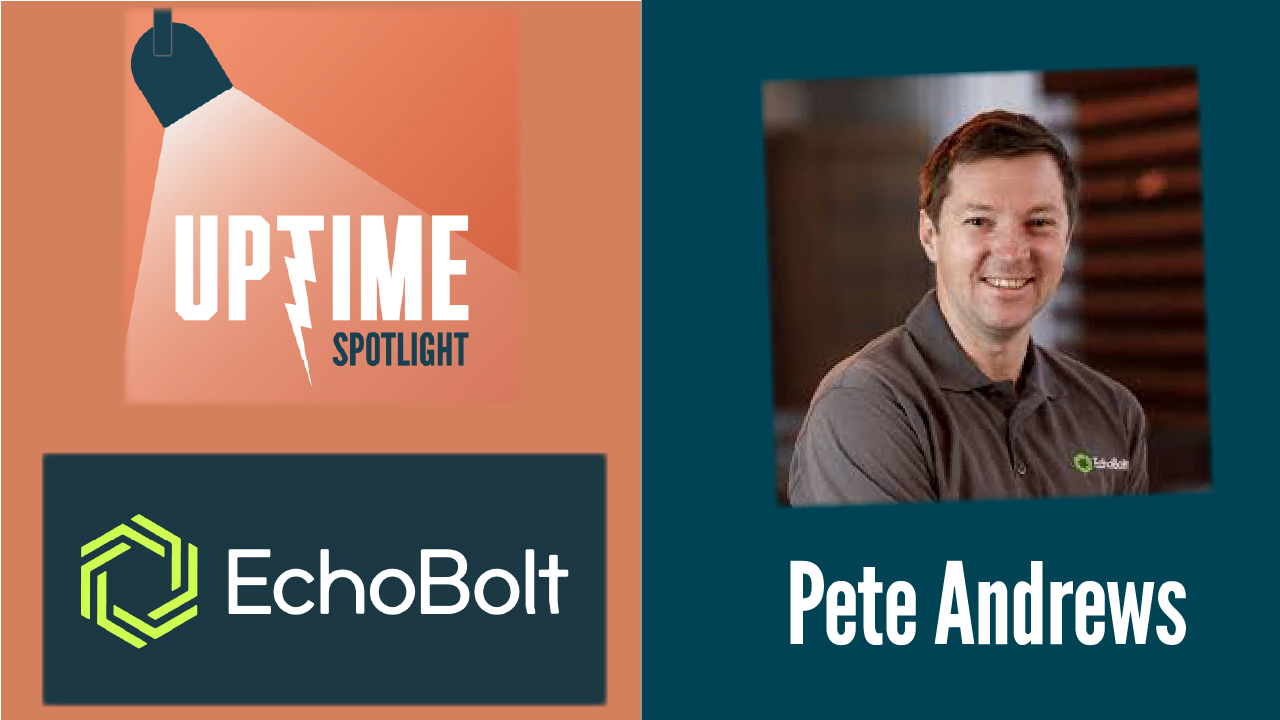
EchoBolt’s BoltWave Makes Bolt Inspections Easy

Pete Andrews from EchoBolt joins to discuss ultrasonic bolt inspection, the Bolt Wave device, and blade stud defect detection.

Sign up now for Uptime Tech News, our weekly newsletter on all things wind technology. This episode is sponsored by Weather Guard Lightning Tech. Learn more about Weather Guard’s StrikeTape Wind Turbine LPS retrofit. Follow the show on YouTube, Linkedin and visit Weather Guard on the web. And subscribe to Rosemary’s “Engineering with Rosie” YouTube channel here. Have a question we can answer on the show? Email us!

Welcome to Uptime Spotlight, shining light on wind. Energy’s brightest innovators. This is the Progress Powering tomorrow.

Pete Andrews: Pete, welcome to the program. Good to be back. Yeah. See you face to face. Yeah. Yes. This is wonderful. It’s a really great event to catch it with loads of the. UK innovation that are happening in the supply chain. So it’s, yeah, really nice to be here.

Allen Hall: This is really good to meet in person because we have seen a lot of bolt issues in the us, Canada, Australia, yeah.

Uh, all around the world and every time bolt problems come up, I say, have you called Pete Andrews and Echo Bolt and gotten the kit to detect bolt issues? And then who’s Pete? Give me Pete’s phone number. Okay, sure. Uh, but now that we’re here in person, a lot has changed since we first talked to you probably two years ago.[00:01:00]

You’re a bootstrap company based in the UK that has global presence, and I, I think it’s a good start to explain what the technology is and why Echo Bolt matters so much in today’s world.

Pete Andrews: Yeah, absolutely. So, um, as you said, we’re a uk, um, SME, there’s a team of 13 of us based here in the uk. Yeah. But we do deliver our services internationally, but really focused on Northern Europe.

Yeah. But increasingly we’ve done more in the US and North America, a little bit in Canada. Um, but our big offering really is to help wind turbine operators and owners reduce the need to routinely retire in bulks. So we have a quick and simple inspection technology that people can deploy, find out the status of their bolt connections, and then.

Reti them if necessary, but the vast majority of the time we find that they’re static and absolutely fine and can be left [00:02:00] alone. So it’s a real big efficiency boost for wind operators.

Joel Saxum: Well, you’re doing things by prescription now, right? Instead of just blanket cover, we’re gonna do all of this. It’s like, let’s work on the ones that actually need to be worked on.

Let’s do the, the work that we actually need to, and instead of lugging, like we’re looking at the kit right here, and I can, you can hold the case in one hand, let alone the tools in a couple of fingers. As opposed to torque tensioning tools that are this big, they weigh a hundred kilos, and those come with all of their own problems.

So I know that you guys said you’re, you’re focused here. You do a lot of work, um, in the offshore wind world as well. Yeah. I mean, offshore wind is where you add a zero right? To zeros. Yeah. Everything else is that much more complicated. It costs that much more. It’s you’re transitioning people offshore to the transition pieces.

Like there’s so much more HSE risk, dollar risk, all of these different spend things. So. The Echo Bolt systems, these different tools that you have being developed and utilized here first make absolute sense, but now you guys are starting to go to onshore as well.

Pete Andrews: Yeah, that’s right. So I mean, as as you said, that there’s really [00:03:00] three main benefit areas we focus on.

The first one is the health and safety of technicians, right? As you said, some of the fasteners used offshore now are up to MA hundred. So a hundred millimeter diameter bolts,

Joel Saxum: four inches for our American friends. Yeah, absolutely.

Pete Andrews: And they probably weigh. 30 kilos plus per bolt. Yeah. Um, so just the physical manual handling of that sort of equipment and the tightening equipment for those bolts is a huge risk for people.

If you think 150 bolts lifting or maneuvering, the tooling around on on its own can cause all the problems. So as well as the inherent risk of the hydraulic kit failing. So occasionally we see catastrophic tool failure. Is, which have really high potential severity, you know, sort of tensioner heads ejecting or crush injuries from Tor.

So that is really a key focus for our customers, just to [00:04:00] keep their teams safe, but also you have to be the cost effective and the the major cost benefit we allow is that we don’t have to revisit every bolt and every turbine like you’d have to do if you were retyping. So we believe there’s something of the order of a million pounds per installed gigawatt saving.

By moving from a routine REIT uh, maintenance strategy to a focused condition based inspection, you significantly reduce the amount of intervention you make and keep your turbines running more and reduce the boots on the ground on the turbine. So three real kind of, um, key. Benefits for people adopting our technology

Allen Hall: because we routinely see tower bolts being reworked or retention depending on who the manufacturer is.

And I’m watching this go on. I’m like, why are [00:05:00] we doing this? It seems, or the 10% rule, we’re tighten 10% this year, and they’ll come back and see how it’s going. That’s a little insane, right, because you’re just kind of. Tensioning bolts up to see if one of them has a problem and then you just do more of them and we’re wasting so much time because echo bolts figured this out years ago.

You don’t need to do that. You can tell what the tension is in a bolt ultrasonically, which was the original technology, the first gen I’ll call it, uh, that you could tell the length of the bolt. If the length of the bolt is correct within certain parameters, you know that it is tension properly. If it’s shrunk, that probably means it’s not tensioned properly.

That’s a huge advantage because you can’t physically see it. And I know I’ve seen technicians go, oh, I could take a hammer and I can tell you which ones are not tensioned properly wrong. Wrong. And I think that’s where equitable comes in because you’re actually applying a a lot of science simply [00:06:00] to a complex problem because the numbers are so big.

Pete Andrews: Yeah, I mean that, that, that’s been the real. Driving force between our offering is to simplify it. So ultimately we’re based on a non-destructive testing technique. It’s an ultrasonic thickness checking technique, but when from the non-destructive testing background, it’s crack detection, people have time, they can be, it’s a very precision measurement.

People have to be trained in the wind industry. We’re trying to inspect. A thousand, 2000 bolts a day at scale. It’s a completely different, um, ask of the technology and the way the technology has been developed historically has required too much technician expertise, too much configuration and set up time, and hasn’t delivered on the, on the speed that’s needed to be efficient in wind.

And that’s where our bolt wave [00:07:00] unit we’ve, that we’ve developed over the last. 18 months, let’s say, where all of our focus has gone to make it as slick and as easy for a client technician to pick up with minimal training. It’s through an iOS interface. Everyone understands it intuitively. Um, it’s a bit like using the camera app on your phone.

You know, you’re just hitting measure, measure, measure, measure, measure 10 seconds a bolt as you move the, um, ultrasonic transducer across, and then the data gets moved. Automatically to the cloud, to our bolt platform. And customers can view it in near real time. The engineer in the office can see the inspections happened.

They can see if there are any anomalous bolts, and then there can be communication there and then whether an intervention is necessary. So it’s sort of really changed the way our customers think about managing their, um. They’re bolted joints.

Joel Saxum: Well, I think these are, these are the kind of innovations that we love to see, right?

Because [00:08:00] we regularly talk about a shortage of technicians, and this isn’t, I was just learning this this week too, like this is not a wind problem. This is a everywhere problem. No matter what industry you’re in. Use are short of technicians. But we’re seeing like a tool like this is developed to be able to scale that workforce as well.

Right. You don’t need to be an NDT level three expert to go and do these things. ’cause there’s a very few of those people out there. Right? Right. We know the NDT people, a lot of NDT people, and that’s a hard skillset to come by. Yeah. This can be put in the hands of any technician. Yeah, a quick training course.

Just, Hey, this is how you use your iPhone. You can check Instagram, right? Yeah. Okay. You can off figure. Yeah, have fun. See you at lunch. Um, but they can, they can make this happen, right? They can go do these inspections and you’re getting that, that, uh, data collected in the field. Centralized back to an SME that’s looking at it and you don’t have to put that SME in the field and try to scale their ability to go and travel and do all these things.

They can be in the office making sure that the, the QA, QC is done correctly. I love it. I think that that’s the way we need to go with a lot of things. [00:09:00]Uh, and you’re making it happen.

Pete Andrews: Yeah. And it’s a real kind of. F change in mindset for us. So originally when we started Ebot, we were using third party hardware.

Yeah. Which required a bit of that specialism. Yeah. A bit of care about the setup of the project, getting multiple parameters configured before you got going. And it wasn’t really something we could put in the hands of a customer.

Joel Saxum: Yeah.

Pete Andrews: Which meant Ebot scale was limited to what our own team could go and do, and regionally as well.

You know, so we’re UK based. Probably 60% of our customers are uk, but now we have this Northern Europe offshore wind is obviously on our doorstep, but then increasingly we’ve done more and more in North America, so we’ve probably been to five or six sites now in North America and expect that to be a growth market because we can, we can now ship the devices over there, give some virtual training help.

Uh, [00:10:00] people set themselves up and then that opens up that market, you know, so it’s been a real change in strategy for us, but has allowed us to have far more impact than we otherwise would just try to be a pure service.

Allen Hall: Well, let’s talk about the big problem in the states of a minute, which are the root bushing or inserts that are loose in some blades.

When you lose that pushing, you also lose the tension on the bolt that can be measured. Is that something you’re getting involved with quite a bit now because of just trying to determine how many bolts are affected and, and where we are on the safety scale of can we run this turbine or not? Is that something that EE bolt’s been looking into?

Pete Andrews: Yeah, absolutely. So I, I’d say there’s sort of two halves of what we do. There’s the, there’s the bulk wholesale monitoring of. Typically static connections to eliminate this routine retitling where it’s not needed typically, typically. But then we have these edge cases of certain [00:11:00] connections and certain platforms that have known bolt integrity problems, and we are working with clients to really, um, manage those integrity risks.

Blade stud is an absolute classic, you know, sort of, I think almost every turbine OEM on some, if not all of their platforms has got. Embedded risk into their blades, pitch bearing connections. Um, so yeah, exactly as you said, our customers are using the technology for two things really. One is to ensure the bolts have been tightened to the preload that was specified or the target window.

And quite often we find there is an opportunity to increase the preload and therefore increase the resistance to fatigue failure. So. You know, particularly on older sites where the bolts perhaps not in the condition they were on day one. Well, they definitely won’t be. Um, when people have gone and retti them, they haven’t got back to where they, they should be.[00:12:00]

So we can prove that and increase a bit of that resilience, but then also start to look for the segments around the joint where, um, the bolt might start loosening or failures are occurring, and find areas where they can really hone in. And actively manage risk. And that sort of leads to what we’ve decided to do for the next year, particularly with Blade Stud in mind, is evolve this technology.

So whilst it’s also measuring the elongation, we will do a defect scan at the same time. So you’ll monitor your blade stu, um, connection and we’re hoping that we can set the device to flag to you there and then. We believe this bulk has got a defect while you’re here, get it changed out before it fails and, and all the knock on problems, um, from there.

Joel Saxum: So what you’re just pointing to there is a, is a workflow, right? So to me that is typical [00:13:00] of some of the amazing, innovative companies in the UK that I’ve run into throughout my career. And that is, you’re a group of SMEs, you know, bolted connections. That’s what you do, right? But then you’re like, hey. If there’s a tool, we could make a tool that would make our lives a bit easier, then it’s like, well, we could make the entire industry’s lives a little bit easier as well.

So let’s iterate on that. And now you’re able to send these kits around the world to look at these things. Hey, you have a problem with this specific model. We can help you with this because we know the failure mode and we know how to look for it. Let’s do that for you. Also here, you’re doing bolt bulk measurements.

We got that for you. But it all kind of flows back to the fact that Echo Bolt is a team. A bolted connection, SMEs that are making tools and being able to also provide consulting if need be. Yeah. Right. Um, to, to an entire industry. And I think that, um, this is my take on it, right? Wind is stop number one. I think you guys are gonna do a fantastic year, but there’s a lot of, uh, opportunity out there in bolted [00:14:00] connections as well.

Allen Hall: A tremendous amount blade bolts being broken from defects in the crystalline structure. What appears to be a more. Rapidly developing issue across fleets that I’ve seen. I went to a farm this summer and the number of blade bolts that were there on the table that were broken on the conference room table was And the whiteboard office.

Yeah. Yeah. This one,

Joel Saxum: this one.

Allen Hall: Your hard head is not gonna protect you from this one. It’s, it’s, it was this, um, I couldn’t imagine the amount of time they were spending hunting these things down. And of course, the only way they were finding ’em was they were broken. You like to catch ’em before they break because it becomes

Joel Saxum: a safety risk.

Just not too long ago we saw an insurance case where there’s an RCA going on and it is pointing at an entire tower came down. Right. And it is pointing at a mid, mid tower section bolted connection. How often do you guys run into those problems? Or are you contacted by insurance companies or anything like that to, to take a peek at those?

Pete Andrews: We haven’t done anything directly for insurance [00:15:00]companies, but we have been engaged by. Engineering consultancies that are doing RCA type activities. Okay. Um, things like at the end of defect liability periods mm-hmm. A customer has, has seen, they’ve had a lot of, uh, issues from an OEM, maybe an OE EM has offered a modification or an upgrade, assessing whether that upgrade is actually solved the problem or not.

We’ve got involved in, um, but the tower. Issue specifically. It’s actually very rare we find, um, problems with tower connections, but where we do is often where they haven’t achieved good flange flatness, ah, during installation or the bolts have been, let’s say, left out in the elements for a period and lubrication has been, has deteriorated before the bolt’s been installed.

So there are cases out there, but what I would say is. [00:16:00] To think about your whole life cycle, so ensure the bolt’s installed correctly and we can help with that with a QA to say, yes, this torque or tightening method has got you to the load that you want. Do some through life monitoring, but often if you install it correctly, it will it’s operational life.

You will have very little concern. But then in the UK market, we’re increasingly getting involved again at the end of life, right? Life extension where life extension turbines are 20, 25 years old. How does an operator make a decision to carry on running without replacing all bots? Um, and that’s where increasingly we being asked to use the technologist just to say, actually the joint is fine.

The bolts have run in a good, um, operational envelope. Run them on. Don’t replace a hundred percent of them like you might have been recommended to from your, um, yeah. Turbine supplier side. [00:17:00]

Allen Hall: So Pete, if someone’s doing a repower where they’re basically putting a new one in the cell on an existing tower, they’re making a lot of assumptions about all the bolts from the ground up that they’re gonna be okay.

And I know we’re talking about that. We’re in a lot of installations where. If the turbine has gone through a repowered or two. So now those bolts are 20 years old. Yeah. And trying to get ’em to

Joel Saxum: 30 35. 35

Allen Hall: 40. Yeah. I don’t know what they’re doing. By those bolted connections. Are they just like replacing the bolts?

Are they hitting ’em with a hammer again? Is that the, yeah,

Pete Andrews: I mean, they might replace ’em, but you’ve got a problem with the foundation bolts. ’cause they’re obviously often anchor bolts set into concrete, so you have to reuse them and. With the projects, both in wind and in process power industry with the chimney stacks to try and ascertain whether foundation bolts that are set into concrete are still suitable for operations.

So look for corrosion losses, look for [00:18:00] defects. Um, so yeah, they’re all things that need thinking about before you just make the snap decision to repower. But I think

Joel Saxum: a lot of that, uh, going back to a couple minutes ago, you were talking about at the commissioning phase, making sure that you have proper qa, QC of how these things were installed day one, and then making sure that before commissioning of a turbine, they’re checked.

I think that’s really important. We’re starting to see that in the blade world now too, where we’ve been talking about it for a long time, and now when you talk to operators, they’re like, we’re getting inspections done on the blades before they’re hung. Or at the factory before they’re hung. After they’re hung.

Like they want a good foundation baseline. Are you seeing that in the bolted connection world too?

Pete Andrews: Yes. Sort of. It’s just emerging for us. What we’ve found is, so most of our customers are in the operational phase ’cause they are the ones feeling the pain. Yeah. Of the routine retitling work. When they do major components, they sometimes engage us to come and say, can you check [00:19:00] before and after the blade was removed?

What was it? Before we took it off from a a bolt load perspective, what is it afterwards? Can you then recheck after 500 hours When we retalk it? And what we’ve seen there often is the initial install hasn’t got them to where they needed to be and they’ve had to go and do the break in maintenance or the 500 hour REIT to get the bolts to the right load.

So one of the questions that we have is whether. Some of the defects are actually being initiated very early on in that initial running in period and whether if, if actually you’d taken the time at, at the point of assembly to make sure you were correct, whether that avoids some of the knock on integrity concerns.

So yeah, it’s interesting area.

Allen Hall: Well, bolts are what hold wind turbines together and you better know you have the right. Tension and [00:20:00] torque on your bolts to get to the lifetime of the wind turbine and to, and to check it once in a while. And I know there’s a lot of operators I can think of right now in the United States that are sort of doing that job somewhat.

I I think they have missed out on opportunities to save a lot of money and to call it echo bolt. How do people get ahold of you? Because that’s one thing I run into all the time. Like, Hey, hey, you gotta talk to Ebol, call Ebol. How do they get ahold of you?

Pete Andrews: So the easiest ways are via our website. Which is echo bolt.com.

Um, LinkedIn, you’ll find us at Echo Bolt on LinkedIn. Reach out. Our email would be info@cobolt.com. So any of those route and you’ll, uh, reach me and the team and more than happy to speak to you about any of your faulting concerns or problems. We are, uh, yeah, we’re passionate about your problems.

Allen Hall: Pete, thank you so much for being on this podcast.

I, it is great to actually see you in person and see the bolt wave technology. It’s really [00:21:00] impressive. So anybody out there that needs bolt tensioning to checking tools, you need to get ahold of Pete at Echo Bolt and get started today. Thank you Pete. Thanks guys. It’s great to be here.


EchoBolt’s BoltWave Makes Bolt Inspections Easy

Continue Reading

Renewable Energy

Pardalote Studies Australian Blade Erosion and Heat Fatigue

Published

on

Weather Guard Lightning Tech

Pardalote Studies Australian Blade Erosion and Heat Fatigue

Rosemary Barnes, CEO and founder of Pardalote Consulting, joins to discuss their new grant-funded study of blade erosion and heat fatigue in Australia.

Sign up now for Uptime Tech News, our weekly newsletter on all things wind technology. This episode is sponsored by Weather Guard Lightning Tech. Learn more about Weather Guard’s StrikeTape Wind Turbine LPS retrofit. Follow the show on YouTubeLinkedin and visit Weather Guard on the web. And subscribe to Rosemary’s “Engineering with Rosie” YouTube channel here. Have a question we can answer on the show? Email us!

Welcome to Uptime Spotlight, shining light on wind energy’s brightest innovators. This is the progress powering tomorrow

Allen Hall 2025: Well, Rosemary, welcome back to the show.

Rosemary Barnes: Thanks, Allen. Great to be here. For, it’s been a while since we did one of these one-on-one episodes, like a, yeah, a proper, proper guest. 

Allen Hall 2025: Well, this is kind of a celebratory episode because your company, Pardalote Consulting, has been awarded, uh, some funding from the Australian Capital Territory’s government for the Energy Innovation Fund.

Rosemary Barnes: It’s a really good program that the ACT government has to try and get energy innovation In the state. It’s not a state actually, it’s technically a territory. Little more than just Canberra, the city. Uh, but there are actually quite a few, like, really interesting energy-related companies here, partly ’cause of the, the fund I think helps, but also just tracing back like, [00:01:00] uh, y- you know, in the 20-teens, Australia had a really conservative government that hated renewable energy, and the ACT government had a commitment at that time to 100%, um, 100% renewable electricity for the, the government.

And that was one of the only programs that was resulting in a lot of, um, you know, clean energy projects being built, and one of the conditions that they put on that, uh, for people that would win PPAs with the ACT was that you had to have your headquarters in Canberra. So we’ve actually got quite a few, quite a few really cool, innovative companies out of here.

Um, like Neoen’s headquarters here. Windlab, uh, yeah, was, was founded here and still has a lot of people here. Pardalote obviously, and you know, a few other companies as well. So despite it being a small city of like, I don’t know, maybe it’s up to 400,000 or something people by now, um, yeah, there is actually quite a lot going on here for energy.

Allen Hall 2025: And the Energy Innovation Fund is funded by the wind and solar operators in the area, and your particular [00:02:00] effort has really global consequences. You’re focusing on two areas involving how wind turbines survive Australia, but more, uh, of relevance is to just really tough conditions which exist not just in Australia but around the world.

What two areas are you going to focus on?

Rosemary Barnes: Yeah. So the two focus areas are leading edge erosion and high temperature fatigue, which we can probably get into the definitions of those in a minute. But basically my, um– what led me to wanna have a project like this was that when I moved back to Australia in 2021, I– and I started working in O&M, uh, I noticed that the wind turbines that I would look at, the blades that I would look at here behaved really differently to the ones that I worked with overseas.

You know, es- especially with leading edge erosion, like often I would be doing a condition assessment of a, you know, a new wind farm. Um, might only have been operating for, you know, two years. That’s a pretty common time for people to get in and do a condition assessment [00:03:00] because their warranty period is about to end and they wanna, you know, make sure that everything is okay.

Um, and I would just notice that often, like 90, 100% of blades would already have bad erosion after just a couple of years, which is super-duper fast. And then there are some tools available to check, um, like what kind of erosion are you likely to experience on your site. Like is it a higher severity erosion site or a, a low severity one?

Um, and you basically, you know, the status quo globally is to just look at the annual rainfall, um, and the tip speed. And if you’ve got, you know, high for both of those, that’s a bad erosion site. And if you’ve got low for both of those, it’s a, a low erosion site. But when I plotted out the wind farms that I knew had really bad erosion problems onto, you know, a chart with those two axes, I just saw a random distribution of dots.

You know? Like, this was not– uh, this had no predictive value for Australian wind farms. And so that led me to believe that, okay, um, you know, things are a bit [00:04:00] different here. Makes sense, you know, most of the knowledge that we have about how wind turbines operate, it’s been developed and validated mostly in Northern Europe.

You know? Like it’s, it’s Denmark and the surrounding countries that had, like, the bulk of the early wind energy. First few decades of knowledge were, you know, were mostly there. Of course, there were some other, um, places that had wind turbines, but, you know, most of the The OEMs have been operating for decades, came from Denmark.

And I know when I lived in Denmark, the rain there is very different to the rain in Australia. So in Denmark, it’s basically always raining, right? Like, it’s just… Like, even if it’s not raining, you’re still gonna get wet when you go outside ’cause it’s just, like, the air has this just amazing ability to just hold onto moisture.

Um, but it’s very, very gentle. But, you know, over an entire year of most days having gentle rain, that adds up to a lot. Whereas in Australia, and especially if you go, like, north to Queensland, it rarely rains. It’s mostly just dry, and when it [00:05:00] does rain, it’s like a tap turns on, and I, I swear you will get bruised from the rain droplets hitting your skin.

You know, they just have so much energy in them. So I think that that i- you know, when you look at just the overall rainfall, you really hide something important about how erosion, um, can progress. Then, um, there’s other places in Australia that have very different characteristics. Again, they don’t have that kind of really intense rain but, you know, some of those sites are also having really bad erosion.

And so it just occurred to me, I did a lot of research, you know, into what’s going on and, you know, the academics are studying erosion a whole lot, and they’ve got, you know, a lot of standardized tests and, you know, products are developed according to these standardized tests. But the standardized tests don’t actually resemble reality, and especially they don’t resemble reality in Australia.

And so my client started asking me, “Okay, you know, the products that we have are, are terrible. We have to replace them every couple of years. It’s, um, causing big problems with also [00:06:00] the amount of energy that you’re losing.” One of the types of, um, leading-edge erosion or leading-edge problems that we have in Australia is that the, the coatings tend to peel off and make these, like, big flakes which will just massively disrupt the airflow, can cause y- you know, at least a few percent AEP loss, and maybe up to five.

And even worse than the AEP loss is the revenue loss because it affects it most at, you know, lower wind speeds. Um, you get a bigger hit than at rated wind speeds. So there’s a variety of problems going on with leading edges in Australia, which mean that I, I basically… My clients would ask, “What product should we put on to prevent having to, you know, constantly replace this?”

‘Cause it costs, like- you know, 30, $40,000 per turbine to replace the protection, not to mention, you know, one or two days of downtime. It’s expensive, and I basically, I didn’t have a good answer for them. What, what product should they put on? I don’t know. No, we, we don’t know. One, we don’t know what the [00:07:00] specific, um, characteristics are that are…

what the specific local environment, local conditions are that are accelerating leading-edge erosion, one. And two, all of the products tend to be tested around this, you know, there’s this protocol that academics have come up with, and they’ve kind of like assumed that this is representative of how things behave in the field, and it’s– I don’t think it’s particularly true anyway, but it’s especially not true in Australia.

There are a few companies that are testing to different standards. Um, definitely applaud them. But without knowing wha- what are the conditions truly like in Australia, uh, it’s really hard to advise, like, what kind of tests should you be demanding from a product you’re considering to be sure that you’re gonna put it on and not gonna be replacing it again in two years.

Allen Hall 2025: Because that’s really the trouble in Australia is when you get offered products They have been tested generally in somewhere in Europe and maybe in the United States, and then when they go to [00:08:00] Australia, it’s really unknown as to how those products will do, which is a huge risk for the Australian wind market as to what to choose, how to choose, is it– what’s real in terms of test data.

So now you’re gonna go out and do what? Are you gonna put sensors out by the wind farms? Are you gonna try to do more of a statistical summary of the actual environment around wind farms using existing data? What’s the approach here?

Rosemary Barnes: It’s all of the above, but the part that is supported by the grant is that we’re gonna have enough money to be able to buy some scientific-grade sensors and put them on, um, a sample of Australian wind farms.

So we’re gonna be looking at a lot more characteristics about the rain than simply is it raining now, you know, how many millimeters per hour. We’re also gonna be investigating, you know, every kind of characteristic of, of that, um, of that rain, um, including, yeah, like the, the energy that’s in it, for example.

A, a bunch of stuff. I won’t get into every single [00:09:00] parameter. Um, and you know, other things as well, like measuring UV, solar radiation, um, particles, because, you know, in Australia we have a lot of dirt roads, which I know is very common in wind farms around the world, but Australian dirt roa- roads are always dry and dusty, like 99% of the time, so that’s one of the things that y- you know, maybe that’s causing a difference.

Um, so basically putting sensors all over a bunch of wind turbines and then monitoring the erosion, um, a combination of some real-time monitoring and also looking at inspection, um, drone inspection images annually. We also have a- an option where we’ll just be using SCADA data and inspection images, so that’s like a lower cost version where we can combine that with the findings from the scientific-grade instrumented turbines to build up a picture of what types of conditions lead to accelerated erosion.[00:10:00]

Allen Hall 2025: So the SCADA data will, will have some information inside of it, you think, that, uh, will correlate to the weather outside?

Rosemary Barnes: It has some Additionally, we can look up, um, you know, just the weather data, like how many millimeters fell during which 15-minute interval throughout the day, what was the temperature.

SCADA will tell us also what the temperature was, um, what the speed of the turbine was, so you can calculate the tip speed, ’cause that’s an important thing. Um, yeah, so it’s, it’s two, it’s two tiers of data collection. The scientific grade sensors, as you can imagine, are, are really expensive and y- you know, the, the grant project has contributed a, a lot of funding, um, but it’s not enough to put those, yeah, put a little mini lab on top of every turbine across Australia, obviously.

So that we’re using s- doing selectively, and then we can increase the number of wind farms that are included in the study by just doing this, um, cheaper version of the SCADA [00:11:00] plus, uh, weather data that’s available.

Allen Hall 2025: So what are some of the risks on the temperature side for all the high-temperature regions of Australia that have wind turbines?

Clearly it’s generally warmer in Australia than it is in, in Scandinavia and Northern Europe. What kind of temperatures are we talking about on the ground?

Rosemary Barnes: Uh, well, temperatures here can get pretty close to 50 degrees. Um, and if you’ve ever been inside a wind turbine blade on a, even a mildly hot day, you’ll know that the temperature inside a wind turbine, and especially inside the blade, is much hotter than what it is, uh, what the ambient temperature is.

So this project is one– I’ve actually been talking about this project for, yeah, like over 10 years now. Ever since I started, I moved to Denmark, started working for a wind turbine manufacturer, I had done– I had just finished doing my PhD on composite materials, structural design, and analysis. So, um, yeah, very, very familiar with, [00:12:00] you know, how composite materials work and, in particular, the effect that temperature has on them.

I mean, like most materials, when composites get warmer, they get softer, and that is really important for a w- a wind turbine blade. You know, if it gets, um, less stiff, then you’re gonna get a lot more strain, and that is going to affect your fatigue behavior. Y- you know, fatigue is just the application of a little bit of, a small amount of strain.

It’s not gonna cause damage, but when you apply it millions, tens of millions of times, like you do in a, o- over a wind turbine’s operate, um, operating lifetime, then that builds up. And, you know, wind turbine blades are a very fatigue-driven design. Um, it’s one of the most important things to consider when you’re designing a wind turbine blade.

And so when I got to Denmark and I learned how materials are qualified and how the qualification is treated in the certification process, I just realized it’s not particularly conservative, and also that some of the assumptions that are made that [00:13:00] wo- again, they worked really well in more moderate climates where wind turbines have had most of their developmental history.

You know, it’s not such a big deal there if you test at room temperature. Your wind turbine blade is spending most of its operating lifetime at room temperature or below. It’s, it’s rarely, you know, above 30 degrees in Denmark and most of Northern Europe and, you know, also a lot of, um, a lot of America, not, not all of it But, um, in Australia it has just extended periods above that temperature and even exceeding the temperature where, you know, wind turbines have an operating limit and after that they will shut down.

But the operating limits are based on ambient temperature. It’s not based on what’s the temperature in the laminate, which is what really matters for blade lifetime. So anyway, I’ve been obsessed, like honestly obsessed about this issue for 10 years. Talked about it with anybody who would listen . But then when I started working in O&M in [00:14:00] Australia and I started seeing some wind farms with an abnormal number of cracks early…

again, early in their lifetime, you know, I think one of the wind farms I was looking at was maybe three years old or four at the time. I think it was three actually, and had a lot of cracks, and I looked at a few years in a row and it was more and more cracks every year and I’m like, “Oof, this really looks like end of life fatigue behavior.”

A- actually it’s not, y- you know, there’s this concept of a bathtub curve where, um, when you’re looking at failures in components, in, in anything, not just in, um, wind turbine blades, but you know, like you’d start– it’s called a bathtub because, you know, when it starts operating, you’ll get quite a lot of failures.

Anything big, any manufacturing defects or anything are gonna cause failures quite fast, and that kind of drops off over time as all of those, uh, get addressed. And then you have, you know, the bulk of your operating life, it’s like pretty low level, pretty, pretty constant for a long time and then as you get towards the end of the [00:15:00] life, you start to see failure rates rise up again.

That’s your fatigue failures, your end of life fatigue failures. And so when I saw the same types of cracks more and more each year, I’m like, “This looks like, you know, the foot end of the bathtub, not the head end.” And, uh, it made me worried and I’ve now seen that across a few wind farms in Australia at, um, hotter places.

There’s a few blade types that are more prone to it than others, but at this point it’s still a suspicion that that’s what’s going on. I mean, a suspicion backed by a lot of, a lot of theory and knowledge of how the certification process works. But this project now we’ve got some funding to actually go put some sensors onto wind turbines, actually learn what the temperatures are in the blades throughout the whole laminate, um, not just the, you know, on the outside surface or not just the ambient temperature, but actually, you know, develop a temperature gradient across the whole, um, the whole laminate in the blade shell.

Um, and [00:16:00] then we’re going to be doing a bunch of modeling basically to look at what is the effect of these different temperatures that blades are really seeing and how much would we expect to… that to decrease a lifetime. And then we should also be able to say, you know, if you have this issue in your wind farm, you might be able to change your operation a little bit and extend your lifetime a lot.

Because this one, it’s real– like, in contrast to leading edge erosion, leading edge erosion is just, it’s, you know, every wind turbine has it to a certain extent, and it, it’s always there, but it’s a relatively minor cost to fix it. You know, like it sounds like a lot, like 30, $40,000 per wind turbine, but, um, you know, compared to if you’ve got to replace every blade across your fleet because they’re all, you know, at the end of their life after five years, you know, that’s obviously shocking.

And, you know, that’s a bad example, but even in a y- you know, like a less extreme example, maybe [00:17:00] after 15 years you have to do a, you know, a f- a fleet-wide campaign to strengthen blades or something. It’s, you know, m- many millions of dollars for that, and so it c- could make sense to be able to learn, okay, what, what hours of operation should we be avoiding?

Additionally, because when it’s super-duper hot in Australia, usually you’ve got heaps of solar power and the electricity price is not that high. So I, I think that there– and I don’t, obviously, before we’ve done the project, I don’t know what the threshold is. But in both cases, we will be aiming to improve the knowledge of how you can operate to avoid these periods of accelerated damage.

Allen Hall 2025: Do you think you’re seeing more fatigue-like damage due to the blades operating when it’s hot or not operating when it’s hot, with maybe less airflow around the blade and maybe less cooling going on is just a temperature soak At rest? [00:18:00]

Rosemary Barnes: Yeah. It’s interesting because the temperature is higher if it’s not rotating, um, because you get a whole lot of, um, convective heat, heat transfer when the turbine is operating.

So your temperatures are not gonna get as hot when operating as when they’re standing still. However, if it’s standing still, they’re only very lightly loaded. Like, yes, they’re gonna get, um, blown by, by gusts and, um, have a little bit of bending, but it’s, it’s very, very small compared to, uh, if it is y- you know, operational loads.

Uh, assuming that you’re not in the middle of a s- a storm. But yeah, a storm probably doesn’t come with 50 degrees temperatures.

Allen Hall 2025: And what part of the blade is susceptible to these higher temperatures? Is it the resin? Is it the fiberglass or carbon fiber? Or is it the, the glue, the bond joints? What part are you focused on?

Rosemary Barnes: The resin is the main part that I’m focused on. It gl- it could be an issue for glue too, actually. I haven’t even looked into what the, um, yeah, temperature assumptions are with, with glue, with [00:19:00] bond lines. But the failures that I’m seeing in the field are not, are not bond line issues. It’s, it’s, um, a laminate problem.

Allen Hall 2025: What about balsa and foam inside of the blade? Are they affected by the temperatures or are they pretty temperature stable?

Rosemary Barnes: I don’t think they’re affected at these kinds of temperatures, no. They, they don’t really do much actually. The, the core materials, like it, it is very important that they’re, that they’re there, but their job is really to keep the fiberglass separated from its- itself to make it stiffer.

So, um, yeah, that’s, that’s unlikely to be a, a major source of problems.

Allen Hall 2025: So this study is gonna work over about three years, and you have a number of wind farms that are participating. Are you looking for more wind farms to participate in Australia?

Rosemary Barnes: Yeah. Yeah, definitely. I mean, we can, um, have as many as, as people want to join.

We’ve got quite a good selection so far. Definitely can always welcome more. A, a bit limited in how many can get the really, um, good sensor [00:20:00]package, because the grant funding is a, you know, a certain amount, and that’s paying the bulk of those sensors. So, um, those spots are limited. So if anybody wants to really zone in on what is specifically causing erosion on their site, you know, if you know that you have got leading edge protection that is not good enough and you have to replace it soon, but you don’t know what to replace it with, then, you know, that would be the kind of wind farm that might want to consider, yeah, joining this and, um, you know, getting these sensors on their, um…

We’re putting them on top of the nacelles, most of them. Um, yeah, so that would be a good match then. Um, and then, yeah, for the ones that are doing the SCADA data and, um, weather data- There’s not such a, a hard limit on how many we can have join like that. So yeah, we can have more, more like that.

Allen Hall 2025: In the temperature fatigue effort, i- is that still looking for participants or are there particular wind turbine types or manufacturers that you’re [00:21:00] looking for to participate?

Rosemary Barnes: Yeah, I think, um, I, I mean yes, we can have more of those. That’s a simpler, a, a simpler issue as well. The sensors are not so expensive and, um, it’s, yeah, it’s a, it’s a simpler project to join that one. We only need, you know, a couple of turbines per site, so it won’t be such a, uh, an involved process to get everything up on into the turbines.

And in terms of who might like to join that, I would say anybody that is in a really hot area where, you know, where they see a lot of days over 30 degrees, and if they see any days, you know, getting into the high 40s, then I would say that that’s worthwhile. Or even I have seen this issue in some milder sites, um, yeah, depending on the, on the blade type as well.

It is more common with polyester resins. They have a, a lower op- uh, maximum operating temperature than epoxy resins. But then also just anybody that has noticed just, hey, [00:22:00] we’ve got a lot of cracks, and it seems like we’re getting more and more cracks every year, which to be honest, can be hard to keep track of if you’re…

If you’ve got a full service agreement, uh, you know, an OEM managing your wind farm The early signs of this are gonna be category one and category two cracks. They’re not in exactly the same location. It’s, you know, it’s a tricky one. Normally, if you’re looking at a serial issue, then you’re going to have, uh, well, you know, your ideal pattern for a serial issue is the exact same thing happening over and over again.

And so it is harder to pull this out. It also really would be very rare for it to be happening in the first two years or three years, whatever your serial defect liability period is. So it’s quite hard. But, um, another group of wind farms that might like to consider it is if you know that in, you know, a certain number of years you have to renegotiate your service agreement or, you know, it ends and you might have to take over yourself, then this’ll be a really good way for you to [00:23:00] understand, you know, have I got a ticking time bomb here?

Um, because it’s not something that you’re gonna be aware of if you haven’t been, you know, doing some really, really in-depth shadow, shadow monitoring of your blades, you know, running your own inspections and looking at every single damage, not just category three, four, five, but lower ones. So yeah, I mean, there’s a, a wide variety of people that, that could be interested in joining.

Allen Hall 2025: Are you expecting a number of manufacturers that make leading-edge protection or involved in resin creation, some– there’s a number of resin companies and a variety of resins that are used globally, sort of interchangeably at times. Are you expecting some of those companies to participate in this effort just to learn about the Australian environment?

Rosemary Barnes: I think it would be a good opportunity to test out some products and see how they behave in the Australian context. I think that that would be a really good selling point, but I, I have to say that most of the companies doing that sort of thing that wanna enter Australia, they don’t [00:24:00] really consider…

Like, from the perspective of wind farm owners in Australia, if you can’t show us wind farms in Australia where this has worked and, you know, show us a before or after, you know, the old LEP lasted Two years and our LEP is going on four years now with no damage. It, you know, unless you’ve got a before and after like that, you can tell us however many turbines that you’ve got installed around the world, but, um, we don’t consider it validated, y- you know?

It’s not validated for Australian conditions yet. And I do have this same discussion over and over again with, you know, not just leading edge protection, but all kinds of, um, you know, manufacturers of whatever doodads that you put on to improve a, a wind turbine. It’s so different to Australia. Things break so fast.

And I’m talking everything, you know, like vortex generators fall off and, um, yeah, like, uh, you know, bits of lightning protection systems fall off, seals just [00:25:00] crumble and disintegrate. Um, and it, you know, we’re very wary of, of new products. So I, I do– I mean, I’m thinking of it more from my client’s point of view than from the product manufacturer’s point of view.

But one thing that I wanna get out of this pro- project is to be able to answer one of the most common questions that I get is, which is, what leading edge protection should I be putting on my turbine? And for now, I don’t know. I, I know a range of products that don’t work in Australia, and not much more than that.

So, um, yeah. And it’s also, you know, Australia’s a very varied place with lots of different kinds of climate too. So it’s not gonna be like, you know, the product that works in Queensland is the same one that’s gonna work in Tasmania, which is the same one that’s gonna work in Western Australia. You know, um, so it, this project is gonna really pull out what are the site specific issues you’ve got at your site and what kinds of, um, you know, tests would we need to see a product um, perform in order to know that this [00:26:00] is gonna last on your site.

Allen Hall 2025: W- what is the outcome of this project or these two projects? Are they gonna be reports or, uh, a, a continual monitoring system that’s designed for the Australian environment? How do you see this going?

Rosemary Barnes: Yeah, so one part of it is, um, developing a way to identify periods of accelerated damage and to know not to operate during that time.

So we call it protective operation. Uh, so that would, uh, help you if, yeah, you’re trying to extend the life of something or increase the amount of time before you have to repair, then y- you know, that would be useful to have that knowledge. And it will be as simple as just an alert saying, “Hey, accelerated damage conditions.

Consider, you know, if you wanna keep on operating.” And, you know, if the price of electricity is super high at that time, they may want to push through, and if it’s low, they probably won’t want to. So that’s one thing. Um, especially, you know, as wind turbines get to their, near the end of their life. I’ve got some clients whose wind farms only have, you know, [00:27:00] maybe five years operation left.

They just simply don’t wanna repair their leading edge protection again. They just, they, they don’t wanna do that. So they would be happy to, you know, reduce operation a bit and have their turbine limp through to the end of the period. Y- you know, you want everything to wear out at once. You don’t want brand-new leading edge protection on a turbine that’s going to come down in a couple of years.

Um, so, you know, that’s, that’s one part of it. And then the other thing is, you know, turbines earlier in their lifetime, how can we optimize the maintenance schedule with leading edge erosion? Um, so, you know, like it’s a lot cheaper to, uh, replace the LEP if you get– catch it early, but then you don’t wanna be catching it too early and replacing it, you know, constantly when you, you don’t need to.

So, um, yeah, it, this, having this knowledge will enable a site-by-site operations and maintenance strategy with respect to leading edge protection. We also have some sites who are having trouble. They’ve got a full service agreement, and the OEM is [00:28:00] responsible for, um, doing the leading edge erosion repairs and protection replacement, but the owner is on the hook for paying for it.

At the other end, we’ve got people with full service agreements where technically the, um, manufacturer is supposed to be doing the leading edge protection and paying for it, but they argue about what, when does it need to be done. Because, you know, um, the operator might think if there’s no structural risk, then we don’t need to be replacing it.

And in the meantime, you’ve got turbines spinning around for years and years and years with, you know, these huge flakes of leading edge protection s- you know, causing the flow at the tip of the turbine to, to detach and to stall, and horrible aerodynamics, huge losses in power generation and revenue. And they’re having a big fight about, you know, is this necessary to do or not?

And then, you know, they’re just gonna put the exact same product on again ’cause the [00:29:00] OEMs are re- all really, really wedded to their own particular brand. It’s like, “Well, last time we had this product and it was factory applied, it lasted one year before it s- it was worse than, you know, if it wasn’t there at all.

Uh, we don’t really want you to put that one on again.” And so, you know, having the information that they need to be able to, you know, really bring data to these discussions and, you know, makes a, yeah, data not drama. That’s a, a good approach I think, um, for any kind of negotiation and especially in the case of leading edge erosion.

And then for the high temperature fatigue part of the problem, aside from, you know, just wanting to know are your blades aging, should you be looking at remediation action or changing the operation, the other really big key thing is, uh, you might need to have a fight with y- your OEM about if this turbine has been designed and operated correctly.

And so then having the data from this, um, project is going to give you the information that you need to come into that [00:30:00] argument with, again, the data not the drama. Um, and to, you know, in- increase your chances of succeeding in that kind of really tricky negotiation.

Allen Hall 2025: So if you’re an OEM or a manufacturer of equipment, an ISP, an operator, pretty much all aspects of wind operations, you probably ought to be getting a hold of Pardalote Consulting and Rosemary to talk about the opportunity to participate in this study.

How do people get ahold of you to, to do that?

Rosemary Barnes: People can go to our website, pardaloteconsulting.com, and get in touch via the contact form there, or you can, uh, look me up on LinkedIn, Rosemary Barnes. That’s probably the easiest, fastest way to get ahold of me personally.

Allen Hall 2025: Well, Rosemary, congratulations on the Energy Innovation Fund Awards and the new three-year effort.

If you are interested in participating with Pardalote Consulting and working with Rosemary and her team [00:31:00] in Australia, reach out to her on LinkedIn and get that process started, because this report and the data from all this analysis that’ll happen over the next couple of years will be important to the wind industry.

So you need to spend some time and get ahold of Rosemary and get this process started now. So Rosemary, congratulations. Uh, thanks for being back on the podcast, and looking forward to, uh, the next couple of years. It sh- should be exciting.

Rosemary Barnes: Thanks so much, Allen.

Pardalote Studies Australian Blade Erosion and Heat Fatigue

Continue Reading

Renewable Energy

Artificial Stupidity?

Published

on

We all understand that there are ultra-conservatives living all around us, but does anyone truly believe that our schoolteachers are ruining our society by teaching children the truth about U.S. and world history? Science? Current events?

Slavery and Jim Crow laws were bad.  Fascism is bad.  Our scientists are telling us that CO2 emissions are causing world temperatures to rise, destroying our planet’s capacity to support life.

Whom do these concepts upset?

Artificial Stupidity?

Continue Reading

Renewable Energy

No Such Thing as a “Dumb Question”

Published

on

There is nothing dumb about the question posed at left.  Democracies fail, falling into “banana republics” constantly.  The rate at which democracies become tyrannies is so great that some of them never make the news. Can you tell me anything about the governments of Eritrea or Chad?

What makes the situation in the United States is, yes, that it’s happening here in the United States, the very last place anyone would have suspected it.

You might have thought that Americans wouldn’t have voted for their nation to become Russia or North Korea.

You would have been wrong.

No Such Thing as a “Dumb Question”

Continue Reading

Trending

Copyright © 2022 BreakingClimateChange.com
