The transition to a low-carbon economy is not just a trend—it’s a must. With climate change accelerating, companies are under increasing pressure to reduce their carbon footprints. Major tech companies, such as Meta, Apple, and Netflix, have committed to achieving net-zero emissions by 2030, while mining and energy giants like Barrick, Newmont, and ExxonMobil are following suit. For investors, this evolving trend presents a unique opportunity to invest in carbon stocks and support innovative companies focused on carbon reduction and capture.
Why Carbon Stocks Are Gaining Traction in 2025
Carbon stocks are becoming increasingly popular as people and organizations alike strive to meet climate goals. These stocks represent companies that focus on reducing or offsetting carbon emissions. They are drawing attention not only for their environmental benefits but also for their potential financial returns.
With governments and corporations prioritizing carbon reduction technologies and emissions offsets, the market for carbon-related solutions is poised for rapid growth.
In 2025, here are the top five carbon stocks worth keeping on your radar.
1. Brookfield Renewable Partners (BEP): A Leader in Clean Energy
Brookfield Renewable Partners (BEP) is one of the world’s largest publicly traded renewable energy companies. With a clear focus on clean, renewable energy, BEP distinguishes itself from many of its competitors by operating as a pure-play renewable energy company. This means that its portfolio consists exclusively of renewable sources of power generation, unlike other companies that often combine renewable energy with fossil fuel assets.
Global Portfolio and Capacity
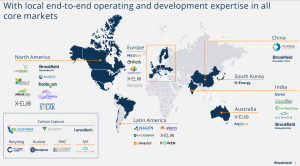
As of 2024, BEP’s diversified portfolio encompasses over 35,000 megawatts of operating capacity across various renewable energy sources:
- Hydroelectric Plants: 229 facilities
- Wind Farms: 105 installations
- Solar Power Plants: 88 sites
- Energy Storage Facilities: 700 megawatts of capacity
This extensive array of assets spans multiple regions, including North America, South America, Europe, and Asia, underscoring BEP’s commitment to global renewable energy development.
Financial Performance, Growth, and Expansion Plans
In the third quarter of 2024, BEP reported Funds From Operations (FFO) of $278 million, equating to $0.42 per unit. This represents an 11% increase compared to the same period in the prior year, highlighting the company’s robust financial health and operational efficiency.
Over the past 5 years, BEP has maintained an average dividend yield of around 5%. Since its inception over two decades ago, it has reached over $109 billion in assets under management globally.
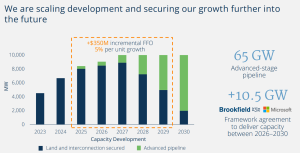
The company is actively pursuing an ambitious growth strategy, with a development pipeline poised to add 11,000 megawatts of capacity. This expansion represents a 46% increase over the current operating capacity, with plans to execute these developments over the next 3 years.
Successful realization of this pipeline could enable the renewable energy company to significantly scale its power generation capabilities. Here’s what BEP’s development and growth plans look like, highlighting its 10.5 GW partnership with Microsoft:
Positioning in the Transition to Clean Energy
As corporations worldwide strive to achieve net-zero carbon emissions, the demand for renewable energy sources is escalating. BEP’s exclusive focus on carbon-free energy positions it as a preferred partner for companies seeking to reduce their carbon footprints.
For investors seeking exposure to the renewable energy sector with a preference for established companies demonstrating stable growth and reliable returns, Brookfield Renewable Partners represents a compelling option.
2. Aker Carbon Capture ASA (AKCCF): Pioneering Carbon Capture Solutions
Aker Carbon Capture (AKCCF) is a Norwegian company specializing in carbon capture technology. Leveraging its expertise from the Aker Group, a global leader in offshore engineering, Aker Carbon Capture has developed modular carbon capture systems that are both cost-effective and scalable.
One of the company’s standout innovations is the “Just Catch” modular carbon capture plant. It is designed to meet the needs of mid-sized industries like cement, biomass, and waste-to-energy. This plant reduces the time and cost typically associated with custom-built carbon capture facilities.
Aker has also developed a proprietary amine solvent, a technology that efficiently captures CO₂ from industrial emissions. This solvent is highly stable, has low degradation rates, and minimizes energy consumption, making it a cost-effective solution for industries looking to reduce their carbon footprint.
The technology has been successfully deployed in real-world projects, such as the CO₂ capture pilot at the Norcem cement plant in Brevik, Norway.
Aker Carbon Capture is also undergoing a joint venture with SLB to form SLB Capturi, which will further accelerate the development of large-scale carbon capture technologies. The carbon capture company partnered with Microsoft last year to capture and store carbon at pulp and paper mills.
Financial Performance, Key Projects, and Outlook
As of the third quarter of 2024, ACC ASA reported a net loss of NOK 47 million. The company maintained a robust financial position with NOK 4.5 billion in cash and an equity standing at NOK 5.5 billion.
ACC ASA is involved in several significant carbon capture projects including:
- Heidelberg Materials Brevik CCS Project (Norway): Captures 400,000 tonnes of CO₂ annually.
- Ørsted’s BECCS Project (Denmark): Deploying five Just Catch units to capture up to 500,000 tonnes of CO₂.
- Twence Project (Netherlands): Captures 100,000 tonnes of CO₂ annually for use in local agriculture.
With a solid financial foundation and strategic partnerships, ACC ASA is well-positioned to expand its carbon capture solutions globally. The aim is to contribute significantly to the reduction of industrial CO₂ emissions and support the transition to a low-carbon economy.
3. LanzaTech Global, Inc. (LNZA): Turning Emissions into Valuable Products
LanzaTech Global, Inc. (LNZA) is a pioneering carbon recycling company that transforms waste carbon emissions into sustainable fuels and chemicals through innovative biotechnology using gas fermentation. Through this process, industrial emissions—rich in carbon monoxide and carbon dioxide—are converted into ethanol and other chemicals.
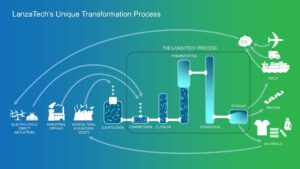
The company uses proprietary microbes engineered to thrive in industrial gas streams, such as those found in steel mills and refineries. These microbes consume waste gases, turning them into useful products.
The ethanol produced can serve as a building block for various products, including jet fuel, plastics, and synthetic fibers.
Financial Performance and Strategic Development
In the third quarter of 2024, LanzaTech reported revenue of $9.9 million, a decrease from $17.4 million in the second quarter and $19.6 million in the third quarter of 2023. This decline was primarily due to a timing delay in a LanzaJet sublicensing event, which was expected to generate about $8.0 million in licensing revenue.
LanzaTech has been actively expanding its technological capabilities and market reach:
- CirculAir Initiative: In June 2024, LanzaTech and its subsidiary LanzaJet introduced CirculAir, a commercially viable solution designed to convert waste carbon and renewable power into sustainable aviation fuel (SAF).
- Project Drake: LanzaTech advanced Project Drake, a 30-million-gallon sustainable aviation fuel project, furthering its commitment to large-scale SAF production.
Key Projects and Partnerships
The carbon recycling company has engaged in several significant projects and collaborations, including:
- Technip Energies Collaboration: Received U.S. Department of Energy funding to commercialize CO₂-to-ethylene technology.
- Eramet Partnership: Developing a Carbon Capture, Utilization, and Storage (CCUS) project in Norway.
- LanzaJet Initiative: Introducing CirculAir, a technology to produce sustainable aviation fuel (SAF).
Additionally, LanzaTech is developing a novel biocatalyst to directly convert CO₂ to ethanol at 100% carbon efficiency, leveraging affordable, renewable hydrogen. This transformative technology aims to produce biofuels and feedstocks for valuable products using carbon-free renewable energy, water, and CO₂.
With a solid financial foundation bolstered by recent capital raises and strategic partnerships, LanzaTech is well-positioned to expand its carbon recycling solutions globally, creating sustainable products from waste carbon.
4. Occidental Petroleum Corporation (OXY): Carbon Capture with Enhanced Oil Recovery
Occidental Petroleum (OXY) is a major player in the oil and gas industry. However, in recent years, the company has been transforming itself into a leader in carbon management solutions.
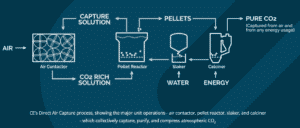
Occidental has embraced Direct Air Capture (DAC) technology, which removes CO₂ directly from the atmosphere. In partnership with Carbon Engineering, Occidental is constructing the world’s largest DAC facility in Texas, a groundbreaking project that will play a significant role in achieving global emission reduction targets.
Financial Performance
In the third quarter of 2024, Occidental reported net income attributable to common stockholders of $964 million, or $0.98 per diluted share. The company has scheduled the announcement of its fourth-quarter 2024 financial results for February 18, 2025.
Carbon Capture Initiatives
Occidental is actively investing in DAC technology through its subsidiary, 1PointFive. The company’s flagship DAC facility, named STRATOS, is under construction in the Permian Basin.
STRATOS is designed to extract 500,000 metric tons of atmospheric CO₂ annually, laying the foundation for commercial-scale DAC deployment. The facility will begin operations in the summer of 2025, with live power anticipated to come online in December 2024.
- RELATED: Are Direct Air Capture Plants Facing Massive Clean Energy Challenge in the U.S.? A S&P Global Report
Occidental plans to integrate the captured CO₂ into enhanced oil recovery (EOR) processes, injecting the CO₂ into aging oil fields to extract additional oil while effectively sequestering the CO₂ underground.
This approach creates a closed-loop system that both boosts oil production and reduces atmospheric carbon.
Additionally, Occidental is developing a project to transport and store CO₂ captured from Velocys’ planned Bayou Fuels biomass-to-fuels project in Natchez, Mississippi, in secure geologic formations.
The Bayou Fuels project converts waste woody biomass into transportation fuels, and applying CO₂ capture and storage can make the facility a net-negative carbon dioxide emitter.
Occidental’s approach is an example of how traditional energy companies are evolving to embrace sustainability. By combining its existing expertise in oil extraction with innovative carbon capture methods, Occidental is paving the way for a future where fossil fuel extraction can coexist with carbon reduction technologies.
5. Equinor ASA (EQNR): Leading the Way in Carbon Storage and Capture
Equinor, formerly known as Statoil, is a Norwegian energy giant that has diversified its portfolio to include renewable energy sources like wind power. It has also been at the forefront of carbon capture, utilization, and storage (CCUS) technologies for over 25 years.
Their extensive experience includes operating the world’s first dedicated CO₂ storage site at the Sleipner field since 1996 and the Snøhvit field since 2008. The image from the company’s presentation below shows its overall performance in the latest report.

Moreover, Equinor is a key player in the Northern Lights project, a pioneering initiative in Norway aimed at developing a large-scale CCS infrastructure.
The Northern Lights project focuses on capturing CO₂ from industrial sources, transporting it via ships, and securely storing it beneath the North Sea seabed. This project is a crucial step in addressing the complexities of CCS, and Equinor is positioning itself as a facilitator of this transformative technology.
What makes the Northern Lights project particularly noteworthy is its open-source infrastructure. It allows other companies to use the storage facilities. This collaborative model could accelerate the widespread adoption of CCS technology across Europe and beyond.

Financial Performance
Other Key Projects and Developments
- Bayou Bend CCS Project: Equinor has acquired a 25% interest in Bayou Bend CCS LLC, positioning it to be one of the largest carbon capture and storage projects in the United States.
- UK Carbon Storage Initiatives: Equinor, in collaboration with BP and TotalEnergies, has secured investment into Britain’s carbon capture projects, directly supporting 2,000 jobs in the northeast of England.
Strategic Partnerships, Technological Innovations, and Outlook
Equinor has signed an agreement with French gas grid operator GRTgaz to develop a CO₂ transport system that will carry captured CO₂ from French industrial emitters to offshore storage sites in Norway.
The Norwegian energy giant operates the Technology Centre Mongstad, the world’s largest and most flexible plant for testing and improving CO₂ capture technologies. This facility plays a crucial role in advancing CCUS solutions to decarbonize industries and the energy system.
In December 2024, Equinor secured over $3 billion in financing for its Empire Wind 1 offshore project in the U.S. Scheduled to become fully operational by 2027, the project will deliver clean energy to 500,000 New York homes, advancing the company’s renewable energy ambitions.
- READ MORE: Equinor’s $3B Financing Deal for Empire Wind 1 Project: A Turning Point for U.S. Offshore Wind?
Equinor has decades of experience in offshore oil and gas exploration, and its deep-rooted knowledge of energy infrastructure is key to its success in developing large-scale CCS solutions. With the potential to store the equivalent of 1,000 years of Norwegian CO₂ emissions beneath the seabed, Equinor’s initiatives are pivotal in supporting global climate goals.
Conclusion: The Future of Carbon Stocks
As more companies declare their commitment to net-zero goals and seek innovative solutions to reduce carbon emissions, carbon stocks are becoming attractive to investors. The top carbon stocks or companies mentioned in this article—Brookfield Renewable Partners, Aker Carbon Capture, LanzaTech, Occidental Petroleum, and Equinor—are leading the charge in decarbonizing industries and creating sustainable solutions for a carbon-constrained world.
By investing in these carbon stocks, investors not only support the transition to a cleaner, more sustainable future but also position themselves to benefit from the growth of the green economy.
As we move closer to 2030 and beyond, carbon stocks will become an increasingly important part of investment portfolios aiming to align financial returns with environmental impact.
The post Top 5 Carbon Stocks to Watch in 2025 appeared first on Carbon Credits.
Carbon Footprint
COP30 Moves Into a More Ambitious Phase: Key Updates to Know
COP30, held in Belém, Brazil, has shifted into higher gear. Ministers are now at the negotiation table. The talks are shifting from technical discussions to tough political bargaining.
The COP30 presidency has released a new summary document outlining 21 different options for resolving some of the most contentious issues. This is signaling a push for real progress.
A Menu of Options from the Presidency
At the heart of the summit is a 5-page note from COP30 President André Corrêa do Lago. This document does more than guide discussions: it frames possible outcomes by laying out 21 options across four major areas.
These major issue-areas include:
- Strengthening national climate plans: whether countries should be urged to do more on their new emissions-reduction pledges.
- Climate finance: especially the allocation of a $300 billion aid target from richer to poorer countries. Current climate finance flows are far too low. About $500 billion is available each year, but the world needs $1.3 trillion by 2030–2035. Rich countries made a promise: to give $100 billion a year by 2020. But they didn’t meet this goal.
- Trade and climate: how to deal with trade barriers and climate-related trade disputes. Climate-related tariffs and disputes are rising. This shows that COP30 needs to tackle trade measures in a more organized way.
- Transparency and reporting: improving how countries report their emissions and climate progress.

The presidency says these options are not fixed decisions. Instead, they reflect different pathways that countries can endorse or reject. This structure is meant to give negotiators flexibility while still working toward a coherent package.
Some options call for a new three-year climate finance program. Others suggest simpler steps, like reaffirming current commitments.
One idea for trade is to host roundtables about how climate policies impact cross-border trade. Another is to create a formal platform to discuss climate-related trade measures under the UNFCCC.
- The presidency also emphasizes core themes: multilateralism, putting people at the center, and moving from negotiation to implementation.
COP30 metrics show the size of these talks. Nearly 200 countries and many observer groups are represented.
Analysts say the document suggests a bolder COP30 outcome that could lead to roadmaps for phasing out fossil fuels. Also, it may establish a clearer link between climate finance and accountability.

Host Brazil Urges Action, Not Just Words
Brazil, as host, is pressing hard for concrete results. It has sent a strong message through a letter and its draft text, urging parties to negotiate in good faith and aim for real deliverables. And so negotiations extended into the nights to finalize the talks.
President Lula da Silva and COP President do Lago both emphasize that talks must lead to a practical roadmap, not vague promises. They argue that to meet the challenges ahead, especially on fossil fuels and finance, countries must chart out “who does what, when, and how.”
In particular, Brazil is pushing for a roadmap to phase out fossil fuels. It sees this as both an ethical and strategic move: phasing out fossil fuels in a just way, while respecting development needs.
- Global fossil fuel subsidies are about $500 billion each year.
Reform efforts are now closely tied to COP talks. This adds urgency to Brazil’s proposals.
Money Talks: Climate Finance Stalls Negotiations
Even though the presidency’s proposal is broad, finance continues to act as a major roadblock. Developing countries say rich nations still haven’t met their climate aid promises. This includes a goal of $300 billion each year by 2035. The shortfall compared to the estimated needs of $1.3 trillion annually illustrates the scale of the finance gap.

These financial disputes have even prompted critics to warn that the absence of real funding could undermine the entire summit. Some say that until money flows, other issues — like emissions or transparency — may remain stalled.
South Korea’s Big Coal Shift
Meanwhile, a significant moment came when South Korea announced it would phase out many of its coal-fired power plants by 2040. The country joined the Powering Past Coal Alliance.
Under the plan, 40 out of its 61 coal plants are set to retire by 2040. The remaining 21 will be evaluated for closure later, based on economic and environmental factors.
South Korea aims to have 45% of its electricity supplied by renewables by 2040, supplemented by nuclear and gas. This commitment signals a major step toward a cleaner energy mix and the creation of green jobs.

But the pledge also raises geopolitical stakes. South Korea has long been a major coal importer. Its decision could ripple through global coal markets, especially affecting exporting countries.
The country accounts for about 1.5% of global emissions. This shows that its policies, though smaller than those of China or the U.S., still hold significant regional influence.
China Steps Up as the United States Steps Back
Complicating dynamics at COP30 is the notable absence of the United States. As such, China has stepped up its diplomatic efforts. With no top U.S. officials around, it is pushing for stronger cooperation among many countries.
Beijing’s delegation sees itself as a stabilizing force. They push for climate finance, technology cooperation, and working together on the Paris Agreement. China accounts for around 31% of global emissions, making its position critical for the overall climate outcome.
Before the summit, China updated its climate goals. It plans to cut emissions by 7–10% from peak levels and increase non-fossil energy use to 30% of total energy consumption by 2035.
Analysts note that, even with these plans, long-term goals and accountability are still necessary to keep warming within 1.5°C.

What’s at Stake: A Turning Point for COP30
As COP30 presses on, what happens in the next few days could define its legacy. Here are the key things to watch out for as the summit takes its second week run:
- The presidency’s “menu” of options gives countries flexibility, but risks producing watered-down outcomes.
- Finance remains the most difficult divide. Without real funding, many fear COP30 could fall short.
- Brazil is pushing for a fossil-fuel roadmap anchored in fairness — but that depends on buy-in from major emitters.
- South Korea’s coal commitment could reshape export markets and send a signal to other coal-dependent nations.
- China’s rising role highlights how power dynamics are shifting, especially in the U.S.’s absence.
- Trade and climate measures, including tariffs and disputes, remain an area where COP30 could produce tangible frameworks to avoid future conflicts.
In short, COP30 may not just be another negotiation; it could be a turning point. Whether countries seize the moment to deliver real change will determine if this climate conference becomes a source of momentum or just another talking summit.
The post COP30 Moves Into a More Ambitious Phase: Key Updates to Know appeared first on Carbon Credits.
Carbon Footprint
Carbon Credit Prices Hit New 2025 Highs: 7 Safe Platforms Every Buyer Should Know
Carbon credit prices jumped to new 2025 highs this week, sparking intense market activity and a wave of interest from companies and investors racing toward net-zero goals. Fresh data from MSCI showed that high-rated credits traded at more than 300% above lower-rated ones in May.
Meanwhile, the MSCI Global ARR Index—which tracks afforestation, reforestation, and revegetation projects—climbed to a record $21.3 per ton in June. These trends reveal a clear shift: buyers now want transparent, verified, and high-impact credits.
As competition heats up, major players and new platforms are doubling down on quality. Because of this, buyers must choose trusted exchanges that offer verified, high-integrity carbon credits. Below, we break down why prices are rising, what trends are driving demand, and where buyers can find reliable credits in today’s fast-changing market.

Why Carbon Credit Prices Are Climbing in 2025
The 2025 carbon market looks very different from previous years. More than 95 million credits were retired in the first half of the year alone, according to Sylvera. This was the highest six-month total ever recorded. The surge reflects stronger climate action from governments and companies facing stricter rules.
Prices show the same direction. Carbon credits today cost 1.9 times more than in 2018. Demand for high-quality offsets hit new highs, while the supply of credible, recent credits remains tight.

Premium Credits and Removals Capture Big Margins
High-rated credits led the price jump. In 2025, “investment-grade” credits—rated BBB or higher—averaged $14.80 per ton. Lower-rated credits averaged just $3.50. Buyers also paid more for newer credits. According to Ecosystem Marketplace, premiums for credits issued in the past five years reached 217%, up from 53% in 2023.
Carbon removal credits, such as reforestation or direct air capture, gained even more momentum. These credits now trade at a massive 381% premium over traditional reduction credits.
Although prices still vary—sometimes by 11% between credits from the same project—buyers show rising confidence. New standards, such as the ICVCM’s Core Carbon Principles and updated regulations, are making integrity a priority.

Why High-Quality Carbon Credits Are in Such High Demand
Demand for trustworthy credits keeps rising due to tighter rules, corporate pressure, and growing public scrutiny. Programs like CORSIA, the global aviation offsetting system, now require stricter eligibility. In the first half of 2025, more than one-third of all new credits issued were potentially eligible for CORSIA Phase 1, depending on Article 6 approvals.
The Science-Based Targets initiative (SBTi) also pushed companies to use only high-integrity carbon removals for net-zero claims. As a result, businesses are moving away from cheap, low-quality credits. Instead, they are paying more for offsets that deliver proven climate and community benefits.
Technology-based removal credits—such as direct air capture—saw some of the highest prices in the market, often above $1,000 per ton. Nature-based credits remained important but typically traded between $7 and $24 per ton. This widening gap shows how buyers value durability and innovation.
The Top 7 Platforms to Buy Verified Carbon Credits in 2025
Because transparency matters more than ever, selecting the right exchange is essential. Here are seven reliable platforms offering verified carbon credits in 2025:

All these platforms work with leading standards bodies like Verra, Gold Standard, and the American Carbon Registry to ensure strong credibility.
- ALSO CHECK OUT: Top 3 Carbon Credit Companies Driving Climate Impact in 2025
How New Standards and Market Forces Are Reshaping 2025 Prices
Integrity-focused reforms, new technologies, and shifting buyer behavior continue to reshape the carbon market. According to the World Bank, new standards have led to fresh price swings—especially for high-quality nature-based credits. Issuances hit record highs, too.
- Sylvera reported that 77 million credits were issued in Q2 2025, up 39% from Q1 and 14% from Q2 2024. Yet retirements grew even faster, keeping pressure on supply.

Old vintage credits are quickly falling out of favor. Companies now want recent, high-quality offsets that meet new regulatory and investor expectations. As a result, BBB-rated credits and other premium assets are setting the tone for market pricing.
Some older credits still trade below $1 per ton, but high-integrity projects now define the market’s direction and future values.
What the Latest Data Says About Growth and the Road Ahead
The numbers reveal a market growing fast and evolving even faster. BloombergNEF’s High Quality scenario shows potential supply rising from 243 million tons in 2024 to 2.6 billion tons by 2030, and possibly 4.8 billion tons by 2050. Even with rising supply, prices are expected to climb.
- BNEF forecasts an average of $60 per ton by 2030, increasing to $104 per ton by 2050 as demand for removals outpaces reduction credits.
Notably, Direct air capture will play a major role. By 2050, BNEF expects it to supply 21% of all carbon credits, helping push average prices above $100.
Market structure is also shifting. Bilateral (over-the-counter) deals have exploded—growing 27-fold since 2022—as buyers want tailored, audited solutions. Compliance markets, like those in Singapore and California, continue to raise prices through strong tax and allowance policies.

The Bottom Line for 2025 and Beyond
The carbon market is moving toward a future defined by quality, transparency, and impact. Demand is rising fast, regulations are tightening, and buyers are paying more for verified, high-integrity credits.
In this new environment, the best opportunities will favor informed buyers—those who act early, choose reputable platforms, and prioritize integrity over volume. The road to net zero increasingly depends on credible, premium carbon credits that deliver real climate results.
- FURTHER READING: Carbon Credits Supply to Skyrocket 35x by 2050 – But at What Price?
The post Carbon Credit Prices Hit New 2025 Highs: 7 Safe Platforms Every Buyer Should Know appeared first on Carbon Credits.
Carbon Footprint
What the IEA’s New Scenarios Mean for the Global Climate — and for COP30
The energy world is changing fast, yet not fast enough to protect the planet from dangerous warming. The International Energy Agency’s (IEA) World Energy Outlook 2025, released at the start of COP30 in Brazil, lays out three futures for global emissions. These scenarios show how close — or far — the world is from meeting the goals of the Paris Agreement. The findings are sobering, but they also give countries clear signals on where action must accelerate.
The IEA makes one point very clear: 2024 was the hottest year ever recorded, and for the first time, global temperatures stayed above 1.5°C across the entire year. The last decade was also the hottest in history. This puts huge pressure on countries as they update their national climate plans at COP30.
Yet the IEA also stresses something important — none of its scenarios are forecasts. They are pathways, and the direction we take still depends on policy choices made today.
A World on a Hotter Track: What the IEA’s Scenarios Show
The IEA’s three major scenarios outline different ways the global energy system could evolve. Two reflect today’s conditions. The third shows what it would take actually to reach net-zero emissions by 2050.

Current Policies Scenario (CPS): The Dangerous Path
This scenario assumes governments stop at policies already written into law. No new climate pledges. No new incentives. No strengthened targets.
Under this path:
- Coal use falls only slightly.
- Oil and gas demand have been rising for decades.
- Global energy-related emissions stay close to 2024 levels all the way to 2050.
The result is alarming. Global warming will hit 2°C by around 2050 and reach 2.9°C by 2100, and temperatures will still be rising. The IEA even warns there is a 5% chance of hitting 4°C, a level associated with extreme climate disruptions and irreversible tipping points.
The CPS was removed after 2020 because it seemed unrealistic in a world trying to cut emissions. But political pressure, especially from the Trump administration, pushed the IEA to bring it back. Its return shows how vulnerable global climate ambition can be when big economies shift direction.
Stated Policies Scenario (STEPS): Better, but Still Off-Track
This scenario reflects what governments say they plan to do — but not what they have legally locked in.
Here:
- Emissions peak within a few years.
- They fall slightly to 35.2 gigatonnes (Gt) in 2035.
- Advanced economies and China reduce emissions.
- But developing economies emit more as energy demand rises.
Even with these changes, the STEPS pathway still results in 2.5°C of warming by 2100. This is far above the Paris goal of “well below 2°C” and nowhere near keeping warming under 1.5°C. The IEA notes that this year’s STEPS outcome is worse than last year’s due to slower clean energy progress and higher expected coal use.
Net Zero by 2050 Scenario (NZE): The Only Path that Stabilizes the Climate
Net Zero by 2050 Scenario, often called the NZE, shows what a 1.5°C-aligned future would require. It is the only pathway that eventually brings warming back below 1.5°C by the end of the century.
But the challenge has grown sharply. Because real-world emissions remain high, the NZE scenario now includes:
- a higher and longer overshoot of the 1.5°C limit
- warming peaks around 65°C mid-century and slowly declines
Large-Scale Carbon Removal Technologies: The Saviour
The only way to return below that threshold later this century is to combine deep emissions cuts with large-scale carbon removal technologies. These technologies remain expensive and unproven at the scale required.
So the IEA emphasizes that countries must do everything possible to limit the overshoot by cutting emissions faster now. Notably, in the NZE pathway, global emissions fall by more than half by 2035 and reach net zero by 2050.
By the end of the century, carbon removal technologies would need to eliminate nearly four gigatonnes of CO₂ each year to bring temperatures back down.
A Fossil Peak Nears as Clean Energy Surges — but the World Still Falls Short
The IEA shows the energy system shifting, with coal already at or near its peak and oil expected to peak around 2030, though its decline will be slower than once expected. Gas demand levels off around 2035, but at a higher baseline than earlier forecasts, revealing how deeply rooted fossil fuels remain in the global mix.

At the same time, clean energy is rising fast. Solar capacity could more than triple by 2035, wind is set to nearly triple, and nuclear expands by close to 40 percent. Renewables will even overtake oil as the largest energy source by the early 2040s. Yet the world is still not moving fast enough. Under stated policies, renewable capacity reaches about 13,700 gigawatts by 2035, far short of the roughly 19,600 gigawatts required under the net-zero pathway.

Global Carbon Emissions: Peaks and Plateaus
Both IEA scenarios point to sustained high emissions, though at different levels. In the CPS, global energy emissions stay near 2024 levels through 2050, as small coal reductions are offset by rising oil and gas use. In the STEPS, emissions peak soon, drop to 35.2 gigatonnes by 2035, and decline slowly to 2050.
Reductions in advanced economies and China are balanced by rising emissions in developing regions. The gap between CPS and STEPS comes mainly from higher coal emissions, slower industrial efficiency, and delayed adoption of electric and efficient vehicles.
All in all, this gap underscores the need to accelerate clean energy deployment to align with global climate goals.

Why COP30 Matters More Than Ever
With the world heating faster than expected and the 1.5°C threshold already breached annually, COP30 becomes a turning point. The IEA’s outlook directly shapes negotiations because it:
- Shows the world is far off-track.
- Highlights the widening gap between political promises and real action.
- Makes clear that overshoot is now unavoidable.
- Warns that delay will force much heavier reliance on expensive CO₂ removals later.
At COP30, countries need to submit new Nationally Determined Contributions (NDCs). The IEA warns that current NDCs do not reflect the full potential of national policies or domestic clean energy momentum. In other words, many countries are doing more at home than they are willing to commit to on paper.
COP30 is a chance to fix this gap.
What Can Be Done to Get on Track? The IEA’s Priority Actions
The message is clear: the world is not on track, and the window to avoid the worst climate impacts is shrinking. Still, the IEA shows that meaningful progress is underway.
It highlights several actions that could quickly bring global emissions closer to the NZE path. The world needs faster renewable energy deployment, stronger energy efficiency improvements, and large reductions in methane emissions from the energy sector.
Electrification of vehicles, buildings, and industry has to accelerate, and sustainable fuels such as biofuels and hydrogen must expand significantly. These steps are well understood, often cost-effective, and achievable with current technology. What remains missing is the political will to scale them up at the speed required.
With COP30, countries certainly have an opportunity to match ambition with action and take decisive steps toward a safer climate future.
The post What the IEA’s New Scenarios Mean for the Global Climate — and for COP30 appeared first on Carbon Credits.
-
Climate Change3 months ago
Guest post: Why China is still building new coal – and when it might stop
-
Greenhouse Gases3 months ago
Guest post: Why China is still building new coal – and when it might stop
-
Climate Change2 years ago
Spanish-language misinformation on renewable energy spreads online, report shows
-
Greenhouse Gases1 year ago嘉宾来稿:满足中国增长的用电需求 光伏加储能“比新建煤电更实惠”
-
Climate Change Videos2 years ago
The toxic gas flares fuelling Nigeria’s climate change – BBC News
-
Climate Change1 year ago嘉宾来稿:满足中国增长的用电需求 光伏加储能“比新建煤电更实惠”
-
Carbon Footprint2 years agoUS SEC’s Climate Disclosure Rules Spur Renewed Interest in Carbon Credits
-
Renewable Energy4 months ago
US Grid Strain, Possible Allete Sale


