

Weather Guard Lightning Tech

Siemens’ Financial Changes, TPI-Nordex Blade Supply Deal, Norway’s €1B Wind Investment
Statkraft plans to invest 1 billion euros in wind energy in Norway. TPI Composites expands its supply agreements with Nordex to manufacture blades in Turkey. Siemens transferred an additional 8% stake in Siemens Energy to its pension fund. What does this mean for the industry?
Sign up now for Uptime Tech News, our weekly email update on all things wind technology. This episode is sponsored by Weather Guard Lightning Tech. Learn more about Weather Guard’s StrikeTape Wind Turbine LPS retrofit. Follow the show on Facebook, YouTube, Twitter, LinkedIn and visit Weather Guard on the web. And subscribe to Rosemary Barnes’ YouTube channel here. Have a question we can answer on the show? Email us!
Pardalote Consulting – https://www.pardaloteconsulting.com
Weather Guard Lightning Tech – www.weatherguardwind.com
Intelstor – https://www.intelstor.com
Allen Hall: I’m Allen Hall, president of Weather Guard Lightning Tech, and I’m here with the founder and CEO of IntelStor, Phil Totaro, and the chief commercial officer of Weather Guard, Joel Saxum. And this is your News Flash. News Flash is brought to you by our friends at IntelStor. If you need actionable information about renewable projects or technologies, check out IntelStor at intelstor.com.
Norwegian utility Statkraft has announced a 1 billion euro investment in new and existing onshore wind farms in Norway. The goal is to double Statkraft’s annual wind production to 2, 500 gigawatt hours. The wind investment is part of a larger 6 billion euro plan for Statkraft’s operation in Norway.
Phil, why does every new investment start with a B as in billion? This is a lot of money moving around on onshore wind at the moment.
Philip Totaro: It is, and they want the power, and they’re taking it seriously, and it’s, interesting because, we talk about, challenges and like the U S offshore wind market and whatever.
And then, you go over to Norway and you got a big utility company plunking down a billion Euro to double their, wind output. They obviously get it and they care and they’re moving forward. They’re going to be, in good stead for, a while.
Joel Saxum: One of the big things here too, to know is that Norway runs mostly all on renewable energy already, and they’re, flush, as an electrified society.
So I believe that a lot of this, if there’s new, production that will be going. They’re gonna take advantage of some of these HVDC, subsea lines that are heading to mainland Europe and over to the UK to sell a lot of this power, into those other markets. So some of this is less of a, let’s electrify Norway, it’s more of a, let’s take advantage of Norway’s natural resources and sell it to other parts in, In the UK and Europe.
Philip Totaro: They also have, not just this desire for offtake, but they’re electrifying a lot of the vehicles like Norway is the number one place in the world for, electric vehicle sales as a percentage of, all sales or a percentage of population.
And, you’re right, Joel, because they can take this power. And, pipe it into a broader European market where, you know, different countries, it’s, thankfully prices have come down in this winter wasn’t so bad. But we’re, only back to 2021 levels in, in terms of prices, average prices in throughout Europe
at this point. Because we’ve stabilized the situation now with, Russia and Ukraine, but things can change. Things can escalate. He who hath the power is going to be able to, use it and to sell it.
Allen Hall: TPI Composites has expanded its supply agreements with wind turbine maker, Nordex in Turkey.
TPI will add two new wind blade manufacturing lines, bringing its total capacity with Nordex in Turkey to eight lines. The agreements are going to run through 2026 with up to three additional years. The expansion builds upon a 10 year relationship between Nordex and TPI in Turkey. This is interesting because you don’t really hear too much about Nordex in the United States at the moment.
However, in Europe and in Turkey, Nordex has a significant presence. This I assume, really helps TPI out because they are becoming the, blade manufacturer of choice.
Philip Totaro: They are, and fun fact, Nordex is actually the number one OEM in Turkey. They beat Vestas. They, they beat GE, they, they’re, they even took over from Enercon, who was the early mover in, my understanding, by the way, is that this TPI contract will cover, the N 163 blades.
And I believe for the 7 megawatt platform where they’re going, I think something like 170, I want to say 172 or something like that. This is gonna, cover the, new and bigger turbines, with some additional production, which I think is, great. They’re deploying a lot of these bigger units throughout Turkey.
And Turkey is actually serving as an export hub for, other projects throughout Europe, especially Eastern Europe and, even in Africa, where, you know, Morocco was supposed to serve as a, as manufacturing hub for, a lot of components, even Egypt. Turkey is gonna fill that void.
So it’s a great thing for, both companies.
Joel Saxum: Interesting. It seems like the shakeups at TPI in the upper management sector, when they brought in the new, quality control people and some, moved a couple other things, pieces and parts around, looks like it’s translated into some, more contracts actually.
So those moves that they made at the top level of, ensured a little bit more confidence in TPI as a, as the manufacturer of choice with these new contracts.
Allen Hall: Siemens has transferred an additional 8 percent stake in its subsidiary Siemens Energy to its pension asset manager, Siemens Pension Trust, EV.
The stake transfer reduces Siemens holdings in Siemens Energy to 17%. In June of 22, Siemens Energy had cut its Siemens Energy stake from about 30 percent to 25 percent by transferring shares to the pension fund. So there seems to be a continual offloading of Siemens Energy’s shares from Siemens to this pension trust.
Phil, what’s the rationale for doing this?
Philip Totaro: It takes some of the liability exposure for Siemens AG. It takes that Siemens Energy liability exposure off the books for Siemens AG. But it’s transferring it to, their, pension fund, which is they’re not really getting rid of it. It’s still, part of the Siemens family, so to speak.
It’s, so this is a financially driven, or a financial mechanism that, that’s driving it. But there, I think the real reason behind this actually might stem from the agreement that was put in place with the German government. Because recall the fact that a few months ago, they finally got an agreement where some of the banks and the government would all kind of step in and provide, a backstop, a liability backstop to, Siemens Energy
on behalf of Siemens Gamesa. And so this could be instigated by, by that, Siemens AG might be compelled if you will, to reduce their, their direct holding on Siemens Energy. Because there, there may be a need to segregate this. Or, again, it’s already been spun off, but maybe further divest, the remaining shares at some point in the future.
I think, to be honest, again, it, may just seem like a, a, purely financial transaction. But, keep in mind what’s probably driving it is, this agreement with the German government.
Siemens’ Financial Changes, TPI-Nordex Blade Supply Deal, Norway’s €1B Wind Investment

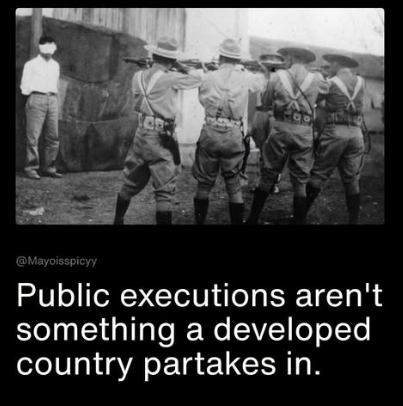 The United States seems set on propelling itself backwards.
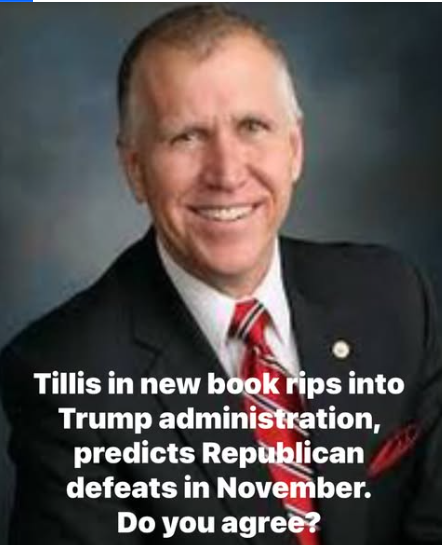 Maybe, as they say, “Hell has a special place reserved in it” for people like Thom Tillis, Republican Senator from North Carolina, who enabled Trump to rape and destroy the United States.
That was until it became clear to Tillis that he could jump ship, write a scathing book about the president, get all over mainstream news promoting it, and go on to enjoy another chapter of political success.
That we Americans are so stupid that we accept this blatant hypocrisy and criminality is sad proof that we’re not the people we were 20 years ago. Maybe what many people are saying are correct: we deserved what we got.
Here’s a short video from Elle Cordova that reminds us that science is something of a rarity in human history.
The great tyrants of history have done their best to cause the people they ruled to reject science, simply to ensure the masses are ignorant, terrified, superstitious, and thus easily controlled.
The current political administration is particularly engrossed in the rejection of science. I wonder why.



-
Climate Change1 year ago
Guest post: Why China is still building new coal – and when it might stop
-

 Greenhouse Gases2 years ago
嘉宾来稿:满足中国增长的用电需求 光伏加储能“比新建煤电更实惠”
-
Greenhouse Gases1 year ago
Guest post: Why China is still building new coal – and when it might stop
-

 Climate Change2 years ago
嘉宾来稿:满足中国增长的用电需求 光伏加储能“比新建煤电更实惠”
-

 Renewable Energy12 months ago
Sending Progressive Philanthropist George Soros to Prison?
-
Climate Change2 years ago
Bill Discounting Climate Change in Florida’s Energy Policy Awaits DeSantis’ Approval
-
Greenhouse Gases1 year ago
嘉宾来稿:探究火山喷发如何影响气候预测
-

 Climate Change2 years ago
Analysis: China’s CO2 falls 1% in Q2 2024 in first quarterly drop since Covid-19