

Mexican citizens will go to the polls on 2 June 2024 to elect a new president, a new legislature and thousands of other local government officials.
Three candidates – two of whom are women – are contending to succeed the current leftwing president Andrés Manuel López Obrador. This could be the first time a woman is elected as president of Mexico.
In Mexico, presidential candidates can be put forward by a coalition of different political parties that share common goals and agendas.
Leading candidate in the polls Dr Claudia Sheinbaum represents a leftwing coalition, which includes Obrador’s ruling party, the National Regeneration Movement (Morena).
Xóchitl Gálvez represents several right and centre-left opposition parties, including the National Action Party. Jorge Álvarez Máynez is the centre-left party Citizen’s Movement candidate.
Mexico – a country with more than 126 million inhabitants and considered the second largest economy in Latin America, after Brazil – had the world’s 11th largest greenhouse gas emissions in 2018. (See Carbon Brief’s Mexico profile for more.)
Within the G20, Mexico is the only member that has not set a net-zero target. The country still strongly depends on oil, gas and coal. It faces several challenges in decarbonising its economy, implementing its national climate law and protecting its biodiversity through, for example, conserving its biodiversity agency.
In the interactive grid below, Carbon Brief compares the three presidential candidates’ proposals on energy, climate and biodiversity, based on manifestos, official webpages and other key official documents.
Each entry in the grid represents a direct quote from one or more of these documents.
Where does the country stand?
In its updated pledge to the UN about its climate actions and ambitions – its nationally determined contribution – Mexico says it contributes 1.3% of global greenhouse gas (GHG) emissions.
The country aims to cut its greenhouse gas emissions to 35% below a business-as-usual baseline by 2030, rising to 40% with international financial support.
The document says that emissions in 2020, not including land-based removals, stood at 804m tonnes of carbon dioxide equivalent (MtCO2e), with this rising to 991MtCO2e under the no-mitigation baseline.
This means hitting the lower target would entail cutting emissions to 25% below 2020 levels and the conditional goal a 35% reduction from the same starting point.
Its 2030 baseline is 991MtCOe with no mitigation efforts by the same year – reaching up to 40% of emissions reductions with international financial support.
Fossil fuels account for 86% of the total energy supply, while renewables make up only 8%.
In 2022, research and NGO partnership Climate Transparency concluded that Mexico “needs to adopt policies to phase out the use of fossil fuels [for example] coal and heavy oil while also reducing the social inequality gap”.
Sandra Guzmán is general director at the Climate Finance Group for Latin America and the Caribbean (GFLAC) and member of México resiliente – a group of civil-society organisations that sent the presidential candidates a proposed climate plan for the country.
This election is particularly important because of the need to rapidly cut global emissions this decade, she tells Carbon Brief. Guzmán adds:
“This is the most important six-year period to achieve climate goals. If someone with no interest in climate change comes to power, we would disdain and discard any commitment that Mexico has made and we will hardly be able to get on the path to compliance.”
What are the proposals?
Dr Claudia Sheinbaum is the candidate of the “let’s keep making history” coalition, made up of the ruling leftwing party, the National Regeneration Movement (Morena), the Labour party and the Green party. She holds a PhD in energy engineering and was head of the government of Mexico City from 2018 to 2023.
Sheinbaum’s roadmap for 2024-2030 aims to “decarbonise the energy matrix as quickly as possible”. However, the 381-page document says her administration would be “in line” with Obrador’s energy policy, which is based on energy self-sufficiency through the strengthening of the state-owned oil company Petróleos Mexicanos (Pemex), and the rehabilitation and acquisition of refineries. As well as the roadmap, the coalition’s manifesto does not mention any reference to net-zero.
Additionally, she has recently unveiled a plan to invest more than $13bn in new energy generation projects through 2030, according to Reuters. This would include increasing wind and solar power generation, as well as modernising five hydroelectric plants.

During the second presidential debate aired on Sunday 28 April, Sheinbaum restated her proposal to boost renewable energy sources. This includes domestic solar panels as well as growing electric transportation, while relying on gas and more combined-cycle plants for the energy transition.
The “let’s keep making history” candidate currently holds a substantial lead in the polls, but it is less clear whether her coalition will achieve the two-thirds majority in the legislature that it would need to enact its desired constitutional reforms.
Xóchitl Gálvez is the coalition candidate of several right and centre-left opposition parties, including the National Action Party, Institutional Revolutionary Party and Party of the Democratic Revolution. She is a computer engineer, an entrepreneur, a former mayor of Miguel Hidalgo borough in Mexico City from 2015 to 2018 and a former senator from 2018 to 2023.
Her coalition’s manifesto outlines a decarbonisation plan and pledges resources to encourage local and national energy transition plans. One of her most prominent energy proposals, outlined on her official webpage, is for the country to reach “net-zero carbon emissions” by 2050.
In the television debate, Galvez reaffirmed her commitment to achieving net-zero emissions by 2050, making Pemex’s business model more efficient and promoting clean energy rounds and electricity auctions. In a new proposal, she suggested that 50% of energy should come from renewable sources by 2030.
Jorge Álvarez Máynez is the candidate of the centre-left party Citizen’s Movement. He was deputy of Mexico’s congress for 2015-2018 and 2021-2024.
The party’s political platform seeks to establish a deadline for phasing out the use of fossil fuels. His party says it is committed to energy transition and recognises that this will involve replacing fossil fuel revenues, suggesting revenues from lithium, wind and hydropower production will make up the shortfall. While the manifesto pledges more ambitious emissions-cutting targets, it does not mention net-zero.
During the debate, Máynez reiterated some of the proposals outlined in his manifesto. This included the importance of transitioning to clean energy sources, such as solar and wind power, changing an oil tax into a green tax for electromobility and public transport, and closing a refinery and thermoelectric plant. He said his administration would install solar panels in all schools and hospitals, and boost sustainable development in the country’s south.
Missing issues
The second presidential debate in Mexico was the first ever to include climate change and sustainable development as one of its thematic areas. The three candidates discussed their proposals on mitigation and energy transition, while adaptation was little mentioned.
Mexico is currently grappling with water scarcity and drought. From October last year to April this year, the country’s 210 dams recorded storage figures below historical averages, according to Mexico’s national water commission. It adds that almost 80% of the country is currently going through some level of drought, with the northwest and center regions having it the worst. All candidates recognised both problems in the debate.
Sheinbaum said she would implement a national water plan focused on modernising agricultural irrigation, and recycling and boosting new water sources, such as seawater desalination. She also would maintain the agroecology program Sembrando Vida, questioned by experts for its impacts on deforestation and communities, and for not having environmental indicators in Central America.
Gálvez proposed creating a tri-national agency between Mexico, the US and Canada to tackle forest fires. On water, she said her government would give financial resources to the national water commission and treat 100% of wastewater by 2040.
Máynez plans to double the budget for water infrastructure, including dams, aqueducts and leak repairs. He proposes new conditions for companies setting up in the country, as most water is currently concessioned to large companies.
Guzmán tells Carbon Brief that, when it comes to climate policies, the biggest gaps in the candidates’ proposals are on adaptation and finance. She criticises candidates for not seeing climate change as a cross-cutting issue and for not earmarking funds or tax reforms to address the matter.
Biodiversity, loss and damage and the Escazú agreement – an agreement ratified by 16 countries from Latin America and the Caribbean to protect environmental defenders – are also absent, according to Anaid Velasco, GFLAC Mexico country director and member of México resiliente.
She tells Carbon Brief that biodiversity is “crucial”, since the Kunming-Montreal Global Biodiversity Framework mandates countries to submit their national biodiversity strategies (NBSAPs) this year. Mexico “should be working on it”, she says.


The post Mexico election 2024: What the manifestos say on energy and climate change appeared first on Carbon Brief.
Mexico election 2024: What the manifestos say on energy and climate change

A report from Greenpeace Australia Pacific and Springmount Advisory reveals the untapped green economic opportunity for Western Australia in a declining Asian gas market, which also offers a genuine solution for decarbonisation in Asia.
Is Western Australia clinging to a fading gas industry while a thriving green future passes it by? As major Asian trading partners rapidly pivot away from volatile gas imports toward cheap solar and battery storage, this report exposes a high-stakes choice: risk becoming stranded in an oversupplied fossil fuel market, or harness WA’s unmatched sun and wind to lead the global clean energy transition.
Summary
From Gas to Green: Building Western Australia’s Future State reveals that Western Australia (WA) faces a critical juncture as falling Asian gas demand, geopolitical gas supply volatility and accelerating renewable energy deployment undermine the long-term economic viability of gas exports. By harnessing its world-class wind and solar resources, the report demonstrates that WA can execute an orderly phase-out of gas and pioneer a green commodity export economy that could generate $987 billion in economic value by 2060, create 24,000 ongoing jobs, and drive a 9.6% reduction in global greenhouse gas emissions.
Key Findings
- Gas demand is falling in Asia – WA can no longer rely on gas exports: Gas demand in core Asian markets fell in 2025 and is projected to continue to decline in 2026. Legislated energy plans in Japan, South Korea, and China now prioritise renewables and nuclear over gas.
- Asia is increasing renewables, importing gas just gets in the way: Evidence from markets like Thailand suggests that gas imports are increasingly crowding out cheaper renewable energy investments and battery storage rather than displacing coal, locking in more emissions over time.
- Green commodities offer a real solution to decarbonise Asia – this is a major win for WA: With world-class renewables, WA can lead Australia’s green commodity exports, which by 2060 could be worth almost a trillion dollars ($987 billion) and support a genuine 9.6% reduction in global emissions.
Recommendations to WA government
Recommendation 1: Plan an orderly gas phase-out aligned with a trading partner pivot plan
Implement a managed, orderly phase-out of gas exports aligned with trading partners’ decarbonisation pathways, rather than waiting for demand to collapse, by:
- Developing and implementing a staged phase-out of gas facilities aligned with feedstock supply expiry or typical end of facility lifespans.
- Committing to no new gas development for gas expansion, including Browse and Kimberley fields.
- Developing new, reciprocal trade relationships with existing gas trade partners, structured to progressively replace gas exports with green commodities – integrated with recommendation 2.
Recommendation 2: Develop an integrated green commodity export strategy, positioning WA as a global green iron manufacturing hub
Establish an integrated green commodity export strategy that immediately prioritises green iron development, positioning WA as a global green iron manufacturing hub, by:
- Committing to green commodity export targets to give industry and investors a clear demand signal.
- Prioritising green iron as the lead sector within the broader green commodity strategy, given WA’s iron ore endowment and first-mover potential.
Recommendation 3: Reject false solutions such as carbon dumping (CCS) and blue hydrogen
Reject carbon dumping (also described as carbon capture and storage, or CCS) and blue hydrogen as viable decarbonisation technologies, and prioritise green hydrogen and proven renewables for clean energy and fuel production by:
- Excluding blue hydrogen projects (and CCS-dependent projects) from all government support programs.
- Requiring existing hydrogen-based production (including ammonia, methanol, synthetic fuels) to have clear, near-term transition timelines to switch to green hydrogen production.

What you can do
Together, we can push for a prosperous green future.
You can help by:
- Sending an email to Environment Minister Murray Watt and Prime Minister Anthony Albanese, calling on them to reject Browse.
- Sharing this story to help more Australians understand what’s at stake.
- Encouraging your friends and family to take action.
REPORT: “From Gas to Green” Building Western Australia’s Future State
Cleaner cooking projects in the UN carbon market will have to set aside a share of their credits to insure against the risk that the trees they save are lost to fire, drought or logging, after the market’s regulator rejected calls to exempt the sector.
The requirement is part of a new rulebook that the Paris Agreement carbon market regulator – the Article 6.4 Supervisory Body – approved last Friday for programmes that aim to cut emissions by distributing new and cleaner cookstoves in regions that still burn wood or charcoal for cooking.
These are the UN mechanism’s first rulebooks for cookstoves, one of the carbon market’s most popular credit types and also one of its most criticised for overstating climate benefits.
They consist of two methodologies: one for programmes that aim to cut greenhouse gas emissions by distributing more efficient cookstoves that burn less wood or charcoal, and a separate methodology for projects shifting households to lower-emissions cookers running on electricity or liquid petroleum gas (LPG).
Mkhuthazi Steleki, the South African chair of the Supervisory Body, said “this decision gives cleaner cooking projects a new pathway under the UN carbon market, with clear rules to ensure that each credit represents a real and credible emission reduction”.
Industry and NGOs lobby to weaken UN carbon credit rules in “coordinated” push
In copycat submissions and a private briefing to government officials, the groups have opposed a proposal to tighten safeguards for emissions offsetsLaunch of Africa Energy Bank delayed again in blow to oil and gas hopes
Repeated delays are raising questions about the bank’s momentum and whether it can mobilise investment to finance Africa’s oil and gas ambitions in an era of energy transition

Exemption push rejected
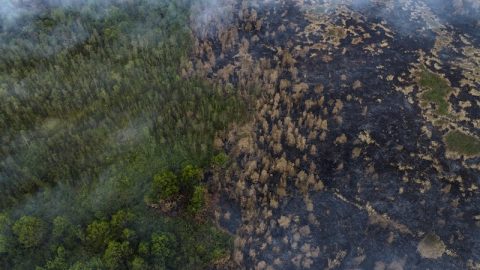
More efficient cookstove projects earn credits based on the amount of carbon they save by preserving trees that would have otherwise been cut down and burned for fuel. But if those trees later burn in a wildfire or are logged, the carbon stored would be released anyway, erasing the climate benefits of the credits.
Several carbon credit developers, conservation NGOs and the UN Environment Programme (UNEP) disputed that cookstove projects face this risk, in what critics described as a “coordinated lobbying campaign”.
They argued that, unlike forest protection schemes, this type of credit represents a “flow” of avoided emissions rather than a “stock” of stored carbon that can be released. They also warned that requiring a buffer would impose disproportionate costs and undermine the financial viability of these activities.
But the UN carbon market regulator was not persuaded by the argument. It decided that projects would have to protect against this reversal risk by handing over a percentage of credits to a so-called “buffer pool” instead of selling them.
‘New paradigm’
The amount of credits to be given up is calculated by applying different methods for natural risks, like wildfires, droughts or hurricanes, and human-caused ones, such as logging or land clearing.
For natural risks, project developers will need to apply local risk values derived from new modelling published by a group of independent scientists.
Campaigners have broadly welcomed the decision. Federica Dossi, an expert at Brussels-based advocacy group Carbon Market Watch, said it sets a new paradigm for calculating reversal risk based on empirical data. “This approach is grounded in science and we hope to see this now being adopted by other carbon crediting mechanisms in the voluntary market,” she added.
Backers claim this method is more rigorous than current practice in the voluntary carbon market, which largely relies on expert guesswork.