

Los ciudadanos mexicanos acudirán a las urnas el 2 de junio de 2024 para elegir a un nuevo presidente, una nueva legislatura y otros miles representantes de cargos públicos locales.
Tres candidatos –dos de ellos mujeres– contienden para suceder al actual presidente de izquierda, Andrés Manuel López Obrador. Esta podría ser la primera vez que una mujer es elegida presidenta de México.
En México, los candidatos presidenciales pueden ser presentados por una coalición de distintos partidos políticos que comparten objetivos y agendas comunes.
La candidata que lidera las encuestas, la Dra. Claudia Sheinbaum, representa a una coalición de izquierdas, que incluye al partido gobernante de Obrador, el Movimiento de Regeneración Nacional (Morena).
Xóchitl Gálvez representa a varios partidos de oposición de derecha y centro-izquierda, incluido el Partido Acción Nacional. Jorge Álvarez Máynez es el candidato del partido de centro-izquierda Movimiento Ciudadano.
México –un país con más de 126 millones de habitantes y considerado la segunda economía más grande de América Latina, después de Brasil– tuvo la 11ª mayor emisión de gases de efecto invernadero del mundo en 2018. (Más información en el perfil de México de Carbon Brief).
Dentro del G20, México es el único miembro que no ha establecido un objetivo de emisiones netas cero. El país sigue dependiendo en gran medida del petróleo, el gas y el carbón. Se enfrenta a varios retos en la descarbonización de su economía, la aplicación de su ley nacional sobre el clima y la protección de su biodiversidad mediante, por ejemplo, preservar su agencia de biodiversidad.
En el cuadro que figura a continuación, Carbon Brief compara las propuestas de los tres candidatos presidenciales en materia de energía, clima y biodiversidad, basándose en sus plataformas electorales, páginas web oficiales y otros documentos oficiales clave.
Cada entrada del cuadro representa una cita directa de uno o más de estos documentos.
¿Cuál es la situación del país?
En su compromiso actualizado ante la ONU sobre sus acciones y ambiciones climáticas –su contribución determinada a nivel nacional– México afirma que contribuye con el 1.3% de las emisiones mundiales de gases de efecto invernadero (GEI).
El país busca reducir sus emisiones de gases de efecto invernadero un 35% por debajo de la línea base para 2030, aumentando hasta el 40% con ayuda financiera internacional.
Según el documento, las emisiones en 2020, sin incluir las absorciones terrestres, se situaron en 804 millones de toneladas equivalentes de dióxido de carbono (MtCO2e), cifra que aumentaría a 991MtCO2e si no se aplicaran medidas de mitigación.
Esto significa que alcanzar el objetivo inferior supondría recortar las emisiones un 25% por debajo de los niveles de 2020 y el objetivo condicional, una reducción del 35% desde el mismo punto de partida.
Su referencia para 2030 es de 991MtCOe sin esfuerzos de mitigación para ese mismo año, alcanzando hasta un 40% de reducción de emisiones con apoyo financiero internacional.
Los combustibles fósiles representan el 86% del suministro total de energía, mientras que las renovables sólo suponen el 8%.
En 2022, la asociación de investigación y ONG Transparencia Climática concluyó que México “necesita adoptar políticas para eliminar gradualmente el uso de combustibles fósiles [por ejemplo] carbón y petróleo pesado, reduciendo al mismo tiempo la brecha de desigualdad social”.
Sandra Guzmán es directora general del Grupo de Financiamiento Climático para América Latina y el Caribe (GFLAC) y miembro de México resiliente, un grupo de organizaciones de la sociedad civil que envió a los candidatos presidenciales una propuesta de plan climático para el país.
Esta elección es particularmente importante debido a la necesidad de reducir rápidamente las emisiones globales en esta década, dice a Carbon Brief. Guzmán agrega:
“Este es el sexenio más importante para alcanzar las metas climáticas. Si alguien sin interés en el cambio climático llega al poder, estaríamos desdeñando y desechando todo compromiso que México haya hecho y difícilmente después de esto vamos a lograr ponernos en la senda de cumplimiento”.
¿Cuáles son las propuestas?
La doctora Claudia Sheinbaum es la candidata de la coalición “sigamos haciendo historia”, integrada por el partido gobernante de izquierda, Movimiento Regeneración Nacional (Morena), el Partido del Trabajo y el Partido Verde. Es doctora en ingeniería energética y fue jefa de gobierno de la Ciudad de México de 2018 a 2023.
La hoja de ruta de Sheinbaum para 2024-2030 tiene como objetivo “descarbonizar la matriz energética lo más rápido posible”. Sin embargo, el documento de 381 páginas señala que su administración estaría “en línea” con la política energética de Obrador, que se basa en la autosuficiencia energética a través del fortalecimiento de la paraestatal Petróleos Mexicanos (Pemex), y la rehabilitación y adquisición de refinerías. Al igual que la hoja de ruta, la plataforma electoral de la coalición no menciona ninguna referencia a las emisiones netas cero.
Además, recientemente ha dado a conocer un plan para invertir más de $13 mil millones de dólares en nuevos proyectos de generación de energía hasta 2030, según Reuters. Esto incluiría el aumento de la generación de energía eólica y solar, así como la modernización de cinco centrales hidroeléctricas.

Durante el segundo debate presidencial, emitido el domingo 28 de abril, Sheinbaum reafirmó su propuesta de impulsar las fuentes de energía renovables. Esto incluye paneles solares domésticos, así como el crecimiento del transporte eléctrico, mientras se depende del gas y de más centrales de ciclo combinado para la transición energética.
La candidata de “sigamos haciendo historia” tiene actualmente una ventaja sustancial en las encuestas, pero no está muy claro si su coalición logrará la mayoría de dos tercios en la legislatura que necesitaría para promulgar sus deseadas reformas constitucionales.
Xóchitl Gálvez es la candidata de la coalición de varios partidos de oposición de derecha y centro-izquierda, entre ellos el Partido Acción Nacional, el Partido Revolucionario Institucional y el Partido de la Revolución Democrática. Es ingeniera informática, empresaria, ex alcaldesa de la alcaldía Miguel Hidalgo de la Ciudad de México de 2015 a 2018 y ex senadora de 2018 a 2023.
La plataforma electoral de su coalición esboza un plan de descarbonización y promete recursos para impulsar planes locales y nacionales de transición energética. Una de sus propuestas energéticas más destacadas, esbozada en su página web oficial, es que el país alcance las “emisiones netas cero de carbono” en 2050.
En el debate televisivo, Gálvez reafirmó su compromiso de lograr cero emisiones netas en 2050, hacer más eficiente el modelo de negocio de Pemex y promover rondas de energías limpias y subastas eléctricas. En una nueva propuesta, sugirió que el 50% de la energía proceda de fuentes renovables para 2030.
Jorge Álvarez Máynez es el candidato del partido de centro-izquierda Movimiento Ciudadano. Fue diputado del congreso de México en los periodos 2015-2018 y 2021-2024.
La plataforma electoral del partido busca establecer una fecha límite para eliminar gradualmente el uso de combustibles fósiles. Su partido dice estar comprometido con la transición energética y reconoce que esto implicará reemplazar los ingresos de los combustibles fósiles, sugiriendo que los ingresos de la producción de litio, viento y energía hidroeléctrica compensarán el déficit. Aunque la plataforma electoral promete objetivos más ambiciosos de reducción de emisiones, no menciona el cero neto.
Durante el debate, Máynez reiteró algunas de las propuestas esbozadas en su plataforma electoral. Entre ellas, la importancia de la transición a fuentes de energía limpias, como la solar y la eólica, el cambio de un impuesto sobre el petróleo por un impuesto verde para la electromovilidad y el transporte público, y el cierre de una planta de refinería y termoeléctrica. Dijo que su administración instalaría paneles solares en todas las escuelas y hospitales, e impulsaría el desarrollo sostenible en el sur del país.
Temas ausentes
El segundo debate presidencial fue el primero en México que incluyó el cambio climático y el desarrollo sostenible como una de sus áreas temáticas. Los tres candidatos debatieron sus propuestas sobre mitigación y transición energética, mientras que la adaptación apenas se mencionó.
México se enfrenta actualmente a la escasez de agua y sequía. De octubre del año pasado a abril de este año, las 210 presas del país registraron cifras de almacenamiento por debajo de los promedios históricos, según la comisión nacional del agua de México. Añade que casi el 80% del país atraviesa actualmente algún nivel de sequía, siendo las regiones noroeste y centro las más afectadas. Todos los candidatos reconocieron ambos problemas en el debate.
Sheinbaum dijo que pondría en marcha un plan nacional del agua centrado en la tecnificación del riego agrícola, y el reciclaje y el impulso de nuevas fuentes de agua, como la desalinización del agua de mar. También mantendría el programa de agroecología Sembrando Vida, cuestionado por expertos por sus impactos en la deforestación y las comunidades, y por no contar con indicadores ambientales en Centroamérica.
Gálvez propuso crear una agencia trinacional entre México, Estados Unidos y Canadá para hacer frente a los incendios forestales. En materia de agua, dijo que su gobierno dotaría de recursos financieros a la comisión nacional del agua y trataría el 100% de las aguas residuales para 2040.
Máynez planea duplicar el presupuesto para infraestructura hídrica, incluidas presas, acueductos y reparación de fugas. Propone nuevas condiciones para las empresas que se instalen en el país, ya que actualmente la mayor parte del agua está concesionada a grandes compañías.
Guzmán dice a Carbon Brief que, en lo que se refiere a políticas climáticas, las mayores lagunas en las propuestas de los candidatos están en la adaptación y el financiamiento. Ella critica a los candidatos por no ver el cambio climático como un tema transversal y por no etiquetar fondos o reformas fiscales para abordar el asunto.
La biodiversidad, las pérdidas y daños y el Acuerdo de Escazú –un acuerdo ratificado por 16 países de América Latina y el Caribe para proteger a los defensores ambientales– también están ausentes, según Anaid Velasco, directora de país de GFLAC México y miembro de México resiliente.
Ella dice a Carbon Brief que la biodiversidad es “crucial”, ya que el Marco Global de Biodiversidad de Kunming-Montreal ordena a los países presentar sus estrategias nacionales de biodiversidad (NBSAPs, en inglés) este año. México “debería estar trabajando en ello”, afirma.


The post Elección de México 2024: qué dicen las plataformas electorales sobre energía y cambio climático appeared first on Carbon Brief.
Elección de México 2024: qué dicen las plataformas electorales sobre energía y cambio climático

A report from Greenpeace Australia Pacific and Springmount Advisory reveals the untapped green economic opportunity for Western Australia in a declining Asian gas market, which also offers a genuine solution for decarbonisation in Asia.
Is Western Australia clinging to a fading gas industry while a thriving green future passes it by? As major Asian trading partners rapidly pivot away from volatile gas imports toward cheap solar and battery storage, this report exposes a high-stakes choice: risk becoming stranded in an oversupplied fossil fuel market, or harness WA’s unmatched sun and wind to lead the global clean energy transition.
Summary
From Gas to Green: Building Western Australia’s Future State reveals that Western Australia (WA) faces a critical juncture as falling Asian gas demand, geopolitical gas supply volatility and accelerating renewable energy deployment undermine the long-term economic viability of gas exports. By harnessing its world-class wind and solar resources, the report demonstrates that WA can execute an orderly phase-out of gas and pioneer a green commodity export economy that could generate $987 billion in economic value by 2060, create 24,000 ongoing jobs, and drive a 9.6% reduction in global greenhouse gas emissions.
Key Findings
- Gas demand is falling in Asia – WA can no longer rely on gas exports: Gas demand in core Asian markets fell in 2025 and is projected to continue to decline in 2026. Legislated energy plans in Japan, South Korea, and China now prioritise renewables and nuclear over gas.
- Asia is increasing renewables, importing gas just gets in the way: Evidence from markets like Thailand suggests that gas imports are increasingly crowding out cheaper renewable energy investments and battery storage rather than displacing coal, locking in more emissions over time.
- Green commodities offer a real solution to decarbonise Asia – this is a major win for WA: With world-class renewables, WA can lead Australia’s green commodity exports, which by 2060 could be worth almost a trillion dollars ($987 billion) and support a genuine 9.6% reduction in global emissions.
Recommendations to WA government
Recommendation 1: Plan an orderly gas phase-out aligned with a trading partner pivot plan
Implement a managed, orderly phase-out of gas exports aligned with trading partners’ decarbonisation pathways, rather than waiting for demand to collapse, by:
- Developing and implementing a staged phase-out of gas facilities aligned with feedstock supply expiry or typical end of facility lifespans.
- Committing to no new gas development for gas expansion, including Browse and Kimberley fields.
- Developing new, reciprocal trade relationships with existing gas trade partners, structured to progressively replace gas exports with green commodities – integrated with recommendation 2.
Recommendation 2: Develop an integrated green commodity export strategy, positioning WA as a global green iron manufacturing hub
Establish an integrated green commodity export strategy that immediately prioritises green iron development, positioning WA as a global green iron manufacturing hub, by:
- Committing to green commodity export targets to give industry and investors a clear demand signal.
- Prioritising green iron as the lead sector within the broader green commodity strategy, given WA’s iron ore endowment and first-mover potential.
Recommendation 3: Reject false solutions such as carbon dumping (CCS) and blue hydrogen
Reject carbon dumping (also described as carbon capture and storage, or CCS) and blue hydrogen as viable decarbonisation technologies, and prioritise green hydrogen and proven renewables for clean energy and fuel production by:
- Excluding blue hydrogen projects (and CCS-dependent projects) from all government support programs.
- Requiring existing hydrogen-based production (including ammonia, methanol, synthetic fuels) to have clear, near-term transition timelines to switch to green hydrogen production.

What you can do
Together, we can push for a prosperous green future.
You can help by:
- Sending an email to Environment Minister Murray Watt and Prime Minister Anthony Albanese, calling on them to reject Browse.
- Sharing this story to help more Australians understand what’s at stake.
- Encouraging your friends and family to take action.
REPORT: “From Gas to Green” Building Western Australia’s Future State
Cleaner cooking projects in the UN carbon market will have to set aside a share of their credits to insure against the risk that the trees they save are lost to fire, drought or logging, after the market’s regulator rejected calls to exempt the sector.
The requirement is part of a new rulebook that the Paris Agreement carbon market regulator – the Article 6.4 Supervisory Body – approved last Friday for programmes that aim to cut emissions by distributing new and cleaner cookstoves in regions that still burn wood or charcoal for cooking.
These are the UN mechanism’s first rulebooks for cookstoves, one of the carbon market’s most popular credit types and also one of its most criticised for overstating climate benefits.
They consist of two methodologies: one for programmes that aim to cut greenhouse gas emissions by distributing more efficient cookstoves that burn less wood or charcoal, and a separate methodology for projects shifting households to lower-emissions cookers running on electricity or liquid petroleum gas (LPG).
Mkhuthazi Steleki, the South African chair of the Supervisory Body, said “this decision gives cleaner cooking projects a new pathway under the UN carbon market, with clear rules to ensure that each credit represents a real and credible emission reduction”.
Industry and NGOs lobby to weaken UN carbon credit rules in “coordinated” push
In copycat submissions and a private briefing to government officials, the groups have opposed a proposal to tighten safeguards for emissions offsetsLaunch of Africa Energy Bank delayed again in blow to oil and gas hopes
Repeated delays are raising questions about the bank’s momentum and whether it can mobilise investment to finance Africa’s oil and gas ambitions in an era of energy transition

Exemption push rejected
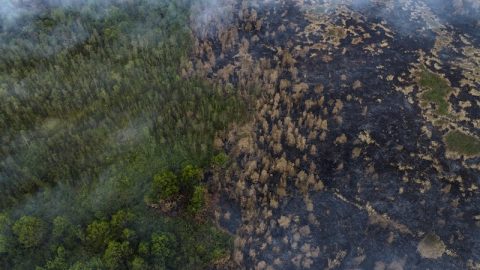
More efficient cookstove projects earn credits based on the amount of carbon they save by preserving trees that would have otherwise been cut down and burned for fuel. But if those trees later burn in a wildfire or are logged, the carbon stored would be released anyway, erasing the climate benefits of the credits.
Several carbon credit developers, conservation NGOs and the UN Environment Programme (UNEP) disputed that cookstove projects face this risk, in what critics described as a “coordinated lobbying campaign”.
They argued that, unlike forest protection schemes, this type of credit represents a “flow” of avoided emissions rather than a “stock” of stored carbon that can be released. They also warned that requiring a buffer would impose disproportionate costs and undermine the financial viability of these activities.
But the UN carbon market regulator was not persuaded by the argument. It decided that projects would have to protect against this reversal risk by handing over a percentage of credits to a so-called “buffer pool” instead of selling them.
‘New paradigm’
The amount of credits to be given up is calculated by applying different methods for natural risks, like wildfires, droughts or hurricanes, and human-caused ones, such as logging or land clearing.
For natural risks, project developers will need to apply local risk values derived from new modelling pu