

As we enter the final two weeks of JOIDES Resolution Expedition 401, we figured it was time to check in with our science team on their expedition highlights to date.
So, we checked in with some of them asking…
What’s the most interesting thing you’ve found in these cores so far?
“That we can correlate individual sedimentary beds (cycles) 100s of miles between our drill sites. It’s an essential step in finding how the Mediterranean overflow behaved and changed through time.”
-Trevor Williams, EPM

“I think the most interesting thing I’ve seen in our cores so far are pyritized burrows. The thing is you can’t really see what they look like under the sediment unless they show up on the X-ray scan. So, when we look at a core, we might see some nodules of pyrite and some spots indicating a trace fossil, but the X-ray will show the actual burrow network if the trace fossil has been infilled with pyrite or a different sediment than the host material. If the infill is denser than the surrounding sediment (like pyrite), it shows up dark on the X-ray scan. Chondrite is usually visible as spots on the split surface of the core, and occasionally you can see a branch in the trace fossil, but seeing the entire network of the burrow is really cool.”
-Patty Standring, Sedimentologist
“As a geophysicist that has a moderate experience with drilling and coring, what surprised me in the cores overall is how homogeneous and unchanging the sediments look to the eyes. On seismic profiles and other measured physical properties data we see a lot of boundaries and variations that are, most of the time, impossible to detect by the naked eye.”
-Fadl Raad, Physical Properties

“Turbidite sands in U1609, that record the movement of coarse grain material from shallower water into deeper water, by gravity flows.”
-Simon George, Sedimentologist
“The most interesting/exciting thing for me is the cross lamination in the mud.
Conventionally, people generally presumed that for fine-grained (e.g., < 20 micrometer) sediments, due to their rather small size, can be deposited only under rather quiet environments through suspension settling. However, about 15 years ago, flume experiments (the flume lab from which I got my Ph.D.) revealed that fine-grained sediments can also be deposited under running water conditions and that they form the same sedimentary structure (ripples) as sands. In ancient sediments, the mud ripples are expressed as cross lamination, which not only tells us that these fine-grained sediments were deposited under relatively energetic flowing conditions, but this is also the first time (I believe) that mud ripples are documented in the deepwater deposits in the cores.”
-Zhiyang Li, Sedimentologist
“The most interesting thing for me is evidence for an outflow during the salinity crisis – there’s been a lot of debate on this over the past few decades.”
-Udara Amarathunga, Micropaleontologist
“We found a dolostone in the core catcher at the bottom of Hole U1610A! This was our deepest recovered sample and the most different lithology of all the cores. Dolomite might be my favorite rock/mineral. We do not yet fully understand how it forms, even though people have been studying it for over a hundred years. There is a hilarious (but actually good) paper title on the topic: “Failure to Precipitate Dolomite at 25 degrees C from Dilute Solution Despite 1000-Fold Oversaturation after 32 Years”.”
-Clara Blättler, Inorganic Geochemist
“Void space gas. Watching some cores fizz like champagne was spectacular.”
-Sarah Feakins, Organic Geochemist



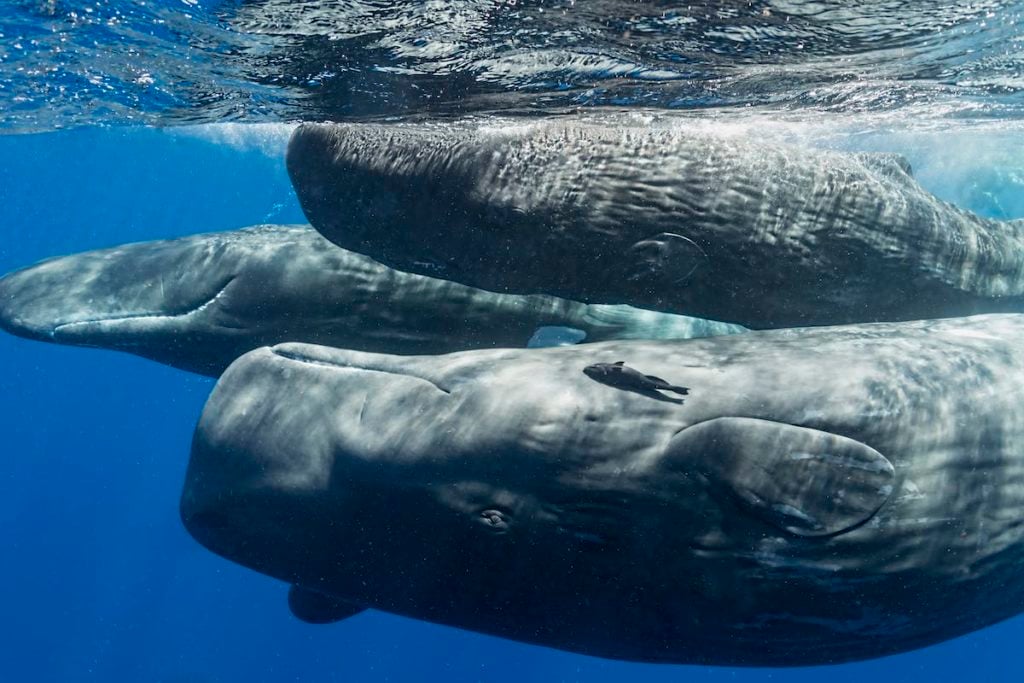
For generations, stories of people being swallowed by enormous sea creatures have painted awe-inspiring tales of human survival and perseverance. From the biblical account of Jonah to the legendary battle of Hercules and Cetus to the timeless story of Pinocchio, these legendary tales have captivated people since time immemorial.
But all these stories raise the question: Could someone really be swallowed by a whale? With the premiere of the film Whalefall on October 16, 2026, you may find yourself in conversations about this very situation. Based on the bestselling 2023 thriller authored by Daniel Kraus, the film tells the story of a scuba diver who is accidentally gobbled up by a sperm whale while searching for the remains of his late father. With only an hour of oxygen left in his tank, the diver must fight to escape the whale’s gut before time runs out.
The answer to whether it’s anatomically possible for a whale to swallow a person is actually a bit more complicated than you might think.
Get Ocean Updates in Your Inbox
Sign up with your email and never miss an update.
What’s not possible
First, let’s start with what’s not possible. There are about 90 whale species known to science today, and they are split into two different groups: toothed whales, such as sperm whales, and baleen whales, such as humpback whales and blue whales. Instead of teeth, baleen whales have massive rows of specially designed bristles that act as filters. When feeding, these whales take big gulps of water, filtering through massive amounts of tiny krill and plankton. This is why baleen whales are known as filter feeders.
Because baleen whales eat such small organisms in large amounts, they don’t physically require much space to swallow their food. The opening in their throat that leads to their esophagus is shockingly small—it’s only about the size of a grapefruit! It’s probably obvious by now, but scientifically, it is entirely impossible for a baleen whale to swallow a person. While a few news stories have recounted oceangoers like kayakers accidentally ending up in or around the mouths of humpback whales, they’ve been spit out or released within seconds. If you were a whale, this would feel like trying to eat a handful of M&Ms and accidentally realizing an entire rotisserie chicken was in your mouth!
Toothed whale anatomy, however, is where this answer gets a bit more nuanced. Toothed cetaceans eat creatures like fish, sharks and squid. Because toothed whales need to chew their food, their digestive anatomy varies from that of their baleen counterparts, and they have notably larger gullets.
What is possible
However, even amidst the more than 70 known species of toothed whales, only one species is anatomically capable of swallowing a person whole: the sperm whale.
Sperm whales are massive creatures and can grow to be up to 60 feet long. Because of their size, their prey tend to be on the larger side, too. A sperm whale’s esophagus isn’t particularly huge, but it has the elasticity to stretch to fit large prey such as giant squid, which can grow to be more than 20 feet long (not including their appendages). So, if a sperm whale can swallow a giant squid … could they potentially swallow a human?
Technically yes, but it’s so highly improbable that it’s nearly inconceivable. First, the likelihood that a human encounters a sperm whale is negligible on its own. Unlike whale species like humpbacks, sperm whales prefer to hang out in the deep water columns and underwater canyons of the open ocean, often diving down to close to 10,000 feet in search of food. So a person’s chances of seeing a sperm whale at any point in their life are very small.
Even if a sperm whale did somehow manage to swallow a person, the circumstances would likely not be what you’d expect. Project CETI whale biologist Shane Gero told Popular Science that it’s not necessarily impossible, but highly unlikely, and would have to involve the “biggest sperm whale ever” to be feasible. Even if it did happen, Gero noted that the initial rush of water or even the whale trying to “cough” to expel the person would likely be enough impact to kill a person before an actual digestive process could.
Has this ever happened?
To date, there is no documented case of a whale actually swallowing a person. The only animal on Earth known to have successfully swallowed a person whole is the longest snake species in the world: the reticulated python.
So, while the thriller Whalefall may be deeply unsettling to watch, you can rest easy knowing just how unlikely—if not impossible—this situation actually is. You need not be afraid of sperm whales … however, if you were a sperm whale, you might be afraid of humans!
These marine mammals are regularly threatened by dangers like vessel strikes, noise pollution and entanglement in lost or discarded fishing gear, otherwise known as “ghost gear”. They are a protected species under the Endangered Species Act, and we should see them not as a threat, but as a captivating species worth protecting. Help Ocean Conservancy protect animals like sperm whales today by taking action in support of the Endangered Species Act.
The post Could You Really Be Swallowed by a Whale? appeared first on Ocean Conservancy.
Ocean Acidification
Dr Heidarzadeh’s TV interview with SkyNews on the massive M7.7 Panama earthquake on 9 October 2026
Dr Heidarzadeh’s TV interview with SkyNews on the massive M7.7 Panama earthquake on 9 October 2026. Click here for the full story.

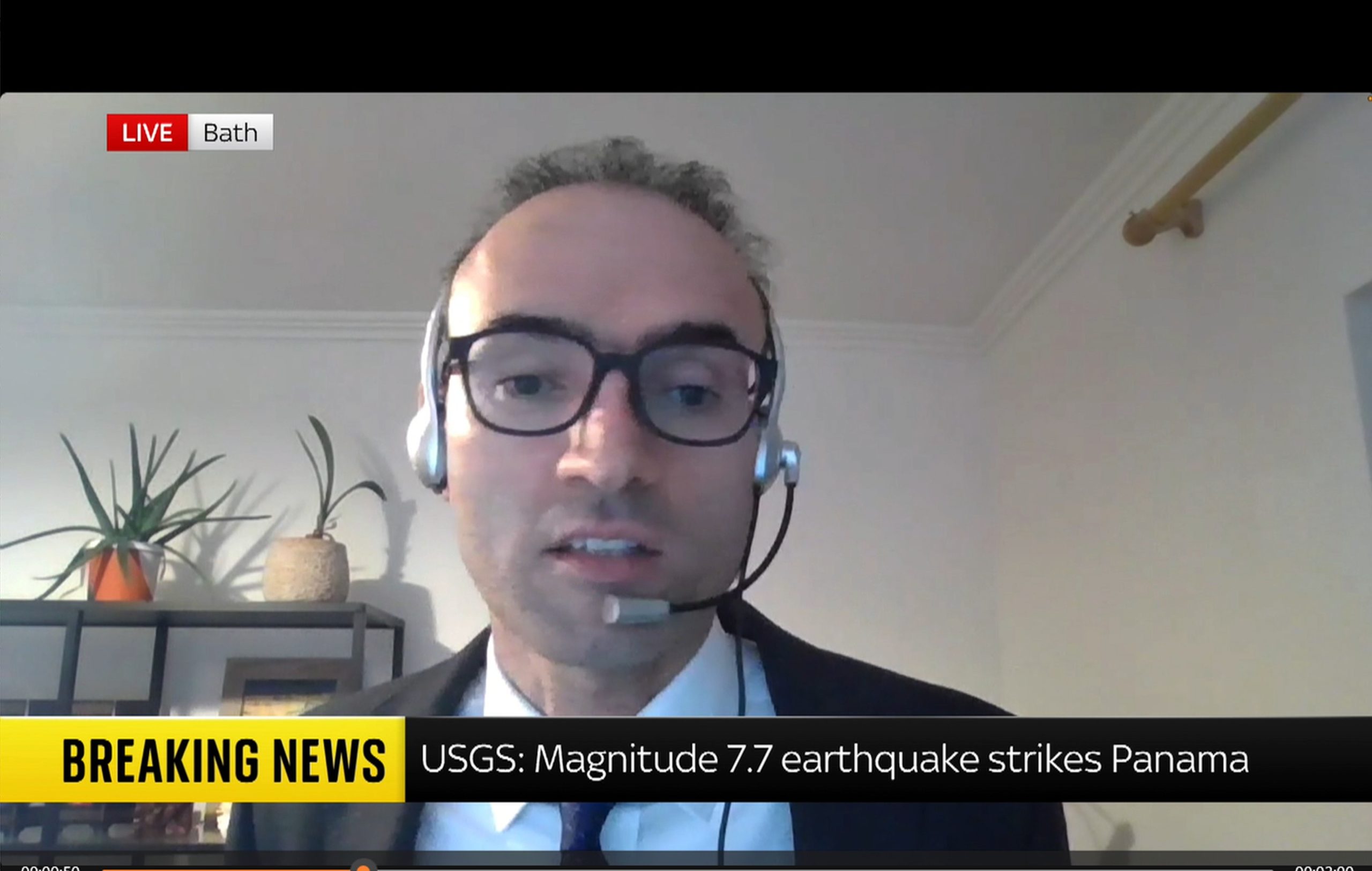
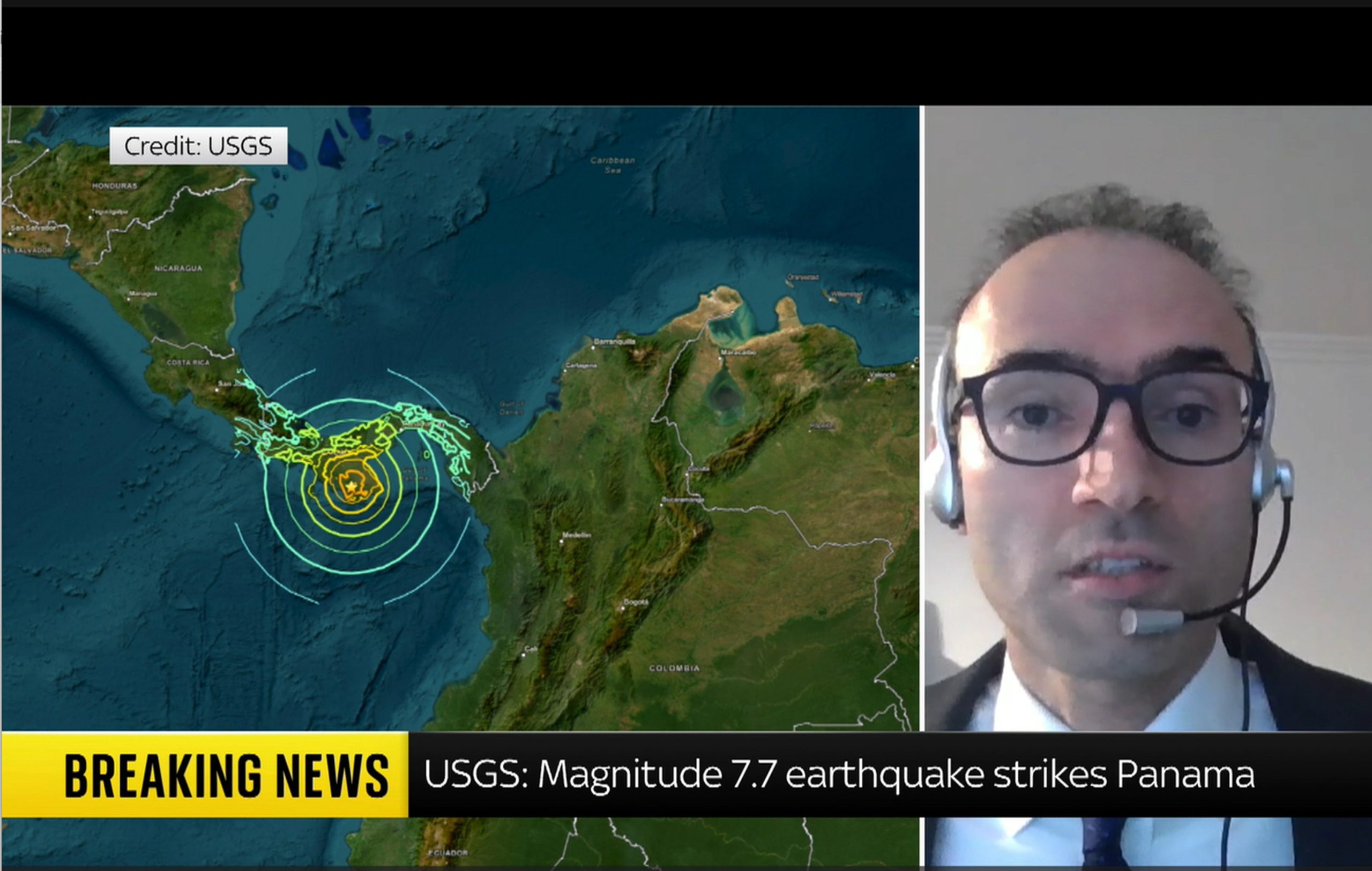
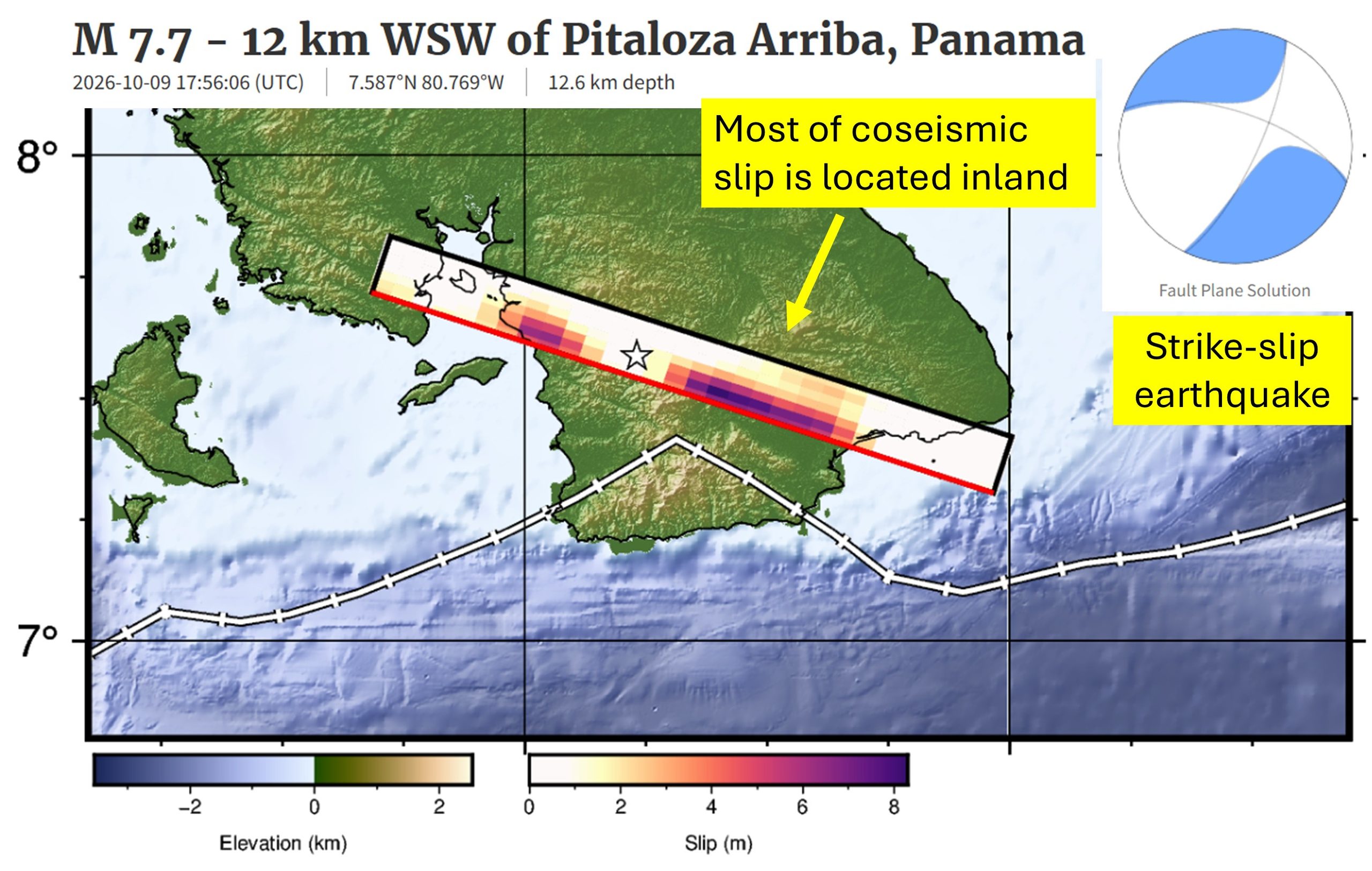
Dr Heidarzadeh’s TV interview with SkyNews on the massive M7.7 Panama earthquake on 9 October 2026
Our ocean is an incredibly vast and mysterious place. And there is no place where that is more evident than the deepest ocean area in the world: the legendary Mariana Trench. Located east of the Philippines, the Mariana Trench lies in the Mariana Archipelago in the western portion of the North Pacific. The greater area of the Mariana Trench Marine National Monument is made up of more than 95,000 square miles of ocean. Beneath these waters lie incredibly complex aggregations of submerged islands and volcanoes … and of course, an astoundingly massive trench.
Dive in with us to have your biggest questions answered about the famed Mariana Trench.
How deep is the Mariana Trench?
The deepest part of the Mariana Trench, known as Challenger Deep, is almost 36,000 feet below the ocean’s surface. For context, Mount Everest is about 29,000 feet above sea level, so the Mariana Trench is about 7,000 feet deeper than Mount Everest is tall. For one more comparison, the RMS Titanic lies at a depth of about 12,500 feet below sea level. The Challenger Deep is in waters nearly three times deeper than this ship’s final resting place.
Due to its enormous size, the Mariana Trench has at times been affectionately nicknamed the Grand Canyon of the ocean. This is certainly a picturesque image, but don’t let the mammoth size of this U.S. national terrestrial park fool you into thinking the Mariana Trench matches its size. The trench’s footprint is estimated to be 120 times larger than the Grand Canyon’s, and to reach the bottom of Challenger Deep, you’d need to descend through almost six Grand Canyons stacked on top of each other before you’d reach the seafloor.
Oh … and did we mention it’s five times wider than it is deep? It’s about 43 miles wide!
What is Challenger Deep, and how long would it take to reach it?
Challenger Deep is the deepest point of the Mariana Trench. Fewer than 30 people have ever journeyed to this area. The trek below the surface is long, dark and time-consuming, and it’s not an expedition considered lightly by scientists and explorers.
The first people to descend into the depths of this area in 1960 were oceanographers Jacques Piccard and Don Walsh, and it took them close to five hours to reach Challenger Deep. Since then, more advanced submersibles have been created, but it still takes two to four hours for modern vessels to reach such depths. For example, explorer and filmmaker James Cameron reached the seafloor in a little more than 2.5 hours in the first documented solo submarine dive to the area, and it took oceanographer Dr. Dawn Wright about four hours in 2022. It is crucial that these submersibles descend slowly and steadily beneath the surface, as the immense water pressure compounds with every mile a submersible descends. Speaking of pressure …