

When moon jellyfish gather in large numbers, the bloom is impossible to ignore. Hundreds or thousands of medusae can suddenly fill a bay or fjord. Because this swimming stage is so visible, it is often the focus of monitoring and research. But the familiar jellyfish is only one chapter in a much more complex life cycle. Before entering the open water, moon jellyfish can spend years as tiny polyps attached to rocks, algae or other hard surfaces on the seafloor. These polyps reproduce asexually and release young jellyfish when conditions are suitable. Our new study in Trondheimsfjorden, Norway, shows why this hidden stage deserves much more attention. The central finding is that the stage that moves the least may be the stage that gives a jellyfish population its greatest stability.
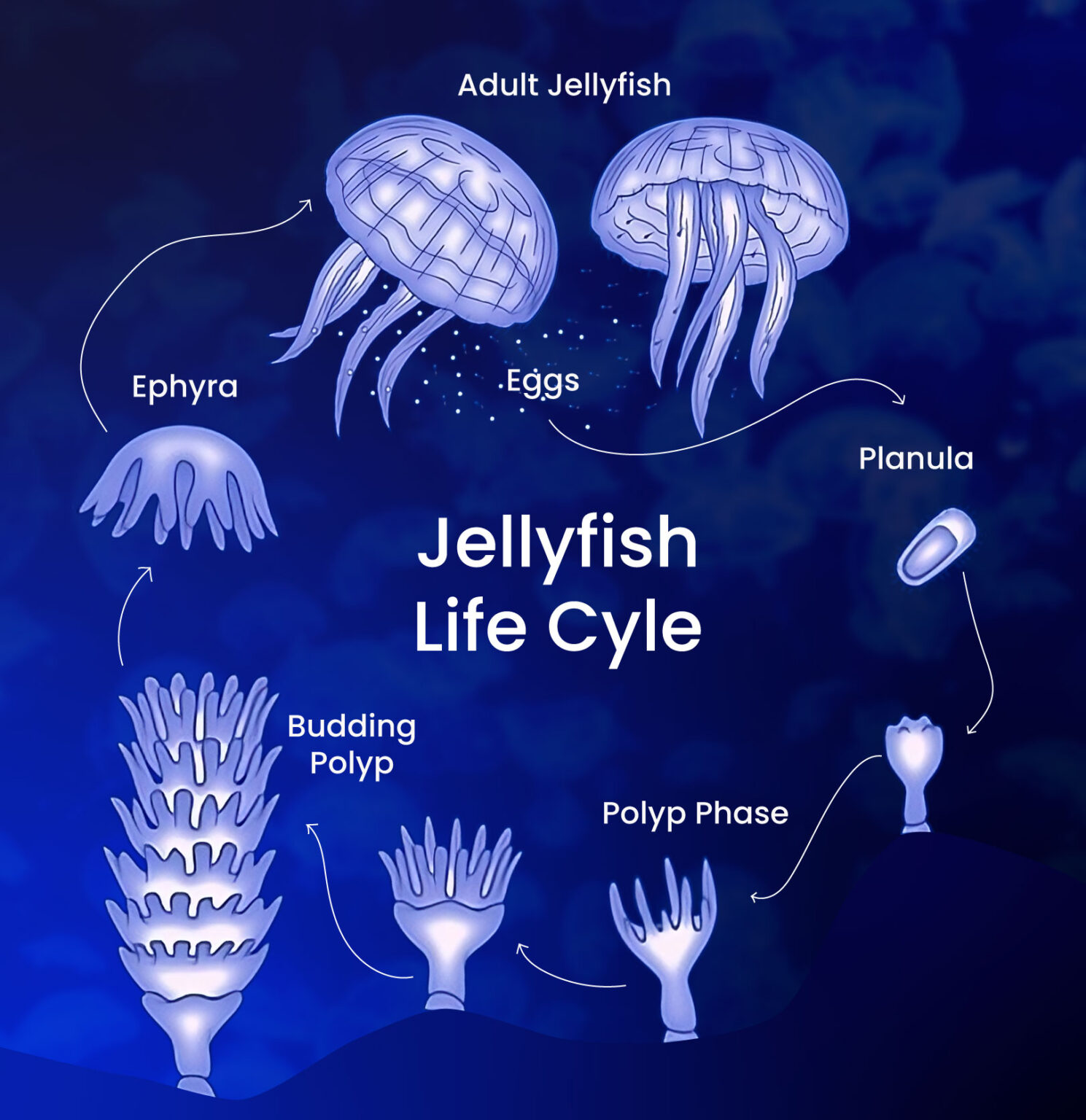
Image courtesy: https://sciencedigest.org/facts-about-jellyfish/
One animal two worlds
Moon jellyfish (Aurelia aurita) alternate between two contrasting habitats. Polyps remain attached to the seabed and can persist locally for years. Medusae live in the water column for a much shorter time and can be transported by currents across the fjord.
This creates an ecological puzzle. If medusae can travel widely, should populations throughout a fjord become genetically well mixed? Or can local structure survive because the stationary polyp stage retains diversity in particular places? Our new study in Trondheimsfjorden, Norway, shows that these hidden polyps may be crucial for maintaining genetic diversity. We combined field observations, genetic analyses of 572 samples and a model of movement through fjord currents. We found 70 genetic variants—and a striking difference between life stages.Polyps consistently held high genetic diversity. Medusae varied much more between places and years and were sometimes dominated by only a few variants. The polyps therefore appear to act like a biological seed bank: many possibilities remain stored out of sight, while each year’s conditions determine which ones emerge.
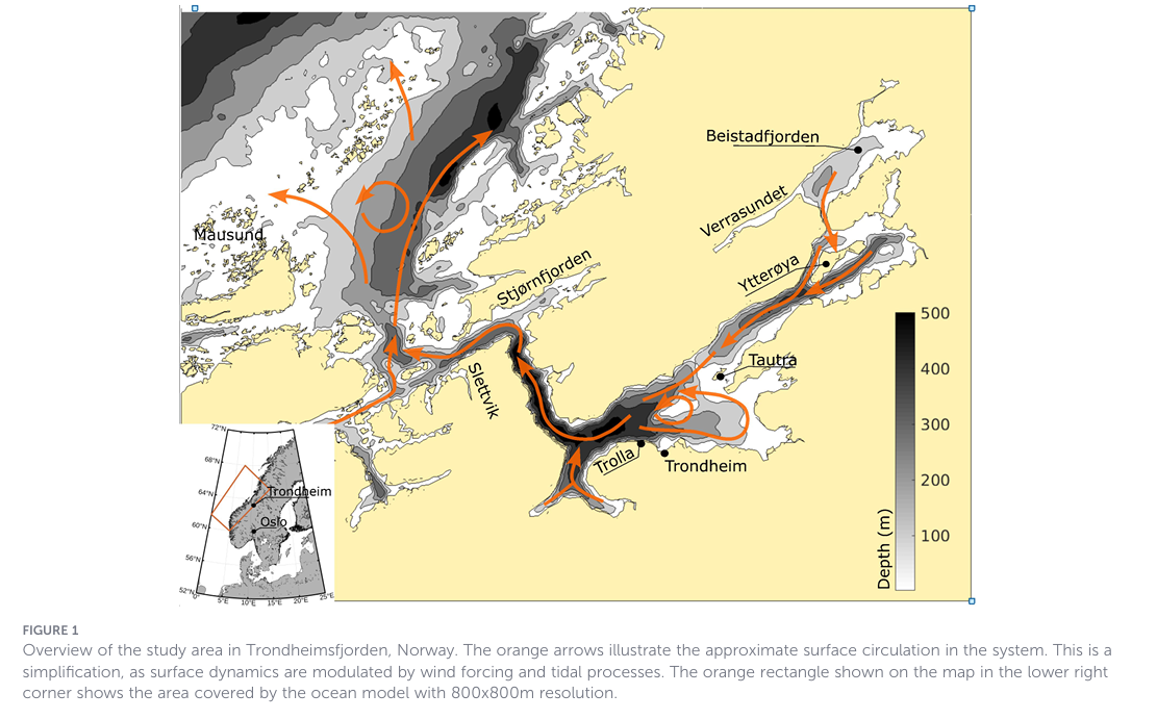
Currents alone could not explain the genetic patterns: the model predicted more mixing than was observed among medusae. Transport is therefore only part of the story. Local retention, temperature, food, survival and reproductive timing can filter which variants reach the visible stage.
This matters because jellyfish blooms affect food webs, fisheries, tourism and coastal infrastructure. Better forecasts will require more than counting medusae or following currents. We must also monitor polyp habitats and understand what controls transitions between life stages.
The wider lesson is simple: to understand the connectivity and resilience of marine organisms, we cannot study only the most visible, or most mobile part of their lives.
Paper: Majaneva, S., Ellingsen, I., Javidpour, J. and Aberle, N. (2026). Benthic life stages retain fjord-scale population structure despite pelagic dispersal. Frontiers in Marine Science, 13:1895768. https://doi.org/10.3389/fmars.2026.1895768

This fall, Ocean Conservancy is celebrating its 41st annual International Coastal Cleanup® (ICC), once again bringing together volunteers to protect the beaches and waterways we all love. Ocean Conservancy recently hosted flagship events in Long Beach and Washington, D.C. that celebrated this global movement close to home.
Over the past four decades, nearly 20 million volunteers have rolled up their sleeves to remove more than 405 million pounds of trash from beaches and waterways around the world. And their impact extends far beyond what they collect. ICC volunteers have documented nearly 440 million individual items, creating the world’s largest marine debris database and providing invaluable information that helps Ocean Conservancy and others better understand—and tackle—ocean plastic pollution.
This year’s celebration continued that incredible legacy. At Alamitos Beach in Southern California, more than 150 volunteers gathered on September 19 and removed 1,109 pounds of trash, alongside members of Team USA Artistic Swimming and Olympic and Paralympic athletes. In Washington, D.C., 439 volunteers gathered on September 26 to remove 2,182 pounds of trash from Anacostia Park along the Anacostia River.


“I am so grateful to all of the volunteers who came out today for our ocean—and every volunteer who has made the last 41 years of impact possible,” said Ocean Conservancy’s Senior Director of Conservation Cleanups, Allison Schutes. “Every piece of plastic collected helps protect marine animals and habitats and contributes to research and advocacy.”
And the impact doesn’t stop when the cleanup ends. During International Coastal Cleanup events, volunteers do more than remove trash: They document what they find, helping build a clearer picture of the plastic pollution threatening our waterways and wildlife. Through the Clean Swell® app or paper data sheets, ICC volunteers contribute to Ocean Conservancy’s online, open-access database, the world’s largest repository of marine debris data. These records help scientists, conservation groups and governments understand pollution trends and identify solutions.
That data can also drive meaningful policy change. ICC data were recently used in a peer-reviewed study showing that plastic bag bans lead to reduced plastic bag pollution. The data have also helped advance policies ranging from California’s SB 54 to Florida’s balloon release ban and the federal Farewell to Foam Act. From a neighborhood cleanup to statewide action, every piece of documented trash helps build the evidence needed to tackle plastic pollution at its source.
Get Ocean Updates in Your Inbox
Sign up with your email and never miss an update.
Want to get involved?
Whether you join a local cleanup, record the trash you find using the Clean Swell app, or take action to reduce plastic pollution, you can be part of this incredible collective effort to protect our ocean. Here are a few ways to make an impact:
- Find a cleanup near you.
- Download our Clean Swell app to easily record the trash you collect.
- Take action to reduce plastic pollution.
- Explore our Wildlife Impact Calculator to estimate the potential benefits of your cleanup for marine wildlife.
- Donate today to Ocean Conservancy to help us fight plastic pollution for years to come!
The post Celebrating 41 Years of the International Coastal Cleanup® appeared first on Ocean Conservancy.
For generations, stories of people being swallowed by enormous sea creatures have painted awe-inspiring tales of human survival and perseverance. From the biblical account of Jonah to the legendary battle of Hercules and Cetus to the timeless story of Pinocchio, these legendary tales have captivated people since time immemorial.
But all these stories raise the question: Could someone really be swallowed by a whale? With the premiere of the film Whalefall on October 16, 2026, you may find yourself in conversations about this very situation. Based on the bestselling 2023 thriller authored by Daniel Kraus, the film tells the story of a scuba diver who is accidentally gobbled up by a sperm whale while searching for the remains of his late father. With only an hour of oxygen left in his tank, the diver must fight to escape the whale’s gut before time runs out.
The answer to whether it’s anatomically possible for a whale to swallow a person is actually a bit more complicated than you might think.
Get Ocean Updates in Your Inbox
Sign up with your email and never miss an update.