

When the temperatures go up, all I want to reach for is natural fibers — specifically, my linen clothing. There’s nothing quite as breathable or breezy as linen. So in this guide I break down what to know about this quintessential summer fiber, and share my top selections for linen clothing brands. They’re all small to mid-sized brands, mostly women-led!
Some Background on Linen
Where does linen come from?
Linen fiber is extracted from the stalks of flax plants. This plant is also known for providing us with nutritious flaxseeds and linseed oil — talk about an overachiever!
In fact, linen is one of the oldest fibers known to man, dating back to the prehistoric era. Archaeologists and paleobiologists have discovered flax fibers during excavations that were twisted, indicating they were used to make ropes or strings among many proposed applications that must have been a great advantage to the hunter-gatherer society. In fact, linen wrappings were even used for mummification in ancient Egypt.
Linen fabric is then created by obtaining its fibers from the inner bark (or stalks) of the flax plant.
How is the linen cloth made?
Before the fibers are spun into the breezy linen you know and love, its fibers are loosened and separated from the rest of the stalk through a process known as “retting”. At that point, the fibers are still straw-like and coarse in texture.
To soften it, the fibers are broken up into small, short bits, while the actual fiber is left unharmed, and then “scutched”, where the straw is scraped off the fiber. After which they are then pulled through “hackles”, that comb the straw out of the fiber to finally prepare flax for spinning into linen fabric.
And linen clothing is, of course, garments comprised of linen fiber in its entirety or blended with other fibers. For this guide, I tried to select brands that only used 100% linen or at the minimum blended linen with other natural fibers like cotton.
The Benefits of Linen Clothing
Why wear linen? Known for being ideal during the summers, clothing made from linen will allow heat to escape from the body while absorbing moisture and drying relatively quickly. While linen may have a notorious reputation for wrinkling rather quickly, when blended with other fibers, the creases aren’t as discernible as they would be with pure linens.
While linen may be notorious for its high energy consumption owing to its need to be ironed more, linen clothing’s pros easily outweigh its cons.
Flax plants can be grown in the harshest of climate conditions that require minimum water. What’s more impressive is the plant’s ability to absorb carbon. The European Confederation of Flax and Hemp (CELC) states that one hectare of flax absorbs 3.7 tons of CO2 every year.
Is Linen More Sustainable Than Cotton?
While there are benefits and drawbacks to every fiber when it comes to environmental sustainability, there are a few points where linen stands out when compared to cotton.
First, we know that durability is a key aspect of sustainability, because it means our clothes will last, enabling us to keep our clothes longer and buy new clothing less frequently.
So how long does linen clothing last in comparison to cotton? Linen clothing is up to 12 times stronger than cotton, helping increase its longevity and taking away the need to be replaced so often.
Another question might be about flax’s water usage. While the irrigation needs of the crop are dependent on the region’s climate (just as with cotton), 450–750 mm of water per season is sufficient for flaxseed. In fact, some studies even indicate that flax could be regarded as a drought-tolerant crop.
How to Care for Linen Clothing
When it comes to caring for linen clothing, linen can be washed on a gentle machine cycle with a mild detergent. (Check out these low waste low-impact detergent options.)
In case you’re curious whether linen stretches or shrinks, then there isn’t much to worry about. Linen is mostly pre-shrunk during the manufacturing stages but pure linens may show about 4% shrinkage.
And when it comes to stretch, linens aren’t known to stretch out over time but can show some level of elasticity when blended with other fibers.
Finally, it’s no secret that linen clothing tends to wrinkle easily! You may choose to embrace the natural characteristics of linen and wear your linen clothing as is, or if you want a crisper look, you may either want to look for a linen blended fabric, or be prepared to steam and/or iron your garments relatively frequently.
Note: This guide includes partners and/or affiliates. As always, brands must meet high standards for sustainability and ethics — and I only share brands that I believe in.
How to Find Sustainable Linen Clothing
So of course, I’m a big advocate for “secondhand first” when it comes to all fashion, including linen clothing. While your local thrift store might not be filled with 100% linen clothes, online secondhand shops can be a great resource. For luxury and premium brands, Vestiaire Collective and The RealReal. For more affordable options, my favorite pick is ThredUp because you can filter by natural fibers only. To be clear: the listings aren’t always accurate, so I still double check the descriptions of any product that shows up with that filter, but it does save some time to start there.
When looking for new linen clothing, I always prioritize small to mid-size women-led businesses. And I check the product details to see if they use 100% linen or if they’re deceptively saying “linen blend” and then it’s actually 50% polyester!
And while not perfect you can also look for certifications. These are the ones most relevant to linen clothing and linen fashion brands.
OEKO-TEX Standard 100 certifies that the finished textile product has been tested for harmful substances (heavy metals, formaldehyde, pesticide residue). This is a chemical-safety certification, not a guarantee of fair labor or environmental practices. So it tells you the linen has been tested for potentially toxic chemicals, but it doesn’t tell you who made it or how. Note that some brands just say “OEKO-TEX certified” — that virtually always refers to OEKO-TEX Standard 100, the most common certification from OEKO-TEX.
GOTS (Global Organic Textile Standard) certifies that a textile contains a minimum percentage of certified organic fiber and meets environmental and social criteria through processing. It’s the standard for verifying a fabric is genuinely “organic,” not just marketed that way.
B Corp certifies the company as a whole against social and environmental performance standards (labor, governance, environmental impact). This is a business-level cert, not a product-level one, so it doesn’t speak to any single garment’s materials.
Fair Trade Certified verifies that the specific factory/facility producing the item meets standards for labor conditions, wages, and worker safety, and that a Community Development Premium is paid to workers. It’s a labor and production-facility certification. It doesn’t certify the fabric’s environmental footprint or chemical content (that’s what OEKO-TEX covers), so a garment can carry both certifications and they’re speaking to different things.
Where to Find Eco-Friendly Linen Clothing
I scoured through dozens of brands to find my top picks for brands with sustainably-crafted linen clothing for women (some have men’s clothing too). I’ve included their conscious qualities, what they’re best for, and any caveats so you can make the best decision for yourself. Keep in mind while shopping that 100% linen garments won’t have any stretch — so if you run between sizes, I’d default to sizing up. But of course, check the size chart and reviews for each brand!
1. Linen Handmade Studio
Best for: tailored, elevated linen clothing
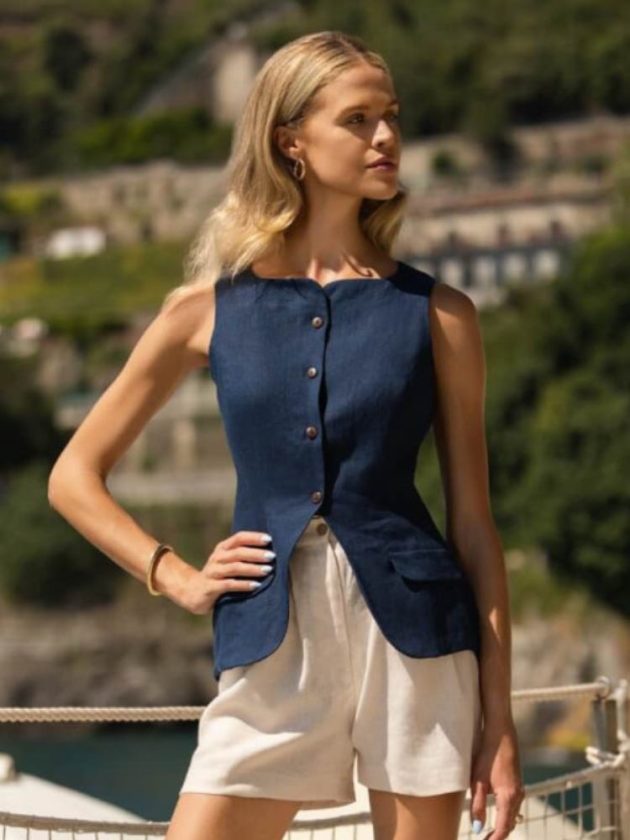
A lot of linen clothing can feel quite casual. And while Linen Handmade studio does have relaxed-fit options, what differentiates the brand in my opinion is their tailored options. I often hear from conscious readers that they want to wear natural fibers to work, but they can’t find something nice enough. Enter in: Linen Handmade Studio’s tailored pieces.
The brand has linen blazers and jackets, linen vests, and linen pants elevated enough for work or an evening out. (They even have bridesmaid dresses.) I’ve been wearing their Evelyn Longline Linen Vest in red clay on repeat and gotten so many compliments on it.
Price Range: $68 – $305
Size Range: US 2-18 (runs slightly small, I’d size up!)
Based in: Lithuania | Ships: Internationally; free U.S. shipping on orders $300+
2. MATE
Best for: casual GOTS-certified organic linen clothing
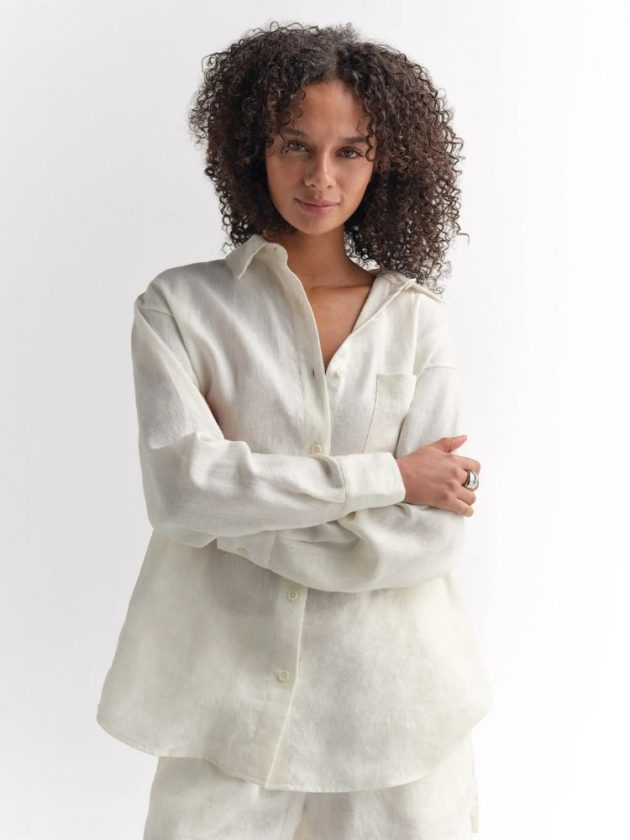
Prioritizing natural non-toxic materials, MATE has a collection of effortless linen shorts, button-downs, and pants made from GOTS-certified organic linen and colored with low-impact dyes.
That means that the color options at MATE are a bit more limited than you might see at other brands. They carry white, black, and “dune” — a soft beige.
I have their organic linen button-down in white and it’s been a reliable staple for me the past two years that’s held up beautifully.
Price Range: $88 – $178
Size Range: XS – XL
Based in: U.S. | Ships: Internationally
3. Linen Fox
Best for: romantic pastoral clothing in trend-forward colors and prints
Linen Fox is a Lithuanian small independent fashion brand — their team of 16 people make all of their linen clothing — including womenswear, menswear, and kids clothes.
The brand’s garments are made from OEKO-TEX Standard 100 certified linen fabric. The label follows fair trade principles to production and reduces fabric waste by selling their fabric scraps as samples, and crafting accessories like scrunchies. They also ship in 98% plastic-free packaging.
Price Range: $74 – $187
Size Range: XS – XL (several products fit oversized; check each description!)
Based in: Lithuania | Ships: Internationally

4. Magic Linen
Best for: linen separates plus matching home linens
From classic linen shirts to linen aprons and linen pajamas, Magic Linen is your destination for finding summer-ready sustainable linen clothing for men or women.
The small business’ linen clothing is made with European flax linen certified by OEKO-TEX Standard 100.
The Etsy shop also has plenty of linen home goods — I have linen curtains and bedsheets from Magic Linen and the quality of the fabric has been fantastic, with the sheets holding up well even after years of washing.
Price Range: $93 – $298
Size Range: XS – XXL
Based in: Lithuania | Ships: Internationally
5. Beaumont Organic
Best for: European-made linen clothing with full factory transparency
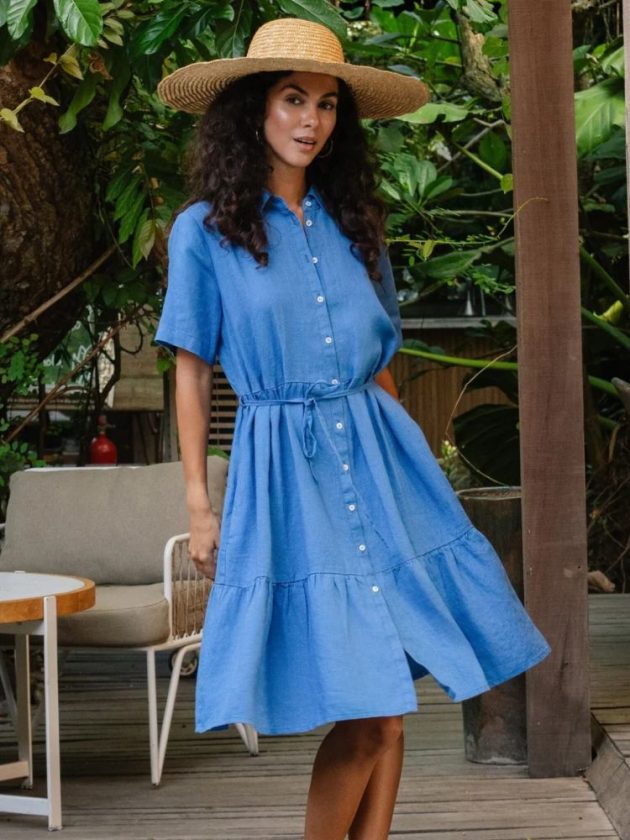
Looking for breathable garments perfect for your summer getaway to the English countryside or sea? Look no further than Beaumont Organic.
Beaumont Organic is a UK slow fashion brand with garments made from natural fabrics, like flax linen clothing! The brand publishes a directory of the factories they source from — 97% of production takes place in Northern Portugal.
They also have a repair program and are launching a resale program (currently available within the UK only).
Price Range: $211 – $300
Size Range: XS – L
Based in: UK | Ships: Internationally
6. LoveAndConfuse
Best for: feminine style linen clothing
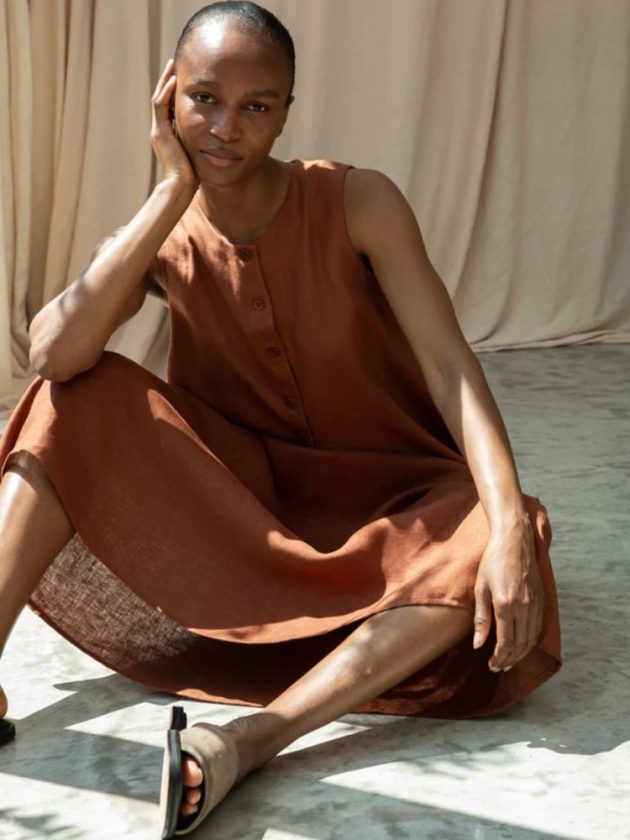
The linen clothing from this lovely small Lithuanian brand on Etsy are truly swoon-worthy!
From wrap dresses to ruffled midi’s to high-waisted linen shorts and linen crop tops, their collection of linen fashion will have you dreaming of a slow travel escape to somewhere warm and sunny.
Price Range: $116 – $225
Size Range: XS – XL
Based in: Lithuania | Ships: Internationally
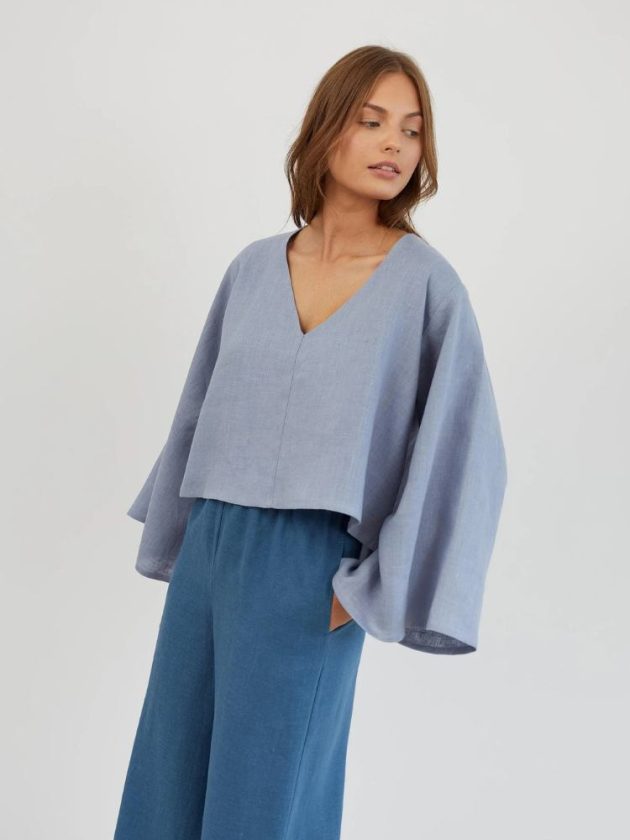
7. Neu Nomads
Best for: classic linen garments and resortwear
With a mission to create simple, sustainable luxury, Neu Nomads offers quality classics made from earth-minded materials, including 100% OEKO-TEX Standard 100-certified linen.
You’ll find linen trousers, effortless shirts, resort-ready kaftans, and tailored linen blazers in classic colors like white, black, olive, and bright coral.
Price Range: $159 – $359
Size Range: XXS – XXL
Based in: U.S. | Ships: Internationally
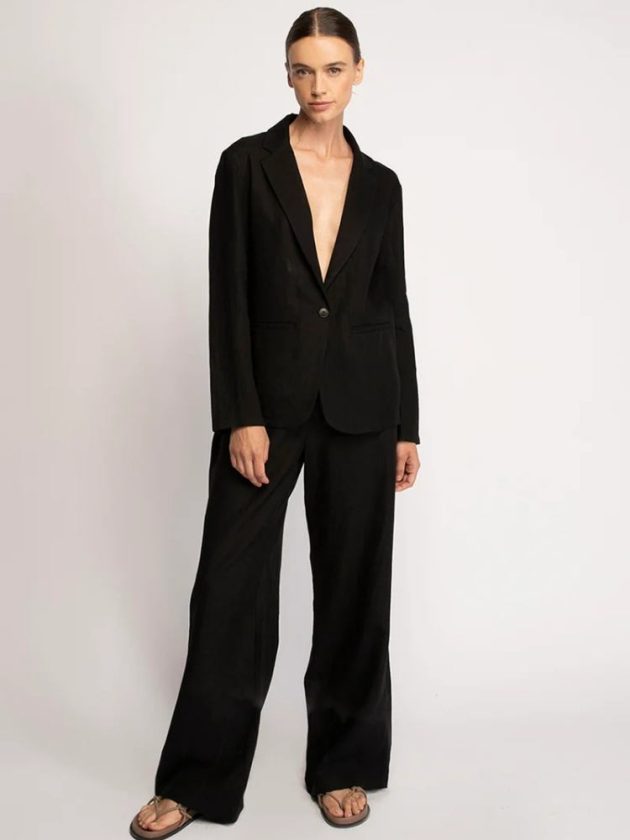
8. EILEEN FISHER
Best for: classic linen clothing with circularity programs
Slow fashion brand EILEEN FISHER has elegant, minimalistic garments made from eco-minded fabrics including organic linen. Several of the pieces are made in Fair Trade Certified factories.
This is the largest company on the list, but still considered a medium-sized enterprise — and, of course, this namesake label is woman-founded.
EILEEN FISHER’s organic linen clothing is timeless and made with quality, as part of their circularity efforts. In addition to ensuring their pieces last, the brand also has a resale program called Renew and a “third life” program that repurposes unwearable garments into unique artwork and other goods.
Price Range: $98 – $268
Size Range: XXS – XL
Based in: U.S. | Ships: Within U.S.
Your Questions, Answered:
What about Quince’s linen clothing?
While Quince offers more affordable linen clothing, in my experience their linen clothing is ok quality, but does not compare with the quality of some of the other brands on this list. Also, I personally want to prioritize women-led small businesses for my guides, not venture-backed billion-dollar companies.
Should I look for organic linen clothing?
While organic linen is wonderful, it is quite rare. Only two brands on this list use certified organic linen. Note that OEKO-TEX Standard 100 linen is not “organic” linen, but rather linen clothing that has been tested against common harmful substances. The most common certification for organic fiber clothing is Global Organic Textile Standard, or GOTS.
Is there any linen clothing that’s work-appropriate?
This one depends on your work place’s dress code, but there are a few options on this list with linen blazers, trousers, and other more tailored pieces like Linen Handmade Studio and Neu Nomads.
More Sustainable Clothing Guides:
The Best Organic Cotton Fashion Brands
Actually Fashionable Hemp Clothing Brands
The post 8 Best Linen Clothing Brands With Easy Breezy, Beautiful Pieces appeared first on Conscious Life & Style.
9 Best Linen Clothing Brands With Easy Breezy, Beautiful Pieces

Last winter, we kept our house at 60 degrees and our electric bill was STILL $280. I’ve been interested in solar for a long time, but on the long list of house projects (especially when you’re restoring a 200 year old house on the historic registry) some are more pressing than others.
But with a few of those major projects wrapping up, and a daunting bill before me, I figured now was the time for a quick google search on solar panels, and let me tell you….. It can be very overwhelming.
Figuring out the rules (cough, cough, historic society), incentives or rebates if applicable, how much it would cost, how much we could save, etc. felt a little like a part-time job. But, one website made it really easy to compare things, and I am happy to be partnering with Aurora Solar to share that site with you.
Because I think you should be able to easily run the numbers on your house without a lot of hassle!
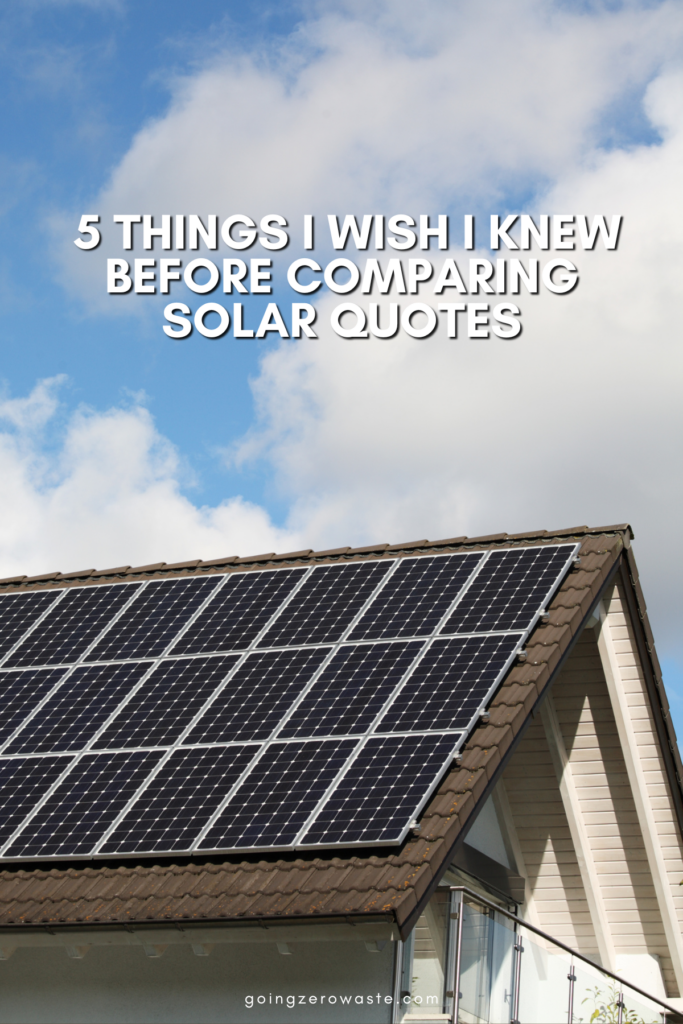
This post is sponsored by Aurora Solar, but all thoughts and opinions are my own.
If you’ve ever gotten a solar quote, there’s a good chance that Aurora Solar was involved. Aurora was founded in 2013 after its co-founders spent seven months trying to design a solar energy system using a patchwork of different tools.
Afterall, designing a solar system shouldn’t be harder than actually installing one. So they built software specifically for solar professionals. Today, more than 7,000 solar organizations use Aurora, and more than 20 million solar projects have been designed using the platform. They are also the largest solar software provider in the world. Their software is used by roughly 80% of the top 75 residential solar companies in the U.S.
All of this tech has been primarily used by professional installers to map your roof and then create a proposal, but now Aurora is offering this tech to us to help compare quotes.
So instead of having to call a bunch of different installers, I could use the Aurora Solar Marketplace to understand my solar potential, compare estimates, understand my possible savings, look into battery storage and other home electrification incentives, and map out different financing options.
1. know how much electricity the system will actually produce
Before you even get into the price, make sure you understand what you’re actually being quoted.
Two solar systems can have very different prices because they may not be the same size or produce the same amount of electricity. A cheaper system might simply have fewer panels and offset less of your electric bill.
With Aurora, you can compare solar estimates and see the system size, energy production, and how much electricity the system should offset.
You can also upload your utility bill to get a solar estimate based more closely on your actual energy usage, to make the quote accurate for you instead of a ‘generic household’.
2. understand the solar payback period
Aurora calculates things like payback period and lifetime savings, which makes it much easier to understand the long-term finances.
The solar payback period is basically how long it takes for your estimated savings to make up for what you spent on the system, and this is the number that surprised me most!
One estimate had a payback period of around 7 years, and another was closer to 11 years! Over 25 years, two of the estimates I looked at had almost a $13,000 difference in projected savings.
Of course, these are still projections as electricity rates can change (HELLO 2026) but when you’re trying to compare two options for the same house, knowing that one is projected to pay for itself four years sooner is pretty useful information.
3. look beyond the monthly payment
Depending on the installer, you may be looking at a cash purchase, solar loan, lease, or power purchase agreement.
But thankfully with Aurora you can compare the different financing options side-by-side which makes it a lot easier to see the trade-offs. One option may have a lower upfront cost, another may have a lower monthly payment, and another may give you better long-term savings.
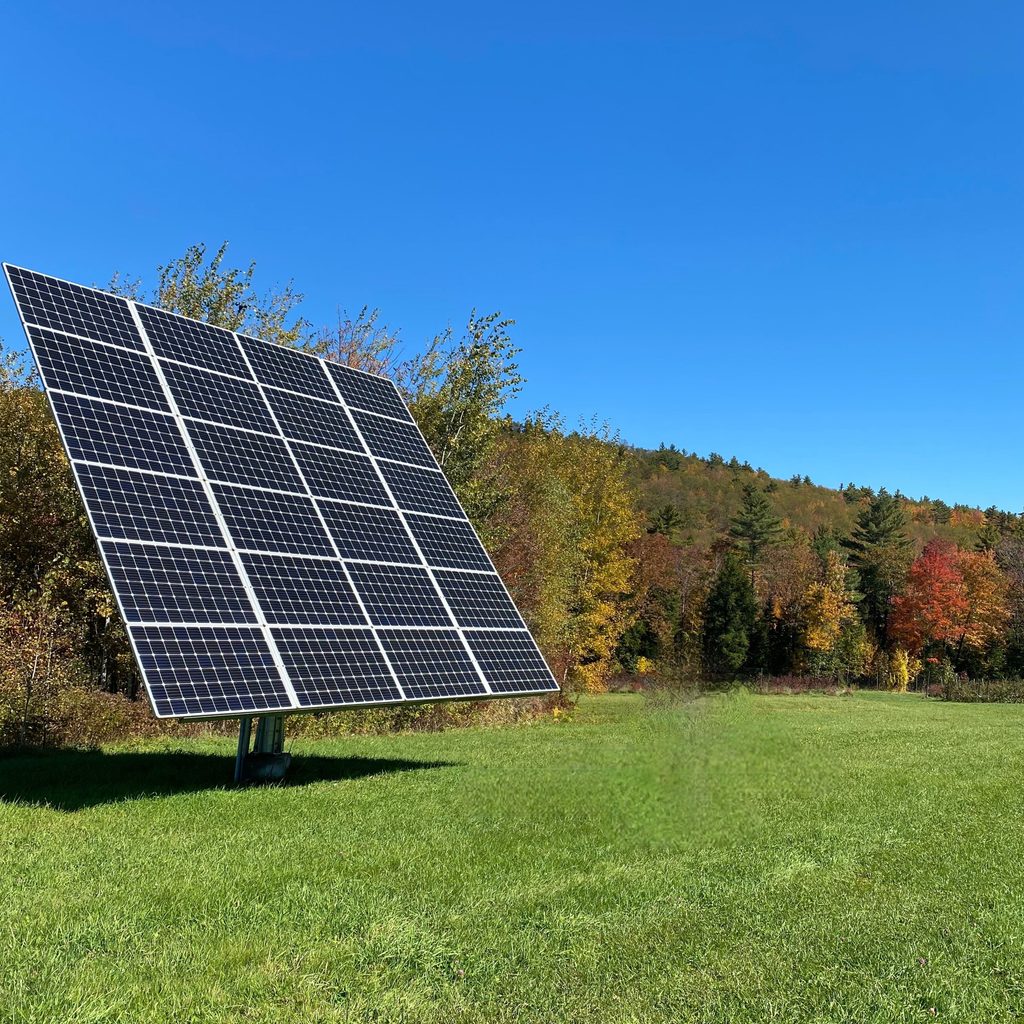
4. find out which solar incentives actually apply to you
The minute you start Googling solar, you can find federal incentives, state incentives, utility programs, rebates, net metering, and a whole bunch of information that may or may not even apply to where you live.
And some of the articles ranking at the top of Google are several years old! (RIP to the federal incentives canceled at the end of 2025.) But, Aurora can account for solar incentives when calculating the cost and savings of a system, including state, local, and utility-specific programs.
I would still double check any incentive or tax benefit you’re planning to use before signing a contract, especially because programs and eligibility can change, but having all the relevant information in the same place makes the research process much less overwhelming.
5. research the installer, equipment, and warranties
Aurora lets you compare solar installers based on things like reviews, reputation, pricing, and financing options, which I think is just as important as the actual quote.
I’d also look closely at what equipment is included. What panels are they using? What kind of inverter? How long are the equipment warranties? Is there also a workmanship warranty from the installer? Who handles repairs if something goes wrong five or ten years from now?
And, I know I’ve said it a million times, but it’s nice to see it side-by-side without having to fill out a bunch of forms and be hounded on the phone just to get an idea of what solar may look like.
The post How to Compare Solar Quotes: What to Look For Before You Choose appeared first on Going Zero Waste.
How to Compare Solar Quotes: What to Look For Before You Choose
Green Living
Sustainability In Your Ear: XPRIZE’s David Babson on Why Climate Grand Challenges Need Buyers, Too
Buyers contracted nearly 30 million tons of durable carbon removal in 2025, more than triple the 2024 total, according to CDR.fyi data reported by Heatmap. About 90% of those purchases came from a single company, Microsoft, and suppliers delivered only about 450,000 tons during the year. That is a sliver of the six to 10 billion tons of removal a year that climate scenarios suggest the world will need by 2050. The technology to pull carbon out of the air works, but the customers needed to scale it remain scarce.
Our guest today, David Babson, is executive vice president of the Energy, Climate, and Nature domain at the XPRIZE Foundation. He calls the slow progress a market failure, because the technology is progressing faster than it is being adopted. Babson previously led MIT’s Climate Grand Challenges initiative and was a program director at the U.S. Department of Energy’s ARPA-E. His portfolio includes