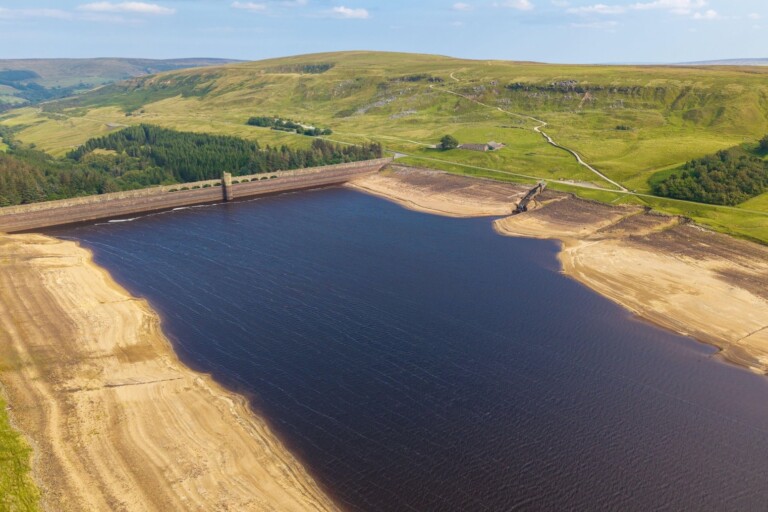
The second-largest reservoir in the US reached a record-low water height on Saturday – just days after the country’s largest reservoir broke its own record.
Both Lake Mead and Lake Powell are located on the Colorado River.
They provide water for populations across seven US states in the south-western US, with around 40 million people getting some or all of their municipal water from the Colorado River.
The river also provides water for around 5.5m acres (22,258 square kilometres) of farmland across Colorado, Arizona, California and the other states in the river basin.
Experts tell Carbon Brief that climate change, population growth and over-consumption are all contributing to the current record-low levels of the reservoirs.
Record lows
At full capacity, Lakes Mead and Powell can hold a combined 68 cubic kilometres of water – enough to supply all household consumption in the contiguous US for nearly 1.5 years. However, the water level in both reservoirs has been declining for decades.
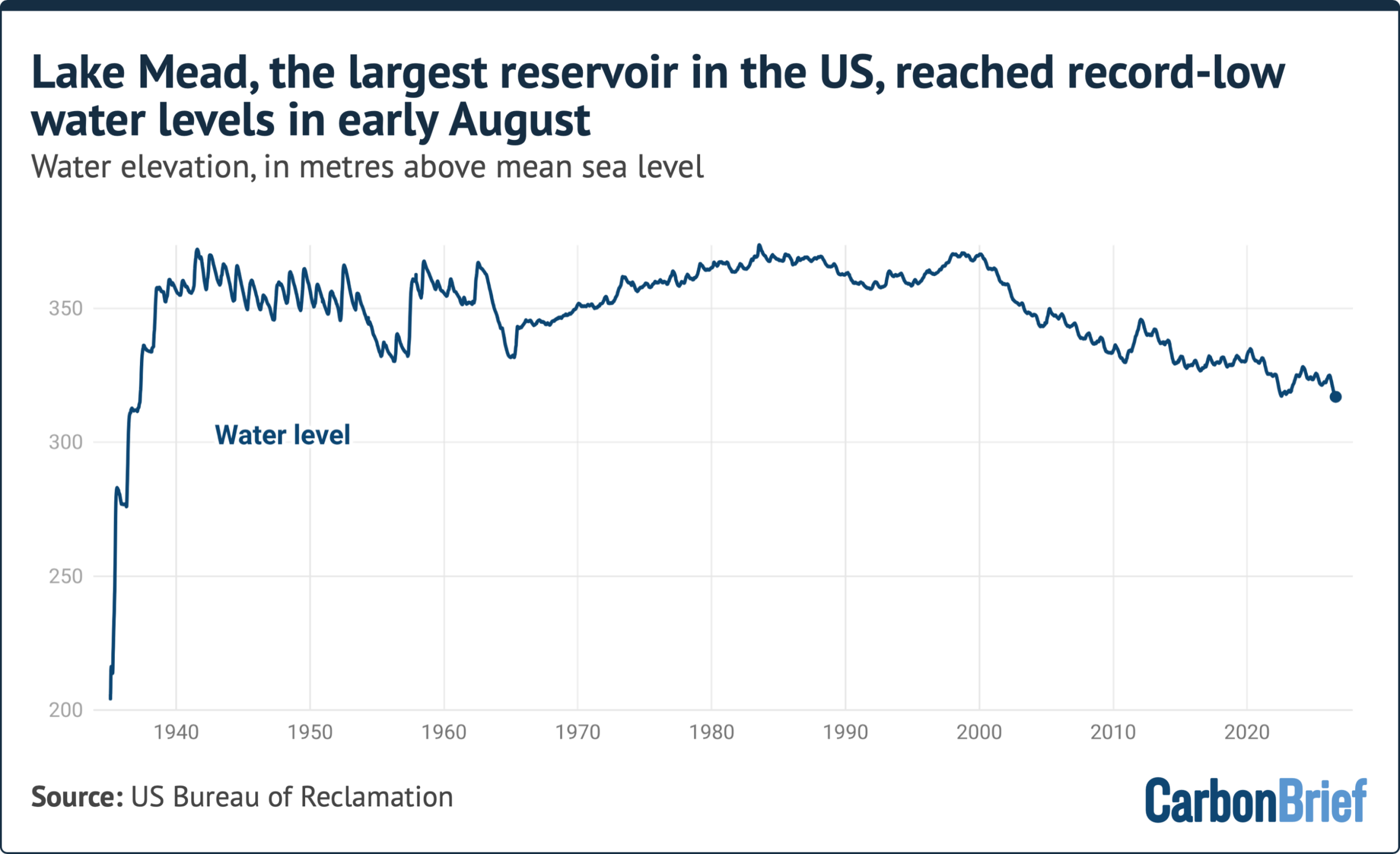
The chart below shows the water level of Lake Mead, in metres above mean sea level. The reservoir, which began to fill in 1935 following the construction of the Hoover Dam, has a “full pool” maximum capacity of 347.60 metres. The water level in Lake Mead reached a record low of 317.11 metres on 7 August.
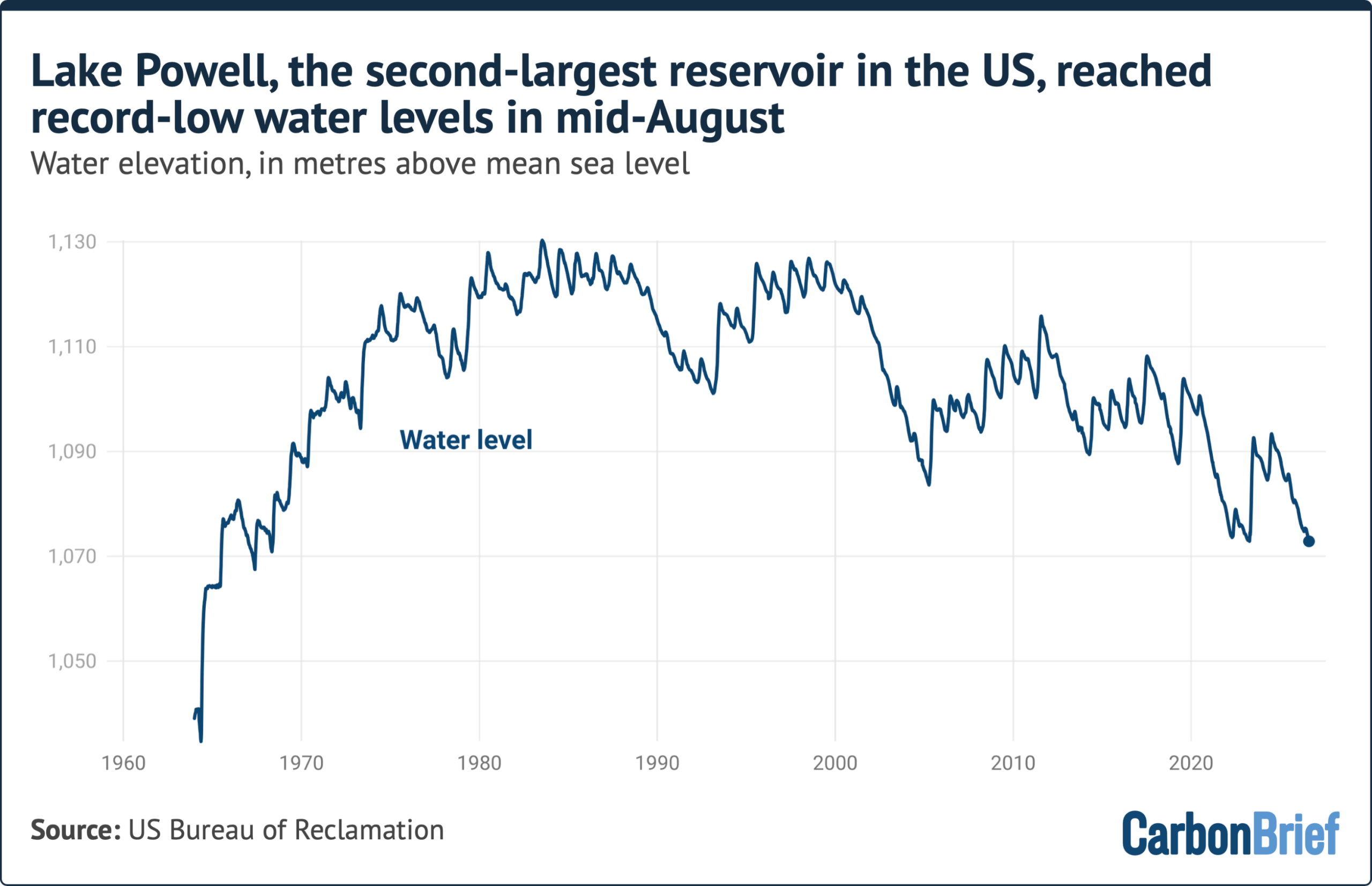
The following chart shows the water level of Lake Powell, in metres above mean sea level. Lake Powell’s full-pool level is 1,127.76 metres.
While the reservoir reached its maximum capacity several times in the 1980s, it has not done so since. On 15 August, the water level in Lake Powell was recorded at a new record-low of 1,072.87 metres.
Both reservoirs have continued to decline in the days since breaking their respective records. The downward trend will largely continue in both lakes until next spring, when the snowpack in the mountains of the Upper Colorado River Basin begins to melt, says Dr Jack Schmidt, a senior research scientist at Utah State University’s Center for Colorado River Studies. He tells Carbon Brief:
“The big dilemma of the moment is that we’re only in the middle of August, and we have no assurance of what the coming winter will be. The only thing we can be sure of is that we will be depleting overall total basin reservoir storage from now until, roughly, early April.”
Compounding factors
The record lows across the two reservoirs are the result of several compounding factors, experts tell Carbon Brief.
Since the turn of the 20th century, the amount of water flowing along the Upper Colorado River has declined by about 20%. Research suggests that half of this decline can be attributed to human-induced climate change.
Most of the river’s streamflow comes from the snowpack of the Upper Colorado River Basin, which stretches across five western US states but is primarily located in Colorado and Utah.
This region has been gripped by a historic “megadrought” for more than a quarter of a century. Nearly half of the megadrought’s intensity over 2000-18 is attributable to climate change, according to a 2020 study.
At the same time, the increasing population in the US south-west has put added pressure on the Colorado River’s water supply. The number of people obtaining some or all of their water from the Colorado system has grown by 15 million (around 60%) since 1992.
Schmidt tells Carbon Brief:
“There’s an ultimate cause of the present water crisis, and there’s a proximate cause. The ultimate cause is a warming climate, a warming planet and a pretty clear correlation between warming conditions and decreased runoff in the Colorado River Basin.
“The proximate cause is that in this messy democratic republic of ours, big policy decisions that match the variability of the climate occur painfully slowly – with intense political negotiations – and only incrementally.”
On 31 July, the US Bureau of Reclamation, which manages water resources in the western US, released an environmental impact statement on its proposed post-2026 strategy for managing Lakes Powell and Mead. The strategy itself has not been released yet.
Schmidt notes that the statement does appear to give the Bureau flexibility to “respond to crisis” by reducing the delivery of water to several states. However, he adds:
“They acknowledge it won’t work if we just stay critically dry, and of course every climate model for the 21st century, especially with a continually warming planet, says that that’s exactly what’s going to happen.”
The post Analysis: The two largest reservoirs in the US have hit record-low levels appeared first on Carbon Brief.
Analysis: The two largest reservoirs in the US have hit record-low levels
Climate Change
Brazil confident new rainforest fund will reach $10bn donor milestone
Brazil’s environment minister says he is “very optimistic” that the Tropical Forest Forever Facility (TFFF) – a new rainforest fund to channel private and public finance to developing nations – can meet a key $10 billion funding target this year, and is not at risk from his country’s elections next month.
The TFFF, launched by Brazil at COP30 in the Amazon last November and co-led by Norway, is intended as an alternative to traditional grant-based forest finance. The fund aims to raise $125bn in public and private capital, invest it in bond markets, and then pay countries that keep their forests standing from the annual returns. Donor contributions needed to get it going have tailed off after an initial burst.
Speaking to Climate Home News on the sidelines of Climate Week in New York, Brazilian environment minister João Paulo Capobianco pointed out that in less than a year since its official launch, the TFFF has already secured $7.3bn from governments.
“How many other initiatives can say that?” he asked. “Of course, if you have $7 billion, it’s easier for more countries to consider their own contribution. And not just countries – non-governmental organisations also. We are expecting even more support.”
As its initial target, the TFFF aims to raise $10bn in seed capital from governments by the end of 2026, and still needs to fill a gap of $2.7bn. Its backers say that for each dollar in public funding, they can secure $4 from the private sector. Critics say the $10bn goal barely covers the fund’s expenses and would not allow it to make any significant payments to forest countries.
Because setting up its financial architecture, raising the starting capital and making the first investments will take time, experts say the TFFF is unlikely to generate any payments for developing countries before 2028.
Seeking new pledges
Capobianco told Climate Home News that Brazil is still in talks with potential new contributors to the fund, among them China, Korea and Japan, and said he hoped to see more pledges announced at the upcoming biodiversity and climate COPs in October and November. The Netherlands is expected to up its first small contribution and Canada may also come in, according to other sources close to the TFFF.
Because the fund was not created as part of the UN climate talks and is hosted by the World Bank, developing countries can contribute without taking on wider donor responsibilities for climate finance. Brazil and Indonesia – both large emerging rainforest nations – have each pledged $1bn to the TFFF.
Earlier in September, the UK became the latest country to pledge funding – promising a loan of £400 million (about $540 million). Capobianco welcomed the contribution and noted that Britain has also said it will keep “under review” the possibility of putting in more.
Currently the largest donor is Norway, which announced a $3bn pledge last year at COP30 in Belém. However, that pledge came with conditions, among them that the fund must reach $10bn in sponsor capital by 2026, and that Norway’s contribution can’t make up more than 20% of that total. Over the longer term, this means the fund must raise $15bn from governments to unlock Norway’s full investment.
Comment: UK’s budget juggling trick with rainforest loan for bus-fare cap needs transparency
Speaking at a forest finance event in New York, Norway’s environment minister Sigrun Aasland said the country’s pledge was made not “only out of solidarity but because of shared interests”, adding that protecting rainforests is critical for climate and biodiversity goals as well as for national security.
“Tropical deforestation matters to people in the Amazon and in the Congo. But let’s not forget that it also matters to global food production and to the cost of living in Oslo or in London,” she said.
At the event, Guyana’s minister of natural resources Vickram Bharrat said the TFFF is “one in a menu of options” to finance forest protection in developing countries. He added that to boost its capital “maybe we should put some amount of pressure on oil companies to contribute to the fund”.
Upcoming election “not a risk”
Brazil, which has been pivotal to getting the fund off the ground, is now heading into a national election that could see the country swing back to an anti-climate stance if right-wing candidate Flávio Bolsonaro beats current left-wing President Luiz Inacio Lula da Silva. Capobianco, however, said the election result does not pose a risk to the TFFF.
“It’s a global initiative, not a Brazilian initiative. We proposed the first idea, but nowadays it’s a global initiative,” he said. “We believe the investor countries and the tropical countries together have the possibility to continue this process.”
In Brazil, the first round of voting is scheduled for Sunday, October 4. If no candidate wins more than 50% of valid votes, a run-off ballot will take place on October 25.
COP30 roadmap to end deforestation will invite countries to draft domestic plans
In July, the TFFF board adopted a charter, which outlines the instrument’s objectives and values, including that 20% of the payments made to tropical countries will go directly to Indigenous people and local communities.
The charter also says the TFFF board may comprise up to 12 member countries during the initial phase. Currently, seven seats are filled by the Democratic Republic of Congo (DRC), Germany, Brazil, France, the Netherlands, Norway and Indonesia.
The board has also formally incorporated the Tropical Forest Investment Fund (TFIF) – the TFFF’s investment arm that will trade bonds in financial markets – hosted in Luxembourg.
The post Brazil confident new rainforest fund will reach $10bn donor milestone appeared first on Climate Home News.
Brazil confident new rainforest fund will reach $10bn donor milestone
Climate Change
COP31 must aim higher to cut emissions from the use of materials
Patrick Schröder is a senior research fellow at Chatham House’s Environment and Society Centre.
A climate summit serious about implementation cannot afford to leave major emissions reductions off the table. Yet, that is the risk COP31 faces unless it makes reducing raw material use central to the way countries decarbonise their economies.
On the sidelines of the UN General Assembly in New York last week, COP31 host Türkiye laid out proposals to accelerate emissions cuts in the next decade. Its plans include global goals to increase the share of recycled products in material use to at least 15% (up from 6.9% in 2025) and halve waste generation by 2035.
COP31 offers an opportunity to connect efforts to improve material circularity with stronger national climate commitments and mitigation pathways. But these targets could be a lot more ambitious.
The case for circularity
The Paris Agreement cannot be delivered through cleaner electricity alone. We must also reduce the emissions that are embedded in the way we extract resources, manufacture products, build infrastructure and dispose of waste.
Circularity principles are pivotal to credible mitigation pathways: designing technologies and products to last, repairing and reusing them, and reducing demand for virgin resources.
The scale of the opportunity is striking. A recent European Environment Agency review found that adopting such principles could deliver average global emissions reductions potential of 52% in the waste sector against a business-as-usual scenario, 48% in construction and buildings, 28% in transport and mobility, 26% in industry and 24% in agriculture.
These figures make a compelling case for raising circularity ambitions across the economy, offering the promise of far more than better recycling bins.
In fact, recycling minerals used in cleantech equipment, for example, illustrate the extent of the emissions savings available. The carbon footprint of minerals and metals recovered from secondary sources is up to 80% lower than those produced from new mining and processing, according to the International Energy Agency.
A major EU-funded project estimates that recovered materials could substitute up to 56% of Europe’s primary critical raw material requirements by 2050, provided they achieve the necessary quality. The main takeaway goes beyond Europe: yesterday’s products can become tomorrow’s strategic resources while mitigating climate change.
In this light, a target to increase the share of recovered material use to 15% isn’t enough.
The evidence-based Circularity Gap Report found a 17% target by 2032 is possible and could unlock additional emissions reductions amounting to several gigatonnes of CO2.
Reducing material demand
A higher circularity metric is only part of the answer, however. An economy can increase its recycling rate at the same time as extracting more primary materials if total material demand keeps growing.
The tougher issue governments need to address is identifying what reductions in primary material use are needed.
The Circularity Gap Report uses an indicative benchmark of eight tonnes of virgin materials consumed per person annually. This is already being translated into policy: Germany’s 2024 circular economy strategy aims to reduce primary resource consumption, with the German Federal Environment Agency identifying six to eight tonnes per person as an ambitious target.

Reducing primary material demand will require a closer integration of energy and resource policies. Efficient EVs charged with solar power can complement better public transport and walkable cities, while batteries designed to be repaired and reused for stationary energy storage before being recycled will reduce the materials footprint of transport and clean energy services.
Coordinated infrastructure development and urban planning can prevent unnecessary overbuild, while renovating existing building stock reduces demand for new steel, cement and aluminium, which are emissions-intensive to produce. Connecting industrial waste heat to district heating networks can further reduce energy demand and emissions.
What governments should agree at COP31
COP31 can translate this approach into three concrete commitments.
First, governments should agree a stronger circularity ambition, supported by material-footprint indicators and milestones. The presidency should seek recognition of these priorities in negotiated outcomes, alongside concrete delivery partnerships under its COP31 Action Agenda.
Second, countries should include quantified circular economy measures in their updated nationally determined contributions (NDCs) and implementation plans. Such measures should include reuse, material efficiency and circularity targets, as well as transparent estimates of emissions savings that avoid double counting across sectors. By the end of 2025, countries had developed 101 national circular economy roadmaps and action plans, yet these often remained disconnected from their NDCs.
Third, climate finance should support the delivery of circular solutions such as material recovery at scale, investments into circular critical mineral value chains beyond mining, developing a circular plastics economy, and designing buildings and cities that support material reuse. Developing countries need technology, affordable finance and support to deliver these ambitions, including for the informal workers whose livelihoods depend on recovering and recycling materials.
The test for COP31 is to reach an agreement that can start the transformation of our production and consumption systems and how they are financed.
A headline circularity target will achieve little without policies that address absolute resource demand and deliver measurable emissions cuts. But COP31 offers an opportunity to make circularity a central element of climate policy, with targets strong enough to matter and institutions equipped to deliver them.
The post COP31 must aim higher to cut emissions from the use of materials appeared first on Climate Home News.
COP31 must aim higher to cut emissions from the use of materials
Climate Change
As El Niño intensifies, we should be investing more in the world’s farmers
An exceptional El Niño is building. The World Meteorological Organization (WMO) says it has intensified to very strong levels and is likely to last at least through February 2027. If its current trajectory holds, it could become stronger than anything seen since WMO monitoring began four decades ago.
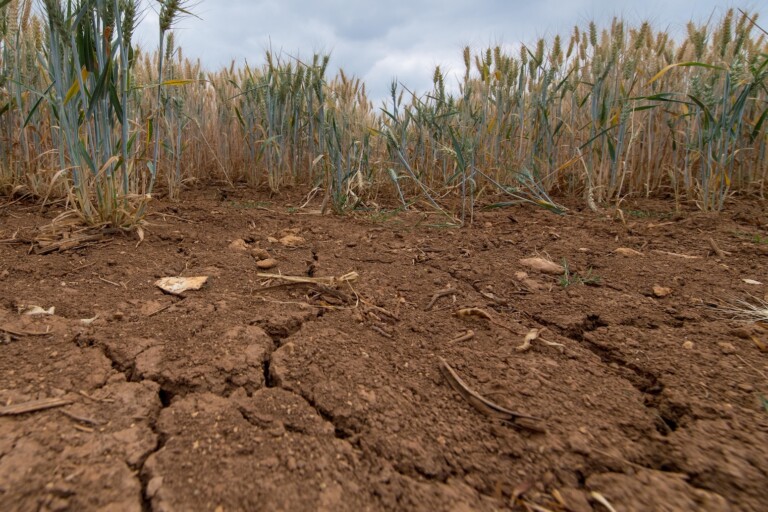
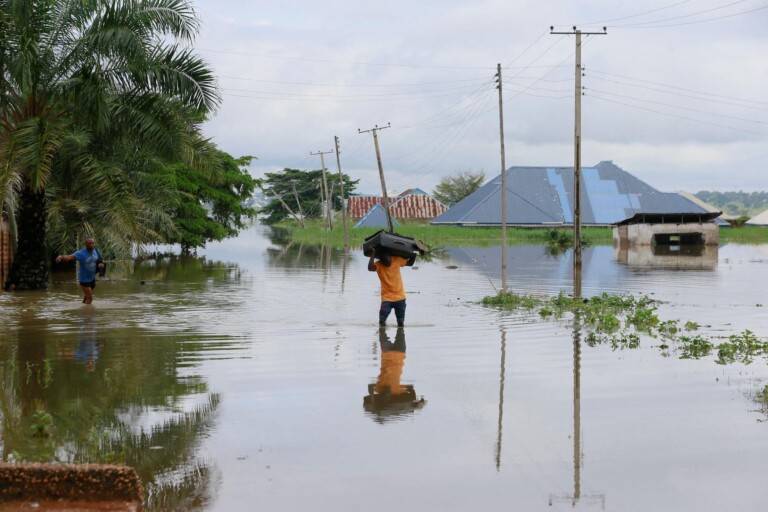
That is bad news for agriculture. El Niño – a naturally occurring weather phenomenon – can scramble rainfall patterns across the world, bringing drought to some regions and floods to others. And this time it is unfolding against the backdrop of a significantly hotter climate, with farmers already contending with unreliable growing seasons, extreme heat and less predictable rainfall because of global warming.
El Niño expected to bring next record-hot year as soon as 2027
We are seeing the consequences already. In Sri Lanka, drought linked to El Niño has dried wells and reservoirs and cut into crops and farmer incomes. Indonesia is experiencing its worst wildfire season in 11 years, with prolonged drought and extreme heat exacerbated by El Niño. And in Peru, authorities are preparing for the opposite extreme: intense rains, flooding and landslides which the national civil-defence agency says could affect around 1.2 million people.
These impacts will multiply as El Niño intensifies.
And yet, just as the risks to food production are rising, the money available to help farmers withstand them is shrinking.
10% funding decline in 2024
A forthcoming analysis from the Food and Agriculture Organization (FAO) shows that climate-related development finance for agrifood systems is moving in the wrong direction. In 2024, the latest year for which data is available, it fell by 10 percent compared with a 2 percent overall decline. The sectors that put food on our tables — crops, livestock, forestry and fisheries — received just 5 percent.
Yet this is precisely the moment when climate investment in agriculture needs to grow, not shrink. It can help communities adapt, build resilience and protect food security, while unlocking larger flows of public and private finance. Agriculture feeds us, supports the livelihoods of well over a billion people, and is often the first sector hit by drought, floods and extreme heat. Cutting that investment now is a false economy.
One failed harvest can plant the seed for the next crisis, forcing farmers to eat the seed they have saved for planting, sell livestock or tools, or take on debt. It can also deepen food insecurity, disrupt supply chains and drive up prices, showing up months later in supermarket aisles far away.
The Central American Dry Corridor, stretching through much of the region, shows both how exposed farmers are, and what investment can do. Based on an analysis of 41 years of satellite observations, FAO finds that some crop and pasture areas there face more than a 50 percent chance of agricultural drought over the coming months.
About half of Central America’s 1.9 million producers of maize, beans and other basic grains live in the Dry Corridor. Many grow food both for sale and for their own families. When a harvest fails, they lose both income and dinner.
El Salvador project conserves water and soil
In El Salvador, which lies within the Dry Corridor, more than 50,000 farmers have adopted practices to better withstand drought and increasingly unreliable rainfall through RECLIMA, a project financed by the Green Climate Fund and implemented by FAO in partnership with the government of El Salvador. It has substantial national co-financing, including from the country’s Environmental Investment Fund.
El Niño can intensify El Salvador’s annual mid-season dry spell, known as the canícula, turning it into a longer, harsher drought just as maize needs water most.


For María Cristina Corvera de López, a second-generation farmer in rural Nahualapa, adapting means changing how every drop of rain is captured and used. She plants trees alongside her crops to provide shade and minimise evaporation and uses simple irrigation channels and a homemade drip system to conserve water. Instead of burning stalks, leaves and husks after harvest, as generations before her did, she turns them into mulch to hold moisture in the soil.
“The effects of climate change are a constant challenge,” she says. But the new techniques have made her farm more resilient to El Niño as well. Where she once harvested about 50 bags of maize per acre, she now gets around 80, even during droughts. It’s enough to feed her family and sell the surplus.
Managing risk now cuts future costs
Together, these adaptations can mean the difference between losing a crop and getting through a dry season with enough food, seed and income to plant again. They are also the result of climate finance invested before disaster strikes.
RECLIMA shows what that kind of adaptation investment can buy. Adaptation accounted for 45 percent of climate-related development finance to agrifood systems in 2024, and multilateral development banks are directing more agricultural finance towards resilience. That shift reflects a growing recognition that adaptation is a form of risk management, not just a development cost.
We need much more of it. The same investments that help farmers withstand El Niño also enable them to adapt to a hotter, more unpredictable future. Cutting investment in the people who produce our food just as climate risks intensify does not save money. It simply pushes a much larger bill into the next harvest, the next food crisis, and the next El Niño.
The post As El Niño intensifies, we should be investing more in the world’s farmers appeared first on Climate Home News.
As El Niño intensifies, we should be investing more in the world’s farmers
-
Climate Change1 year ago
Guest post: Why China is still building new coal – and when it might stop
-
Greenhouse Gases2 years ago嘉宾来稿:满足中国增长的用电需求 光伏加储能“比新建煤电更实惠”
-
Greenhouse Gases1 year ago
Guest post: Why China is still building new coal – and when it might stop
-
Climate Change2 years ago嘉宾来稿:满足中国增长的用电需求 光伏加储能“比新建煤电更实惠”
-
Renewable Energy11 months agoSending Progressive Philanthropist George Soros to Prison?
-
Climate Change2 years ago
Bill Discounting Climate Change in Florida’s Energy Policy Awaits DeSantis’ Approval
-
Greenhouse Gases1 year ago
嘉宾来稿:探究火山喷发如何影响气候预测
-
Climate Change2 years agoAnalysis: China’s CO2 falls 1% in Q2 2024 in first quarterly drop since Covid-19