

Climate governance, how societies organize decision-making around climate change, is often framed through Western political and legal structures. These models tend to prioritize human-centric policies rooted in concepts such as property, ownership, and nation-states. Within this framework, the environment is often reduced to a resource to be managed, extracted, or commodified. In contrast, Indigenous climate governance offers an entirely different paradigm, one that is not about dominion over land but about reciprocal relationships, sacred obligations, and the recognition of ecological sovereignty.
It is essential to emphasize that Indigenous Peoples do not require validation, endorsement, or recognition from non-Indigenous institutions to develop, uphold, or practice their governance systems. These frameworks of law and stewardship are rooted in original relationships to homeland ties that precede and transcend colonial boundaries.
The days are numbered for systems that invite Indigenous Peoples to the table only as tokens or symbolic presences, while denying their voices the space and authority to shape outcomes. Indigenous governance is not a matter of permission from others; it is the lived practice of self-determination that every living being on Mother Earth inherits and is responsible for.
What is Indigenous Climate Governance?
Indigenous climate governance is a holistic system of law, custom, and responsibility that places interdependence at its core. It reflects millennia of Indigenous stewardship and an understanding that humans are not the rulers of ecosystems but participants within them. Governance is not defined solely by human authority, but by respect for the natural laws that sustain all life. This worldview recognizes that the land, waters, plants, animals, and spiritual forces all carry agency and rights. Humans are woven into this vast web of relations, with responsibilities of reciprocity and care.
At its foundation, Indigenous climate governance protects the autonomy and vitality of place, which is often referred to as ecological sovereignty. Decision-making is collective, inclusive of all living beings, and guided by natural law rather than anthropocentric legal constructs. In this way, governance is not about imposing human will but about aligning with the rhythms, responsibilities, and teachings of the natural world.
Climate change is, at its root, a crisis of ecological imbalance. Indigenous Peoples who have retained rights to stewardship through origin relationships to place, space, and homeland understand this balance as sacred. They are best positioned to speak with, rather than for, their human and non-human kin regarding the health and well-being of these homelands. This is where the difference between Indigenous and non-Indigenous governance lies: the former is grounded in responsibilities to life systems. At the same time, the latter too often assumes authority to determine for others. True governance is not about control but about nurturing the self-determination of people, lands, waters, and ecosystems.
How Indigenous Climate Governance Differs from Western Models
Western climate governance is profoundly influenced by colonial legacies that prioritize property rights, commodity extraction, and human control over land and water. Such frameworks often fragment ecosystems and communities by enforcing borders and legal regimes that treat nature as something to be divided, owned, and exploited. Indigenous governance rejects these constructs and instead insists on a worldview that frames the Earth as a living relative, with inherent rights and sovereignty.
This worldview demands that human actions serve to maintain balance and harmony in ecosystems, rather than disrupt them. Governance is viewed as a set of ongoing relationships founded on care, respect, and mutual responsibility, rather than as systems of domination and control. By refusing to fragment ecosystems with artificial legal and political borders, Indigenous climate governance opens pathways to climate justice that are inclusive, life-sustaining, and grounded in ecological stewardship.
For non-Indigenous Peoples, this requires a willingness to step aside and listen, to witness the story of life being shared through Indigenous knowledge and practice. It means recognizing that democracy itself must be redefined, not as a system of power over others but as a philosophy of coexistence, rooted in the laws of nature. These are the laws that governance is meant to uphold, not jeopardize. Colonization has had the opposite effect: undermining natural law to benefit the few at the expense of the many.
The Building Blocks of Ecological Sovereignty
Ecological sovereignty is the right of Indigenous Nations and the ecosystems they steward to manage and protect their lands and waters in alignment with their laws and values. It is rooted in kinship relations, where plants, animals, waters, and lands are recognized as relatives with their agency to thrive or suffer. This principle is sustained by natural law, which acts as a living constitution that structures coexistence, respect, and accountability among all beings.
Relational governance is another key element. Rather than separating human interests from ecological systems, it binds humans and non-humans together in an interdependent framework of stewardship and decision-making. Cultural protocols and ceremonies ensure that governance remains responsive to the cycles of nature and ancestral teachings, grounding decisions in gratitude, responsibility, and humility. These building blocks together create a framework for sovereignty that extends beyond political recognition into the living fabric of ecosystems.
The Indigenous Constitution of the Land: Laws and Regulations of Peace and Harmony
In many Indigenous Nations, governance of place is carried out through a constitution that is not confined to written text, but is encoded in ceremony, storytelling, and the role of law keepers. These laws emphasize peace, mutual respect, and the ongoing balance of life. Every action must consider its impacts on the land, waters, climate, and all beings. Reciprocity is essential; humans must return to the Earth what they take, ensuring that ecosystems regenerate and remain vibrant for future generations.
This constitution also recognizes the agency of non-human beings, affirming their right to exist, flourish, and govern their own lives. Governance is inclusive and collective, ensuring that the voices of Elders, youth, women, and the land itself are respected and valued. For example, laws may mandate sustainable harvesting, seasonal restrictions, ceremonies of permission and thanksgiving, and rites of care when ecosystems are vulnerable. These protocols are not static but adaptive, responsive to the cycles of place, and always rooted in harmony and respect.
Why Indigenous-Led Climate Governance Matters
Indigenous climate governance offers a profound alternative to Western models of climate decision-making. It is not about control, but coexistence. This shift is critical in addressing the climate crisis because it directly challenges the colonial systems that have fueled ecological destruction and excluded Indigenous Nations from decision-making. By centring Indigenous leadership, governance becomes about multidimensional wellbeing: ecological, cultural, spiritual, and communal health.
It also restores natural laws that protect biodiversity, climate stability, and the rights of all beings. Where Western systems often respond reactively to crises, Indigenous governance emphasizes proactive care, long-term thinking, and intergenerational responsibilities. By embracing these principles, climate justice transforms into a journey toward genuine equity, recognizing Indigenous Nations as sovereign stewards of their lands and waters, with authority that transcends human political boundaries and includes all life.
Blog by Rye Karonhiowanen Barberstock
Image Credit: Igor Kyryliuk and Tetiana Kravchenko, Unsplash
The post Indigenous Climate Governance: Reclaiming Ecological Sovereignty and Redefining Climate Justice appeared first on Indigenous Climate Hub.
Indigenous Climate Governance: Reclaiming Ecological Sovereignty and Redefining Climate Justice

Next week, diplomats from around the world will descend on Yerevan, Armenia, to negotiate a series of decisions under the UN Convention on Biological Diversity (CBD).
Between 19 and 30 October, 196 parties will gather to hammer out the precise wording of the dozens of legal texts that make up the decisions under the Conference of the Parties (COP) to the CBD.
This year’s summit is particularly significant, as it marks the halfway point between the agreement of the Kunming-Montreal Global Biodiversity Framework and the deadline for achieving its targets.
The CBD has found that countries are currently not on track to meet 22 out of the framework’s 23 targets.
During the fortnight, delegates will also be negotiating decisions relating to the two supplemental protocols to the CBD: the Cartagena Protocol, which covers biosafety; and the Nagoya Protocol, which covers access and benefit-sharing for the use of genetic resources.
(The Cartagena and Nagoya Protocols, which are each governed by a “meeting of the parties”, or “MOP”, have fewer parties than the CBD as a whole, with 173 and 141, respectively.)
Carbon Brief is tracking the progress of countries towards consensus on dozens of negotiating texts using the interactive table below.
The tracker includes texts from the COP, as well as the MOPs for the Cartagena and Nagoya protocols. It also includes draft decisions from the most recent subsidiary body meetings, as these form the starting point for the negotiations in Yerevan.
The CBD has three subsidiary bodies: the subsidiary body on scientific, technical and technological advice (SBSTTA), the subsidiary body on implementation (SBI) and the subsidiary body on article 8(j) and other provisions (SB8J).
SB8J focuses on issues related to the Indigenous peoples and local communities. It was established at COP16 in Cali, Colombia, in 2024.
The first two columns of the interactive tracker list the topic of each agenda item and the relevant body, with subsequent columns including dates, page counts and links to the original documents.
The table is searchable and can be sorted using the arrows in the header.
Areas of disagreement in UN draft texts are denoted by square brackets. Counting the brackets in a particular iteration of a text therefore gives a sense of how far parties are from reaching consensus.
The bracket column is colour-coded, with dark green indicating a low number of brackets and red indicating a high number of brackets remaining.
Texts can also present parties with choices using “options” or alternatives (“alt”), which are counted together in the sixth column of the table.
The key discussions in Yerevan will centre around two agenda items in particular. The first is the global review, which will assess progress towards the GBF and make recommendations for accelerating action.
The second is finance, which can be separated into two parts: resource mobilisation and the financial mechanism. On resource mobilisation, biodiverse global south countries are likely to push for an increased amount of international finance for conservation.
Disagreement over the creation of the financial mechanism led to the suspension of COP16 in Cali in October 2024, as parties failed to find agreement on the mobilisation of finance before the end of the summit.
Global south countries want the establishment of a separate financial mechanism under the control of the CBD; global north countries largely prefer to maintain the existing mechanism, which sits under the Global Environment Facility.
At the resumed session of COP16 in Rome in early 2025, countries agreed on a roadmap that would lead to the establishment of a permanent mechanism.
related
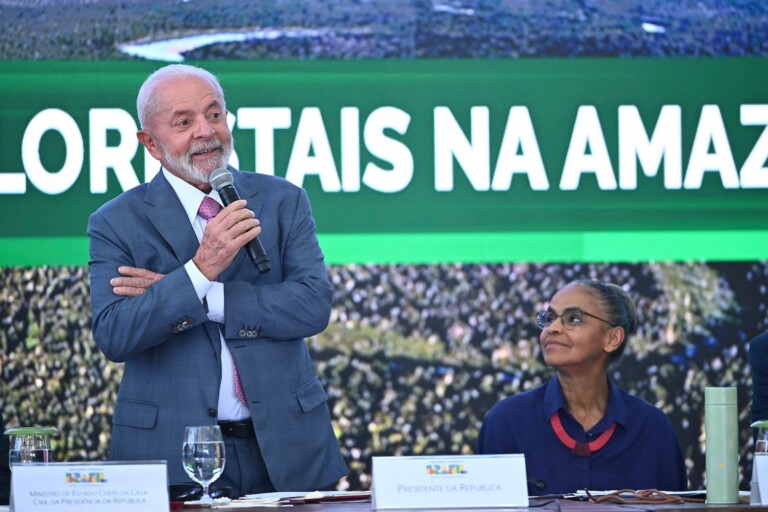
Analysis: Lula presidency saved at least 20,000km2 of Brazilian Amazon since 2022
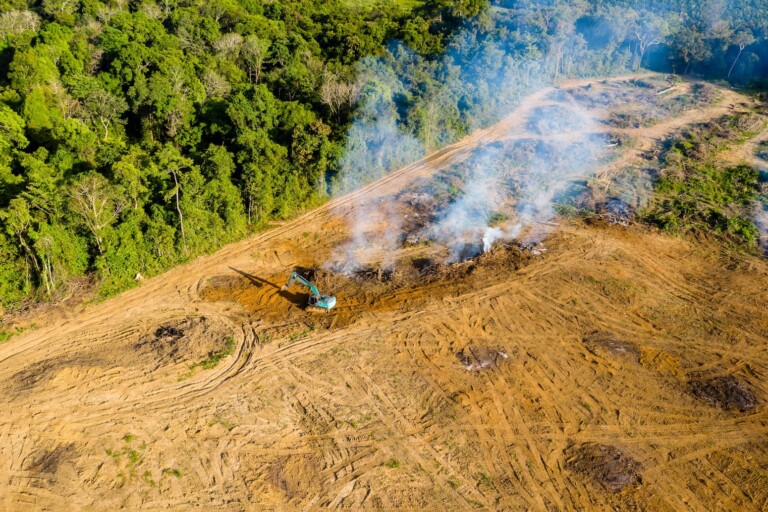
Why land-use emissions have fallen by a third this century – in six charts

Analysis: 84% of nations miss deadline to identify ‘nature-harming’ subsidies by 2025
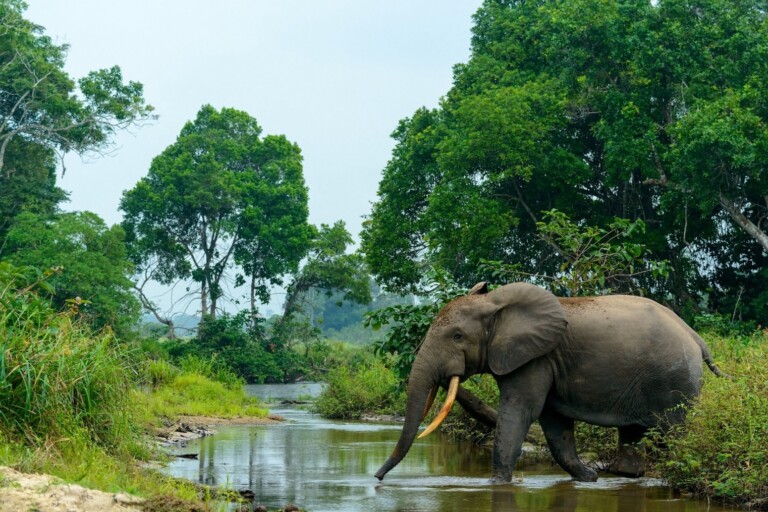
UK withdraws millions in funding from world’s second-largest rainforest in Congo
The post Interactive: Tracking negotiating texts at the COP17 biodiversity summit appeared first on Carbon Brief.
Interactive: Tracking negotiating texts at the COP17 biodiversity summit
A beacon of love
On an outer island of Fiji, two thousand nautical miles from Sydney, is a shining light of hope and resilience for our troubled world.
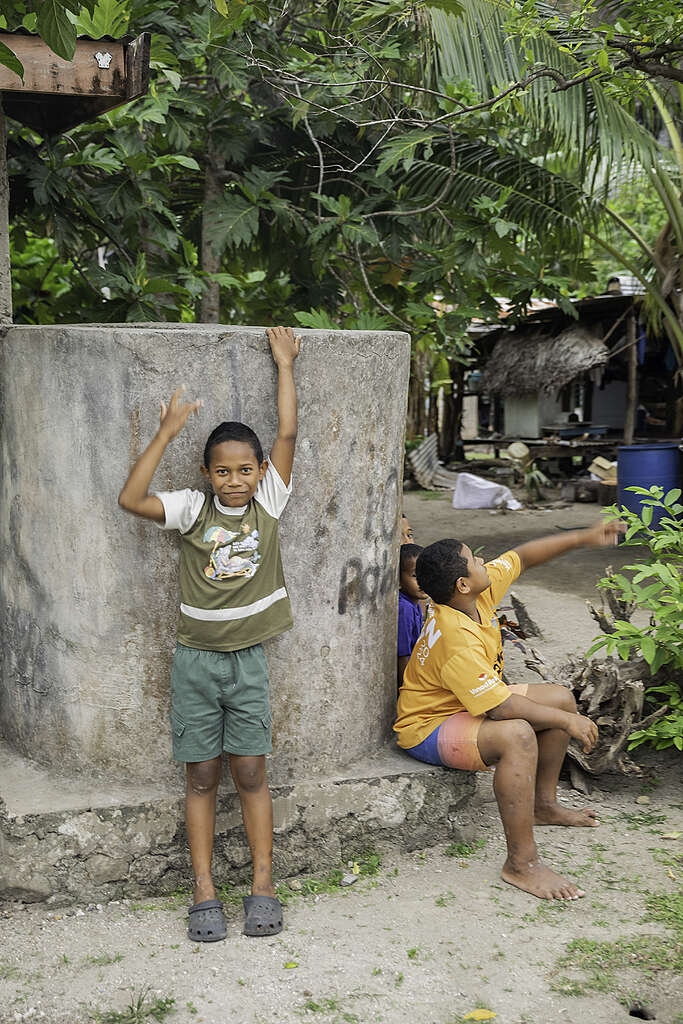
The island of Kioa is home to a Tuvaluan community who migrated from their atoll of Vaitupu in the late 1940s. It is a land of warm hearts, big smiles, and deep cultural roots; a place where the sound of a conch still summons the island together, where islanders paddle out to fish in carved outrigger canoes, and healthy happy children walk barefoot to school.
Here, culture is life. Kioans live sustainably through their traditional knowledge and practices. The island is alive with song, dance and the rhythms of a life tied to the tides, the winds, and the seasons.
Facing the future
Greenpeace has been lucky to have a relationship with Kioa for a number of years now, and we are continually learning from this remarkable community.
Last week, as part of our Voyaging Oceania project, we returned to the island. Our purpose was twofold —- to carry messages from the island to leaders gathering in Nadi this week for the Pacific Pre-COP, and to support the Kioa community in their efforts to improve water security for the island.
Unlike Tuvalu itself, with its eight atolls, Kioa is a mountainous, forested and richly fertile island. It will remain habitable far into the future. Kioans did not initially migrate from Vaitupu due to climate change, but the move was prophetic. They now have a lifeboat.
However, even Kioa faces challenges on our rapidly warming planet, in particular when it comes to water. Climate change is shifting once reliable rainfall patterns. On top of this, the island is already feeling the effect of this year’s intensifying El Niño event, which for Fiji means reduced rainfall and prolonged dry spells.
Right now, fresh water has to be carefully rationed, and is only available for a few hours a day. During last week’s visit aboard our campaigning ship Oceania, Greenpeace was privileged to work with the Kioa community on a new solar-powered water distribution project for the island.
Designed and led by the island, the project involves using a solar pump to move water from a reliable source to a storage tank and then using gravity to distribute the water around the village.
It was a lesson in how local knowledge and ingenuity can be the backbone of today’s climate solutions. To build a dam around the source, the local community knew the exact spot where they could gather gravel at low tide to mix with the cement. They took only what was needed, knowing that all resources must be carefully conserved. Kioa has no roads and no machinery, and it was an all-of-island effort to carry the materials up to the project site, including many heavy bags of sand and rock.
Such projects truly bring to life the vision of a resilient, locally-led, fossil fuel free Pacific.