

As competition for minerals needed to produce clean energy technologies intensifies, a growing number of countries have resorted to an age-old mechanism to cope with the threat of scarcity: stockpiling.
The world’s biggest economies are racing to shore up reserves of cobalt, lithium, graphite and rare earths, which are needed to produce batteries, electric vehicles, wind turbines and electric systems to wean the global economy off fossil fuels. The same minerals are also increasingly sought after to manufacture military hardware and chips for AI, adding further pressure on supplies.
But the cutthroat scramble to build up reserves threatens to drive up the costs of the energy transition by intensifying competition and pushing up prices of key materials needed to produce clean energy technologies, research published today has found.
“If you undermine the financial viability of [clean energy] projects through higher raw material costs, you’re going to delay their roll-out,” co-author Hugh Miller, the critical minerals lead at the Centre for Economic Transition Expertise at the London School of Economics and Political Science, told Climate Home News.
Stockpiling “is happening, whether we like it or not”, said Miller. “But if we’re going to do it, we need to have it in a coordinated manner that means we don’t have massive market volatility and adverse implications from every country trying to go at it alone,” he added.
The rise of stockpiles
A growing number of governments have adopted national stockpiling programmes in response to heightened geopolitical tensions around mineral supply chains.
Earlier this year, US President Donald Trump announced the establishment of a critical mineral reserve known as “Project Vault” to protect American businesses from shortages after China imposed export restrictions on rare earth supplies.

Beijing suspended the measures until November as part of a trade truce with Washington but the episode spooked Western governments and exposed how strategic materials can be weaponised to achieve geopolitical objectives.
Australia, China, the EU and India have also announced measures to create strategic mineral reserves. Japan and South Korea already have long-standing mineral stockpiling programmes.
“Legitimate concerns”
“There are legitimate concerns with regards to potential global shortages of these minerals,” said Miller, citing rapidly rising and concurrent mineral demand for the energy transition, AI, data centres, and military technologies, combined with underinvestment in new supplies for some minerals, such as copper.
While stockpiling can serve as an emergency response mechanism during acute shortages, it does nothing to address the underlying concentration risks in mineral supply chains. The Democratic Republic of Congo holds around 70% of the world’s cobalt reserves, for example, while China dominates the processing of 19 out of 20 minerals deemed critical by a large number of nations.
-
Recycling could meet half of Europe’s critical mineral needs by 2050
A new report by an EU-funded research project says the bloc could harness its “urban mines” to reduce its dependence on China for energy transition minerals -
The energy transition has a rare earth problem: These startups are solving it
China’s grip on global supply chains is turbocharging efforts to find alternatives to the small group of metals that dominate EV motor technology -
The US’s critical minerals club threatens an equitable clean energy transition
Washington’s minerals trading bloc will shore up supplies for the US’s digital and military sectors and risks diverting resources away from cleantech


Uncoordinated stockpiling programmes risk heightening the price volatility they are designed to hedge against, according to the report.
Researchers found that if Australia, China, the EU, India, Japan, South Korea and the US simultaneously built reserves of minerals to cover six months of imports, the aggregate stockpile demand could represent up to 34% of global annual cobalt supply and over 10% of global lithium, graphite and copper supply. That could cause a shock to the market, triggering the shortages and price spikes they are trying to avoid.
Miller said it was unlikely that every country would stockpile at that rate, but aggregate stockpiling demand of just 5% of global mineral supply would have an impact on prices.
Coordinating stockpiles: a role for the IEA?
Researchers found that avoiding the negative impacts of stockpiling requires global coordination over how mineral stocks are accumulated and released – a mechanism which already exists for other commodities, including oil.
Coordination should include agreed rules for countries to build up their stocks over a slow and staggered timeline and pre-agreed conditions for releasing reserves to provide market predictability and reduce the risk of price spikes.
The International Energy Agency (IEA), which was established after the 1970s oil crisis to coordinate emergency oil stock releases among member countries, is best placed to oversee such a mechanism, they say.
Earlier this year, IEA member countries called on the agency to strengthen its work on critical minerals, including by providing support to countries “that choose to establish and expand critical minerals stockpiling systems”.
But Miller and his co-author Pau Morandi, a policy fellow at the Centre for Economic Transition Expertise, argue that members should go one step further and mandate the IEA to coordinate the security of supplies, rather than only helping individual governments.
The IEA has been contacted for comment.
A call to action for the G7
Miller said he hoped the research could be picked up by the G7 group of wealthy countries, which could lead on mandating the IEA to take on this coordination role.
France, which is presiding over the group this year and is hosting leaders in Evian on the shores of Lake Geneva in mid-June, has made strengthening the resilience of critical minerals value chains a priority.
In a communique last month, finance ministers agreed to “deepen and expand our cooperation among G7 members and with like-minded partners” to strengthen and diversify critical mineral supply chains and to continue discussions “on how to best organise analytical cooperation”.
Sebastien Treyer, executive director of the Paris-based Institute for Sustainable Development and International Relations (IDDRI), said he hoped the G7 leaders’ summit can help move the discussion on critical minerals towards greater international cooperation to secure the resources the world needs to build a clean economy.
From inclusive and mutually beneficial partnerships to mine resources to stockpiling minerals, “we need to coordinate more like a trade organisation than something that is about securing supply,” he said.
The post The scramble to stockpile critical minerals could drive up energy transition costs appeared first on Climate Home News.
The scramble to stockpile critical minerals could drive up energy transition costs

Next week, diplomats from around the world will descend on Yerevan, Armenia, to negotiate a series of decisions under the UN Convention on Biological Diversity (CBD).
Between 19 and 30 October, 196 parties will gather to hammer out the precise wording of the dozens of legal texts that make up the decisions under the Conference of the Parties (COP) to the CBD.
This year’s summit is particularly significant, as it marks the halfway point between the agreement of the Kunming-Montreal Global Biodiversity Framework and the deadline for achieving its targets.
The CBD has found that countries are currently not on track to meet 22 out of the framework’s 23 targets.
During the fortnight, delegates will also be negotiating decisions relating to the two supplemental protocols to the CBD: the Cartagena Protocol, which covers biosafety; and the Nagoya Protocol, which covers access and benefit-sharing for the use of genetic resources.
(The Cartagena and Nagoya Protocols, which are each governed by a “meeting of the parties”, or “MOP”, have fewer parties than the CBD as a whole, with 173 and 141, respectively.)
Carbon Brief is tracking the progress of countries towards consensus on dozens of negotiating texts using the interactive table below.
The tracker includes texts from the COP, as well as the MOPs for the Cartagena and Nagoya protocols. It also includes draft decisions from the most recent subsidiary body meetings, as these form the starting point for the negotiations in Yerevan.
The CBD has three subsidiary bodies: the subsidiary body on scientific, technical and technological advice (SBSTTA), the subsidiary body on implementation (SBI) and the subsidiary body on article 8(j) and other provisions (SB8J).
SB8J focuses on issues related to the Indigenous peoples and local communities. It was established at COP16 in Cali, Colombia, in 2024.
The first two columns of the interactive tracker list the topic of each agenda item and the relevant body, with subsequent columns including dates, page counts and links to the original documents.
The table is searchable and can be sorted using the arrows in the header.
Areas of disagreement in UN draft texts are denoted by square brackets. Counting the brackets in a particular iteration of a text therefore gives a sense of how far parties are from reaching consensus.
The bracket column is colour-coded, with dark green indicating a low number of brackets and red indicating a high number of brackets remaining.
Texts can also present parties with choices using “options” or alternatives (“alt”), which are counted together in the sixth column of the table.
The key discussions in Yerevan will centre around two agenda items in particular. The first is the global review, which will assess progress towards the GBF and make recommendations for accelerating action.
The second is finance, which can be separated into two parts: resource mobilisation and the financial mechanism. On resource mobilisation, biodiverse global south countries are likely to push for an increased amount of international finance for conservation.
Disagreement over the creation of the financial mechanism led to the suspension of COP16 in Cali in October 2024, as parties failed to find agreement on the mobilisation of finance before the end of the summit.
Global south countries want the establishment of a separate financial mechanism under the control of the CBD; global north countries largely prefer to maintain the existing mechanism, which sits under the Global Environment Facility.
At the resumed session of COP16 in Rome in early 2025, countries agreed on a roadmap that would lead to the establishment of a permanent mechanism.
related
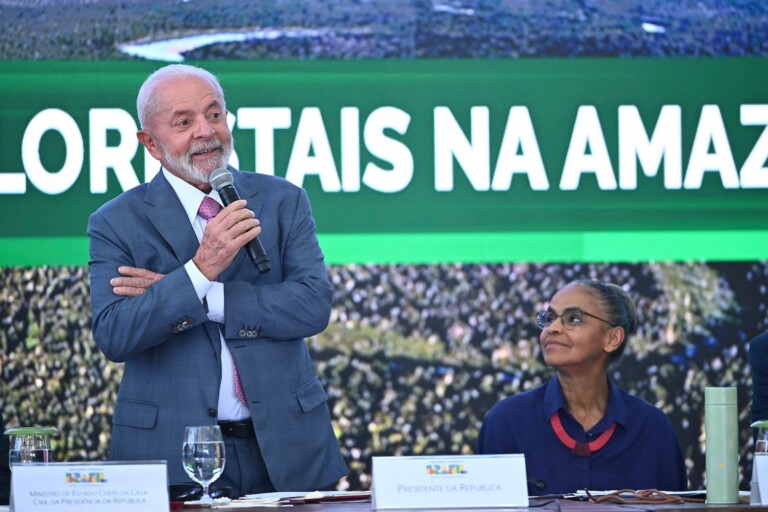
Analysis: Lula presidency saved at least 20,000km2 of Brazilian Amazon since 2022
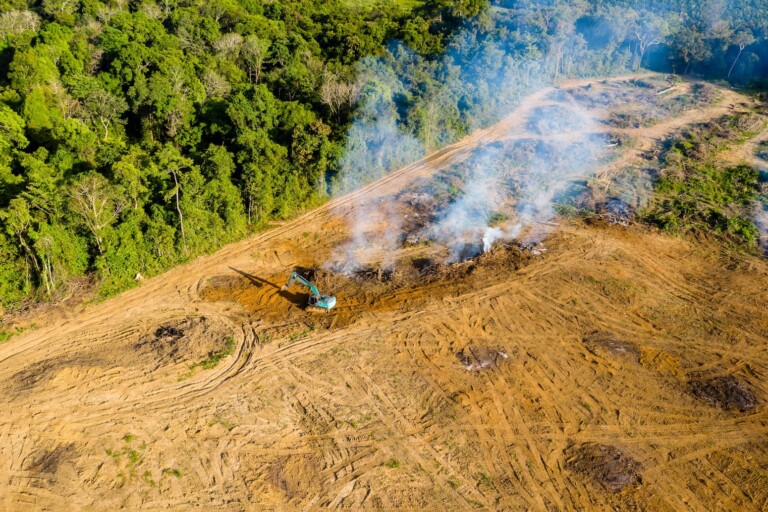
Why land-use emissions have fallen by a third this century – in six charts

Analysis: 84% of nations miss deadline to identify ‘nature-harming’ subsidies by 2025
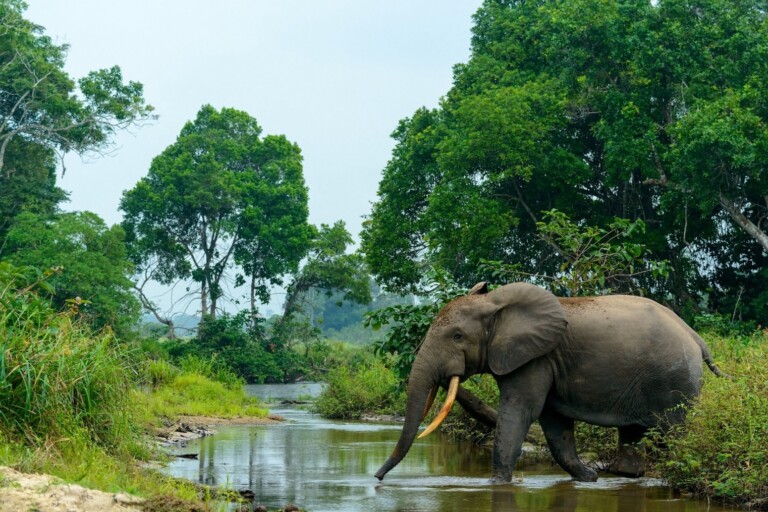
UK withdraws millions in funding from world’s second-largest rainforest in Congo
The post Interactive: Tracking negotiating texts at the COP17 biodiversity summit appeared first on Carbon Brief.
Interactive: Tracking negotiating texts at the COP17 biodiversity summit
A beacon of love
On an outer island of Fiji, two thousand nautical miles from Sydney, is a shining light of hope and resilience for our troubled world.
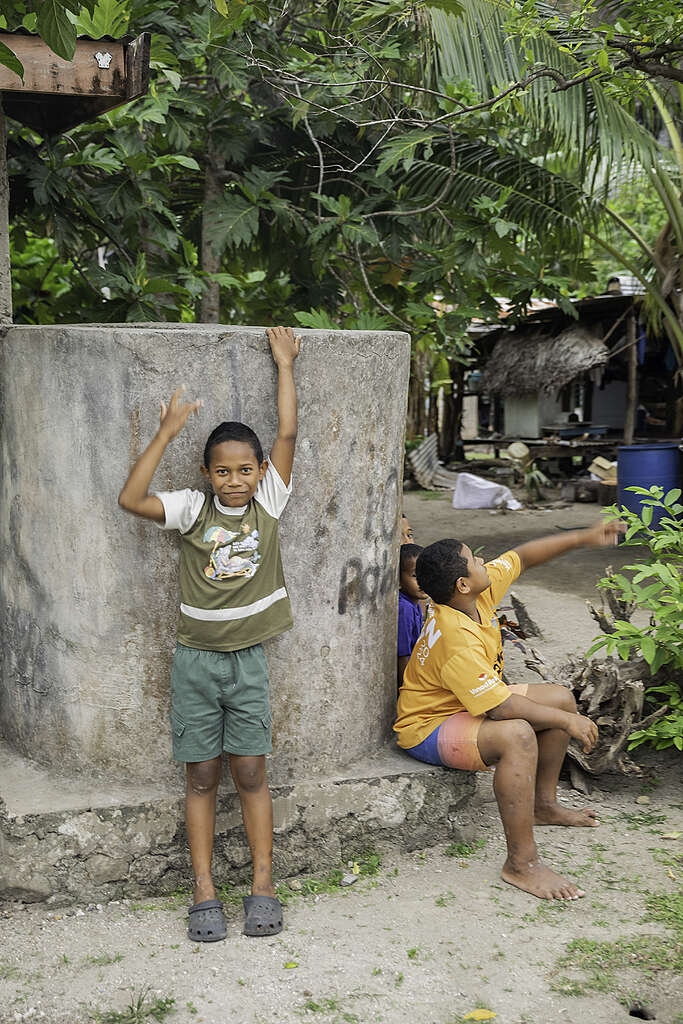
The island of Kioa is home to a Tuvaluan community who migrated from their atoll of Vaitupu in the late 1940s. It is a land of warm hearts, big smiles, and deep cultural roots; a place where the sound of a conch still summons the island together, where islanders paddle out to fish in carved outrigger canoes, and healthy happy children walk barefoot to school.
Here, culture is life. Kioans live sustainably through their traditional knowledge and practices. The island is alive with song, dance and the rhythms of a life tied to the tides, the winds, and the seasons.
Facing the future
Greenpeace has been lucky to have a relationship with Kioa for a number of years now, and we are continually learning from this remarkable community.
Last week, as part of our Voyaging Oceania project, we returned to the island. Our purpose was twofold —- to carry messages from the island to leaders gathering in Nadi this week for the Pacific Pre-COP, and to support the Kioa community in their efforts to improve water security for the island.
Unlike Tuvalu itself, with its eight atolls, Kioa is a mountainous, forested and richly fertile island. It will remain habitable far into the future. Kioans did not initially migrate from Vaitupu due to climate change, but the move was prophetic. They now have a lifeboat.
However, even Kioa faces challenges on our rapidly warming planet, in particular when it comes to water. Climate change is shifting once reliable rainfall patterns. On top of this, the island is already feeling the effect of this year’s intensifying El Niño event, which for Fiji means reduced rainfall and prolonged dry spells.
Right now, fresh water has to be carefully rationed, and is only available for a few hours a day. During last week’s visit aboard our campaigning ship Oceania, Greenpeace was privileged to work with the Kioa community on a new solar-powered water distribution project for the island.
Designed and led by the island, the project involves using a solar pump to move water from a reliable source to a storage tank and then using gravity to distribute the water around the village.
It was a lesson in how local knowledge and ingenuity can be the backbone of today’s climate solutions. To build a dam around the source, the local community knew the exact spot where they could gather gravel at low tide to mix with the cement. They took only what was needed, knowing that all resources must be carefully conserved. Kioa has no roads and no machinery, and it was an all-of-island effort to carry the materials up to the project site, including many heavy bags of sand and rock.
Such projects truly bring to life the vision of a resilient, locally-led, fossil fuel free Pacific.