

Nayyir Ransome builds relationships between the government and the people it serves to support the ocean. As Senior Analyst with Ocean Conservancy, Nayyir sees the power of small, incremental steps that lead to big impacts for people and waterways.
“I want to encourage people to start where they are. Start with your friends, your church group, your classroom”, Nayyir shared.
Nayyir started advocacy work when they were young, joining the Campfire Youth Legislature as a seventh-grade student in Broadmoor Middle School in East Baton Rouge Parish School System, a school that was closed in 2019. “I was one of the youngest people in the room. The bill that I proposed didn’t even make it out of committee. So, when it was time to come together on the floor and vote on all the bills that came out of committee, I decided that I was going to speak on every single bill that hit the floor, literally, all of them. I ended up winning Outstanding Legislator that year. This honor is given only to one legislator out of almost 500 young people from across the state. I still have the medal. I keep it on my desk lamp with all my other conference tags and medals. It reminds me how much impact a person simply speaking up can have. Whether or not the vote goes your way at that moment, someone is still listening.”

Nayyir got involved in Youth Legislature at a time in Baton Rouge, Louisiana, when many students were feeling unheard, anxious and facing physical displacement after Hurricane Katrina.
Remembering the day Hurricane Katrina landed
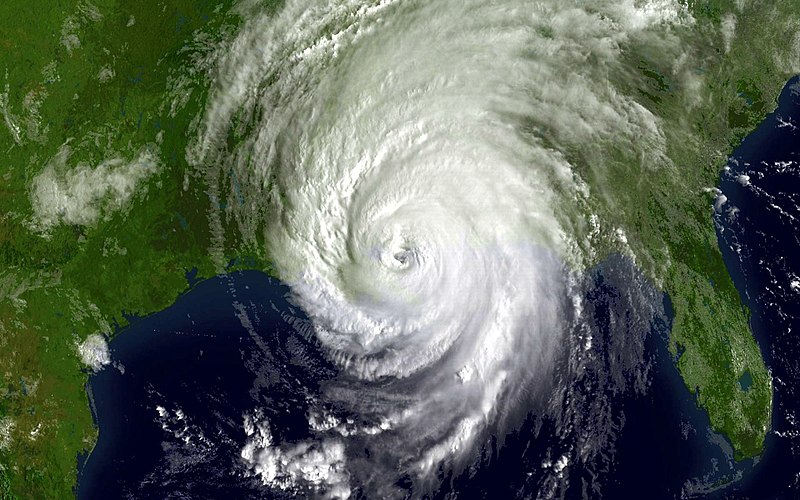
On August 29th, 2005, Hurricane Katrina made landfall in New Orleans. At least 1,900 people were killed in the storm and, due to medical and infrastructure complications, post-storm. The devastation of one of the deadliest hurricane seasons in United States history forced 650,000 survivors from their homes—some were never able to return.
“We were out of school for two weeks. Compared to New Orleans where many schools closed for months and others shut their doors permanently, this felt like a privilege. When we went back to school, there were 200 more students in the building. Many families from New Orleans were forced to move to temporary housing in Baton Rouge. Our school was one of many that saw a large influx of students from New Orleans where many schools were unable to reopen due to Katrina. There wasn’t enough space, services or support to handle that, and it became a tense environment for all of us.”
Nayyir’s family moved to Baton Rouge just one year before the storm. Coming from Philadelphia, one of the largest metropolitan cities in the country, Nayyir experienced an intense culture shock when adjusting to life in open-air, sea-centric Southern Louisiana. Nayyir reflected on the contrast of towering buildings and lightning-fast train transport to kids catching mudbugs from the crawfish mounds in the drainage ditches, designed to channel storm water, along roads without sidewalks.
“When I started participating in Camp Fire USA’s Youth Legislature program, I felt intimidated. It was a strange experience, grappling with my own sense of displacement while watching other kids being displaced on such a large scale due to Hurricane Katrina. I wasn’t from the area, but I was there, and I did understand how it felt to be pushed out, to feel discarded.”
New Orleans has a culture unlike any other place in the world, and this rich weaving of languages, ethnicities and histories creates an unshakable strength that still stands today. Yet, the crippling impacts of Hurricane Katrina can be traced through the yet-to-be-rebuilt homes in the Lower Ninth Ward and the reality of long-term health consequences and economic instability for many residents, even now, 20 years after the storm.
Hurricane detection is better than ever, thanks to NOAA
In 2005, the best hurricane detection science provided around a 48-hour warning. The people of New Orleans had less than 24 hours from the time the mandatory evacuation order was issued to when water began to spill over one of the levees.
When Hurricane Katrina developed into a Category 3 storm, receded and then reformed as a Category 5 storm, scientists, local officials and communities scrambled to keep up and spread information quickly.
“We didn’t know what was happening in New Orleans for three days. People with friends and family there were starting to panic.”
Now, thanks to the steady, decades-long efforts of organizations like the National Oceanic and Atmospheric Administration (NOAA), current predictive technologies can provide up to five days warning of extreme weather—enough time potentially to prevent storms from having the same catastrophic impact as Katrina. Yet, the question remains, ”Will we continue funding the hurricane forecasting systems we know are protecting our communities?”
Tell Congress to Protect NOAA Today
Take action to ensure Congress stands up for NOAA, demanding the agency be fully funded and fully staffed.
Understanding NOAA’s vital role during storm season
It might not be clear what NOAA does during hurricane season because much of their work is behind the scenes. The National Weather Service sits under NOAA, and NOAA scientists and professionals are key players in many of the long-term conservation measures, research and technology that prevent the most dire consequences of extreme weather. Their work includes projects that we may not think of as disaster preparedness and resilience, such as coastal restoration initiatives.
NOAA uses a variety of scientific instruments on crafts such as planes, saildrones and gliders to gather data from inside hurricanes. Long term ocean observations contribute to hurricane and weather models. This hurricane season we have an opportunity to speak up about the proposed cuts to NOAA and the vital resources we would lose if these budget changes are approved by Congress. Continuing to fund NOAA is one way to ensure ongoing improvements to weather forecasting, honor those lost to Hurricane Katrina and, in the aftermath, support the people of New Orleans today, as they rebuild and heal.
We can all speak up for life-saving hurricane detection and research
As storm seasons intensify, we need faster, more accurate weather prediction and storm detection more than ever. NOAA is America’s first line of defense against the deadliest impacts of natural disasters on our communities. Yet, NOAA’s funding is facing major cuts that, if enacted, will result in lives lost. We need to keep moving forward keeping in mind and heart the nearly 2,000 people who lost their lives during Katrina, the thousands more New Orleanians who lost their land and legacies, and the hundreds of thousands of people who are impacted by deadly storms in the United States each year.
Looking back, Nayyir can see how these experiences growing up in post-Katrina Louisiana shaped their advocacy and approach to community organizing.
“My time in Southeast Louisiana taught me a lot about people-centered advocacy. Even if we haven’t experienced something at its most extreme, we can find a way to understand the root of it by looking at our lives and the places we live. Ocean Conservancy has helped me to grow in how and why we must work across government agencies and lines to protect our ocean and the people who rely on it.”
Ocean Conservancy works alongside NOAA as a science-led advocacy organization mobilizing federal, state and local action for our ocean. Every investment in NOAA translates into vital seconds, hours and days of response time for communities when hurricane season strikes. The more data we can collect and use to predict the behavior and patterns of storms, the better we can respond and prevent tragedies.
Each year, storm season is intensifying from climate change—and not just on our coasts. Communities throughout the U.S. are affected by hurricanes and floods that threaten lives and livelihoods. We all rely on NOAA’s vital research and tools for weather prediction and extreme weather warnings. These services are a lifeline we cannot afford to lose.
Call on your Congress members today and insist they support full funding and operation of NOAA.
The post Honoring New Orleans 20 Years After Hurricane Katrina Means Protecting NOAA appeared first on Ocean Conservancy.
Honoring New Orleans 20 Years After Hurricane Katrina Means Protecting NOAA

Ocean Acidification
Dr Heidarzadeh’s TV interview with SkyNews on the massive M7.7 Panama earthquake on 9 October 2026
Dr Heidarzadeh’s TV interview with SkyNews on the massive M7.7 Panama earthquake on 9 October 2026. Click here for the full story.
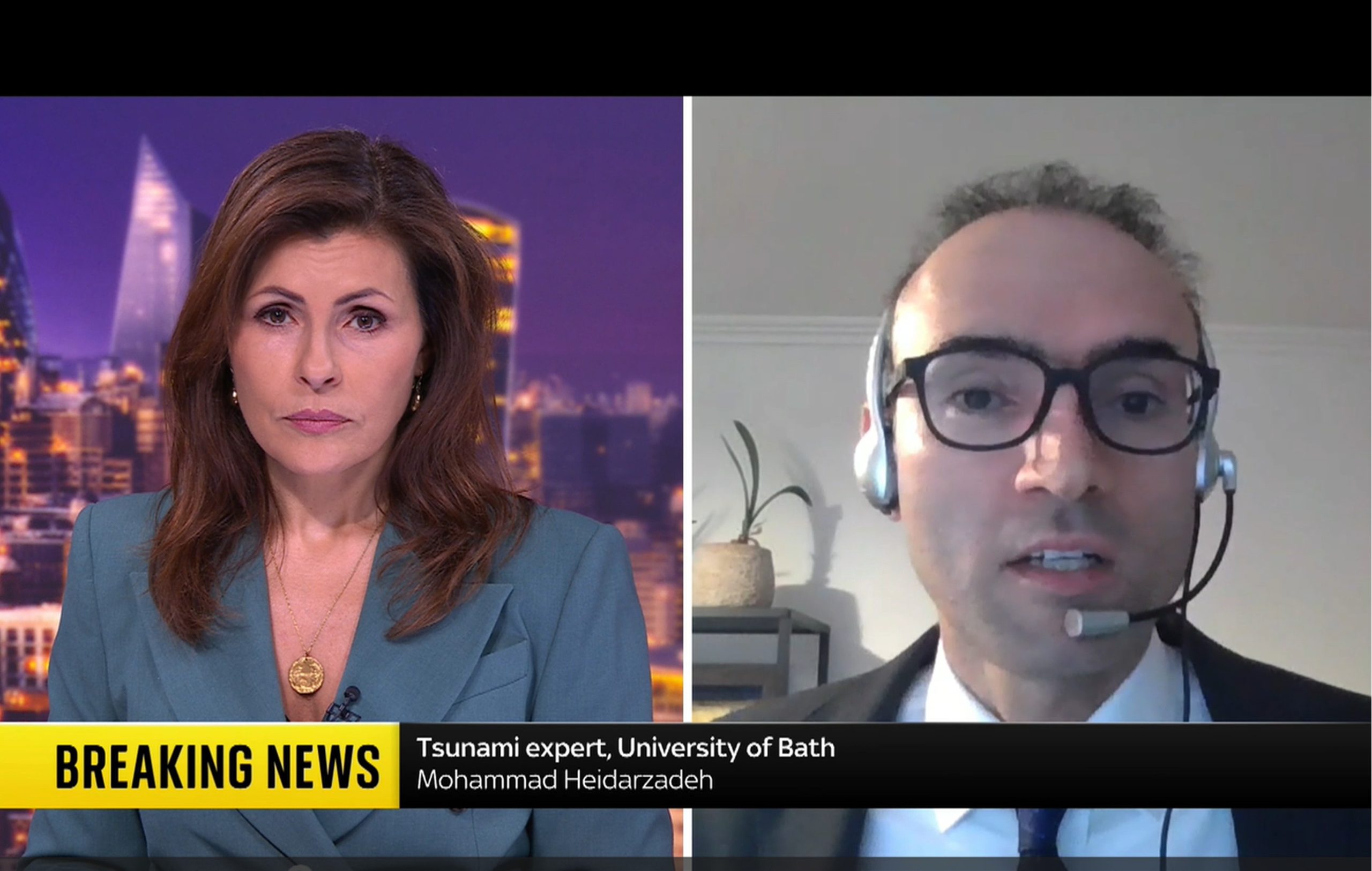
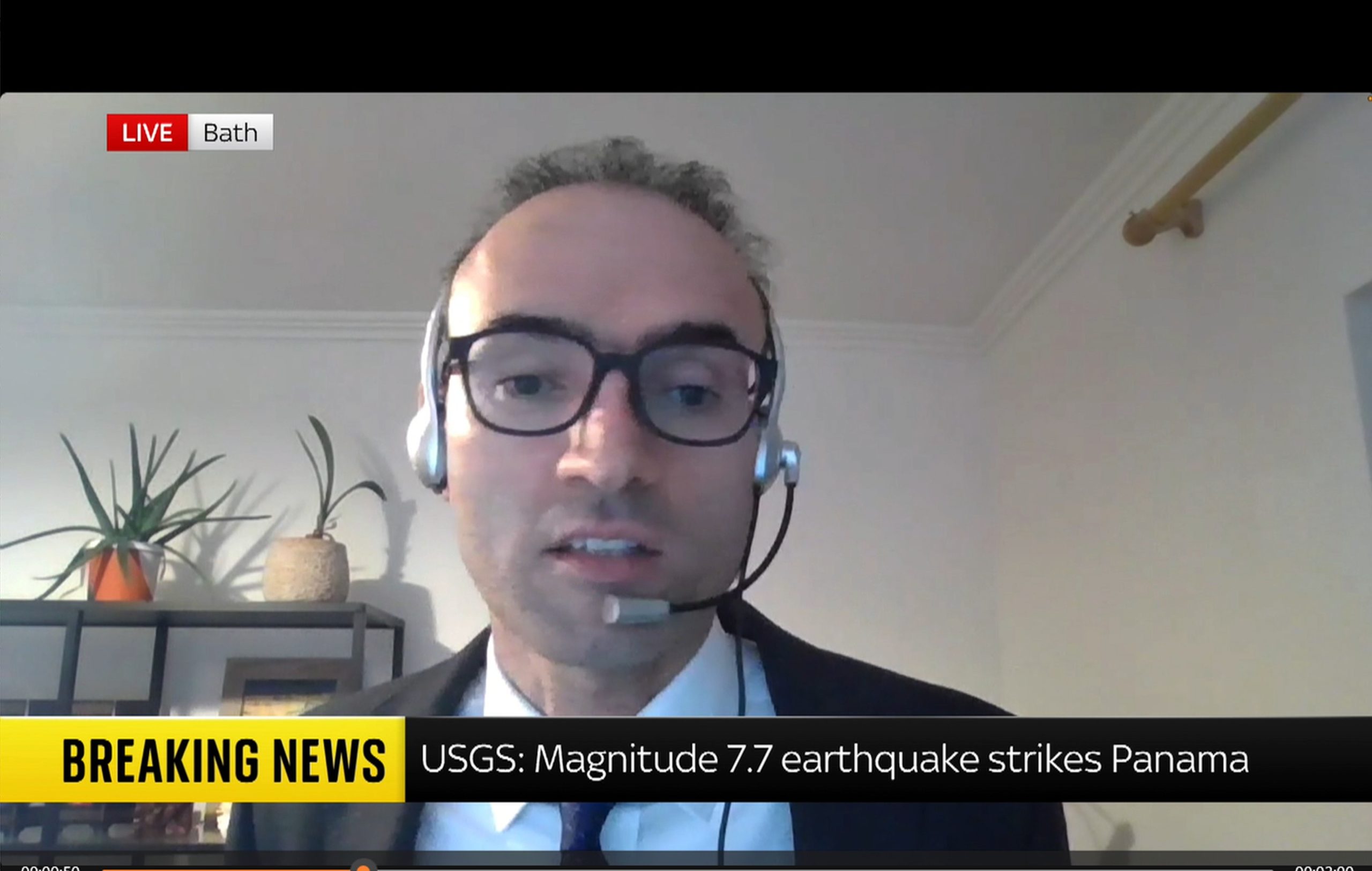
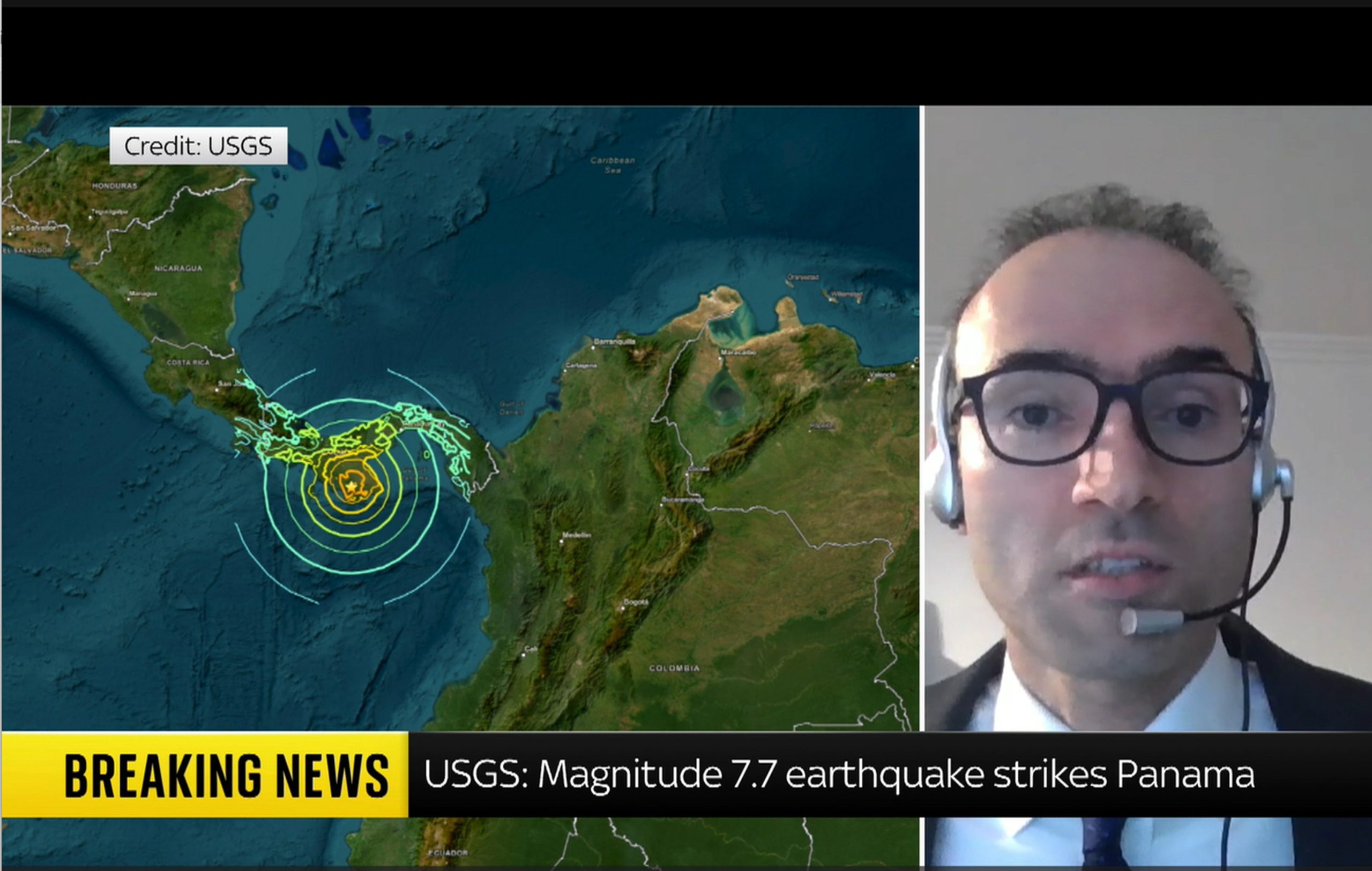
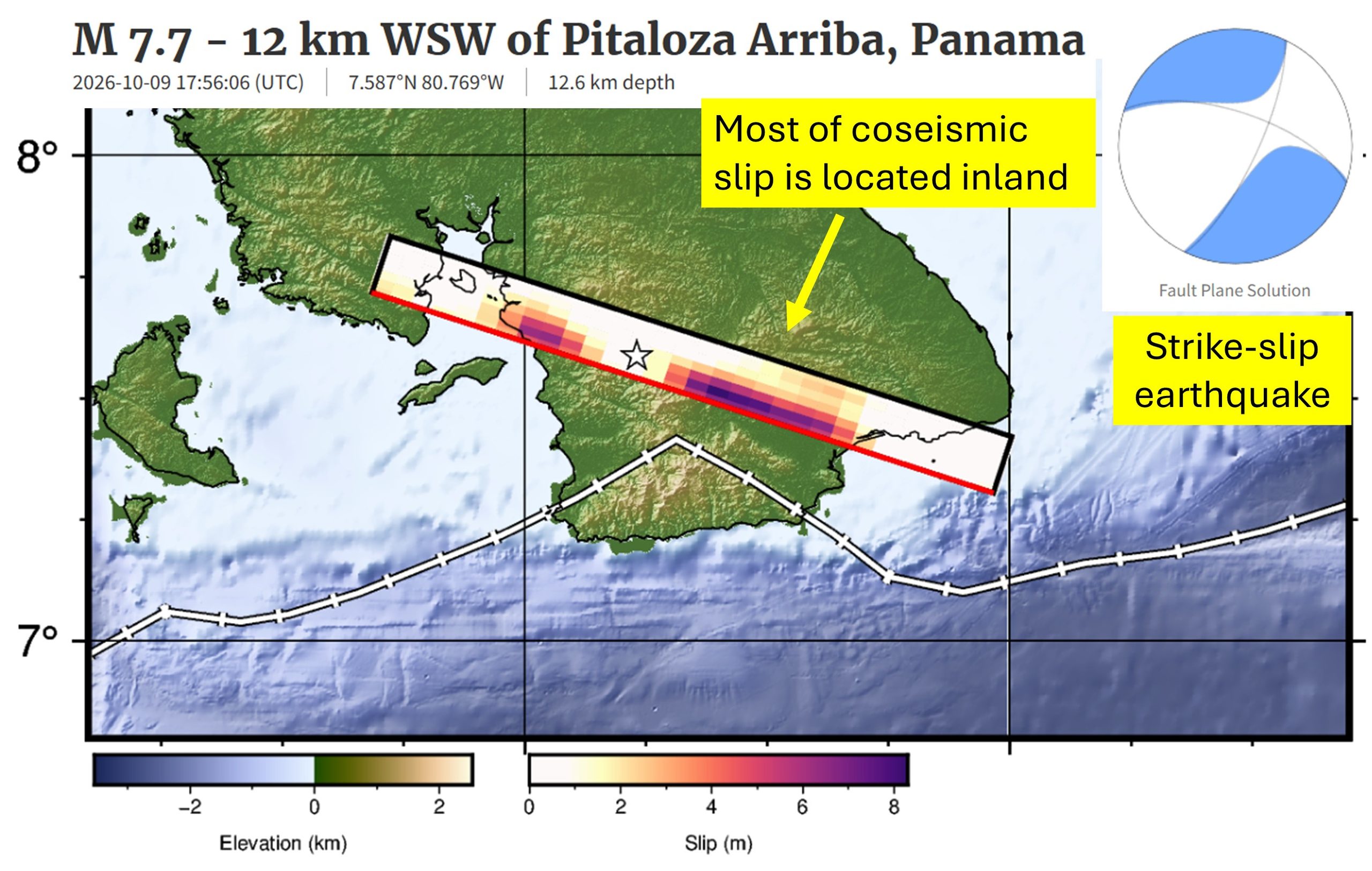
Dr Heidarzadeh’s TV interview with SkyNews on the massive M7.7 Panama earthquake on 9 October 2026
Our ocean is an incredibly vast and mysterious place. And there is no place where that is more evident than the deepest ocean area in the world: the legendary Mariana Trench. Located east of the Philippines, the Mariana Trench lies in the Mariana Archipelago in the western portion of the North Pacific. The greater area of the Mariana Trench Marine National Monument is made up of more than 95,000 square miles of ocean. Beneath these waters lie incredibly complex aggregations of submerged islands and volcanoes … and of course, an astoundingly massive trench.
Dive in with us to have your biggest questions answered about the famed Mariana Trench.
How deep is the Mariana Trench?
The deepest part of the Mariana Trench, known as Challenger Deep, is almost 36,000 feet below the ocean’s surface. For context, Mount Everest is about 29,000 feet above sea level, so the Mariana Trench is about 7,000 feet deeper than Mount Everest is tall. For one more comparison, the RMS Titanic lies at a depth of about 12,500 feet below sea level. The Challenger Deep is in waters nearly three times deeper than this ship’s final resting place.
Due to its enormous size, the Mariana Trench has at times been affectionately nicknamed the Grand Canyon of the ocean. This is certainly a picturesque image, but don’t let the mammoth size of this U.S. national terrestrial park fool you into thinking the Mariana Trench matches its size. The trench’s footprint is estimated to be 120 times larger than the Grand Canyon’s, and to reach the bottom of Challenger Deep, you’d need to descend through almost six Grand Canyons stacked on top of each other before you’d reach the seafloor.
Oh … and did we mention it’s five times wider than it is deep? It’s about 43 miles wide!
What is Challenger Deep, and how long would it take to reach it?
Challenger Deep is the deepest point of the Mariana Trench. Fewer than 30 people have ever journeyed to this area. The trek below the surface is long, dark and time-consuming, and it’s not an expedition considered lightly by scientists and explorers.
The first people to descend into the depths of this area in 1960 were oceanographers Jacques Piccard and Don Walsh, and it took them close to five hours to reach Challenger Deep. Since then, more advanced submersibles have been created, but it still takes two to four hours for modern vessels to reach such depths. For example, explorer and filmmaker James Cameron reached the seafloor in a little more than 2.5 hours in the first documented solo submarine dive to the area, and it took oceanographer Dr. Dawn Wright about four hours in 2022. It is crucial that these submersibles descend slowly and steadily beneath the surface, as the immense water pressure compounds with every mile a submersible descends. Speaking of pressure …
Get Ocean Updates in Your Inbox
Sign up with your email and never miss an update.
What is the water pressure at the bottom of the Mariana Trench?
If you thought the depth of the Mariana Trench was its only jaw-dropping feature, think again. Water pressure is one of the most important factors affecting deep-sea life. In the ocean, pressure increases by one atmosphere for every 33 feet (10 meters) of depth. One atmosphere (a unit of measurement for pressure equivalent to average air pressure at sea level) is equal to about 14.7 pounds per square inch (PSI), which is the approximate standard atmospheric pressure at sea level. If you were to convert atmospheric pressure into weight, one atmosphere is about the weight of a bowling ball. Stay with me, friends.
If a vessel were to dive 2,000 feet below the surface, the pressure would equal that of 60 bowling balls stacked atop every square inch of that submersible. But 60 bowling balls is simply nothing compared to the pressure in the Mariana Trench. The atmospheric pressure at the depths of Challenger Deep is equal to about 16,000 PSI. That pressure is about the same as the weight of an entire full-grown elephant on every square inch of a submersible!
Need a more extreme comparison? If a human were to be placed at the bottom of the Mariana Trench, the pressure would be equal to that of 50 jumbo jets piled on top of a person!
Do any animals live in the Mariana Trench?
The depths of the Mariana Trench come with immense pressure and extreme darkness, but somehow, life finds a way to survive. Organisms that live at an extreme depth, like that of Challenger Deep, have to be highly adapted to low temperatures (typically just above freezing), high pressure and virtually no light at all.
Species found in the depths of the Mariana Trench might look vastly different from animals from other ocean depths because their anatomy has been refined to thrive in harsh conditions. At such great depths, these animals typically depend on chemosynthesis (using nutrient-rich waters being pumped out of hydrothermal vents) or descending detritus (dead matter that has fallen from higher parts of the ocean) for food, such as whale falls. Just a handful of these animals include species of octopuses and squids, sea cucumbers, amphipods, sea jellies, shrimp, sea worms and some wild-looking fish!
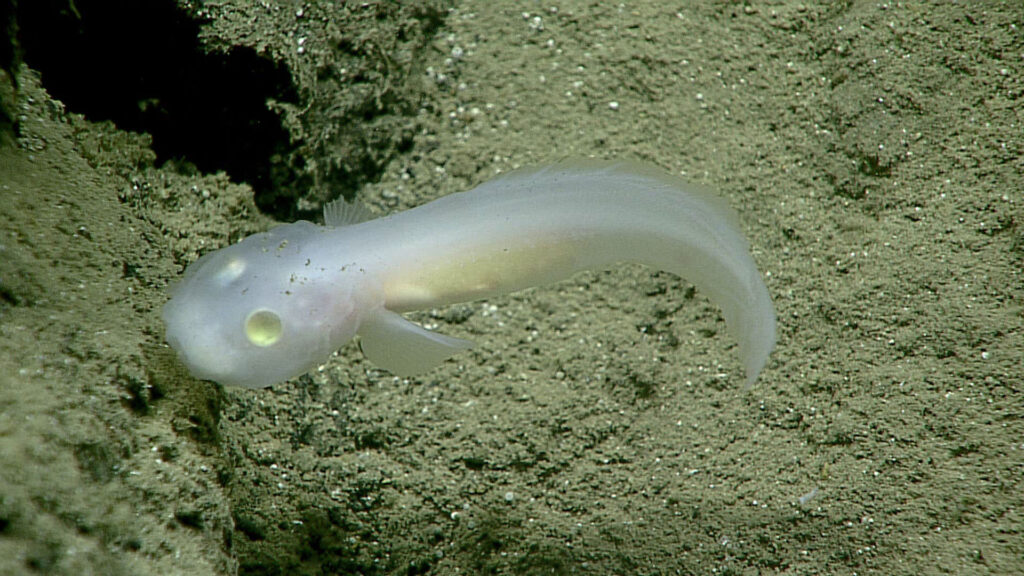
In 2025, more than 7,000 new species were discovered in the Mariana Trench, including the hadal snailfish (Pseudoliparis swirei). This is the deepest-dwelling fish currently known to science. Now, the fish has been dubbed “the Mariana snailfish.”
How was the Mariana Trench formed?
The process by which the Mariana Trench was created is a geologically fascinating one known as subduction. On the Earth’s surface, there are thin plates that cover the planet’s mantle, which is made of molten rock. If two of these plates collide, one pushes down into the Earth’s mantle while the other is pushed over the bottom plate. When this happens, a trench is formed from the drag of the bottom plate. This process can sometimes create incredibly strong earthquakes. The plates that forged the Mariana Trench’s creation are estimated to be up to approximately 180 million years old.
This trench was unknown to scientists until 1875. It was then that a team of explorers on the HMS Challenger measured the depth of the sea by simply lowering a weighted rope into the water. They were baffled when they measured that first portion of the seafloor to be five miles below the surface. And so was born the origin of some of the most daring deep-sea explorations known to mankind to date.
Is the Mariana Trench protected?
The Mariana Trench is in waters off Guam and the Mariana Islands. The region is protected from some human activities under its status as a marine monument. The creation of the Mariana Trench Marine National Monument signified that international,