Ocean Conservancy’s annual Photo Contest has come to a close and the results are breathtaking. Hundreds of you sent inspirational and heartbreaking photos and videos, and I am so impressed. Thank you for sharing your art with us. Discover the beautiful, inspiring and heartbreaking submissions that won the hearts of our judges, our staff and ocean lovers like you.
I am thrilled to announce the winners of Ocean Conservancy’s 2025 Photo Contest.
Judge’s Choice Winner
The Art of Survival by Rickie Andrés Ballesteros Guerrero
Follow Andrés on Instagram
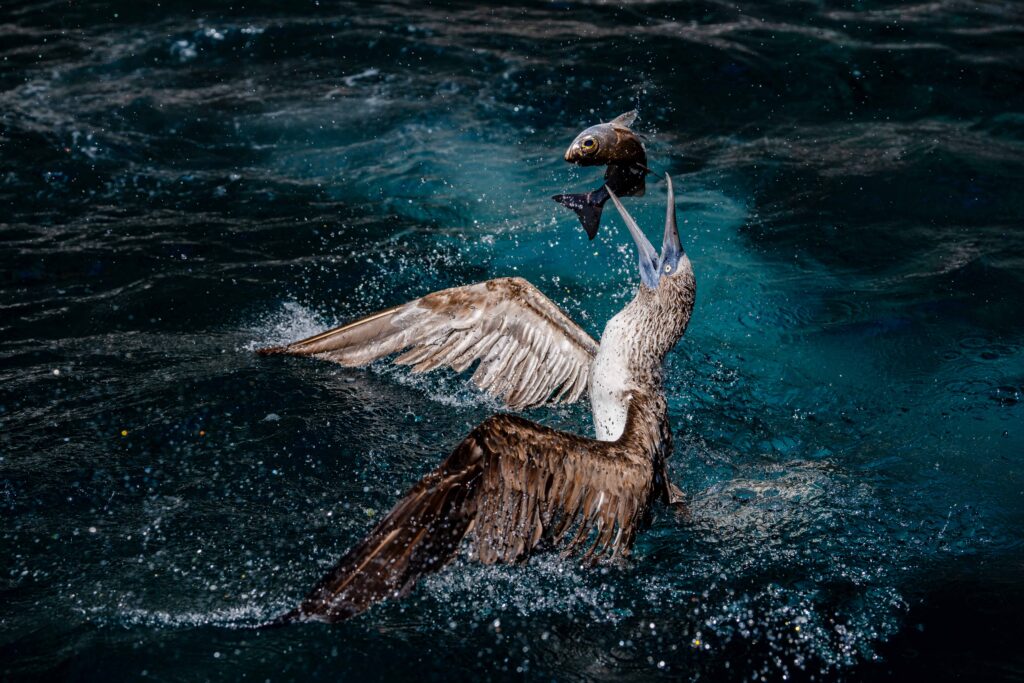
From the Photographer:
“A blue-footed booby from the Galapagos Islands breaks the ocean’s surface in a swift and precise flight. With its wings spread and eyes focused, it catches a gleaming fish in its beak. The water splashes around it in a fleeting but powerful scene of the natural balance between predator and prey.”
What our Judges had to say:
“A moment frozen in time – this one stopped me in my tracks. A brief beat in the natural world, captured spectacularly.” – Pier Nirandara, 2025 Ocean Conservancy Photo Contest Judge
“An excellent photo of feeding and fighting for survival. The composition, light and action are perfectly captured. A great job by the photographer who patiently waited for the right moment to shoot. Great work.” – Mariano Rodríguez, 2025 Ocean Conservancy Photo Contest Judge
“This is a standout capture of a decisive moment. The image is sharp, emotional and dynamic. You can feel the energy of the hunt. It’s the kind of photo that brings nature’s raw beauty front and center—and reminds us of the power and grace within every species.” – Angela J. Farmer, 2025 Ocean Conservancy Photo Contest Judge
“A fantastic shot. He shot fast enough to freeze the exact moment. Lighting is good and also post processing. Love it.” – Joaquín Fregoni, 2025 Ocean Conservancy Photo Contest Judge
See more wonderful ocean animals!
By providing your mobile number you consent to receive recurring text messages from Ocean Conservancy from 52551 for donations to protect our ocean from today’s greatest global challenges. Message and data rates may apply. Reply HELP for more information or STOP to cancel. Terms & Conditions and Privacy Policy
Staff Choice Winner
Sunset Whale Tail in Front of Eagle Glacier by Harvey Hergett
Follow Harvey on Instagram

From the Photographer:
“On the last whale watching trip of the summer with Jayleen’s Alaska, as the sun was setting on a perfect September day in Alaska, she positioned the boat perfectly in front of Eagle Glacier to capture this humpback whale who was playfully tail and fin slapping.“
What our staff had to say:
“I recognized this beautiful spot outside of Juneau right away! One of the things I love about Alaska is that there is always magic if you know where and how to look for it. Thank you for sharing this little slice of my home.” – Mike Levine, Senior Director, Alaska Programs
People’s Choice Winner
Manatee Love! by Paige Taggart

From the Photographer:
“This was taken in Crystal River, Florida when a curious juvenile manatee was investigating me while I was snorkeling the springs.”
What our staff had to say:
“Manatees have a special place in every Floridian’s heart, and anybody who’s ever visited the Sunshine State and seen these gentle giants up close and personally can attest to their awesomeness. With their round bodies and curious personalities, they perfectly embody the uniqueness of the Floridian environment and remind us of how important it is to protect our special and beloved ocean and coasts.” – J.P. Brooker, Director, Florida Conservation
We’d like to extend our deepest thanks to all who participated, voted, shared and submitted photos—you truly made this year’s contest a success. And a very special thank you to our judges: Angela J. Farmer, Joaquín Fregoni, Pier Nirandara and Mariano Rodríguez for lending their expert eyes to evaluating our finalists and determining our grand prize winner. Learn more about our judges here.
Congratulations to ALL our entrants, and we hope to see you next year.
The post Introducing Ocean Conservancy’s 2025 Photo Contest Winners appeared first on Ocean Conservancy.

Ocean Acidification
Dr Heidarzadeh’s TV interview with SkyNews on the massive M7.7 Panama earthquake on 9 October 2026
Dr Heidarzadeh’s TV interview with SkyNews on the massive M7.7 Panama earthquake on 9 October 2026. Click here for the full story.

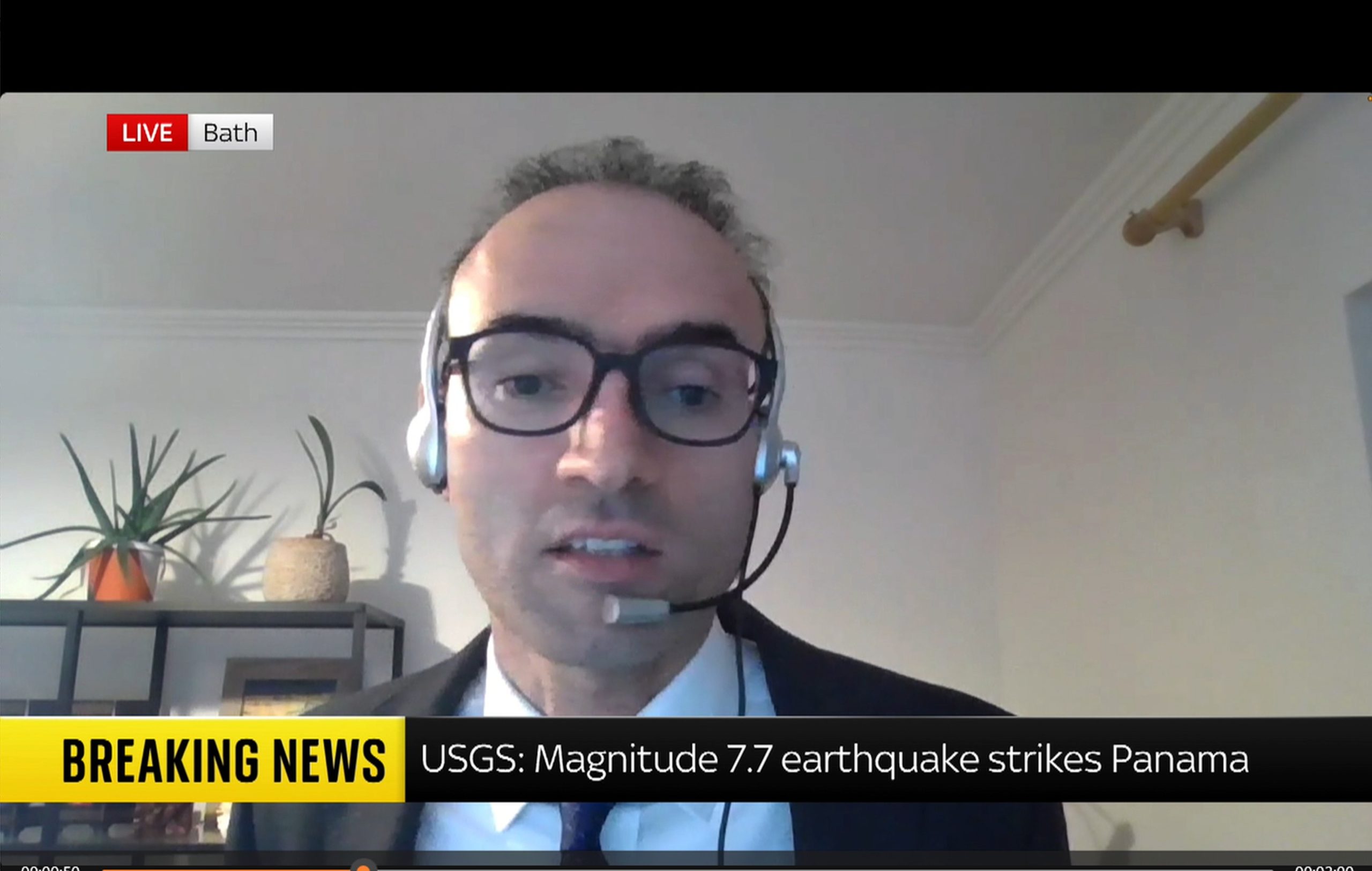
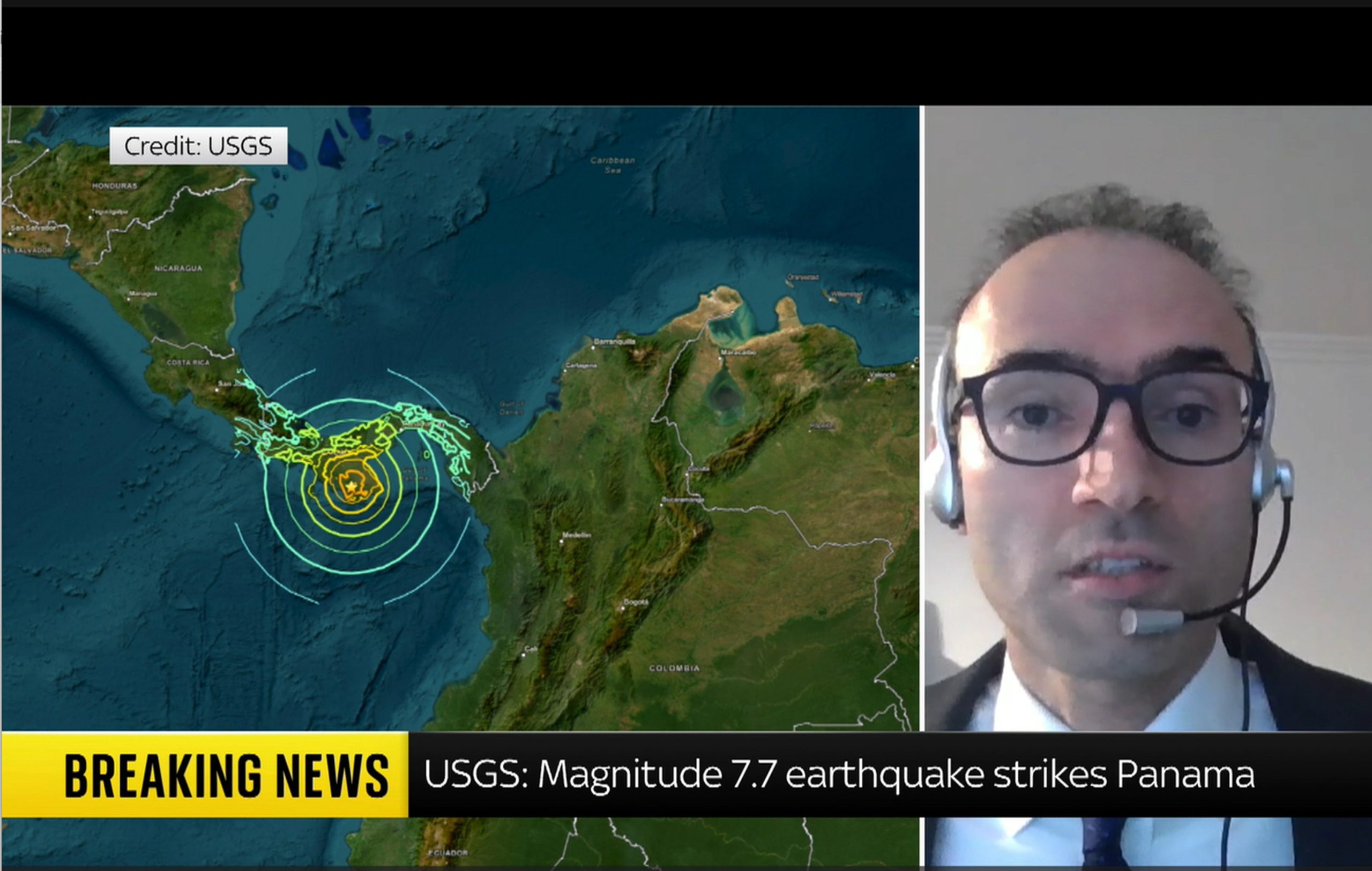
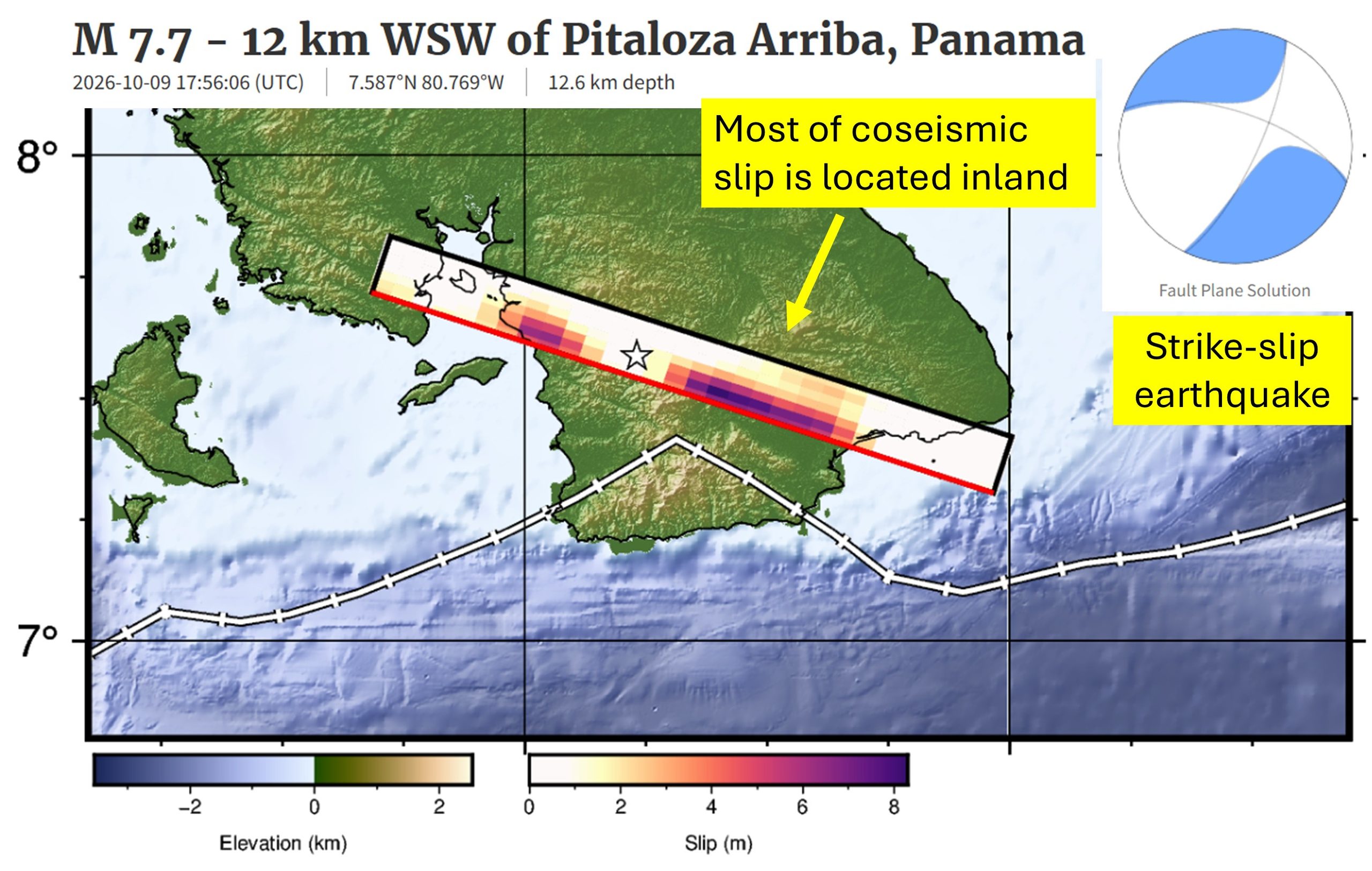
Dr Heidarzadeh’s TV interview with SkyNews on the massive M7.7 Panama earthquake on 9 October 2026
Our ocean is an incredibly vast and mysterious place. And there is no place where that is more evident than the deepest ocean area in the world: the legendary Mariana Trench. Located east of the Philippines, the Mariana Trench lies in the Mariana Archipelago in the western portion of the North Pacific. The greater area of the Mariana Trench Marine National Monument is made up of more than 95,000 square miles of ocean. Beneath these waters lie incredibly complex aggregations of submerged islands and volcanoes … and of course, an astoundingly massive trench.
Dive in with us to have your biggest questions answered about the famed Mariana Trench.
How deep is the Mariana Trench?
The deepest part of the Mariana Trench, known as Challenger Deep, is almost 36,000 feet below the ocean’s surface. For context, Mount Everest is about 29,000 feet above sea level, so the Mariana Trench is about 7,000 feet deeper than Mount Everest is tall. For one more comparison, the RMS Titanic lies at a depth of about 12,500 feet below sea level. The Challenger Deep is in waters nearly three times deeper than this ship’s final resting place.
Due to its enormous size, the Mariana Trench has at times been affectionately nicknamed the Grand Canyon of the ocean. This is certainly a picturesque image, but don’t let the mammoth size of this U.S. national terrestrial park fool you into thinking the Mariana Trench matches its size. The trench’s footprint is estimated to be 120 times larger than the Grand Canyon’s, and to reach the bottom of Challenger Deep, you’d need to descend through almost six Grand Canyons stacked on top of each other before you’d reach the seafloor.
Oh … and did we mention it’s five times wider than it is deep? It’s about 43 miles wide!
What is Challenger Deep, and how long would it take to reach it?
Challenger Deep is the deepest point of the Mariana Trench. Fewer than 30 people have ever journeyed to this area. The trek below the surface is long, dark and time-consuming, and it’s not an expedition considered lightly by scientists and explorers.
The first people to descend into the depths of this area in 1960 were oceanographers Jacques Piccard and Don Walsh, and it took them close to five hours to reach Challenger Deep. Since then, more advanced submersibles have been created, but it still takes two to four hours for modern vessels to reach such depths. For example, explorer and filmmaker James Cameron reached the seafloor in a little more than 2.5 hours in the first documented solo submarine dive to the area, and it took oceanographer Dr. Dawn Wright about four hours in 2022. It is crucial that these submersibles descend slowly and steadily beneath the surface, as the immense water pressure compounds with every mile a submersible descends. Speaking of pressure …
Get Ocean Updates in Your Inbox
Sign up with your email and never miss an update.
What is the water pressure at the bottom of the Mariana Trench?
If you thought the depth of the Mariana Trench was its only jaw-dropping feature, think again. Water pressure is one of the most important factors affecting deep-sea life. In the ocean, pressure increases by one atmosphere for every 33 feet (10 meters) of depth. One atmosphere (a unit of measurement for pressure equivalent to average air pressure at sea level) is equal to about 14.7 pounds per square inch (PSI), which is the approximate standard atmospheric pressure at sea level. If you were to convert atmospheric pressure into weight, one atmosphere is about the weight of a bowling ball. Stay with me, friends.
If a vessel were to dive 2,000 feet below the surface, the pressure would equal that of 60 bowling balls stacked atop every square inch of that submersible. But 60 bowling balls is simply nothing compared to the pressure in the Mariana Trench. The atmospheric pressure at the depths of Challenger Deep is equal to about 16,000 PSI. That pressure is about the same as the weight of an entire full-grown elephant on every square inch of a submersible!
Need a more extreme comparison? If a human were to be placed at the bottom of the Mariana Trench, the pressure would be equal to that of 50 jumbo jets piled on top of a person!
Do any animals live in the Mariana Trench?
The depths of the Mariana Trench come with immense pressure and extreme darkness, but somehow, life finds a way to survive. Organisms that live at an extreme depth, like that of Challenger Deep, have to be highly adapted to low temperatures (typically just above freezing), high pressure and virtually no light at all.
Species found in the depths of the Mariana Trench might look vastly different from animals from other ocean depths because their anatomy has been refined to thrive in harsh conditions. At such great depths, these animals typically depend on chemosynthesis (using nutrient-rich waters being pumped out of hydrothermal vents) or descending detritus (dead matter that has fallen from higher parts of the ocean) for food, such as whale falls. Just a handful of these animals include species of octopuses and squids, sea cucumbers, amphipods, sea jellies, shrimp, sea worms and some wild-looking fish!
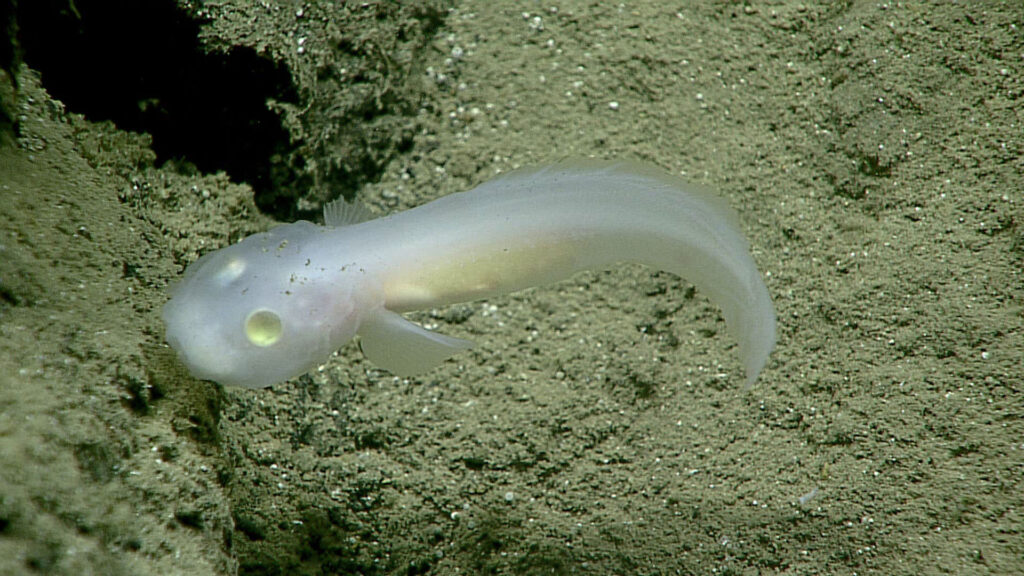
In 2025, more than 7,000 new species were discovered in the Mariana Trench, including the hadal snailfish (Pseudoliparis swirei). This is the deepest-dwelling fish currently known to science. Now, the fish has been dubbed “the Mariana snailfish.”