

Al-Karim Govindji is the global head of public affairs for energy systems at DNV, an independent assurance and risk management provider, operating in more than 100 countries.
Optimism that this year may be less eventful than those that have preceded it have already been dealt a big blow – and we’re just weeks into 2026. Events in Venezuela, protests in Iran and a potential diplomatic crisis over Greenland all spell a continuation of the unpredictability that has now become the norm.
As is so often the case, it is impossible to separate energy and the industry that provides it from the geopolitical incidents shaping the future. Increasingly we hear the phrase ‘the past is a foreign country’, but for those working in oil and gas, offshore wind, and everything in between, this sentiment rings truer every day. More than 10 years on from the signing of the Paris Agreement, the sector and the world around it is unrecognisable.
The decade has, to date, been defined by a gritty reality – geopolitical friction, trade barriers and shifting domestic priorities – and amidst policy reversals in major economies, it is tempting to conclude that the transition is stalling.
Truth, however, is so often found in the numbers – and DNV’s Energy Transition Outlook 2025 should act as a tonic for those feeling downhearted about the state of play.
While the transition is becoming more fragmented and slower than required, it is being propelled by a new, powerful logic found at the intersection between national energy security and unbeatable renewable economics.
A diverging global trajectory
The transition is no longer a single, uniform movement; rather, we are seeing a widening “execution gap” between mature technologies and those still finding their feet. Driven by China’s massive industrial scaling, solar PV, onshore wind and battery storage have reached a price point where they are virtually unstoppable.
These variable renewables are projected to account for 32% of global power by 2030, surging to over half of the world’s electricity by 2040. This shift signals the end of coal and gas dominance, with the fossil fuel share of the power sector expected to collapse from 59% today to just 4% by 2060.
-
Climate at Davos: Clean tech powers on despite policy wobbles
Al Gore says climate policy may be suffering “a recession” in many countries – but the energy transition continues apace, driven by falling costs for renewables and batteries -
Climate at Davos: Energy security in the geopolitical driving seat
While climate change is a lower priority for leaders at this year’s World Economic Forum, control of energy supplies and minerals is a hot topic


Conversely, technologies that require heavy subsidies or consistent long-term policy, the likes of hydrogen derivatives (ammonia and methanol), floating wind and carbon capture, are struggling to gain traction.
Our forecast for hydrogen’s share in the 2050 energy mix has been downgraded from 4.8% to 3.5% over the last three years, as large-scale commercialisation for these “hard-to-abate” solutions is pushed back into the 2040s.
Regional friction and the security paradigm
Policy volatility remains a significant risk to transition timelines across the globe, most notably in North America. Recently we have seen the US pivot its policy to favour fossil fuel promotion, something that is only likely to increase under the current administration.
Invariably this creates measurable drag, with our research suggesting the region will emit 500-1,000 Mt more CO₂ annually through 2050 than previously projected.
China, conversely, continues to shatter energy transition records, installing over half of the world’s solar and 60% of its wind capacity.
In Europe and Asia, energy policy is increasingly viewed through the lens of sovereignty; renewables are no longer just ‘green’, they are ‘domestic’, ‘indigenous’, ‘homegrown’. They offer a way to reduce reliance on volatile international fuel markets and protect industrial competitiveness.
Grids and the AI variable
As we move toward a future where electricity’s share of energy demand doubles to 43% by 2060, we are hitting a physical wall, namely the power grid.
In Europe, this ‘gridlock’ is already a much-discussed issue and without faster infrastructure expansion, wind and solar deployment will be constrained by 8% and 16% respectively by 2035.
Comment: To break its coal habit, China should look to California’s progress on batteries
This pressure is compounded by the rise of Artificial Intelligence (AI). While AI will represent only 3% of global electricity use by 2040, its concentration in North American data centres means it will consume a staggering 12% of the region’s power demand.
This localized hunger for power threatens to slow the retirement of fossil fuel plants as utilities struggle to meet surging base-load requirements.
The offshore resurgence
Despite recent headlines regarding supply chain inflation and project cancellations, the long-term outlook for offshore energy remains robust.
We anticipate a strong resurgence post-2030 as costs stabilise and supply chains mature, positioning offshore wind as a central pillar of energy-secure systems.
Governments defend clean energy transition as US snubs renewables agency
A new trend is also emerging in behind-the-meter offshore power, where hybrid floating platforms that combine wind and solar will power subsea operations and maritime hubs, effectively bypassing grid bottlenecks while decarbonising oil and gas infrastructure.
2.2C – a reality check
Global CO₂ emissions are finally expected to have peaked in 2025, but the descent will be gradual.
On our current path, the 1.5C carbon budget will be exhausted by 2029, leading the world toward 2.2C of warming by the end of the century.
Still, the transition is not failing – but it is changing shape, moving away from a policy-led “green dream” toward a market-led “industrial reality”.
For the ocean and energy sectors, the strategy for the next decade is clear. Scale the technologies that are winning today, aggressively unblock the infrastructure bottlenecks of tomorrow, and plan for a future that will, once again, look wholly different.
The post For proof of the energy transition’s resilience, look at what it’s up against appeared first on Climate Home News.
For proof of the energy transition’s resilience, look at what it’s up against

Scientists have vowed to keep working on the next flagship set of reports for the Intergovernmental Panel on Climate Change (IPCC), after a political row over the timeline for their release saw its latest session suspended on Friday evening without agreement.
During the weekend, government officials and scientists alike expressed disappointment over the inability to reach a compromise before some delegates from developing countries and small island states had to leave the week-long meeting in Ethiopia to catch flights home.
The disagreement – which has persisted since early 2024 – turns on whether the three key parts of the AR7 assessment should all be published before the conclusion of the UN’s next Global Stocktake of global climate action, which is due to be completed in late 2028.
The IPCC issued a statement after the close of the session, saying that “key agenda items” – the timelines for the three AR7 reports, as well as the IPCC budget – remain open and under discussion. It said the IPCC’s plenary session and its deliberations on the pending agenda “will resume at the earliest opportunity”, giving no further details of when.
IPCC Chair Jim Skea told delegates in closing remarks that recent months had been some of the most turbulent for the climate science panel and that, if there were stronger words than “profound disappointment” he would use them, according to a summary published by the Earth Negotiators Bulletin (ENB). IPCC discussions happen behind closed doors.
IPCC scientists remained committed
In an open letter, issued on Monday, a group of nearly 120 scientists – from a total of 664 AR7 authors – said they “stand committed to continue working to deliver the AR7 reports in a manner that is rigorous, timely and inclusive, in line with our mandate to be policy-relevant”.
“An assessment that arrives after the decisions it is meant to inform cannot serve its purpose,” they emphasised. “The second Global Stocktake in 2028 is such a decision point, and the world should not have to face it without the IPCCʼs latest assessment.”
Europe, small islands and the least developed countries, plus many Latin American and developed nations, want the IPCC to meet this deadline, arguing that the findings from the UN climate science body are irreplaceable in the UN climate policy-making process.
However, around a dozen developing countries plus Russia have argued that the reports should come later in order to allow for greater research input from the Global South – something that, in their view, would make the findings fairer. They also claim that a shorter timeline would put excessive pressure on experts.
-
Who shapes climate science? The equity question facing the IPCC
Early completion of the next global climate science assessment reports risks excluding research from the Global South, which is key to ensuring the findings are fair -
Governments that support climate science must stand firm against naysayers
The IPCC is meeting to decide the timing of its next major report, as some countries try to delay it and weaken the case for faster emissions cuts


The most vocal of this group at last week’s meeting were India and Saudi Arabia, according to the ENB summary and a developed country diplomat. Critics see this push for a longer timeline as an excuse to deprive government decision-makers of the latest science and ease pressure on emerging economies to raise their ambition, particularly on cutting emissions.
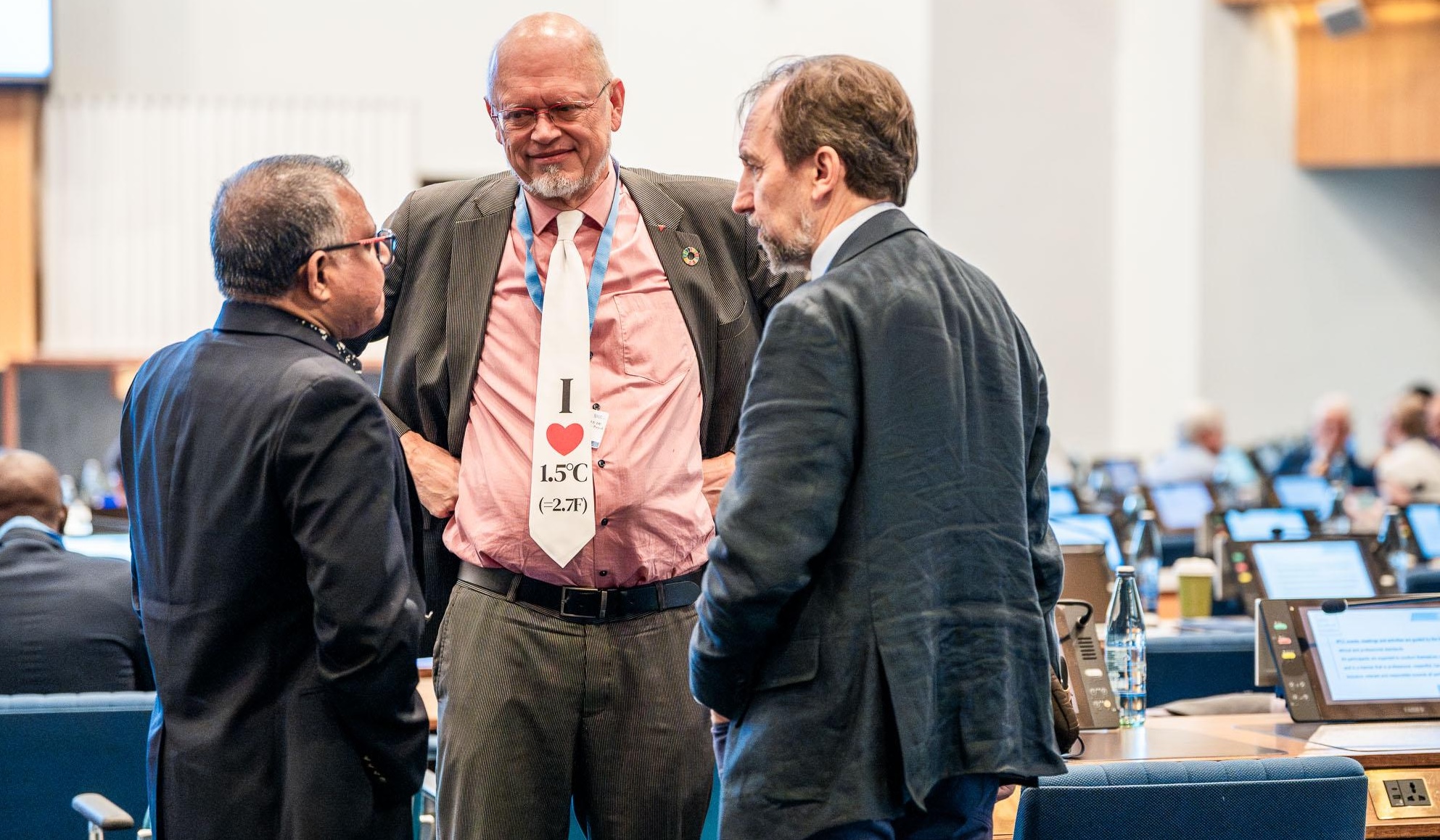
Commenting on last week’s meeting, France’s ambassador for climate negotiations Benoît Faraco said a broad coalition of developed and developing countries from all five continents, “united in their support for science and the timeline proposed by scientists”, had withstood pressure “from a few countries” seeking to slow down the process of adopting the IPCC reports.
He added that France would not back down and would “continue to fight tirelessly for science, protect the integrity of information, and convince our partners that without the best available scientific data, we will be less effective in tackling climate change and protecting our populations”.
Inclusivity proposal stalled
In a bid to unlock a solution for the AR7 timeline, countries discussed ways to improve the inclusivity of the IPCC’s work. One option put on the table was for the IPCC to expand its funding for delegates from developing countries to attend some or all of its sessions from one to two participants, according to the ENB summary and a delegate speaking to Climate Home News.
That would increase the costs for the IPCC to complete AR7 by up to a quarter, according to an assessment shared by the secretariat. The panel’s budget is under severe strain and its officials have warned that, without additional voluntary contributions, it risks running out of money before it can deliver on this assessment cycle.
Climate Home News understands that some of the IPCC’s traditional donors – which mainly include European countries, Japan and Australia – indicated a willingness to support funding for an additional developing country participant. But without an agreement over the budget or the timeline for the reports, that option was ultimately not adopted.
‘Disappointed and worried’
The three reports are managed by working groups that collate and draw overall findings from the latest scientific studies and data on the physical effects of global warming around the world, how to adapt to it, and pathways for cutting planet-heating emissions in order to meet the temperature goals of the Paris Agreement.
Winston Chow, an urban climate professor at Singapore Management University who co-chairs Working Group II on adaptation, wrote in a LinkedIn post that he was “disappointed and worried” for the IPCC authors who have worked “extraordinarily hard” to assess the relevant climate science over the past two years.
He said he shared their concern that “the rigour, time and goodwill they’ve invested are now being put at risk by the Panel’s stalemate”.
As science comes under attack at UN talks, climate movement splits over how to respond
For Working Group II, a meeting for 250 experts writing that report is scheduled for January 2027, followed by the approval of a special report on cities and climate change in Singapore next March.
But because the IPCC’s budget has not been confirmed due to uncertainty about the AR7 schedule, travel support for those researchers is at risk, wrote Chow. “If they cannot participate, our assessments will lose vital expertise, perspectives and scientific breadth, and the collective effort of our authors will be undermined,” he warned.
Scientific work continues
Despite the political holdups, he – together with French climate scientist Robert Vautard, co-chair of Working Group 1 – agreed with IPCC head Skea who told the IPCC’s closing session on Friday: “The engine room of the IPCC is working, and it’s healthy.”
Vautard commented in a separate post on LinkedIn after it ended: “The boat is at full steam.” Working groups I and II are due to start revising the first drafts of their reports, while Working Group III on reducing emissions is finalising its first draft which will be out soon, he wrote.
“The most exciting two years of the cycle are ahead, for the authors. The momentum in the engine room is here and now. Trust the engine room!” he added.
The IPCC and some scientists report that progress has been made towards achieving an equitable balance of authors from the Global North and the Global South.
The group of researchers who signed the open letter on Monday noted that “inclusivity is at the heart of how we work”, with author teams bringing together experts from developed and developing countries with diverse backgrounds and at different stages of their careers.
Plea to overcome political differences
The signatories include several scientists from some of the countries opposed to the alignment of all IPCC reports with the Global Stocktake.
“We are committed to an assessment in which the knowledge, experience and priorities of every region are fully reflected, a commitment we share with the leadership of the IPCC.
Equity is built into how our assessment is being drafted,” they added.
They appealed to governments that make up the IPCC “to overcome their political differences and work together as we do as a global scientific community, so that we can deliver the IPCC reports the world needs to hear”.
In a statement published on Monday, IPCC chair Skea said reaching consensus on the schedule for the reports is “vital”. He added that the assessments provide authoritative scientific evidence to inform national climate policies, strengthen adaptation and resilience and support access to climate finance, as well as helping communicate the scale of the climate crisis and the urgency of efforts to tackle it.
The post IPCC scientists vow to press on with climate reports despite political deadlock appeared first on Climate Home News.
IPCC scientists vow to press on with climate reports despite political deadlock
An Lambrechts is a biodiversity politics expert at Greenpeace International with extensive experience in biodiversity-related multilateral negotiations. She is the head of the Greenpeace delegation at the Convention on Biological Diversity (CBD) COP17 happening in Yerevan, Armenia.
In 2022, COP15 delivered the landmark Kunming-Montreal Global Biodiversity Framework to halt and reverse biodiversity loss by 2030. With COP17 starting in Yerevan, we are now halfway to the deadline, and according to the first Global Review of progress, countries are not on track to meet the biodiversity targets, and implementation must accelerate fast.
One of the main findings of the Global Review is that funding falls far short of the scale needed to halt and reverse nature loss. But the crisis facing the world’s biodiversity is not an absolute scarcity of capital – it is a profound public policy distortion.
The global economy currently spends roughly $30 destroying nature for every single dollar invested in its protection. According to a report from the Intergovernmental Science-Policy Platform on Biodiversity and Ecosystem Services, a staggering $2.4 trillion is spent in public subsidies for fossil fuels, agriculture and water use, while global investment in biodiversity conservation and restoration stands at a mere $220 billion.
Countries urged to ramp up “insufficient” nature policies at COP17
Yet, discussions about how to close the biodiversity finance gap continue to claim that salvation lies in mobilising private capital, scaling offsets and “derisking” investments in nature. This is a fundamental misunderstanding of both the nature of ecological stewardship and of the global financial architecture.
Biodiversity conservation is not a speculative investment portfolio – it is the foundation of human survival. The health of our planet is a non-monetisable, non-excludable public good. Expecting profit-seeking private capital to protect nature perpetuates the structural drivers of ecosystem destruction in the first place.
But if private market mechanisms cannot save biodiversity, where will the necessary public resources come from?
Money going to the wrong places
The answer lies in recovering the vast public wealth currently drained by cross-border tax abuse, financial secrecy and corporate impunity. Finance and environment ministers meeting in Yerevan must give a strong political signal that, to avert ecological breakdown, countries need to take swift action to reform global tax rules, eliminate harmful public subsidies and cancel unsustainable sovereign debts for the public revenues to end up where they belong.
Extractive sectors such as industrial agriculture, fishing, timber and mining continue business-as-usual, often heavily subsidised by public treasuries, while voluntary carbon and biodiversity offset markets pose a serious risk to nature conservation. Offset schemes have delivered only a negligible fraction of the funding needed to preserve ecosystems, allowing industries to continue with their destructive business-as-usual practices.
-
Global deforestation slowed in 2025 but Brazil’s election could undo “fragile” gains
Countries remain 70% off track to meet a goal to end deforestation by 2030, as progress in Latin America offset by failures in Africa -
Brazil confident new rainforest fund will reach $10bn donor milestone
Brazil’s environment minister said the Tropical Forest Forever Facility has raised billions in record time – which he hopes will convince more investors


In advanced economies, public funding often actively undermines biodiversity. In Europe, over €5.3 billion in public subsidies is funnelled annually into intensive forest biomass harvesting under renewable energy directives, degrading primary forest ecosystems and undermining long-term climate resilience. Pleading with private investors to fill a “finance gap” while pouring billions into ecological destruction is an exercise in futility.
Developing countries struggle with debt burden
For developing countries, reliance on private finance is further compounded by a crushing sovereign debt crisis. In 2024, public debt in developing economies reached record levels, with net interest payments alone absorbing $921 billion. A record 61 developing countries now spend more than 10% of government revenue on foreign debt service, with many climate-vulnerable nations spending twice as much servicing external debt as they receive in climate and biodiversity finance combined.
This burden acts as a structural driver of ecosystem destruction. Under pressure from external creditors and international financial institutions to avoid default and secure foreign exchange, governments are routinely forced into austerity measures and pushed to expand raw commodity exports into pristine biomes.
Comment: World Bank and IMF should lead the financial system in responding to the climate crisis
The current negotiations for a United Nations Framework Convention on International Tax Cooperation (UNFCITC) also offer a way forward. An estimated $492 billion in tax revenue is lost every year to offshore tax havens. Multinational corporations account for around $348 billion of this total by shifting profits away from the countries where real economic extraction and environmental degradation occur.
In the mining sector alone, developing nations lose tens of billions annually to corporate tax dodging. Furthermore, international financial secrecy shields environmental criminals, with illicit financial flows from illegal logging draining between $51 billion and $152 billion annually.
At COP17, leaders must seize the opportunity to build a bridge between the two conventions and enhance cooperation. Governments must put the world on a firm path to securing predictable, sufficient, sovereign public finance for biodiversity conservation. It’s the only path to a restorative, rights-based future for people and the planet.
The post Protecting nature is a public duty, not a Wall Street profit opportunity appeared first on Climate Home News.
Protecting nature is a public duty, not a Wall Street profit opportunity