

The UK government’s “high-risk” research funding agency last week announced that it will invest £57m ($76m) in a new solar geoengineering research programme.
“Solar geoengineering” refers to methods that aim to address some of the impacts of a warming climate by reflecting away more sunlight from the Earth.
The programme, spearheaded by the Advanced Research and Invention Agency (Aria), will fund 21 projects globally.
This includes small-scale outdoor experiments, involving attempts to thicken Arctic sea ice and brighten clouds above Australia’s Great Barrier Reef to reflect away sunlight.
The news was reported breathlessly by the UK media, with some outlets conjuring images of the government one day “dimming the sun” or trying to modify the weather and others focusing on the “secretive” nature of Aria and its research.
The reaction was even more exaggerated on social media, where anonymous accounts seized upon the news to spread misinformation about existing “secret” government schemes to “control” the weather.
At the same time, the programme – first reported last year – has sparked legitimate debate among climate scientists, who have long held diverging views on whether more research funding should be channelled into solar geoengineering.
Below, Carbon Brief explains what the new solar geoengineering research programme consists of and explores the social and ethical concerns surrounding the technology.
- What is the UK’s new solar geoengineering research programme?
- How does this compare to past solar geoengineering efforts in the UK and globally?
- Why do some scientists say solar geoengineering research is needed?
- Why are there social and ethical concerns around solar geoengineering?
What is the UK’s new solar geoengineering research programme?
Solar geoengineering is a term used to describe a group of hypothetical technologies that could, in theory, counteract temperature rise by reflecting more sunlight away from the Earth’s surface. (It is also sometimes called “solar radiation modification”.)
The most commonly proposed idea is to introduce reflective aerosols high up into the stratosphere, which would lower global temperatures in a similar way to a volcanic eruption.
Other ideas include deliberately modifying clouds to make them more reflective or sending giant mirrors into space.
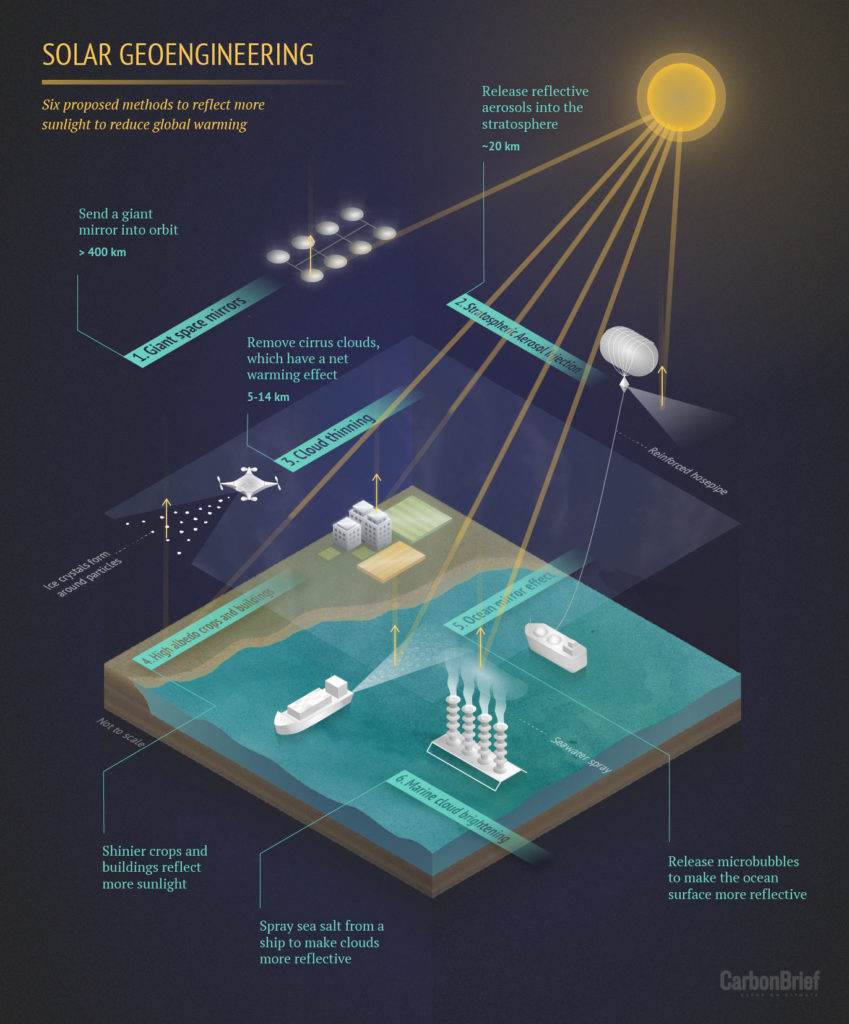
The proposals may sound futuristic, but the notion of engineering the climate in order to limit sunlight has been debated by scientists and politicians for more than 50 years.
However, these debates have always proved controversial, meaning – apart from studies based on computer simulations – little field research into solar geoengineering has been carried out. (See: How does this compare to past solar geoengineering efforts in the UK and globally?)
Aria’s new research programme aims to invest £57m in 21 solar geoengineering research projects globally.
This – along with a separate £10m scheme from the UK Research and Innovation body – means the UK is now one of the world’s biggest funders of solar geoengineering research.
Announcing the details of the scheme, Aria said its motivation for launching the research programme was “the possibility of encountering damaging climate tipping points”.
Out of the £57m, around £24.5m ($33m) will be spent on “controlled, small-scale outdoor experiments”, according to Aria.
These include attempts to thicken Arctic sea ice, brighten clouds above Australia’s Great Barrier Reef and to float weather balloons containing natural minerals high in the stratosphere, which will be retrieved after “hours or weeks”.
All outdoor experiments will be “scrutinised” by an oversight committee chaired by Prof Piers Forster, a leading climate scientist who is the founding director of the Priestley Centre for Climate Futures at the University of Leeds.
In a note released alongside news of the research funding, the oversight committee said it does “not exist to legitimise this programme”, adding:
“We advise Aria on the risks and benefits of supporting proposed creator projects and how best to work with and across creator teams to support learning and to help ensure that findings are contextualised and communicated appropriately alongside [climate] mitigation and adaptation options.”
Aria is a “high-risk, high-reward” government research agency that was formally established through an act of parliament in 2023.
It was originally conceptualised by Dominic Cummings, a controversial former adviser of then prime minister Boris Johnson.
According to Nature, Aria was modelled on the “famed US Defense Advanced Research Projects Agency, or DARPA, which helped to pioneer some of the world’s most consequential technologies, including the internet and personal computers”.
In its recent coverage, the Daily Telegraph described Aria as a “secretive government unit”.

Aria itself has said that it aims to be fully transparent about its solar geoengineering programme, which was its motivation for publicly announcing its spending on the 21 projects involved.
How does this compare to past solar geoengineering efforts in the UK and globally?
As mentioned above, the idea of solar geoengineering has been debated for more than 50 years. However, its controversial nature has meant that, until now, very few field experiments have been carried out.
In 2010, there was an attempt to carry out field research in the UK by the Stratospheric Particle Injection for Climate Engineering (SPICE) project, which was headed by Dr Matthew Watson at the University of Bristol and involved scientists from the University of Oxford, the University of Cambridge and the University of Edinburgh.
The project aimed to “investigate the effectiveness” of solar geoengineering, in part by releasing the equivalent of a bathtub of water high into the atmosphere above Norfolk.
However, it was met with fierce opposition by some campaign groups. In 2012, the team ended the project, citing issues with intellectual property and discomfort with the current lack of regulation and governance of solar geoengineering research.
(Watson is one of the recipients of Aria’s new research programme. His team has been awarded £4.3m ($5.7m) to build specialised drones to study emissions from regularly erupting volcanoes in Guatemala, Montserrat and Chile.)
Outside of the UK, another high-profile solar geoengineering experiment headed by researchers at Harvard University, called the Stratospheric Controlled Perturbation Experiment (Scopex), was also forced to disband following public disapproval.
In the private sector, a US start-up called Make Sunsets has begun releasing high-altitude balloons containing sulphur dioxide into the stratosphere, in an attempt to geoengineer the planet. It funds its activities by selling “cooling credits”.
The company has been banned in Mexico, where it previously launched balloons, and is currently being investigated by the US Environmental Protection Agency.
According to the online publication SRM360, funding for solar geoengineering has increased from $34.9m in 2010-14 to $112.1m in 2020-24. The vast majority of funding is concentrated in global-north countries and about half of all funding comes from philanthropic sources.
This week, scientists and policymakers are meeting in Cape Town, South Africa for the largest summit to date on the scientific, social and political implications of solar geoengineering.
Countries have agreed to a de facto moratorium on large-scale solar geoengineering under the Convention on Biological Diversity, a UN treaty that aims to protect biodiversity. (However, it is not legally binding.)
Why do some scientists say solar geoengineering research is needed?
Scientists agree that cutting global greenhouse emissions as soon as possible is key to tackling climate change.
But global emissions are still rising – and the prospect of limiting global warming to 1.5C above pre-industrial levels, the ambition of the landmark Paris Agreement, without first “overshooting” the target is fast vanishing.
This has led some scientists to call for more research into solar geoengineering ideas, including through small-scale experiments and trials.
Research based on computer modelling indicates that artificially cooling the planet by releasing reflective aerosols into the stratosphere using specialised planes could be effective at offsetting a range of climate impacts, such as more intense heatwaves and flooding, melting sea ice and higher tropical storm risk.
(One solar geoengineering scientist has estimated that halving global warming with reflective aerosols would involve a specialised fleet of about 100 planes releasing 1m tonnes of sulfuric acid each year by 2070.)
However, this type of solar geoengineering would not address rising CO2 levels, which are causing oceans to become more acidic and crops to become less nutritious, among other issues.
Some scientists have raised concerns that, if aerosols were used to address global warming, the world could be left at risk of a “termination shock”. That is, if aerosols were released and then suddenly stopped – as a result of political disagreement or a terrorist attack, for example – global temperatures could rapidly rebound.
This sharp temperature change could be “catastrophic” for wildlife, modelling studies have suggested. However, other research argues that the likelihood of a termination shock has been “overplayed” and that measures could be put in place to ensure that the risk is minimised.
There is also a risk that deploying aerosols from just one spot on Earth could cause uneven impacts for people. One research paper based on modelling found that releasing aerosols in just the northern hemisphere could lead to a decrease in rainfall – and, therefore, an enhanced drought risk – in India and the African Sahel.
Ultimately, advocates of solar geoengineering research tend to argue that the only way to understand more about the efficacy and risks of the technology is to study it further, whereas opponents say more research could be a “slippery slope” towards deployment.
Why are there social and ethical concerns around solar geoengineering?
As well as scientific uncertainties, experts have long warned that solar geoengineering poses large social, ethical and governance challenges.
Some scientists and campaigners are fundamentally opposed to the idea of manipulating the climate further in order to try to repair some of the damage caused by fossil-fuel emissions.
Writing in the Guardian, climate scientists Prof Raymond Pierrehumbert and Dr Michael Mann described Aria’s research programme as “like using aspirin for cancer”.
Indigenous groups have strongly opposed the idea of solar geoengineering and its research, often arguing it goes against their beliefs about living in harmony with nature.
Some scientists and campaign groups also believe that solar geoengineering could be viewed by politicians and the public as a quick “technofix” to climate change. If more research and development is channelled into these techniques, they argue, people may start to backpedal on their promises to cut their emissions.
This is often referred to as the “moral hazard” dilemma.
But other researchers have urged caution on this idea. One reason for this is that social experiments conducted with members of the public have found little evidence of the moral hazard problem existing in practice.
Advocates of solar geoengineering research say it should be viewed as a “supplement” to climate mitigation efforts rather than a “substitute” or “quick fix”.
However, many experts and commentators have pointed out that the technology presents a very large global governance challenge.
A fair and just deployment of solar geoengineering would require agreement between countries, experts have reasoned. At present, it is difficult to picture a global forum that could garner such collaboration, they say.
Prof Alan Robock, a professor in the department of environmental sciences at Rutgers University, summarised this issue neatly in a conversation with Carbon Brief in 2018, when he said:
“You’re asking if the world can come together and agree on geoengineering without agreeing on mitigation. I think the answer is for us to agree on mitigation. Paris is the first step, the pledges made there aren’t enough but have got to increase.”
Another concern is the “free-driver problem”, an idea that refers to the potential for a single country, group or even individual to unilaterally deploy solar geoengineering, even if it might cause negative impacts for others. This concern arises from the fact that solar geoengineering would be relatively cheap to carry out.
It has been argued that the free-driver problem poses a larger concern than ever in today’s increasingly polarised world, where lone politicians and billionaires hold large amounts of power.
These serious social and governance issues prompt some experts to say solar geoengineering should not be researched at all, but others to say it should be researched to try to address concerns.
Out of Aria’s £57m for solar geoengineering research, around £2.8m ($3.7m) is earmarked for governance and ethics projects.
In its latest assessment for how the world can address climate change, the world’s authority on climate science, the Intergovernmental Panel on Climate Change (IPCC), notes that there is “high agreement” among research papers that solar geoengineering “cannot be the main policy response to climate change and is, at best, a supplement to achieving sustained net-zero”.
The assessment also notes that solar geoengineering “may introduce novel risks for international collaboration and peace”.


The post Factcheck: How the UK is – and is not – studying solar geoengineering appeared first on Carbon Brief.
Factcheck: How the UK is – and is not – studying solar geoengineering

Türkiye and Australia risk losing their credibility as hosts of this year’s COP31 UN climate summit if they keep betting on fossil fuels at home, climate policy experts have warned.
As governments are expected to continue fraught talks over how to advance the global transition away from oil, coal and gas in Antalya this November, both of the co-host countries are pursuing fossil fuel expansion at home, without a national timeline to phase out their use.
Türkiye has accelerated its rollout of wind and solar energy in recent years. But that progress has yet to make a dent in the country’s dependence on fossil fuels for power, as demand growth has outpaced the renewables build-out, new analysis by Climate Action Tracker (CAT) has found.
The share of electricity generated by burning coal and fossil gas – 56% in 2025 – has barely changed since 2019, and total fossil fuel use in the power sector, and the emissions it produces, are still rising, according to the report released on Friday.
The Turkish government has also signalled that fossil fuels will remain a central component of its energy mix and has outlined plans to expand the country’s burgeoning domestic gas production in the Black Sea.
‘Need to demonstrate seriousness’
Australia, which will chair the Antalya negotiations, relies on fossil fuels for over 60% of its electricity, with coal alone still supplying 45%. According to experts, it lacks an ambitious plan to shift away from fossil fuels at home, relying heavily on carbon offsetting to reach its climate targets.
Australia is also the world’s third-largest fossil fuel exporter and has plans to expand its coal and gas production, which is backed by significant government subsidies. It recently upset climate groups by approving an extension of the Saraji open-cut coal mine in Queensland.
Türkiye says it has “final decision” at COP31 despite Australia running negotiations
Jennifer Morgan, a senior fellow with the Fletcher School of Law and Diplomacy at Tufts University and former climate envoy for Germany, said Türkiye and Australia need to demonstrate their seriousness about their COP presidency roles by leading by example on the energy transition.
“They have made progress in renewable energy,” she told reporters this week. “But I think their credibility – and their ability to therefore bring momentum and good outcomes to the COP – will depend on their taking further action at home.”
Türkiye’s electrification homework
The co-hosts’ fossil fuel policies are being scrutinised in the run-up to the annual UN climate summit, with much riding on the signal climate diplomacy sends on the energy transition.
Türkiye has so far stopped short of putting any overt political capital behind the fossil fuel transition itself. It has instead been rallying support for a new global electrification target of 35% by 2035, seen as the centrepiece of this year’s non-negotiated Action Agenda put forward by Ankara.
COP31 president Murat Kurum said last week the push to electrify economies – through measures like electric vehicles and heat pumps – will “automatically” lead to a reduction in the use of fossil fuels.
Türkiye’s own energy plan projects the country’s electrification rate would fall short on the global target and only hit 25% by 2035, according to the CAT report, which called for a “substantial step-change” in electrification policies and the deployment of more renewable power and grid infrastructure.
Coal still dominant
CAT’s analysts also warned that, without a parallel phase-out of fossil fuels, rising electricity demand risks being met in part by coal and gas, failing to deliver the emissions reductions the electrification target is meant to achieve.
Türkiye has had some success in its clean energy build-out: the share of electricity generation from wind and solar rose to 22% in 2025, up from 12% in 2020, according to the CAT report.
But coal’s role in Türkiye’s electricity mix has also grown, in both its share and absolute terms, over the past decade. And while reliance on fossil gas has declined overall, it still plays an important role in Ankara’s energy policy, which is pushing to boost domestic gas production in the Black Sea.
Dr Niklas Höhne from the NewClimate Institute said the government could demonstrate leadership as COP31 president by building on its recent successes in increasing its renewable energy capacity and announcing targets and plans to phase out coal and gas ahead of the summit.
According to CAT, Türkiye should phase out coal by 2040 and fossil gas by 2045 at the latest to align its power sector with global efforts to limit the rise in global temperatures to 1.5C above preindustrial times.
Türkiye quiet on fossil fuel roadmap
Ümit Şahin, coordinator of climate change studies at the Istanbul Policy Center (IPM), said Türkiye’s strategy is to approach the fossil fuel debate exclusively from the “end-use point of view”.
“I don’t expect any push from the Turkish presidency to the producer countries in terms of fossil fuel production,” he told reporters.
Neither does Şahin believe the Turkish presidency will throw its political weight behind another big-ticket item for COP31: a new global roadmap to transition away from fossil fuels.
Brazil took on the responsibility to voluntarily draft this document outside of the formal negotiations as a way to break the deadlock at last year’s UN summit in Belém when governments clashed over whether to develop one.
The outgoing COP30 presidency will deliver the roadmap in early November – but it will be up to Türkiye and Australia to guide countries towards a decision on how the blueprint will be taken forward, either inside or outside the negotiations.
Leadership needed
Australia’s Chris Bowen, COP31’s president of negotiations, promised to lobby producing countries to deliver a “meaningful step forward” on the fossil fuel transition in an interview with The Guardian earlier this year. But he has been quiet on the role Australia sees for the fossil fuel transition roadmap.
Natalie Jones, senior policy advisor at the International Institute for Sustainable Development (IISD), said the COP31 co-presidents “must provide clear leadership” on this process.
“This roadmap cannot be left in a dusty drawer,” she told journalists. “Rather, it must be translated into action, with all countries identifying what elements they can adopt or develop in their own national roadmap.”
-
Made in Nigeria: The race to build an African solar industry from scratch
A solar power revolution is gathering pace in Africa and Nigeria wants a slice of the fast-growing industry, but competing with Chinese imports won’t be easy -
China’s industrial engine starts to break its fossil fuel habit
Despite a rebound in coal generation this year, clean energy from wind and solar is gaining ground on the fossil fuels that have powered decades of industry growth

Like Türkiye, Australia has yet to produce a national blueprint for winding down coal, gas and oil. Rather than moving toward a phase-out, state and federal governments have kept expanding fossil fuel licensing over the past year, according to a new analysis published this month by Climate Analytics.
Under existing policy, both coal and gas are on track to remain in Australia’s power system as late as 2050 – a trajectory the report defines as incompatible with the 1.5C limit the country says it’s committed to.
No binding end dates for the Netherlands
Analysts are watching out for national transition roadmaps as a bellwether for governments that claim to be leaders in the global shift away from fossil fuels.

The Netherlands, which co-hosted the first fossil fuel transition conference in Santa Marta this year, published its own domestic roadmap earlier this week. The document followed through on a pledge that “leadership on transitioning away from fossil fuels must be backed by concrete action, not just ambitious words”, said a spokesperson for Stientje van Veldhoven, the Dutch minister for climate policy.
But experts criticised the plan for failing to set a binding end date for the country’s fossil fuel production and use. While targeting a rapid increase in renewables capacity, the Dutch government only commits to phasing out oil, gas and coal “in the energy and feedstock system to eventually zero, and to minimise fossil use” by 2050.
Yvo de Boer, a former Dutch diplomat and executive secretary of the UN climate body, said the Dutch roadmap falls short of what’s needed to give industry the confidence to deploy capital in support of the energy transition with greater predictability.
“Ultimately, a roadmap without deadlines is nothing more than a footpath paved with good intentions,” he added, writing on LinkedIn.
The post Fossil fuel expansion threatens COP31 hosts’ credibility, experts warn appeared first on Climate Home News.
Fossil fuel expansion threatens COP31 hosts’ credibility, experts warn
Despite millions of dollars in grants and technical help for African businesses to power farming and other food production activities with renewable energy, most efforts remain stuck at the early stages because they struggle to find the investors, markets and expertise they need to grow.
This was the message from a coalition of global institutions working on energy, water and agriculture at this month’s Africa Food Systems Forum in Kigali, Rwanda.
“Energy, agriculture, water and nutrition actors rarely design solutions together,” the Agri-Energy Coalition said in a Call to Action on powering food systems with clean energy.
Using more renewables – especially solar power – to drive food systems would reduce food losses, ensure year-round availability and affordability of healthy foods, and improve productivity, income and resilience among farmers, food processors and other small enterprises, the coalition added.
In an interview with Climate Home News at the forum, Olamide Niyi-Afuye, CEO of the Africa Minigrid Developers Association (AMDA) – a body representing private-sector developers of small-scale, off-grid electricity systems across the continent – said its members are starting to recognise this interdependence and are increasingly considering businesses that combine energy with agricultural activities.
-
Second Africa Climate Summit seeks to jump hurdles to green industrialisation
A report on progress since the first summit in 2023 says financial, infrastructure and trade obstacles are hampering “climate-positive growth” on the continent

This, Niyi-Afuye added, could lead to greater supply and use of clean power for key processes like irrigation, food processing and storage, creating new sources of revenue for both sectors.
CHN: Conversations at the Africa Food Systems Forum highlighted how organisations working in energy and agriculture often operate in silos. What has hampered their collaboration, and how has that affected Africa’s economic development?
A: Most mini-grid companies in Africa were primarily incentivised to achieve connections. If you look at some ongoing projects, you see a cost-per-connection model [of revenue]. When a subsidy is tied to achieving a connection, regardless of whether it is a productive connection, you might not notice the problem until five years down the line, when you realise the cash flows are not what you projected.
Despite African walkout, fractious land COP ends without drought deal
So now we’re in a “come-to-Jesus moment” as an industry, where we’re righting the wrongs and adjusting our business models to make sure companies do not go bust and there is some level of sustainability over the long term.
The saying is not wrong that we’ve been working in our own silos because we’ve focused on the smaller things instead of the helicopter view. There needs to be cross-pollination [between the energy and agriculture sectors] because, if we are thinking about industrialisation, energy is a key driver of industrialisation. We will not achieve that if we’re not in the room and part of those conversations.
CHN: Productive use of energy is intended to ensure electricity access goes beyond lighting homes to improving livelihoods, creating jobs and powering equipment. But what happens when farmers cannot afford the equipment they need to do that? How can energy, agriculture and equipment players work together to make the transition more accessible?
A: That’s why we’re having conversations with companies set up to de-risk the agriculture sector. By leveraging that connection, we’re able to aggregate potential energy needs and develop instruments that make equipment more affordable through bulk procurement.
We can have arrangements that make it easier for farmers and food producers to lease equipment and eventually own it over a period. There’s no real pressure to recover the capital very quickly because you’re looking at scale.
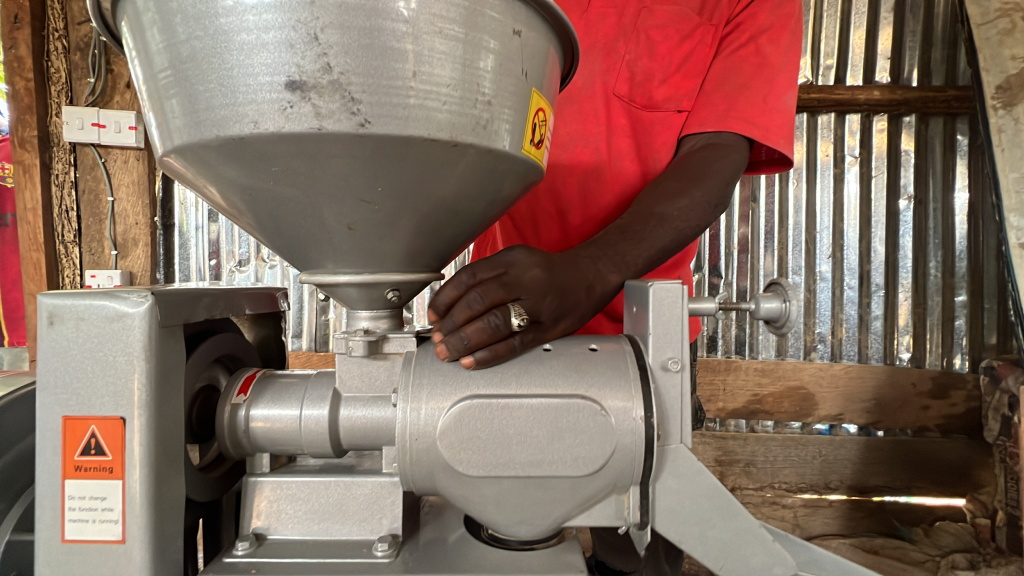
There is a whole lot across the agricultural value chain that needs energy, from farming and harvesting to food processing and value-addition. We need to understand the energy needs across the value chain and bring our members in to provide solutions.
Developers do not necessarily need to provide every productive-use solution themselves. They can partner with equipment suppliers, financiers, agribusinesses and other service providers to enable customers to use electricity productively. The objective is simple: do not just electrify communities; enable economic activity that uses that electricity.
CHN: When Africa’s industrialisation is discussed, you hear things like renewables cannot provide enough baseload, while some food processors are sceptical about switching to renewable energy because of these concerns about reliability. What is your response?
A: It’s not a controversial statement to say that a typical baseload is usually from the grid, and it’s usually from multiple sources including renewable energy. For large-scale operations, we can look at blending multiple sources of energy. But how do we solve the problem of a mid-sized farmer? We can solve it with a mini-grid using renewable energy.
Comment: Every country needs a model to help optimise its energy transition
If you go to a small farmer in a rural area, they don’t care about what source of energy they’re getting. They just want something that can help them get from A to B. If you look at the direct energy needs of farmers and food processors, I’m sure 90 percent of their consumption can be solved by renewable energy. Let’s start with that problem first. Then, as they scale, they might need to ramp up, and we can start talking about a bigger baseload.
CHN: How much agricultural value is lost because farmers and food businesses lack reliable, affordable electricity?
A: If you look at, for example, the fact that we need to maybe plant tomatoes or strawberries in Jos before it gets to Lagos [Nigeria], which most likely is by road, I can assure you that a good chunk, if not stored properly, would be bad by then. So the fact that we do not have energy is in itself a lost opportunity to maximise the potential of the agriculture sector. So until we’ve solved the energy problem, we will not salvage waste – and for me that is a lost opportunity.
CHN: AGRA, an institution focused on scaling agricultural innovations to help smallholder farmers, estimates a massive shortfall between current investments in the continent’s food systems and what is actually needed to build a resilient, profitable agricultural economy – to the tune of $180 billion per year. Can integrating energy into food systems help bridge that gap?
A: Yes – if energy can help unlock the potential to earn more money, investors will follow the money. Investments go where there is certainty, and until there is certainty around cash flow and revenue, investment will be limited.
My vision is to see more Power Purchase Agreements (PPAs) being signed between energy players and the agriculture sector. We can start by getting people into the room, understanding their pain points, crafting a framework and documentation that works for both parties, and then seeing deals happen.
This interview was shortened and edited for clarity.
The post How clean energy can boost business for Africa’s food producers appeared first on Climate Home News.
How clean energy can boost business for Africa’s food producers
Cristina Rumbaitis del Rio is a senior advisor on adaptation and resilience with the United Nations Foundation and Mattias Söderberg is global climate lead at Danish NGO DanChurchAid.
Recent extreme events – from wildfires and heatwaves in Europe to flash flooding following a glacier collapse in Nepal – have shocked and devastated communities, bringing years of warnings about such climate impacts to the doorstep of communities around the world.
One thing is certain: the new climate reality is here – and the adaptation strategies designed for yesterday’s world are no longer sufficient.
Attribution science has since shown that the hotter and more frequent heatwaves we’re experiencing around the world would have been virtually impossible without today’s high concentrations of greenhouse gases in the atmosphere. Climate shocks are now so severe that they reverberate through supply chains, food and water systems, financial markets and the movement of people.
-
Foreign minister: Nepal needs “meaningful” international support to face climate threats
Following its recent Himalayan flooding disaster, the South Asian nation is seeking urgent help from a new UN climate fund, appealing for “stronger global solidarity” -
Palestine: Israel’s bombing has left Gaza vulnerable to climate change
With homes, hospitals and water storage destroyed, Palestine’s government says that Gazans have little protection from climate impacts and sets conditional emissions targets
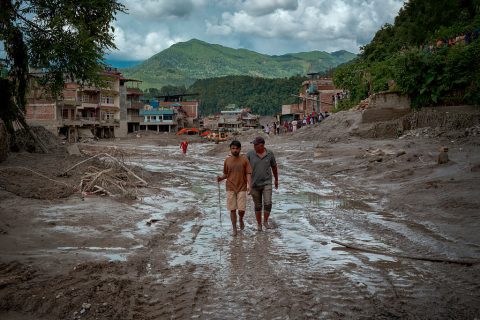

They must be a catalyst for a new way of thinking about adaptation and resilience, and how we finance solutions that work. A failure to invest in adaptation in one region can create costs far beyond it, which is why the concept of shared resilience is critical for leaders to grasp.
Investment not charity
At the UN General Assembly (UNGA 81) this month, leaders have an opportunity to translate today’s urgency into concrete commitments on adaptation and loss and damage finance ahead of COP31.
Those commitments are needed to underpin global stability, shared prosperity and human security. Governments should use this moment to show what a new response looks like: finance that reaches communities faster, supports locally grounded solutions, strengthens national systems, and helps countries prepare before the next shock arrives.
If we want sustained economic growth, food and water security, and resilient and prosperous societies across every region, adaptation must be at the heart of today’s development and security agenda. It cannot be just a future planning consideration or a narrow issue for climate ministries. Adaptation is now everyone’s business – and it must be financed fast and fair.
UN Secretary-General António Guterres has repeatedly framed climate finance as an investment rather than charity, warning that “a world in climate chaos cannot be a world at peace” and describing human security as freedom from the chronic and sudden disruptions that climate change multiplies.
What’s more, adaptation delivers a real return-on-investment, with researchers estimating that every dollar invested produces $10 in benefits, saving lives, protecting livelihoods, and reducing the costs of future disasters.
Hitting adaptation limits
The urgency to scale adaptation systematically is growing. The newly released “Limiting Overshoot” report from the UN Environment Programme (UNEP) confirms what scientists have long warned: exceeding global warming of 1.5C is now unavoidable under current policies. Yet, how high temperatures rise – and how long the world remains above the 1.5C threshold – will determine whether communities, economies and entire ecosystems can keep pace.
There are limits to adaptation. When we breach those limits, lives and livelihoods are lost, and people and ecosystems suffer greatly. We cannot simply build yesterday’s infrastructure a little stronger and assume it will be enough.
Nepal flood destruction shows “limits to adaptation”, scientists say
We need to fundamentally change the systems that determine how societies anticipate, absorb and recover from both immediate and evolving non-linear climate shocks. This includes transforming physical systems, such as infrastructure, and the governance systems that affect where and how we live to how we maintain our health and wellbeing.
Finance today is nowhere near the scale of the challenge.
The UNEP “Adaptation Gap Report 2025” estimates the shortfall in adaptation finance in developing countries at $284 billion–$339 billion a year – roughly 12 to 14 times current international public flows of around $26 billion. That gap is a development, economic and human security problem, especially for the most vulnerable populations who have contributed the least to causing the climate crisis.
Building resilience into financial systems
There are already signs of what a more systemic adaptation response could look like. Communities around the world are delivering practical solutions at local level, even as adaptation finance remains notoriously, and appallingly, difficult to access. Cyclone-resistant homes, local forecasting capacities, drought-resistant crops, heat insurance for pregnant informal workers and mangrove restoration are rooted in local knowledge and lived experience, while delivering benefits far beyond the communities where they originate from.
But local innovation alone is not enough; the systems around it need to be resilient too.
Jamaica offers one example. The country has built a multi-layered disaster-risk financing framework, including a catastrophe bond and contingency funds, through sustained fiscal discipline and proactive investment. Its debt-to-GDP ratio fell from around 147% in 2012 to around 62% in 202-25. That groundwork matters when disaster strikes.
Hurricane Melissa’s destruction shows need for climate resilience push
Following Hurricane Melissa, Jamaica was able to secure billions of dollars in reconstruction financing from multilateral banks – finance that might otherwise have been much harder to access. The lesson is clear: resilience can be built into the financial architecture of a country before a crisis arrives. That is the shift we now need to make at scale.
The foundations already exist – in Kingston’s fiscal reforms, in early-warning systems from the Sahel to the Pacific, and in every community that adapted before disaster struck. What is still missing is the political will, and the finance, to take what works and put it to work everywhere, at the speed our world’s new climate reality demands.
To hear more on this issue from high-level officials and experts, sign up for this event during Climate Week NYC, at 8am EDT on September 24 (in person or online), moderated by Climate Home News Editor Megan Rowling: Adapting to the New Climate Reality: Why Accelerating Impacts Demand New Responses.
The post Human security relies on adapting to the world’s new climate reality appeared first on Climate Home News.
Human security relies on adapting to the world’s new climate reality



-

 Greenhouse Gases2 years ago
嘉宾来稿:满足中国增长的用电需求 光伏加储能“比新建煤电更实惠”
-
Climate Change1 year ago
Guest post: Why China is still building new coal – and when it might stop
-
Greenhouse Gases1 year ago
Guest post: Why China is still building new coal – and when it might stop
-

 Climate Change2 years ago
嘉宾来稿:满足中国增长的用电需求 光伏加储能“比新建煤电更实惠”
-

 Renewable Energy11 months ago
Sending Progressive Philanthropist George Soros to Prison?
-
Climate Change2 years ago
Bill Discounting Climate Change in Florida’s Energy Policy Awaits DeSantis’ Approval
-
Greenhouse Gases1 year ago
嘉宾来稿:探究火山喷发如何影响气候预测
-

 Carbon Footprint2 years ago
US SEC’s Climate Disclosure Rules Spur Renewed Interest in Carbon Credits