

いらっしゃいませ – welcome!
Greetings
GAME is back in Japan! Once again, an international two-person team, made up of a German and a Japanese student, is based at the Akkeshi Marine Station on Hokkaido, Japan, to contribute to this year’s pioneering research on the effect of artificial light at night on marine macroalgae.
GAME
GAME projects have constituted an important part in global oceanic research for well over two decades. Sophisticated experimental set ups, which are replicated over a broad range of climatic and geographic areas around the globe do not only provide valuable scientific data for single systems, but also enable a global comparison of the results between latitudes, climate zones and biogeographic regions. In times in which we face universal environmental issues like climate change and the loss of biodiversity, it is becoming increasingly important to conduct experiments on a bigger scale.
ALAN and macroalgae
Just as in the last three years, this year’s GAME teams will investigate an anthropogenic influence on marine ecosystems that so far has not received the attention which it deserves – light pollution. Although, it is not a field that is of interest for many people, including even marine biologists and oceanographers, light pollution is by now regarded as one of the fastest growing human impacts on coastal ecosystems of the last twenty years.
Almost unnoticed, artificial light at night (ALAN) became a constant companion of modern life and this also applies to coastlines, of which some are among the most densely populated regions on earth. In these areas, seeing the milky way when walking alongside a beach has become practically impossible. Direct illumination by coastal infrastructures like houses, streetlights, and harbors as well as indirect enlightening of the coast through the so-called “skyglow”, i.e. artificial light reflected by clouds, have deprived us of this beautiful experience. However, although, we can directly experience the consequences of this change in night-time lightscapes, so far little is known about the consequences for underwater life. This is particularly true for the potential influence of ALAN on macroalgae, which are very important marine photoautotroph organisms. Almost no research has so far been conducted on this topic. GAME 2024 investigates the impact of ALAN on different species of macroalgae and its possible interplay with another important stressors for aquatic plants – grazing.
Why could artificial light at night affect macroalgae? As photoautotrophic organisms, just like terrestrial vascular plants, they need periodical light-dark rhythms to maintain their growth and vitality. The latter ensures the stability of macroalgae populations, and this not only relevant for the integrity of coastal ecosystems. Macroalgae provide multiple important ecosystem services to us such as coastal protection, carbon fixation and food supply. Therefore, it is crucial to understand how nightly illumination could impact the performance of these organisms.
Akkeshi
Akkeshi-chō (Akkeshi town) is a perfect locality regarding ALAN research as we can find areas with varying levels of light pollution in the close surroundings. Areas heavily lit throughout the night like the Akkeshi harbor can be found as well as the Aikappu cape, where basically no artificial light at night can be measured. Especially in this project year, with its focus laying on macroalgae, Japan’s northern coast constitutes a perfect place for this kind of research. The cold temperate climate and the nutrient rich waters support a huge variety of macroalgae, which are also important for the economy of the region as well as for the above mentioned ecosystem services.
But also besides being a fantastic place for our research, this area has a lot to offer. The Akkeshi Sakura (Cherry blossom) & Oyster Festival is just around the corner of the marine station, and it is supposed to be one of the highlights of the year! The oyster culture can be experienced here at every corner. There are multiple izakaya in Akkeshi, which serve delicious oysters – many of them are still run by the local oyster farmers themselves.
During longer trips around Hokkaido you can visit the world-famous Shiretoko National Park or the beautiful cities of Hakodate and Sapporo. Furthermore, there are multiple beautiful lakes and a variety of natural shitsugen (wetlands) worth visiting
Akkeshi Marine Station
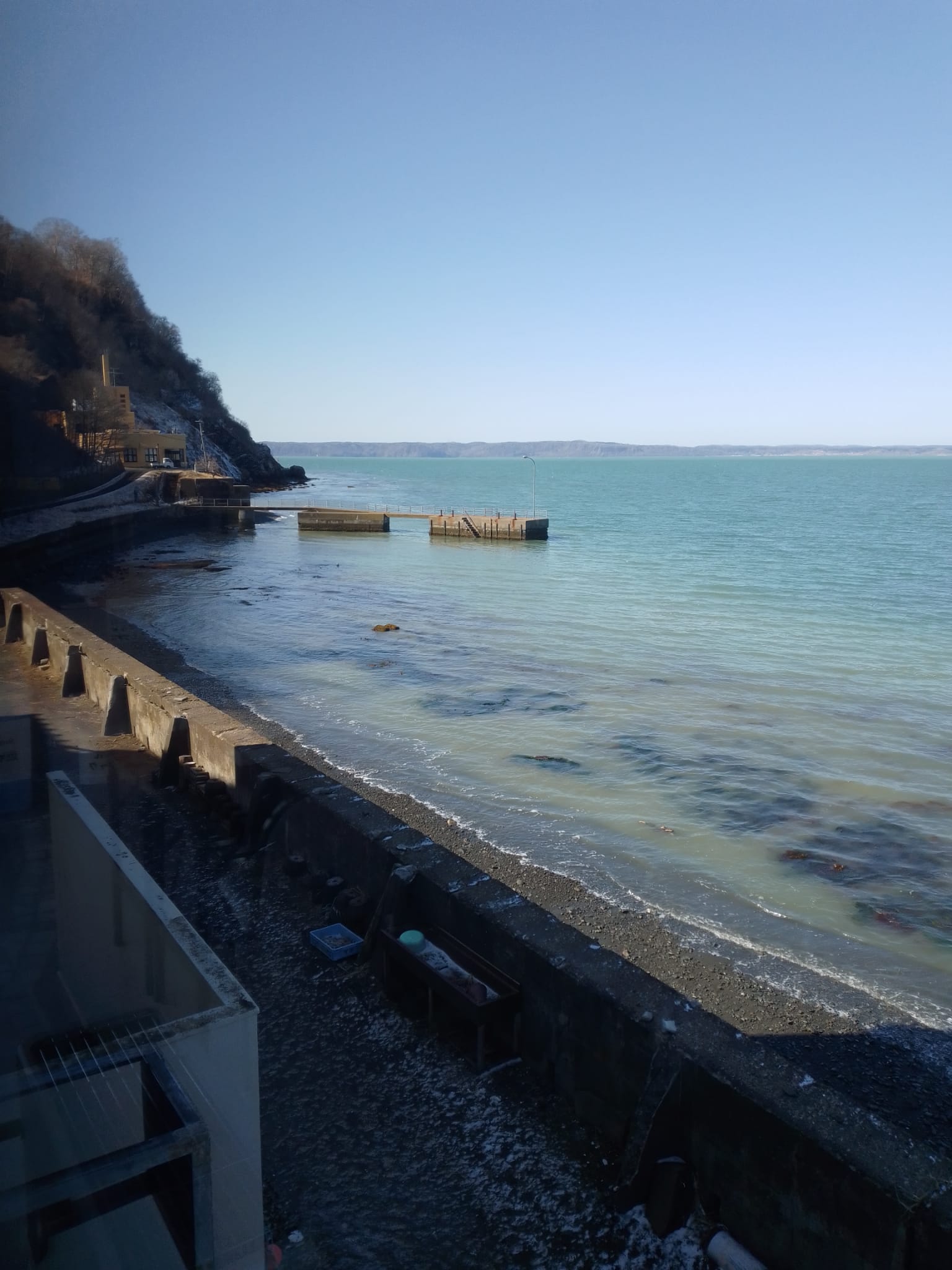
The Akkeshi Marine Station is an external research unit of the University of Hokkaido in Sapporo located at the east coast of Japan’s northernmost main island. It has been a valuable site for applied research to the GAME projects for many years. Apart from its exquisite location for macroalgae, it is an outstandingly well-equipped facility with a great team of fellow Japanese master and PhD students as well as renowned scientist in various field of marine research (seagrass, phytoplankton, marine mammals, microplastic, peracarid crustaceans, etc.).
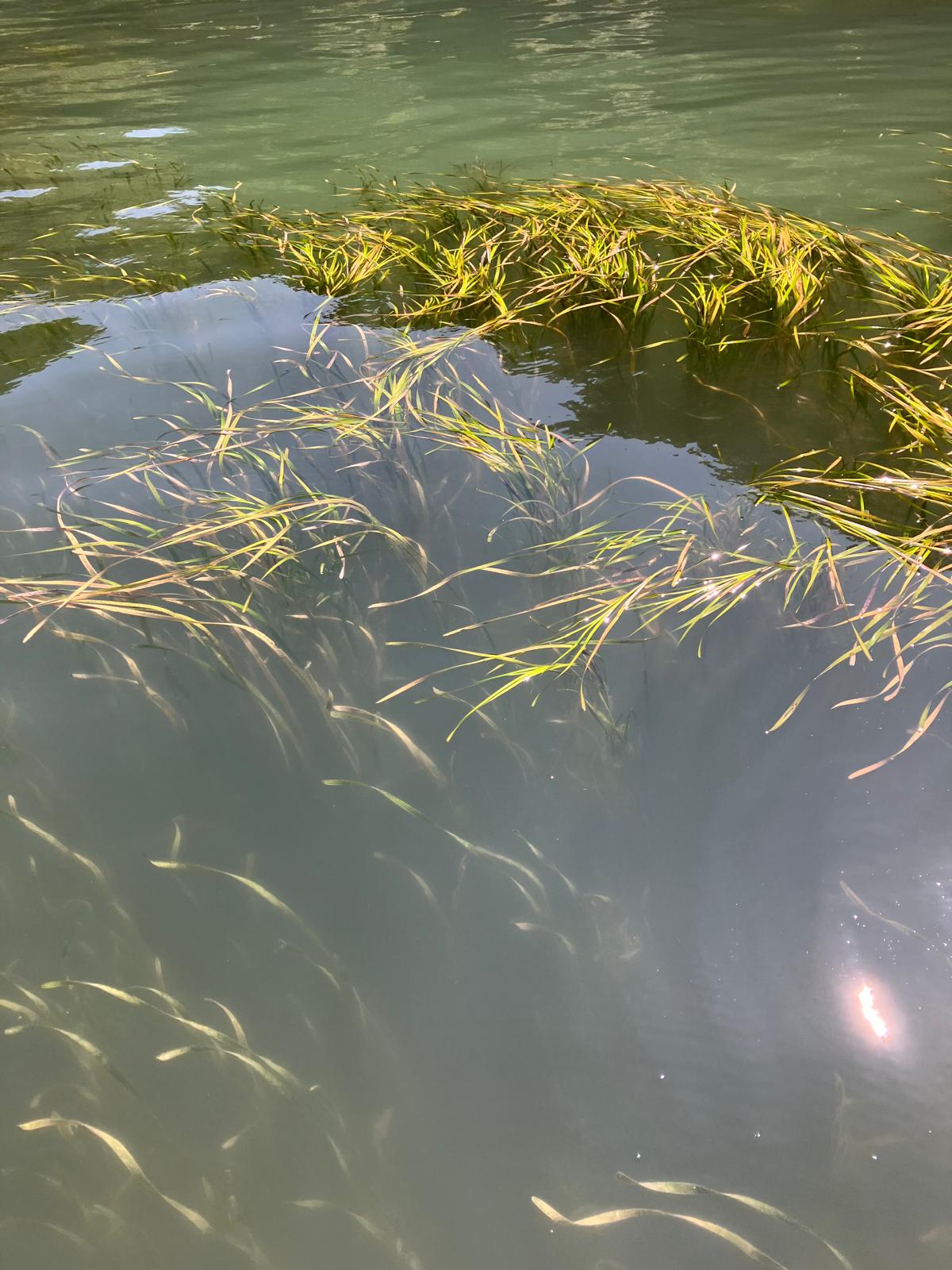
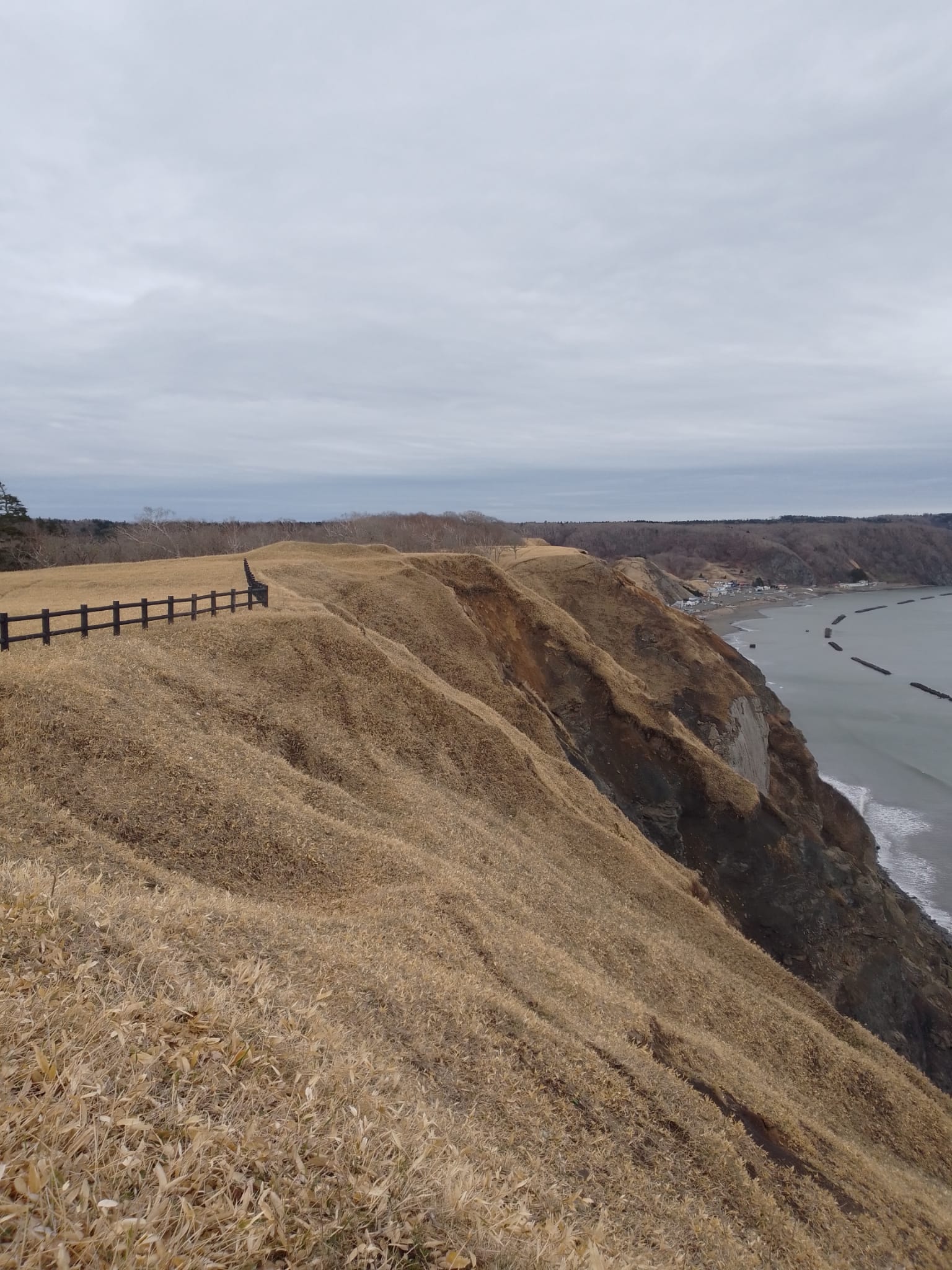
The station lies within the Akkeshi-Kiritappu-Konbumori Quasi-National Park, where daytrips can lead you from the tidal flats of the Akkeshi-ko (Lake Akkeshi) and the oak and maple forests to the bamboo-covered scarps of the Namida-misaki cape (Cape of Tears – but don’t worry, it will be tears of joy), where herds of Sika deer are bearingly grazing. With a little bit of luck, you can also see the local rakko (sea otters) from there. Outdoorsiness will therefore definitely pay off… 
Martin
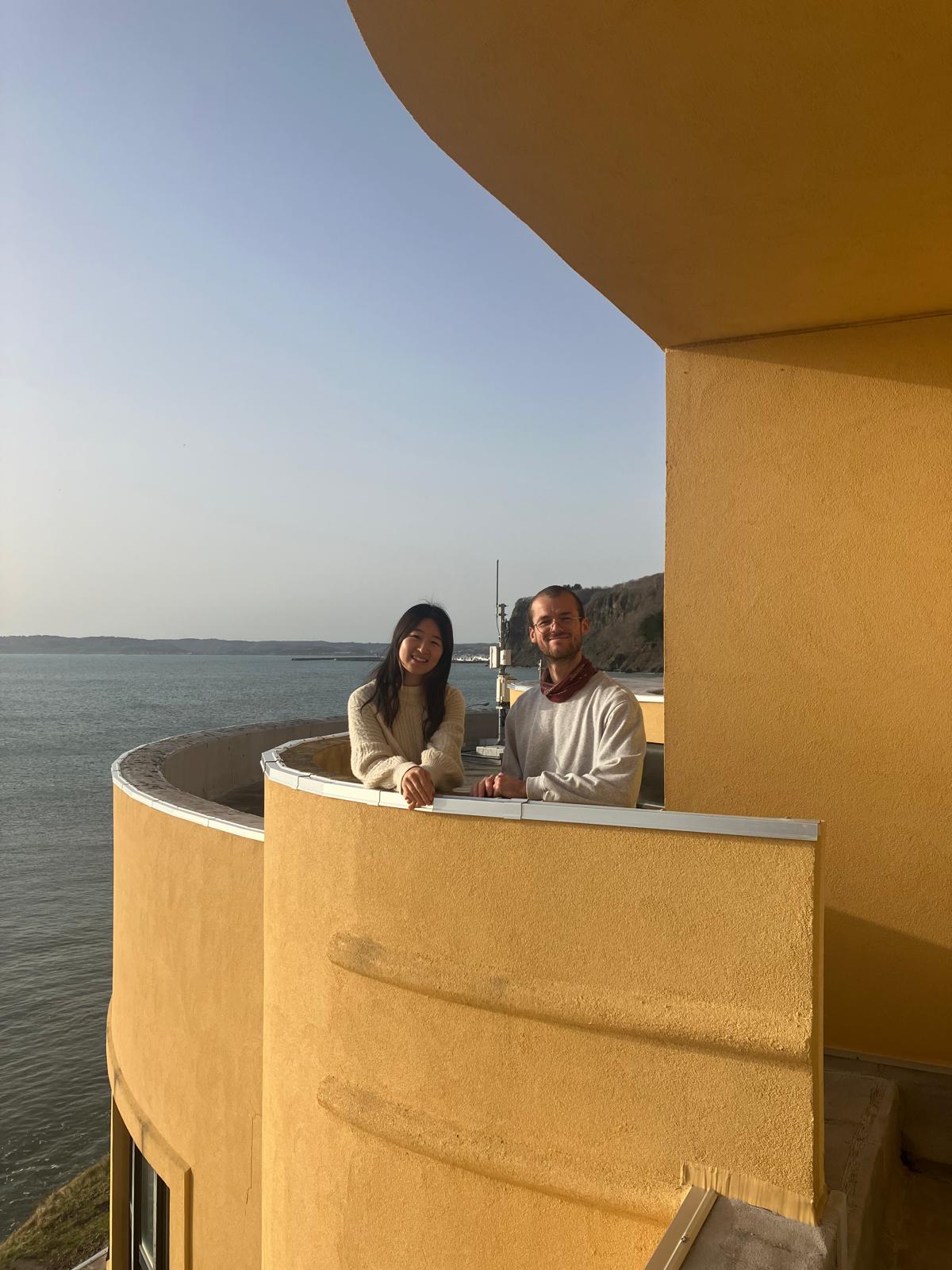
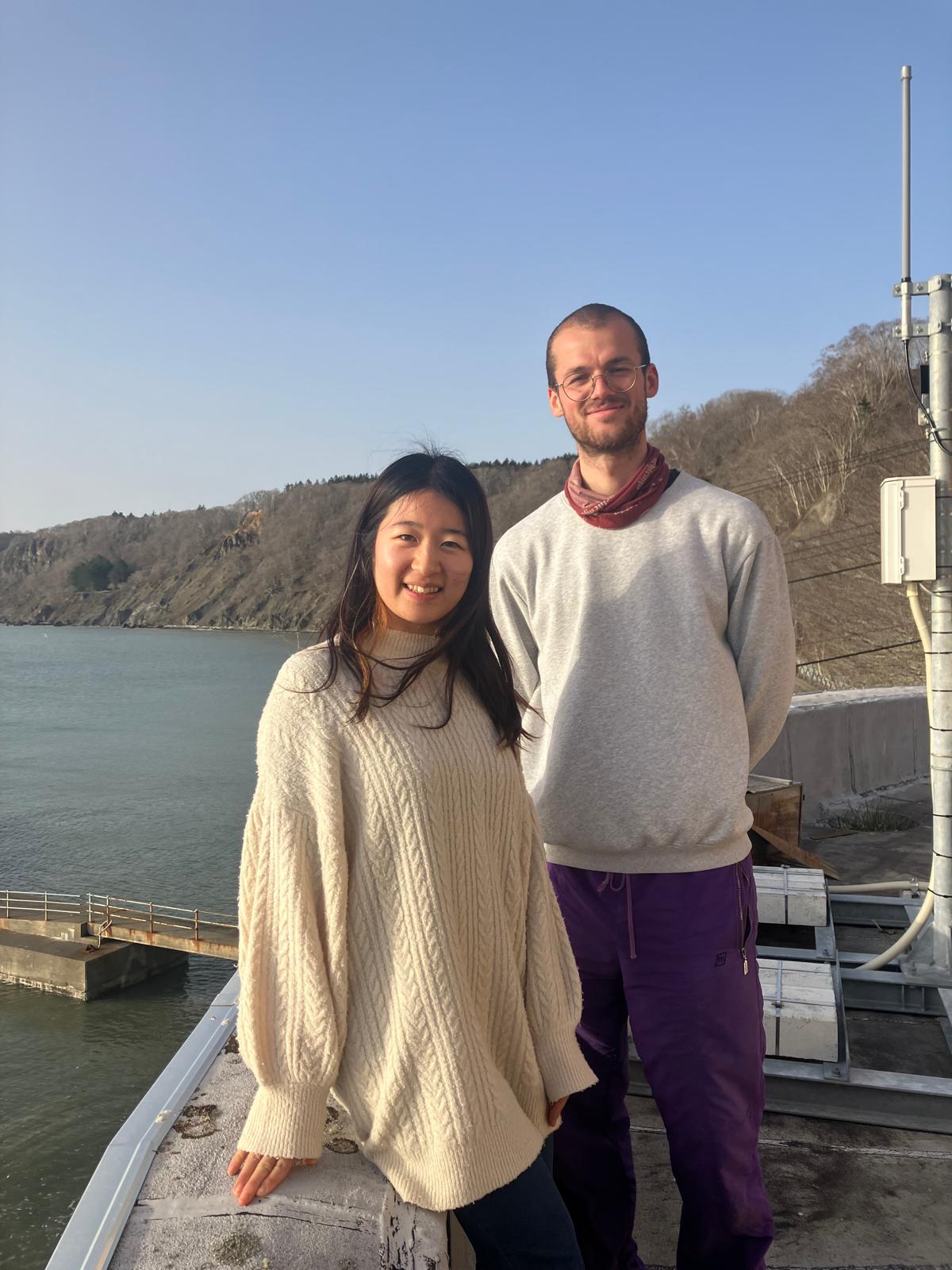
My name is Martin (29) and I represent the “German” part of this year’s GAME team in Akkeshi, Japan. I was born and raised in the very west of the Austrian Alps and started my biological career more or less far away from the ocean in Styria, the so-called “Austrian Tuscany”. Through acquaintances with the GAME participants at the study site in Croatia back in 2021 I first got to know about this program and was immediately fascinated by it. Though back then I didn’t think that I will participate in it myself one day. When I started my master course in marine biology at the University of Rostock in northern Germany it became clear to me very soon that this is the kind of scientific consortium that I wanted to be a part of.
This is my first visit to Japan, and it has been very fascinating so far. Although it is still very cold – spring season seems to start very late around here – I was already able to experience some of the natural beauties in this area. The Bekambeushi-shitsugen is a Ramsar-registered wetland area around Akkeshi town and the second biggest in all of Japan. It has a unique waterfowl diversity (especially the famous red-crowned crane, Grus japonensis) and is supposed to be beautiful for kayak trips (let’s hope it will get warmer soon  ).
).
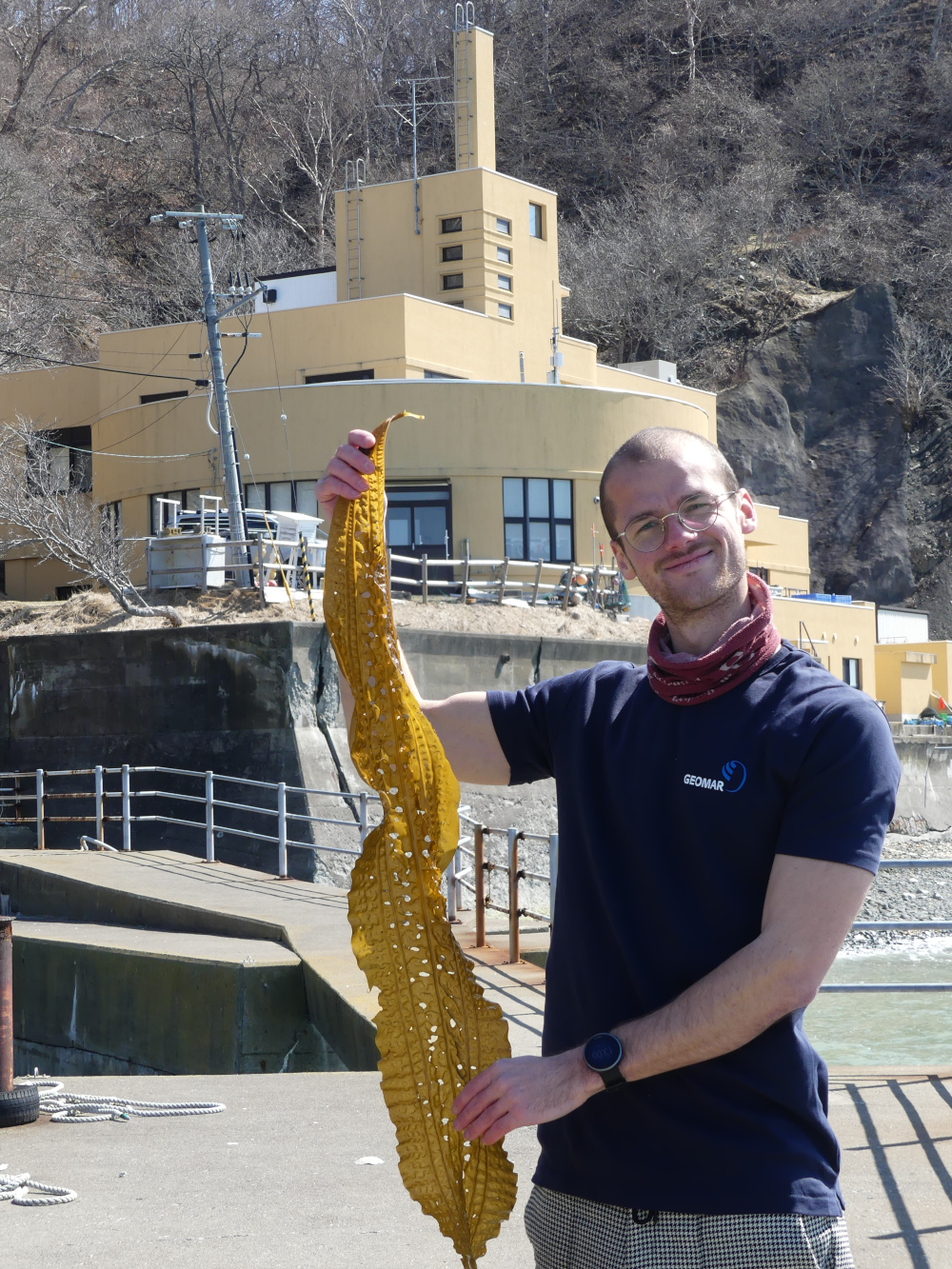
Another great experience so far was the rocky shore just in front of the station with its countless tidepools. A huge variety of all kinds of organisms (macroalgae, crustaceans, echinoderms, molluscs, etc.) can be found there, which are vastly different and much bigger than what I am used to from the Baltic and North Sea. The local seagrass meadows grow up to two meters tall and the kelp forests (brown algae) can even reach five to six meters in length. The variety of occurring algae is also mindblowing. Altogether more than 200 macroalgae species can be found around this area, of which we choose some of the most dominant and important species to conduct our experiments with.
A short walk away from the station also lies the Akkeshi National History Museum, which our team’s supervisor, Masahiro Nakaoka, is the curator of and which is definitely worth a visit.
Hikari
Hi, I’m Hikari (22) and I am studying in the master program “Aquatic biology” at Hokkaido University. My hometown is far from any coastline, which made me longing to live near the sea and to study about the ocean for a long time. I visited the Akkeshi Marine Station for the first time for a practical training two years ago and I was completely captivated by the beautiful scenery. Therefore, I permanently relocated to Akkeshi last year. My motivation for this project is to obtain profound knowledge and gain as much experience on macroalgae research as possible.
Site specific work
By now, we’re about to start the main experiments. In the beginning, we checked our material and devices and conducted some light measurements on different light sources, spectra and intensities. As my (Martin ) Japanese is not that fluent so far, I have encountered some minor communication problems with the in-house technicians (unfortunately they’re not so fluent in English), but with the help of Hikari we still managed to communicate our wishes and concerns. Thanks a lot at this point to the technicians, Hamano-san and Hide-san, for their great help! ありがとうございます – arigatou gozaimasu!
During the past weeks we worked on setting up our shelves, on which we will expose macroalgae from the nearby sea to different night time light regimes. The main tasks for us so far were the installation of the water flow-through system and the mounting of the LED lights in the laboratory. It was a lot of fuzzy work to get everything exactly at the spot we want it to be but in the end we managed to do so. Hopefully everything stays at its place for the next 5 months – fingers crossed… Besides the area, where we will conduct our experiments, the laboratory contains multiple other aquariums of all sorts and sizes where simultaneously other scientists and student are working on their experiments. The station and its aquarium room literally are a stone’s throw away from the intertidal area of Akkeshi Bay, which makes the collection and the transport of algae and grazers to the laboratory very fast and keeps the impact to the organisms to a minimum.
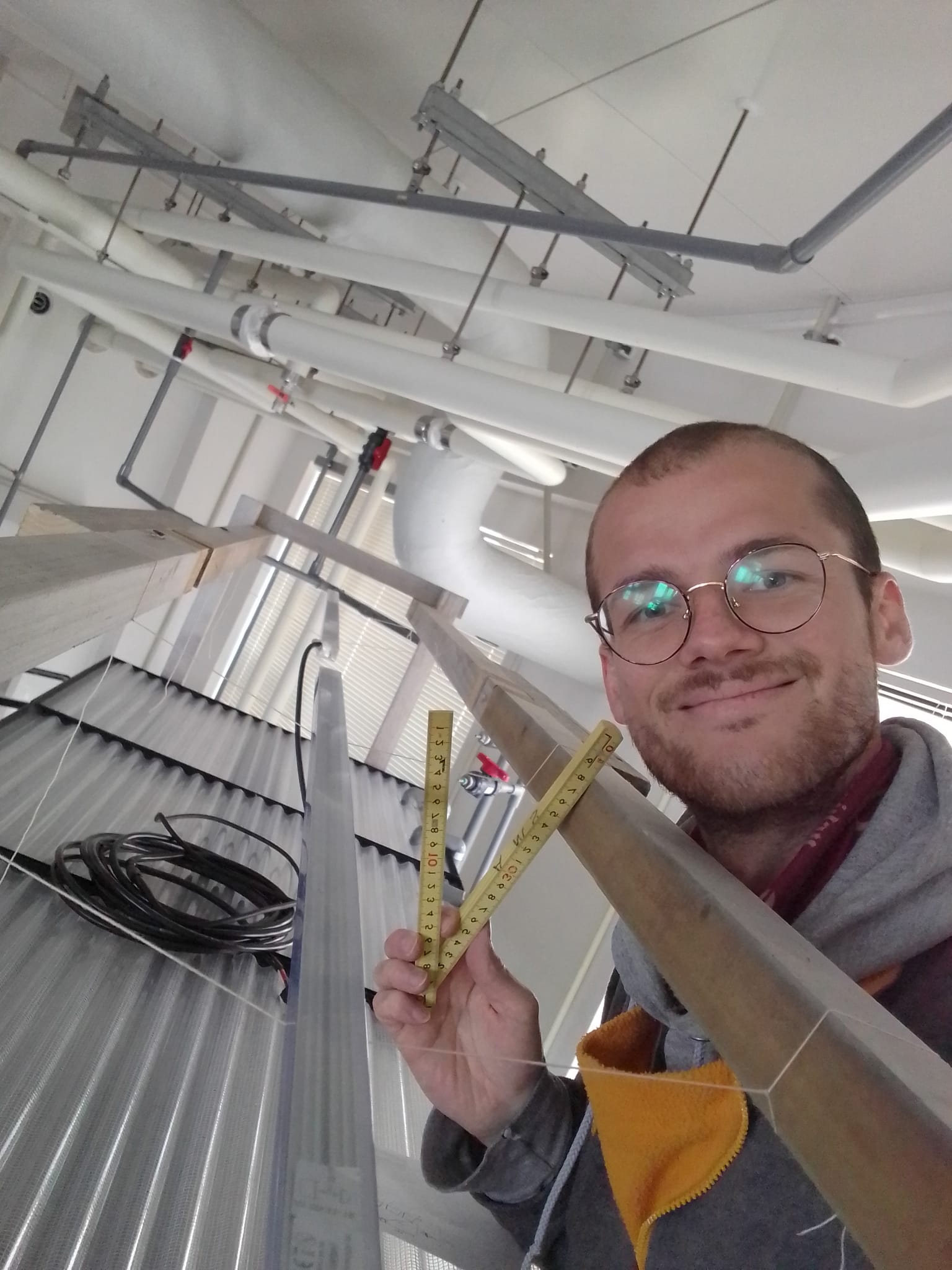
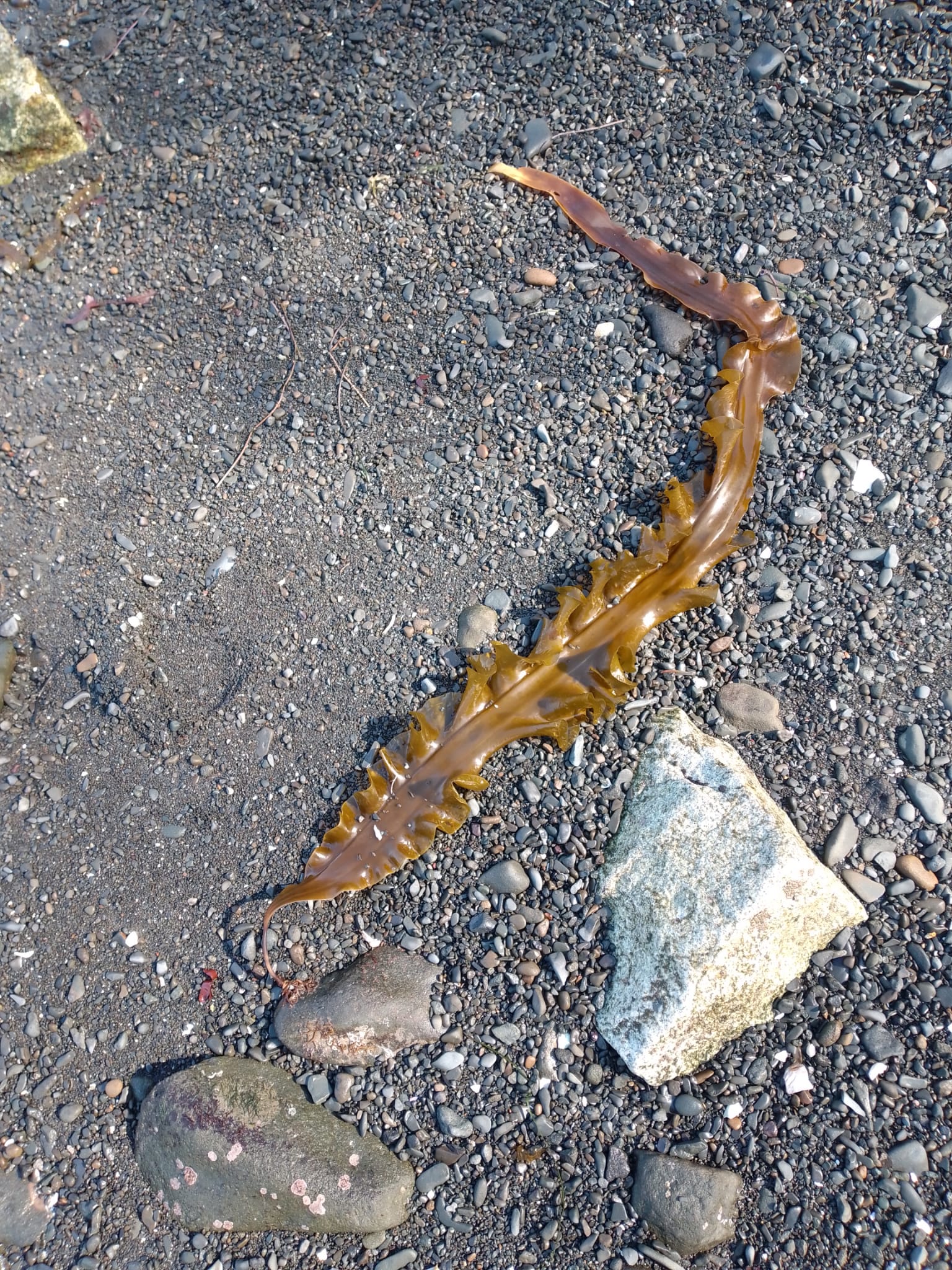
After having covered the whole shelf with light impermeable foil, we started to set up the scene for our pilot studies, during which we gained additional knowledge about the interaction of the algae and grazer species we work with. To gain the most valuable information about the effects of ALAN, we decided to work with the most abundant and important species of the local coastal ecosystem. Our choice for the algal target species fell on Saccharina japonica (a local brown algae species of kombu, which is also very important economically), Chondrus yendoi (a very abundant red algae, which is very important as a food resource for most of the intertidal species) and Fucus distichus (a habitat building brown algae crucial for the vitality of the coastal area). To feed on our algae we decided to work with Idotea ochotensis, a regional species of marine isopod, which is inconspicuous to the eye at first, but due to its abundance and voracity plays an essential role in the coastal food web and the remineralization process of organic material. For obtaining more detailed information on the interaction of these species with each other, we will assess the consumption rates of the isopods on our algae as well as if they prefer to graze during the day or during the night.
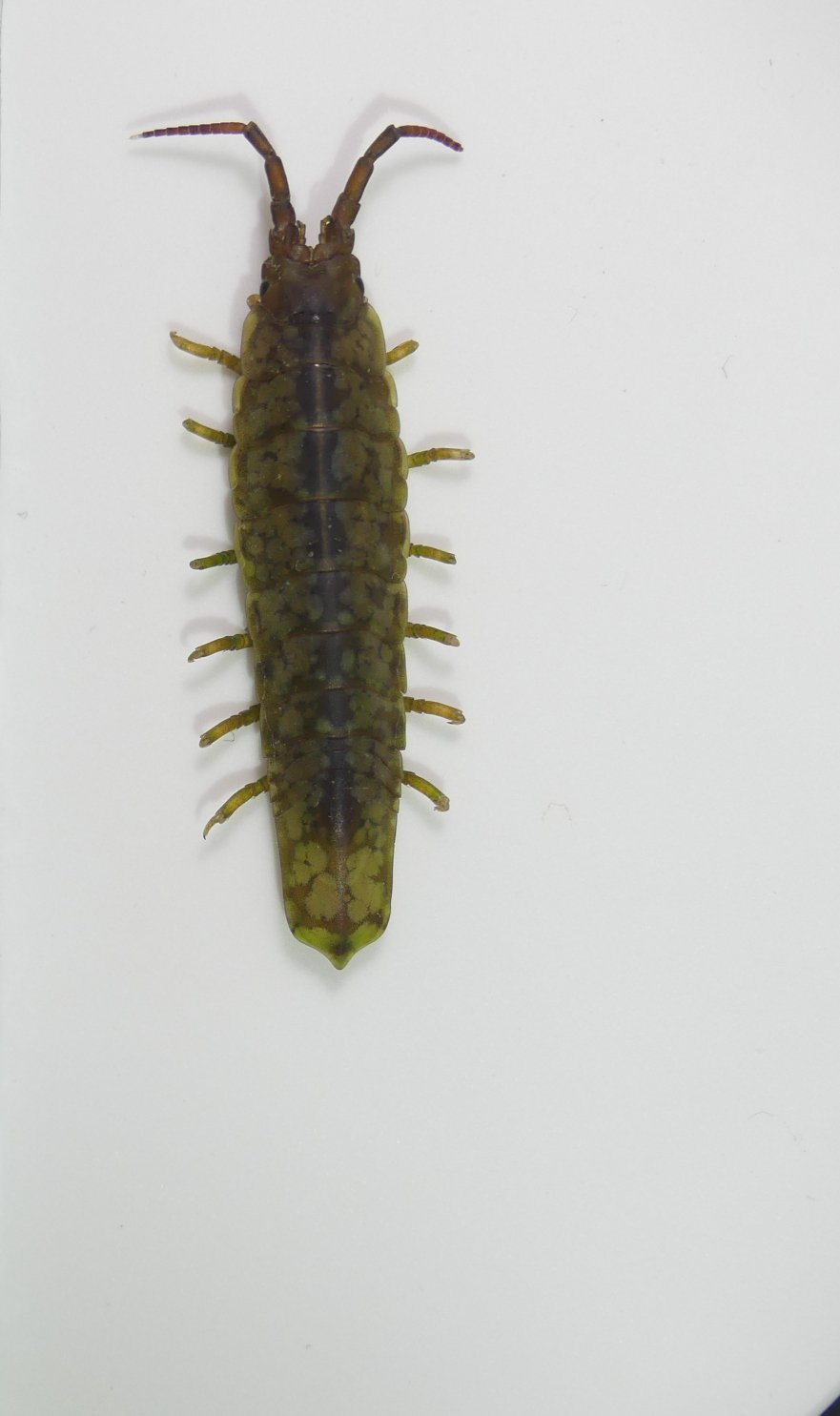
In the next days, after having accomplished several test runs on the experimental set up as well as having practiced to conduct measurements with the laboratory equipment, we will start our main experiments.
お疲れ様です – thanks for your hard work!
Enlightenment in Japan – how artificial light at night influences local kelp forests.


Our ocean is an incredibly vast and mysterious place. And there is no place where that is more evident than the deepest ocean area in the world: the legendary Mariana Trench. Located east of the Philippines, the Mariana Trench lies in the Mariana Archipelago in the western portion of the North Pacific. The greater area of the Mariana Trench Marine National Monument is made up of more than 95,000 square miles of ocean. Beneath these waters lie incredibly complex aggregations of submerged islands and volcanoes … and of course, an astoundingly massive trench.
Dive in with us to have your biggest questions answered about the famed Mariana Trench.
How deep is the Mariana Trench?
The deepest part of the Mariana Trench, known as Challenger Deep, is almost 36,000 feet below the ocean’s surface. For context, Mount Everest is about 29,000 feet above sea level, so the Mariana Trench is about 7,000 feet deeper than Mount Everest is tall. For one more comparison, the RMS Titanic lies at a depth of about 12,500 feet below sea level. The Challenger Deep is in waters nearly three times deeper than this ship’s final resting place.
Due to its enormous size, the Mariana Trench has at times been affectionately nicknamed the Grand Canyon of the ocean. This is certainly a picturesque image, but don’t let the mammoth size of this U.S. national terrestrial park fool you into thinking the Mariana Trench matches its size. The trench’s footprint is estimated to be 120 times larger than the Grand Canyon’s, and to reach the bottom of Challenger Deep, you’d need to descend through almost six Grand Canyons stacked on top of each other before you’d reach the seafloor.
Oh … and did we mention it’s five times wider than it is deep? It’s about 43 miles wide!
What is Challenger Deep, and how long would it take to reach it?
Challenger Deep is the deepest point of the Mariana Trench. Fewer than 30 people have ever journeyed to this area. The trek below the surface is long, dark and time-consuming, and it’s not an expedition considered lightly by scientists and explorers.
The first people to descend into the depths of this area in 1960 were oceanographers Jacques Piccard and Don Walsh, and it took them close to five hours to reach Challenger Deep. Since then, more advanced submersibles have been created, but it still takes two to four hours for modern vessels to reach such depths. For example, explorer and filmmaker James Cameron reached the seafloor in a little more than 2.5 hours in the first documented solo submarine dive to the area, and it took oceanographer Dr. Dawn Wright about four hours in 2022. It is crucial that these submersibles descend slowly and steadily beneath the surface, as the immense water pressure compounds with every mile a submersible descends. Speaking of pressure …
Get Ocean Updates in Your Inbox
Sign up with your email and never miss an update.
What is the water pressure at the bottom of the Mariana Trench?
If you thought the depth of the Mariana Trench was its only jaw-dropping feature, think again. Water pressure is one of the most important factors affecting deep-sea life. In the ocean, pressure increases by one atmosphere for every 33 feet (10 meters) of depth. One atmosphere (a unit of measurement for pressure equivalent to average air pressure at sea level) is equal to about 14.7 pounds per square inch (PSI), which is the approximate standard atmospheric pressure at sea level. If you were to convert atmospheric pressure into weight, one atmosphere is about the weight of a bowling ball. Stay with me, friends.
If a vessel were to dive 2,000 feet below the surface, the pressure would equal that of 60 bowling balls stacked atop every square inch of that submersible. But 60 bowling balls is simply nothing compared to the pressure in the Mariana Trench. The atmospheric pressure at the depths of Challenger Deep is equal to about 16,000 PSI. That pressure is about the same as the weight of an entire full-grown elephant on every square inch of a submersible!
Need a more extreme comparison? If a human were to be placed at the bottom of the Mariana Trench, the pressure would be equal to that of 50 jumbo jets piled on top of a person!
Do any animals live in the Mariana Trench?
The depths of the Mariana Trench come with immense pressure and extreme darkness, but somehow, life finds a way to survive. Organisms that live at an extreme depth, like that of Challenger Deep, have to be highly adapted to low temperatures (typically just above freezing), high pressure and virtually no light at all.
Species found in the depths of the Mariana Trench might look vastly different from animals from other ocean depths because their anatomy has been refined to thrive in harsh conditions. At such great depths, these animals typically depend on chemosynthesis (using nutrient-rich waters being pumped out of hydrothermal vents) or descending detritus (dead matter that has fallen from higher parts of the ocean) for food, such as whale falls. Just a handful of these animals include species of octopuses and squids, sea cucumbers, amphipods, sea jellies, shrimp, sea worms and some wild-looking fish!
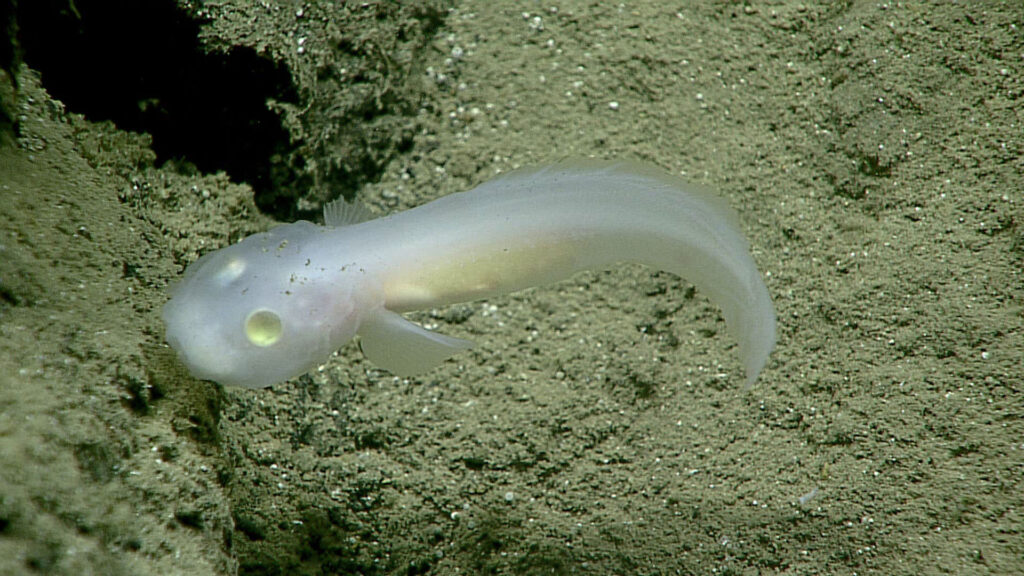
In 2025, more than 7,000 new species were discovered in the Mariana Trench, including the hadal snailfish (Pseudoliparis swirei). This is the deepest-dwelling fish currently known to science. Now, the fish has been dubbed “the Mariana snailfish.”
How was the Mariana Trench formed?
The process by which the Mariana Trench was created is a geologically fascinating one known as subduction. On the Earth’s surface, there are thin plates that cover the planet’s mantle, which is made of molten rock. If two of these plates collide, one pushes down into the Earth’s mantle while the other is pushed over the bottom plate. When this happens, a trench is formed from the drag of the bottom plate. This process can sometimes create incredibly strong earthquakes. T