Connect with us

Published

on

A traditional sustainability certification can take six to eight weeks and thousands of dollars in consultancy fees, and still leave purchasers wondering whether the claims actually hold up. Martin Johnston, founder of EarthRating.ai, thinks he can deliver a more useful answer in 10 minutes. His London-based startup is building a universal credibility score for sustainability — a 1,000-point rating, drawn from roughly 100 public data points, that measures whether what a company says about its environmental and social performance is consistent with what its audited filings and regulatory disclosures actually show. The premise borrows directly from consumer credit scoring: a FICO score doesn’t tell a lender whether you’re a good person, only whether your behavior is consistent enough to be trusted. On this episode of Sustainability In Your Ear, Martin explains how EarthRating’s “accelerated impact engine” gathers verified data instead of relying on questionnaires, and why the small and mid-sized businesses now caught up in the EU’s Corporate Sustainability Reporting Directive and the UK’s Procurement Act 2023 need an affordable way to prove their credentials.
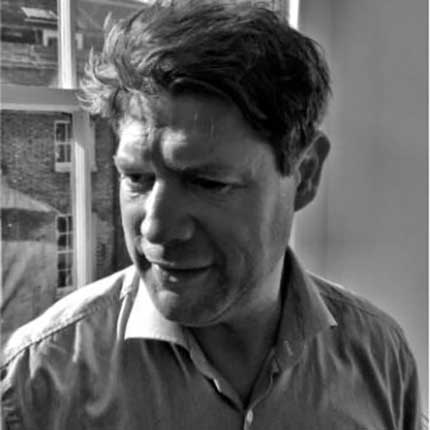
Martin Johnston, founder of EarthRating.ai, is our guest on Sustainability In Your Ear.

Most sustainability frameworks rely on self-reported questionnaires; EarthRating pulls data from audited annual reports, regulatory filings, press coverage, and marketing materials, then cross-checks them against each other to surface contradictions before they become a regulatory or reputational problem. A near-term emissions target that appears in a press release but not in the audited annual report is exactly the kind of credibility gap the platform is designed to flag. Importantly, EarthRating isn’t measuring environmental impact — it’s measuring whether a company’s story is internally consistent and externally verifiable. That sidesteps the impossible problem of reducing carbon, water, biodiversity, and social performance into a single comparable number, and replaces it with a more tractable question: are the claims true? That speed and accessibility comes with real caveats, and Martin and I dig into them. A credibility score isn’t an impact score: a small landscaping firm with a modest, well-documented commitment to electric mowers could rate higher than a multinational with aspirational but unverified net-zero pledges. That’s the right calibration for measuring trust, but it isn’t the same as measuring environmental performance. EarthRating also exists at “Google 1.0,” in Martin’s own words — a launch-stage platform with a proprietary methodology that hasn’t yet been externally audited. Global standards aren’t willed into existence; they’re earned through adoption. The underlying problem EarthRating is trying to solve — making credible sustainability measurement accessible to the businesses that have been priced out of it — is a real one, and worth watching.

To find out more about EarthRating, visit EarthRating.ai.

Interview Transcript

Mitch Ratcliffe  0:09

Hello, good morning, good afternoon, or good evening, wherever you are on this beautiful planet of ours. Welcome to Sustainability In Your Ear. This is the podcast conversation about accelerating the transition to a sustainable, carbon-neutral society, and I’m your host, Mitch Ratcliffe. Thanks for joining the conversation today.

We’re going to talk about, well, in a way, credit scores. Every sustainability claim made today faces the same fundamental problem: we lack a credible common language that quantifies a business’s impact on planet and people. A company, of course, can call itself sustainable simply by cherry-picking a single metric, commissioning a favorable audit, or simply repeating the word often enough that it seems to stick.

However, regulatory pressure is tightening. The EU’s Corporate Sustainability Reporting Directive now covers roughly 50,000 companies, and the UK’s Green Claims Code is actively prosecuting misleading environmental marketing. Here in the United States, the SEC’s climate disclosure rules are still in effect, although they are under attack. Of course, regulation alone doesn’t solve the underlying problem. Businesses, investors, and consumers still lack a fast, affordable, and trustworthy way to evaluate whether a sustainability claim actually holds up.

Our guest today is Martin Johnston, founder of EarthRating.ai. It’s an early-stage company building what it calls a universal credibility score for sustainability. The Earth Rating is a 1,000-point scale generated in minutes using AI and verified data from a company. It’s designed to measure, manage, and monitor sustainability performance across businesses of all sizes, from a regional landscaping firm to a global fashion house.

But unlike legacy frameworks built for large corporations with dedicated sustainability teams and consultancy budgets, EarthRating is designed to be accessible to small and medium-sized companies. They constitute the vast majority of economic activity worldwide and have been almost entirely locked out of credible sustainability measurement. EarthRating’s core proposition is that sustainability credibility should work more like a credit score — standardized, legible, and universally available — rather than opaque, expensive, and inconsistent.

So we’re going to talk with Martin about what makes a sustainability score genuinely credible, rather than just another layer of greenwashing; how EarthRating’s methodology handles the inherent incompleteness of any single score across carbon, water, biodiversity, and governance; and what guardrails prevent businesses from gaming the system he’s designing. We’ll dig into who the primary audience for an Earth Rating actually is — whether it’s regulators, investors, supply chain partners, or even consumers — and how the company is thinking about the gap between giving a business a number and actually changing its behavior. We’ll also look at the roadmap: what EarthRating is building, which markets it’s targeting first, and what would have to be true for a startup like this to become the universal standard it’s aiming to be.

You can learn more about EarthRating at EarthRating.ai. EarthRating is all one word, no space, no dash. EarthRating.ai. So can a single AI-powered score do what decades of sustainability frameworks have failed to accomplish — make environmental credibility fast, affordable, and impossible to fake? Let’s find out right after this brief commercial break.

Mitch Ratcliffe  3:43

Welcome to the show, Martin. How are you doing today?

Martin Johnston  3:45

Oh, yeah, not bad, actually. Thank you very much.

Mitch Ratcliffe  3:47

Well, thanks for joining me. We had a really interesting conversation a couple of months ago about what EarthRating is up to. And I want to start off by asking — you’re describing this as a universal credit score for sustainability. What will make EarthRating credible when so many sustainability scores and certifications have been accused of serving mostly as marketing tools?

Martin Johnston  4:07

Yeah, it’s a good question. I think the difference between us and other people really is the fact that we can summarize it in three words: we don’t actually ask, we find out. Where most other frameworks are reliant upon questionnaires and self-reporting — and I know a lot of them are now catching up on verifying the data and that kind of stuff — we’ve built an accelerated impact engine that gathers 100-plus data points and feeds them into a scoring system where we can verify what people are saying against what they’re actually doing. We search for verified information and verified data, and therefore what comes out of the platform is quite a good indication of the maturity of where a company is at from a sustainability perspective, based on evidence and based on real data, rather than based on a questionnaire that someone else has filled in for them.

Mitch Ratcliffe  5:13

Can you describe briefly what kind of data you get when you make that assessment?

Martin Johnston  5:18

Yeah, I can describe it. Obviously, I don’t want to go too much into detail, but we research the four pillars of sustainability — so human, environmental, economic, and social. Data that comes out includes things like: Is it verified carbon measurement? Do they have a near-term target? Do they have a future target? We then assess whether that is actually verified by an independent body. So it’s not just what the company says about itself — has it actually got third-party endorsement? From there, what we can then look for is any flags or any conflicting statements, because we go into detail from actual reports that have been signed off by their accountancy teams, versus what the press and what marketing materials say. It looks to verify that data and compares the conflicts. So from our point of view, it’s not really a certification. It’s a B2B tool which allows organizations to genuinely use it in an impactful way. It’s not there to scrutinize and be used as a lens so other people can jump on the bandwagon of having a go at businesses who are trying to do the right things and be positive towards the planet and the people who live on it.

Mitch Ratcliffe  6:40

Roughly how long does it take to establish that score once I decide to do it as a company? What does the timeline look like?

Martin Johnston  6:48

To be honest with you, it varies, but we’re talking minutes.

Mitch Ratcliffe  6:52

Minutes?

Martin Johnston  6:53

We’re talking anything up to 10 or 15 minutes. We can do it sometimes in three or four. It depends on the veracity of the information we’re searching for, how much information is available, and whether we have to cross-check that information using our accelerated impact engine. Literally, the speed is how quickly we can ascertain that information — whereas, you know, comparable processes take six to eight weeks for a certification, and 12 months-plus for others.

Mitch Ratcliffe  7:27

Sustainability measurement is fragmented across carbon, water, biodiversity, social impact, the human implications that you described a moment ago. How do you handle that kind of inherent incompleteness in any single score? And how does EarthRating express explicitly what it doesn’t measure as well as what it does?

Martin Johnston  7:49

Good question. Well, we’re measuring the credibility — this is our differentiator. We measure the credibility of what an organization is saying, rather than the impact itself. So what we look for is: What does an organization say it’s doing? What claim is it making? And then we offer data to verify that claim. That’s why it’s a credit score in the true sense of the word — a credit score is actually credibility. That’s what credit means. It’s based on the idea of trust: if you are paying back your debts to your financial institutions on a regular basis within the timeframe and show that you can manage your financial responsibilities in a considerate way, you will get a good trust score, which is what a credit score is. That means you are a good opportunity for underwriters to look at and say, ‘Yeah, you’re a good person to loan my money to. I live where I live, I bank with the right bank, I’m on the electoral roll, and I have a credit history of doing the right thing on a timely basis.’ If you take that financial model and recategorize it to sustainability and change the inputs — are the claims credible? Are they historically valuable? Do they prove themselves time and time again, consistently? — when you do that, you build up a nice picture of an organization that you can actually trust on what it’s claiming to do. And that’s what we’re trying to do.

Mitch Ratcliffe  9:15

That’s interesting. You think about the timeliness of a credit score, which goes down if you don’t use credit. At some point, it will be necessary to be on the system on an ongoing basis. But how frequently would a review be completed? Or is this integrated into the businesses’ systems in such a way that it’s just a continuous score?

Martin Johnston  9:39

Okay, so we’re kind of in launch process at the moment. We’re doing Google 1.0 — not what Google is now, but what Google was back then. For us, we are continuously going to be checking, but continuously means we’ll be giving updates on a quarterly basis to organizations. However, we want to move this to real time, because we believe that, in the words of Douglas Adams, bad news travels fast. If a claim that an organization is making hits the headlines, then that needs to be alerted to the business — just like a credit score has alerts which say somebody’s checked your file, somebody’s looking at your profile, an underwriter or whatever. We think the same process has to happen for businesses to be able to respond quickly and responsibly to potential threats or risks.

Mitch Ratcliffe  10:32

I was particularly intrigued by your focus on small business. Can you explain what a landscaping company, for instance, or maybe a regional logistics firm, might actually do with the sustainability score? Who are they going to show it to, and why does it matter to them to do it?

Martin Johnston  10:50

To be honest, this is the current problem for small businesses. Inherently, reporting on sustainability is too costly, too time-consuming, overwhelming, and confusing. The whole thing needs to be looked at from a complexity level. That means that 91% of small businesses do not report on sustainability at all, yet they make up the vast majority of the economies of the world. If you combine the numbers and the impact, and the ability we could give if small businesses have the same opportunities as larger businesses to report on sustainability — and we break those barriers down — then that allows a business to operate in a world where sustainability needs to be taken a lot more seriously. It needs to be shown as innovative and commercially valuable, not just a nice-to-have. In the UK particularly, we’ve got the new Procurement Act, which has come out, and if you cannot show sustainability and the progress of sustainability for your business, you could be excluded from government contracts. You could be excluded from the largest supply chains. Bigger businesses are looking to regulate their supply chains and their ESG claims throughout, because they’re responsible for their own supply chains. That means small businesses, if they can’t do this, might risk losing or reducing their work or opportunities to gain work. And then the biggest thing as well is tender writing. If we can give them an instant ability to showcase where they sit on a maturity level of sustainability, and how easy it is for them to implement a reporting process that takes minutes, not months — not even years — and costs no time at all in terms of labor to produce, then that removes the bureaucracy and the friction that small businesses face when trying to come up with stuff that they’re required to do for procurement.

Mitch Ratcliffe  12:56

A credit score is typically paid for by another organization that wants to see how my credit is, or my business’s credit is. What’s the business model? You described it as a B2B metric. Am I going to, when I’m reviewing a supplier, pay you to get a rating?

Martin Johnston  13:11

The idea is that eventually, when we process this out and it’s a bit more mature and the business has grown, then, yeah, we will be hopefully selling the reporting processes that organizations can pay for. But for us, this is a tool for a small business to use to implement and to make sustainability actionable, so they pay for it, and they pay to be on the platform.

Mitch Ratcliffe  13:32

Could you also begin to roll up individual entities’ carbon impact? For instance, there’s Scope 1 and 2 emissions, in order to provide some other organization up or downstream visibility into their impact, so they could calculate their Scope 3 score?

Martin Johnston  13:49

Yeah. Well, this is also interesting, because sustainability has a complexity attached to it where consultancy is required for stuff like that. So what we’ve done, and what we are doing, is we’re building a sustainability navigator, which effectively is a tool that sits on a platform. If they need to understand where to go and get their SBTi carbon Scope 1, 2 or 3, or need to do something that requires heavy lifting in terms of what sustainability metrics look like for their business, then our sustainability navigator will point them to the right places without the fees of a consultancy — £800 to £1,500 a day.

Mitch Ratcliffe  14:35

Okay, so this is where the AI comes in. As you’ve developed this guidance you just described, what is it based on — for instance, the SBTi standards? How did you develop the methodology that it’s going to use to coach those small businesses? Because that’s really an interesting opportunity.

Martin Johnston  14:55

Yeah. Well, we’ve been doing sustainability for quite a while, and I’ve looked at all of the frameworks. We haven’t sort of adopted any particular one. But what we do understand is the standardization of questions that are being required through tenders and through responses by businesses. We’ve developed 100-plus data points, which we developed our own over a number of years. It’s proprietary information that we gather. It’s not based on any one framework, but the sustainability navigator will point them to people who actually can help them — organizations that can give guidance in the right way. So that’s what we’ve done. That’s what we’re aiming to do. It’s still in its infancy, and we’re in launch mode, so we’ve got to do more of the doing, rather than more of the talking about what we’re going to do in order to implement this stuff.

Mitch Ratcliffe  15:54

It does sound like one of the functions of that AI guidance in the future could be to look across the market space and say, ‘Here’s a partner who can solve this problem for you.’ Becoming the marketplace, in the long run.

Martin Johnston  16:08

No, absolutely not. It’s not a way to become the marketplace at all. It’s a three-in-one platform. It provides a credit score instantly — or almost as instant as you can be — which gives information to an organization showing how well they are performing against the four pillars of sustainability and where the information gaps are. We then have a Green Claims Code checker, so we actually go out and search for: Are they compliant with the Green Claims Code? Is there anything out there that could put them at risk, and is that affecting their credit score effectively? And then we have the sustainability navigator, which can help them correct anything, fill in the gaps, or provide them with information to say, ‘Look, these are the best three things you can do to increase your score and make the immediate impact you need to do.’ We’ve got a growth mindset built into the platform. The idea is to reward the businesses that want to improve quickly and get them on the journey. Because even having a low score — that’s the difference between us and everybody else. There’s no pass/fail. It’s not negative. A low score is, ‘Well done. You’re on the journey.’ It’s not ‘You need to improve.’ It’s ‘You’ve made the step, you’ve made the commitment, you’ve made the positive commitment to actually want to do something that’s positive for your business.’ For me, commercially, sustainability leads to innovation, it leads to cost efficiencies in the long term, and it helps businesses future-proof themselves. So it’s an absolute no-brainer to want to do something that protects the business from itself in the future.

Mitch Ratcliffe  17:50

You are at the launch stage, and Google version 1.0, as you just said. What are you finding that early customer discussions are pointing towards in terms of what they’re most interested in — the continuous monitoring, the transparency in their supply chain, getting benchmarked?

Martin Johnston  18:08

The most interesting thing is the fact that we do all the work for them. They’re astonished. They say, ‘Well, what do we have to do?’ And we say, ‘Nothing. You give us your company name, you give us your company registration number, and we do the rest.’ The fact that they don’t have to fill in a questionnaire, the fact it doesn’t take them weeks to produce answers to all of these questions, the fact that it’s not labor-intensive — that’s the game changer, we think, which will be the non-bureaucratic, non-burdensome process that stops businesses from wanting to do good.

Mitch Ratcliffe  18:41

Simplification. And we’re talking about an incredibly complex system that’s growing more so all the time, especially with the growing impact of climate change on all of our businesses. This is, I think, a great place to stop and take a quick commercial break. I want to dig into a lot more of this. We’ll be right back. Folks, stay tuned.

Welcome back to Sustainability In Your Ear. Let’s return to my conversation with Martin Johnson. He’s founder of EarthRating.ai, which aims to make environmental impact an easily measured and understood business metric with a universal credibility score for people and planet. So Martin, as we were talking about, this is an immensely complex problem, and you’re at this early stage, still gathering a lot of interest from organizations. What does your roadmap look like? And what are the particular areas of complexity you think you can tackle in the next 12 to 18 months?

Martin Johnston  19:35

Some interesting questions there. I think you’ve nailed on something — the landscape for sustainability is incredibly complex, and it shouldn’t be. The reality is that it took rocket science to get us off the planet, but we only need trees, water, and air to breathe and live on it. So we need to simplify sustainability, and that’s our purpose. The whole idea is to look at how we can make it easier, simpler, and less complex for businesses to start to report and then create operational efficiencies by making the right decisions for their business. The whole concept of sustainability is really about literally the word ‘sustain’ and ‘able.’ If you aren’t doing the right things, you’re putting your business at risk in the future. There’s supply chain risk, demand risk, regulatory risk, and reputational risk that all need to be put into the mix when you start to think about what the future looks like for your business. For us, the roadmap really is to create a universal — and ‘universal’ doesn’t necessarily mean the same; it means available to every business. Making that available to every business means we need to break those barriers down, which create the complexities, and allow businesses to start doing the right things, rather than spending time, money, and energy on reporting the wrong things. That’s where we need to change the system. We need to create a new operating system for sustainable business. Look at how we can then seriously make inroads, so it becomes almost the standard, if you like, by simplifying sustainability and getting mass adoption as quickly as we can. That’s the aim.

Mitch Ratcliffe  21:25

What would you describe as the most important question you can help a business answer about itself or a supplier in the next couple of years? Let’s talk simplification. Bring it down to that level.

Martin Johnston  21:38

I guess the simple question is: if you’re looking to regulate your supply chain and you’re looking to de-risk your supply chain as an organization from above, you need to know that your supply chain is saying what they’re doing and actually implementing what they’re doing — not just saying the right things to help them win tenders, because they’d be putting everybody at risk. So what we’re doing, first of all, is just absolutely putting the credibility back into what sustainability is for businesses and for people. And then what that means for a smaller business who’s looking upwards is that they can show they’re on the journey, show they’re good enough to win and be part of a regulated supply chain, and actually want to be in an ecosystem where businesses think beyond profits and balance sheets — because it’s commercially not astute not to. It’s because it’s commercially the right thing to do.

Mitch Ratcliffe  22:43

When we talked a couple of months ago, when we first met, you mentioned that you’re focused on — and this is a quote — ‘detecting credibility gaps early.’ Can you describe what a credibility gap is going to look like in practice, and how your monitoring will catch it, particularly before it becomes a reputational crisis for the company?

Martin Johnston  23:02

Yeah. One of the things we are doing, as I said right from the beginning — and we didn’t make this statement, Douglas Adams did — bad news travels fast. Bad news travels really quickly, and the ability for businesses to put out statements which are unintentionally wrong is where this goes pear-shaped for them. The well-intentioned statement by any large organization is genuinely probably well-intentioned, but when it doesn’t take total impact into consideration, it can then be taken out of context and actually be untrue. That’s where you need to look at the regulatory complexity and the gap in the marketplace. Look at the statements that they’re making applying across the board. So it’s total impact considerations, actually saying, ‘You can’t say that, because over here you’re not doing it.’ That means you can pull out what could be a compliance risk, a damaging reputational risk, and an opportunity for fines risk, and show businesses, ‘This is how you should be rephrasing this, or sourcing some evidence to prove it,’ before you then spend loads of money on an advertising campaign and getting it all wrong.

Mitch Ratcliffe  24:26

One of the concerns that a lot of people have when we talk about artificial intelligence and sustainability, frankly, is a credibility problem in and of itself. Models can hallucinate. The training data could be biased, and as you’ve pointed out, verification can be really hard. How do you validate all of the inputs and the AI inference that is applied to those inputs when generating the score?

Martin Johnston  24:52

Yeah, okay. There is a lot of hallucination in AI, which is why we use it very minimally. The idea is the gathering of the data. If you take a credit score model, it gathers realistic data from all kinds of places. It then aggregates that data, and that aggregated data can give you a very solid viewpoint of what you can do. You can then potentially use AI to look into that data — which you know is correct — to give you the right information much quicker than if you were to do it with human eyes. That’s the thing you have to do: gather the correct data, the right data, and evidence against that data. The other good thing you can do is compare data sources from one to the other, and by doing that, show the gaps from, say, a news source against the annual report. The annual report will be signed off. The annual report will be true. The annual report will have an accountancy stamp all over it to say this is legally correct. So what you need to do is look at the legally correct information, take the legally correct information, benchmark it against marketing information, and showcase where things could go wrong. That is not necessarily a hallucination AI job. That’s just using AI to show how you can display data quicker than you could do in any other way. But you have to still gather the data and gather the data sources, which is why our accelerated impact engine has gathered all of that. It’s taken years to build. It’s not just sticking something into Claude and saying, ‘What do you think of this?’

Mitch Ratcliffe  26:23

Specialized models are going to be particularly important as you think about the emergence of a universal standard, which, of course, you’re trying to build. What has to be true in terms of the technology — our ability to integrate into systems and do these kinds of credibility checks — in terms of regulation? Do you need to have… as you pointed out, the UK government has a new procurement law. The European Union has transparency laws in terms of the sustainability and environmental impact of a variety of products. Is that all moving in the direction to support your work?

Martin Johnston  26:56

No, I don’t think we need more regulation. I really don’t. I think AI maybe needs regulation, but that’s not what I’m about. It’s not what we’re here to talk about at all. I think the point is, sustainability and more regulation, more red tape, will just stop businesses from doing it. The best example of self-regulation we have in this country is the Law Society, and it’s a system which everybody adopts, everybody understands and learns. It’s almost like the industry self-regulating. I think we need to get businesses to understand that they need to self-regulate against stuff. That’s where sustainability can actually start to take a much bigger impact and a much bigger step forward — if we actually lost a lot of the regulation. For example, you have repurpose and recycling, and then so much insurance invalidation from using materials that have been used before, because of the risks involved. Yet the questions behind that are not necessarily commercially correct. It’s just that the risk is too great. So I think regulation, and imposing stuff on businesses — particularly around wanting to be more sustainable — is just another tax that they don’t need. Innovation moving forwards, doing the right things to de-risk their business from future demand, from future supply chain restriction because of global issues around the world that stop things from happening or trap movement from happening, and international trade being available, is something that needs less friction, less friction — rather than more barriers.

Mitch Ratcliffe  28:44

In the long term — and I’m asking you to think maybe five or 10 years out in the future — who’s the ultimate consumer of the EarthRating score? Does it include investors, and maybe ultimately consumers who would say, ‘Is this business one that I can trust to be sustainable?’

Martin Johnston  29:00

I think that’s a good question, actually. In five years’ time, the aim really is for us to be globally recognized, like a credit score for environmental and social impact — transparent, credible, and recognized worldwide. We’d love investors and consumers to look at it and back businesses with real sustainability credentials, which doesn’t involve greenwashing. It drives demand for genuine impact. Honestly, if we could build this into finance so the highest scores influence lending — they influence decision-making — so that sustainability becomes a strategic financial advantage, that would be incredible. And to finalize it all off, access for small businesses — giving them the tools and the resources to adopt sustainable business practices — is probably the biggest opportunity for us as a race to make a difference to the planet and the businesses that are on it.

Mitch Ratcliffe  30:11

Based on what you’ve learned so far, what’s your advice for a small business that’s thinking about its sustainability moves? Where would you urge them to focus first or second?

Martin Johnston  30:22

I’d obviously go and get yourself an EarthRating.

Mitch Ratcliffe  30:24

Well, beyond that, what would make their EarthRating score really shine?

Martin Johnston  30:31

Well, I think what they need to do is look at their business model. The best businesses solve problems, and they expressly say so through their brand. For example, you’ve got Tony’s Chocolonely in Europe — I don’t know if you have them in the US — although they exist to eradicate poverty in chocolate supply chains. They’ve got an open supply chain methodology, and they’ve grown exponentially by doing something really positive and being really good, then showcasing the problem they solve for the world through their brand. Patagonia do it as well — ‘Don’t buy this jacket.’ All the best brands are universally challenging what a marketing campaign looks like. But I’m actually going back to what they stand for. Where do they fit into this world, and what difference can they make? A small business should apply the same model: What are you doing? Why are you here? And what difference can you make? Then start championing that, because that’s an authentic positioning that no one can copy. That’s most important for any business — to start operating in a way that amplifies that process, because that means you’ll engage suppliers, you’ll engage partners, you’ll engage opportunities, and create advocates for brands and businesses more than any other way. In doing so, you’ll automatically want to adopt sustainable business practices, which just make you a better business.

Mitch Ratcliffe  31:56

I think of an orchestra when you describe that. A lot of people will focus only on the rhythm section or only on the violins because that’s what they do, but they have to see themselves in this larger picture — the way that Patagonia or Tony’s Chocolonely does, where they’re trying to help and create opportunities and solutions for the world, rather than simply meet some demand. As you design EarthRating, how do you describe that vision for your contribution to the larger world?

Martin Johnston  32:23

You just mentioned an analogy I really like — the orchestra. If you take it up to a bigger stage, you know, we’re called Earth, and the only reason we are alive on this planet is because we operate and are located within a larger solar system, where the gravity of the worlds pulls us in a way where we are equidistant from the sun, which allows life and oxygen to exist, right? So if you can take that orchestra analogy and explode it out to the solar system and then bring it back to the planetary system, to the ecosystem — we’re all part of it. It’s really important to understand that, to play a part in its future, we need to think in systems. We need to think system-wide. You can’t operate in isolation, because you just don’t operate within a structure where impact matters — if you don’t understand what your impact is on others.

Mitch Ratcliffe  33:21

You’ve got to look up, take a wider view of the world, it sounds like, and I wholeheartedly agree with that perspective. Now you’re early. You’re still collecting a lot of interest from people. How can folks — say, a small business — get involved with EarthRating.ai?

Martin Johnston  33:39

Well, we’ve got a holding website up there, which you can sign up to, and we can get in contact with you. We’ve also got a LinkedIn page, and I think those are the best two ways. Yeah, that’s probably the right way to go — to EarthRating.ai and register interest, and then we can get in contact. We do need adoption at scale. So yeah, one of the things we want to do is to challenge and transform sustainability by simplifying the whole thing and making it easier, more accessible, and more available to a larger audience group than it currently is.

Mitch Ratcliffe  34:15

Well, Martin, thanks very much for a fascinating conversation.

Mitch Ratcliffe  34:23

Welcome back to Sustainability In Your Ear. You’ve been listening to my conversation with Martin Johnston. He’s the founder of EarthRating.ai, an early-stage company building what it calls a universal credibility score for sustainability claims. You can learn more about Martin and his team’s work at EarthRating.ai. EarthRating is all one word, no space, no dash. EarthRating.ai.

Artificial intelligence has incredible power to find, organize, and systematize large amounts of unstructured information, which humans have plenty of — though its reasoning over that information may not always be sound. AI’s promise for sustainability work, which, as Martin pointed out, is to gather and analyze far more information for contradictions that undermine the credibility of a company’s claims that it achieves a reduced environmental and adverse social impact, is significant. But it’s early days for AI and EarthRating, and they’ve made a lot of promises that we’re going to have to see whether the technology and EarthRating can keep.

EarthRating doesn’t try to measure a company’s environmental impact. It measures whether the claims a company makes about its impact hold up against the evidence available in the public record. So like a FICO score that doesn’t tell a lender whether you’re a good person, this tells them whether your behavior is consistent enough to be trusted. EarthRating proposes to do the same for sustainability claims by pulling roughly 100 data points from audited reports, regulatory filings, news coverage, and marketing materials, and then flagging the gaps between what a company says and what the verifiable record shows.

The promise of a sustainability credibility score generated in minutes, not the six to eight weeks a conventional certification takes, would deliver simplicity. If that works as advertised, it would represent a real application of AI to a problem that has resisted simplification for two decades — the slow, expensive, fragmented mess that sustainability reporting has become. But perhaps we can take simplicity too far.

So two ideas from this conversation come wrapped with a healthy stack of promises still to be kept. The first is the reframe itself — credibility instead of impact. This is interesting because it sidesteps the impossible problem of trying to reduce carbon, water, biodiversity, and social performance into a single comparable number, and replaces it with a more tractable one: whether a company’s statements are internally consistent and externally verifiable. That has obvious value for procurement teams under, for instance, the UK’s new Procurement Act or the EU’s Corporate Sustainability Reporting Directive, which now covers about 50,000 companies and is pushing accountability down the supply chain.

But there’s a limit to transparency too. A high credibility score means a company is telling the truth about what it does, but it doesn’t mean the company is necessarily doing enough. A small landscaping firm with a modest, well-documented commitment to, say, electric mowers and edgers could rate higher than a multinational with ambitious but aspirational net-zero targets that have not been independently verified. That’s probably the right calibration for a trust score, but it’s not the same thing as an environmental performance score. As we’ve discussed with prior guests, the limits of single-metric thinking in a systems world are that every framework leaves something out, and the question is whether the thing it leaves out matters more than the thing it captures.

The second idea is the small business democratization play, and this is where the opportunity is largest and the proof is thinnest. Martin cited a striking number: 91% of small businesses don’t report on sustainability at all, even though they constitute the vast majority of economic activity worldwide. The reasons are exactly as you’d expect — cost, frameworks built for companies with dedicated sustainability teams, and bureaucracy that is overwhelming for a regional logistics firm or a five-person landscaping outfit. If EarthRating can give those companies a credible, low-friction way to participate in regulated supply chains and government tenders, it solves a real economic exclusion problem.

But the platform is, in Martin’s own words, at Google 1.0. And I was there when Google 1.0 was launched, and it did some important and interesting things that set it apart. But it was a launch-stage project with a proprietary scoring methodology — the PageRank algorithm — that wasn’t yet externally audited, and it had no business model. They were still trying to work that out. The vision for EarthRating to become a global standard that influences lending decisions and consumer trust is genuinely interesting, but global standards aren’t willed into existence by founders. They’re ratified by customers, by usage, embraced by regulators, and ultimately require widespread education to ensure that the seal of approval it grants is well understood in the market and not just another meaningless symbol or certification.

So let me add one note of friction here. Martin made the case that sustainability needs less regulation, not more, and that self-regulation is the path forward. I don’t think the historical record supports that argument. The real reason that small businesses are suddenly facing sustainability scrutiny at all is because of the regulation. The UK Procurement Act, the EU’s wide-ranging environmental and circular economy programs, and the SEC climate disclosure rules here in the United States are pushing sustainability reporting down the supply chain. EarthRating exists in a market that regulation created. That’s not a knock on the product — it’s an observation about the soil that it must grow in.

So count me intrigued, but with asterisks. An AI-powered credibility score for sustainability claims is a useful idea, particularly for small and medium-sized businesses that have been left on the sidelines of the reporting economy. Whether EarthRating becomes a standard or is absorbed by a larger framework is a question only adoption will answer, and so we’ll be watching.

Hey, and would you do me a favor? If you’ve enjoyed this conversation, please share it with a friend or a family member. You folks are the amplifiers who can spread more ideas to create less waste. So please tell your friends and family that they can check out more than 550 episodes in our archive and hear us on Apple Podcasts, Spotify, iHeartRadio, Audible, or whatever purveyor of podcast goodness they prefer. Writing a review on your favorite podcast platform does help people find us. Thank you for your support.

I’m Mitch Ratcliffe. This is Sustainability In Your Ear, and we will be back with another innovator interview soon. In the meantime, folks, take care of yourself, take care of one another, and let’s all take care of this beautiful planet of ours. Have a Green Day.

The post Sustainability In Your Ear: EarthRating’s Martin Johnston On Making Sustainability Claims Creditable appeared first on Earth911.

https://earth911.com/podcast/sustainability-in-your-ear-earthratings-martin-johnson-on-making-sustainability-claims-creditable/

Continue Reading

Green Living

Best of Sustainability In Your Ear: Luke Purdy, Wieden+Kennedy’s Director of Sustainability, on Advertising’s Power To Change

Published

on

Subscribe to receive transcripts by email. Read along with this episode.

Can the industry that taught the world to consume help us learn to consume more responsibly? Luke Purdy, Director of Sustainability at one of the world’s leading creative agencies, Wieden+Kennedy, is betting his career on it. After 13 years working on major accounts like Nike and Corona at one of the world’s most influential creative agencies, Purdy did something unusual: he wrote his own job description and asked to become the agency’s first sustainability director. Wieden+Kennedy gave him the job, and in 2023, the agency became the first global advertising network to achieve B Corp certification across all nine offices in seven countries. With brands spending over $700 billion annually on advertising worldwide, the messages agencies craft shape not just what people buy, but how they think about consumption itself.

Luke Purdy, Director of Sustainability at Wieden+Kennedy, is our guest on Sustainability In Your Ear.

Luke discusses how he sold sustainability as a business value proposition rather than a compliance issue, why he reports to the CFO instead of the CMO, and how Wieden+Kennedy’s carbon removal program for video productions is changing industry standards. He also tackles thorny questions about greenwashing that can guide which clients agencies should work with, arguing that guiding any company toward sustainability is better than refusing to engage. He shares lessons from helping transform Danish Oil and Natural Gas into Ørsted, one of the world’s leading renewable energy companies, and explains why authentic storytelling beats green leaves and clichés every time. Can advertising agencies avoid greenwashing while still growing their clients’ businesses? And what does it mean when sustainability becomes culture rather than just compliance?

You can learn more about Wieden+Kennedy’s sustainability work at wk.com.

Editor’s Note: This episode originally aired on November 10, 2025.

The post Best of Sustainability In Your Ear: Luke Purdy, Wieden+Kennedy’s Director of Sustainability, on Advertising’s Power To Change appeared first on Earth911.

https://earth911.com/podcast/sustainability-in-your-ear-luke-purdy-wiedenkennedys-director-of-sustainability-on-advertisings-power-to-change/

Continue Reading

Green Living

Sustainability In Your Ear: Ethan and Desmond Hua Build HOPE for School Uniform Reuse

Published

on

Most school uniforms are retired while they are still perfectly wearable. Children cycle through them on a predictable annual schedule as they grow, which sends a steady stream of usable clothing toward the landfill at the same moment families on tight budgets are paying to replace what their kids have grown out of. The waste side of that equation is substantial: the EPA estimates Americans generated about 17 million tons of textiles in 2018, and roughly 11.3 million tons of it was landfilled. Ethan and Desmond Hua, brothers from San Mateo, California, looked at textile waste and the cost of raising a family and saw a single solvable loop. In 2020, while they were still in middle school, they founded the HOPE Uniforms Program — HOPE stands for Help Our Planet Earth — a student-led nonprofit that collects gently used school uniforms families have outgrown and redistributes them, free, to families who need them. What began in one elementary school, run out of the family garage, now serves about 10 schools across three districts. By the brothers’ count, HOPE has kept more than 14,000 uniforms out of landfills, redistributed over 12,000 of them, and served more than 1,400 households, saving those families an estimated $141,000. On this episode of Sustainability In Your Ear, Ethan and Desmond discuss why reuse sits a rung above recycling, how two teenagers built a multilingual logistics operation with a live inventory system, and what it took to talk Costco into donating 2,000 new uniforms. Ethan’s work has earned him a 2025 Gloria Barron Prize for Young Heroes and a Samaritan House Young Samaritan Award.
Desmond and Ethan Hua, cofounders of the H.O.P.E. uniform reuse program, are our guests on Sustainability In Your Ear.
The environmental case rests on a point that’s easy to miss: the highest-value thing you can do with a garment is keep it whole and in use. What makes HOPE worth attention is the operations as much as the intent. The brothers engineered the return step directly into the model: families request uniforms through a website available in English, Spanish, and Mandarin Chinese; the uniforms are returned when kids outgrow them; and Ethan and Desmond spot-check and reissue them. That return loop, paired with a deliberate decision to treat families as repeat customers who deserve a dependable service, is what converts a one-time donation into a repeating cycle. The approach is also honest about scale — a garage operation in San Mateo County will not move the national textile-waste numbers on its own. The brothers’ wager is replication; Ethan’s dream is HOPE in another garage, and then another, and the model is plain enough for a motivated student in another district to copy. Whether thousands of small local loops can add up to a circular economy is the open question this conversation puts on the table.
To find out more about HOPE — and to donate uniforms, request them, or start a program in your own community — visit hopeuniformsprogram.com and follow the program on Instagram, @hopeuniformsprogram. If you know a teen making a difference for the planet, the Gloria Barron Prize for Young Heroes recognizes young changemakers each year.

Interview Transcript

Mitch Ratcliffe 0:10

Hello. Good morning, good afternoon, or good evening, wherever you are in this beautiful planet of ours. Welcome to Sustainability in Your Ear. This is the podcast conversation about accelerating the transition to a sustainable, carbon-neutral society, and I’m your host, Mitch Ratcliffe. Thanks for joining the conversation today, and it’s one I particularly enjoy — talking to a young person. Well, actually, two of them, making a positive impact.

Textile waste has become one of the most stubborn problems in the American waste stream. Americans throw away roughly 17 million tons of clothing every year, and a great majority of it ends up buried in landfills, where natural fibers slowly decompose and release methane — a greenhouse gas many times more potent than carbon dioxide. Over a century, as things break down in a landfill, clothing is uniquely wasteful, because so much of what gets discarded is still perfectly usable, and it’s simply been outgrown, or it’s gone out of style, or fallen out of someone’s rotation.

And the environmental cost we pay is paid twice: once when a still-good garment is thrown away, and again when a brand-new one is manufactured to replace it, consuming water, energy, and raw materials in the process. And nowhere is that double cost more visible than with children’s school uniforms. Kids outgrow them on a predictable annual cycle, long before the clothing wears out. And for families on a tight budget, replacing a uniform every year is a recurring expense that arrives whether the household can afford it or not.

The result is a steady stream of good clothing headed for the trash and a parallel stream of families struggling to pay for its replacement — two problems that, looked at the right way, turn out to be each other’s solution. And our guests today saw that connection when they were still in middle school.

Ethan and Desmond Hua are the founders of HOPE — H-O-P-E — the HOPE Uniforms Program. HOPE stands for Help Our Planet Earth, a student-led nonprofit that they launched in 2020 in San Mateo, California. The idea was simple: collect gently used school uniforms that families had outgrown and redistribute them for free to families who need them.

What began in a single elementary school run out of the family garage has grown into an operation serving 10 schools across three districts, and to date, HOPE has kept more than 14,000 uniforms out of landfills, redistributed over 12,000 of them back to families, and served more than 1,400 households, saving those families an estimated $141,000 in clothing costs along the way.

The spark, as Ethan has said, was a single moment: a classmate came to school in shorts on a cold day because he couldn’t afford another pair of pants to last until laundry day. And from that, Ethan and Desmond built something with real operational sophistication — an online request system with a live inventory tracker, and a website in English, Spanish, and Mandarin Chinese to reach every corner of his multilingual community. They’ve since secured a donation of 2,000 brand-new uniforms from Costco, and their work has earned Ethan a 2025 Gloria Barron Prize for Young Heroes, a Samaritan House Young Samaritan Award, and coverage on national television.

So we’re going to talk with Ethan and Desmond about what started it all, why reuse is one of the most underrated tools in the sustainability toolkit, and the environmental case for keeping a garment whole and in circulation rather than recycling or replacing it. We’ll dig into how they built a real logistics operation as teenagers and why they made the program multilingual from the start, as well as how they designed it so that asking for help feels routine rather than uncomfortable. And we’ll look ahead at what’s next for HOPE, and what they’d tell any listener sitting on an idea but waiting for money, permission, or someone else to go first.

So, to learn more, visit hopeuniformsprogram.com. That’s all one word, no space, no dash — hopeuniformsprogram.com. And if you’re a teen making a difference for the planet, check out the Barron Prize at barronprize.org. Again, all one word, no space, no dash — barronprize.org — to learn how to enter your work for recognition by the Gloria Barron Prize program.

Can a teenager with a garage, a good idea, and a little persistence really make a dent in two of our most intractable problems at once — textile waste and the cost of raising a family? Let’s find out, right after this.

Mitch Ratcliffe 4:30

Welcome to the show, Ethan and Desmond. Hey, introduce yourselves so people can recognize the difference.

Ethan Hua 4:42

Hi, I’m Ethan. I just graduated as a senior.

Desmond Hua 4:46

My name is Desmond, and I just finished my freshman year at Aragon High School.

Ethan Hua 4:51

And we’re the co-founders of the HOPE Uniforms Program, HOPE standing for Help Our Planet Earth.

Mitch Ratcliffe 4:56

You guys have done some amazing work already, and I just want to start off by — tell me about how this started. You saw a classmate come to school in shorts, and it was a cold day, and he was wearing them because they couldn’t afford a pair of pants until laundry day. What went through your mind, and how did you come to the conclusion, “I can solve that problem”?

Desmond Hua 5:13

Well, I guess what went through our minds was that when we were in elementary school, when we saw our friends, we realized that we outgrow so much clothes ourselves when we grew up, and we wondered, what do we do with them when we outgrow them? So when we went — how do…

Ethan Hua 5:27

…they go?

Desmond Hua 5:28

Yeah, like to—

Ethan Hua 5:29

Narnia. Like, some place.

Desmond Hua 5:33

Yeah. So when we went home, we talked to our parents, and we asked them, where does our clothes go? And they said we used to just throw them away, don’t usually have a better purpose. So me and my brother wanted to give them a new life, something to reuse those uniforms, and so we actually founded HOPE around five years ago.

Ethan Hua 5:54

One of the biggest travesties that we saw in these uniforms is that they’re very reusable, they’re gently used, there’s nothing wrong with them, and it’s a shame that, with this little time that we spent with the uniform, they’re going thrown away — when they’re able to be perfectly used and given a second life. In fact, we tell that these uniforms not only have a second life in them, but a third life and a fourth life as well, and because of that, it just seemed like a shame to be tossed away after one single use.

Mitch Ratcliffe 6:23

You picked the name “Help Our Planet Earth,” but this program obviously does something else. It helps families just as much as the planet. Which did you really feel like was the right focus at the time you launched?

Desmond Hua 6:34

I think the main focus at first was our community, because we, you know, grew up in the elementary school. But then at the same time our mission was also helping the earth, because this cause not only impacted the community, but also took out over 40 tons of textile waste from the landfills — 40 metric tons of textile waste, or 30, 30 metric tons of textile waste out of the landfills. So we wanted to cover both aspects while we’re doing HOPE.

Ethan Hua 7:06

So yes — when we first addressed this problem, the community, it was based on a problem that we experienced, that we witnessed from peers. However, we did act, because we’re Scouts, and we’ve been part of the Scouting program since kindergarten, so we have a lot of sustainability virtues instilled in us, like Leave No Trace principles, and we thought that there’s something we can give back to the environment.

Mitch Ratcliffe 7:33

Clothing reuse, thrift shopping, is a big deal these days. Is clothing reuse gaining traction? Is it becoming cool to say these clothes are being reused? Or is that still a point of resistance in people who you might give a uniform to?

Ethan Hua 7:48

I think that there’s, in the youth, there’s a little disparity, but I guess between the youth and the more grown-up adults. We live — me and Desmond live — 10 minutes away from San Francisco, and some people don’t know this, but San Francisco is one of the thrifting capitals of the nation, and because of that, it’s very trendy. I thrift. A lot of kids love thrifting as a hobby; it’s something fun to do on the weekends, so there’s nothing wrong with thrifting. However, there are certain stigmas surrounding getting used clothes, and it’s understandable.

However, to combat that, what we do is, once we get our donations from the community, we process them, we check them for any rips, stains, tears, make sure they’re gently used. We want these families to have — we want these uniforms to have — many, many lives, not just one life or two. We’re in for the long, the long sustainable impact, long-term impact. Because of that, we check them, and what we pride ourselves in is ensuring that our families are repeat customers.

So we get all our uniforms from families all across the community — we get them from families who no longer need to use their uniforms — so we receive them through donation bins in each of our partner schools’ offices. We drop them off in these wooden bins that we’ve built, and then once we take these uniforms back, we process them, we do the check, as I said. And on our website, a family would request, okay, I need three articles of size-medium white polo tops. And our website is multilingual, because we serve a very diverse customer base across the community, across the Bay Area.

And on these websites we see, okay, this family at so-and-so school needs this amount of uniforms at this size. Let’s go check our inventory — a spreadsheet of all the uniforms we have in our inventory. Currently, we have roughly 2,000; it’s all sitting in our garage. And then we refill this order, we put it in the bag, we drop it off to the school, and these families would receive them. And, say, it’s probably six months down the line, hopefully: they wear the uniforms, they take good care of them, and they outgrow them, and at this point they’re back at stage one. The family goes, “Hey, at least out of four, I have these uniforms that they’ve outgrown — what do I do with them?” And they send it back to us.

So because of that, we want to make sure these uniforms are kept very nice, they’ve been spot-checked, so the families are happy with their services and they will reuse us in the future, thereby forming an eco-friendly cycle — a long-term sustainability impact.

Mitch Ratcliffe 10:31

So, by getting them involved in the return process too, you’re also reinforcing the value of reuse, and that makes it feel more normal to them to get what would, in earlier generations, be described as hand-me-downs. Does that activation of their concern about the planet play a big part in that messaging?

Ethan Hua 10:49

We try to include that message — we do include that messaging in all our announcements. That’s one of our main selling points. However, it’s hard to beat the word “free” when it comes to advertising to the community, especially when it’s across different cultures or languages — Spanish, Chinese, and English. It’s a lot more direct to say, hey, we have free uniforms that are reused through our program, and it’s a really cool benefit that we prevent them from going to landfills. One of our most proud statistics, actually — Des, you might want to share the statistics. Yeah, okay. So the reason why I’m sharing this with you is that, since inception, we have diverted roughly 14,900 garments from landfills and given back out to the community roughly 12,700 uniforms. Desmond, do you want to share our most proud statistics that sprung up from that?

Desmond Hua 11:45

So I think we’ve roughly also helped around 1,400 families, and we’ve also saved families around $140,000 through uniforms, so they don’t have to keep buying uniforms over and over as they grow up. Also, the methane equivalent to carbon emissions is around 3,000 kilograms, and, as I said, the 30 metric tons is saved from the landfills through HOPE’s Uniform Program, and those are some of our proudest statistics.

Ethan Hua 12:16

When we — so this is our message to the community — when we usually talk about HOPE, we mention the 30 to 30,000 methane-equivalent carbon emissions avoided from landfill diversion. So when uniforms reach landfills, what someone might ask is, why are they so harmful to the atmosphere? The answer to that question is that when they sit in these landfills, over time they decompose — first goes the cotton, then go the poly fibers, the plastics — and throughout the years it takes for a uniform garment to decompose, it releases harmful greenhouse gases, such as methane. Especially methane: methane is 20 times more potent than carbon dioxide to our atmosphere, and throughout these many years it just releases more and more of these gases, and it builds up, adding to the greenhouse effect, warming up our planet.

Mitch Ratcliffe 13:08

Both of you have articulated a number of benefits and a number of the concerns that people should be aware of. You mentioned that “free” is the driving force in a lot of this — the messaging, and the reuse generally. When you think about how your generation is growing up in a world where it’s very difficult to be unaware of the environmental consequences of our life, are we beginning to see a change in their relationship with materials like clothing that you see as promising for a more sustainable economy?

Desmond Hua 13:42

I feel like I would say so, because — I think not just here, but around the world — there’s many ways people are trying to find ways to reuse, recycle, and, right, there’s like new methods, and, I guess, new technology now that we’re able to access, to find ways to reduce carbon emissions and make things more eco-friendly.

Ethan Hua 14:07

Just to specify your question — are you asking, is the next generation more willing to reuse?

Mitch Ratcliffe 14:13

More willing to reuse, but also, to what Desmond was just saying — are we also seeing a generation grow up that recognizes they have tools to do things with material that we weren’t able to do before? When I was growing up, there was a garbage can and there was nothing else. Now there’s a recycling bin too. How do you imagine the world will be configured to support what your generation recognizes it needs to do with regard to reuse, with creating a circular economy?

Ethan Hua 14:42

I think, of course, we’re a lot more well-equipped to deal with the climate crisis, and, more importantly, a lot of people are a lot more aware. For example, we know a lot about the textile world because we run a uniform organization. But one thing that we’ve noticed has taken on in the industry is that a lot more fabrics have been developed to become more eco-friendly, such as hemp. Hemp is a little coarse of a fabric, so… very comfortable, but it’s all plant-based. Well, it’s a lot more plant-based than just microfibers and plastics, and it’s very durable as well, and it seems like that could be a possible trend, and something that the textile industry is going towards in the future. So, trends like that — just seeing things like that — it’s very encouraging to see that there are good people concerned about our future and thinking of keeping that in mind.

Mitch Ratcliffe 15:48

So, you’ve run this out of your family’s garage, as you said, but you’ve also built an inventory management system. Tell us about how you learned to run an operation like this, because that’s another key to unlocking the potential your generation has to make a really massive difference in the way the economy runs.

Desmond Hua 16:06

I think, in the beginning, in order to talk to families and reach out to families, we actually had to do a really slow system where we just had to email back and forth. We realized, you know, if we want the operation to grow or to improve, it would require a much more mechanical process. So I think we started to use a spreadsheet, taking everything that came in, managing how much of each uniform we have, roughly, and what we’re giving out. So, like, we have a spreadsheet of our entire inventory, and even when we do orders to give out to families, we keep track of everything we give out. So I think, in order for us to have a mechanical process and to know what we have and how much we can help the families, and remove gas emissions — that’s how the spreadsheet would really help, because it just keeps everything in track.

Mitch Ratcliffe 17:11

So, how do you deliver the uniform once you have that need identified? Is it — you hand it to them, or do they pick it up?

Desmond Hua 17:21

So we actually drop it off at their school’s front office, and they can just pick it up at the school.

Ethan Hua 17:29

We send them an announcement to come pick it up, as well as the school does, to their emails.

Mitch Ratcliffe 17:33

So, is it getting easier with the new tools — the vibe-coding tools and things like that — for you to start to solve some of these problems? Have you explored them?

Ethan Hua 17:42

Oh, yeah. We have automation. We have, like, automated emails to the families that, yes, your order is in queue, it’s coming up, we’re working on it, and we have ways to let them know that, yeah, your order is ready for pickup. And social media is a very great tool for that — we use Instagram. Follow us on our HOPE Uniforms Program Instagram. It’s a very good way to let families know en masse. And one thing that I’d like to add to Desmond’s point: in our journey of collecting uniform orders from families, originally in 2020 when we started this program, we were doing it by email — literally one-on-one email chains, so we’re managing 50 email chains at once, which was very logistically challenging. On top of that, we’re receiving emails not even in English — we’re in Chinese, in Vietnamese, in Spanish — so, using Google Translate, it was just a lot of steps to take to get to the final product of getting the uniforms to the family.

Desmond Hua 18:47

Yeah.

Ethan Hua 18:47

And because of that, we set up this multilingual website to help us address the multilingual, cultural diversity in our community, which was very helpful.

Mitch Ratcliffe 18:57

I guess the question I want to get to before we take a quick commercial break is: do you think the satisfaction that both of you are expressing about the impact you’re having — as well as the satisfaction people have in participating in the program — is the catalyst for jump-starting thousands of local programs to solve thousands of different problems across the country? Like keeping uniforms in circulation, but potentially collecting a lot of other things for reuse?

Ethan Hua 19:23

Is it worth it? Is that your question?

Mitch Ratcliffe 19:24

Is this the kind of thing that can inspire people to solve local problems? Do you have a template here for a solution to jump-starting the circular economy in the many small places it needs to happen?

Ethan Hua 19:38

I think it matters — or, I think true sustainability is very hard to reach. When I hear the word “sustainability” nowadays, I think of words like gourmet and adventure. What do I mean by that? So, if you look at the Merriam-Webster definition of adventure, you see it connotes risk-taking and danger, yet when you go on adventure travel, it’s rarely ever dangerous. And for gourmet — if you eat a gourmet burger at a restaurant, sometimes it’s not even that tasty, yet it’s still labeled as gourmet. Same thing with sustainability. When you hear the word “sustainability” — sustainability buildings, for example — yes, they might be carbon-neutral, yet the process to get these net-carbon-zero buildings, it’s not sustainable, like all the building practices; it takes a lot of energy and resources to get that building to energy perfection, as you could say.

And likewise, in the real world, achieving true sustainability is very, very hard, and clothing is one of these things that we noticed could have a cyclical life cycle, and being able to be reused for these many, many life cycles. Again, we’re long-term impact; it’s something that you could reuse many times, not just one or two. So, yes, I think that we are jump-starting and inspiring a lot of grassroots efforts in achieving these reuse programs. Not everything can be reused, though. However, the idea, and getting it into people’s minds, is, I think, the biggest, most important part.

Mitch Ratcliffe 21:16

And then we’ll start to solve problems. So, this is a great conversation. I want to take a quick commercial break. Folks, we’re going to be right back to continue the conversation.

Mitch Ratcliffe 21:28

Welcome back to Sustainability in Your Ear. Let’s continue the discussion with Ethan and Desmond Hua, who created Help Our Planet Earth, or HOPE — a clothing reuse program that helps teens in need while reducing the volume of textile waste headed for landfill. And Ethan was a 2025 winner of the Gloria Barron Prize for Young Heroes. Ethan, what has that recognition — as well as the Samaritan House Young Samaritan Award that you won — done for the program? Are you getting more attention now?

Ethan Hua 21:55

Yes, we are getting more attention. The biggest thing this exposure has helped us with is that it gives us credibility to talk to new schools, and then it’s just really helpful, because when we first started this program, we started with one school — me and Desmond’s elementary school — and we started by announcing it just to the couple of families at our school, saying that we have this program available, it’d be pretty cool for the environment and for other families, if you could help out. And now, instead, with this exposure to the Gloria Barron Prize and Samaritan House, and our interviews on ABC, NBC — it just helps us a lot, because schools were like, okay, these guys are legit, they’re really in the business of helping the community, they’ll do their job, and they’ve been verified by all these organizations. And because of that, it’s all the easier to spread and make a bigger impact on the community.

Mitch Ratcliffe 22:55

So, how big can this get before you outgrow your garage, and your parents say, “Look, that’s just too many uniforms”?

Ethan Hua 23:02

Well, I would say — I’m not exactly sure about the limit, that’s a good question. Yeah, it’s certainly going to reach a limit, and I think the beauty about HOPE is that anyone can do it. Yes, me and Desmond, we do have backgrounds in scouting, and we have strong sustainability virtues, however, that does not make us that unique, and students like us could take on the program. And in the long term, what I think would be great is if we could spread HOPE to other districts — like, other districts beyond what we can manage — and we’ll have HOPE in another garage.

Desmond Hua 23:47

Yeah.

Ethan Hua 23:48

And then maybe another one. And I think that is what makes HOPE — I think that is the biggest impact that HOPE could have: it’s not, of course, only the environmental impact of diverting uniforms from landfills and saving them from decomposing into the atmosphere, but it’s also putting the idea in other kids’ minds that they could do something as well. And I see a lot of kids in the Bay Area having a lot of reuse programs, like saving food waste, or other service projects in parks. I think that’s very, very powerful — just the fact that you’re doing it, and you’re telling other people about it. It puts the idea in kids’ minds, saying, I could do something like that as well.

Mitch Ratcliffe 24:29

Well, you’re also creating new communities by connecting different lingual groups — you do English, Spanish, Mandarin on the site right now. As you think about the various communities you serve and the reuse challenges that are emerging all around you — the Bay Area being a hotspot for a variety of new trends in the world — how would you use a multilingual website and other services to help people understand what they could do together to solve some of our environmental problems?

Ethan Hua 25:00

So what we like to do is fully contextualize the problem. It’s very important for families to understand that this is an issue, in order for them to fully appreciate their usage of our services. Going back to our number-one most serious statistic — the 30 metric tons of carbon emissions prevented through uniform reuse — we tell families this. We need to fully explain what goes behind that 30 metric tons. So that 30 metric tons represents the 12,700 uniforms that we’ve given back to the community; this represents all the carbon that would have gone into making 12,700 uniforms, but was saved because they used one that was pre-existing. So this carbon waste includes — when we try to calculate a rough estimate — all the carbon used through all the land that it takes to grow the cotton for these uniforms, all the water that was used to grow the cotton, all the pesticides, all the chemical dyes used to dye the uniforms, the energy that goes into making it in the factory, and all the car emissions that are emitted through that, the transportation costs to the store. It’s a long laundry list of all the things that go into making a uniform. Although it’s a lot of carbon going into a uniform, just a rough estimate, it adds up — it does make a really sizable difference when you add up all the 12,000 uniforms. And it’s important to tell the families that, because if they don’t understand what it means to reuse the uniform, then they won’t understand the true impact of their actions, and I want them to appreciate it.

Mitch Ratcliffe 26:48

Well, so that’s really what I’m getting at. Are there other areas where you can see being able to tell that story in a variety of languages, rather than just in English, which shuts out a lot of people, that we could start to activate within many communities a lot of different circular cycles? Not just uniforms, but maybe school supplies that go unused, and so forth. Have you thought about what else HOPE could eventually manage within the circular economy?

Desmond Hua 27:16

Definitely, I think so. Actually, recently I’ve been trying to expand to some schools in San Jose. They actually do especially have a need for uniforms, and seeing that, I think it’s definitely a school that would appreciate getting free uniforms. And seeing that, I think if we showed them the true meaning of what we’re trying to aim for — which is helping, or helping Planet Earth — I think the families would be more willing to, first of all, help with the eco cycle, which is donating back to HOPE, where we can, and then we can give back to them. So it’s like a process. So, but yes, there’s definitely schools around here that would appreciate HOPE.

Mitch Ratcliffe 28:06

Now, Ethan, you’ve said that meaningful change doesn’t take a lot of resources or institutional backing — just an idea and the willingness to act. For someone who’s listening, who has an idea but assumes that they need a lot of money or some permission to get started, what would you tell them?

Ethan Hua 28:23

I remember when me and Desmond started, we were very, very scared talking to adults in that moment, but deep down, we knew what we were doing was good. It was good for the community. It was going to be a benefit for the community and the environment. We didn’t have any doubt about that. Our biggest fear was that, right now, we’re just going to say the wrong thing and embarrass ourselves, but deep down we knew that it was an ultimate good — there’s no way that it couldn’t be an ultimate good for the community. And I think most people do understand: if they’re trying to launch an initiative, and it truly is a net benefit for the community, I think people deep down know what’s good, and I would say, keep pushing on that feeling.

Mitch Ratcliffe 29:21

If a student wanted to start something like HOPE in their own district, where would you point them, so they could take a first step? What did you learn that allowed you to confidently pursue that vision you just described?

Ethan Hua 29:35

It’s like — you want to foster your idea in an environment where you know it will succeed. At first, you always want to start strong, you always want to start in a community where you understand your community 100%. So we started ours in our elementary school. We knew the principal, we spoke Chinese — it was a Chinese-immersion school — so we knew that we could address this community. And I want everyone to address their own community at first. Help your community first, make sure it survives — sorry, let me say, make sure it survives, make sure it grows — until you can expand to other areas that you know can be helped.

Mitch Ratcliffe 30:21

Knowing a community is something that a lot of brands wish they could do, and you managed to get Costco to give you 2,000 new uniforms. How did that relationship emerge, and is that potentially a pointer to the new relationships you could build in order to take HOPE to the next level?

Desmond Hua 30:40

Well, what we did with Costco is, both of us actually reached out to the CEO, Ron Vachris, and we asked him if, in our local Costco area, they had any extra uniforms they could possibly donate to us.

Mitch Ratcliffe 30:57

Wait — so you sent an email to the CEO of Costco?

Desmond Hua 31:00

So what we did is, we actually reached out to Ron Vachris, the CEO of Costco, and we told him that we had such a low supply of uniforms at that time, and for—

Ethan Hua 31:11

—the back-to-school season. Yeah, our most popular demand season is back-to-school.

Desmond Hua 31:16

Yeah, so we reached out to him asking if he had any extra uniforms he could possibly donate to HOPE’s Uniform Program, and he actually responded saying yes, he does have surplus inventory. And so—

Mitch Ratcliffe 31:31

—I think that’s a nervy move, but boy, congratulations.

Desmond Hua 31:35

Thank you. Yeah, both of us. Yeah.

Mitch Ratcliffe 31:37

That says a lot about the potential for an initiative like yours to make a difference in the world.

Desmond Hua 31:44

Yes, that actually does show — when you try to reach out, and when you have a good cause, whether it’s in the community or in the world, I think reaching out to people who could help you is definitely a thing that — it’s like an opportunity for you to expand and to improve the initiative, or your passion.

Mitch Ratcliffe 32:05

Ethan, you’ve just graduated from high school. What’s next for you?

Ethan Hua 32:10

So, in the fall, I’ll be attending Wharton at UPenn. And I think, if there’s one thing I’d like people to know about me, it’s that I enjoy addressing unmet needs in the community with self-sustaining solutions. With HOPE, I’ve done that; and in my work at the San Mateo–Foster City School District, I built a repository of Eagle Scout projects in order to create an outlet for schools to get their service projects out to the community, and to help other scouts like us find their Eagle Scout projects. By the way, an Eagle Scout project is the final step a scout can take in their scouting journey to achieve the rank of Eagle, which is the highest rank.

Mitch Ratcliffe 32:55

Desmond, what are your plans? I mean, you’ve got a couple more years of high school, but what are you thinking about doing?

Desmond Hua 33:00

Well, first of all, for HOPE, I think my mission is to keep expanding HOPE into further areas — even though I may not be as familiar with the communities, I want to reach out to as many people and families as I’m able to help, beyond the San Mateo–Foster City School District. I guess outside of HOPE, I would also love to continue Boy Scouts as the senior patrol leader this year. The senior patrol leader is basically — it’s like a CEO; not CEO, club president — yeah, the highest rank.

Ethan Hua

I’m very proud of Desmond.

Desmond Hua

Yeah, yeah. So I think — he’s been a senior patrol leader, and I’m going to be one this year, so being in that position, leading younger scouts and showing them the right path, I think that’s going to be a really fun experience. That’s what I’m looking forward to this year, too.

Mitch Ratcliffe 33:52

So, Ethan, you’re going to business school, and based on what both of you are saying, leadership is really that instigator of the change that you want to see in the world. Is business the primary lever that you see as our opportunity for change?

Ethan Hua 34:07

Yes. In fact, I think that business is going to be the discipline that helps push the world to be more sustainable. If you think about it, all too often the careers that attack the climate crisis are very siloed — for example, politicians in their chambers, engineers in their labs, or lawmakers in their courts — but all too often these disciplines are not very interconnected and working together in unity to address these issues. And I think that business is something that — its profit is what connects all these efforts together. It’s what pushes people to attempt to create a greener world: financial incentives. Okay, let me give you an example: the solar panel industry. Families would be less incentivized to purchase a solar panel for their home if they didn’t understand that it would save them money in the long term. Because they understand that solar panels will save them money on their electricity bills, they’re like, okay, not only does it save me money, but it’s also a lot greener for the planet. So because people have that — it’s an example of the power of financial incentives to motivate people to join sustainable causes. I think that’s why that cause and effect is what interests me in pursuing business.

Mitch Ratcliffe 35:31

Do you see that as the pursuit of vast wealth, or distributed prosperity?

Ethan Hua 35:38

Distributed prosperity. I think that financial incentives are what’s going to push sustainable efforts, and that’s kind of how HOPE is founded upon, too — free uniforms for families who then don’t have to go out and spend roughly $100 a year per child, with the added benefit that it saves landfill waste.

Mitch Ratcliffe 36:02

So obviously there’s a lot of opportunity in front of you, and for HOPE. What are you thinking about growing into, and where can people find out how to donate, or to request uniforms, or maybe just make a contribution to help make this bigger?

Desmond Hua 36:18

I think just helping out HOPE in general. First of all, donating to HOPE is a really big thing. Contacting HOPE — of course, we have a multilingual website, so visiting that, we have all the info on where to donate, where to request. But I think also what we’re trying to aim for is expanding into bigger schools, where we reach out with HOPE, with our mission, to help out families that, like you said, need uniforms, so they don’t have to spend that $100 to $200 every single year.

Mitch Ratcliffe 36:57

So, Ethan, how can people track what you all are doing and get involved?

Ethan Hua 37:01

Follow our Instagram, @hopeuniformsprogram. Stay on our website; we update our statistics there. You can find out a lot more about how we started this, where we are, and why we do what we do, on our website. We provide it so that families across the community, no matter what language they speak, can understand us — understand our story, understand our passion, our mission.

Mitch Ratcliffe 37:27

Congratulations, gentlemen, to both of you, for an immense good that you have brought into the world. And I wish you both the greatest success in the future. And Ethan, enjoy Wharton.

Ethan Hua 37:38

Thank you, Mitch.

Mitch Ratcliffe 37:46

Welcome back to Sustainability in Your Ear. You’ve been listening to my conversation with Ethan and Desmond Hua. They are brothers who founded the HOPE Uniforms Program. HOPE is short for Help Our Planet Earth, and that’s a student-led nonprofit that collects gently used school uniforms and redistributes them free to families who need them. You can learn more about their work at hopeuniformsprogram.com. That’s all one word, no space, no dash — hopeuniformsprogram.com.

And if you know a teenager doing this kind of work, the Gloria Barron Prize for Young Heroes is something you should point out to them. Ethan was recognized by the program last year, and you can learn more about the Gloria Barron Prize for Young Heroes at barronprize.org. Again, all one word, no space, no dash — barronprize.org, and Barron has two R’s.

The circular economy won’t be built only in boardrooms and at pilot plants; it will also grow from the grassroots, in garages like the one we’ve heard about today. That happens when people recognize human needs and take steps to address them. Ethan and Desmond started HOPE in 2020 while they were still in middle school, after a classmate showed up in shorts on a cold day. That’s a failure of material flows, in the same sense as when a species within an ecosystem struggles because something further up or down the food chain is disrupted.

Ethan kept returning to the idea that the highest-value thing you can do with a uniform is keep it whole and keep it in use, flowing through the economy. Keep the garment in circulation, and you can avoid a variety of environmental impacts, including the water used to grow the cotton, the pesticides, the oil drilled to create the synthetic textiles, the dyes, the factory energy, and the freight emissions produced simply by transporting a uniform to the store. We’ve trained a generation to feel good about the recycling bin, but reuse sits a rung above recycling, and textiles are only the clearest case for it. Americans throw away something like 17 million tons of clothing every year, most of it still wearable.

HOPE’s answer to that isn’t a new material or a chemical process; it’s a reverse-logistics system — a community solution based on a phone number and a website — that keeps uniforms in use. And you’ll note that HOPE is building a closed loop, not a one-way consumption model. That’s an important shift. Families request uniforms through the website; the uniforms come back when kids outgrow them; and the brothers spot-check and then reissue them for another use.

Ethan and Desmond built in the return mechanism, and that’s important. It’s a blocker that many big players are running into. Think back a couple of weeks ago to my conversation with Amy Fernandez and Zach Lauer of Trex, the synthetic decking company. They struggle to recapture material because contractors don’t want to separate old Trex decking from the sprues and connectors used to make the deck in the first place. HOPE started by making returns routine and building a solution for getting the material back, and then communicating about the services in three languages, so that no family is shut out. They also refuse to treat what they’re doing as charity, focusing on raising the service experience for families, which is the basis for long-term engagement and long-term behavior change.

Ethan said his goal is distributed prosperity, and that echoes the idea shared by many of our guests, that sustainability can be a profitability lever rather than a cost center, even while creating social benefits. Ethan’s pitch is that HOPE is replicable — a model that other communities can use. As he said, anyone can do it, and the dream is HOPE in another garage, and then another. And I think Desmond’s comment that the biggest impact isn’t the uniforms diverted, it’s putting the idea in another kid’s head that they could do this too — that’s an important point. We can spread this virally. We’re building the systems for the next generation, not the last.

When I was growing up, there was a garbage can, and nothing else — no recycling bin, no curbside pickup. The recycling system that we know today, the one that we take for granted, didn’t exist even within living memory. It’s going to be built again by another generation, piece by piece, by people who start small and local and don’t wait for permission to do so. And, of course, we have to acknowledge this: the scale of challenges and adverse environmental impacts faced by this generation is daunting. But every system we now treat as permanent was once somebody’s improbable idea, run out of a garage, a church, a basement, or a classroom.

What Ethan and Desmond have proven at the scale of San Mateo County is that circular economies are waiting for people willing to do the unglamorous work of moving material back to where it’s needed. Ethan heads off to Wharton this fall with a thesis already tested in the field: the belief that business is a lever for prosperity. And that’s the important point. We’ll be watching where they take HOPE, and who copies them.

And if this conversation gave you something to think about, please share it with a young person in your life who’s sitting on a great idea. You folks are the amplifiers to spread more ideas and create less waste, and I hope you’ll take a moment to share one of the more than 550 episodes in our archive to help others get up to speed on recycling, circularity, and sustainable business. Please point your friends, family, coworkers, and the people you meet on the street to Sustainability in Your Ear on Apple Podcasts, Spotify, iHeartRadio, Audible, or whatever purveyor of podcast goodness you prefer, and if you take a moment to leave a rating or review, that will go a long way toward helping others find the show.

Thanks for your support. I’m Mitch Ratcliffe. This is Sustainability in Your Ear, and we will be back with another innovator interview soon. In the meantime, folks, take care of yourself, take care of one another, and, of course, let’s all take care of this beautiful planet of ours. Have a green day.

The post Sustainability In Your Ear: Ethan and Desmond Hua Build HOPE for School Uniform Reuse appeared first on Earth911.

https://earth911.com/podcast/sustainability-in-your-ear-ethan-and-desmond-hua-build-hope-for-school-uniform-reuse/

Continue Reading

Green Living

How to Store Food So It Lasts Weeks  

Published

on

Have you ever opened your fridge and found a carton of moldy strawberries you didn’t get to in time? It’s happened to the best of us.

In the US alone, we waste 40 percent of our food. That hits us both in our gut and wallet: The average American household loses $2,913 a year to food waste.

How to Store Food So It Lasts Weeks  

Why does this happen? A big culprit is simply not storing food properly. Ex: keeping milk in the fridge door when it should be on one of the shelves, then wondering why it went bad so fast.

Most of our food is stored in plastic containers or bags, which can speed up the decomposition process. Plastic is also a known endocrine disruptor, so limiting your exposure to it is ideal.

Here’s how to properly store your food so it lasts weeks, not days, without plastic.

produce storage

If you throw all your produce as-is into the fridge after buying it, please stop.

When you keep your produce in plastic bags and containers they’re more susceptible to rotting. This is especially true of greens which get slimy and shrivel up.

As a general rule of thumb:

  • Wash produce before you eat it, not before you store it. Especially berries.
  • Before shopping for more food, make a note of what you already have and plan meals around the older food.
  • Choose the right containers to keep food in tip-top shape (more on this later).
  • Check labels before putting your food away, as many products carry storage instructions (ex: Peanut butter or jams may say refrigerate after opening).

Personally, I have several hacks for keeping my monthly grocery budget to $300 a month. And it helps I meal plan and prep too!

A quick guide to storing produce:

  • Lettuce – chop lettuce, store in airtight container with a cloth on top
  • Cucumbers – wrap in cloth towel and store in airtight container
  • Potatoes and onions – mortal enemies, store separately in a cool dry place
  • Herbs – store like bouquets of flowers, mostly in the fridge. Mint and basil can go in a dark and cool corner on countertop
  • Carrots and celery – chop and store in a glass of water in the fridge
  • Mushrooms – brown paper bag in the fridge
  • Berries – store in airtight containers in fridge
  • Citrus – on countertop, but if it starts to get wrinkly, place in a bowl of water in your fridge
  • Apples and bananas – room temperature
  • Avocado – Let them ripen at room temperature before storing in the fridge
  • Zucchini, squash – Roam free in crisper drawer
  • Kale, asparagus, broccoli, broccolini – cut the ends off and store it like a bouquet of flowers in fridge
  • Tomato and garlic – store on the countertop. Pro tip: Stop garlic from spoiling by tying bulbs in panty hose and hang them up
How to Store Food So It Lasts Weeks  

food storage containers

Supporting your local farmers market and local refillery make it easier to shop plastic-free. Most produce is package-free and has no produce stickers, and dry goods can be placed inside your own containers.

But if you don’t have access to those, you can still find what you need in most grocery stores. Try to prioritize package-free produce whenever you can. Alternatively, stick to paper, cardboard, and glass packaging as these are easier to recycle/upcycle.

If plastic is unavoidable, aim for products packaging in rigid plastics #1 (PET) and #2 (HDPE), as these are often considered more recyclable than soft plastics. Though some grocery stores do offer take-back programs for soft plastics worth looking into.

Once you’re home, you’ll want to transfer produce and dry goods into the proper containers. Here are some plastic-free options I recommend.

the swag bag

The Swag bags are made from unbleached, unseeded cotton and are scientifically proven to keep fruit and veg fresh for two weeks or more. They come with color coded trim that makes for easy organization and can be used to store fruits (not bananas!), veggies, leafy greens and herbs.

To use, you’ll want to machine wash and dry it first, then dampen The Swag under tap. Wring out excess water before packing your produce of choice and storing it in the crisper drawer.

At the end of its life, Swag Bags are fully compostable. Love a full-circle product!

silicone bags

Silicone bags, like Stasher bags, are great for storing leftovers, marinating food, and freezing food. I especially love using them to save up my vegetable scraps for homemade veggie stock.

Stasher bags come in various sizes, from a pocket 2-pack to a gallon. And some bags even have flat bottoms, enabling them to stand up.

Stasher Bags are freezer, dishwasher, and oven safe. And at the end of its life, your bag can be recycled with Terracycle to avoid waste.

RELATED: Is Silicone Plastic? Here’s What You Need to Know

glass snapware and jars

I love to upcycle empty marinara and jam jars – they’re great for repurposing around the kitchen! One of my favorite uses for them is storing my herbs and produce like bouquets in the fridge.  

However, some produce requires a bit more space (like chopped lettuce), so investing in glass snapware is handy.

OXO’s BPA-free borosilicate glass container sets are spill-proof and seal with a snap. The 12-piece set comes in a variety of sizes, fit for any use. They can go from freezer, to oven, to fridge without a problem (just make sure to remove the lid before microwaving or putting in the oven).

It’s dishwasher safe, plus you can remove the silicone seal to make cleaning easy. They’re perfect for nesting and stacking, making them ideal for optimizing storage space.

beeswax wraps

Beeswrap is a great alternative to plastic wrap, and it can be used to store a variety of items like produce, cheese, bread, and more. You can also use it to cover a jar, a pie dish, a bowl, or even fold into a snack pouch.

Beeswraps are made from organic cotton, beeswax, plant oil and tree resin. But they do carry vegan wraps as well, made using candelilla wax. Both are compostable at the end of their life!

To use, just wrap the item of your choice and secure it using the warmth of your hands. Clean using cold water, mild dish soap, and then air dry. If it no longer sticks to itself, it’s time for a refresh (though with proper care, they can last up to a year).

metal tiffins

Metal tiffins are wonderful for storing food you intend to travel with, like commuting to work or on a picnic. ECO Lunch Box creates Tri Bentos that are 3 layers that stack and clip together. Made from stainless steel, it’s built to last.

The 3-layer design allows you to pack three separate foods, perfect for when you don’t want flavors mixing together. It’s also dishwasher safe, making it easy to clean.

There’s no plastic and its reusable for years to come. But if you want a leakproof metal tiffin, try their Bento Wet Box, which contains silicone gaskets.

How to Store Food So It Lasts Weeks  

fridge organization

Not every area of your fridge is created equal. Different shelves and drawers should be used to store different foods for the best longevity.

It’s also a great idea to have a ‘use it up!’ basket where you store a bunch of food on the verge of going bad. Keep this somewhere you can easily see so you remember to reach for it. 

The fridge door: This is the warmest part of your fridge so use it for items that are less sensitive to temperature. Condiments, sauces, sodas, and bottles of juice do well here.

Top shelf: This is where the most consistent temperature is, so anything you intend to eat right away, or leftovers, should be kept here.

Bottom shelf: These are the coldest, so store raw items like fish, meat, dairy and eggs here. It also helps prevent cross-contamination.

Crisper drawers: One is high humidity (ideal for thin-skinned veggies and leafy greens), another is low humidity (ideal for ethylene-emitting fruits). Don’t overpack crisper drawers, as this can also cause accelerated spoilage. Aim to only fill a quarter of the way. I highly recommend laying some cloth towels down onto your crisper drawers, as this will help absorb excess moisture and reduce cleanup. Make sure you replace it every week.

Freezer: Make sure you label everything you freeze, including what kind of food it is, the date you made/bought it. Make sure the older foods face the front so you can easily use it up. You can freeze all kinds of things from nuts to cake to cooked pasta – not just fruits and veggies!

So, what are your tips for storing food? Let me know in the comments!

The post How to Store Food So It Lasts Weeks   appeared first on Going Zero Waste.

How to Store Food So It Lasts Weeks  

Continue Reading

Trending

Copyright © 2022 BreakingClimateChange.com