Geht man auf eine Wanderung in den Bergen, so schaut man sich meistens als ersten Schritt eine Karte an. Genauso ist es auch auf dem Ozean wichtig eine Karte zu haben. Nicht nur eine Karte, in der die Küsten und Inseln verzeichnet sind, sondern vor allem eine detaillierte Karte der Topografie des Meeresbodens. Während Mitte des 19. Jahrhunderts bis Anfang des 20. Jahrhunderts Tiefenmessung noch mit einem Gewicht am Ende eines langen Seils durchgeführt wurde, wird heute in den meisten Fällen das vom Kieler Dr. Alexander Behm 1913 patentierte Echolot genutzt.
Die beste und auch wissenschaftlich anerkannte bathymetrische Daten-Zusammenstellung erstellt GEBCO (englisch: General Bathymetric Chart of the Oceans). Der Datensatz basiert auf zusammengetragenen Daten aus Schiffs-Tiefenmessungen und wurde erstmals vor 120 Jahren der Öffentlichkeit vorgestellt. Heutzutage besteht dieser Datensatz weitestgehend aus so genannter prädizierter Bathymetrie. Das bedeutet, dass Satellitenmessungen gemacht werden, die im Anschluss mit von Schiffen gemessener Bathymetrie verifiziert und ergänzt werden können. Die Satelliten können über verschiedene physikalische Zusammenhänge aus der gemessenen Meeresspiegelhöhe ableiten, ob sich unter Wasser ein Seamount befindet. Dieses Verfahren ermöglicht zwar den gesamten Ozean abzubilden, ist aber sehr ungenau. Seamounts mit einer Größe unter 2 km können zum Beispiel nicht gemessen werden. Der GEBCO Datensatz wird mittlerweile jedes Jahr erneuert. Der einzige Nachteil ist, dass es ihn an detaillierten Metadaten mangelt. Metadaten sind Hintergrundinformationen, die zum Beispiel angeben, von welchem Institut oder auf welchem Schiff die zur Verfügung gestellten Daten gemessen wurden.
Da der Datensatz in großen Teilen auf Schiffsmessungen basiert, ist er stark abhängig von Schiffsrouten, zwischen denen sich teilweise sehr große Lücken befinden. Es sind erst circa 20% des Meeresbodens auf diese Weise vermessen (Mayer et. al 2018). Auf dieser Reise wollen wir einige dieser Lücken kartieren. Genauer gesagt, wollen wir sogenannte Seamounts kartieren.
Seamounts sind unter Wasser liegende Berge meist vulkanischen Ursprungs. Sie sind typischerweise kegelförmig, haben oft Krater, lineare Kämme oder flache Gipfel. Die Form ist häufig abhängig von der Entstehung des Seamounts. Geformt werden sie an Orten, an denen es tektonische Aktivitäten gibt, so zum Beispiel in der Nähe von ozeanischen Rücken, Inselbögen oder an Stellen, wo unter der tektonischen Platte heißes Material aus dem Erdmantel aufsteigt. Seamounts, die in der Nähe von Plattengrenzen entstehen, also dort, wo die Lithosphäre (die Erdkruste und der äußerste Teil des Erdmantels) noch frisch entstanden und dünn ist, sind meistens eher klein. Klein heißt in diesem Fall weniger als 2.5 km Höhe. Größere Seamounts mit 3-10 km Höhe entstehen häufig an Stellen, wo die Lithosphäre schon älter und dicker ist. Obwohl nicht genau bekannt ist, wie viele Seamounts es gibt, ist eines sicher: es sind sehr viele!
Aufgrund ihres vulkanischen Ursprungs sind Seamounts aus geologischer Sicht sehr interessant, da sie einen Einblick in die Zusammensetzung und die Temperatur des Erdmantels geben können. Auch für ozeanographische Betrachtungen sind Seamounts wichtig, da die Bathymetrie Einfluss auf Strömungen und Vermischungsprozesse hat. So können Seamounts als Barrieren fungieren, die verhindern, dass kaltes Tiefenwasser sich mit dem warmen Oberflächenwasser mischen kann. Zu guter Letzt sind sie auch Mittelpunkt eines diversen Ökosystems. Das liegt daran, dass nährstoffreiches Tiefenwasser an ihnen aufsteigt (diesen Prozess nennt man Upwelling) und somit die perfekte Grundlage für Fische und eine vielfältige Flora und Fauna bildet.
Jetzt wissen wir also, warum wir uns für Seamounts interessieren sollten, dass es unglaublich viele von ihnen gibt und, dass viele noch nicht kartiert sind.

Auf unserer geplanten Reiseroute kommen wir an einigen Stellen vorbei, wo Seamounts vermutet werden. Durch nur leichte Kursänderung ist es möglich über einige dieser Seamounts hinweg zu fahren und sie so mit dem Schiffsecholot zu vermessen. Dabei wird ein akustisches Signal zum Meeresboden gesendet, das am Boden reflektiert und dann bei Rückkehr zum Schiff wieder empfangen wird. So kann man durch die gemessene Zeit zwischen Senden und Empfangen den Abstand zwischen Schiff und Meeresboden messen. Dieses Prinzip wird auch hier auf der Maria S. Merian genutzt, mit dem Unterschied, dass nicht nur ein Signal, sondern ein ganzer Fächer von Signalen ausgesendet wird. Damit kann ein Streifen mit einer Breite sechs Mal so groß wie die Wassertiefe vermessen werden. In unserem derzeitigen Messgebiet beträgt die Wassertiefe 2500-3000 m was einem kartierten Streifen von 15 bis 18 km Breite entspricht.
Wir befinden uns im Moment in der Nähe des Mittelozeanischen Rückens, also an einem Ort, wo neue Lithosphäre entsteht. Wie wir bereits gelernt haben, werden die hier zu findenden Seamounts eher kleiner sein. In diesem Gebiet ist auch die Anzahl und Dichte der vorhergesagten Seamounts deutlich größer. Unser erster „überfahrende“ kleine Seamount, noch weit entfernt von dem Mittelozeanischen Rückens, zeigte einen flachen Gipfel mit einer ungefähren Höhe von 450 m. Mit 7.5 km breite sowie 8 km Länge war er fast rund und äußerst sehenswert. In wie weit dieser Seamount in Zukunft weiter erforscht wird, wird sich zeigen.

Auf dieser Fahrt kümmert sich Daniel und Marianne vom „Unterwegs“-Forschungsdaten Projektes der Deutschen Allianz Meeresforschung (DAM) um alles, was mit den Seamounts und dem Fächerecholot zu tun hat. Häufig werden Fächerecholot Daten auch nebenbei erhoben, wenn der Schwerpunkt der Ausfahrt nicht in der Vermessung des Meeresbodens liegt. Im Rahmen des Projekts arbeiteten beide daran, dass diese Daten erhoben und nach der Forschungsfahrt für die Wissenschaft verfügbar gemacht werden. Beide arbeiten für PANGAEA einem Datenrepositorium für Erd- und Umweltdaten.
English version:
If you go on a hike in the mountains, you usually look at a map as the first step. It is also important to have a map being on the ocean. Not only a map listing the coasts and islands, but above all a detailed map of the topography of the seabed. During the middle of the 19th century to the beginning of the 20th century, depth measurement was still carried out with a weight at the end of a long rope, but today the echo sounder patented by Dr. Alexander Behm from Kiel in 1913 is used in most cases.
The most accurate and scientifically recognized bathymetric data collection is produced by GEBCO (General Bathymetric Chart of the Oceans). The dataset is based on collected data from vessel depth measurements and was first presented to the public 120 years ago. Today, this data set consists largely of so-called predicated bathymetry. This means that satellite measurements are made, which can then be verified and supplemented with bathymetry measured by ships. The satellites can derive from the measured sea level via various physical relationships whether a seamount is underwater. This method allows us to map the entire ocean, but it is very inaccurate. Seamounts less than 2 km in size, for example, cannot be measured. The GEBCO dataset is now renewed every year. The only drawback is that it lacks detailed metadata. Metadata are background information indicating, for example, by which institute or on which vessel the data provided were measured.
Since the data set is largely based on ship measurements, it is highly dependent on ship routes, some of which have very large gaps. Only about 20% of the seabed have been measured in this way (Mayer et. al 2018). On this journey we want to map some of these gaps. More specifically, we want to map so-called seamounts.
Seamounts are submerged mountains of volcanic origin. They are typically conical, often with craters, linear ridges or shallow peaks. The shape often depends on the origin of the seamount. They are formed in places where tectonic activity occurs, such as near oceanic ridges, arch islands, or at places where hot material rises from the Earth’s mantle beneath the tectonic plate. Seamounts that form near plate boundaries, i. e. where the lithosphere (the Earth’s crust and the outer part of the Earth’s mantle) is still fresh and thin, tend to be rather small. Small in this case means less than 2. 5 km altitude. Larger seamounts with a height of 3-10 km often form in places where the lithosphere is older and thicker. Although it is not known exactly how many seamounts there are, one thing is certain: there are many!
Due to their volcanic origin, seamounts are very interesting from a geological point of view, as they can provide insight into the composition and temperature of the Earth’s mantle. Seamounts are also important for oceanographic observations, as bathymetry influences currents and mixing processes. Seamounts can act as barriers that prevent cold deep water from mixing with warm surface water. Finally, they are also the centre of a diverse ecosystem. This is because nutrient-rich deep water rises at their flanks (a process called upwelling) and thus forms the perfect basis for fish and a diverse flora and fauna.
So now we know why we should be interested in seamounts, that there are many of them out there, and that a lot of them have not yet been mapped.

On our planned itinerary we pass some places where seamounts are suspected. By only slight course changes it is possible to drive over some of these seamounts and to measure them with the ship echo sounder. An acoustic signal is sent to the seabed, which is reflected on the ground and then received when returning to the ship. Thus, the measured time between sending and receiving can be used to measure the distance between the ship and the seabed. This principle is also used here on the Maria S. Merian, with the difference that not only one signal, but a whole range of signals is emitted. This allows a strip with a width of six times as large as the water depth to be measured. In our current measuring area the water depth is 2500-3000 m which corresponds to a mapped strip of 15 to 18 km wide.
We are at the moment near the Mid-Oceanic Ridge, a place where new lithosphere is forming. As we have already learned, the seamounts to be found here will tend to be smaller. In this area, the number and density of predicted seamounts is also significantly higher. Our first mapped small seamount, still far from the Mid-Oceanic Ridge, showed a shallow peak with an approximate height of 450 m. With 7. 5 km wide and 8 km long, it was almost round and extremely worth seeing.
On this trip, Daniel and Marianne from the “Underway” research data project of the German Marine Research Alliance (DAM) will take care of everything that has to do with the seamounts and the Multibeam Echo Sounder. Frequently, Multibeam data is collected even if the focus of the research is not in the measurement of the seabed. As part of the project, Daniel and Marianne worked to collect these data and make them available to scientists after the research trip. Both are part of PANGAEA, a data repository for earth and environmental data.
Quellen/Sources:
- Gevorgian, J., Sandwell, D. T., Yu, Y., Kim, S.-S., & Wessel, P. (2023). Global distribution and morphology of small seamounts. Earth and Space Science, 10, e2022EA002331. https://doi.org/10.1029/2022EA002331
- Mayer, L.; Jakobsson, M.; Allen, G.; Dorschel, B.; Falconer, R.; Ferrini, V.; Lamarche, G.; Snaith, H.; Weatherall, P. The Nippon Foundation—GEBCO Seabed 2030 Project: The Quest to See the World’s Oceans Completely Mapped by 2030. Geosciences 2018, 8, 63. https://doi.org/10.3390/geosciences8020063
- Damaske, D. (2013): Bathymetry and short term changes of submarine seafloor structures in the area of the former Larsen ice shelf, north west Weddel Sea, Master thesis, http://hdl.handle.net/10013/epic.67a7bbd6-5ada-4764-a961-519e334d5c56
- https://oceanexplorer.noaa.gov/facts/seamounts.html


Our ocean is an incredibly vast and mysterious place. And there is no place where that is more evident than the deepest ocean area in the world: the legendary Mariana Trench. Located east of the Philippines, the Mariana Trench lies in the Mariana Archipelago in the western portion of the North Pacific. The greater area of the Mariana Trench Marine National Monument is made up of more than 95,000 square miles of ocean. Beneath these waters lie incredibly complex aggregations of submerged islands and volcanoes … and of course, an astoundingly massive trench.
Dive in with us to have your biggest questions answered about the famed Mariana Trench.
How deep is the Mariana Trench?
The deepest part of the Mariana Trench, known as Challenger Deep, is almost 36,000 feet below the ocean’s surface. For context, Mount Everest is about 29,000 feet above sea level, so the Mariana Trench is about 7,000 feet deeper than Mount Everest is tall. For one more comparison, the RMS Titanic lies at a depth of about 12,500 feet below sea level. The Challenger Deep is in waters nearly three times deeper than this ship’s final resting place.
Due to its enormous size, the Mariana Trench has at times been affectionately nicknamed the Grand Canyon of the ocean. This is certainly a picturesque image, but don’t let the mammoth size of this U.S. national terrestrial park fool you into thinking the Mariana Trench matches its size. The trench’s footprint is estimated to be 120 times larger than the Grand Canyon’s, and to reach the bottom of Challenger Deep, you’d need to descend through almost six Grand Canyons stacked on top of each other before you’d reach the seafloor.
Oh … and did we mention it’s five times wider than it is deep? It’s about 43 miles wide!
What is Challenger Deep, and how long would it take to reach it?
Challenger Deep is the deepest point of the Mariana Trench. Fewer than 30 people have ever journeyed to this area. The trek below the surface is long, dark and time-consuming, and it’s not an expedition considered lightly by scientists and explorers.
The first people to descend into the depths of this area in 1960 were oceanographers Jacques Piccard and Don Walsh, and it took them close to five hours to reach Challenger Deep. Since then, more advanced submersibles have been created, but it still takes two to four hours for modern vessels to reach such depths. For example, explorer and filmmaker James Cameron reached the seafloor in a little more than 2.5 hours in the first documented solo submarine dive to the area, and it took oceanographer Dr. Dawn Wright about four hours in 2022. It is crucial that these submersibles descend slowly and steadily beneath the surface, as the immense water pressure compounds with every mile a submersible descends. Speaking of pressure …
Get Ocean Updates in Your Inbox
Sign up with your email and never miss an update.
What is the water pressure at the bottom of the Mariana Trench?
If you thought the depth of the Mariana Trench was its only jaw-dropping feature, think again. Water pressure is one of the most important factors affecting deep-sea life. In the ocean, pressure increases by one atmosphere for every 33 feet (10 meters) of depth. One atmosphere (a unit of measurement for pressure equivalent to average air pressure at sea level) is equal to about 14.7 pounds per square inch (PSI), which is the approximate standard atmospheric pressure at sea level. If you were to convert atmospheric pressure into weight, one atmosphere is about the weight of a bowling ball. Stay with me, friends.
If a vessel were to dive 2,000 feet below the surface, the pressure would equal that of 60 bowling balls stacked atop every square inch of that submersible. But 60 bowling balls is simply nothing compared to the pressure in the Mariana Trench. The atmospheric pressure at the depths of Challenger Deep is equal to about 16,000 PSI. That pressure is about the same as the weight of an entire full-grown elephant on every square inch of a submersible!
Need a more extreme comparison? If a human were to be placed at the bottom of the Mariana Trench, the pressure would be equal to that of 50 jumbo jets piled on top of a person!
Do any animals live in the Mariana Trench?
The depths of the Mariana Trench come with immense pressure and extreme darkness, but somehow, life finds a way to survive. Organisms that live at an extreme depth, like that of Challenger Deep, have to be highly adapted to low temperatures (typically just above freezing), high pressure and virtually no light at all.
Species found in the depths of the Mariana Trench might look vastly different from animals from other ocean depths because their anatomy has been refined to thrive in harsh conditions. At such great depths, these animals typically depend on chemosynthesis (using nutrient-rich waters being pumped out of hydrothermal vents) or descending detritus (dead matter that has fallen from higher parts of the ocean) for food, such as whale falls. Just a handful of these animals include species of octopuses and squids, sea cucumbers, amphipods, sea jellies, shrimp, sea worms and some wild-looking fish!
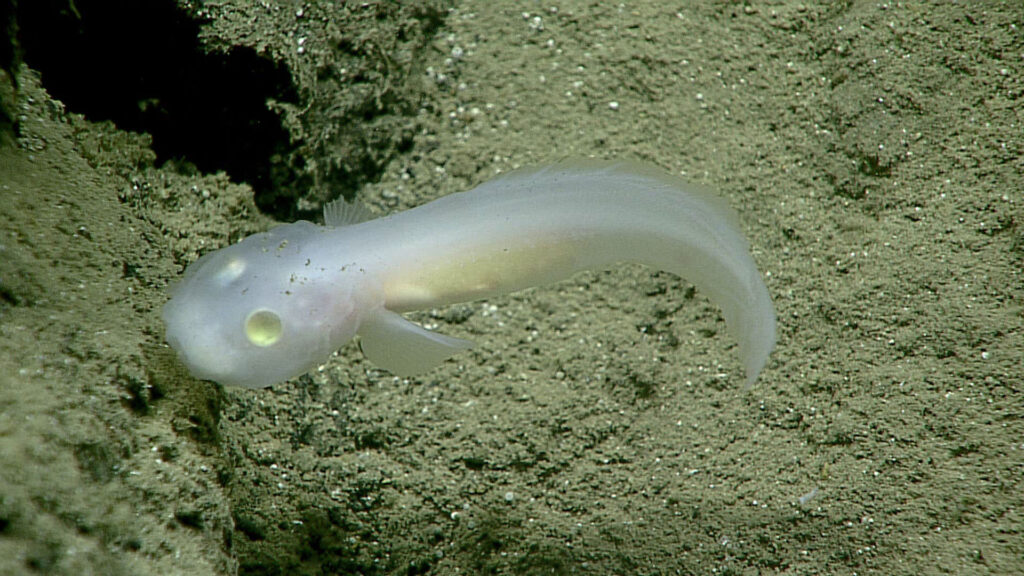
In 2025, more than 7,000 new species were discovered in the Mariana Trench, including the hadal snailfish (Pseudoliparis swirei). This is the deepest-dwelling fish currently known to science. Now, the fish has been dubbed “the Mariana snailfish.”
How was the Mariana Trench formed?
The process by which the Mariana Trench was created is a geologically fascinating one known as subduction. On the Earth’s surface, there are thin plates that cover the planet’s mantle, which is made of molten rock. If two of these plates collide, one pushes down into the Earth’s mantle while the other is pushed over the bottom plate. When this happens, a trench is formed from the drag of the bottom plate. This process can sometimes create incredibly strong earthquakes. The plates that forged the Mariana Trench’s creation are estimated to be up to approximately 180 million years old.
This trench was unknown to scientists until 1875. It was then that a team of explorers on the HMS Challenger measured the depth of the sea by simply lowering a weighted rope into the water. They were baffled when they measured that first portion of the seafloor to be five miles below the surface. And so was born the origin of some of the most daring deep-sea explorations known to mankind to date.
Is the Mariana Trench protected?
The Mariana Trench is in waters off Guam and the Mariana Islands. The region is protected from some human activities under its status as a marine monument. The creation of the Mariana Trench Marine National Monument signified that international, national and local leaders all recognize the importance of protecting this area.
However, just because the region is protected does not mean it’s not vulnerable to modern threats to ocean health. Plastic bags have been spotted in the Mariana Trench during several expeditions, highlighting the far-reaching impact of the marine debris problem. No corner of our ocean is safe from the ever-present threat of plastic pollution. The reality of a changing climate makes the future well-being of wondrous places like the Mariana Trench uncertain. What’s more: More than 70% of the global ocean has yet to be mapped. And what we don’t yet know about, we cannot wisely work to protect.
It’s up to us to work together to defend our ocean, from the sandy shores of our favorite beaches to the deepest, darkest parts of the sea. Together, we can work to protect our ocean as a whole, which ultimately helps protect treasured places like Challenger Deep.
Find out how you can join Ocean Conservancy’s wave of momentum to secure a healthy ocean and a thriving planet, forever and for everyone!
The post The Mysteries of the Mariana Trench appeared first on Ocean Conservancy.
Intro
At the western tip of Luzon, which is the biggest island of the Philippines, lies the small coastal town of Bolinao. Tourists seldom find their way here as it takes around seven hours to get here by bus from Manila. Still, you can spot foreigners walking around every now and then, but they really stand out among the Filipinos. A reason for their presence is often that they study or work at the Bolinao Marine Laboratory (BML), which belongs to the University of the Philippines (UP). It is one of the seven research institutions participating in the GAME project 2026. Every year, GAME brings together Master’s students from all over the world to experience different cultures and conduct globally replicated experiments in marine ecology.

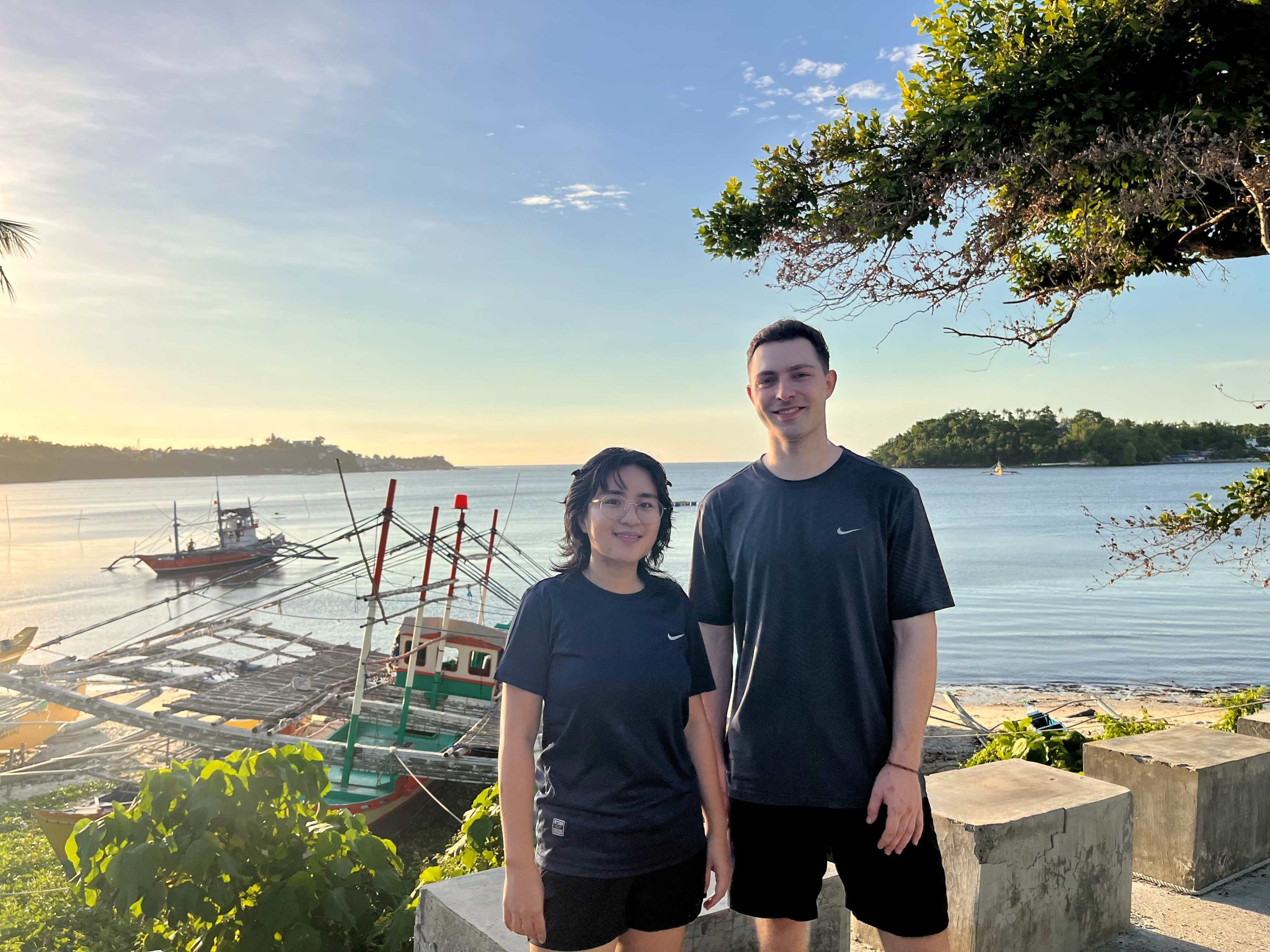
This year’s Team Philippines consists of Jona, a Filipino master student of Marine Biology at the University of the Philippines, and Konstantin, a German student who is enrolled in the Master programme „Ecology and Evolution“ at Freiburg University. As part of GAME 2026, we are currently staying at BML for 6 months to run experiments about the influence of underwater soundscapes on the colonization of marine hardbottoms.
Where are we?
At the BML, we live in a dormitory together with many other students and scientists mostly from the Philippines and a few international interns. At almost any time of the day there is someone in the kitchen to hang out with, eat together, or simply have a chat. It is easy to make friends in this little community. The way to work is just a short walk along a forest path, where we can pick mangos for a snack and spot butterflies, birds, or even wild macaques climbing through the trees. After crossing a street, we reach the institute. But instead of enjoying the cool temperatures of the laboratories, we spend most of our working days outside, doing fieldwork in or near the water.