Beneath the thick and unbroken rainforest canopy, there is a growing sense of desperation among the guardians of French Guiana’s slice of the Amazon.
Illegal miners, lured by the prospect of untapped gold, are crossing into the French-ruled territory from the nearby border with Brazil, pushing local authorities to the limit.
France spends more than 100 million euros ($115 million) a year to fight illegal gold mining in Guiana Amazonian Park, which extends over some 34,000 square km (13,000 square miles) – an area larger than Belgium.
But stopping the miners sneaking in from Brazil sometimes feels like a losing battle.
“More than money, we need a joint, permanent policing strategy, with officers from both countries on the same boat, to create a barrier and stop the mining along the border,” said Thierry Girardot, a former senior official with the French park’s delegation in Camopi, a handful of wooden buildings separated from Brazil by the meandering Oiapoque River.
-
Political backing more important than money for new forest fund at COP30, Brazil says
The Tropical Forest Forever Facility is seeking $25bn in startup capital from donors but doesn’t need to hit this goal before its launch in Belém, Brazil’s finance ministry tells Climate Home event -
With no COP30 roadmap, hopes of saving forests hinge on voluntary initiatives
The world is falling short of a target to halt deforestation by 2030, but the “Amazon COP” failed to agree a concrete global plan to save rainforests despite backing by over 80 nations -
Milei’s budget cuts fuel deforestation fears in Argentina’s Chaco
President Javier Milei has slashed environmental spending since his 2023 election, putting forest defenders on alert in Gran Chaco, South America’s second-largest forest biome


There are an estimated 7,000 miners digging for gold inside the national park at present and about 95% of them are Brazilian, said Major Christophe Laratte, who oversees French operations to combat illegal gold mining in French Guiana alongside the national police force.
The wildcat miners cut down trees and use mercury to separate fragments of gold, polluting rivers and leaving desolation behind them. About 90% of the territory’s coastline shows signs of mercury contamination, Laratte told Climate Home News.

What is the TFFF and will it help?
But despite the damage caused by miners, the vast expanse of forest around the Oiapoque is still relatively pristine, making the Brazilian side of the border a potential candidate for funding from the Tropical Forest Forever Facility (TFFF), the new multilateral fund launched by Brazilian President Luiz Inácio Lula da Silva ahead of COP30 in the Amazon city of Belém.
Under the current plan, Brazil would be eligible for an estimated $1.3 billion a year in forest payments, according to online platform TFFF Watch. However, this amount would need to be split between the country’s conservation areas and Indigenous territories, numbering more than 3,700 in total.
Part of France, French Guiana is not listed among the forested developing nations that could be eligible to benefit from the fund, in contrast with Brazil.
But while authorities on both sides of the border hope the TFFF could boost efforts to fight illegal mining by channelling cash to local communities, Indigenous leaders and economists told Climate Home News they feared the planned fund would be no match for the profits from illegality – even once the fund is able to start disbursing aid.

The TFFF aims to raise $25 billion in public capital and an additional $100 billion from private investors, operating as a fixed-income investment fund. Its returns will be used to reward developing countries and local communities that conserve tropical forests and act as a disincentive to activities that damage them.
So far, Brazil and Indonesia have contributed $1 billion each and Norway has promised to provide $3 billion once the fund secures its first $12 billion. Germany, France and Colombia have also offered support under varying conditions.
Brazil’s Ministry of Finance told Climate Home News that the next step after COP30 is to set up governing boards for the TFFF and the Tropical Forest Investment Fund (TFIF), its investment arm.
The TFIF will only be launched when it reaches an initial goal of $10 billion in startup capital, the ministry said, adding that more fundraising activities are planned for the short term. So far, the TFFF has raised about $6.7 billion in total, around half on conditional terms.
The new rainforest fund plans to pay countries about $4 per hectare of conserved forest per year, obliging them to demonstrate the results of their forest protection efforts before receiving the money. According to the concept note, at least 20% of the resources should be allocated to Indigenous peoples and local communities.

Miners use profits to make inroads
But officials and Indigenous leaders battling illegal miners along the border between French Guiana and the far northern Brazilian state of Amapá said their experience suggests the fund’s promise of more financial aid may not be enough to deter the destructive activity.
Siméon Monnerville, chief of the Teko people, said basic social assistance paid by the French government to every resident of about 600 euros (around $700) a month had not stopped miners from recruiting Indigenous locals.
He said the miners look for people who know the rivers and streams, initially offering them excessive sums of more than 1,000 euros per day.
Explainer: Can a new climate fund help save the world’s rainforests?
With few other ways to earn money to buy goods such as smartphones, many are tempted, said a leader of the Waiãpi people, another Indigenous community living on both sides of the border.
“There is almost always an Indigenous person in the boat, because they know how to pass the rocks in the river,” the leader said, asking to speak on condition of anonymity.
Across the Oiapoque, Brazil’s Montanhas do Tumucumaque national park spans nearly 39,000 square km (15,000 square miles).
Here, too, the miners have made deep economic inroads.

Inside the borders of the national park, many of the 800 residents of the village of Vila Brasil make a living by catering to the needs of the miners, operating restaurants and guesthouses and selling equipment.
The community also has secured political backing – highlighting another potential hurdle for the TFFF in Brazil and elsewhere. A bill in the Brazilian Congress introduced by Senator Lucas Barreto, who represents Amapá, seeks to remove the village from the national park’s boundaries and shrink the protected area by 8,000 hectares (19,800 acres).
Shopkeepers in Vila Brasil, who spoke to Climate Home News on condition of anonymity, said they supported the bill and wanted the village removed from the park, which would drastically reduce the risk, intensity and frequency of government enforcement.
Fund’s financial promises “too small”
The issue highlights a crucial flaw in the TFFF’s design, said Tasso Azevedo, one of Brazil’s leading experts in climate and forest policy, founder of MapBiomas and former director of the Brazilian Forest Service.
Azevedo, who two years ago presented the original conservation finance proposal to Lula’s team that eventually became the TFFF, said the amount the TFFF has fixed for reward payments is no match for the illegal profits that drive deforestation.
“The payment per hectare was set very low, because it was calculated based on what they thought could be raised from the fund,” he said.

The original idea, developed by Azevedo and economist Pedro Moura, was for the global oil industry to commit $1 per barrel of oil produced. With current demand of roughly 30 billion barrels per year, this could have supported payments of about $30 per hectare per year of conserved tropical forest – while the final TFFF proposal offers just $4.
“Certainly, the current value is not enough to stop economies that destroy forests. It’s a very small amount,” Azevedo said.
In the meantime, the biggest question mark hanging over the plan is whether it can raise its initial target of $125 billion, said Moura, a specialist in market-based conservation mechanisms who heads BVRio, an environmental commodities and traceability company.
“That’s the big ‘if’ right now,” he said.
“It’s not all about money”
The Brazilian government says the TFFF’s distinguishing feature lies in its promise of a steady, long-term flow of payments guaranteed by investment returns, and that the proposed $125 billion target is only a starting point rather than a minimum requirement.
For João Resende, secretary for economic affairs at Brazil’s Finance Ministry, the key lies in changing how governments see climate spending.
“The big shift is getting countries to stop seeing it as an expense and start treating it as an investment. Brazil was able to put in $1 billion because we see it as investment,” he said.
-
Brazil’s Congress defies Lula to push through “devastation bill” on COP30’s heels
NGOs say the new environmental licensing rules to fast-track mining, energy and infrastructure projects will sweep away existing safeguards, undermining the country’s climate pledges in Belém -
Ahead of COP30, Brazil grants Petrobras a licence to drill for oil in Amazon region
Brazil has authorised Petrobras to explore for oil off the Amazon coast, a move campaigners say undermines global climate goals -
Amazon fires threaten initiatives to raise cash for rainforest protection
Brazil’s Tropical Forests Forever Facility (TFFF) and other innovative finance tools will be showcased at COP30, but surging wildfires in the Amazon pose a threat to their success, climate experts warn


In Montanhas do Tumucumaque, park director Fernanda Brandão said budget constraints limit the Brazilian authorities’ ability to crack down on illegal mining. That means proposals such as the TFFF could help bring consistency to enforcement actions as long as the payments ensure a steady stream of funding.
On the other side of the border, Laratte said reining in the miners is challenging and requires a multi-pronged approach.
Miners quickly adapt to law enforcement strategies by funding networks of lookouts and preparing back-up kits to replace equipment seized during operations, which cost the French government about 110 million euros per year, he added.
“It’s a complex issue, involving social, strategic and diplomatic aspects,” Laratte said. “It’s not all about money.”
Reporting for this story was supported by the Pulitzer Center.
Main image: Siméon Monnerville, chief of the Teko people, says illegal miners recruit Indigenous locals with the promise of high wages, in Camopi, French Guiana. (Photo: Pedro Ladeira)
The post Deep in the Amazon, forest protection cash must vie with glitter of illegal gold appeared first on Climate Home News.
Deep in the Amazon, forest protection cash must vie with glitter of illegal gold

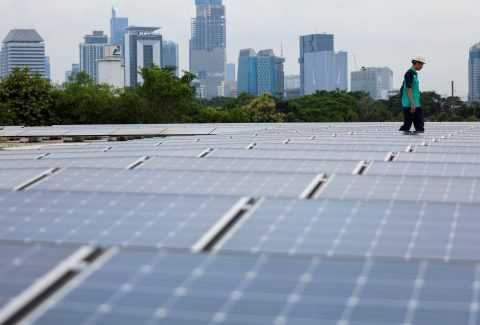
When oil and gas shipments stopped flowing through the Strait of Hormuz at the start of the Iran war, Southeast Asian nations were left reeling as the supply crunch laid bare their acute reliance on fossil fuel imports.
As prices soared, governments in the region scrambled to introduce emergency energy-saving measures – from a four-day working week to curbs on air conditioning. Thailand revived decommissioned coal plants while the Philippines, which imports nearly all of its oil, declared a “national energy emergency”.
But the crisis has also prompted renewed resolve to find a long-term solution to their vulnerability at a time when electricity demand is booming to power the region’s growing industry, cooling needs and the mushrooming of energy-hungry data centres.
At the heart of Southeast Asian nations’ response is a longstanding infrastructure project to connect the region’s power grids by 2045 and enable cross-border trading of clean electricity through a network of underground and subsea interconnectors.