Welcome to Carbon Brief’s China Briefing.
China Briefing handpicks and explains the most important climate and energy stories from China over the past fortnight. Subscribe for free here.
Key developments
China to play major role in global energy shift
ELECTRIFICATION: As the world moves into the “age of electricity”, China’s per-capita demand for electricity will grow to overtake that of all advanced economies combined by 2030 under current policy settings, according to the International Energy Agency (IEA)’s World Energy Outlook (WEO) 2024. The report said this is due to the country’s rising electrification, pushed forward by adoption of electric vehicles (EVs) and other low-carbon technologies, as well as economic growth.
LOW-CARBON POWER: China accounted for 60% of worldwide renewable installations in 2023 and its solar power generation alone will, by 2035, exceed the US’ current total electricity demand, WEO said. A separate IEA report released last week found that China will add 60% of new renewables installations globally between 2024 and 2030. This rapid expansion, according to WEO, will help China lead a global decline in carbon emissions after 2030, with China’s emissions falling to 8% below 2023 levels by 2030 and 24% below by 2035, based on current policy settings. (These figures rise to 17% and 45%, respectively, if China meets its announced pledges.) However, to align with the IEA’s scenario for net-zero emissions by 2050, China’s clean power would need to expand 1.5-times faster than current rates and investment – particularly in grids and energy storage – would need to double.
OIL SLOWS, COAL RISING: China, the world’s largest importer of oil, is currently spurring a “major slowdown” in oil demand growth, largely due to its rapid adoption of EVs, said the report. However, the IEA also said that China will overtake the US as the world’s largest oil consuming country by 2030 and remain the largest oil importer until 2050. Similarly, China is also the largest coal user. It consumed around 55% of the coal used to generate electricity globally and added 73% of the world’s new coal-fired power capacity in 2023, WEO said. (Bloomberg reported that China is also still developing new coal-fired power overseas.) Nevertheless, WEO added that China’s coal consumption for power is likely to peak “in the next few years”.
High-level environmental meeting held
ANNUAL MEETING: The China Council for International Cooperation on Environment and Development (CCICED), a high-level environmental advisory body to the Chinese government, held its annual general meeting on 10-12 October, Earth Negotiations Bulletin reported. About 400 people, including global experts, such as WWF director general Kirsten Schuijt, and high-profile Chinese officials attended the meeting, said China Environment News. Following discussions supervised by the Ministry of Ecology and Environment, CCICED revised a series of draft recommendations, which included: combining “ambitious goals with pragmatic actions” in China’s “nationally determined contribution” under the Paris Agreement and establishing an absolute emissions reduction goal for 2035; setting a target of 2,400 gigawatts (GW) of solar and wind capacity by 2030 and 6,000GW by 2040; and accelerating the expansion of the national carbon market and shifting to auctions for carbon allowances, which are currently given for free.
HEAVY HITTERS: Several influential political figures spoke at the meeting, including executive vice-premier Ding Xuexiang, who reiterated China’s willingness to “work with all parties” on building “a clean and beautiful world” and said it will follow the principle of “common but differentiated responsibilities” in “global environmental challenges”, according to the Communist party-affiliated newspaper People’s Daily. Environment minister Huang Runqiu told delegates that, to advance climate goals, China will focus on six key areas: better “prevention” of emissions; more “precise” emissions control; building “norms” and standards in climate policy; “market guidance”; scientific and technological “empowerment”; and “openness and win-win cooperation”, state news agency Xinhua said. Chinese climate envoy Liu Zhenmin said that “many of the concerns of developing countries at COP28 have not been adequately addressed”, adding that “developed countries…[need to take] the lead in reducing emissions”, according to news outlet China News. Liu’s predecessor, Xie Zhenhua, said in a speech that, “compared with mitigation, in developing countries, adaptation…needs to be solved more than anything else”, said the Paper, a Shanghai-based newspaper.
Diversifying critical mineral supply chains
GROWING FRUSTRATION: The Democratic Republic of Congo (DRC) confirmed that it is “courting new investors” in order to “diversify ownership” in its mining industry, currently dominated by China, Bloomberg reported. It quotes mines minister Kizito Pakabomba saying the country “is looking to make strategic choices about who runs Congo’s mines”. The outlet added that the DRC has “grown increasingly frustrated by its lack of influence over its mining industry, particularly in cobalt”, a mineral central to the production of some types of EV batteries. The Wall Street Journal said the US is encouraging companies to purchase cobalt producer Chemaf in DRC, after blocking its sale to the Chinese state-backed Norin Mining.
MINERALS ALLIANCE: Meanwhile, the US and India have agreed to “cooperate on strengthening supply chains in India and US for lithium, cobalt and other critical minerals”, the Indian Express reported, adding that the agreement “still fall[s] short of a full critical minerals trade deal” allowing India to access US tax credits for EVs. The newspaper also noted that India’s commerce minister Piyush Goyal aimed to “include other countries in the partnership, especially those who are already mineral rich like countries in Africa and South America”. In response to the agreement, an editorial in the state-run newspaper China Daily said the US, “understandably, does not want to put all its eggs in one basket in the face of rising tensions with China” and described a similar minerals deal with Vietnam as “lip service”, adding that “the US helps none but itself”.
HARSH RHETORIC: Meanwhile, the US Department of State’s under secretary for economic growth, energy and the environment Jose Fernandez criticised China for producing too much lithium for global consumption and alleged it was triggering a “predatory” price drop in an “intentional response” to the US’ Inflation Reduction Act, in comments covered by Reuters.
Spotlight
China’s birth policy ‘could raise emissions 20% by 2060’
A study published in Nature Climate Change finds that China’s current population policies – allowing families to have three children – could increase its future carbon emissions.
However, lead author Prof Zhifu Mi, who researches climate change economics at University College London’s (UCL) Bartlett School of Sustainable Construction, tells Carbon Brief that this finding is not to imply that China should reverse its demographic policies.
In an interview, Mi says that, in response to the findings, China could consider a “synergistic approach” to both “fertility policies” and “climate action strategies”.
Carbon Brief: What impact does China’s current population size and demographic makeup have on its carbon emissions?
Zhifu Mi: Population size and demographic composition significantly influence a country’s carbon emissions. Population is one of the primary drivers of greenhouse gas emissions. China has long been the most populous nation, contributing to its status as the largest carbon emitter all over the world. [In 2023, India overtook China as the world’s most populous nation.]
Age structure also plays a role in emissions. The per-capita carbon footprint of younger people (under 30) in China is approximately 1.8 times that of older people (60 and above). This pattern contrasts with developed countries, where older individuals often have higher carbon footprints.
CB: To avoid demographic pressures, China is encouraging families to have three children and its workforce to delay retirement. You found that relaxing limits on family size would make it harder to meet China’s carbon neutrality goal. Could you explain these findings?
ZM: Both relaxing fertility policies and delaying retirement would increase carbon emissions via boosting the labour force. The impact of relaxing fertility policies [and allowing families to have more children] is notably greater than delaying retirement. Shifting from a two-child to a three-child policy would result in a roughly 20% increase in China’s total carbon emissions by 2060.
CB: How are the emissions profiles of China’s young people different to its elderly?
ZM: Younger individuals in China have higher per-capita carbon footprints due to age-related income differences. Their higher per-capita carbon footprints are related to clothing, goods and transport, while older Chinese have higher per-capita carbon footprints related to healthcare.
CB: Some previous research, suggesting that having fewer children is one of the best ways for individuals to cut their carbon footprints, has been criticised for ignoring the impact of climate action, which could reduce the per-capita emissions of the next generation. What do you think about the wider debate on population growth and climate change?
ZM: I disagree with the idea that having fewer children is one of the best ways to cut carbon footprints. Beyond climate change mitigation, we have many other Sustainable Development Goals to consider. While reducing population growth can lower carbon footprints to some extent, population also drives socio-economic development.
Our research indicates that relaxing fertility policies would increase China’s household carbon footprint. We present this objective phenomenon with the hope that this impact of fertility policy will be integrated into climate action strategies.
CB: The paper states that your results should not be read to imply that China must reverse its three-child and retirement-delay policies, but that the policies should be synergised with emissions reductions targets. In your view, what steps could the Chinese government take to do so?
ZM: Yes, our result is not to imply that such policies should be avoided to reduce environmental pressure. We recommend a synergistic approach, considering both population policies and climate goals.
First, climate policies should be tailored to the specific demographic structures of different regions in China – promoting greener consumption and sustainable lifestyles among younger people is crucial. Second, addressing income and consumption disparities across age groups can help mitigate the carbon impacts of fertility and retirement policies. Third, when setting climate targets for each province, population size and demographic composition should be key considerations.
CB: Your paper talks about the need to explore what would happen if China misses its 2060 target, which, as China’s NDC notes, is a challenging goal to meet. What do you see as the key hurdles in this effort?
ZM: Achieving carbon neutrality is a significant challenge for China, particularly because the country has only 30 years to reduce its net carbon emissions to zero after peaking. In contrast, developed countries have had much longer timelines. For instance, the EU…[has allowed] for about 70 years to reduce emissions [from its peak to net-zero]. The US, with a peak in 2005, has 45 years to reach net-zero. China’s more compressed timeline, coupled with the higher volume of emissions to be reduced, makes the challenge more daunting.
Furthermore, China’s energy mix, which is dominated by coal and lacks sufficient oil and gas resources, poses another significant hurdle…Finally, China’s regional economic development is uneven. Eastern regions have witnessed rapid economic growth and industrialisation, while central and western regions lag behind. This imbalance…further complicates China’s path to carbon neutrality.
Responses have been edited for length and clarity.
Watch, read, listen
SUNNY DISPOSITIONS: State broadcaster CCTV’s flagship interview programme Duihua (Dialogue, 对话) aired a discussion of the state of the solar industry with major Chinese solar manufacturers, including Tongwei, LONGi and JingkoSolar.
FIVE-YEAR PLAN: The California-China Climate Institute, a research institute housed at UC Berkeley, issued recommendations for ways Chinese policymakers can take climate goals into account as they prepare for the 15th “five-year plan” (2026-2030).
NDC WATCH: China must avoid setting “conservative near-term climate goals”, an opinion article in Foreign Policy by Lauri Myllyvirta, senior fellow at the Asia Society Policy Institute, and Byford Tsang, senior fellow at the European Council on Foreign Relations, argued.
GREEN FINANCE: Yuan Yuan, a climate and energy campaigner at Greenpeace East Asia, wrote in the Shuang Tan newsletter how the asset management industry can improve climate-related risk management and disclosure standards.
51%
The percentage of Chinese citizens who believe that the US and China have “common objectives” on environment and climate change issues, according to a public opinion poll carried out by Tsinghua University on China’s outlook on international security. Respondents also ranked climate change as the 8th most concerning risk from a list of 18 global security challenges.
New science
Can combined wind and solar power meet the increased electricity load on heatwave days in China after the carbon emission peak? A case study in southern Hebei
Journal of Cleaner Production
A new study revealed that wind and solar power generation could meet the increase in electricity consumption in China’s Hebei province on heatwave days from 2039, in part because heatwaves would raise wind and solar power generation as well as power demand. Using data from the south of Hebei province, which boasts the highest combined wind and solar capacity in China, researchers developed load and wind power models and calibrated “a boosting ensemble learning model to simulate solar generation”. Results showed Hebei could “harness” wind and solar energy to address demand but energy storage capacity would be needed to ensure full coverage.
Comparative analysis of embodied carbon in modular and conventional construction methods in Hong Kong
Scientific Reports
Using modular integrated construction, where parts of new buildings are prefabricated elsewhere and brought to be installed on-site, rather than conventional construction methods, reduced embodied carbon in a Covid-19 isolation facility in Hong Kong by 21%, according to a new study. The study used an embodied carbon assessment of the isolation facility. It found that the reduction in embodied carbon was primarily due to “shortened construction timelines, decreased waste generation and optimised material usage”.
Energy transition in China: Is there a role for climate policy uncertainty?
Journal of Environmental Management
New research found that climate policy uncertainty in China “significantly hinders the progress” of China’s energy transition, particularly by “reducing the level of green finance development and hindering the optimisation of [the] energy structure”. The study used data from 277 Chinese cities to assess this dynamic, discovering that in regions with “weak environmental regulations, high fiscal decentralisation and low administrative levels”, uncertainty has a higher impact on energy transitions. It also stated that climate policy uncertainty further limited the “high-quality development” of China’s economy and levels of “green innovation”.
China Briefing is compiled by Wanyuan Song and Anika Patel. It is edited by Wanyuan Song and Dr Simon Evans. Please send tips and feedback to china@carbonbrief.org

The post China Briefing 17 October 2024: China’s electrification to disrupt oil; High-level environment meeting; Aligning China’s population and climate policies appeared first on Carbon Brief.

Climate Change
“Sink or swim”: WA Gov hugely underestimating decline in regional gas demand while sleeping on green exports, new report finds
PERTH, Tuesday 13 October 2026 — A new report from Greenpeace Australia Pacific and Springmount Advisory reveals green commodity exports are an untapped economic opportunity for Western Australia in a declining Asian gas market, while offering a genuine solution for decarbonising Asia.
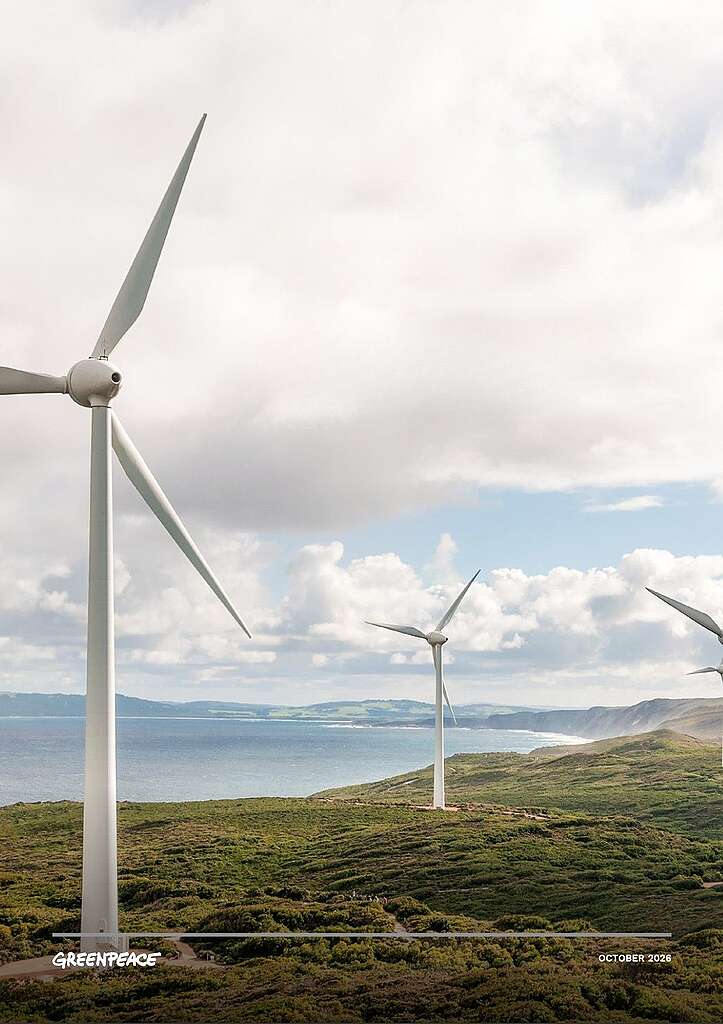
From Gas to Green: Building Western Australia’s Future State is a comprehensive analysis of the declining gas market in Asia, and the untapped economic opportunity for WA to become a global leader in green commodity exports while driving the regional shift away from fossil fuels.
The report offers key recommendations for the WA Government to support regional decarbonisation through an orderly phase out of gas exports in favour of green iron and other green exports. It comes as global climate leaders from across business, politics and advocacy prepare to meet for the Global Citizen Now: Perth event focused on decarbonising WA.
Key findings:
- Gas demand is falling across WA’s core markets in Asia: Gas demand fell in 2025 and is projected to continue to decline, driven by a combination of global geopolitical factors and domestic concerns.
- Policy shifts in key markets since the war on Iran now prioritise renewables and nuclear over gas: Japan, South Korea and China have legislated energy plans that prioritise renewables and nuclear over gas.
- New WA gas would arrive in a saturated, uncertain Asian market filled with cheaper gas: The US is now the world’s largest liquefied gas producer and plans to double its capacity as it also targets Asian markets.
- Green commodities offer a real solution to sustain WA’s economy: WA can lead Australia’s green commodity exports, which by 2060 could be worth almost a trillion dollars.
- Exporting more WA gas is likely to delay or impede Asia decarbonisation: Despite claims by the gas industry, there is no evidence that WA gas is displacing coal in Asia, and in fact diverts resources from genuine decarbonisation options.
Geoff Bice, WA Campaign Lead at Greenpeace Australia Pacific said: “As our export partners in Asia shift away from expensive and polluting gas, the WA Government has a golden opportunity to pivot our economy to green exports, like green iron, which is the most effective way to help our region to decarbonise.
“The writing is on the wall: gas is in decline, renewables are our future. In this context, it makes zero sense for the government to encourage high risk projects like Woodside’s reckless Browse gas proposal at Scott Reef.
“This report clearly shows that the WA Government faces a choice: sink or swim. They can either allow the gas industry to keep ripping off West Australians and continue propping up its decline, or choose the path that will deliver enormous benefits to the state and the world by becoming a leader in the rapidly expanding green economy.”
Tom Quinn, Managing Director of Springmount Advisory: “Western Australia prospers when it looks to the future and builds for future demand. Twenty years from now, what the world needs is green commodities made using WAs abundant renewable resources. Just like it did with iron ore in the 1950s and gas in the 1970s, WA should look to the future and build what the world will need, not sunsetting industries like gas that are already past their peak.”
-ENDS-
Media contact
Kate O’Callaghan on 0406 231 892 or kate.ocallaghan@greenpeace.org
Lucy Keller on 0491 135 308 or lucy.keller@greenpeace.org
A report from Greenpeace Australia Pacific and Springmount Advisory reveals the untapped green economic opportunity for Western Australia in a declining Asian gas market, which also offers a genuine solution for decarbonisation in Asia.
Is Western Australia clinging to a fading gas industry while a thriving green future passes it by? As major Asian trading partners rapidly pivot away from volatile gas imports toward cheap solar and battery storage, this report exposes a high-stakes choice: risk becoming stranded in an oversupplied fossil fuel market, or harness WA’s unmatched sun and wind to lead the global clean energy transition.
Summary
From Gas to Green: Building Western Australia’s Future State reveals that Western Australia (WA) faces a critical juncture as falling Asian gas demand, geopolitical gas supply volatility and accelerating renewable energy deployment undermine the long-term economic viability of gas exports. By harnessing its world-class wind and solar resources, the report demonstrates that WA can execute an orderly phase-out of gas and pioneer a green commodity export economy that could generate $987 billion in economic value by 2060, create 24,000 ongoing jobs, and drive a 9.6% reduction in global greenhouse gas emissions.
Key Findings
- Gas demand is falling in Asia – WA can no longer rely on gas exports: Gas demand in core Asian markets fell in 2025 and is projected to continue to decline in 2026. Legislated energy plans in Japan, South Korea, and China now prioritise renewables and nuclear over gas.
- Asia is increasing renewables, importing gas just gets in the way: Evidence from markets like Thailand suggests that gas imports are increasingly crowding out cheaper renewable energy investments and battery storage rather than displacing coal, locking in more emissions over time.
- Green commodities offer a real solution to decarbonise Asia – this is a major win for WA: With world-class renewables, WA can lead Australia’s green commodity exports, which by 2060 could be worth almost a trillion dollars ($987 billion) and support a genuine 9.6% reduction in global emissions.