Connect with us

Published

on

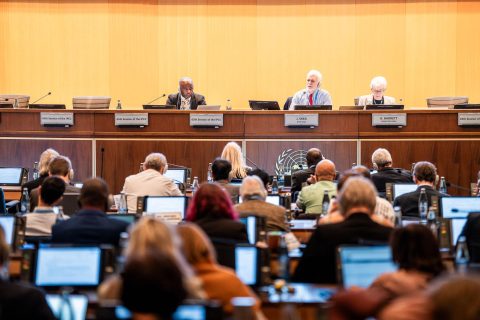
As countries gathered in Geneva this week for the first UN dialogue on the governance of artificial intelligence, campaigners said the debate around the fast-evolving technology has overlooked the potential harm it could cause to nature and biodiversity.

Not only has nature been absent from discussions on the environmental impacts of AI data centres, which focus mainly on carbon emissions and water use, there has also been no consideration of how AI deployment by industry could gobble up more natural resources, activists warned.

Brian O’Donnell, director of the Campaign for Nature, said that while AI can help protect wildlife and forests, the broader boost it will give to economic growth poses a far bigger threat than expected benefits.

“We’ve seen over $250 billion of private capital go into AI in 2024 alone – and almost all of that is seeking an economic return, and the money follows commercial value,” he told journalists. “Extraction, industrial farming, resource logistics, and the engines that drive ever more consumption are all activities that contribute to biodiversity loss.”

    The leading conservationist added that the policy documents produced by leading AI companies do not address the downstream effects of their technology for nature and biodiversity, focusing more on employment and other social issues.

    Some have firms have put small sums towards projects that support conservation, he noted, but none are addressing the issue in a serious way or have included nature in the safety rules for their models.

    “The living world that all of this rests upon – nature being the foundation of our economies, our societies, all life on earth – is not a primary concern in the governance of AI, as proposed by the corporates of AI,” O’Donnell said.

    Positive uses steal the show

    Last month, UN chief António Guterres launched an initiative to hold major AI firms accountable for their exploding environmental impacts, including carbon emissions, the amount of water and land used for data centres, and the energy they consume.

    The UN boss also wants big players to commit to power all data centres with renewable energy by 2030. On Monday in Geneva, in a wide-ranging speech, he again raised his proposed “AI Environmental Transparency Initiative”. But nature has not featured in his comments on the issue.

    UN asks AI companies to reveal full environmental impacts

    In addition, the preliminary report of the newly formed Independent International Scientific Panel on AI – which assesses the opportunities, risks and impacts of AI – mentions environmental concerns only briefly.

    The report, which examines available scientific evidence and was presented to governments at the Geneva dialogue, does not highlight any threats to nature and biodiversity but cites a study showing how AI has been used to track and reduce conflict between humans and wildlife.

    O’Donnell pointed to “some really important technological uses of AI for biodiversity” such as monitoring species, forest damage and tree cover and using camera traps to see what kind of wildlife migrates in a particular area. But, he added, these get a disproportionate amount of attention compared with the threat from more rapacious resource extraction which he perceives as far greater.

    By making commercial operations cheaper, quicker and more efficient, and opening access to untapped areas of land and sea, AI could drive biodiversity loss through increased over-exploitation of fish, wildlife and timber, worsening pollution and spreading invasive species on faster trade networks, he added.

    Indigenous concerns

    Indigenous peoples are also worried that their lands, critical mineral reserves and knowledge will be appropriated by AI and the accelerated economic development it fuels, said Hindou Oumarou Ibrahim, a leading global environmental activist and Indigenous leader from Chad.

    Ibrahim, who produced a report on Indigenous peoples and AI for the UN in April, told journalists that before Indigenous peoples share their know-how on managing forests and stewarding nature, companies and governments must put in place principles to ensure this can happen in a fair way that prevents it being abused by bad actors.

    Warning against ‘consumer club’ as G7 forms critical minerals alliance

    Her report also points to positive ways that AI can support Indigenous culture and rights, such as tackling their lack of access to digital tools, preserving their languages and knowledge and mapping their territories to detect threats and better protect biodiversity.

    Efforts such as those by the UN to shape the future of AI governance should look not only at what AI can do, but also ask who benefits and how it safeguards the planet, Ibrahim said.

    “If we answer those questions together with Indigenous peoples as equal partners, we can build AI that serves humanity, protects biodiversity and help restore the balance between peoples and planet in an equitable and just way,” she added.

    Policy processes lag AI development

    Both O’Donnell and Ibrahim said they would lobby countries, the UN and AI firms themselves to put nature and biodiversity on the political agenda, including at the UN biodiversity summit in Armenia in October.

    O’Donnell told Climate Home News that when the Global Biodiversity Framework, the world’s main treaty to protect nature, was agreed in 2022, AI was still nascent but has since exploded in terms of investment and its influence on economies.

    The vote that stopped a data center: US communities query resource-hungry AI

    He pointed to the mismatch between the timeline of the UN’s efforts to develop governance guidelines and the speed with which AI is being developed in the real world.

    “Nature can’t be sidelined in these discussions,” he said, calling for a faster and more comprehensive response from policymakers, business and the environmental community.

    “We have a very short window to embed nature both into the governance constitutions of the companies themselves and into the formal regulatory [system] going forward,” he added.

    The post AI governance debate silent on risks to nature, campaigners warn appeared first on Climate Home News.

    AI governance debate silent on risks to nature, campaigners warn

    Continue Reading

    Climate Change

    As blue economy gathers pace, communities must benefit from ocean boom, activists say

    Published

    on

    As governments and institutions pledged billions for offshore wind, cleaner shipping and marine protection at last month’s Our Ocean Conference in Mombasa, countries are increasingly turning to the ocean as a source of jobs and climate action.

    But civil society groups warn that the push to expand the “blue economy” may reproduce familiar inequalities unless coastal communities have a greater say in how projects are designed, financed and governed.

    Neville van Rooy from The Green Connection in South Africa, which works with coastal communities who rely directly on the ocean for their livelihoods, said local people were frequently unaware of proposed developments until civil society groups alerted them.

    “Communities need to be taken seriously,” van Rooy told delegates at the Mombasa conference held on the shores of the Indian Ocean.

    “Just because they are often struggling does not mean they do not have a vision of development. Inclusivity needs to be at the centre and development pathways must build on communities’ own experience, including indigenous knowledge systems rooted in harmony with nature.”

      Ocean investment flowing in

      The value of the blue economy—the sustainable use and protection of marine resources—doubled from $1.3 trillion in 1995 to $2.6 trillion in 2020 and is projected to quadruple by 2050, according to the Organisation for Economic Co-operation and Development (OECD).

      The scale of ambition in Mombasa was clear, with governments, institutions, companies and civil society groups announcing 320 commitments worth $6.4 billion.

      The largest share went to sustainable blue economy projects, with 86 commitments worth $2.86 billion, followed by sustainable fisheries with $1.75 billion and ocean-climate action with $1.18 billion.

      The pledges included support for ocean startups in Africa, coastal ecosystem restoration across the Indian Ocean, marine research and policy, recycling discarded fishing nets, sustainable livelihoods in Timor-Leste and planning tools for offshore wind.

      Cynthia Barzuna, global deputy director of the Ocean Program at the World Resources Institute, said there are signs that blue finance and ocean planning are moving closer to coastal communities, particularly through the development of sustainable ocean plans.

      In 2020, a group of 14 countries – co-led by Australia and Chile – pledged to manage their oceans sustainably, by jointly drawing up plans with coastal communities to shape how marine resources are managed and where investments should go.

      “Once communities are involved in the planning, bring in their knowledge, and participate in designing, developing and implementing a sustainable ocean plan, it puts us on the right path,” Barzuna told Climate Home News on the sidelines of the conference.

      Yet some of those countries – including Kenya, Australia and Mexico – have embarked on a new wave of offshore oil and gas projects, threatening key biodiversity hotspots, according to a recent report by a group of environmental NGOs.

      When projects go wrong

      Civil society groups say lessons need to be learnt from failed blue economy projects too.

      In Kenya, a proposed coal-fired power plant at Lamu Port – a fragile coastal ecosystem and a UNESCO World Heritage site – was challenged by residents and campaigners who cited little consultation and threats to fishing, tourism, culture and public health.

      In 2019, Kenya’s National Environment Tribunal revoked its environmental licence, citing inadequate public participation and flaws in the environmental assessment – a decision later upheld by the courts.

      “It is not enough to say that whatever you are doing is in the name of the communities, their livelihoods and whatever else you want to improve”, but that they should be directly involved in projects from the start, said Omar Elmawi, a Kenyan climate activist and Convenor of the Africa Movement of Movements. 

      He said another lesson learnt was that environmental impact assessments must not only be completed, but “must be done rigorously” and that the process has to be transparent so that people feel involved and that their views are being counted.

      Blue transition

      Blue carbon schemes can also attract finance, but campaigners said communities that have long protected mangroves, seagrasses and salt marshes must be treated as rights-holders, not just beneficiaries. In some past projects, they said, communities were asked to provide labour, attend consultations or receive small payments, while outside developers retained control over carbon revenues and decisions over how ecosystems were managed.

      Similarly, offshore wind and marine protected areas can bring climate and conservation gains, but if poorly planned, they can disrupt fishing grounds, marine species and small-scale fishers’ access to the sea, added campaigners.

      Farida Aliwa, executive director of Natural Justice, said the answer was not to halt ocean-based development, but to put in place stronger safeguards before projects are approved, financed and expanded.

      Aliwa said legal frameworks across Africa were evolving, with strategic litigation increasingly being used to hold governments accountable for environmental, climate and human rights impacts related to new projects.

      But she warned that communities and coastal defenders still face shrinking civic space, and said any shift to renewable energy must be designed responsibly.

      “As we work on alternatives, we need to ensure that renewable projects benefit communities,” she said.

      The post As blue economy gathers pace, communities must benefit from ocean boom, activists say appeared first on Climate Home News.

      As blue economy gathers pace, communities must benefit from ocean boom, activists say

      Continue Reading

      Climate Change

      Ugandan farmers launch UK court case against East African oil pipeline

      Published

      on

      Four Ugandan farmers filed a case with London’s High Court on Tuesday, aiming to stop the East African Crude Oil Pipeline (EACOP) from starting to operate by asking the court to apply Uganda’s laws against the project’s UK-registered company.

      The controversial 1,443-kilometre (897-mile) pipeline, majority-owned by French energy company ​TotalEnergies, aims to carry crude from Ugandan fields for export through neighbouring Tanzania. About 80% has been built so far, according to its developers.

      The pipeline’s first oil exports are expected as soon as October, according to its developers, and the campaign group Avaaz, which is backing the farmers’ crowdfunded lawsuit, called it “one final chance to stop one of the worst oil pipelines on the planet”.

      The claim, filed by London law firm Leigh Day, argues that EACOP Ltd’s role in developing and operating the pipeline breaches Ugandan laws that protect citizens’ right to a clean and healthy environment.

        One of the claimants, Racheal Tugume, told a press conference she had been displaced from her land due to the pipeline’s construction, which she said had damaged local rivers, wildlife and ecosystems that communities depend on for their livelihoods just as erratic weather linked to climate change takes an increasing toll.

        “I am very happy that there are people in countries like the UK who are listening to us, who are behind us and who have come to support us,” Tugume said, adding that she hoped the case would bring justice to communities affected by the pipeline.

        Ugandan law in UK court

        While the pipeline is a joint venture led by TotalEnergies, with smaller stakes owned by Ugandan, Tanzanian and Chinese national oil firms, it is operated by EACOP Ltd, a company registered to an office in London’s Canary Wharf financial district.

        EACOP Ltd did not respond to a request for comment.

        The claim appears to be the first attempt to have Uganda’s climate and environmental protections enforced in a foreign court, partly reflecting concerns over whether cases challenging the multibillion-dollar pipeline would get a fair trial in Uganda.

        Ugandans living near new oil pipeline let down by compensation programmes

        Concerns about access to a fair hearing are among the issues the court will consider when deciding if it should take on the case, said Matthew Renshaw, partner at Leigh Day.

        Renshaw said that precedents including the Nigerian oil pollution case against Shell have shown that claims against British-registered companies for harms overseas can be successfully fought in UK courts.

        “We are proud to represent the four brave principled individuals,” Renshaw said.

        Constitutional protections

        The pipeline project has already been subject to repeated lawsuits in several countries, none of which have succeeded. A climate lawsuit filed in Uganda more than a decade ago by a group of young people has yet to conclude. Another at the East African Court of Justice, brought by campaign groups against Uganda and Tanzania, was rejected on procedural grounds last November.

        A separate ongoing lawsuit in TotalEnergies’ home country of France – a refiled version of an earlier failed claim – cannot stop EACOP going ahead, but it does seek damages from TotalEnergies for affected communities.

        With the newly launched case, Leigh Day’s legal adviser Marc Willers said the claim draws on specific Ugandan laws in a bid to stop EACOP’s operations.

        Uganda may see lower oil revenues than expected as costs rise and demand falls

        These include the Ugandan constitution, a 2019 environmental law and the National Climate Change Act 2021, which gives Ugandans the right to bring a case before a court in circumstances where anyone or any entity threatens the country’s ability to mitigate climate change.

        Stopping a “carbon bomb”

        The pipeline, which will link Uganda’s Lake Albert oil fields to Africa’s east coast in Tanzania, has already displaced thousands of people and cuts through the Lake Victoria basin, one of East Africa’s major freshwater systems and a critical water source for around 40 million people.

        According to the BankTrack non-profit, when the pipeline is at peak production, it will carry 216,000 barrels of crude oil per day and release over 33 million tonnes of carbon emissions each year. Over its full lifetime of 25 years, it is estimated to release about 379 million tonnes of greenhouse gas emissions across its value chain including construction, refining and product use.

        A May 2026 report from Earth Insight also warns that the pipeline and related infrastructure could affect 158 wetlands in Uganda, 11 rivers, 44 protected areas and seven key biodiversity areas while disrupting about 2,000 square km of protected wildlife habitats.

        This is why the primary focus of the UK court case is to stop the operation of the pipeline in its tracks, Leigh Day’s Willers said, calling it a “carbon bomb” that would worsen the world’s climate crisis.

        Long wait for first hearing

        While the purpose of the case is to stop the pipeline from launching operations, Renshaw said it could take about 12 months before the case gets a first hearing and about 18 months before it goes to trial.

        Billions unlocked as Green Climate Fund agrees to spend more and save less

        The farmers are, however, seeking an injunction to stop EACOP Ltd from proceeding with operations. In the event that shipments begin, the lawsuit will still seek to stop the pipeline from then on, Renshaw said.

        “We will be doing what we can to expedite matters but it is possible that EACOP will have started operating the pipeline before the claim is heard. If that is the case, the claim would intend to halt operations from that point. For example, the pipeline may operate for just one year rather than 30-plus, resulting in far less harm,” he said.

        The post Ugandan farmers launch UK court case against East African oil pipeline appeared first on Climate Home News.

        Ugandan farmers launch UK court case against East African oil pipeline

        Continue Reading

        Climate Change

        Cited 7 July 2026: ‘Impossible’ heat | Global ocean record | Climate change and the ozone hole

        Published

        on

        Welcome to Cited, your essential guide to new climate research.

        In the news

        ‘HEAT ALERT’: At least 25 people died as a “heat dome” smothered the eastern half of the US, reported the Guardian, with more than 20 states under “stifling temperatures more than 100F (38C)”. More than 140 million people were under heat alerts, the outlet said, with dead bodies found in “homes with no air conditioning, outside their residences, on the street and in parked cars”. Analysis by World Weather Attribution (WWA) found that the combined heat and humidity would have been “virtually impossible” without human-caused warming, reported the New York Times.

        ‘MORTALITY WILL RISE FURTHER’: Meanwhile, extreme heat continued to hit Europe, with Le Monde reporting on temperatures of 40C in France, Portugal and Spain again this past weekend, alongside “devastating” wildfires. Public Health France doubled its preliminary estimate of the “excess deaths” from the extreme heat in late June, from 1,000 to more than 2,000, according to the Guardian. The higher figure was still “probably an underestimate”, the agency said. Analysis published by Carbon Brief put the figure at 2,700 heat-related deaths. A WWA attribution study, covered by Carbon Brief, found that Europe’s June heatwave would have been “virtually impossible” even 50 years ago.

        ‘BOOST TO GLOBAL TEMPERATURES’: The UN World Meteorological Organization (WMO) “raised its forecast for ​the rapid emergence of a strong El Niño in the coming months, ‌warning that the phenomenon is likely to drive global temperatures higher”, reported Reuters. A WMO scientist told the newswire that “El Niño conditions have emerged ⁠in the equatorial Pacific and there is a remarkable agreement between forecast models that ​this will be a strong El Niño”.

        Research picks

        Extremes

        • The annual season when “intense” tropical cyclones occur has lengthened by 10-14 days per decade across the world since the 1980s | Nature Communications
        • There is an “increasing” and “overlooked” global threat from glacial outburst floods from small lakes | Nature Sustainability
        • Female smallholder farmers in sub-Saharan Africa experience crops losses 2-2.5 times greater than male smallholders in periods of extreme heat | Nature Sustainability

        Policy

        • The summaries for policymakers in Intergovernmental Panel on Climate Change (IPCC) mitigation reports over 2001-22 “have not yet become more solution-oriented while abiding by their policy-neutrality principle” | npj Climate Action
        • Two-thirds of countries address inequality in their national pledges under the Paris Agreement – particularly in “countries with lower levels of human development and greater income inequality” | Climate and Development
        • To “future proof” the Paris Agreement’s “well-below 2C” limit, it should be interpreted as a median “peak warming” of 1.6-1.8C, rather than a 66-90% chance of staying below 2C | Nature Climate Change

        Land sink

        • From 2001 to 2015, northern Eurasia absorbed about 0.47bn tonnes of carbon each year – around one-third of the total global land carbon sink | Global Biogeochemical Cycles
        • Model simulations of potential land-use carbon emissions out to 2100 show that “deforestation and forest regrowth dominate variability” of emissions, with policy timing and ambition “exerting strong control” | Nature Communications
        • Tropical forests are facing an increase in areas that exceed critical temperatures where their “photosynthetic system breaks down” | Proceedings of the National Academy of Sciences

        Captured

        On 21 June, global average sea surface temperature (SST) reached a record high for the day of the year, according to the Copernicus Climate Change Service (C3S). Daily SST for the global ocean, excluding polar regions, reached 20.86C on 21 June, exceeding the 20.83C reached on the same day in both 2023 and 2024, the C3S said. Global SST has remained at record levels for every day since. The conditions “could indicate the beginning of a new phase, leading, once more, to uncharted territory”, said C3S director Carlo Buontempo.


        56 hours and 30 hours

        The amount of time that the average lifespan of tropical cyclones in the north-east and north-west Pacific has shortened, respectively, over 1982-2024, according to a study in npj Climate and Atmospheric Science. This shorter lifespan “compresses the time available for weather forecasting and disaster preparedness”, the authors said.


        Spotlight

        The ozone hole and climate change

        As a new “thought experiment” asks whether the hole in the ozone layer could, theoretically, have been identified decades before it was discovered, Carbon Brief explores the interactions between climate change and the ozone hole.

        It is now more than 40 years since the discovery of the hole in the ozone layer over Antarctica, detailed in the journal Nature in 1985.

        A study more than a decade earlier had predicted that chlorine-based substances – such as chlorofluorocarbons (CFCs) – could lead to the destruction of ozone in the stratosphere.

        So, in theory, how early could the ozone hole have been detected?

        New research, published in the Proceedings of the National Academy of Sciences, explored this very question.

        Study co-author Prof Susan Solomon from the Massachusetts Institute of Technology is a leading atmospheric scientist. In the late 1980s, Solomon and colleagues identified the mechanism behind how CFCs were causing ozone depletion.

        The new study is a “thought experiment”, Solomon told Carbon Brief, asking when scientists could have discovered the ozone hole had they had access to modern satellite observations.

        “We found that depletion could have been detected as early as 1957 in the tropical upper stratosphere, where natural variability is especially small,” explained Solomon.

        This would have been before the use of CFCs became widespread, Solomon added. Instead, early ozone depletion was caused by carbon tetrachloride, a chemical used as a cleaning agent, as well as in fire extinguishers and for producing refrigerants.

        For many decades, the ozone hole and global warming have often been confused by the public and the media, Solomon explained:

        “It’s common to imagine that because ozone is so important at shielding us from the UV [ultraviolet] light that causes skin cancer, then having less ozone must mean the Earth would warm up.”

        For example, in a 1995 editorial, the Los Angeles Times congratulated the Nobel prize-winning chemists who identified the threat of CFCs to the ozone layer. The newspaper noted that these processes “threaten calamitous global warming by damaging the Earth’s protective layer of ozone”.

        However, said Solomon, “the Earth is warmed much more by visible light – UV doesn’t really contribute, so ozone depletion doesn’t cause significant warming”.

        Regional impacts

        The depletion of ozone actually has a very small cooling effect at the Earth’s surface. But this is more than outweighed by the warming impact of CFCs and other ozone-depleting substances.

        This warming impact means that efforts to reverse ozone depletion have had a beneficial impact on the climate.

        The Montreal Protocol, a 1987 international agreement to phase out CFCs, “has played – and is playing – a very substantial role in safeguarding climate too”, said Solomon:

        “It turns out that the CFCs and their replacement gases HCFCs [hydrochlorofluorocarbons] are strong greenhouse gases, so phasing out their production has not only avoided a lot of ozone depletion that would otherwise have occurred, it also had a big influence on global warming.”

        HCFCs were considered as “transitional substitutes” for CFCs – they still damaged ozone, but to a lesser extent – until ozone-safe alternatives were commercially available.

        Hydrofluorocarbons (HFCs), which are not ozone depleting, began to be used widely in the 1990s. However, HFCs are also potent greenhouse gases. HFCs and similar replacements are now being phased out under the 2016 Kigali Amendment to the Montreal Protocol.

        While the ozone hole itself has only a very small impact on global temperatures, it does have a clear impact on the regional climate over Antarctica.

        Prof David Thompson from Colorado State University, working with colleagues including Solomon, has published research demonstrating that “changes in southern-hemisphere winds linked to the stratospheric ozone losses extend all the way down to the ground in some seasons”, explained Solomon.

        This has “reduc[ed] warming that would have occurred in interior Antarctica and enhanc[ed] warming in the Antarctic Peninsula region”, she said.

        The knock-on impacts include “wind changes [that] actually extend beyond Antarctica to the mid-latitudes of the southern hemisphere, where they even affect rainfall”, she added.

        Preprints to watch

        Carbon Brief’s pick of new papers under review

        • The drying impact over Africa from using stratospheric aerosol injections to stabilise global temperatures would only be minimised “when combined with a strong decarbonisation effort” | Earth System Dynamics
        • The El Niño-Southern Oscillation and Indian Ocean Dipole could “shape” the playing conditions at the Rugby World Cup 2027 in Australia | Journal of Southern Hemisphere Earth Systems Science
        • A “strong” weakening of the Atlantic Meridional Overturning Circulation (AMOC) would “profoundly alter the climate-carbon cycle system”, underscoring the “importance of explicitly accounting for AMOC risks in long-term climate assessments” | Earth System Dynamics

        Noticeboard

        • 6 July-25 September: Registration open for experts to review the first-order draft of the Intergovernmental Panel on Climate Change’s Working Group I report 
        • 7-15 July: UN High-level Political Forum on Sustainable Development, New York
        • 19 July: Application deadline for a postdoctoral scholar in transdisciplinary climate research at Penn State University, US | Salary: unknown
        • 22 July: Application deadline for PhD project on “climate change impacts on the Antarctic coastal ocean carbon sink” at the University of East Anglia, UK
        • 26 July: Application deadline for PhD projects on “AI for land-atmosphere feedbacks during hydroclimatic extremes” at the Helmholtz School for Integrated Data Science in Environmental & Life Sciences, Germany
        • 29 July: Application deadline for an assistant professor in Earth and environmental geosciences (palaeoclimatology) at Colgate University, US | Salary: $97,500-101,500
        • 31 July: Application deadline for PhD project on Arctic Ocean methane oxidation at Stockholm University, Sweden

        Cited is researched and written by Cecilia Keating, Robert McSweeney, Ayesha Tandon, Daisy Dunne and Dr Giuliana Viglione.

        Please send tips, feedback and upcoming climate research to cited@carbonbrief.org

        This is an online version of Carbon Brief’s fortnightly Cited email newsletter. Subscribe for free here.

        The post Cited 7 July 2026: ‘Impossible’ heat | Global ocean record | Climate change and the ozone hole appeared first on Carbon Brief.

        Cited 7 July 2026: ‘Impossible’ heat | Global ocean record | Climate change and the ozone hole

        Continue Reading

        Trending

        Copyright © 2022 BreakingClimateChange.com