

Welcome to Carbon Brief’s DeBriefed.
An essential guide to the week’s key developments relating to climate change.
This week
Finance and 1.5C dominate talks
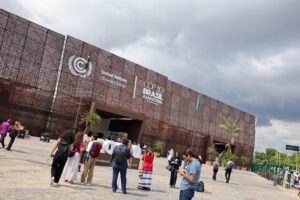
AGENDA ADOPTED: Negotiations at the COP30 UN climate talks began in the Brazilian city of Belém this week, attended in person by Carbon Brief’s Daisy Dunne, Josh Gabbatiss and Anika Patel. The Brazilian hosts scored an unexpected early win by dodging an “agenda fight” over proposals to add various contentious issues to the official docket. Despite the neat footwork, four issues kept off the agreed agenda – climate finance; emissions reporting; trade measures; ambition and 1.5C – still loom large, having merely been diverted into “presidency consultations”.
PRESIDENCY PROMISES: By Wednesday, the presidency was promising “good news” at a plenary later that day, which had been due to offer an update on progress with the four extra items. Instead, it ended abruptly, with COP30 president André Corrêa do Lago promising to say more at another plenary scheduled for tomorrow. It remains unclear how the presidency intends to deal with these thorny issues, leaving the COP rumour-mill in full swing.
MINISTERIAL MAGIC: Aside from the extra issues, the official agenda at COP30 already has more than 100 items to contend with, including how to track progress on adaptation and how to ensure a “just transition” as emissions-cutting measures are implemented. (You can follow them all via the Carbon Brief text tracker.) While draft texts have started to emerge, many items remain stalled, with persistent divisions along familiar lines (see below). Negotiators will be hoping that ministers arriving over the weekend are primed to unlock progress. Brazil has appointed pairs of these politicians to push for deals in key areas.
Around the world
- Ethiopia has said it will host COP32 after beating out a bid from Nigeria, Reuters reported. Turkey and Australia are still in deadlock over who should host COP31, with a decision due by the end of these talks, BBC News reported.
- China will not contribute to Brazil’s Tropical Forest Forever Facility, Bloomberg reported, while Devex said two multilateral development banks are considering paying in. More than $5.5bn has been pledged so far, which BusinessGreen noted is “well short” of a $25bn target. The fund was labelled a “false solution” by some Indigenous and civil society groups.
- After Brazilian president Luiz Inácio Lula da Silva called for a “roadmap” away from fossil fuels ahead of COP’s opening, rumours are swirling over how this might take shape. A new declaration spearheaded by Colombia and a roadmap with backing from a number of countries, including Denmark, the UK, France, Kenya and Germany, are being floated as possible options.
- China is currently among the countries pushing for “provision of finance from rich countries and unilateral trade measures” to be included on the agenda, reported Climate Home News. Chinese delegation head Li Gao told Agence France-Presse it is “crucial” for developed countries to fulfil their $300bn commitment.
- Dozens of Indigenous protesters forced their way into COP’s blue zone on Tuesday night, expressing anger at a lack of access to the negotiations, Reuters said. On Friday, a peaceful protest blocked the entrance to the blue zone, causing lengthy queues as delegates were forced to use a side door.
344%
The rise in the global use of solar from 2024 to 2035 under “stated policies”, according to Carbon Brief’s analysis of the latest World Energy Outlook from the International Energy Agency.
Latest climate research
- The 2025 Global Carbon Budget, covered in detail by Carbon Brief, finds that CO2 emissions from fossil fuels and cement will rise 1.1% in 2025 | Earth System Science Data
- In its November 2025 update, Climate Action Tracker says that its projections of global warming by 2100 have “barely moved” in four years | Climate Action Tracker
- The AI server industry in the US is unlikely to meet its 2030 net-zero goals “without substantial reliance on highly uncertain” carbon offsets | Nature Sustainability
(For more, see Carbon Brief’s in-depth daily summaries of the top climate news stories on Monday, Tuesday, Wednesday, Thursday and Friday.)
Captured

China’s carbon dioxide emissions have “now been flat or falling for 18 months” since March 2024, analysis for Carbon Brief has found, due, in particular, to the transport, cement and steel sectors. The analysis has been covered widely in publications including China’s Global Times, the New York Times, Financial Times, Reuters, Bloomberg and on the frontpage of the Guardian.
Spotlight
What to expect from COP30 talks
This week, Carbon Brief’s expert team walk through what is happening with the biggest issues being negotiated at COP30.
‘Cover text’
Can you judge a COP by its cover text? At COP, the presidency has the option to pull together a new negotiated “cover text”, an overarching political overview of decisions agreed at the summit, along with other issues not on the agenda that it wants to draw attention to.
COP30 president André Corrêa do Lago might have dismissed a catch-all “cover decision” as a “last-minute solution” ahead of COP and dodged the question since, but other parties have been less shy in hinting that a cover text is, indeed, coming.
Cover decisions are often the product of fraught negotiations, high stakes, too little time and too many parties to accommodate.
This year, there is added pressure to address what is happening in the wider world outside the “negotiations” and to politically signal that the UN climate process is alive and making progress, despite the withdrawal of the US.
What elements could go into it? As a member of the “BASIC” group of nations comprising Brazil, South Africa, India and China, trade measures could find a place. But ideas pushed by Brazilian president Lula for new “roadmaps” away from fossil fuels and deforestation might find a place. Finance, however, could be much trickier to fit in.
Adaptation
One of the key expected outcomes of COP30 is agreement on a list of 100 indicators that can be used to measure progress under the “global goal on adaptation” (GGA). After two years of work by experts, negotiations got underway with a suggested list that had been whittled down from nearly 10,000 possible indicators.
Despite the focus on the GGA by the COP30 presidency and others, division has quickly emerged around the timeline for the adoption of the indicators. The African Group has notably requested a two-year work programme to further refine the list, while other parties are pushing for the indicators to be adopted in Belém as planned.
On Wednesday, an informal note was published that compiled elements for a draft decision. Significantly, for the first time under the GGA, this included a call for developed countries to “at least triple their collective provision” of adaptation finance by 2030, with a target to reach $120bn. This echoed a suggested target originally set out by the negotiating group of least developed countries (LDCs), supported by the African Group, Arab Group and the Association of Latin America and the Caribbean (AILAC) countries.
Just transition and mitigation work programmes
Over the past year, civil society groups have been calling for the establishment of a mechanism to enact the agreed UNFCCC principles of a “just transition”. This gained momentum on Wednesday within negotiations of the just transition work programme (JTWP), when the G77 and China called for the development of the “Belem Action Mechanism” (BAM).
Chile, the Alliance of Small Island States (AOSIS), India and other developing countries supported the mechanism. However, Norway, the UK, Australia and Japan pushed back. Other long-standing points of contention have also raised their heads, including around unilateral trade measures and references to fossil fuels and aligning to global temperature goals.
Within the mitigation work programme (MWP) talks, negotiators are looking to build on two dialogues held this year. The main themes at COP30 are the links between the MWP and the global stocktake (see below) and the future of the programme itself.
Old divisions have emerged in negotiations, focused predominantly on the mandate of the MWP and the potential development of a digital platform as part of its continuation.
UAE dialogue
The landmark outcome of the first “global stocktake”, agreed at COP28 in Dubai, called on all countries to contribute to a “transition away from fossil fuels”. It also mandated a “UAE dialogue” on “implementing the global stocktake outcomes”.
Two years later, countries remain deadlocked over what this dialogue should discuss. Many want it to cover all parts of the stocktake, including the energy transition, while others want an exclusive focus on climate finance. They also disagree on whether the dialogue should have substantive outcomes, including a formal process to keep discussing the issues raised.
Having failed to reach agreement at COP29 last year, the latest draft text shows parties are just as far apart in Belém, nearly halfway into the summit.
Finance
Climate finance for developing countries does not occupy a high-profile position in the formal COP30 negotiations. Yet, as demonstrated by its role in adaptation talks and the agenda dispute, finance still has the potential to derail proceedings.
Ahead of the conference, the COP30 and COP29 presidencies released their “Baku to Belém roadmap”, exploring how finance could be ramped up to $1.3tn by 2035.
An influential group of experts also released new analysis showing a “feasible path” to this goal, leaning on private finance. They said this work would provide a “valuable signal” to those in the finance sector.
However, with no position in the Belém negotiations, it was unclear how – or whether – the roadmap would be taken forward by governments beyond COP30.
Instead, finance negotiators have been occupied with technical matters, but these still show signs of division. For example, some developing-party groups have pushed back against an EU priority goal to extend a “dialogue” about “making finance flows consistent” with climate objectives.
Watch, read, listen
UNDER THREAT: The Bureau of Investigative Journalism told the story of Kim Rebholz – an environmentalist who was threatened for his work curbing illegal logging in Democratic Republic of Congo’s mangrove parks.
SPOTLIGHT ON STARMER: YouTuber Simon Clark has published a video of himself interviewing prime minister Keir Starmer about the UK’s actions on climate and nature, at COP30 and domestically.
INSIDE COP:Outrage and Optimism is running a “special edition” podcast series in partnership with the COP30 presidency, bringing “exclusive, behind-the-scenes access” to the conference.
Coming up
- 14-21 November: UN Climate Change conference (COP30) heads into its crucial second week in Belém
- 15 November: Informal stocktaking plenary of COP30 talks by the Brazilian presidency
- 17 November: Launch of the Global Methane Status Report
Pick of the jobs
- International Energy Agency, intern, China programme | Stipend: €1,000/month. Location: Paris
- Channel 4, sustainability production executive | Salary: £48,125. Location: Bristol, Glasgow or Leeds, UK
- World Bank, environmental specialist | Salary: “GF” grade. Location: Yaounde, Cameroon
- Greenpeace, climate and energy campaigner | Salary: Unknown. Location: Bangkok, Thailand
DeBriefed is edited by Daisy Dunne. Please send any tips or feedback to debriefed@carbonbrief.org.
This is an online version of Carbon Brief’s weekly DeBriefed email newsletter. Subscribe for free here.

The post DeBriefed 14 November 2025: COP30 DeBriefed: Finance and 1.5C loom large at talks; China’s emissions dip; Negotiations explained appeared first on Carbon Brief.

Anne Jellema is executive director of 350.org; Mads Christensen is executive director of Greenpeace International; and Amitabh Behar is executive director of Oxfam International.
On Monday, global petitions with a collective total of more than 2 million signatures were presented to the United Nations, calling on governments to introduce binding mechanisms to make fossil-fuel companies and the super-rich contribute to the costs of the damage they have created.
The petition signatures were received by Selwin Hart, the UN Assistant Secretary-General for Climate Action, in New York during the UN General Assembly, sending a clear message to governments: there is no more room for excuses.
If governments are serious about resilience, energy security and protecting people from an increasingly unstable world, they must make the companies profiting from the fossil-fuel economy pay their fair share. Because the crisis we are facing is no longer some distant threat. It is unfolding in real time, and it is exposing the extraordinary costs of an economy still built around fossil fuels.
-
Climate change and energy transition rise up national security agenda
Leaders highlighted the national security risks posed by global warming and fossil fuel dependency at New York Climate Week -
COP31 presidency announces AI pledge as UN climate chief says Big Tech ‘on thin ice’
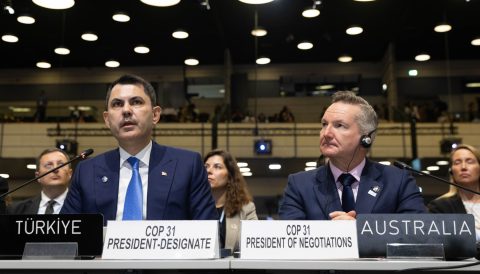
Turkish minister Murat Kurum said AI companies should be transparent about their energy use and power their data centres with clean energy
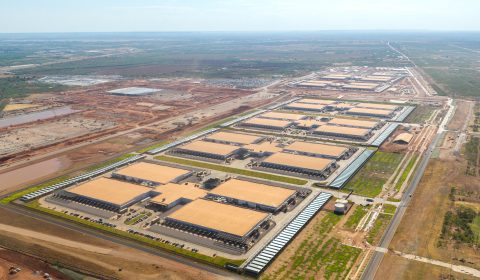
For more than six months, the Strait of Hormuz, the channel through which a fifth of the world’s oil once flowed without a second thought, has been closed, contested or effectively unusable. Tankers sit at anchor. Insurance premiums have gone through the roof. Petrol pumps from Los Angeles to Lagos have felt the tremor. It has taken a war to remind the world just how much of our daily lives still rests on a single, fragile artery of fossil fuels.
At the other end of the same emergency, a glacier came down on the Nepal–China border in the last week of August. A wall of ice, rock and water tore through the Bhote Koshi and Langtang valleys. It has been described as one of the deadliest disasters in the region’s modern history, unfolding in a landscape where the world’s glaciers are retreating and destabilising at a pace scientists have been warning about for years.
And this came only weeks after hundreds of thousands of people were displaced — not by ice, but by fire. Europe has experienced its worst wildfire season in more than a decade. Homes have been lost across Spain, Portugal, France, Greece and the UK. Firefighters and civilians have been killed battling the blazes, while damage and reconstruction costs continue to reach extraordinary levels.
These are not separate crises. They are different expressions of a world becoming more volatile, while the fossil-fuel economy continues to generate enormous profits for those at the top and pushes the costs onto everyone else.
Communities absorbing cost
Because the crisis we are facing is no longer some distant threat. It is unfolding in real time, and it is exposing the extraordinary costs of an economy still built around fossil fuels. One thread runs through all of these events: a global economy still organised around the profits of a fossil fuel industry that has known, for decades, exactly what it was doing to the planet.
At a moment when governments are gathering in New York for the UN General Assembly to talk about security, resilience and economic competitiveness, it is worth spelling out what “security” – or the lack of it, driven by our economy’s dependence on oil – actually means this year for ordinary people around the world: 35,000 excess deaths in Europe due to heat; the highest food prices in three and a half years; $700 billion in economic losses, threatening countless jobs and livelihoods, from a war and a closed oil chokepoint whose consequences are nowhere near over.
Meanwhile the companies that extracted, refined, shipped and sold the fuel behind all of this continue to report extraordinary profits. Households are paying more for energy. Governments are spending billions on disaster response, on reconstruction, on emergency deployments of firefighters and aid. Communities are absorbing the cost of a system they didn’t design and don’t control. We pay. They profit.
This is not a coincidence, and it is not inevitable. It is a political choice, repeated year after year, to let the companies most responsible for the climate crisis hoard the wealth they generate while the rest of us carry the risk.
Taxes and fines needed
That is why, together with communities and campaigners in dozens of countries have spent the last three years building the case for a simple, overdue idea: polluters should pay for the damage they have caused. Not through voluntary pledges or distant net-zero promises, but through binding mechanisms, climate damages taxes, surtaxes on fossil fuel profits, and fines ring-fenced for recovery and adaptation that put real money where the harm actually is. This is how we take the profit out of destruction and protect the generations to come.
The response has told us we are not alone in thinking this. Our petitions calling on governments to make polluters pay have now gathered a collective total of over 2 million signatures from people across every region of the world.
The case for making polluters pay has moved into the mainstream
That is not a fringe demand. It is what happens when people watch a choke-point war spike their fuel bill, watch a glacier take a thousand lives, watch their own summer holidays rearranged by fire. They draw the obvious conclusion: the people who caused this should be paying for it – not profiting from it.
We hear the objection already forming: that this is not the moment, with wars underway and economies fragmenting, to burden industry further. We would say the opposite is true. If governments can mobilise trillions for war, for bailouts and for new fossil fuel infrastructure, they can mobilise the political will to tax the companies that caused this crisis.
Money for clean energy and resilience
That money can go straight to the people paying for it, through cheaper, cleaner, more secure energy, and through funding for communities on the frontline of floods, fires and glacial collapse. There isn’t an excuse left. There is only a choice about where power and money go next. Every dollar we don’t spend now on adaptation, resilience and cutting emissions, we burn many times over later: on disasters we could have prevented and economies we scramble to fix too late.
This year’s UNGA should be the moment that choice gets made in public. Governments arriving in New York will talk about resilience, about energy security, about protecting their citizens from an unstable world. Let them explain on the record why a fossil fuel industry that has spent decades profiting from that instability should not be the one paying to fix it so wrecking the planet no longer pays off.
The fires, floods and storms won’t just go away. The system that keeps producing these disasters, and keeps paying the same companies for the privilege, will not change itself unless political leaders step up. It is on all of us to make sure they hear, as loudly as possible, that the time for excuses has run out.
The post After Hormuz, Nepal and wildfires, people demand action to make polluters pay appeared first on Climate Home News.
After Hormuz, Nepal and wildfires, people want action to make polluters pay
(and why it matters for the Global Plastics Treaty)
Originally posted by Greenpeace International.
The gravest consequences of the war are borne by people in Iran and across the region: lives lost, families displaced and essential infrastructure damaged. Its fossil fuel shock has also carried economic consequences far beyond the battlefield.
The war on Iran triggered an oil market crisis that sent shockwaves far and wide, and some consequences are still unfolding. Impacts rippled beyond energy and transport into shops and supermarkets, pharmacies and homes. People everywhere are still paying.
Nearly everything we buy, from shampoo bottles to strawberry packaging, is made from or with petrochemicals, wrapped in plastic, or both. But it does not have to be, and most people do not want it to be.
The war exposed a hidden risk in the plastics economy. Plastic depends on fossil fuel feedstocks and global petrochemical supply chains. When oil and gas supplies are disrupted, the cost and availability of packaging, medical supplies and everyday goods are disrupted too. Households, public services and communities ultimately pay.
The war has changed the terms of the debate around the Global Plastics Treaty. It has revealed the real costs of being tethered to the plastics supply chain. At the next round of treaty negotiations, governments have a choice. They can lock in deeper vulnerability to future price and supply shocks, or build economies resilient enough to withstand them.
Here are six things the conflict has shown us.
1. Plastic supply chains are vulnerable to fossil fuel shocks
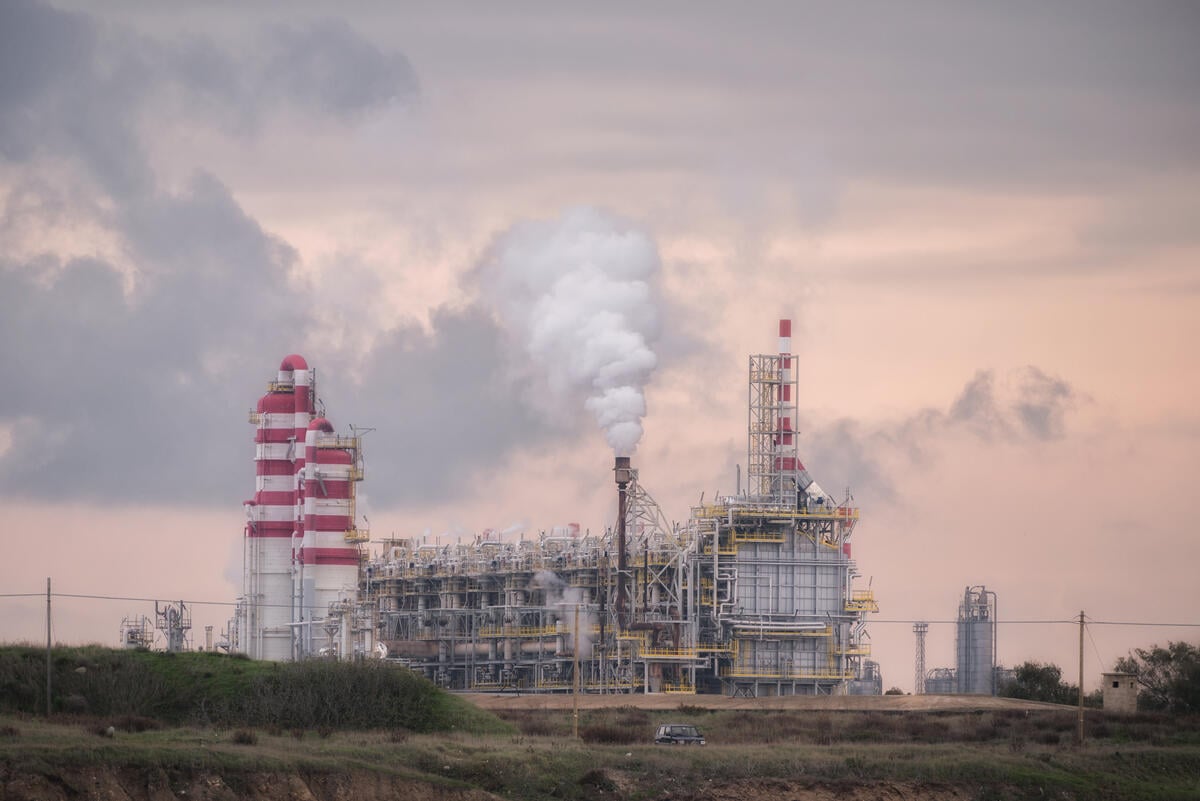
The war disrupted plastic production, imports, and exports at once, sending costs soaring worldwide. Formosa Petrochemical Corp (FPCC), one of the world’s largest plastic producers, was forced to declare force majeure. This is a legal term meaning it could not meet contractual obligations because of circumstances beyond its control.
In Japan, polyethylene production, a plastic widely used in shopping bags and packaging, reportedly fell 62% in March. Shortages then spread from factories to supermarket shelves.
The fallout reached beyond supply chains to hospitals, where South Korea had toban the hoarding of medical syringes. It reached household cupboards, where the price of body wash reportedly climbed 7.7% in a matter of weeks. It also reached children’s toy boxes. A US-based soft-toy manufacturer said its supplier in China had cited material cost increases of 10% to 15% within three weeks of the war starting.
Petrochemicals go into more than 6,000 everyday products, according to the US Department of Energy. The question is not whether every one of these products can change overnight. It is how many uses can be reduced, redesigned or replaced with safer, non-fossil-fuel alternatives.
2. The crisis created winners and losers
This conflict revealed new pressure points for countries whose industries depend heavily on plastics and petrochemical feedstocks. According to South Korean media, naphtha import prices rose 68% in a single month, while small and medium-sized manufacturers reported material shortages and cost increases of more than 20%.
As some producers were forced to scale back, China saw the conflict as a way to move beyond years of oversupply and low margins. Its own efforts to curb destructive overcapacity and price competition had struggled to resolve this problem. It increased exports to Asian markets, used accumulated inventory, ramped up idle capacity and absorbed demand left by disrupted competitors. One industry analyst has described this as a potentially lasting shift in market share.
Meanwhile, the US turned the same crisis into a windfall. Ethane-fed plants were less exposed to disruption at the Strait of Hormuz and kept input costs lower even as global prices climbed. Producers raised prices as markets tightened.Dow raised North American polyethylene prices by 10 cents a pound in March, then 15 cents in April, before doubling that increase days later. Another increase was announced in August.
LyondellBasell said its second-quarter earnings, excluding unusual items, rose nearly 600% year on year to US$1.4bn. Dow swung from a loss to a profitwithin a few quarters of the war’s start. This was not simply a story of market adjustment. Companies with less exposure to naphtha supply disruptions were better positioned to profit while producers and communities elsewhere absorbed the risks.
The benefits and harms of the petrochemical economy are not distributed fairly. Communities near extraction, refining and petrochemical facilities often carry pollution and health burdens, while countries dependent on imported fuel and feedstocks are exposed to prices they cannot control.
3. Households, public services and communities bear the costs

According to NielsenIQ data reported by Reuters, grocery prices in the US rose 2.9% year on year in the four weeks from the start of the war to 28 March. The same data showed bottled-water prices rising 5.8%, while nappies, pads and tampons, all of which contain plastics, rose by between 2% and 6%. School lunchboxes rose by more than 26%, the biggest increase of any school item, according to retail data.
Synthetic footwear could also become more expensive. With roughly 70% of synthetic shoe materials derived from petrochemicals, industry analysts project prices could rise by another 1.5% to 3% by late summer and autumn.
In Taiwan, the price of a basic plastic bag more than doubled, and Costco reportedly had to ration the number of food storage bags a single customer could buy. Companies and governments made the decisions that left economies exposed to this crisis, but it was ordinary people who paid for it. They paid through petrol, public transport, food, household goods and essential supplies.
The impacts are not shared equally. Lower-income households, small businesses, informal workers and countries reliant on imported fossil fuels and petrochemical feedstocks have far less room to absorb higher costs or shortages of essential goods.
4. Some governments are choosing reuse and resilience
In March, just weeks into the conflict, South Korea’s president, Lee Jae Myung, told his cabinet that the country’s deep reliance on petrochemicals made it difficult to predict where the next disruption would hit. He warned it ‘poses a serious threat to people’s daily lives’.
By April, he had moved from emergency response to longer-term reform, calling for a ‘plastics-free economy’. Taiwan’s government expanded reuse infrastructure to build a more resilient economy and reduce exposure to market fluctuations.
The lesson is not that scarcity or rationing is desirable. It is that planned, publicly supported reuse and reduction systems can protect people better than an economy dependent on volatile virgin plastic supply chains.
The question is whether enough governments act in time to avoid the next shockwave.
5. Reuse and reduction can work at scale

Industry has long argued that plastic is too convenient, too cheap and too embedded in everyday life to be meaningfully cut back. But when Taiwan’s plastic bags suddenly became scarce, the country continued to function. Retailers adjusted, the government expanded reuse programmes, and people brought their own bags.
As virgin plastic prices climbed, French retailer Carrefour committed to removing 5,000 tonnes of plastic from its packaging through refill formats and packaging reductions. It said it would pass the savings on to customers through lower prices.
This does not mean responsibility should fall on individuals. It means governments and businesses can build systems that make reuse, refill and less packaging easy, accessible and affordable.
Single-use plastic is embedded in retail systems, but it is not as indispensable as the industry claims. Cutting back is possible, and it can reduce costs as well as pollution.
6. Without structural change, the next shock is inevitable
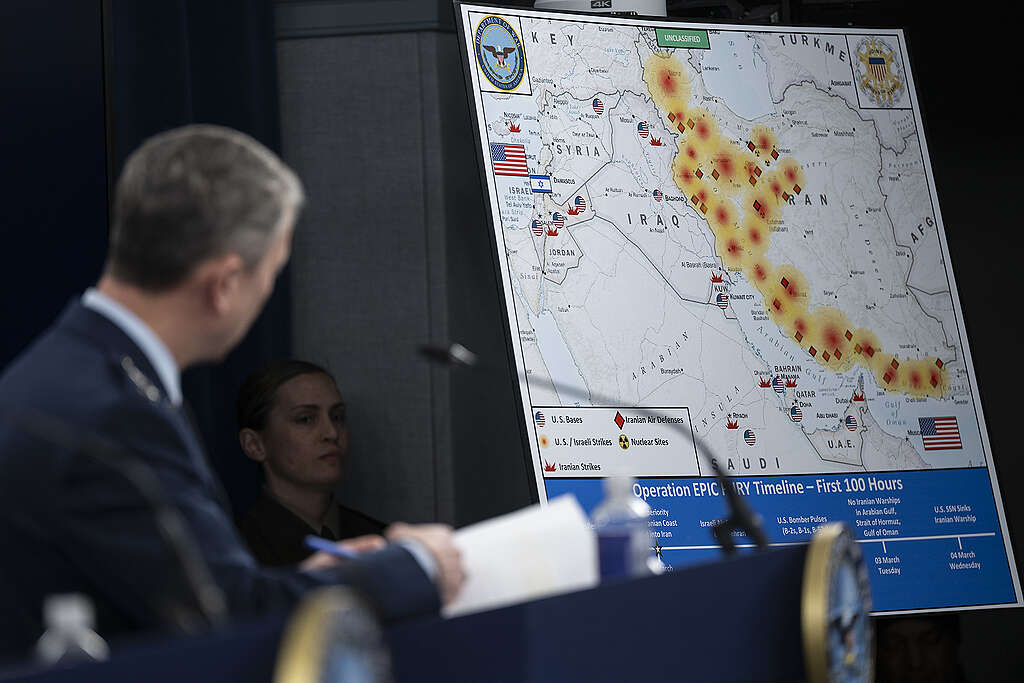
The conflict is not over, and even when it is, disruptions will come again. A similar pattern played out in 2021, when the Ever Given blocked the Suez Canal for six days, disrupting global trade and adding to existing pressures on plastics supply chains.
Exposure is also set to grow. The IEA predicts that plastics and petrochemicals are on track to become the single largest driver of growth in global oil demand through 2050.
Plastic producers are not separate from the fossil fuel economy. Petrochemicals are made from fossil fuel feedstocks, so continued growth in virgin plastic production deepens demand for oil and gas. It also locks communities and economies into exposure to future price shocks.
At the next round of Global Plastics Treaty negotiations, governments have a critical opportunity to cut dependence on fossil fuels, reduce the health harms caused by plastics and build systems more resilient to the next disruption.
A binding treaty that meaningfully cuts plastic production is not only a win for public health, ecosystems and the climate. It could be a turning point for economic security, geopolitical stability and the resilience of the systems we all depend on.
A Global Plastics Treaty can help break the cycle
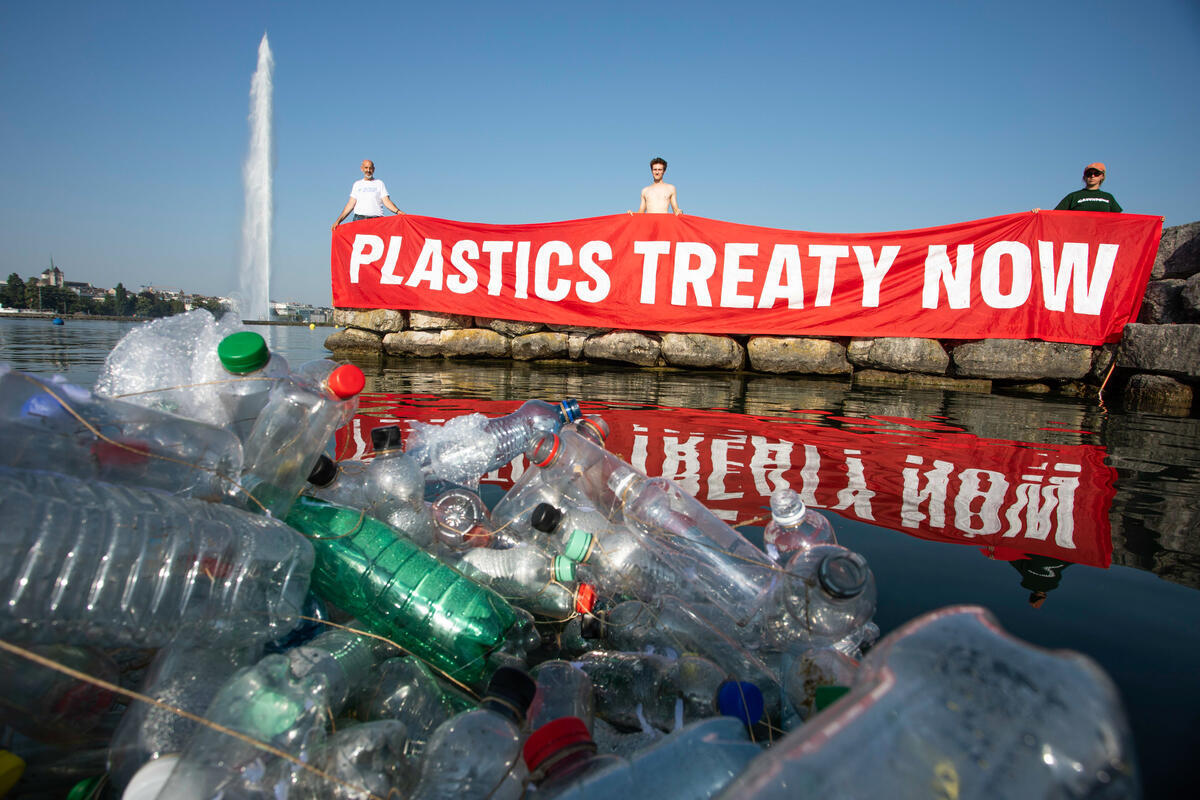
The lesson of the war on Iran is not that people should learn to live with shortages. It is that economies built around fossil fuels and ever-growing virgin plastic production are exposed to shocks they cannot control.
A strong, binding Global Plastics Treaty can help change that. By cutting plastic production, expanding accessible reuse systems and supporting a just transition away from fossil fuel dependence, governments can reduce pollution and help protect people from the next price shock.
Governments should protect people now while reducing future exposure. They should support reuse systems, invest in accessible refill and public services, and shift public investment away from fossil fuel and petrochemical expansion.
The people and communities least responsible for this system should not be the ones left paying for it. Governments must put public wellbeing, resilience and a liveable future ahead of the profits of fossil fuel and petrochemical companies.
For a more in-depth analysis, read our brief.
Lindsey Jurca is a Senior Plastics Campaigner at Greenpeace USA.
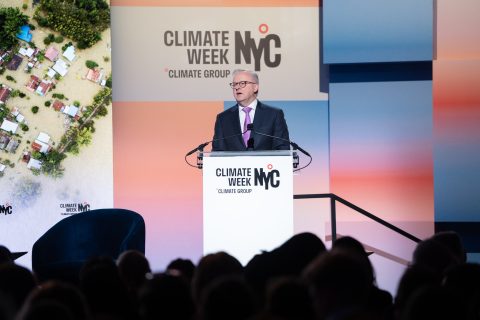
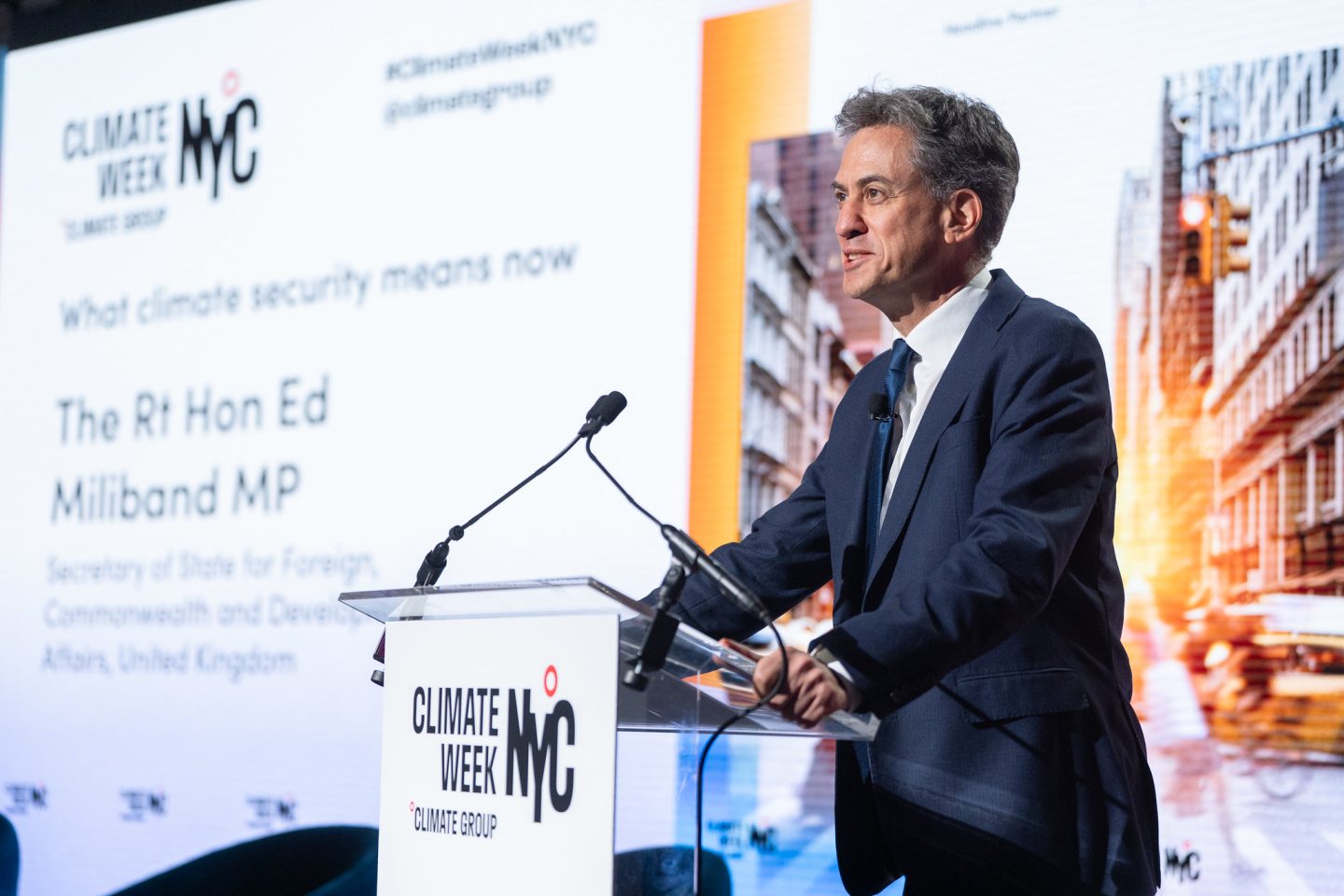
Governments need to start addressing climate change impacts and nature loss as a threat to national security and manage shocks before they hit rather than picking up the pieces afterwards, Britain’s foreign minister and other leaders told the opening of Climate Week NYC on Monday.
Ed Miliband – who was until July the UK’s energy minister – said the growing urgency and severity of extreme weather and related disasters require a shift in thinking, calling on governments to put the issues “front and centre”.
“Climate breakdown, in my view, must be an issue for foreign ministers and prime ministers, as well as energy and climate ministers – the security community, not just the activist community, the generals, not just the green campaigner,” he told an audience of policy and business leaders.
There is a need to assess risk differently, he added, by embedding climate and nature in national security systems, threat assessments and contingency planning. He also urged countries to pool information because climate shocks can travel fast through supply chains as well as influencing financial markets and migration patterns.
The framing of climate change as a threat to countries’ security and stability is not new, but it has gained greater emphasis as the impacts of global warming are biting harder in places like Europe, which is struggling with more intense heatwaves, drought and forest fires.
In mid-August, Miliband said in a social media post, reflecting on the UK’s hot and dry summer, that he would convene foreign ministers attending the UN General Assembly in late September to discuss how to respond to “this new national security threat” and build a coalition for action. But he did not give further details of that initiative on Monday.
-
Fossil fuel expansion threatens COP31 hosts’ credibility, experts warn
Türkiye and Australia are pushing coal, oil and gas at home with no national timeline for their own fossil fuel phase-out -
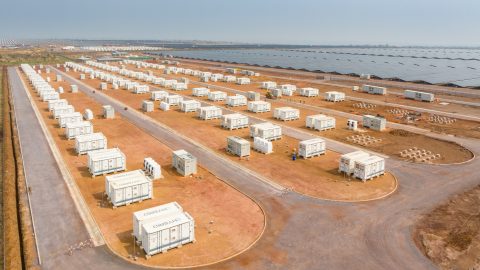
DR Congo’s power-hungry mining sector drives record solar surge
As solar deployment rapidly accelerates across Africa, miners in the DRC are driving significant demand for clean energy to replace expensive diesel
Australia calls for unified response
Other leaders in New York also reflected on the growing threat to their societies and economies from climate change impacts and exposure to volatile fossil fuel markets.
Australian Prime Minister Anthony Albanese said his country “understands the dangers of global warming and the urgency of climate action as well as any nation”.
“We have seen it up close – from increasingly intense bushfires and floods, to the damage warming oceans are wreaking on our vulnerable coastlines,” he said in a speech, adding that with a record-breaking El Nino forecast, Australia and Pacific nations are preparing for a potential summer of extreme heat, bushfires and floods.
With scientific forecasts of worsening impacts now coming to pass, “this means the global community cannot afford to be frozen in time as the world warms around us”, he added. People cannot be left to cope alone, he said, emphasising that as leaders, “we need to come together, to meet the problem head on”.
Australia will lead the negotiations at the upcoming COP31 climate summit, and has brought the existential threat to Pacific countries from sea level rise into the diplomatic limelight. The pre-COP gathering next month will be hosted in Fiji, with a visit by leaders to Tuvalu.
Speaking to Climate Home News in New York, Panama’s environment minister Juan Carlos Navarro said the small Central American country faces hundreds of millions of dollars in losses from drought in the Panama Canal due to El Niño.
The Panama Canal Authority estimates income could be reduced by between $225 million and $400 million due to slower maritime traffic passing through the strait.
“What a great irony,” Navarro said. “Panama being a small, carbon-negative country pays the price for the big carbon-emitting countries.”
Climate investment “critical” to stability
Amina J. Mohammed, deputy secretary-general of the United Nations, said there was a need for countries to stick with multilateral approaches to problems including climate change, despite the difficult geopolitical times the world is going through. She added, however, that it “does require your voices. It won’t happen by itself. We have to lean into it.”
The rest of the high-level UNGA week in New York will show the extent to which multilateral efforts to resolve the world’s problems – from climate change to poverty – have top-level support as leaders give their speeches, including the Brazilian and US presidents on Tuesday.
Kaysie Brown, associate director for climate diplomacy and geopolitics with think-tank E3G, said the statements by Miliband and other leaders at Climate Week NYC had underlined the political and government case to integrate climate considerations into security thinking and institutions at the highest level.
“In a world of escalating climate impacts and the record El Niño expected to heighten risks worldwide alongside energy volatility and geopolitical tensions, investing in global climate resilience and the clean energy transition are critical to credible strategies to enhance stability and national security,” she added in a statement.
Suneeta Kaimal from the Natural Resource Governance Initiative (NRGI) said that, while in previous years governments heavily focused their speeches on climate action, this year’s focus on energy security does not change the underlying challenge.
“The fact that the framing has changed from energy transition to energy security doesn’t change the reality that this transition needs to occur in energy systems. It’s just a different framework. It’s a more transactional framework, but it all points to the need for resilience,” she said.
Speaking at the opening session of Climate Week, Iceland’s Prime Minister Kristrún Frostadóttir described how her country had reacted to the spiralling costs it faced from the 1970s oil price crisis by investing in a large-scale district heating system fuelled instead by its abundant geothermal energy.
“Resilience wasn’t built while the crisis was happening. It was built in the years after – deliberately, patiently, as a national mission – so that the next shock wouldn’t hit as hard, if at all,” she said.
New COP goal on electrification
Speaking at a separate event on Monday, UN climate chief Simon Stiell pointed to a new voluntary target expected to be adopted at COP31 for 35% of global energy use to come from electricity by 2035 as a strategy that can help cushion countries, families and businesses from fossil fuel supply shocks and rising costs.
At the United Nations, the Turkish COP presidency gave more details of the electrification goal it first announced at the Bonn climate talks in June, including sharing with governments a final text of the pledge it wants them to get behind.
The pledge sets out a global ambition to advance electrification, highlighting the importance of supporting developing countries to identify their grid investment needs and access finance for electrification.
“It is a development strategy, an industrial strategy, a health strategy, and a security strategy,” Stiell said.
The post Climate change and energy transition rise up national security agenda appeared first on Climate Home News.
Climate change and energy transition rise up national security agenda



-

 Greenhouse Gases2 years ago
嘉宾来稿:满足中国增长的用电需求 光伏加储能“比新建煤电更实惠”
-
Climate Change1 year ago
Guest post: Why China is still building new coal – and when it might stop
-
Greenhouse Gases1 year ago
Guest post: Why China is still building new coal – and when it might stop
-

 Climate Change2 years ago
嘉宾来稿:满足中国增长的用电需求 光伏加储能“比新建煤电更实惠”
-

 Renewable Energy11 months ago
Sending Progressive Philanthropist George Soros to Prison?
-
Climate Change2 years ago
Bill Discounting Climate Change in Florida’s Energy Policy Awaits DeSantis’ Approval
-
Greenhouse Gases1 year ago
嘉宾来稿:探究火山喷发如何影响气候预测
-

 Carbon Footprint2 years ago
US SEC’s Climate Disclosure Rules Spur Renewed Interest in Carbon Credits