

Indigenous peoples, climate activists, feminist organisations, clowns, friars, cyclists and more came together on Saturday under Belém’s baking sun for the “Great People’s March”, a demonstration demanding climate justice and territorial protection.
Thousands joined the first march outside the COP venue in four years, as the last three summits were held in Egypt, the United Arab Emirates and Azerbaijan, places where street protests outside the COP venue were not permitted by the authorities.
Week 1 of COP30 ends with uneven progress and many thorny issues still unresolved. Want clarity on what’s at stake? Sign up for our Monday event.
Saturday’s march in Belém ended peacefully at the Aldeia COP, a village designated by the Brazilian government to host the more than 3,000 Indigenous people who travelled to attend the conference.
During the first week of COP, it was mainly Indigenous people who led the two biggest civil society actions: a flotilla sailing on the Amazon River delta on Wednesday and a blockade of the conference centre’s entrance on Friday. Thousands also participated on Saturday.
The props seen at the march included a statue of US President Donald Trump riding on the back of a worker and a figure of Brazilian President Luiz Inácio Lula da Silva using a straw to drink “oil from the Amazon”. A network of green groups dressed in black staged a funeral for fossil fuels, carrying three huge coffins emblazoned with coal, oil and gas.
One of the Indigenous leaders present, Nelson of the Amazon Munduruku people – who organised the blockade of the COP venue entrance – said they were here “to fight, to bring the people’s vindication of resistance and struggle,” and reiterated their demand for a meeting with President Lula.
The soundtrack to the march changed from group to group of marchers, ranging from Indigenous chants and Brazilian music to shouts of Free Palestine and Free Congo.
Adaptation talks held hostage by finance
Finalising a list of 100 metrics to measure progress on adapting to more extreme weather and rising seas after two years of work may have seemed like a relatively straightforward technical win for the UN climate summit in Belém. The COP30 presidency were hoping they might even get it wrapped up in week one of the talks, which winds up on Saturday.
-
Ahead of COP30, Brazil grants Petrobras a licence to drill for oil in Amazon region
Brazil has authorised Petrobras to explore for oil off the Amazon coast, a move campaigners say undermines global climate goals -
“It’s shameful”: Amazon Indigenous people call for oil drilling ban at COP30
Indigenous leaders representing dozens of Amazon ethnicities have signed a declaration calling for a COP30 roadmap to phase out fossil fuels -
Despite record turnout, only 14% of Indigenous Brazilians get access to COP30 decision-making spaces
Around 2,500 Indigenous people from across Brazil have gathered in Belém, with leaders demanding a bigger role in the negotiations


No such luck, as the negotiating groups for Africa, Latin America and the Arab countries have decided they want to use the talks on indicators for the Global Goal on Adaptation as a place to press for more funding from wealthy governments. Earlier in the week, as we reported, they asked for two more years to discuss the metrics, which include “means of implementation” – code for how adaptation will be paid for.
By the mid-point of the talks – when negotiators compile their work into texts that are either ready to be approved or need further refinement by ministers who arrive on Monday – the latest version of the adaptation text was entirely inside square brackets, meaning that none of it has yet been agreed among countries. It will now fall to the presidency to find a way forward.
The text they’ve been handed shows no sign of any convergence of views, and includes two main options on adaptation finance – one which would have nothing at all and the other which reflects developing-country proposals for a new quantitative goal of either $120 billion (from the Least-Developed Countries) or $150 billion (Arab Group) a year by 2030.
Under a current target set at COP26 in 2021, donor governments pledged to deliver at least $40 billion a year by 2025. But with aid budgets being cut by many, current predictions are that they are on track to deliver little more than $25 billion, which leaves a huge gap compared with needs.
Global South’s climate adaptation bill to top $300 billion a year by 2035: UN
Parts of the proposed text released on Saturday also aim to prevent developing countries from being expected to fund their own adaptation measures and say that the indicators would be voluntary and left to countries to decide how to use them, in a bid to avoid being told what they should do to make their agriculture, water and health systems and other infrastructure more resilient.
Debbie Hillier, Mercy Corps’ UNFCCC policy lead, noted that the new text brings together the full spectrum of positions raised by negotiators. “The large number of options and brackets underscores how much work still lies ahead and how crucial ministerial engagement will be in resolving the core political divergences,” she said.
She pointed to the reference to providing at least $120 billion in adaptation finance for developing countries as a signal that “pressure is mounting for a serious response to the scale of adaptation needs,” adding that the text “recognises the urgency of delivering additional and predictable public finance”.
On Friday, African Group of Negotiators Chair Richard Muyungi told Climate Home News that a two-year extension of discussions on the metrics may not be needed if there is political will to unlock more funding for adaptation.
“[If] we get the means of implementation in the indicators, I think we’ll be able to agree [them] within the shortest time possible,” he added.
While adaptation finance has erupted as an issue in the discussions on the metrics, negotiators on this track don’t actually have a mandate to decide finance matters. That is why the hot topic of whether and how to set a new target is also part of talks on the broader finance goal (NCQG) that was decided in Baku last year.
Sources told Climate Home News it may be more likely that adaptation could be allocated a share of the $300 billion a year developed countries agreed to mobilise for poorer nations by 2035 under the NCQG.

Future of $1.3-trillion roadmap uncertain at COP30
COP30 President André Corrêa do Lago today hosted a much-anticipated event on the Baku-Belém Roadmap, a document building on last year’s finance COP. It is meant to chart a way forward to meet a new goal to deliver $1.3 trillion-a-year for developing nations by 2035. But experts said the session failed to provide clear guidance and raised concerns that the roadmap could die in Belem.
The event, which is not part of formal negotiations, was originally scheduled for Tuesday but got pushed back to the weekend after countries failed to decide whether to start a conversation on finance at COP30.
Seven speakers – among them UN climate chief Simon Stiell – read statements for the first half of the 40-minute event, reiterating the roadmap’s main points — a shopping list of measures that could deliver the $1.3 trillion. A handful of governments and observers gave mostly positive feedback.
Ali Mohamed, special climate envoy of Kenya, proposed incorporating its short-term recommendations in the decisions made at COP30. One of those recommendations invites developed countries to consider working together on a delivery plan to achieve the $300 billion they are due to mobilise annually by 2035.
China’s delegate Chen Zhihua told the event that “greater clarity is needed on the implementation path” of that goal.
Corrêa do Lago emphasised that only the $300-billion core goal approved in Baku “is in the process of negotiation” and that the roadmap to 1.3T “is still something open”.
Roadmap to $1.3 trillion seeks to tip climate finance scales but way forward unclear
A representative of Colombia said, on behalf of the AILAC group of Latin American countries, that the report confuses actions to support developing countries with actions to transform all financing flows, and requested to discuss it formally in the UN climate regime.
Some observers were critical of the Brazil-led event at COP30, arguing that it risks leaving the formal negotiations with no clear guidance on finance.
“What happened today was not a conversation. It was not even a format that allows interaction with the presidency,” said Sandra Guzmán, director of the nonprofit Climate Finance Group for Latin America and the Caribbean (GFLAC).
She added that not enough developing countries were represented because at the time climate finance negotiators were in other rooms, attempting to carry the talks forward.
Joe Thwaites, senior climate finance advocate at the Natural Resources Defense Council (NRDC), said the risk of lacking clear guidance is that developed countries could fail to deliver the finance goal, as happened in the past with a previous $100bn goal that was delivered two years late. “I’m really worried that we’re going to be in the same position for the $1.3 trillion, which is a goal 13 times the size,” he added.
Azerbaijani lead finance negotiator Elmaddin Mehdiyev told Climate Home that the mandate to deliver the Baku-Belem roadmap has been completed and focusing on implementation is now “much more important”.
He added that getting the roadmap endorsed or welcomed formally by governments at COP30 was not key to taking it forward as it is a “non-negotiated document”.
Asked about this possibility after the event, Corrêa do Lago told Climate Home News: “There’s a movement starting, but we’ll see how the countries react. I think it’s unlikely to happen in Belém.”

Brazil launches flagship climate and trade forum
The COP30 presidency this Saturday launched a forum for countries to discuss climate and trade, seen by Brazil as one of its “flagship” initiatives outside of the formal talks.
Trade has been one of the most contentious issues at the summit in Belém, after the Like Minded group of emerging economies pushed for an agenda item on the topic at the start of the UN climate talks.
Several countries in that group – among them China, India and Iran – have been hit by US or European trade restrictions such as the recent US tariffs on solar imports. “Collaboration remains the only viable path to solving the global crisis; only through unity can we overcome it,” said Li Gao, China’s head of delegation at the launch event for the Integrated Forum on Climate Change and Trade (IFCCT).
After a week of consultations, countries have yet to agree on whether to hold such a conversation at COP30 and the first reactions to the IFCCT were lukewarm. A senior EU negotiator said on Wednesday that the bloc does not want to address trade disputes at COP that belong in the World Trade Organization.
For now, the Brazil-led forum is in a consultation phase, including on “modalities and thematic focus”, according to its official website. The IFCCT is intended to run for an initial phase of three years from early 2026 to end 2028 and is open for countries to join, it says.
The post COP30 Bulletin Day 6: COP’s climate march takes to the streets again appeared first on Climate Home News.
COP30 Bulletin Day 6: First week ends with a colourful march and much work left to do

Next week, diplomats from around the world will descend on Yerevan, Armenia, to negotiate a series of decisions under the UN Convention on Biological Diversity (CBD).
Between 19 and 30 October, 196 parties will gather to hammer out the precise wording of the dozens of legal texts that make up the decisions under the Conference of the Parties (COP) to the CBD.
This year’s summit is particularly significant, as it marks the halfway point between the agreement of the Kunming-Montreal Global Biodiversity Framework and the deadline for achieving its targets.
The CBD has found that countries are currently not on track to meet 22 out of the framework’s 23 targets.
During the fortnight, delegates will also be negotiating decisions relating to the two supplemental protocols to the CBD: the Cartagena Protocol, which covers biosafety; and the Nagoya Protocol, which covers access and benefit-sharing for the use of genetic resources.
(The Cartagena and Nagoya Protocols, which are each governed by a “meeting of the parties”, or “MOP”, have fewer parties than the CBD as a whole, with 173 and 141, respectively.)
Carbon Brief is tracking the progress of countries towards consensus on dozens of negotiating texts using the interactive table below.
The tracker includes texts from the COP, as well as the MOPs for the Cartagena and Nagoya protocols. It also includes draft decisions from the most recent subsidiary body meetings, as these form the starting point for the negotiations in Yerevan.
The CBD has three subsidiary bodies: the subsidiary body on scientific, technical and technological advice (SBSTTA), the subsidiary body on implementation (SBI) and the subsidiary body on article 8(j) and other provisions (SB8J).
SB8J focuses on issues related to the Indigenous peoples and local communities. It was established at COP16 in Cali, Colombia, in 2024.
The first two columns of the interactive tracker list the topic of each agenda item and the relevant body, with subsequent columns including dates, page counts and links to the original documents.
The table is searchable and can be sorted using the arrows in the header.
Areas of disagreement in UN draft texts are denoted by square brackets. Counting the brackets in a particular iteration of a text therefore gives a sense of how far parties are from reaching consensus.
The bracket column is colour-coded, with dark green indicating a low number of brackets and red indicating a high number of brackets remaining.
Texts can also present parties with choices using “options” or alternatives (“alt”), which are counted together in the sixth column of the table.
The key discussions in Yerevan will centre around two agenda items in particular. The first is the global review, which will assess progress towards the GBF and make recommendations for accelerating action.
The second is finance, which can be separated into two parts: resource mobilisation and the financial mechanism. On resource mobilisation, biodiverse global south countries are likely to push for an increased amount of international finance for conservation.
Disagreement over the creation of the financial mechanism led to the suspension of COP16 in Cali in October 2024, as parties failed to find agreement on the mobilisation of finance before the end of the summit.
Global south countries want the establishment of a separate financial mechanism under the control of the CBD; global north countries largely prefer to maintain the existing mechanism, which sits under the Global Environment Facility.
At the resumed session of COP16 in Rome in early 2025, countries agreed on a roadmap that would lead to the establishment of a permanent mechanism.
related
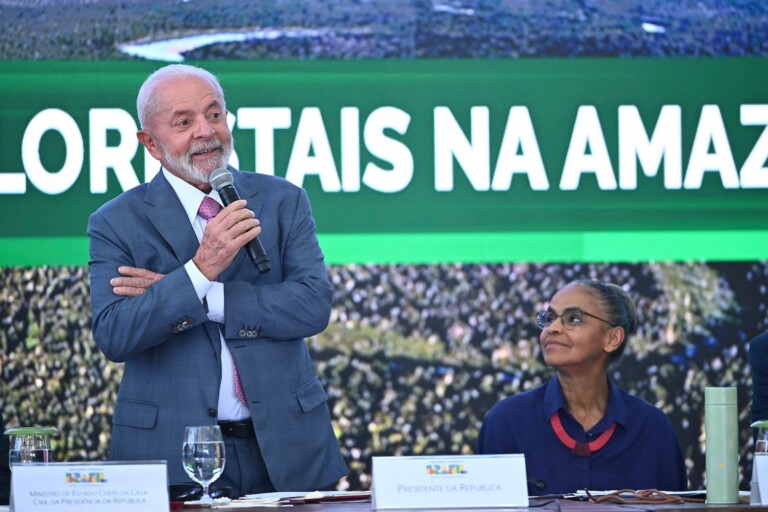
Analysis: Lula presidency saved at least 20,000km2 of Brazilian Amazon since 2022
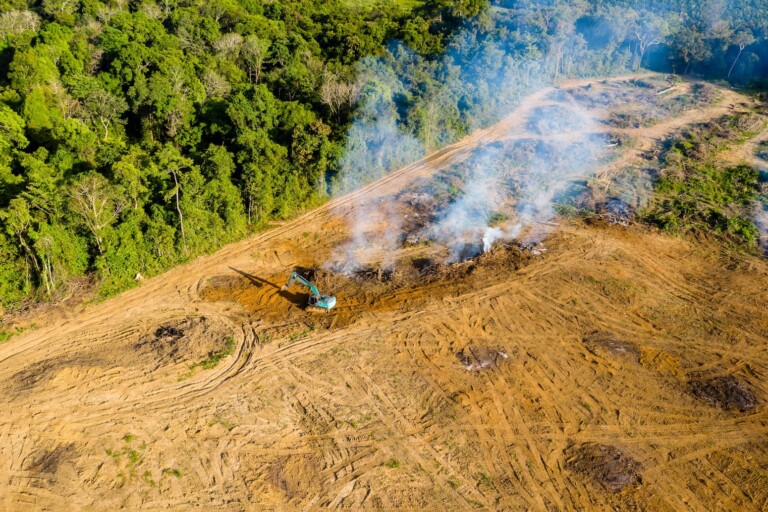
Why land-use emissions have fallen by a third this century – in six charts

Analysis: 84% of nations miss deadline to identify ‘nature-harming’ subsidies by 2025
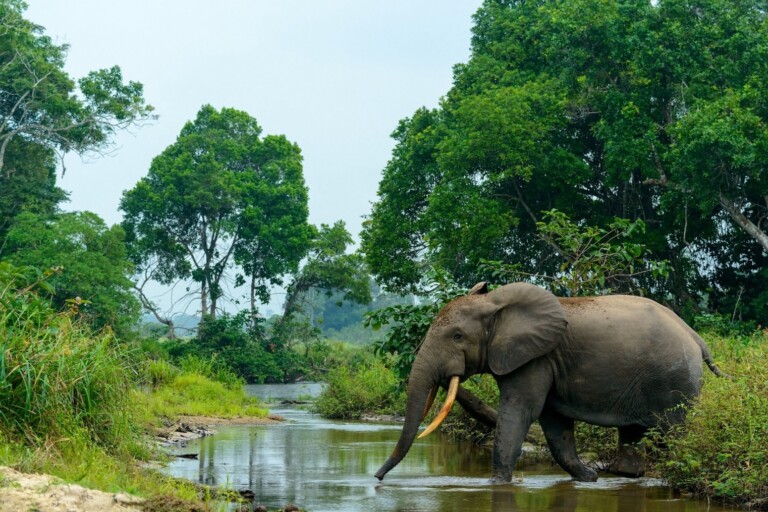
UK withdraws millions in funding from world’s second-largest rainforest in Congo
The post Interactive: Tracking negotiating texts at the COP17 biodiversity summit appeared first on Carbon Brief.
Interactive: Tracking negotiating texts at the COP17 biodiversity summit