Connect with us

Published

on

Top 5 Carbon Stocks to Watch in 2025

The transition to a low-carbon economy is not just a trend—it’s a must. With climate change accelerating, companies are under increasing pressure to reduce their carbon footprints. Major tech companies, such as Meta, Apple, and Netflix, have committed to achieving net-zero emissions by 2030, while mining and energy giants like Barrick, Newmont, and ExxonMobil are following suit. For investors, this evolving trend presents a unique opportunity to invest in carbon stocks and support innovative companies focused on carbon reduction and capture.

Why Carbon Stocks Are Gaining Traction in 2025

Carbon stocks are becoming increasingly popular as people and organizations alike strive to meet climate goals. These stocks represent companies that focus on reducing or offsetting carbon emissions. They are drawing attention not only for their environmental benefits but also for their potential financial returns. 

With governments and corporations prioritizing carbon reduction technologies and emissions offsets, the market for carbon-related solutions is poised for rapid growth.

In 2025, here are the top five carbon stocks worth keeping on your radar.

1. Brookfield Renewable Partners (BEP): A Leader in Clean Energy

Brookfield Renewable Partners (BEP) is one of the world’s largest publicly traded renewable energy companies. With a clear focus on clean, renewable energy, BEP distinguishes itself from many of its competitors by operating as a pure-play renewable energy company. This means that its portfolio consists exclusively of renewable sources of power generation, unlike other companies that often combine renewable energy with fossil fuel assets.

Global Portfolio and Capacity

As of 2024, BEP’s diversified portfolio encompasses over 35,000 megawatts of operating capacity across various renewable energy sources:

  • Hydroelectric Plants: 229 facilities
  • Wind Farms: 105 installations
  • Solar Power Plants: 88 sites
  • Energy Storage Facilities: 700 megawatts of capacity

This extensive array of assets spans multiple regions, including North America, South America, Europe, and Asia, underscoring BEP’s commitment to global renewable energy development.
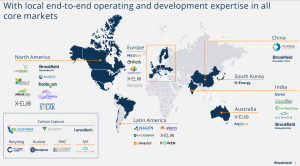
Brookfield Renewable Partners global operations

Financial Performance, Growth, and Expansion Plans

In the third quarter of 2024, BEP reported Funds From Operations (FFO) of $278 million, equating to $0.42 per unit. This represents an 11% increase compared to the same period in the prior year, highlighting the company’s robust financial health and operational efficiency. 

Over the past 5 years, BEP has maintained an average dividend yield of around 5%. Since its inception over two decades ago, it has reached over $109 billion in assets under management globally. 

The company is actively pursuing an ambitious growth strategy, with a development pipeline poised to add 11,000 megawatts of capacity. This expansion represents a 46% increase over the current operating capacity, with plans to execute these developments over the next 3 years.

Successful realization of this pipeline could enable the renewable energy company to significantly scale its power generation capabilities. Here’s what BEP’s development and growth plans look like, highlighting its 10.5 GW partnership with Microsoft:
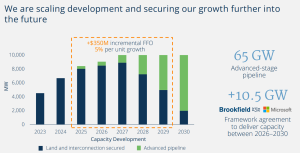
Brookfield Renewable Partners growth plan
Source: Company presentation

Positioning in the Transition to Clean Energy

As corporations worldwide strive to achieve net-zero carbon emissions, the demand for renewable energy sources is escalating. BEP’s exclusive focus on carbon-free energy positions it as a preferred partner for companies seeking to reduce their carbon footprints.

For investors seeking exposure to the renewable energy sector with a preference for established companies demonstrating stable growth and reliable returns, Brookfield Renewable Partners represents a compelling option.

2. Aker Carbon Capture ASA (AKCCF): Pioneering Carbon Capture Solutions

Aker Carbon Capture (AKCCF) is a Norwegian company specializing in carbon capture technology. Leveraging its expertise from the Aker Group, a global leader in offshore engineering, Aker Carbon Capture has developed modular carbon capture systems that are both cost-effective and scalable.

One of the company’s standout innovations is the “Just Catch” modular carbon capture plant. It is designed to meet the needs of mid-sized industries like cement, biomass, and waste-to-energy. This plant reduces the time and cost typically associated with custom-built carbon capture facilities.

Aker has also developed a proprietary amine solvent, a technology that efficiently captures CO₂ from industrial emissions. This solvent is highly stable, has low degradation rates, and minimizes energy consumption, making it a cost-effective solution for industries looking to reduce their carbon footprint. 

The technology has been successfully deployed in real-world projects, such as the CO₂ capture pilot at the Norcem cement plant in Brevik, Norway.

Aker Carbon Capture is also undergoing a joint venture with SLB to form SLB Capturi, which will further accelerate the development of large-scale carbon capture technologies. The carbon capture company partnered with Microsoft last year to capture and store carbon at pulp and paper mills.

Financial Performance, Key Projects, and Outlook

As of the third quarter of 2024, ACC ASA reported a net loss of NOK 47 million. The company maintained a robust financial position with NOK 4.5 billion in cash and an equity standing at NOK 5.5 billion.

ACC ASA is involved in several significant carbon capture projects including:

  • Heidelberg Materials Brevik CCS Project (Norway): Captures 400,000 tonnes of CO₂ annually.
  • Ørsted’s BECCS Project (Denmark): Deploying five Just Catch units to capture up to 500,000 tonnes of CO₂.
  • Twence Project (Netherlands): Captures 100,000 tonnes of CO₂ annually for use in local agriculture.

With a solid financial foundation and strategic partnerships, ACC ASA is well-positioned to expand its carbon capture solutions globally. The aim is to contribute significantly to the reduction of industrial CO₂ emissions and support the transition to a low-carbon economy.

3. LanzaTech Global, Inc. (LNZA): Turning Emissions into Valuable Products

LanzaTech Global, Inc. (LNZA) is a pioneering carbon recycling company that transforms waste carbon emissions into sustainable fuels and chemicals through innovative biotechnology using gas fermentation. Through this process, industrial emissions—rich in carbon monoxide and carbon dioxide—are converted into ethanol and other chemicals.
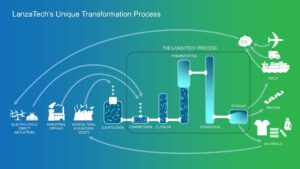
lanzatech carbon conversion process
Source: LanzaTech website

The company uses proprietary microbes engineered to thrive in industrial gas streams, such as those found in steel mills and refineries. These microbes consume waste gases, turning them into useful products. 

The ethanol produced can serve as a building block for various products, including jet fuel, plastics, and synthetic fibers.

Financial Performance and Strategic Development

In the third quarter of 2024, LanzaTech reported revenue of $9.9 million, a decrease from $17.4 million in the second quarter and $19.6 million in the third quarter of 2023. This decline was primarily due to a timing delay in a LanzaJet sublicensing event, which was expected to generate about $8.0 million in licensing revenue.

LanzaTech has been actively expanding its technological capabilities and market reach:

  • CirculAir Initiative: In June 2024, LanzaTech and its subsidiary LanzaJet introduced CirculAir, a commercially viable solution designed to convert waste carbon and renewable power into sustainable aviation fuel (SAF). 
  • Project Drake: LanzaTech advanced Project Drake, a 30-million-gallon sustainable aviation fuel project, furthering its commitment to large-scale SAF production.

Key Projects and Partnerships

The carbon recycling company has engaged in several significant projects and collaborations, including:

  • Technip Energies Collaboration: Received U.S. Department of Energy funding to commercialize CO₂-to-ethylene technology.
  • Eramet Partnership: Developing a Carbon Capture, Utilization, and Storage (CCUS) project in Norway.
  • LanzaJet Initiative: Introducing CirculAir, a technology to produce sustainable aviation fuel (SAF).

Additionally, LanzaTech is developing a novel biocatalyst to directly convert CO₂ to ethanol at 100% carbon efficiency, leveraging affordable, renewable hydrogen. This transformative technology aims to produce biofuels and feedstocks for valuable products using carbon-free renewable energy, water, and CO₂.

With a solid financial foundation bolstered by recent capital raises and strategic partnerships, LanzaTech is well-positioned to expand its carbon recycling solutions globally, creating sustainable products from waste carbon.

4. Occidental Petroleum Corporation (OXY): Carbon Capture with Enhanced Oil Recovery

Occidental Petroleum (OXY) is a major player in the oil and gas industry. However, in recent years, the company has been transforming itself into a leader in carbon management solutions. 

Occidental has embraced Direct Air Capture (DAC) technology, which removes CO₂ directly from the atmosphere. In partnership with Carbon Engineering, Occidental is constructing the world’s largest DAC facility in Texas, a groundbreaking project that will play a significant role in achieving global emission reduction targets.
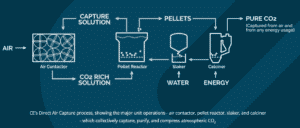
Carbon Engineering DAC tech

Financial Performance

In the third quarter of 2024, Occidental reported net income attributable to common stockholders of $964 million, or $0.98 per diluted share. The company has scheduled the announcement of its fourth-quarter 2024 financial results for February 18, 2025.

Carbon Capture Initiatives

Occidental is actively investing in DAC technology through its subsidiary, 1PointFive. The company’s flagship DAC facility, named STRATOS, is under construction in the Permian Basin.

STRATOS is designed to extract 500,000 metric tons of atmospheric CO₂ annually, laying the foundation for commercial-scale DAC deployment. The facility will begin operations in the summer of 2025, with live power anticipated to come online in December 2024.

Occidental plans to integrate the captured CO₂ into enhanced oil recovery (EOR) processes, injecting the CO₂ into aging oil fields to extract additional oil while effectively sequestering the CO₂ underground.

This approach creates a closed-loop system that both boosts oil production and reduces atmospheric carbon.

Additionally, Occidental is developing a project to transport and store CO₂ captured from Velocys’ planned Bayou Fuels biomass-to-fuels project in Natchez, Mississippi, in secure geologic formations.

The Bayou Fuels project converts waste woody biomass into transportation fuels, and applying CO₂ capture and storage can make the facility a net-negative carbon dioxide emitter.

Occidental’s approach is an example of how traditional energy companies are evolving to embrace sustainability. By combining its existing expertise in oil extraction with innovative carbon capture methods, Occidental is paving the way for a future where fossil fuel extraction can coexist with carbon reduction technologies.

5. Equinor ASA (EQNR): Leading the Way in Carbon Storage and Capture

Equinor, formerly known as Statoil, is a Norwegian energy giant that has diversified its portfolio to include renewable energy sources like wind power. It has also been at the forefront of carbon capture, utilization, and storage (CCUS) technologies for over 25 years. 

Their extensive experience includes operating the world’s first dedicated CO₂ storage site at the Sleipner field since 1996 and the Snøhvit field since 2008. The image from the company’s presentation below shows its overall performance in the latest report.

Equinor ASA overall performance

Moreover, Equinor is a key player in the Northern Lights project, a pioneering initiative in Norway aimed at developing a large-scale CCS infrastructure.

The Northern Lights project focuses on capturing CO₂ from industrial sources, transporting it via ships, and securely storing it beneath the North Sea seabed. This project is a crucial step in addressing the complexities of CCS, and Equinor is positioning itself as a facilitator of this transformative technology. 

What makes the Northern Lights project particularly noteworthy is its open-source infrastructure. It allows other companies to use the storage facilities. This collaborative model could accelerate the widespread adoption of CCS technology across Europe and beyond.

Equinor Northern Lights project

Financial Performance

Equinor reported Q3 2024 operating income of $6.89 billion, down 13% from $7.93 billion in Q3 2023, missing forecasts. Adjusted net income after tax was $2.04 billion, with net income at $2.29 billion. Earnings per share reached $0.79. Lower oil prices and production declines drove the decrease in profit.

Other Key Projects and Developments

  • Bayou Bend CCS Project: Equinor has acquired a 25% interest in Bayou Bend CCS LLC, positioning it to be one of the largest carbon capture and storage projects in the United States.
  • UK Carbon Storage Initiatives: Equinor, in collaboration with BP and TotalEnergies, has secured investment into Britain’s carbon capture projects, directly supporting 2,000 jobs in the northeast of England.

Strategic Partnerships, Technological Innovations, and Outlook

Equinor has signed an agreement with French gas grid operator GRTgaz to develop a CO₂ transport system that will carry captured CO₂ from French industrial emitters to offshore storage sites in Norway.

The Norwegian energy giant operates the Technology Centre Mongstad, the world’s largest and most flexible plant for testing and improving CO₂ capture technologies. This facility plays a crucial role in advancing CCUS solutions to decarbonize industries and the energy system.

In December 2024, Equinor secured over $3 billion in financing for its Empire Wind 1 offshore project in the U.S. Scheduled to become fully operational by 2027, the project will deliver clean energy to 500,000 New York homes, advancing the company’s renewable energy ambitions.

Equinor has decades of experience in offshore oil and gas exploration, and its deep-rooted knowledge of energy infrastructure is key to its success in developing large-scale CCS solutions. With the potential to store the equivalent of 1,000 years of Norwegian CO₂ emissions beneath the seabed, Equinor’s initiatives are pivotal in supporting global climate goals.

Conclusion: The Future of Carbon Stocks

As more companies declare their commitment to net-zero goals and seek innovative solutions to reduce carbon emissions, carbon stocks are becoming attractive to investors. The top carbon stocks or companies mentioned in this article—Brookfield Renewable Partners, Aker Carbon Capture, LanzaTech, Occidental Petroleum, and Equinor—are leading the charge in decarbonizing industries and creating sustainable solutions for a carbon-constrained world.

By investing in these carbon stocks, investors not only support the transition to a cleaner, more sustainable future but also position themselves to benefit from the growth of the green economy.

As we move closer to 2030 and beyond, carbon stocks will become an increasingly important part of investment portfolios aiming to align financial returns with environmental impact.

The post Top 5 Carbon Stocks to Watch in 2025 appeared first on Carbon Credits.

Continue Reading

Carbon Footprint

Clean Energy Investment Hits Record $2.3T in 2025 Says BloombergNEF: What Leads the Surge?

Published

on

Clean Energy Investment Hits Record $2.3T in 2025: EVs and Renewables Lead the Surge

Global investment in clean energy reached a new high of $2.3 trillion in 2025, according to a major industry report. This total was 8% higher than in 2024, showing that investment in low-carbon technologies continued to grow despite economic uncertainty. Researchers say this shows the global interest in cutting greenhouse gas emissions and creating cleaner energy systems.

The figures come from the BloombergNEF Energy Transition Investment Trends 2026 report. BloombergNEF is a leading research provider that tracks investments in clean energy technologies and infrastructure.

The clean energy transition includes technologies such as renewable power, electric vehicles (EVs), grid improvements, energy storage, and climate-related tech companies. Together, these areas attracted record funding.

Breakdown of the $2.3 Trillion Investment

The global total of $2.3 trillion in 2025 covered several key clean energy sectors:

  • Electric transport: The largest category, with $893 billion invested. This includes electric vehicles and charging infrastructure, which are expanding rapidly around the world.
  • Renewable energy: About $690 billion went into renewable power such as wind, solar, and other clean sources. This was slightly lower than the previous year due to changing regulations in China’s power markets.
  • Power grids: Investment in grid systems reached $483 billion in 2025. This spending supports the transmission and distribution of clean energy.
  • Emerging sectors: Hydrogen received $7.3 billion, and nuclear energy received $36 billion.

Bloomberg Energy Transition Investment Trends 2025

Although total investment grew, renewable energy funding itself was down nearly 9.5% compared with 2024. This decline was mainly due to new regulatory rules in China, the world’s largest clean energy market.

Overall, clean energy spending has outpaced fossil fuel investment for a second year in a row. Fossil fuel supply investment fell by $9 billion in 2025, mainly due to reduced spending on oil and gas production and fossil power plants.

Global-energy-transition-investment-by-sector-BNEF

Regional Power Plays: Who’s Investing Where

Investment levels differ greatly by region. This shows the impact of policy, industry structure, and economic growth.

In the Asia Pacific, investment accounted for nearly 47% of the global total in 2025. China stayed the top market, investing around $800 billion in clean tech. This was despite some drops in its renewable sector.

India saw investment grow by 15%, reaching around $68 billion in 2025. The increase was driven by renewables, grid upgrades, and electrification projects.

The European Union grew its investment by 18% to about $455 billion, making it a major contributor to the global increase.

In the United States, investment increased by 3.5% to about $378 billion. This rise happened even though some federal policies slowed support for certain clean energy programs.

Global energy transition investment, by economy or region
Source: BloombergNEF

These patterns show that all regions invest in clean energy. However, the pace and focus vary based on local strategies and market conditions.

Trends Driving Clean Energy Investment

  • Electrified Transport Leads

Investment in electric transport, like EVs and charging stations, is now a key player in clean energy spending. In 2025, this area alone attracted $893 billion, making it the top category of global investment.

Electric vehicles are growing fast as battery costs fall and more models become available. Many countries and companies have set targets to phase out fossil fuel vehicles, which boosts demand for EV infrastructure.

EV sales share by region 2030 IEA

  • Renewable Power and Grids

Even though renewable investment dipped slightly, it still remained a large portion of the total. The $690 billion invested in renewables in 2025 supports new solar, wind, and other clean power plants.

Investment in power grids also grew, reaching $483 billion. Upgrading grids is essential to connect more clean energy to the places that need it. These upgrades include transmission lines, smart grid technologies, and energy storage systems.

  • Clean Tech Supply Chains and Finance

Investment in factories and supply chains for clean tech also expanded. In 2025, spending on clean energy supply chains reached $127 billion, a 6% increase from 2024. These funds went to battery factories, solar equipment production, and mining for battery metals.

Equity funding in climate-tech companies also rebounded strongly, rising to $77.3 billion — a 53% increase from the previous year. This was the first year of growth in equity funding after several years of decline.

In addition, energy transition debt issuance, loans, and bonds to finance clean energy projects reached $1.2 trillion, up 17% from 2024. This reflects strong interest from both public and private financiers.

Historical Context and Recent Growth

Clean energy investment has been growing steadily over the past decade.

In 2024, global energy transition investment reached about $2.1 trillion, surpassing the $2 trillion mark for the first time. This total was driven by electrified transport, renewable power, and grid investment.

In 2023, investment in clean energy surged to around $1.77 trillion, reflecting rising spending despite geopolitical challenges and market pressures. Electrified transport and renewables both hit new highs that year.

The jump to $2.3 trillion in 2025 continues this long-term growth trend, even though the rate of growth has slowed compared with earlier years. The annual increase dropped from more than 20% several years ago to 8% in 2025 as markets matured and conditions shifted.

Looking Ahead: The Road to $2.9 Trillion

Analysts expect clean energy investment to keep rising in the near term, though uncertainties remain.

BloombergNEF’s base-case scenario shows that global energy transition investment might hit about $2.9 trillion annually over the next five years. This will be above 2025 levels. It shows ongoing interest from both governments and companies.

The International Energy Agency (IEA) offers a broader forecast for total energy investment in 2025. Overall energy investment could reach around $3.3 trillion. This includes spending on both clean and fossil fuels. Clean technologies are expected to get over $2.2 trillion of that total. This would mean clean energy investment continues to outpace fossil fuel spending.

global clean energy investment 2025 by IEA
Source: IEA

Experts see these future figures as good signs. However, they say annual investment must grow a lot to reach long-term climate goals, like those in the Paris Agreement. To meet net-zero by 2050, analysts say the world may need to invest over $5 trillion each year by the end of this decade.

What The Record Spend Means for the Energy Transition

The $2.3 trillion clean energy investment in 2025 shows that countries, companies, and investors around the world continue to fund the energy transition. These funds support low-carbon technologies that reduce emissions and improve energy security.

Investment in electric transport helps shift away from fossil fuel vehicles. Renewable energy funding builds new wind and solar capacity. Grid and storage investment enables that power to reach homes, businesses, and industries.

Regional investment patterns show strong gains in the Asia Pacific, Europe, India, and the United States. However, China saw a slight drop in renewable energy funding.

The clean energy transition remains robust, though overall growth rates have slowed compared with earlier years. The trend also shows that climate goals are now a key part of economic and infrastructure strategies. Forecasts indicate a continued expansion of clean energy investment soon. However, meeting long‑term climate targets will need even greater flows of capital across all regions.

The post Clean Energy Investment Hits Record $2.3T in 2025 Says BloombergNEF: What Leads the Surge? appeared first on Carbon Credits.

Continue Reading

Carbon Footprint

Microsoft Q2 FY26 Earnings: $81B Revenue, AI Momentum, and a 150% Jump in Water Use by 2030

Published

on

Microsoft Q2 FY26: $81B Revenue, AI Momentum, and a 150% Jump in Water Use by 2030

Microsoft’s Q2 FY26 earnings show a company growing fast while facing new sustainability pressures. Revenue surged on strong AI and cloud demand, carbon removal commitments doubled, and data centers expanded. At the same time, rising water use highlights the environmental costs of AI. Together, the results show how Microsoft is trying to balance financial growth, climate action, and resource management as its AI-driven business scales.

Big Numbers, Bigger Momentum: Microsoft’s Q2 FY26 Performance

Microsoft reported strong results for the second quarter of fiscal 2026, ending December 31, 2025. The company’s total revenue was $81.3 billion, up 17% from the $69.6 billion reported in the same period last year.

Net income, the profit after expenses, was $38.5 billion. This figure rose 60% from about $24.1 billion in the second quarter of fiscal 2025. Microsoft also reported a diluted earnings per share (EPS) of $5.16. This was up 60% from $3.23 per share in the prior year. Operating income also increased by 21% year over year to was $38.3 billion. 

The tech giant also reported large growth in its cloud and AI-related businesses. Revenue from Microsoft Cloud reached $51.5 billion in the quarter. This was an increase of 26% compared with the prior year.

Breaking this down:

  • Intelligent Cloud revenue was $32.9 billion, up 29%.
  • Productivity and Business Processes revenue was $34.1 billion, up 16%.
  • More Personal Computing revenue was $14.3 billion, down 3%.
microsoft fy26 income statement
Source: App Economy Insights

The company also reported its remaining performance obligations, future contracted revenue yet to be recognized, at $625 billion. This was up 110% compared with the same time last year.

Microsoft continued to return cash to shareholders. In the quarter, it returned about $12.7 billion through dividends and share buybacks — an increase of about 32% year over year.

These results show that Microsoft continued to grow across major business segments in Q2 FY 2026. Cloud services and AI-related products remained key drivers of revenue growth. At the same time, personal computing revenue, which includes Windows licensing, Surface devices, and search advertising, experienced a small decline.

Despite these robust results, Microsoft’s stock fell about 11% after the earnings. It dropped by $52.95 to close around $428.68 in late trading after hitting a low of $421.11. This is due to investors’ concerns about slow cloud growth and high spending on AI.

Microsoft MSFT stock price

Alongside its strong financial performance, Microsoft is also taking major strides in its environmental commitments.

Carbon Removal Leadership: Doubling Impact in 2025

Sustainability remains central to Microsoft’s strategy. In 2025, the company more than doubled its carbon removal agreements to 45 million metric tons of CO₂, up from 22 million tons in 2024.

microsoft carbon removal contracts 2023-2025

These purchases include a mix of nature-based solutions. They cover forestry and soil carbon projects, plus direct air capture technologies. The agreements span North America, Europe, and Africa, targeting high-quality, verified removal credits with long-term permanence.

Microsoft’s move reflects a broader trend among tech giants committing to net-zero and carbon-negative strategies. Other big buyers are Amazon, Google, and Stripe. They’re investing in carbon removal to offset emissions that can’t be cut yet.

By securing long-term offtake agreements, Microsoft ensures these projects receive funding to scale operations and deliver measurable climate impact. Analysts predict that global corporate carbon removal purchases might exceed 150 million metric tons each year by 2030. This shows a fast-growing market that mixes corporate sustainability goals with investment chances.

AI’s Hidden Cost: Data Centers and Water Demand

Microsoft also released projections on AI-driven data center water consumption. With AI workloads surging, water use in Microsoft’s global data centers is expected to rise 150% by 2030 compared with current levels. That’s equal to using about 18 billion liters over the said period. 

The increase is mainly due to liquid cooling systems used to maintain GPU and CPU performance in AI servers. Water is essential to prevent overheating and maintain efficiency. Microsoft’s water needs are spiking hardest in dry areas.

  • In Phoenix (hit by 20 years of drought), the company cut its 2030 estimate from 3.3 billion liters to 2 billion by running hotter data centers.
  • Near Jakarta, Indonesia (a sinking city with drained underground water), the forecast dropped from 1.9 billion to 664 million liters.
  • In Pune, India (where shortages caused protests and a “No Water, No Vote” push), it fell from 1.9 billion to just 237 million liters—Microsoft wouldn’t say why.

As AI adoption grows, data centers will consume more energy and water, especially in regions with concentrated cloud infrastructure.

global data center water use projection Bloomberg

In an interview, Priscilla Johnson, Microsoft’s former director of water strategy until 2020, stated:

“Water took a back seat. Energy was more the focus because it was more expensive. Water was too cheap to be prioritized.”

Microsoft is now exploring solutions such as:

  • Advanced cooling technologies to reduce water intensity per compute unit
  • Use of recycled water in data centers where feasible
  • AI-driven energy and resource optimization to manage electricity and water demand

The company emphasizes that AI deployment must be balanced with sustainability practices, ensuring growth does not lead to unsustainable water consumption or carbon emissions.

Where Growth Meets Responsibility

Microsoft’s Q2 results show that growth and sustainability are connected. Investments in AI, cloud, and enterprise services boost revenue while increasing resource demand. The company’s carbon removal goals and energy-efficient data center plans help reduce environmental impacts.

Key metrics illustrate this balance:

  • Revenue growth of 9% year-over-year
  • Cloud revenue of $30.5 billion, up 12%
  • Carbon removal agreements totaling 45 million metric tons
  • Projected AI data center water increase of 150% by 2030

These initiatives demonstrate that Microsoft is trying to align profitability with long-term climate goals. Investing in clean technology, energy efficiency, and carbon removal shows that big companies can grow responsibly. This approach also helps reduce environmental impacts.

What Comes Next for AI, Climate, and Capital

Microsoft expects AI adoption to boost demand for:

  • Data center capacity
  • Cloud computing
  • Specialized hardware like GPUs

Analysts predict the global AI data center market could double by 2030, creating both financial and sustainability challenges.

The carbon removal market is also expected to expand. With 45 million tons already contracted, Microsoft’s continued leadership signals corporate influence in scaling carbon removal projects.

Forecasts show that voluntary carbon removal deals might exceed $15 billion each year by 2030. This growth is mainly due to tech companies, industrial firms, and financial institutions.

Water management in data centers is another critical area. Companies need to invest in better cooling and recycled water solutions to help meet rising demand while protecting local water resources. Microsoft’s transparency around water use provides a model for responsible AI deployment globally.

Overall, Microsoft’s earnings report not only reflects strong financial performance but also highlights the company’s sustainability leadership. Growth, carbon removal, and AI infrastructure are linked. They provide insights for companies like Microsoft trying to balance profit with environmental responsibility.

The post Microsoft Q2 FY26 Earnings: $81B Revenue, AI Momentum, and a 150% Jump in Water Use by 2030 appeared first on Carbon Credits.

Continue Reading

Carbon Footprint

Royal Caribbean’s (RCL) Record 2025 Profits Meet Carbon Challenges of the Cruise Industry

Published

on

Royal Caribbean’s (RCL) Big Profits Meet Carbon Challenges of the Cruise Industry

Royal Caribbean Cruises Ltd. (NYSE: RCL) kicked off 2026 with strong financial results for 2025. The company’s success reflects a broader recovery and growth in the global cruise industry. Alongside financial gains, the industry faces growing scrutiny over environmental impact. 

Cruise ships are highly carbon-intensive per passenger, prompting major lines—including Royal Caribbean, MSC, Carnival, and Norwegian Cruise Line—to invest in cleaner fuels, energy-efficient technologies, and shore power solutions. 

This article looks at the cruise sector’s financial health, passenger growth, and environmental issues. It also discusses how companies are working to balance profits with sustainability.

Smooth Sailing: 2025 Profits and 2026 Outlook

Royal Caribbean Cruises had solid financial results in 2025 and a positive outlook for 2026. The company made nearly $18 billion in revenue in 2025, up from about $16.48 billion in 2024.

Net income also grew to about $4.27 billion, compared with roughly $2.88 billion the year before. Adjusted earnings per share (EPS) rose to $15.64, showing improved profitability.

Royal Caribbean Cruise financial results 2025
Source: Royal Caribbean Cruises

The company also generated a strong operating cash flow of about $6.4–6.5 billion and returned around $2 billion to shareholders during the year. Record cruise bookings and higher ticket prices helped drive these results.

Royal Caribbean’s board expects double-digit revenue growth in 2026, along with higher capacity. Adjusted EPS is projected between $17.70 and $18.10. Around two-thirds of 2026 cruise capacity is already booked at strong pricing, supporting this forecast.

Jason Liberty, the company CEO, remarked:

“2025 was an outstanding year, and the momentum is further accelerating into 2026… and we continue to see strong and growing preference for our leading brands and differentiated vacation experiences. We expect another strong year of financial performance with both revenue and earnings growing double digits, and we remain on track to achieve our Perfecta goals by 2027.”

After the earnings call, the company’s stock climbed over 6%, mainly due to strong 2026 guidance. 

Royal Caribbean Cruises RCL stock price

These results show not only a recovery from pandemic lows but also sustained demand for cruises. Analysts expect this trend to continue as global travel and premium leisure spending grow.

Passenger Waves: Cruise Industry Expansion and Emissions 

The global cruise industry is growing fast. Projections show over 38 million passengers by 2026, up from around 37.7 million in 2025. This growth follows strong momentum from 2024 and reflects overall travel trends.

cruise passengers outlook
Source: Cruise Lines International Association

Higher demand is encouraging cruise lines to add ships and expand routes. Royal Caribbean, for example, has ordered new Discovery Class vessels and is growing its river cruise segment with more ships planned through 2031. This shows long-term confidence in the market.

Carbon Wake: Cruise Emissions vs Other Travel

Cruising, however, has a higher environmental impact than many other types of travel. Cruise ships are among the most carbon-intensive forms of travel per passenger per distance traveled. This is because they need fuel not just to move but also to run cabins, restaurants, pools, and entertainment.

Even large, efficient cruise ships by Royal Caribbean emit around 250 grams of CO₂ per passenger-kilometer. That is higher than most long-haul flights or hotel stays. Onboard services and hotel-style energy use make cruises even more carbon-heavy.

For perspective:

  • A five-night cruise of 1,200 miles produces about 1,100 pounds (≈500 kg) of CO₂ per passenger.
  • A flight covering the same distance plus a hotel stay produces roughly 264 kg of CO₂ per person.

This means a cruise can generate about 2x the greenhouse gas emissions of an equivalent flight-and-hotel trip.

Trains and electric cars have much lower emissions per passenger. For example, traveling by national rail produces about 35 g CO₂ per kilometer, and international trains like Eurostar are even lower at 4.5 g CO₂ per kilometer.

The Carbon Footprint of Cruise Ship vs Major Travel Methods
Data source: Voronoi App

Other comparison insights:

  • Emissions per passenger-kilometer: Large cruise ships emit 0.43–0.65 kg CO₂, depending on occupancy and efficiency. Economy-class flights emit 0.15–0.20 kg, while high-speed rail is around 0.04 kg. Cruises can be 2–10x more carbon-intensive per passenger.
  • Fuel and technology impact: Using LNG instead of heavy fuel oil reduces CO₂ by 20–25%, but methane slip and upstream emissions can reduce gains. Air lubrication and optimized routing can cut fuel use by 5–10% per voyage.

Ship engines burn huge amounts of fuel. Amenities like air conditioning, theaters, pools, and restaurants add to the energy demand. Cruises remain a luxurious experience, but travelers should know that they usually have a higher carbon footprint than flights, plus hotels or land-based travel. This shows that while cruises are luxurious and convenient, they have a much higher carbon footprint than most other ways of traveling.

Cruise ships also emit sulfur oxides (SOx), nitrogen oxides (NOx), and fine particles, which can harm air quality in port cities and marine ecosystems. Many passengers also fly to and from cruise ports, adding more carbon emissions that are often not included in cruise footprint estimates.

How Cruise Lines Are Addressing Environmental Impact

Cruise companies, including Royal Caribbean, are working to reduce their environmental impact. Many aim to reach net-zero greenhouse gas emissions by 2050 or earlier.

Royal Caribbean’s Destination Net Zero strategy focuses on:

  • Alternative fuels: LNG-powered ships, biofuels, and fuel cell technology.
  • New ship technologies: Advanced hulls, air lubrication systems, and shore power connections.
  • Operational efficiency: Optimized routes and engine improvements to reduce fuel use per passenger.
Royal Caribbean Cruise emission reductions pathways
Source: Royal Caribbean Cruises

Other cruise lines are also taking action to tackle their environmental footprint: 

MSC Cruises used efficiency tools and smart itinerary planning to cut 50,000 tonnes of CO₂ in 2024. They are testing hybrid propulsion and shore power at multiple ports. Carnival Corporation is expanding LNG and biofuel use while increasing shore-side electrical connections. They are also researching carbon capture for ships.

Likewise, Norwegian Cruise Line (NCL) is adding LNG-powered ships, battery-assisted propulsion, and energy-efficient onboard systems. NCL is also expanding shore power at ports.

Disney Cruise Line uses hybrid exhaust gas cleaning, advanced wastewater treatment, and fuel-efficient hulls while eliminating single-use plastics onboard. Meanwhile, Princess Cruises applies energy-saving tech, waste reduction, and wastewater treatment, while testing LNG as a fuel alternative.

Overall, the cruise industry faces pressure to reduce carbon intensity. Cleaner fuels, new technologies, and operational efficiency are becoming standard. Environmental responsibility is now a key part of long-term business strategy.

Forecast Horizon: Growth, Finance, and Green Goals

Royal Caribbean and the cruise industry are financially strong. High bookings, growing revenue, and positive forecasts show that demand for cruises is rising. Investments in new ships and offerings aim to meet demand across different traveler groups.

Cruise forecasts show over 38 million passengers by 2026, highlighting ongoing interest. Electric and hybrid propulsion, shore power, biofuels, and fuel-saving technologies are slowly becoming standard.

Challenges remain. Reducing cruise carbon intensity to levels similar to other travel modes will require more alternative fuels, stricter rules, and continued innovation.

Still, many cruise lines have pledged net-zero targets, often aligned with global shipping goals. Passengers are also more aware of environmental impact, driving demand for greener cruises.

Balancing Growth and Emissions

Royal Caribbean’s strong earnings and positive outlook show a resilient and growing industry. Record bookings and strategic investments indicate financial health and long-term growth.

However, carbon emissions remain a major issue. Cruises generally produce more CO₂ per passenger than many other vacations. Cruising is also considered to emit the most emissions compared to other travel methods. Thus, the industry faces pressure to reduce this impact.

Understanding both the financial and environmental sides can help travelers make better choices. For cruise companies and policymakers, balancing growth with emissions reductions is key for the future of cruising.

The post Royal Caribbean’s (RCL) Record 2025 Profits Meet Carbon Challenges of the Cruise Industry appeared first on Carbon Credits.

Continue Reading

Trending

Copyright © 2022 BreakingClimateChange.com

