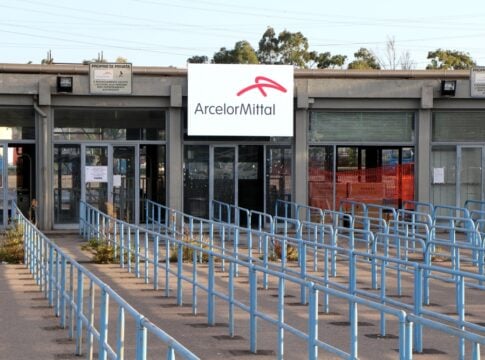
Connect with us

Published

on

ArcelorMittal Confirms $1.5 Billion Low-Carbon Steel Investment in France

ArcelorMittal will invest €1.3 billion (about $1.5 billion) to build a new electric arc furnace (EAF) at its steel site in Dunkirk, France. The company said the project marks a major step in cutting emissions from its French steel production.

The steelmaker announced the decision as French President Emmanuel Macron visited the Dunkirk site. ArcelorMittal said it now has more confidence to move forward because of recent policy and market changes in Europe and France. CEO Geert van Poelvoorde said,

“The decision to proceed with building an EAF in ArcelorMittal Dunkirk, to produce low-carbon emissions steel at scale for our customers, has been made possible because we now have the conditions in place to make this project a success…We will now focus on steering the Dunkirk EAF project to completion and commercial success.”

The EAF is scheduled to start up in 2029. It will have a capacity of 2 million tonnes of steel per year. 

A 2M-Tonne Shift Toward Scrap-Based Steel

Electric arc furnaces make steel mainly by melting scrap steel. They can also use low-carbon inputs like HBI/DRI (hot briquetted iron / direct reduced iron) mixed with hot metal. ArcelorMittal said its Dunkirk EAF will use a mix of scrap, HBI/DRI, and hot metal.

The company also gave a clear emissions estimate. It said the new EAF will emit about 0.6 tonne of CO₂ per tonne of steel and deliver three times less CO₂ than steel made in a blast furnace route.

This matters because steel is a hard sector to decarbonize. The industry produces significant CO₂e emissions, due to energy-intensive processes and heavy fossil fuel use. 

Per World Steel Association, the steel industry produces ~3 billion tonnes of CO₂ annually, accounting for ~9% of global emissions. The industry emits an average of 1.89 tonnes CO₂ per tonne in 2020. Producing one tonne of steel generates 1.7-1.8 tonnes of CO₂ on average, depending on technology use as seen below.
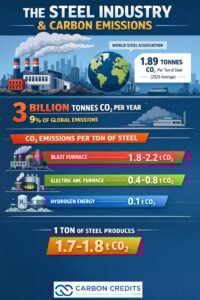
steel industry carbon emissions
Data source: World Steel Association

How Will France Support the Investment?

ArcelorMittal said part of the project will receive public support through Energy Efficiency Certificates (CEE). CEE is a regulatory mechanism in France that promotes energy savings and CO₂ reductions. The company said the support amount will represent 50% of the €1.3 billion investment.

The steelmaker also pointed to a key energy step in France. It said it recently signed a contract with EDF to secure a long-term supply of low-carbon, competitive electricity. The company described this as a major part of its energy strategy in France.

Electricity supply is critical for EAFs. The carbon benefit of an EAF depends heavily on how clean the grid is and how stable power prices are over time.

Why Did ArcelorMittal Invest in Bunkirk?

ArcelorMittal said three developments gave it confidence to confirm the Dunkirk investment.

  • Import Controls

First, it cited new European Commission proposals to limit unfair imports through a Tariff Rate Quota (TRQ) mechanism. ArcelorMittal said this approach would limit import quantities and impose additional duties if imports exceed set limits.

  • CBAM

Second, it pointed to proposed reforms to the EU’s Carbon Border Adjustment Mechanism (CBAM). ArcelorMittal said it expects these measures—if fully implemented—to restore “fair and competitive conditions” in the European steel market.

CBAM is the EU’s tool to apply a carbon price to certain carbon-intensive goods entering the EU. The European Commission says CBAM’s transitional phase runs from 2023 to 2025, and the definitive regime starts in 2026.

ArcelorMittal’s message was direct. It said it is important to implement the TRQ and adjust CBAM to close remaining loopholes as quickly as possible.

  • EDF Deal

Third, it highlighted its EDF electricity deal as another factor supporting the project.

€500M Bet on Electrification Demand

ArcelorMittal also highlighted another major investment near Dunkirk. At its Mardyck plant, close to Dunkirk, the company said it is starting up a new electrical steel production unit this quarter.

It said the company invested €500 million in this facility. ArcelorMittal described it as its largest investment in Europe in the last 10 years, excluding decarbonization projects.

Electrical steel is used in electric motors and other electrification applications. ArcelorMittal said the new plant supports the electrification of industrial and automotive uses. This point matters for demand.

Steelmakers often need clearer long-term demand signals for low-carbon materials before committing large capital to new production routes. 

From Blast Furnaces to EAFs: ArcelorMittal’s Broader Decarbonization Program

ArcelorMittal says it remains committed to reaching net-zero emissions by 2050. The company set this as a group-wide goal in 2020.
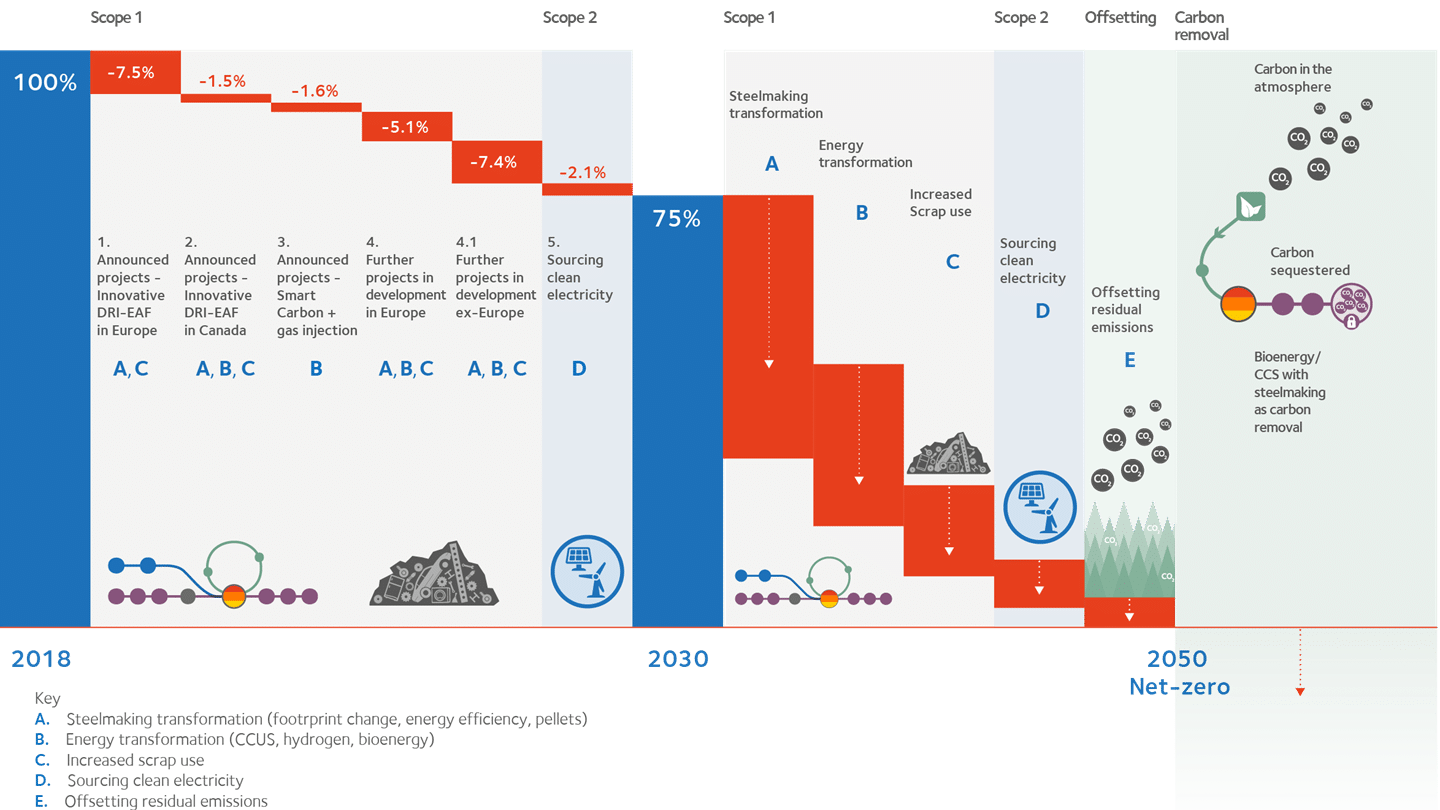
ArcelorMittal net zero or decarbonization roadmap
Source: ArcelorMittal

In its latest sustainability update, ArcelorMittal’s absolute emissions for its 2024 operating perimeter are almost 50% lower than its 2018 operating perimeter. The steel manufacturer further said it has invested $1 billion in decarbonization projects over that period.

The company is also shifting more steel production to the electric arc furnace (EAF) route. EAF production accounted for about a quarter of its global steelmaking in 2024, up from 19% in 2018.

In Europe, ArcelorMittal is moving ahead with several EAF-led projects. It said it started construction of a 1.1 million-tonne EAF at its long products plant in Gijón, Spain, which it expects will cut emissions by 1 million tonnes of CO₂e. It is also increasing output at Sestao, Spain, to 1.6 million tonnes by 2026, using two EAFs.

ArcelorMittal markets its low-carbon products under the XCarb® brand. The company said it can deliver low-carbon steel with a footprint as low as 300 kg CO₂ per tonne of steel, and it expected XCarb sales to rise to around 400,000 tonnes in the year it reported.

More notably, the company already operates an industrial-scale carbon capture and utilization (CCU) facility at Ghent, Belgium, with two additional pilots underway at the same site. 

Carbon Pricing and Competitiveness Reshape Steel

Steel decarbonization requires major capital and new infrastructure. It also needs policy support that reduces carbon leakage risk and helps companies compete with lower-cost imports.

The EU’s CBAM design aims to put a fair carbon price on imports and reduce the incentive to shift production outside the EU. The Commission notes that CBAM is also aligned with the phase-out of free allowances under the EU ETS to support industrial decarbonization.

At the same time, the steel sector still needs faster progress on emissions cuts. The IEA notes that steel emissions and emissions intensity need to fall by about 25% by 2030—around 3% per year—to get on track for net zero by mid-century.

ArcelorMittal’s Dunkirk EAF fits this direction. It shifts part of production toward a lower-emissions process and signals confidence that market rules are moving toward stronger climate and competitiveness safeguards.

Execution Phase: Can Policy and Profit Align?

ArcelorMittal said it will now focus on delivering the Dunkirk EAF project through to completion and commercial success.

The company also said it will review the possibility of building further EAFs elsewhere in Europe, but it plans to take a cautious approach based on its “economic decarbonisation” strategy.

For France, the project adds to broader efforts to keep heavy industry competitive while cutting emissions. Meanwhile, it reflects a wider shift toward low-carbon industrial investment for Europe backed by border measures, market defenses, and energy contracts.

For customers, the key outcome is supply. A 2-million-tonne EAF could provide lower-carbon steel at scale, starting in 2029, if the project stays on schedule and the policy measures ArcelorMittal cited take effect as planned.

The post ArcelorMittal Confirms $1.5 Billion Low-Carbon Steel Investment in France appeared first on Carbon Credits.

Continue Reading

Carbon Footprint

EU Carbon Market under Pressure: Business Lobby for Reform, Italy Calls for Suspension

Published

on

EU Carbon Market under Pressure: Business Lobby for Reform, Italy Calls for Suspension

Europe’s carbon market is facing new political pressure. Europe’s largest business lobby group has called for reforms. At the same time, Italy has asked for a temporary suspension of the system. These calls focus on the European Union Emissions Trading System (EU ETS).

The EU ETS is the world’s largest carbon market. It covers around 40% of the EU’s total greenhouse gas emissions. It sets a cap on emissions from power plants, heavy industry, and aviation within Europe.

Under this scheme, companies must hold allowances for each ton of carbon dioxide (CO₂) they emit. They can buy and sell these allowances on the market. Recent carbon price swings and concerns about industrial competitiveness have triggered a new debate. 

Inside the System: How Europe’s Carbon Market Operates

The EU ETS started in 2005. It now operates in its fourth phase, which runs from 2021 to 2030. The cap on emissions declines each year. This ensures that total emissions fall over time.

Under the reforms agreed in 2023, the annual cap will decline faster. The linear reduction factor increased to 4.3% per year from 2024 to 2027 and to 4.4% per year from 2028 to 2030.

  • The EU also decided to cut the total cap by 90 million allowances in 2024 and 27 million allowances in 2026.

In 2023, emissions from sectors covered by the EU ETS fell by about 15.5% compared to 2022, according to the European Commission. Power sector emissions dropped sharply due to higher renewable energy use and lower gas demand. Since 2005, emissions from ETS sectors have fallen by around 47%.

The EU aims to cut net greenhouse gas emissions by at least 55% by 2030 compared to 1990 levels. This target is part of the European Climate Law. The EU ETS is a key tool to meet that goal.

EU net GHG emissions
Source: European Commission

From €10 to €100: The Price Swings Shaping the Debate

Carbon prices in the EU ETS have risen strongly in recent years. In 2018, prices were below €10 per ton. By early 2023, prices reached record highs of around €100 per ton.

However, prices fell in 2024. By early 2025, EU carbon prices were trading closer to €60–€70 per ton. Slower industrial activity, lower energy demand, and market expectations about future supply influenced this drop.

Most recently, EU prices have fluctuated, trading around €70–€75 per tonne of CO₂ in early March 2026, after rising from their lows in late 2025. On March 3, 2026, EU carbon allowances were around €74.20 per tonne. This is a slight rise from recent lows, but still below the peaks above €90 from earlier in the year.

EU carbon prices March 2026
Data source: TradingEconomics

The Market Stability Reserve (MSR) adjusts the supply of allowances. It removes surplus allowances from the market when supply is high. In 2023, the MSR continued to absorb allowances to support market balance.

Despite these controls, industry groups say price volatility creates uncertainty. Energy-intensive sectors such as steel, cement, chemicals, and aluminum face higher costs when carbon prices rise.

BusinessEurope Calls for Reform

BusinessEurope represents national business federations across the EU. In early 2026, it called for reforms to the EU carbon market.

The group warned that high energy and carbon costs are hurting European industry. It said the EU risks “deindustrialization” if companies move production outside Europe. This could lead to carbon leakage, where emissions shift to countries with weaker climate rules.

BusinessEurope asked EU policymakers to review the Market Stability Reserve. It also called for measures to reduce excessive price swings. The group stressed the need to align climate policy with industrial competitiveness and reduce energy prices in the short term.

electricity prices EU 2024
Source: BusinessEurope

The lobby group noted in its paper:

“The enabling conditions and incentives to create a viable business case for decarbonisation are still largely missing. The EU has yet to put in place effective short-term measures to lower energy costs and close the related cost competitiveness gap faced by European companies compared to their global competitors… Moreover, EU climate and energy policies continue to lack a genuinely technology-neutral approach. For example, state aid thresholds still differentiate between technologies, making it harder for industries to invest in the technologies needed to achieve Europe’s climate neutrality targets.”

At the same time, the EU has introduced the Carbon Border Adjustment Mechanism (CBAM). CBAM will apply a carbon price on imports of cement, steel, aluminum, fertilizers, electricity, and hydrogen.

The goal is to level the playing field between EU and non-EU producers. The system is in its transitional phase from 2023 to 2025. Full financial obligations begin in 2026.

Italy’s Bold Proposal: Hit Pause on Carbon Pricing?

Italy has taken a stronger position. Italian officials have called for a temporary suspension of the EU ETS. They argue that high carbon prices increase electricity costs and hurt households and businesses.

Italy’s Industry Minister Adolfo Urso remarked:

“The ETS, as currently conceived, represents an additional tax on European companies, affecting costs and limiting their competitiveness.”

Italy relies on gas for a large share of its power generation. When gas prices rise, electricity prices also increase. Adding a carbon price can raise costs further. Italian leaders say this creates pressure on industry and families.

However, suspending the EU ETS would require agreement at EU level. The carbon market is governed by EU law. A single member state cannot stop it alone.

The European Commission has defended the system. It argues that the EU ETS reduces emissions in a cost-effective way. It also generates revenue for member states. In 2023, EU ETS auction revenues reached tens of billions of euros across the bloc. These funds support climate action, energy transition, and social measures.

Billions at Stake: Where Carbon Market Revenues Go

EU member states receive most revenue from auctioning carbon allowances. From 2013 to late 2025, total auction revenues have exceeded €245 billion, per official EU sources.

In 2024 alone, revenues totaled around €39 billion (down from €44 billion in 2023), with €24.4-25 billion going directly to member states despite lower average prices of €64.76/tCO2.

EU ETS revenue annual 2024
Source: Argus Media

At least 50% of auction revenues must be used for climate and energy-related purposes. Many countries report using much more than this minimum share.

The EU ETS also funds innovation. The Innovation Fund supports low-carbon technologies in industry and energy. It is financed by the sale of 450 million allowances from 2020 to 2030. The Modernisation Fund supports lower-income EU countries in upgrading their energy systems.

These funds aim to help the industry reduce emissions rather than relocate.

What Could Reform Look Like?

The European Commission has signaled a review of the ETS later in 2026. This review comes as part of the broader European Green Deal, the EU’s plan to reach net-zero emissions by 2050.

Reform proposals could include:

  • Adjusting the pace at which free allowances are phased out.
  • Modifying how carbon prices are calculated or allocated.
  • Changing how new sectors like transport and buildings are integrated into the system.

Some industry representatives also want changes to the CBAM. CBAM is a carbon tariff on certain imported goods, such as steel, cement, and fertilisers, starting in 2026. It aims to prevent carbon leakage by making non-EU products pay a carbon cost similar to EU goods.

However, the European Commission recently rejected calls to suspend carbon levies on fertilisers, saying the CBAM must remain stable to protect EU producers.

Reform could seek a balance between climate goals and business competitiveness. How to achieve this balance remains a key question for EU policymakers.

The Road Ahead: Reform, Resistance, or Reinforcement?

The debate reflects a broader tension. The EU wants to cut emissions quickly. At the same time, it wants to protect industrial jobs and economic growth.

The European Commission will continue monitoring the carbon market. It publishes regular reports on supply, demand, and price trends. Any major reform would require agreement from the European Parliament and EU member states.

For now, the EU ETS remains central to Europe’s climate policy. It has helped drive a nearly 50% cut in emissions from covered sectors since 2005. But political pressure is rising. The outcome will shape Europe’s path toward its 2030 target and its longer-term aim of climate neutrality by 2050.

The post EU Carbon Market under Pressure: Business Lobby for Reform, Italy Calls for Suspension appeared first on Carbon Credits.

Continue Reading

Carbon Footprint

Vistra Leverages Nuclear Partnerships with Meta and Amazon to Drive 2026 Growth

Published

on

vistra

Vistra Corp. (NYSE: VST) closed 2025 with strong operational and financial momentum. Headquartered in Irving, Texas, the Fortune 500 power producer operates one of the largest competitive electricity portfolios in the United States.

Last year, the company expanded its fleet, strengthened long-term partnerships, and delivered record operational performance. At the same time, it positioned itself to benefit from rising electricity demand driven by data centers, electrification, and AI growth.

  • It now owns and operates roughly 44,000 megawatts (MW) of generation capacity across natural gas, nuclear, coal, solar, and battery storage assets. That capacity can power about 22 million homes.

Financial Performance Shows Underlying Strength

For the year ended December 31, 2025, Vistra reported GAAP net income of $944 million. This figure included an $808 million unrealized pre-tax loss from commodity hedges expected to settle in future years.

vistra earnings
Source: Vistra

Although net income declined compared to 2024, the drop mainly reflected accounting impacts from rising forward power prices. Higher forward prices typically increase the long-term value of Vistra’s generation portfolio. As a result, the underlying business remains strong.

Ongoing Operations Adjusted EBITDA reached $5.9 billion, up $269 million year over year. Stronger retail margins and contributions from newly acquired assets supported the increase. Cash flow from operations totaled $4.07 billion, reinforcing liquidity and balance sheet strength.

2026 Expectations

For 2026, Vistra expects its adjusted EBITDA to range between $6.8 billion and $7.6 billion, while its adjusted free cash flow before growth is projected between $3.93 billion and $4.73 billion.

Importantly, these projections exclude potential impacts from the pending Cogentrix acquisition and recently signed nuclear agreements.

Meta and Amazon Anchor Vistra’s Nuclear Growth Strategy

The company operates the second-largest competitive nuclear fleet in the United States, providing steady, carbon-free baseload electricity that supports both grid reliability and corporate decarbonization goals.

  • In early 2026, the company signed 20-year power purchase agreements with Meta, covering more than 2,600 megawatts of nuclear energy across its PJM facilities. As Meta expands its AI capabilities and data center footprint, it needs dependable, around-the-clock power. These agreements secure long-term access to emissions-free electricity while giving Vistra predictable revenue streams.

Importantly, the structure of the contracts goes beyond traditional energy sales. They include capacity payments and plant uprates, allowing higher output from existing nuclear units. This approach improves asset efficiency for Vistra while ensuring price stability and supply certainty for Meta.

  • Vistra also strengthened its clean energy partnerships in Texas. Last year, it signed a separate 20-year agreement with Amazon Web Services for up to 1,200 megawatts of nuclear power from the Comanche Peak Nuclear Power Plant. The deal supports Amazon’s growing data operations with firm, carbon-free electricity and locks in long-term value for the company.

Together, these agreements reinforce the long-term viability of Vistra’s nuclear fleet. Long-term license renewals for the PJM units extend the life of critical zero-carbon infrastructure and strengthen grid reliability. At the same time, they position Vistra to meet rising corporate demand for clean, dependable power in the AI-driven economy.

AI data center
Source: IEA

Expanding Solar and Natural Gas 

Vistra also commissioned the 200-MW Oak Hill Solar Facility on a reclaimed coal mine site. The project includes a PPA with AWS, expanding the clean energy collaboration.

In November 2025, it closed a 2,600-MW acquisition from Lotus Infrastructure Partners. Shortly after, it announced plans to acquire Cogentrix Energy, adding approximately 5,500 MW of gas-fired capacity. The transaction is expected to close in mid-to-late 2026.

Additionally, it has also begun construction on two new gas units totaling 860 MW at its Permian Basin plant, effectively tripling that site’s capacity. In addition, it executed uprates across its Texas gas fleet to increase efficiency and output.

These investments reflect a balanced approach. As renewable penetration increases, flexible gas generation helps stabilize the grid and manage peak demand.

Advancing Emissions Reduction Goals

Vistra’s Scope 1 greenhouse gas emissions declined for the third consecutive year in 2024, primarily due to reduced coal generation. Scope 1 includes carbon dioxide, methane, and nitrous oxide, with carbon dioxide representing the largest share.

  • The company targets a 60% reduction in Scope 1 and 2 emissions by 2030 compared to 2010 levels. It also aims to achieve net-zero emissions by 2050.

vistra emissions

Corporate sustainability efforts extend beyond generation. The company’s headquarters operates on 100% Green-e Wind renewable energy certificates. Nuclear-based emissions-free energy certificates also support fleet electricity usage. Together, these certificates covered more than 30% of corporate electricity consumption in 2024.

vistra energy
Source: Vistra

Positioned for Long-Term Value Creation

Vistra enters 2026 with strong momentum. Long-term nuclear PPAs with Meta and Amazon, expanded gas capacity, disciplined hedging, and growing renewable assets provide earnings visibility.

As electricity demand rises from AI, electrification, and digital infrastructure, companies with scale and reliability will benefit. Vistra’s integrated model of combining retail operations, nuclear baseload, flexible gas assets, and renewables positions it to capture that growth.

With projected EBITDA exceeding $7 billion in 2026 and potential upside from acquisitions, Vistra is not only adapting to the evolving energy market. It is actively shaping its future.

The post Vistra Leverages Nuclear Partnerships with Meta and Amazon to Drive 2026 Growth appeared first on Carbon Credits.

Continue Reading

Carbon Footprint

AEMC’s Nikolai: America’s Answer to Indonesia’s Nickel Crunch

Published

on

Alaska Energy Metals - AEMC - Nikolai Project

Disseminated on behalf of Alaska Energy Metals Corporation.

nickel Price Analysis Today

Nickel prices edged 0.26% lower today to $17,391.65/Ton, pressured by a stronger US dollar and risk-off sentiment tied to Middle East geopolitical tensions. Despite these macroeconomic headwinds and ongoing global oversupply, losses were strictly capped. Firm demand from Chinese stainless steel mills—keeping regional pricing resilient at ¥120,116/Ton—and strict Indonesian ore quota limits provided a robust structural floor. Additionally, revived expectations for a Federal Reserve rate cut following weak payroll data helped stabilize the broader market outlook.


As the global energy transition accelerates, access to critical minerals is becoming just as important as innovation itself. Among these materials, nickel plays a central role. It powers electric vehicle batteries, supports energy storage systems, and remains essential for industrial applications such as stainless steel. Yet, while demand continues to climb, supply risks are growing—largely due to Indonesia’s tightening control over global nickel production.

In this shifting landscape, Alaska Energy Metals Corporation (AEMC) is advancing its Nikolai Nickel Project in interior Alaska. The project is emerging as a potential domestic anchor for U.S. nickel supply at a time when geopolitical, environmental, and market pressures are reshaping the global nickel industry.

Indonesia’s Nickel Dominance—and Its Strategic Pullback

Indonesia currently dominates global nickel supply, accounting for nearly half of the world’s mined output. Over the past decade, the country expanded production rapidly, flooding the market and pushing prices lower. However, that era appears to be ending.

In January, Indonesia’s Ministry of Energy and Mineral Resources announced a sharp reduction in nickel ore production quotas. For 2026, the government set quotas at 250–260 million tonnes, down significantly from the 379 million tonnes approved for 2025. This shift represents one of the most aggressive supply controls the nickel market has seen in years.

At the same time, Indonesia changed the validity of its mining work plans (RKABs) from three years to one. As a result, the government now holds direct annual control over production levels, allowing it to adjust supply more tightly in response to prices, environmental pressures, and domestic processing capacity.

The policy pivot aims to preserve long-term reserves, stabilize prices, and push miners toward value-added processing such as nickel matte production for EV batteries. However, it also introduces uncertainty for global buyers that rely heavily on Indonesian supply.

indonesia nickel

Short-Term Surplus, Long-Term Risk

On the surface, the nickel market still appears well supplied. Analysts forecast a 261,000-tonne surplus in 2026, with global supply estimated at 3.78 million tonnes compared to demand of 3.52 million tonnes. Inventories remain elevated due to previous years of overproduction.

Yet this balance may prove fragile. Actual production in 2025 already fell short of approved quotas due to underutilized capacity and rising costs. If prices weaken further, high-cost operations could shut down, tightening supply faster than expected.

Meanwhile, demand continues to grow. The IEA projects that the use of nickel in EV batteries, renewables, and stainless steel will push nickel demand above 5.5 Mt by 2035. As Indonesia tightens output and China dominates downstream processing, Western economies face rising exposure to supply disruptions and geopolitical leverage.

global nickel demand and supply
Source: IEA

Why the Nikolai Project Stands Out

Against this backdrop, the Nikolai Nickel Project represents a rare opportunity for the United States.

Located in interior Alaska, Nikolai hosts the Eureka deposit, now recognized as the largest nickel resource in the U.S. Beyond nickel, the deposit also contains copper, cobalt, chromium, platinum, and palladium—metals that play key roles in clean energy, defense systems, and advanced manufacturing.

In March, AEMC released an updated 2025 Mineral Resource Estimate, which significantly upgraded the project’s scale and quality. The update increased both tonnage and metal content compared to the 2024 estimate.

Measured and Indicated Resources now include 61 billion pounds of nickel and 1.77 billion pounds of copper, representing a 46% increase. Inferred resources rose even more sharply, climbing over 120% to 9.38 billion pounds of nickel and 2.43 billion pounds of copper.

Importantly, the deposit remains open in three directions, suggesting additional expansion potential as exploration continues.

Here are the tables that show Nikolai’s 2025 mineral resource estimates: 

AEMC Nikolai nickel
Source: AEMC
AEMC Nikolai nickel
Source: AEMC

Geology That Supports Long-Term Development

Nikolai’s geological characteristics further strengthen its strategic appeal.

The Eureka deposit features highly consistent and continuous mineralization, reducing geological risk. A higher-grade core sits near the surface, which may lower mining costs during early production phases. In addition, a low strip ratio supports efficient material movement and long-term mine planning.

Equally important, Nikolai is dominated by sulfide mineralization, rather than lateritic ore. This distinction matters. Lateritic nickel, common in Indonesia, requires energy-intensive processing and often carries a higher carbon footprint. Sulfide deposits typically allow for more straightforward processing routes with lower emissions.

nikolai claim map
Source: AEMC

Cleaner Processing and On-Site Refining Potential

To build on this advantage, AEMC is actively exploring cleaner processing pathways.

Metallurgical testing is underway at SGS Laboratories in Lakefield, Ontario, where the company has conducted extensive work using magnetic separation and flotation techniques. A processing flow sheet has already been established, and a locked-cycle test is scheduled in the near term.

The current plan aims to produce:

  • A bulk nickel–copper–cobalt concentrate
  • A separate iron–chromium concentrate

Further testing will determine whether copper can be separated into its own concentrate to improve overall economics. The miner planned to publish metallurgical results in November 2025.

In parallel, the company signed a memorandum of understanding with RecycLiCo U.S. Mineral Recovery. This partnership will test hydrometallurgical refining methods that could be applied directly to Nikolai concentrates. If successful, this approach may allow semi-refined or refined nickel, copper, and cobalt to be produced on site in Alaska. Such a development would reduce reliance on foreign smelters, cut transportation emissions, and strengthen domestic battery supply chains.

Alongside, AEMC has also signed an MOU with Lucid Group, Inc (NASDAQ: LCID), maker of the world’s most advanced electric vehicles.

AEMC President & CEO Gregory Beischer commented on this development,

“By developing resilient automotive supply chains, we establish commercially viable mining operations that also help strengthen the American Defense Industrial Base. Sourcing minerals domestically enables better regulatory oversight, higher environmental standards, metal source traceability, and responsible sourcing. This approach mitigates harmful environmental and human rights risks often associated with foreign mining operations and provides an opportunity to improve the livelihoods of American communities.”

Strategic Importance for U.S. Supply Chains

The United States currently relies entirely on imported nickel, making it vulnerable to supply shocks, trade restrictions, and price volatility. In this context, Nikolai represents more than an economic opportunity—it carries strategic value.

A domestic nickel source could support:

  • EV battery manufacturing
  • Grid-scale energy storage
  • Defense and aerospace applications
  • Long-term clean energy deployment

As electrification expands and renewable energy integration accelerates, reliable access to nickel will become increasingly critical. Domestic production could help ensure that clean energy growth does not come at the cost of supply insecurity.

Permitting, Planning, and Federal Support

Nikolai’s inclusion on the U.S. FAST-41 Transparency Dashboard highlights its national significance. The program aims to improve coordination and transparency for major infrastructure and resource projects, potentially streamlining future permitting processes.

Meanwhile, AEMC continues to pursue U.S. government funding, noting recent federal support awarded to other critical minerals projects in Alaska. Public funding or strategic investment could help de-risk early development stages and accelerate timelines.

The company is also conducting an internal Options Study to assess potential mine development pathways and high-level economics. While results will not be published, the work will inform a formal Preliminary Economic Assessment planned for 2026.

Investment Takeaway

As Indonesia tightens supply and demand continues to grow, the nickel market is entering a new phase—one defined less by oversupply and more by security, jurisdiction, and processing control.

In this environment, Alaska Energy Metals’ Nikolai Project stands out as a long-duration strategic asset. Its scale, location, resource growth, and alignment with U.S. supply chain priorities position it well for long-term relevance.

For investors seeking exposure to nickel beyond Indonesia and China, Nikolai offers a differentiated opportunity—one that combines commodity upside with geopolitical and strategic optionality.

  • ALSO SEE: Nickel Prices Hit $18,000 in 2026 Amid Global Oversupply, US Boosts Domestic Supply Chain

    Live Nickel Spot Price

    Unit: USD/Tonne

    Loading Chart…


    DISCLAIMER 

    New Era Publishing Inc. and/or CarbonCredits.com (“We” or “Us”) are not securities dealers or brokers, investment advisers, or financial advisers, and you should not rely on the information herein as investment advice. Alaska Energy Metals. (“Company”) made a one-time payment of $75,000 to provide marketing services for a term of three months. None of the owners, members, directors, or employees of New Era Publishing Inc. and/or CarbonCredits.com currently hold, or have any beneficial ownership in, any shares, stocks, or options of the companies mentioned.

    This article is informational only and is solely for use by prospective investors in determining whether to seek additional information. It does not constitute an offer to sell or a solicitation of an offer to buy any securities. Examples that we provide of share price increases pertaining to a particular issuer from one referenced date to another represent arbitrarily chosen time periods and are no indication whatsoever of future stock prices for that issuer and are of no predictive value.

    Our stock profiles are intended to highlight certain companies for your further investigation; they are not stock recommendations or an offer or sale of the referenced securities. The securities issued by the companies we profile should be considered high-risk; if you do invest despite these warnings, you may lose your entire investment. Please do your own research before investing, including reviewing the companies’ SEDAR+ and SEC filings, press releases, and risk disclosures.

    It is our policy that information contained in this profile was provided by the company, extracted from SEDAR+ and SEC filings, company websites, and other publicly available sources. We believe the sources and information are accurate and reliable but we cannot guarantee them.


    CAUTIONARY STATEMENT AND FORWARD-LOOKING INFORMATION


    Certain statements contained in this news release may constitute “forward-looking information” within the meaning of applicable securities laws. Forward-looking information generally can be identified by words such as “anticipate,” “expect,” “estimate,” “forecast,” “plan,” and similar expressions suggesting future outcomes or events. Forward-looking information is based on current expectations of management; however, it is subject to known and unknown risks, uncertainties, and other factors that may cause actual results to differ materially from those anticipated.

    These factors include, without limitation, statements relating to the Company’s exploration and development plans, the potential of its mineral projects, financing activities, regulatory approvals, market conditions, and future objectives. Forward-looking information involves numerous risks and uncertainties and actual results might differ materially from results suggested in any forward-looking information. These risks and uncertainties include, among other things, market volatility, the state of financial markets for the Company’s securities, fluctuations in commodity prices, operational challenges, and changes in business plans.

    Forward-looking information is based on several key expectations and assumptions, including, without limitation, that the Company will continue with its stated business objectives and will be able to raise additional capital as required. Although management of the Company has attempted to identify important factors that could cause actual results to differ materially, there may be other factors that cause results not to be as anticipated, estimated, or intended.

    There can be no assurance that such forward-looking information will prove to be accurate, as actual results and future events could differ materially. Accordingly, readers should not place undue reliance on forward-looking information. Additional information about risks and uncertainties is contained in the Company’s management’s discussion and analysis and annual information form for the year ended December 31, 2025, copies of which are available on SEDAR+ at www.sedarplus.ca.

    The forward-looking information contained herein is expressly qualified in its entirety by this cautionary statement. Forward-looking information reflects management’s current beliefs and is based on information currently available to the Company. The forward-looking information is made as of the date of this news release, and the Company assumes no obligation to update or revise such information to reflect new events or circumstances except as may be required by applicable law.

The post AEMC’s Nikolai: America’s Answer to Indonesia’s Nickel Crunch appeared first on Carbon Credits.

Continue Reading

Trending

Copyright © 2022 BreakingClimateChange.com

