


To hit its 2050 decarbonization targets, the U.S. is focused on tripling its nuclear power, adding over 200 GW of new capacity. Net-zero models highlight the need for this expansion, but how will the U.S. make it happen? The key strategies include deploying advanced reactors, streamlining regulations, boosting public-private partnerships, and investing in critical infrastructure. These steps will pave the way for a cleaner, more sustainable energy future.
The U.S. currently operates 94 nuclear reactors across 54 sites, providing about 20% of the nation’s electricity and nearly half of its carbon-free energy. These reactors are Light Water Reactors (LWRs), with 63 pressurized water reactors and 31 boiling water reactors. The average capacity of these reactors is 1031 MW, with the smallest at 519 MW and the largest at 1401 MW.
Unlocking the U.S. Nuclear Energy Future with Gen III+ and IV Reactors
The DOE has explained the need for both Gen III+ and Generation IV reactors to meet the 3X capacity by 2050. For example, LWRs, bolstered by the recently launched Gen III+ reactors at Vogtle are highly efficient in meeting the immediate energy demands.
Generation IV reactors, on the other hand, offer the advantage of producing higher temperatures, which are ideal for industrial uses. Although some of these designs date back to the 1950s, they have limited operational experience. This means they will need significant investment to reach commercial viability.
Advanced nuclear includes Gen III+ and Gen IV reactors of all sizes

Source: DOE report
Cost Efficiency, Selection, and Standardization of Nuclear Reactors
Making nuclear energy more affordable hinges on selecting and standardizing reactor designs. Different markets, however, need other solutions that are ideal for large-scale electricity generation, such as powering data centers. In contrast, industries needing high heat or steam may benefit from next-gen technologies like Gen IV reactors. Remote areas may require more specialized designs.
Multi-unit plants help cut costs, with a 30% per megawatt-hour saving compared to single-unit plants. While 19 sites host a single reactor, others have two or more, and Vogtle stands out with four reactors. Public support for nuclear energy remains strong, with 91% of residents near plants backing it.
Many current nuclear sites could expand with new reactors like Small Modular Reactors (SMRs) or larger designs. For example, North Carolina’s Shearon Harris plant, originally designed for four reactors, runs just one. SMRs, which are smaller than 350 MW, are seen as a key to reducing costs through factory production. Their small size makes them useful for remote areas, military bases, and industries that rely on expensive diesel generators. Similarly, microreactors which are generally smaller than 50 MW are often used for the same purpose.
To succeed, SMR construction must maximize factory production. Additionally, reducing on-site construction will help lower costs and make nuclear energy more competitive.
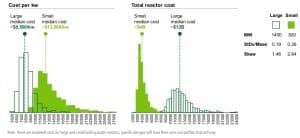
Source: DOE report
A MESSAGE FROM URANIUM ROYALY CORP.
[Disseminated on behalf of Uranium Royalty Corp.]
How To Get Ahead In The Nuclear Renaissance.

Uranium Royalty Corp. is a pure-play uranium royalty company focused on gaining exposure to uranium prices by making strategic investments in uranium interests, including royalties, streams, debt and equity investments in uranium companies, as well as through holdings of physical uranium.
Learn more about their portfolio of geographically diversified uranium interests >>
________________________________________________________________________
The 3 Phases to Achieve Nuclear Liftoff by 2050
A Robust Orderbook
The first step to nuclear expansion is securing 5–10 reactor orders by 2025. This committed orderbook is key for suppliers to invest in manufacturing and reduce costs. Early orders will allow the industry to ramp up production without overloading the supply chain. Delaying these orders until 2030 would raise costs by over 50% and make it harder to hit 2050 decarbonization goals.
On-Time Project Delivery
After the initial demand, delivering the first projects on time and within budget is crucial. The nuclear industry must ensure each phase, from design to licensing, is done efficiently. Meeting construction deadlines will build confidence and prove that future reactors can be completed successfully.
Scaling the Industry
As demand grows, the nuclear industry must expand its workforce, supply chains, and fuel capacity. Reaching 200 GW by 2050 will require scaling up every part of the nuclear ecosystem, from components to spent-fuel management. This industrial growth is essential for supporting the long-term deployment of nuclear energy.
Delaying new nuclear deployment could increase the cost of decarbonization

Source: DOE Report
U.S. Nuclear Growth Requires Major Expansion in Uranium Supply Chain
The DOE has given utmost importance to the need to boost uranium supply to reach the goal of 300 GW of nuclear power. The uranium enrichment pathway looks like this:
The nuclear fuel supply chain has four key steps

Source: DOE report
Mining and Milling
The nation will need 55,000 – 75,000 metric tons (MT) of uranium (U3O8) each year to hit the 2050 target. Currently, the country only produces 2,000 MT annually and has procured 22,000 MT. In 2014, U.S. uranium production peaked at 2,263 MT. To meet future demand, the US will have to increase its production by about 71,000 MT annually.
Conversion Capacity
U.S. will require 70,000 to 95,000 MT of uranium hexafluoride (UF6) conversion capacity. Right now, the country has 10,400 MT of capacity. The Metropolis Works facility, the nation’s sole UF6 converter, reopened in July 2023 after a six-year shutdown. However, this restart alone will not be enough to meet rising demand.
Enrichment Needs
The U.S. needs to boost its uranium enrichment from its current 4.4 million separative work units (SWU) per year to between 45 and 55 million SWU to support 300 GW of nuclear capacity. Generation IV reactors require high-assay low-enriched uranium (HALEU), enriched to 19.75%. At present, the U.S. relies on a single HALEU facility, producing only 900 kg annually. The DOE is taking steps to create a domestic HALEU supply chain through programs like the HALEU Availability Program, which is backed by $700 million from the Inflation Reduction Act.
Fabrication
The U.S. must also increase its uranium fuel fabrication capacity to between 6,000 and 8,000 MTU annually to support 300 GW of nuclear capacity. Its current capacity stands at 4,200 MT. In addition, advanced reactors will need new fuel types, such as TRISO and metallic fuels. Companies like TerraPower and X-energy are leading projects to develop these advanced fuels. X-energy’s TRISO-X facility, set to begin operations in 2025, will help meet these demands.
International Cooperation
The U.S. leads the “Sapporo 5” coalition, which includes the U.K., France, Japan, and Canada. Together, they have pledged $4.2 billion to invest in nuclear fuel services, including enrichment and conversion. The U.S. has committed $3.42 billion to secure a stable nuclear fuel supply chain and is working closely with its partners to eliminate bottlenecks in the supply chain.
By strengthening its uranium supply chains and collaborating with global partners, the U.S. is positioning itself for significant nuclear growth while ensuring energy independence and a secure domestic supply.
U.S. Nuclear Restarts Spark Fresh Demand for Uranium Amid Tight Supply
In September, the U.S. nuclear sector received a significant boost from DOE to restart major reactors, creating fresh demand for uranium amid a tight global supply chain. These developments mark a clear shift toward nuclear growth in the nation.
S&P Global mentioned, Jonathan Hinze, president of the UxC nuclear fuel consultancy remarked,
“Each of these reactors will use up to 500,000 lb U3O8 annually, and that demand has yet to fully hit the market. While the incremental increase in demand is not that large, any additional fuel purchasing by utilities will likely be felt in the current market given very tight supply-demand fundamentals across the nuclear fuel cycle.”
On Sept. 30, the Biden administration approved a $1.52 billion conditional loan guarantee to restart the 800-MW Palisades nuclear plant in Covert, Michigan. Just days earlier, on Sept. 20, Constellation Energy Corp. announced plans to restart the Three Mile Island Unit 1 nuclear plant in Pennsylvania, partnering with Microsoft to power its data centers.
Uranium Prices Rise on Reactor Restarts
Pricing is a key factor in the nuclear energy comeback. According to S&P Global, spot uranium prices have only seen a slight rise since recent announcements, but the sector is now trending upward. The price has quadrupled from its late-2010s level, fueled by renewed interest in nuclear energy. After the 2011 Fukushima disaster, the uranium market slumped for years. However, prices soared past $100 per pound in early 2024, driven by improved investor confidence.
Recent reactor restarts mark a sharp turnaround for the U.S. nuclear sector, which saw 13 reactors close between 2013 and 2022. Analysts now see more potential for growth. CIBC analysts believe these restarts will further boost the uranium market, especially as the power-hungry AI industry increases demand for energy to run data centers.

Source: S&P Global
Will it Put Pressure on Uranium Supply?
S&P Global further analyzed the situation. They anticipate the revival of nuclear plants is expected to intensify uranium demand. Consequently, driving up prices and challenging supply chains. Scott Melbye, president of the Uranium Producers of America, pointed out that Constellation’s restart will cut into its nuclear fuel reserves, further tightening an already constrained market.
Currently, global geopolitical tensions have also impacted the nuclear fuel market. The ongoing Russia-Ukraine war has led to disruptions, with the U.S. banning enriched uranium imports from Russia in April 2023. While waivers allow some imports until 2028, the market remains under pressure as Russia considers retaliatory export cuts.
With more countries, including the U.S., committing to tripling nuclear power by 2050, the sector is poised for long-term growth. As nuclear energy regains momentum, it is positioned as a critical component in global efforts to reduce carbon emissions and combat climate change.
6 Reasons Why Nuclear Energy Will Rule the Decarbonized Future
Here are six important reasons nuclear energy plays a key role in the journey to net-zero emissions:
- Generates electricity with almost no carbon emissions, making it essential for reducing reliance on fossil fuels.
- Provides constant, reliable electricity, crucial for stabilizing the grid as renewable sources grow.
- Nuclear plants produce far more electricity per acre than solar or wind, making them ideal for regions with limited space.
- They create high-paying jobs and stimulate local economies, especially in regions like the U.S. Southeast.
- Supports industrial processes like hydrogen production, benefiting industries beyond just power generation.
- Requires fewer raw materials than renewables, reducing environmental impact and conserving critical resources.
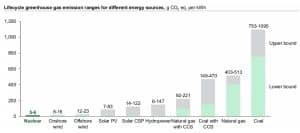
Source: DOE Report
In conclusion, nuclear energy will play a pivotal role in the U.S.’s transition to a cleaner, more resilient grid, supporting economic growth and reducing emissions.
Source: Advanced Nuclear Commercial LiftOff
- MUST READ: The Atomic Awakening
The post What Does the U.S. Need to Triple Its Nuclear Capacity by 2050? DOE Explains… appeared first on Carbon Credits.

EU carbon credit claims changed on 27 September 2026, the day the Directive (EU) 2024/825 began to apply across the European Union. The change is narrow. It changes how a company can talk about the credits it buys. A product can no longer be called neutral on the strength of compensation alone; however, every specific, evidenced statement about what a company measured, reduced, and funded stays fully available.

The post Promoting Improved Cooking Practices in Nigeria appeared first on Terrapass.


Ming Yang Eyes 33 MW Turbine, Greenvolt Delays FID
‘A strong start’: WA’s transition to renewable energy powerhouse aided by Premier’s announcement
WA EPA warned Woodside of ‘serious, significant and irreversible’ harms to Scott Reef from gas plans, new documents reveal
-
Climate Change1 year ago
Guest post: Why China is still building new coal – and when it might stop
-

 Greenhouse Gases2 years ago
嘉宾来稿:满足中国增长的用电需求 光伏加储能“比新建煤电更实惠”
-
Greenhouse Gases1 year ago
Guest post: Why China is still building new coal – and when it might stop
-

 Climate Change2 years ago
嘉宾来稿:满足中国增长的用电需求 光伏加储能“比新建煤电更实惠”
-

 Renewable Energy1 year ago
Sending Progressive Philanthropist George Soros to Prison?
-
Climate Change2 years ago
Bill Discounting Climate Change in Florida’s Energy Policy Awaits DeSantis’ Approval
-
Greenhouse Gases1 year ago
嘉宾来稿:探究火山喷发如何影响气候预测
-

 Climate Change2 years ago
Analysis: China’s CO2 falls 1% in Q2 2024 in first quarterly drop since Covid-19