

The US government is seeking to bolster support for carbon offsets by putting its weight behind industry-led efforts to reform a market that has faced growing criticism.
The Biden administration has laid out for the first time a set of principles that attempt to define how “high-integrity” carbon credits can play “a meaningful role” in helping cut greenhouse gas emissions and channelling “a significant amount of private capital” to combat climate change.
A 12-page policy document released by the US government on Tuesday includes provisions to ensure that carbon credit projects deliver real emission reductions, avoid harming local communities and encourage companies to decarbonise their own operations before buying offsets.
But it also recommends that businesses should be allowed to use carbon credits to cancel out some of the emissions generated by their suppliers and customers, known as “Scope 3”. A similar move by the board of the Science Based Targets initiative (SBTi), a leading arbiter of corporate net zero plans, sparked a major backlash from staff last month.
The US government guidelines are neither binding nor enforceable. However, proponents hope they will reinforce a number of ongoing initiatives led by carbon credit developers, buyers and green groups to raise standards and boost the role of carbon markets in climate and nature protection.
Troubled market
Polluting companies, including major fossil fuel producers and airlines, spent an estimated $1.7 billion last year on voluntary carbon offsets meant to compensate their direct emissions by funding climate-friendly activities elsewhere, such as planting trees or rolling out renewable energy sources.
But a series of revelations questioning the environmental and social benefits claimed by some developers and users of carbon credits have dented confidence in the market.
As South Africa heads to the polls, voters await stalled “just energy transition”
Scientific studies and investigative reports – including by Climate Home – have found that a growing number of projects failed to deliver the emission reductions promised. NGOs have also denounced instances of human rights abuse and environmental damage caused by carbon-offsetting activities.
“Voluntary carbon markets are a huge distraction and a waste of time and resources,” said Mohamed Adow, the Nairobi-based founder of the Power Shift Africa think-tank. “It’s sad to see politicians in the Global North desperately trying to find any way they can to avoid actually just cutting their carbon emissions,” he added.
Every tool needed
In its announcement, the US government acknowledged the shortcomings in voluntary carbon markets (VCMs), saying that “in too many instances” credits do not live up to the high standards required.
“For good reasons a lot of folks outside this room are skeptical,” National Climate Advisor Ali Zaidi told attendees of the policy launch in Washington. “[They are] scared off by news stories of things that went wrong and gloss of greenwash.”

US National Climate Advisor Ali Zaidi speaks during a press briefing at the White House in Washington, U.S., January 26, 2024. REUTERS/Julia Nikhinson
But, he added, that should not be seen as “an excuse to slow down but as an occasion to speed up” and do things better.
The Biden administration wants to be a leader in guiding “the development of VCMs toward high-quality and high-efficacy decarbonization actions”, the White House said. Its principles closely align with those of industry-led governance bodies that are trying to revamp the carbon market.
The Integrity Council for the Voluntary Carbon Market (ICVCM) is currently assessing project methodologies as part of its efforts to establish the first independent global benchmark for “high-integrity” carbon offsets, known as the “Core Carbon Principles”.
“We are in a climate emergency and we need every tool in the box to meet the 1.5°C [global warming] target,” said ICVCM Council Chair Annette Nazareth. “High-integrity carbon credits can mobilise private finance at scale for projects to reduce and remove billions of tonnes of emissions that would not otherwise be viable.”
Substitute for government aid
As most of the world’s largest carbon offsetting projects are based in the Global South, many rich governments view the market favourably as a way of getting dollars to developing nations without tapping into public budgets.
That is the case in the US where climate funding has fallen victim to political polarisation. President Joe Biden promised to increase international climate finance to over $11.4 billion per year by 2024. But Congress approved only a fraction of that as part of this year’s government budget: $1 billion of a spending package totalling $1.59 trillion.
In Malawi, dubious cyclone aid highlights need for loss and damage fund
The White House’s Zaidi said voluntary carbon markets can move “mountains of capital” if their integrity is improved. Better regulation could expand the market from its current size of around $1.7 billion to $1.1 trillion by 2050, according to predictions by BloombergNEF.
Gilles Dufrasne, global policy lead at Carbon Market Watch, told Climate Home the US government will need to “walk the talk and ensure that its promises of transparency and integrity are followed up by actions”.
“There is currently no public data to measure how much finance is flowing to climate action through carbon credits and how much is staying in the pockets of Global North intermediaries and consultants,” he added.
International negotiations
The US government is also a strong proponent of private sector-led carbon credit initiatives in international climate circles.
In discussions at the COP28 climate summit last year on setting the rules for a new carbon market governed by the United Nations, Washington championed what observers described as a “light-touch, no-frills” approach that could hand a prominent role to private-sector players from the voluntary market.
The move was rejected by the European Union, causing a breakdown in the negotiations, which will resume at the mid-year UN climate talks in Bonn starting next week.
“By undermining the multilateral process […] and placing more faith in private sector-governed voluntary carbon markets, the US appears to be shirking its responsibilities for financing climate action and offloading them onto the private sector,” said Trishant Dev, a carbon market expert at the Delhi-based Centre for Science and Environment.
(Reporting by Matteo Civillini and Joe Lo; editing by Megan Rowling)
The post US government backs the carbon credit industry’s push to fix itself appeared first on Climate Home News.
US government backs the carbon credit industry’s push to fix itself

June Rubis is a steering group committee member for the Cali Fund, from Sarawak in Malaysian Borneo.
At COP16 in Cali, governments made a significant commitment: at least half of the funding from the new Cali Fund should support the self-identified needs of Indigenous Peoples and local communities, including women and youth. It was a watershed moment for multilateral benefit-sharing.
The challenge now is to translate that commitment into access arrangements that recognise the different institutions, priorities and decision-making processes of Indigenous Peoples and local communities.
For generations, biodiversity and traditional Indigenous knowledge have provided significant value to companies who depend on nature’s genetic diversity to discover new drugs that fight diseases, create products that improve health, and grow crops resilient to extreme heat and flooding events. While some compounds are sampled directly from the source country, increasingly the digital blueprints are held in online public databases which are freely accessible to use for innovation and research.
Countries urged to ramp up “insufficient” nature policies at COP17
The Cali Fund was established at COP16 to encourage commercial users of Digital Sequence Information, or DSI, to share benefits arising from its use. Estimates suggest it could generate over $3.5 billion a year – a stark contrast to the modest $10,656 currently committed to the fund from just five SMEs, underlining how much progress must be made at COP17 over the next two weeks.
The COP16 decision that set up the fund offers two routes for money to reach Indigenous Peoples and local communities: through government authorities, and through direct payments to institutions identified by Indigenous Peoples and local communities themselves.
Varied ways of organising
Indigenous Peoples and local communities organise through a wide range of institutions. Some have national or regional organisations experienced in managing international grants. Others work through territorial organisations, customary institutions, community associations, cooperatives or networks. Some have professional finance teams and audited accounts; others have extensive experience governing territories, collective resources or conservation work without having been organised around international funding requirements.
For direct access, some questions are already apparent. Which institutions should be able to receive funds? How should they be identified? What fiduciary standards should apply? How should safeguards and accountability work where institutional capacities differ? What support may be needed where institutions have strong community mandates but less experience with international finance?
Comment: Protecting nature is a public duty, not a Wall Street profit opportunity
If access is designed mainly around institutions that already meet the expectations of large international finance mechanisms, early funding will tend to favour those already familiar to funders. They will gain further experience and become better positioned for future funding, while institutions with less administrative capacity may remain outside the system despite strong community mandates and long histories of stewardship.
These first decisions matter most, because they set the terms for everyone who follows.
The role of intermediaries requires care. Some Indigenous organisations may want a fiscal host to hold and manage funds on their behalf. Communities may choose to work through an NGO they trust. Government-facilitated arrangements may work well in particular national contexts.
What matters is the function an intermediary performs and the authority that comes with it. Providing administrative support is different from deciding which Indigenous organisations qualify, which priorities can receive support, or how success will be assessed. Direct access means communities keep that decision-making authority.
Decision-making power
The COP16 decision refers to institutions that Indigenous Peoples and local communities identify. But authority among Indigenous Peoples does not sit in one kind of body. It may sit with territorial organisations, customary institutions, community associations or combinations of these. Legal recognition and customary authority do not always align neatly.
Global deforestation slowed in 2025 but Brazil’s election could undo “fragile” gains
An important feature of the Cali Fund’s governance is that Indigenous Peoples and local communities participate as full members of the Steering Committee, rather than as observers. Seven Indigenous Peoples and local community representatives, one from each of the seven socio-cultural regions, participate in consensus-based decision-making alongside representatives of governments and UN entities. Six additional representatives from civil society, scientific institutions and the private sector participate as observers.
That representation carries responsibility. Institutional legitimacy, access and representation take different forms across the seven socio-cultural regions. Indigenous Peoples and local communities members therefore have an important role in bringing those differences into the Fund’s governance and in ensuring that arrangements developed for one context do not become the assumed model for everyone else.
Safeguards and clear responsibilities
COP17 can establish the core principles and direction, while allowing operational pathways to develop in ways that respond to different regional contexts. The decisions countries take in Yerevan will shape how that flexibility is realised in practice.
The choices made around access will influence which institutions are able to participate, which routes become established and which forms of authority are recognised within the funding architecture. The aim should be an architecture with enough structure to maintain confidence while allowing for different forms of Indigenous and community governance.
A credible direct-access pathway will need safeguards, financial oversight and clear responsibilities. This would give the 50% commitment a stronger institutional foundation.
The Cali Fund’s importance will ultimately depend not only on how much funding reaches Indigenous Peoples and local communities, but on whether they are able to determine how the money is accessed, governed and used. This requires access pathways that recognise their institutions, priorities and decision-making processes, rather than requiring them to conform to a single predetermined model.
The post COP17 must settle who decides how Cali Fund money is disbursed appeared first on Climate Home News.
COP17 must settle who decides how Cali Fund money is disbursed
The UK government has approved extraction at the Jackdaw gas field in the North Sea, despite acknowledging that this decision could make it harder for Britain to convince other countries to move away from fossil fuel production.
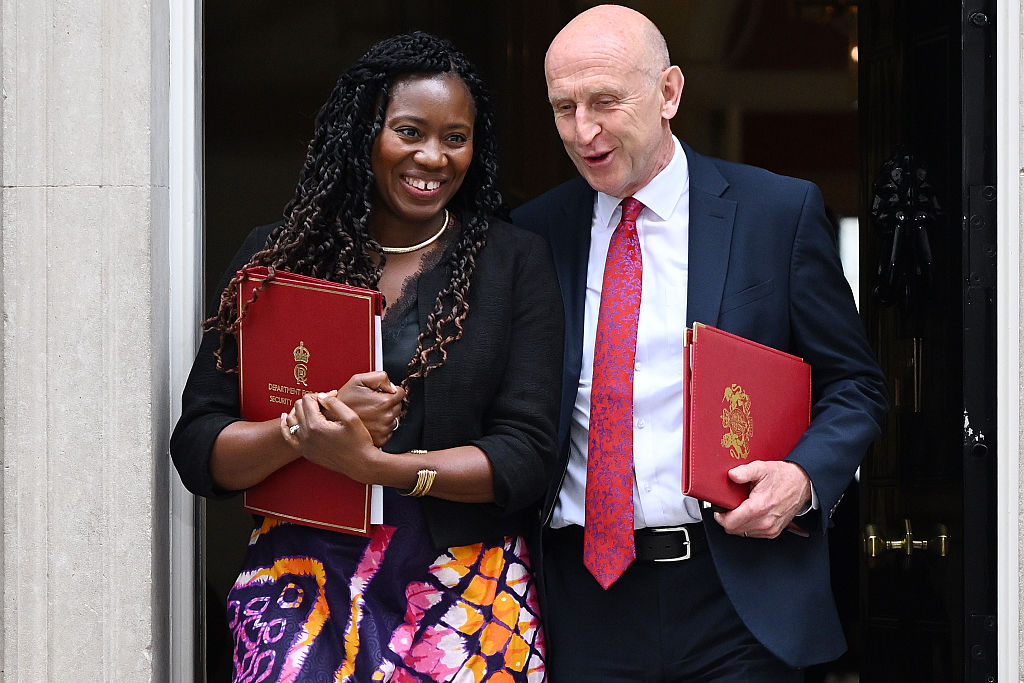
UK energy secretary Miatta Fahnbulleh approved the drilling on Wednesday after months of high-profile debate, fuelled in part by interventions from US President Donald Trump. She argued that the project would boost energy security in the wake of the Middle East fossil fuel crisis, protect hundreds of jobs and add £2.9 billion ($3.88bn) to the UK economy.
She said Jackdaw’s gas would be cleaner than imported gas and would not prevent the UK from meeting its legally-binding carbon targets and its goal of net zero by 2050. As the field is already licensed, she said extraction was consistent with the Labour Party’s 2024 manifesto promise not to issue any new oil and gas licenses.
The same morning, the government announced a new Energy Wealth Fund to reinvest oil and gas revenues in the climate transition. It will start with £2 billion ($2.67bn) from the government and be topped up over time with tax revenues from offshore oil and gas production.
Climate campaigners in the UK and abroad were quick to condemn the decision, while a leading legal expert told Climate Home News it goes against the advice of the International Court of Justice. Meanwhile, the government’s own documents reveal that it recognises the drilling could damage the UK’s reputation and its ability to push forward the global transition away from fossil fuels.
“Climate leadership” blow
The 92-page decision document says Fahnbulleh “acknowledges that international standing on climate is important and accepts that a decision to grant consent may not further the UK’s international climate leadership.”
It adds: “She acknowledges concerns about the potential implications for the UK’s credibility and influence – including the difficulty inherent in encouraging other states to move away from fossil fuel production while the UK continues, in a limited and transitional way, to draw on its own domestic resources.”
While noting that Jackdaw has not been issued with a new license – just permission to extract gas – the document says Fahnbulleh “accepts this does not fully resolve the underlying tension in the UK’s position” but “considers this alongside the substance of the UK’s wider record [on emissions reduction], which remains significant”.
It continues that she accepts these concerns are “legitimate” and weigh against approving gas extraction, but only gives this argument a “moderate negative weight” set against the benefits of gas production.
“Huge” wrong signal
In international climate talks, the UK has long supported the transition away from fossil fuels and is one of very few major oil and gas producers to ban new licenses. Across the North Sea, the Norwegian government continues to make offshore areas available for oil and gas exploration through annual licensing rounds.
Climate experts and campaigners shared the concern, acknowledged in the decision document, that approving Jackdaw could set a precedent for fossil fuel production elsewhere. Sam Fankhauser, professor of climate change economics at Oxford University, said the direct climate impact of Jackdaw is “much smaller than the debate around it would suggest” but the “wrong signal it sends, however, is huge”.
-
Carbon capture industry faces tough future, as UK raids green spending
Despite a spate of projects getting underway, the mood at an industry conference in London this week was low with government subsidies set to shrink -
Paris Agreement committee names three countries snubbing it over NDCs
More than 30 countries have failed to submit an NDC, but only three have repeatedly ignored the committee’s efforts to engage with them -
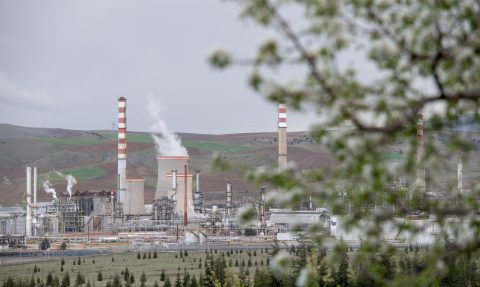
Turkish giant sponsoring COP31 cut climate goals then cashed in on oil boom
COP31 sponsors should be screened for “climate integrity”. Yet Koç Holding has become a top partner while its oil refiner runs flat out and its climate targets slip


Bob Ward, policy and communications director at the Grantham Research Institute on Climate Change, said that while Jackdaw’s output will be very small, “it will signal to other fossil fuel producers that they too should carry on with business as usual, less than a month before the COP31”.
Kenyan campaigner Mohamed Adow, director of Power Shift Africa, called the decision “a serious blow to Britain’s international climate credibility” as “the UK cannot expect developing countries to move away from fossil fuels while giving the green light to new drilling in its own backyard”.
International Court of Justice
In July 2025, the International Court of Justice (ICJ) advised that government failure to take appropriate climate action “including through fossil fuel production” may amount to an internationally wrongful act.
The UK voted in favour of a United Nations resolution welcoming the advisory opinion. Yet, in its Jackdaw decision document, it notes that the ICJ opinion is not legally binding and says the UK does not accept the court’s opinion that the customary international law duty to prevent significant harm to the environment applies to climate change.
Fahnbulleh concludes that, although it will have “significant effect on the environment”, gas drilling in Jackdaw “would not lead to significant harm to the environment” – and so does not breach any duty to prevent such harm. Instead, the government document says the duty should be considered “as a matter of policy rather than legal obligation”.
Margaretha Wewerinke-Singh, who led Vanuatu’s legal team pushing for the ICJ’s advisory opinion, told Climate Home News that treating the duty as a matter of policy rather than legal obligation is “not how international law works”. “An advisory opinion is not a judgement,” she said, “but it states the law as it stands, and that law binds the UK whether or not it accepts it.”
“Even as a matter of policy,” she added, “the decision asks the wrong question: whether Jackdaw on its own would cause significant harm. The Court found that accumulated emissions are already causing significant harm. What matters is whether approving new production is consistent with the stringent due diligence the duty requires.”
Public support for decision
While the decision was criticised by climate campaigners and the opposition Green party, polling reported by Politico suggests that 55% of British adults support drilling at Jackdaw, with just 14% opposed. Even supporters of the UK’s net zero target back new drilling by more than two to one, the polling found.
Jackdaw is one of two North Sea oil and gas fields the government has been debating whether to extract more from for months. While Jackdaw is a small gas field, the other, Rosebank, is a much larger field that holds mostly oil.
Rosebank’s emissions are estimated to be around seven times higher than Jackdaw’s. Fahnbulleh told Sky News that Rosebank is “different” to Jackdaw because its oil would be exported, whereas Jackdaw’s gas will be used in the UK, adding that she will consider it “in its own right”.
The Guardian reported on Wednesday that UK officials say Fahnbulleh is minded to refuse approval for Rosebank. She has not yet taken a final decision on Rosebank, the newspaper said, but a ruling is expected later this year.
The post UK approves gas drilling despite admitting blow to “climate leadership” status appeared first on Climate Home News.
UK approves gas drilling despite admitting blow to “climate leadership” status
A surge in wholesale costs driven by expensive gas is responsible for nearly 90% of the rise in UK household electricity bills since 2020, reveals new analysis.
The figures, shared with Carbon Brief by thinktank Nesta, show that wholesale gas costs are also behind the vast majority (77%) of the increase in household gas bills.
The analysis firmly contradicts the idea, which has become embedded in UK media and political narratives, that the UK’s net-zero target is to blame for high energy bills.
Andrew Sissons, director for sustainable future at Nesta, tells Carbon Brief that net-zero is, in fact, “helping to shelter Britain from the impact of expensive gas”. He adds:
“Rising gas prices, not net-zero, have driven most of the recent surge in Britain’s energy bills. Britain is particularly exposed, with over 80% of households connected to gas mains, while our electricity system still relies too much on gas as the marginal unit.”
The analysis comes after the UK government gave its approval for the Jackdaw gas field to be de