

Did you know some female sea turtles can travel hundreds—or even thousands—of miles through open ocean before returning to nest on or near the very beaches where they hatched? In fact, Leatherback sea turtles take this long-distance travel to an extraordinary level. Pacific leatherbacks nesting in Indonesia have been documented migrating more than 10,000 kilometers to the West Coast of the United States. That’s the longest migration of any air-breathing marine vertebrate. So how do they accomplish this without Google Maps?
Scientists have found that sea turtles can sense magnetic information and use it as a navigational cue. Because the strength and angle of Earth’s magnetic field vary across the planet, these subtle differences can provide turtles with information about where they are and help guide their movements across the ocean. For turtles that return to their birthplace to nest (a behavior known as natal homing), these magnetic cues may be especially important. It’s an extraordinary system, but even the best navigation can take a turtle only so far.
Despite their great sense of direction, sea turtles don’t always make it where they’re going.
A sea turtle may be capable of navigating thousands of miles, but reaching the right destination is that much more of a challenge when human-caused obstacles lie in the way.
Artificial light is one example. Artificial lighting not only discourages nesting females from coming ashore but also has a harmful impact on hatchlings, which historically emerge from their nests at night and orient toward the brightest horizon. On a natural, undeveloped beach, that is generally the open ocean. But artificial light from coastal development can overwhelm the natural cue, drawing hatchlings inland away from the water and causing them to get lost on day one.
Coastal development not only brings more artificial light and human activity to the shoreline, but it also changes turtle habitats themselves. Buildings, roads and other development can alter or reduce areas sea turtles need for nesting. Shoreline armoring, such as seawalls, can eliminate the dry sand turtles need to successfully nest, while beach driving and other activities can further disrupt nesting habitats. And these challenges extend beyond the beach.
The ocean is getting noisier, too. Sea turtles have internal ears and can hear underwater sounds. Vessel traffic, oil and gas surveys, underwater construction and sonar all add noise to the marine environment. Human-generated sound can cause stress, disrupt normal behaviors or even force marine animals to move from preferred habitats or divert from migratory paths.
Get Ocean Updates in Your Inbox
Sign up with your email and never miss an update.
Evolution never saw the plastic grocery bag coming.
Then there’s a threat sea turtles encounter almost everywhere they travel: plastic pollution. Sea turtles evolved over millions of years to spot drifting prey, like jellyfish. But plastic rapidly started to be used only around 60+ years ago.
Our plastic trash entered the ocean so quickly that animals haven’t had time to adapt. To a hungry sea turtle, a floating plastic bag still looks enough like dinner to trick even an experienced turtle. Plastic bags, balloons, soft plastic packaging and other plastics, once swallowed, can block a turtle’s digestive tract or puncture internal organs. And it doesn’t necessarily take much.
A recent Ocean Conservancy study of more than 10,000 marine animal autopsies found that nearly half of the sea turtles studied had ingested plastic. Even more alarming, researchers found that for adult loggerhead turtles, swallowing just one and a half times the plastic in a golf ball was enough to kill 50% of these creatures.
It’s a heartbreaking reminder that something we use for minutes can threaten an animal that’s been roaming Earth’s ocean for more than 100 million years.
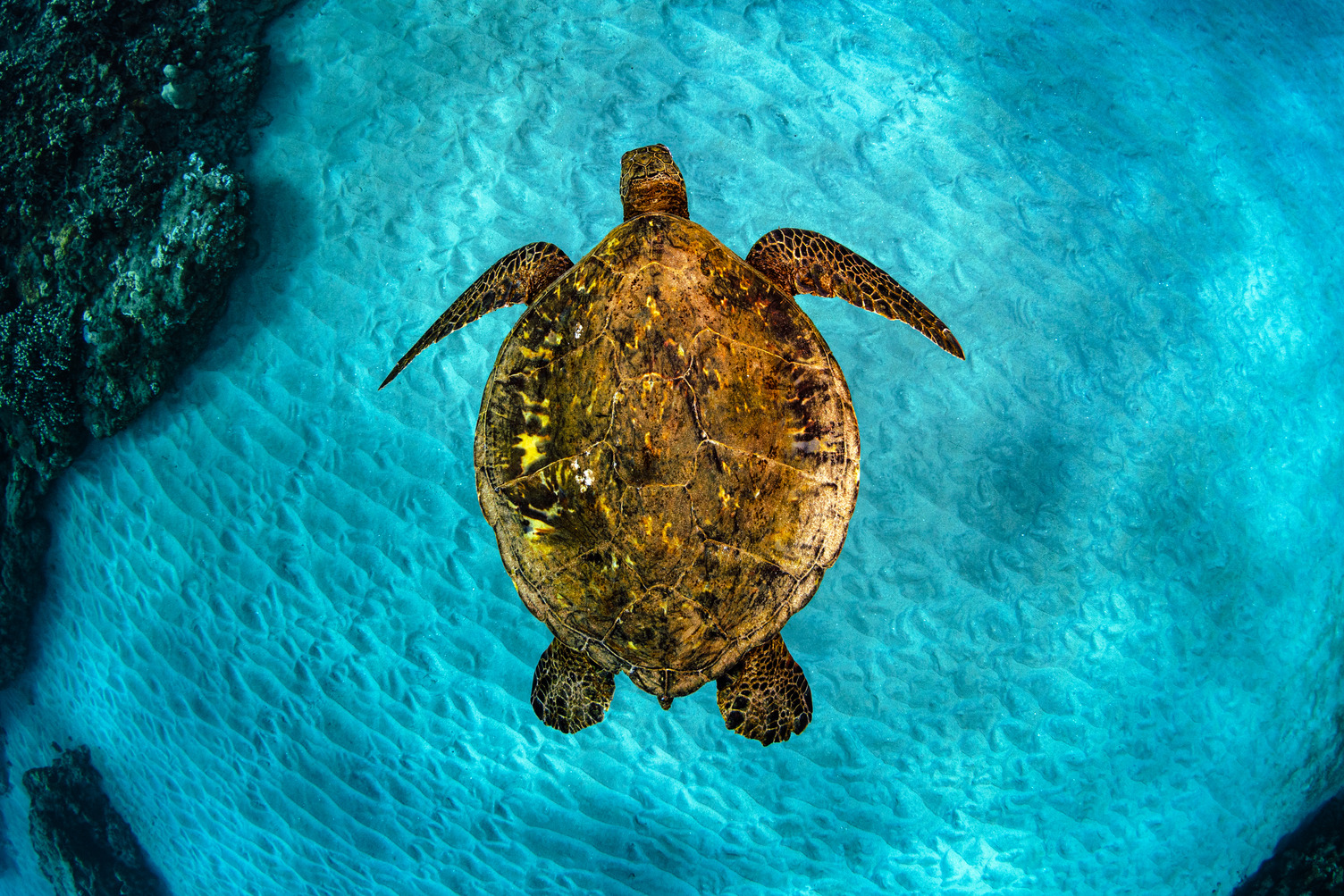
Ancient animals still face very modern threats.
Sea turtles survived the extinction event that wiped out dinosaurs. They’ve outlasted shifting continents and dramatic changes to our planet. But surviving millions of years doesn’t make them invincible. Today, they’re facing threats that appeared in the blink of an evolutionary eye: plastic pollution, habitat loss, vessel strikes, fishing gear entanglement and climate change. The remarkable thing is that many of these challenges aren’t inevitable. They’re problems we can all help solve.
Together, we can reduce the amount of plastic that reaches the ocean. We can protect and restore nesting beaches. And we can support policies that protect healthy ocean ecosystems. Every action helps make our waters a safer place for animals that depend on it.
So, do sea turtles get lost? When left to their own devices, not often. Sea turtles have an extraordinary ability to navigate across vast stretches of open oceans. But there’s a bigger question worth asking: Can we help make the ocean a safe place while they make these incredible journeys? Navigation is only part of the challenge for sea turtles trying to find their way home. Sea turtles may know where they’re going, but it’s our job to ensure the ocean and coastlines they depend on are safe when they get there. That’s why Ocean Conservancy is committed to protecting our entire ocean—and all the creatures that dwell there.
We’re fortunate to share the planet with these amazing creatures. Their journeys are a remarkable feat of science and survival. To all the turtles out there: Here’s to finding your way—wherever you’re going!
Visit Our Action Center
The post Do Sea Turtles Get Lost? appeared first on Ocean Conservancy.
https://oceanconservancy.org/blog/2026/08/27/do-sea-turtles-get-lost/

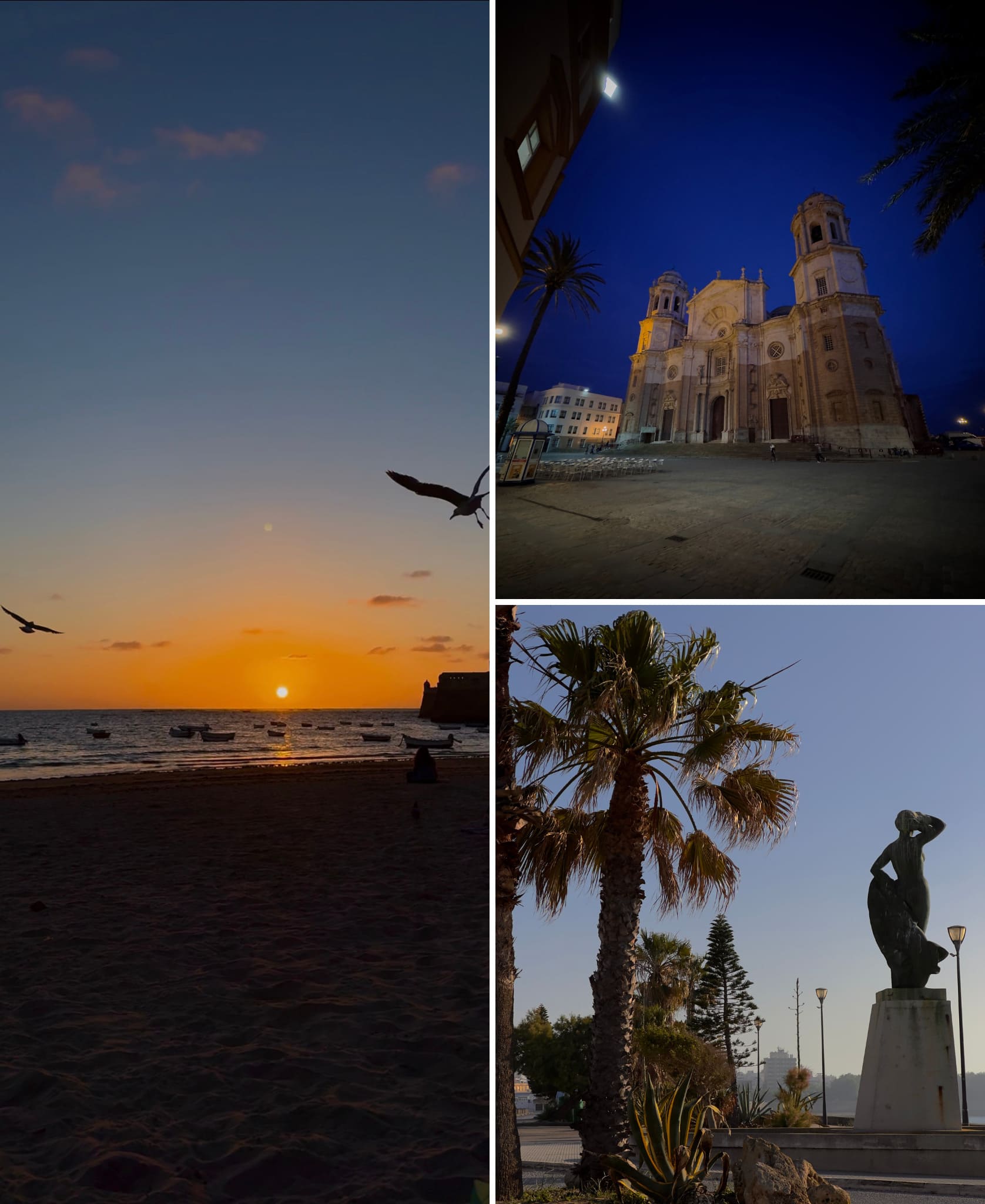
Welcome to Cádiz
When we arrived in Cádiz in April, we knew that we would be spending the next months working on an experiment about underwater soundscapes. What we did not yet know was how much of our time would be spent carrying equipment through the city, rebuilding experimental frames, solving technical problems and trying to convince various pieces of equipment not to end up at the bottom of the Atlantic.
Cádiz itself was a pretty good and beautiful place to start.
The city is located at the very tip of a narrow peninsula and is surrounded by the Atlantic on almost all sides. There are beaches almost everywhere, small streets leading through the old town, the harbour with its many boats and plenty of places where you can simply sit down and watch the sea. It did not take us long to understand why Cádiz is sometimes called La Tacita de Plata, the Silver Cup.
Our first evening was still fairly relaxed. After arriving and settling in, we went out together for a drink and explored a little bit of the city. It was a good introduction to our new home. The next morning, however, the relaxed part was over and GAME 2026 officially began for us.
Our project focuses on how underwater soundscapes may influence the colonization of hard surfaces by marine sessile organisms. To investigate this, we used standardized PVC settlement panels mounted on experimental frames and exposed them to different underwater soundscapes.
Over the course of the experiment, we monitored which organisms settle on the panels and checked whether the developing communities differ between the different acoustic conditions. The panels themselves were only 15 x 15 cm in size, but the frames, which were holding them while they were underwater, were much larger and required quite a bit of construction and preparation.
So, before we could investigate anything, however, we had to build everything.
Building the experiment
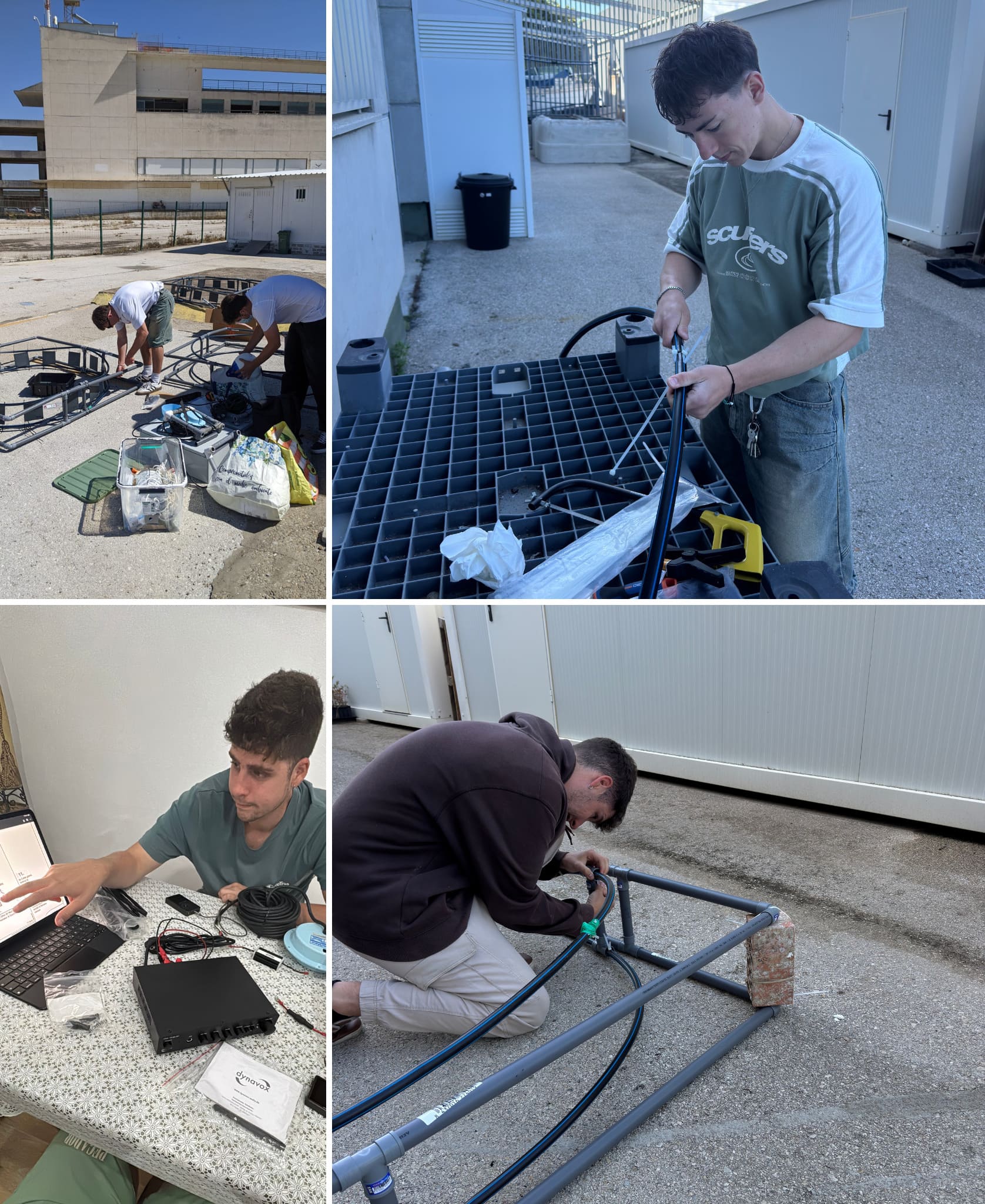
The first weeks in Cádiz were all about getting the experiment ready. Before the panels could go into the water, we had to prepare the equipment, rebuild the experimental frames and organize everything needed for the different parts of the experiment. Our setup consisted of large rectangular frames made from PVC pipes that carried the 15 x 15 cm settlement panels while they were in the water. In addition to this, we had speakers for the sound playbacks and ropes, buoys and weights that kept everything in position.
Although, there were frames left from a previous GAME project that was done in Cádiz, we decided to build new ones, which meant sourcing new material, cutting and assembling PVC pipes, preparing the panels and putting the different parts of the setup together. Some materials were bought locally, while others had to be ordered. This also resulted in one of our first small fieldwork adventures: transporting several metres of PVC pipes in a public transport bus through Cádiz was not exactly an everyday activity. We did not have a car at the time, and the large hardware store, where we bought some of the material, was quite far away, so getting everything back to Cádiz meant taking several buses while carrying long PVC pipes through crowded streets and vehicles. We bumped into things more than once, attracted a fair amount of attention and quickly realized that carrying several metres of PVC through a busy city is not as easy as it sounds. At one point, the combination of researchers, long PVC pipes and a local hardware store became what we jokingly refer to as the “Bus Hardware Store” episode.
Building the frames also taught us quite quickly that fieldwork rarely goes exactly according to plan. Some parts required a bit of improvisation and technical problem-solving, and when we reached a particularly stubborn technical issue, we even called Liam’s father in Germany for some additional advice. Although he was not directly involved in the project, his background in mechanical engineering and his experience with practical technical problems made him a useful person to call when we needed another perspective. A video call across Europe was not exactly part of the original plan, but it turned out to be a useful addition to our fieldwork toolkit.
At the same time as we worked on the set up, we were preparing the recordings of natural underwater soundscapes that would later be used for the experiment. For this, we built a deployment system consisting of a concrete-filled bucket, a wooden pole and a HydroMoth attached to the pole. The idea was simple: the heavy bucket keeps the structure stable on the seafloor, while the hydrophone records the surrounding natural soundscape above it. The practical part was considerably less simple. Several heavy loads of concrete had to be transported through Cádiz, and once the equipment reached the beach, getting the concrete-filled bucket into position was another workout altogether. We used a two-wheeled hand truck to move the heavy bucket across the beach and then into the shallow water. From there, we worked our way out by snorkeling and swimming, carrying and guiding the setup into position. The water was no more than about two metres deep, so there was no need for a boat.
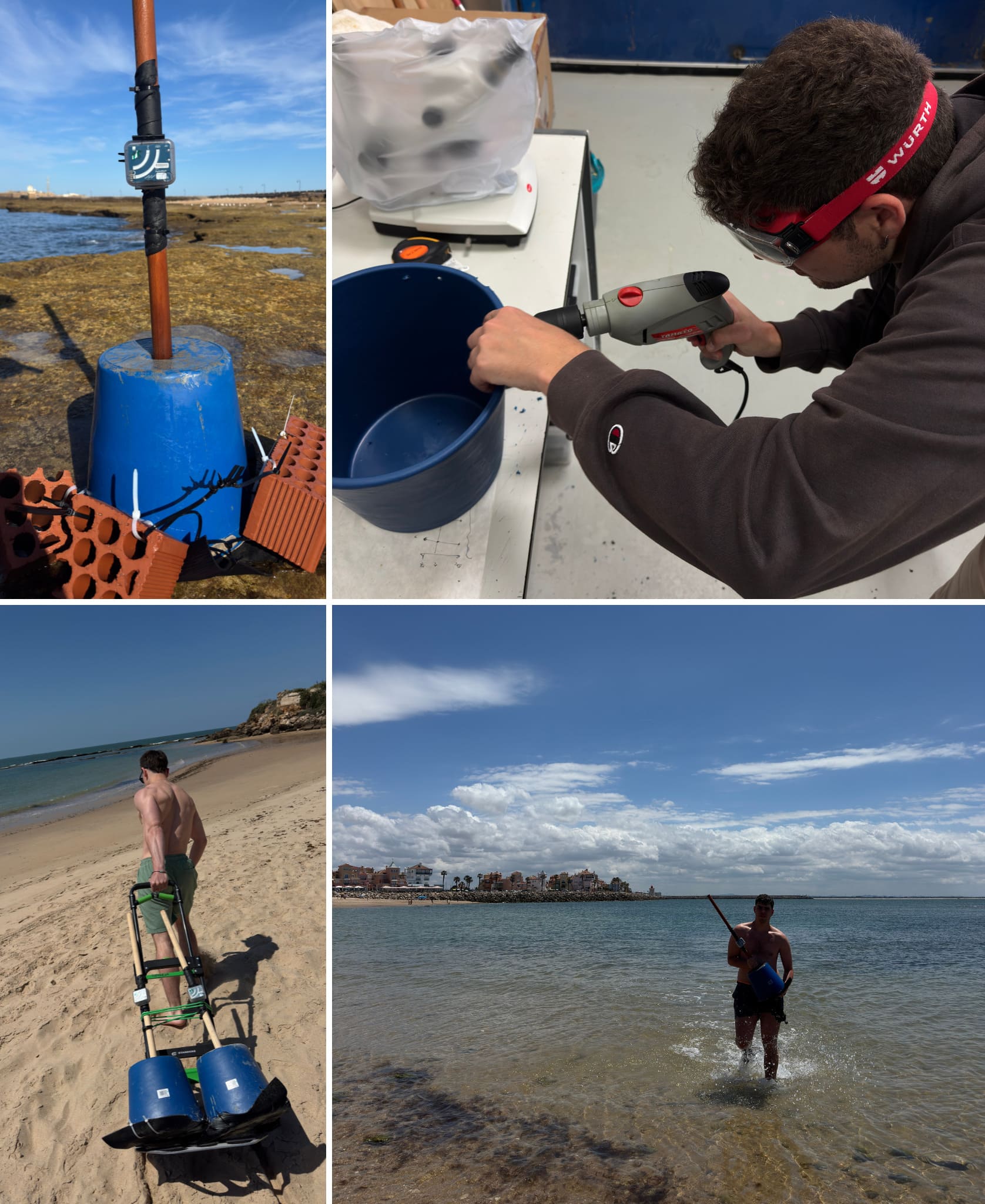
The setup may have looked a little unconventional, but it was based on the plans we deleoped for recording natural soundscapes during the preparative course in March. After plenty of cutting, drilling, tying, carrying and assembling, the first major pieces of the project were finally ready. The frames were taking shape, the equipment was coming together and our first soundscape recordings were underway.
With the construction phase coming to an end, there was only one major question left: where exactly will we put everything?
When the plan changed
Finding a suitable experimental site turned out to be one of the more complicated parts of the project.
Our original plans involved a site in a nearby marina, but the situation changed when we were informed that construction work was planned close to the site. The associated noise would have interfered with the acoustic conditions required for our experiment, making the location unsuitable for our setup. We therefore had to move the experiment to a different location at relatively short notice. This meant adapting the setup and transporting the frames again. In the end, we found our new home at Puerto América, at the north-eastern tip of the city.
The change was a good example of how fieldwork can sometimes require a little flexibility. You can spend weeks discussing the experimental design, the set up and the site selection, but once you actually arrive at the water, there are always things that you could not have predicted from a map.
The new location gave us enough space for the experimental setup and allowed us to continue with the project. Hence, the frames were finally transported to Puerto América, weighted and installed.
Getting the frames into the water was actually much easier than building them in the first place. Once we had transported the frames to the harbour, we were able to get them into position and secure them relatively smoothly. The real challenge had been the preparation on beforehand: assembling the large PVC structures, attaching all the necessary components and making sure that everything was ready for deployment.
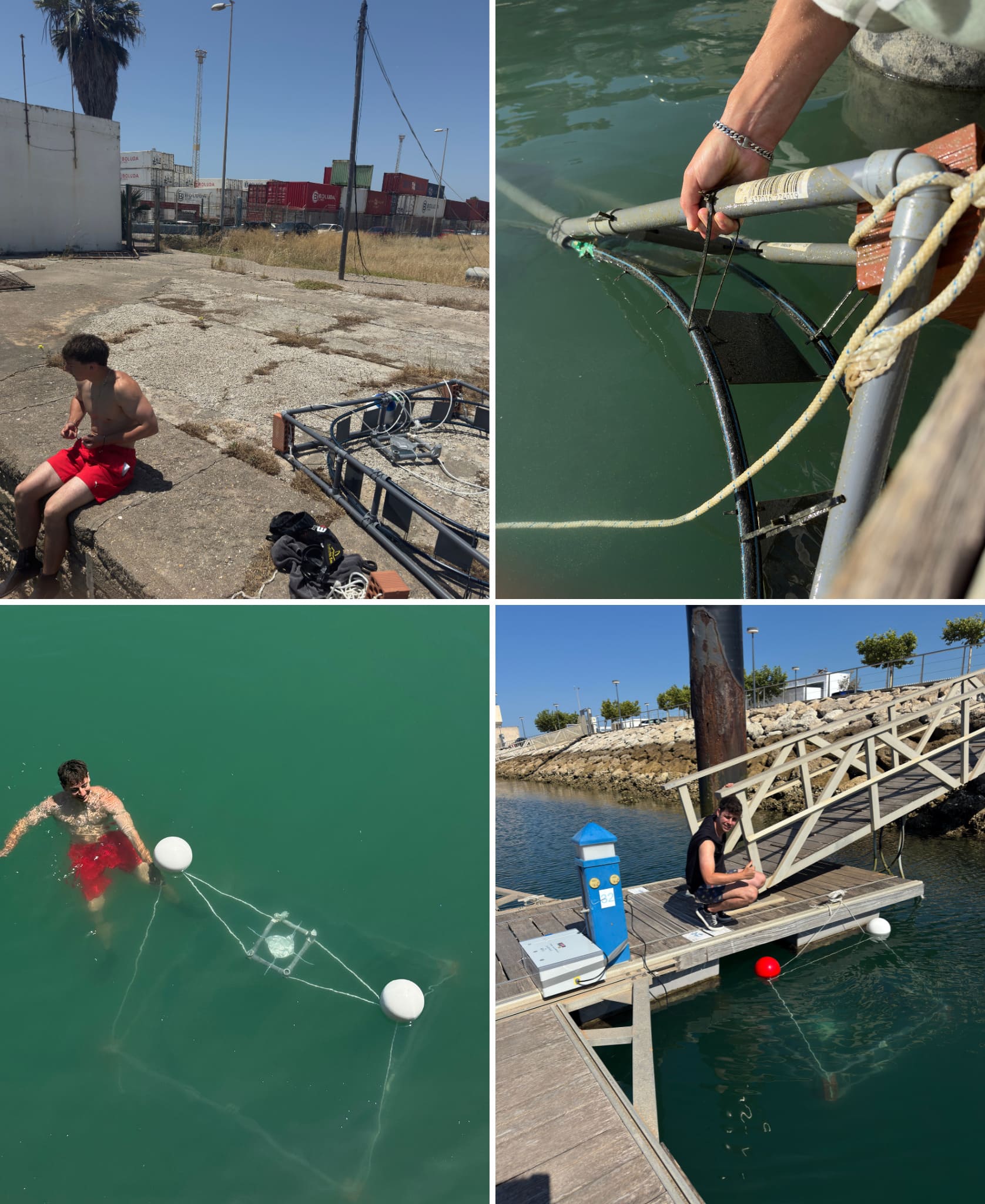
After weeks of preparation, the frames were finally in the water. The structures that we had spent so much time building on land were now ready to become the basis of our experiment.
From this point on, the focus shifted from building the experiment to monitoring what was happening around it.
Hydrophones, boats and one very expensive swim
Once the experiment was running, the HydroMoths became an important part of our regular monitoring. These small underwater recorders allowed us to record the acoustic conditions around our experimental frames and to measure the sound levels reaching the area of the experiment. This helped us to keep track of the underwater soundscape throughout the experimental period and to verify in hindcast what acoustic conditions the organisms on the settlement panels were actually exposed to.
Of course, regular monitorings also meant regularly getting the equipment in and out of the water. And this was when one of our more memorable fieldwork incidents happened. One day, Liam was alone at the harbour and had a fairly straightforward task: retrieve a HydroMoth, download the data and put it back into the water. Everything went well until the moment when the HydroMoth decided to make the last part of the procedure considerably easier for itself.
It slipped out of his hands and disappeared into the water.
We tried to retrieve it by diving down, but the visibility was extremely poor. Finding a relatively small piece of equipment underwater turned out to be much harder than expected, and despite our efforts, we could not recover it. It was certainly not part of the original plan, but fortunately, the experiment could continue. The lost HydroMoth has since become one of those fieldwork stories that is much easier to laugh about afterwards.
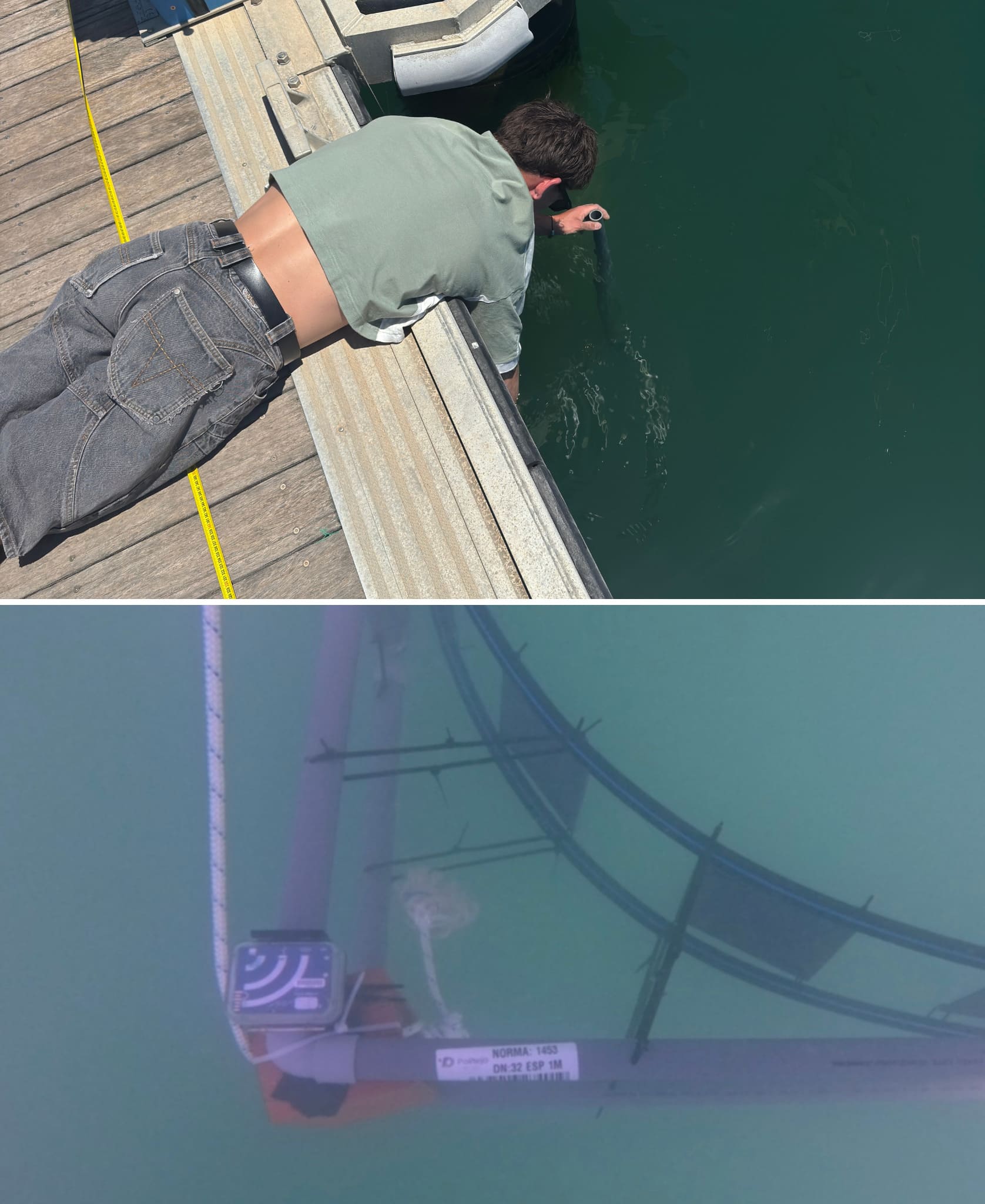
The regular monitorings also revealed how quickly conditions around the experimental site can change. One day, for example, we arrived at the harbour and found a boat parked remarkably close to our experimental setup, almost directly next to our buoys. Luckily, nothing was damaged and the boat did not cause any problems for the frames, but it was certainly an unexpected sight when we arrived.
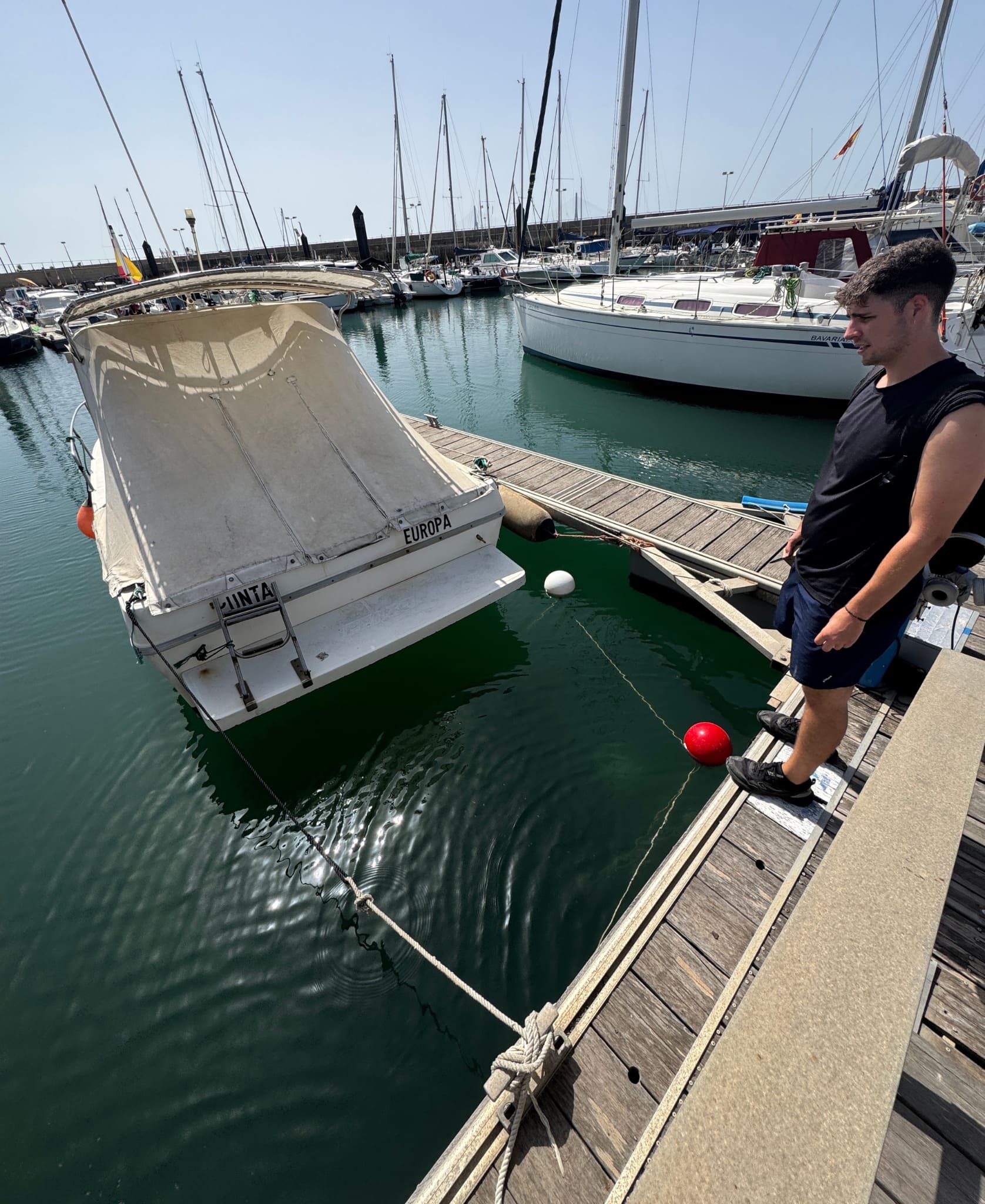
Working in a harbour means that we are sharing the space with many other users, and sometimes the surroundings have a few surprises in store for us. Fortunately, most of them have been harmless so far.
From PVC panels to marine communities
The most interesting changes, however, did not happen above the water.
They happened on the settlement panels.
At the beginning of the experiment, the panels were simply pieces of PVC. We sanded their surfaces and standardized them so that they would provide suitable settlement substrates for marine sessile organisms. After deployment, there was not much to see.
Then the first organisms started to arrive.
During the first sampling events, we began to see the panels changing. Small organisms had settled on the surfaces, and the communities became increasingly diverse. Ascidians and bryozoans were among those colonizers that became particularly noticeable, together with worms, crustaceans and algae.
Suddenly, the panels that we had spent weeks preparing were becoming real pieces of habitat.
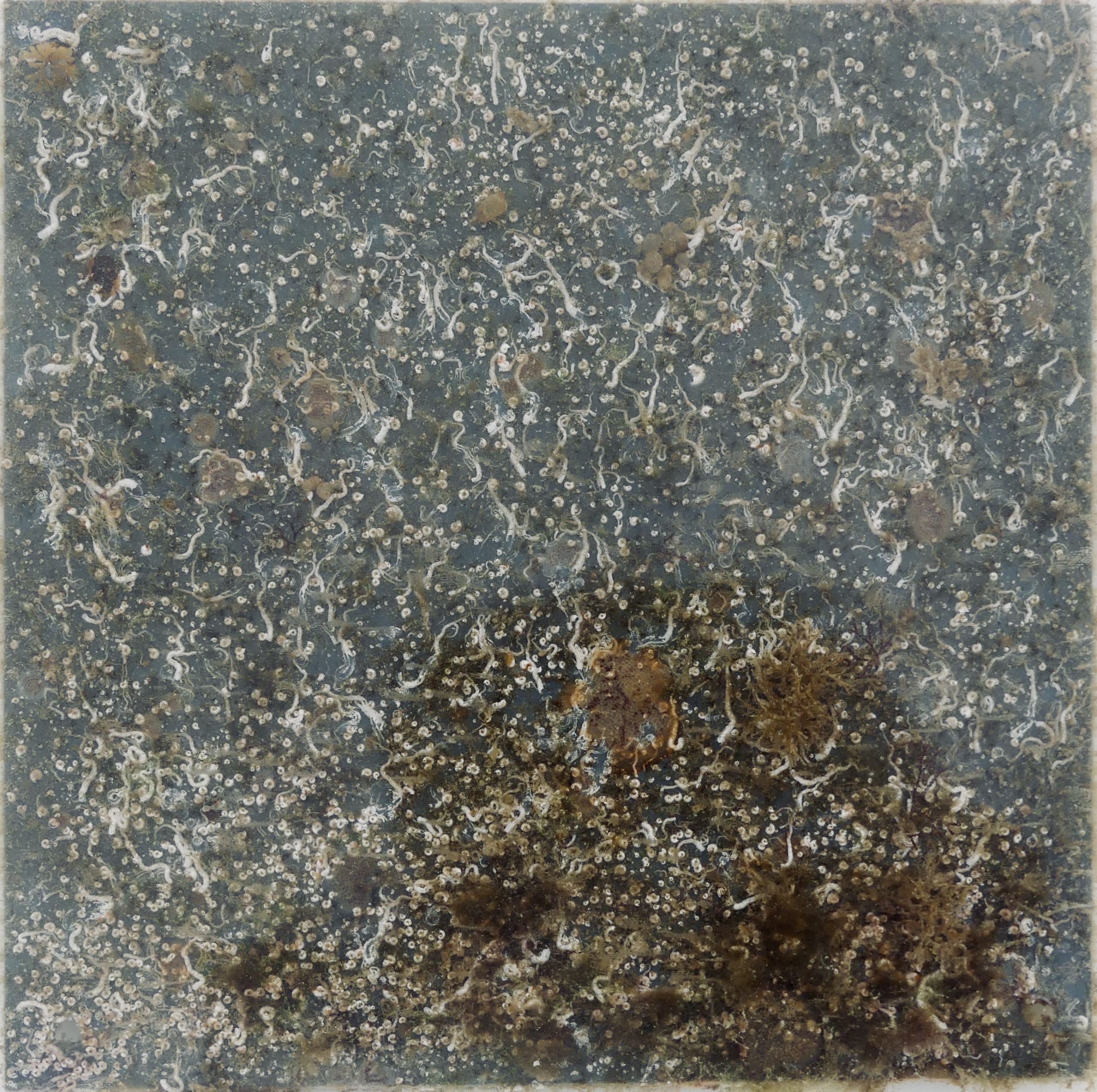
That was probably one of the most rewarding moments of the project. You knew exactly what a panel looked like before it went into the water. Then you retrieve it a few weeks later and had to figure out what has colonized it.
Some organisms were relatively easy to recognize. Others required a microscope, identification guides and considerably more patience.
Our supervisor was a huge help with this part of the project, especially when it came to identifying organisms that were less obvious at first glance. What initially looked like a small patch of something growing on a panel, could turn out to be an entirely different taxonomic group once you took a closer look.
And sometimes the organisms were simply fascinating to look at.
Despite the fauna and flora on the panels, we encountered small crustaceans, fish and other animals using the experimental structures as a habitat. One particularly photogenic shrimp even ended up on Liam’s hand during sampling.
The panels were therefore becoming more than just experimental units. They were small snapshots of the underwater world and the marine biodiversity around Cádiz.
The scientific question remained whether the different acoustic conditions influence the development of the communities. But before we could answer that, we had to document what was actually there.
And that meant sampling.
Sampling in the field
Our first sampling event made another aspect of fieldwork very clear: sometimes there is no perfect laboratory waiting for you at the harbour.
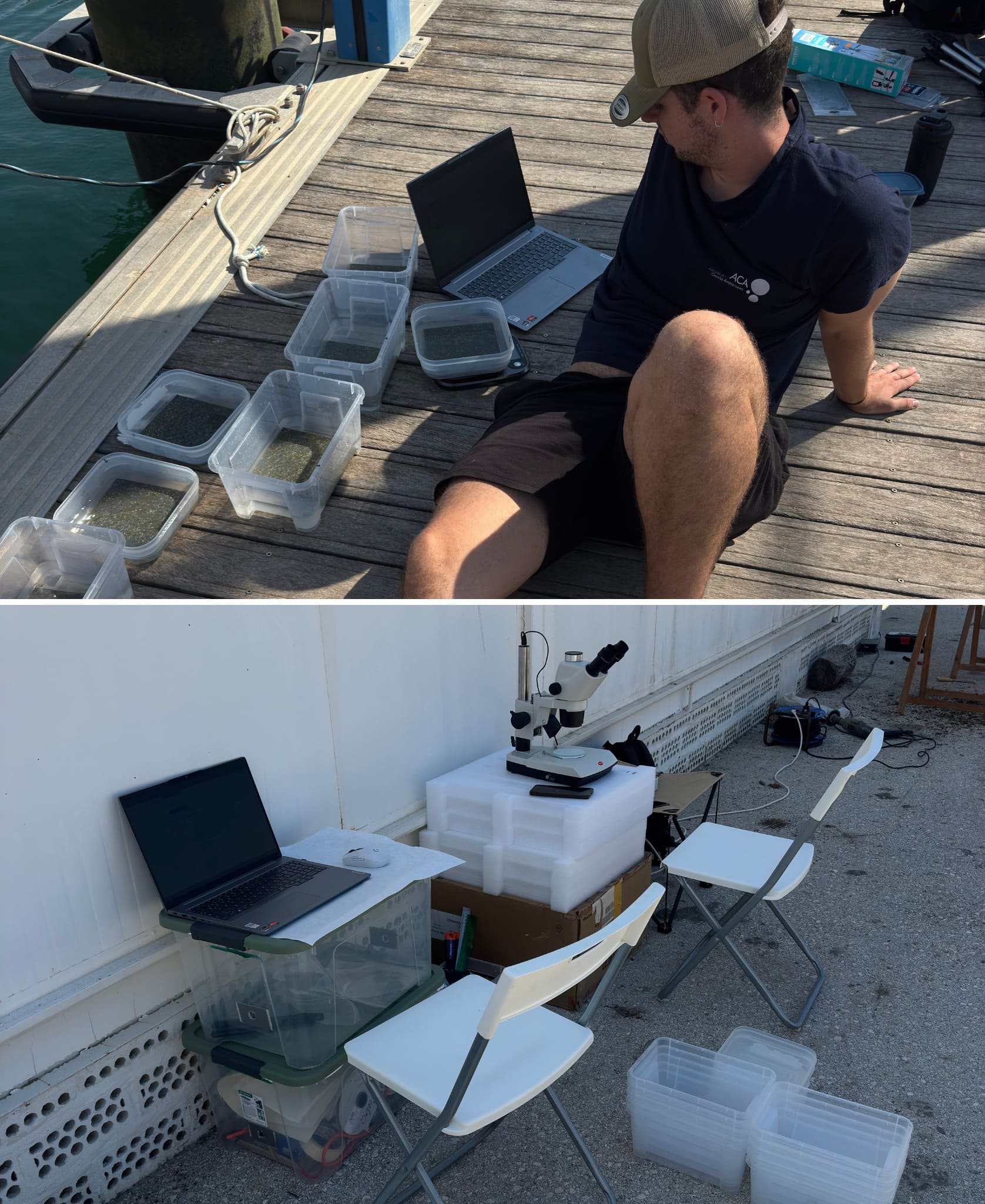
Since our experimental site was relatively far from the university facilities, we transported the equipment we needed directly to the field site by car. This included the microscope and the other equipment needed to examine, photograph and document the settlement panels.
There was no perfect laboratory waiting for us at the harbour. So, we built one.
We set up a small temporary workspace close to the experimental site and arranged everything we needed for the sampling. With the microscope, cameras, laptops, sampling equipment and the panels themselves, we quickly had our own little field laboratory ready to go.
Once everything was set up, the panels came out of the water. One by one, they were photographed, examined and assessed for the organisms that had settled on their surfaces. Some could be identified relatively easily, while others required a closer look under the microscope and a little more time.
The same basic procedure was repeated during the following sampling event, allowing us to compare how the panels had changed over time and which organisms had newly appeared or become more abundant.
Working directly at the field site also had its advantages. Instead of transporting the panels back and forth, we could examine and document them close to where the experiment was running and get an immediate impression of how the communities were developing.
Of course, the conditions were not always perfectly calm. Strong winds can make working at the harbour considerably more challenging, and this is where we really began to appreciate the Levante, the strong easterly wind that regularly affects the Cádiz area. By “appreciate”, we mean learning very quickly how much more complicated even a routine sampling day can become when the wind picks up. Even simple tasks require more coordination, especially when working with equipment and panels close to the water.
Nevertheless, the sampling days became one of the most interesting parts of the experiment so far. Every time we brought a panel out of the water, there was something new to discover.
The youngest member of the GAME team
There was also one very important member of the team who deserves a special mention.
During one of our most recent monitoring days, we had some unexpected assistance from a four-year-old.
While we were reading out the equipment, working on the frames and dealing with the usual collection of sampling tasks, our youngest helper decided that watching from the side was not enough. He wanted to participate.
So he did.
For a short time, we had officially found the youngest member of the GAME team. He may not have been able to explain the experimental design or tell us anything about sound pressure levels, but he was very enthusiastic about helping with the