

Brazil’s environment minister says he is “very optimistic” that the Tropical Forest Forever Facility (TFFF) – a new rainforest fund to channel private and public finance to developing nations – can meet a key $10 billion funding target this year, and is not at risk from his country’s elections next month.
The TFFF, launched by Brazil at COP30 in the Amazon last November and co-led by Norway, is intended as an alternative to traditional grant-based forest finance. The fund aims to raise $125bn in public and private capital, invest it in bond markets, and then pay countries that keep their forests standing from the annual returns. Donor contributions needed to get it going have tailed off after an initial burst.
Speaking to Climate Home News on the sidelines of Climate Week in New York, Brazilian environment minister João Paulo Capobianco pointed out that in less than a year since its official launch, the TFFF has already secured $7.3bn from governments.
“How many other initiatives can say that?” he asked. “Of course, if you have $7 billion, it’s easier for more countries to consider their own contribution. And not just countries – non-governmental organisations also. We are expecting even more support.”
-
As El Niño intensifies, we should be investing more in the world’s farmers
Finance to help agriculture adapt to a hotter world and more extreme weather is vital for food security – but new data shows it’s on a downward trend -
COP31 attendees told not to interfere in Türkiye’s “internal affairs”
Amnesty International says the provision in the hosting agreement could have a “chilling effect” on free expression in Antalya -
Threatened by rising seas, small islands secure right to keep their statehood
Efforts to protect marine ecosystems and coastal communities have risen up the political agenda at the UN General Assembly in New York


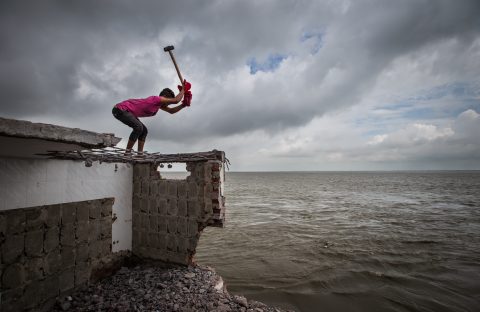
As its initial target, the TFFF aims to raise $10bn in seed capital from governments by the end of 2026, and still needs to fill a gap of $2.7bn. Its backers say that for each dollar in public funding, they can secure $4 from the private sector. Critics say the $10bn goal barely covers the fund’s expenses and would not allow it to make any significant payments to forest countries.
Because setting up its financial architecture, raising the starting capital and making the first investments will take time, experts say the TFFF is unlikely to generate any payments for developing countries before 2028.
Seeking new pledges
Capobianco told Climate Home News that Brazil is still in talks with potential new contributors to the fund, among them China, Korea and Japan, and said he hoped to see more pledges announced at the upcoming biodiversity and climate COPs in October and November. The Netherlands is expected to up its first small contribution and Canada may also come in, according to other sources close to the TFFF.
Because the fund was not created as part of the UN climate talks and is hosted by the World Bank, developing countries can contribute without taking on wider donor responsibilities for climate finance. Brazil and Indonesia – both large emerging rainforest nations – have each pledged $1bn to the TFFF.
Earlier in September, the UK became the latest country to pledge funding – promising a loan of £400 million (about $540 million). Capobianco welcomed the contribution and noted that Britain has also said it will keep “under review” the possibility of putting in more.
Currently the largest donor is Norway, which announced a $3bn pledge last year at COP30 in Belém. However, that pledge came with conditions, among them that the fund must reach $10bn in sponsor capital by 2026, and that Norway’s contribution can’t make up more than 20% of that total. Over the longer term, this means the fund must raise $15bn from governments to unlock Norway’s full investment.
Comment: UK’s budget juggling trick with rainforest loan for bus-fare cap needs transparency
Speaking at a forest finance event in New York, Norway’s environment minister Sigrun Aasland said the country’s pledge was made not “only out of solidarity but because of shared interests”, adding that protecting rainforests is critical for climate and biodiversity goals as well as for national security.
“Tropical deforestation matters to people in the Amazon and in the Congo. But let’s not forget that it also matters to global food production and to the cost of living in Oslo or in London,” she said.
At the event, Guyana’s minister of natural resources Vickram Bharrat said the TFFF is “one in a menu of options” to finance forest protection in developing countries. He added that to boost its capital “maybe we should put some amount of pressure on oil companies to contribute to the fund”.
Upcoming election “not a risk”
Brazil, which has been pivotal to getting the fund off the ground, is now heading into a national election that could see the country swing back to an anti-climate stance if right-wing candidate Flávio Bolsonaro beats current left-wing President Luiz Inacio Lula da Silva. Capobianco, however, said the election result does not pose a risk to the TFFF.
“It’s a global initiative, not a Brazilian initiative. We proposed the first idea, but nowadays it’s a global initiative,” he said. “We believe the investor countries and the tropical countries together have the possibility to continue this process.”
In Brazil, the first round of voting is scheduled for Sunday, October 4. If no candidate wins more than 50% of valid votes, a run-off ballot will take place on October 25.
COP30 roadmap to end deforestation will invite countries to draft domestic plans
In July, the TFFF board adopted a charter, which outlines the instrument’s objectives and values, including that 20% of the payments made to tropical countries will go directly to Indigenous people and local communities.
The charter also says the TFFF board may comprise up to 12 member countries during the initial phase. Currently, seven seats are filled by the Democratic Republic of Congo (DRC), Germany, Brazil, France, the Netherlands, Norway and Indonesia.
The board has also formally incorporated the Tropical Forest Investment Fund (TFIF) – the TFFF’s investment arm that will trade bonds in financial markets – hosted in Luxembourg.
The post Brazil confident new rainforest fund will reach $10bn donor milestone appeared first on Climate Home News.
Brazil confident new rainforest fund will reach $10bn donor milestone

Climate Change
Albanese must deliver credible action to end fossil fuel chokehold, not just rhetoric
ANTALYA,Türkiye, Thursday 12 November 2026 — In response to Prime Minister Albanese’s COP31 Leaders’ Summit address, Shiva Gounden, Head of Pacific at Greenpeace Australia Pacific, speaking from Antalya said:
“Prime Minister Albanese’s COP31 address was full of nice rhetoric, but once again failed to confront or even mention the root cause of the climate crisis — fossil fuels.
“In Antalya, UN climate chief Guterres told leaders to “tell the truth”. The truth is Australia can not credibly talk about its clean energy transition while continuing to expand the industry it needs to leave behind. Australia must reckon with reality; its damning track record of 38 coal and gas approvals since it took office in 2022.
“We meet in Antalya amidst a global energy shock and dire projections of 1.5°C overshoot. Overshoot means something in the Pacific — it means irreversible harm, lives and cultures lost forever, entire nations at stake. We must face the fierce urgency of now.
“Never before has the need to end the fossil fuel chokehold been so abundantly clear, as our Pacific communities again suffer the consequences of a global economy hooked on coal, oil and gas. The Pacific needs credible roadmaps and clear timelines to unhook from fossil fuels — Australia can’t keep saying implementation and not reflect it with credible action.”
ENDS
COP31 images and video available here in Greenpeace Media Library
Media contact: Kate O’Callaghan in Antalya (GMT+3) on +61 406 231 892 (Whatsapp/Signal)
Albanese must deliver credible action to end fossil fuel chokehold, not just rhetoric
A second set of world leaders give their speeches on Thursday before heading out of town and leaving their negotiators to it. After around 40 leaders spoke on Wednesday, today there will be just 25 or so including the UK’s Andy Burnham, Venezuela’s Delcy Rodriguez and Bangladesh’s Tarique Rahman.
But Brazil’s President Lula is still there and is expected to keep grabbing headlines, along with California’s Governor – and maybe next US president – Gavin Newsom – and Swedish climate activist Greta Thunberg who has lost none of her star power, if the crowd around her in the press centre was anything to go by.
We’ll bring you highlights through the day on issues ranging from finance to methane, and update you on a pledging event for the Pacific Resilience Facility, which the climate-vulnerable region is relying on to keep small island nations as safe as possible in the face of intensifying storms, drought and sea level rise.
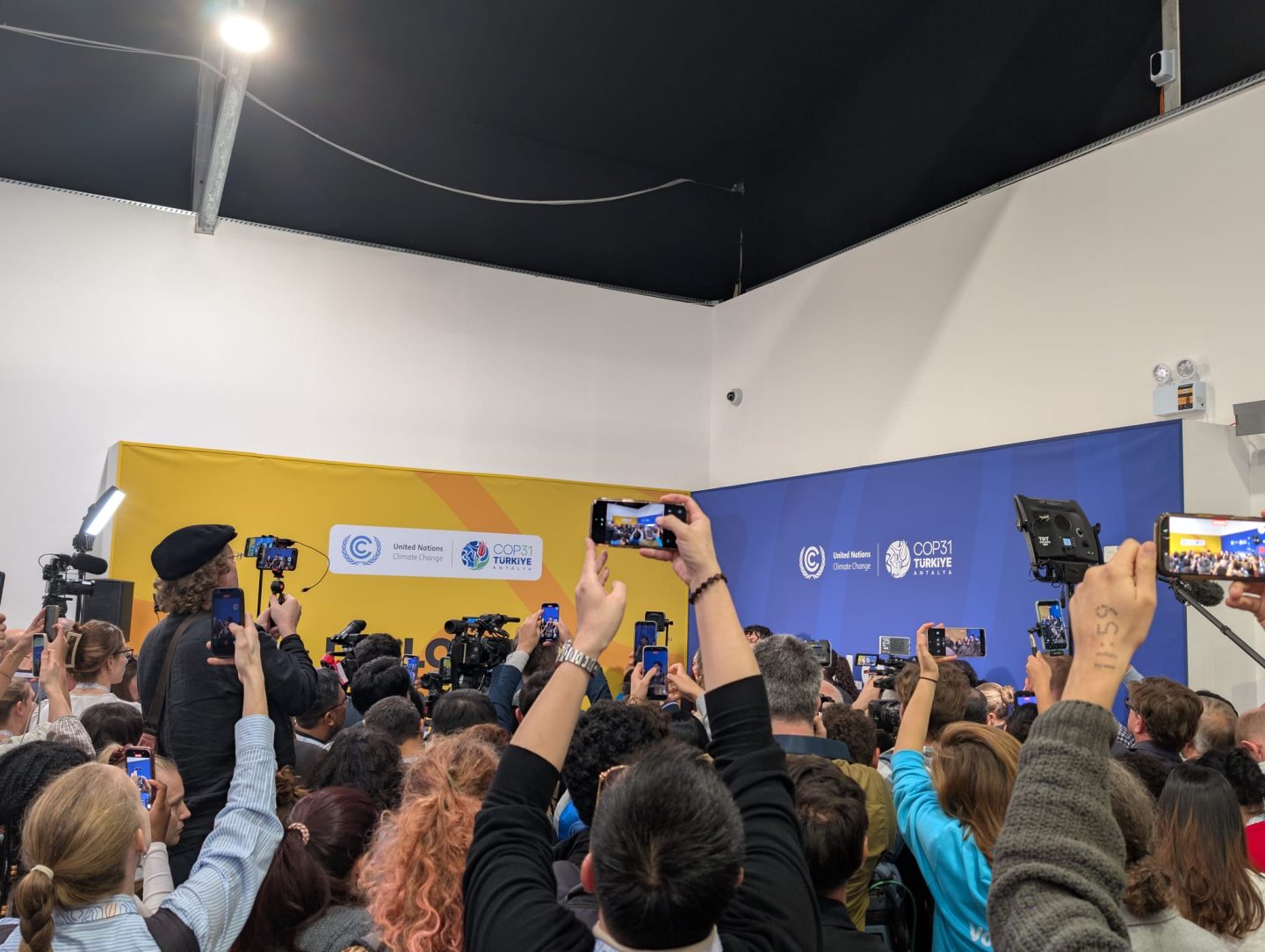
The post COP31 Bulletin Day 4: Burnham speaks with UK climate policy under fire appeared first on Climate Home News.
COP31 Bulletin Day 4: Burnham speaks with UK climate policy under fire
Climate Change
Australia must ‘pull all available levers’ to deliver fossil fuel phase out, following Albanese’s COP31 address
ANTALYA, Türkiye, Wednesday 11 November 2026 — In response to Prime Minister Albanese’s COP31 Leaders’ Summit address, Dr Susie Byers, Head of Advocacy at Greenpeace Australia Pacific, speaking from Antalya said:
“Prime Minister Albanese’s Leaders’ Summit address emphasised the power and clarity of Pacific climate leadership and that we must all fight to return warming to below 1.5°C. To inject the momentum these talks critically need, Australia must lead by example.
“Australia takes the reins of the COP31 talks at a critical moment where global instability can spark transformative change, or entrench more of the same inaction and paper pledges. Australia must pull all available levers over the next two weeks, taking the baton from Brazil and sprinting forward.
“The world’s most important job in Antalya is to deliver tangible action to end the fossil fuel era. Communities in Australia, the Pacific and around the world who are grappling with climate disasters and a cost of living crisis need concrete dates and credible plans. We know the transition is coming, one way or another. Our Government has a responsibility to make a plan for this change, which is based on the best available science, and a commitment to put people, energy security and our environment ahead of fossil fuel profits.
“In his address, UN climate chief Guterres told leaders to “tell the truth”. Prime Minister Albanese told an important truth today: that we all have solemn responsibilities to return warming to below 1.5°C. We also know that the best way for Australia to lead through this summit is to start by making its own commitments to turn the temperature down, by stopping developing and exporting fossil fuels.
“Australia’s domestic progress on renewables, and the ‘35 by 35’ electrification goal, are welcome and important. Now we must ensure electricity comes from clean, renewable sources that actually displace fossil fuels and align with the science of 1.5°C.
“The pressure on Australia is building. COP31 must deliver real action to advance multilateral climate cooperation, accelerate the just transition away from fossil fuels, and advance Pacific priorities — including significantly scaling-up climate finance and keeping 1.5°C alive.”
ENDS
COP31 images and video available here in Greenpeace Media Library
Media contact: Kate O’Callaghan in Antalya (GMT+3) on +61 406 231 892 (Whatsapp/Signal)



-
Climate Change1 year ago
Guest post: Why China is still building new coal – and when it might stop
-
Greenhouse Gases1 year ago
Guest post: Why China is still building new coal – and when it might stop
-

 Greenhouse Gases2 years ago
嘉宾来稿:满足中国增长的用电需求 光伏加储能“比新建煤电更实惠”
-

 Climate Change2 years ago
嘉宾来稿:满足中国增长的用电需求 光伏加储能“比新建煤电更实惠”
-

 Renewable Energy1 year ago
Sending Progressive Philanthropist George Soros to Prison?
-
Greenhouse Gases1 year ago
嘉宾来稿:探究火山喷发如何影响气候预测
-

