

Climate negotiators in Bonn have been tasked with taking a “deep dive” into how a roadmap to boost climate finance for developing countries should look, so that it can be finalised at COP30 in Brazil – but a series of consultations last week revealed that governments have yet to align on its contents.
At the start of the mid-year talks, UN climate chief Simon Stiell advised governments that the roadmap for mobilising $1.3 trillion a year by 2035 should not be “just a report, but a how-to guide with clear next steps on dramatically scaling up climate finance and investment”.
That will mean reconciling widely divergent views among countries about what sources of finance the roadmap should draw on – and what form the money should come in. Some delegates in Bonn have also complained that the process for compiling the roadmap is unclear.
The “Baku to Belém Roadmap to 1.3T” was launched as part of the new climate finance goal (the NCQG) agreed at COP29, with a commitment for donors to raise $300 million annually – largely from the public purse – at its core.
Brazil: Let’s deliver on our old climate promises before making new ones
Sandra Guzmán, director general of the Climate Finance Group for Latin America and the Caribbean (GFLAC), told Climate Home the roadmap “emerged as a way to reduce the gap” between the $300 billion developed countries have committed to mobilise by 2035 and the far higher amount developing countries were asking for, of $1 trillion-$1.3 trillion.
“It was also a kind of exit plan to prevent the NCQG discussion from moving to Belém,” she noted.
The two COP presidency teams charged with drafting the roadmap – Azerbaijan and Brazil – last week listened to the needs and concerns of governments in Bonn in the first formal consultations on the roadmap since COP29 in Baku.
Differing needs and expectations
One main unresolved rift is that developing countries wanted the $1.3 trillion to consist of public money from rich nations – but according to the text agreed in Baku, all sources of finance are possible with no percentage distribution between them specified, Guzmán said.
Rebecca Thissen, global advocacy lead at Climate Action Network International, told Climate Home the broad scope of proposals on the roadmap from countries in Bonn shows “it’s clear we don’t have a common understanding of what it is and what we´re going to do with it.”
In general, developing countries have requested that the $1.3 trillion should consist of new money that is not re-labelled from other budgets, with public grant money as the bulk of it, excluding loans and other forms of debt.
India, for its part, has said that global tax levies and approaches to raise money from specific sectors should be excluded, even though a recent survey by Greenpeace and Oxfam shows that 80% of respondents in India agreed that oil, gas, coal corporations should be taxed for the environmental damage they have caused.
During last week’s discussions, a delegate from the Independent Alliance of Latin America and the Caribbean (AILAC), said: “The engagement of private sector and philanthropic institutions must complement and not replace the obligations of developed countries.”
In contrast, the European Union’s representative argued: “We should really focus on scaling up private finance and catalysing investments that drive climate action.” They also called on other countries to join the pool of donors mobilising money – referring indirectly to China and Gulf nations.
From the 116 submissions on the roadmap received ahead of the Bonn talks, only 20 were from governments, with the rest from civil society including NGOs, research organisations and business.
At a consultation for these non-government groups, Avinash Persaud, special adviser on climate change to the president of the Inter-American Development Bank, presented a plan to achieve the $1.3 trillion goal. Under it, multilateral banks would buy existing private-sector loans to renewable energy projects in poor countries, with commercial lenders then using the proceeds for more clean energy investment.
Guzmán said the private sector should play a bigger role but it is still unclear how the roadmap would avoid perpetuating the existing model of largely debt-based climate finance, nor who would benefit – as countries like Brazil and Tuvalu do not have the same needs.
Whose roadmap?
The two COP presidencies are tasked with preparing the roadmap, whose form is still being decided but needs to present ideas for how the $1.3 trillion can be raised.
COP30 CEO Ana Toni told Climate Home it will include recommendations on how to move forward. “It will be what the two COP Presidents – considering what they listened to – feel is needed to mobilise $1.3 trillion,” Toni said in an interview in Bonn.
A first draft of the report is expected to be presented for comment in September, with the final version published in October.
Toni added that she expects many of the recommendations to be for “players” outside the UN climate process. For example, “the reform of the multilateral banks is not something that we can do within the [UN climate] convention, but if it’s mentioned in the report, it will be an important message for those actors,” she said.
How ‘sophisticated’ climate misinformation gets to the heart of power
In Bonn, some officials said it was unclear how the consultations on the roadmap outside the UN climate process would be brought together with those happening inside. In particular, they pointed to a “circle of finance ministers” convened by Brazil to contribute to the roadmap, saying there was confusion about its role.
Toni said the circle is not part of “the official track of the roadmap”. “It’s our [Brazil’s] initiative led by finance minister Fernando Haddad to hear from finance ministers what they feel should be a roadmap to mobilise $1.3 trillion,” she explained.
There have also been concerns about inclusivity. The circle originally covered 24 countries and has since been expanded to 32 members, including the European Union, Canada, the UK and China. One of the selection criteria is to involve countries that have hosted COPs since the 2015 Paris Agreement.
Toni clarified this to Climate Home, saying that any country that wants to participate would be welcome, adding “it’s not a closed shop”. During the Bonn talks, the Marshall Islands and Tanzania asked to join the circle.
Toni said the finance ministers’ circle – due to meet again at a development finance conference in Spain next week – would produce a report that will feed into the roadmap. Civil society consultations have so far been limited to webinars.
Life beyond COP30
Thissen of CAN International said it would be good to connect the climate finance conversation with the wider international finance architecture – but without “forgetting what you have to move forward here, at the COPs”.
She added that developing countries remain concerned there is ambiguity over whether rich nations will be held responsible for ensuring the NCQG finance goal is delivered, which is why they want formal UN discussions to be launched on that specifically.
Another big question for the roadmap at COP30 in Belém is how it will be treated as part of the UN climate process going forward. Countries could formally “note” or “welcome” the final document – as they have done with key climate science reports – or they could include it in the negotiations as a new agenda item or under other discussions such as on long-term finance.
“If the [roadmap] doesn’t include elements that have a scope beyond COP30, it will be an absolutely wasted year,” Guzmán said, warning against a report that fails to meet neither immediate nor future needs. “That’s the greatest risk: to have a document that could die at COP30.”
The post UN expects climate finance roadmap to offer “clear next steps” appeared first on Climate Home News.
UN expects climate finance roadmap to offer “clear next steps”

Next week, diplomats from around the world will descend on Yerevan, Armenia, to negotiate a series of decisions under the UN Convention on Biological Diversity (CBD).
Between 19 and 30 October, 196 parties will gather to hammer out the precise wording of the dozens of legal texts that make up the decisions under the Conference of the Parties (COP) to the CBD.
This year’s summit is particularly significant, as it marks the halfway point between the agreement of the Kunming-Montreal Global Biodiversity Framework and the deadline for achieving its targets.
The CBD has found that countries are currently not on track to meet 22 out of the framework’s 23 targets.
During the fortnight, delegates will also be negotiating decisions relating to the two supplemental protocols to the CBD: the Cartagena Protocol, which covers biosafety; and the Nagoya Protocol, which covers access and benefit-sharing for the use of genetic resources.
(The Cartagena and Nagoya Protocols, which are each governed by a “meeting of the parties”, or “MOP”, have fewer parties than the CBD as a whole, with 173 and 141, respectively.)
Carbon Brief is tracking the progress of countries towards consensus on dozens of negotiating texts using the interactive table below.
The tracker includes texts from the COP, as well as the MOPs for the Cartagena and Nagoya protocols. It also includes draft decisions from the most recent subsidiary body meetings, as these form the starting point for the negotiations in Yerevan.
The CBD has three subsidiary bodies: the subsidiary body on scientific, technical and technological advice (SBSTTA), the subsidiary body on implementation (SBI) and the subsidiary body on article 8(j) and other provisions (SB8J).
SB8J focuses on issues related to the Indigenous peoples and local communities. It was established at COP16 in Cali, Colombia, in 2024.
The first two columns of the interactive tracker list the topic of each agenda item and the relevant body, with subsequent columns including dates, page counts and links to the original documents.
The table is searchable and can be sorted using the arrows in the header.
Areas of disagreement in UN draft texts are denoted by square brackets. Counting the brackets in a particular iteration of a text therefore gives a sense of how far parties are from reaching consensus.
The bracket column is colour-coded, with dark green indicating a low number of brackets and red indicating a high number of brackets remaining.
Texts can also present parties with choices using “options” or alternatives (“alt”), which are counted together in the sixth column of the table.
The key discussions in Yerevan will centre around two agenda items in particular. The first is the global review, which will assess progress towards the GBF and make recommendations for accelerating action.
The second is finance, which can be separated into two parts: resource mobilisation and the financial mechanism. On resource mobilisation, biodiverse global south countries are likely to push for an increased amount of international finance for conservation.
Disagreement over the creation of the financial mechanism led to the suspension of COP16 in Cali in October 2024, as parties failed to find agreement on the mobilisation of finance before the end of the summit.
Global south countries want the establishment of a separate financial mechanism under the control of the CBD; global north countries largely prefer to maintain the existing mechanism, which sits under the Global Environment Facility.
At the resumed session of COP16 in Rome in early 2025, countries agreed on a roadmap that would lead to the establishment of a permanent mechanism.
related
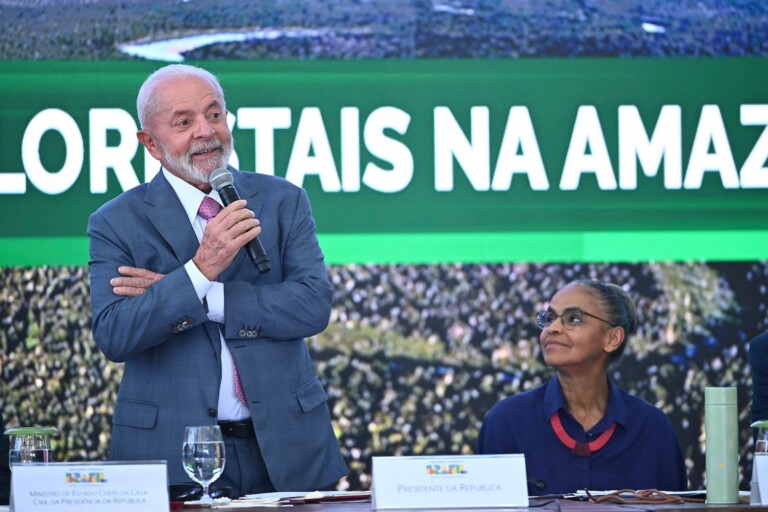
Analysis: Lula presidency saved at least 20,000km2 of Brazilian Amazon since 2022
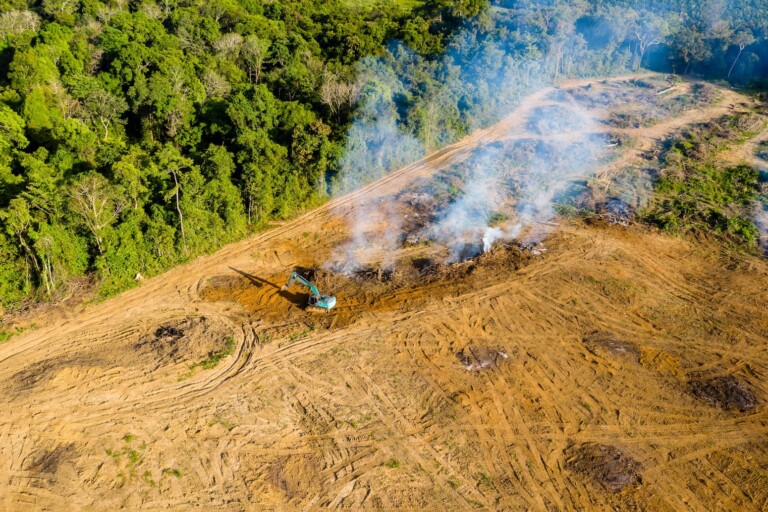
Why land-use emissions have fallen by a third this century – in six charts

Analysis: 84% of nations miss deadline to identify ‘nature-harming’ subsidies by 2025
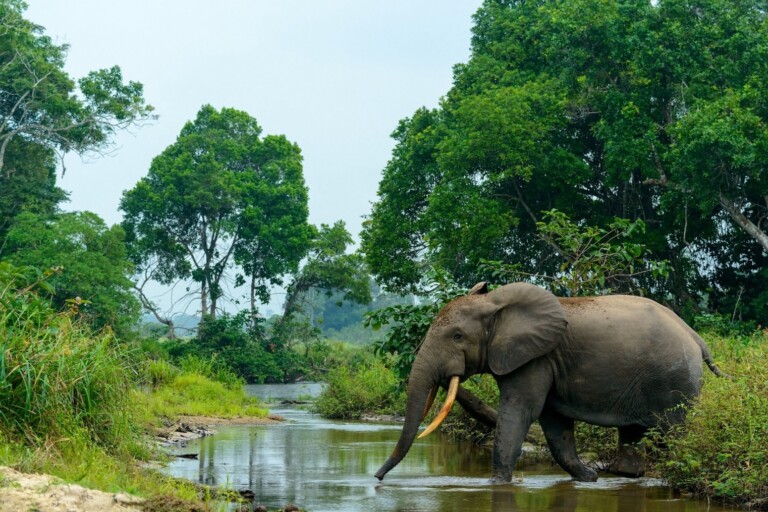
UK withdraws millions in funding from world’s second-largest rainforest in Congo
The post Interactive: Tracking negotiating texts at the COP17 biodiversity summit appeared first on Carbon Brief.
Interactive: Tracking negotiating texts at the COP17 biodiversity summit
A beacon of love
On an outer island of Fiji, two thousand nautical miles from Sydney, is a shining light of hope and resilience for our troubled world.
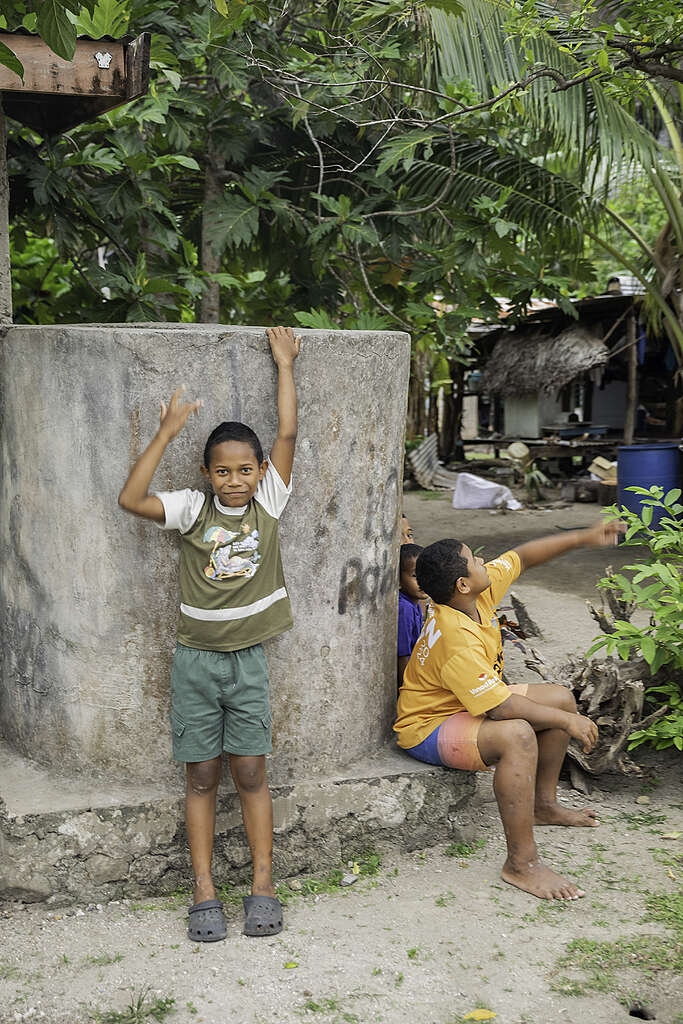
The island of Kioa is home to a Tuvaluan community who migrated from their atoll of Vaitupu in the late 1940s. It is a land of warm hearts, big smiles, and deep cultural roots; a place where the sound of a conch still summons the island together, where islanders paddle out to fish in carved outrigger canoes, and healthy happy children walk barefoot to school.
Here, culture is life. Kioans live sustainably through their traditional knowledge and practices. The island is alive with song, dance and the rhythms of a life tied to the tides, the winds, and the seasons.
Facing the future
Greenpeace has been lucky to have a relationship with Kioa for a number of years now, and we are continually learning from this remarkable community.
Last week, as part of our Voyaging Oceania project, we returned to the island. Our purpose was twofold —- to carry messages from the island to leaders gathering in Nadi this week for the Pacific Pre-COP, and to support the Kioa community in their efforts to improve water security for the island.
Unlike Tuvalu itself, with its eight atolls, Kioa is a mountainous, forested and richly fertile island. It will remain habitable far into the future. Kioans did not initially migrate from Vaitupu due to climate change, but the move was prophetic. They now have a lifeboat.
However, even Kioa faces challenges on our rapidly warming planet, in particular when it comes to water. Climate change is shifting once reliable rainfall patterns. On top of this, the island is already feeling the effect of this year’s intensifying El Niño event, which for Fiji means reduced rainfall and prolonged dry spells.
Right now, fresh water has to be carefully rationed, and is only available for a few hours a day. During last week’s visit aboard our campaigning ship Oceania, Greenpeace was privileged to work with the Kioa community on a new solar-powered water distribution project for the island.
Designed and led by the island, the project involves using a solar pump to move water from a reliable source to a storage tank and then using gravity to distribute the water around the village.
It was a lesson in how local knowledge and ingenuity can be the backbone of today’s climate solutions. To build a dam around the source, the local community knew the exact spot where they could gather gravel at low tide to mix with the cement. They took only what was needed, knowing that all resources must be carefully conserved. Kioa has no roads and no machinery, and it was an all-of-island effort to carry the materials up to the project site, including many heavy bags of sand and rock.
Such projects truly bring to life the vision of a resilient, locally-led, fossil fuel free Pacific.