

The UK government may have broken the law by approving the transfer of two deep-sea mining licences for exploration of mineral-rich seabed in the Pacific Ocean to an “opaque” company with ties to a US lobby group, according to Greenpeace.
The campaign group has taken the first step to kick-start a legal challenge over the government’s decision to facilitate the transfer of the permits it sponsors in the Clarion Clipperton Zone to Glomar Minerals following the bankruptcy of their previous holder, a Norwegian firm called Loke Marine Minerals.
The licences, overseen by the International Seabed Authority (ISA), a UN body, grant exclusive rights to explore an area of the ocean larger than England for potato-sized polymetallic nodules. These nodules contain minerals such as copper, cobalt and nickel, which are used in both clean energy technologies and defence applications.
No extraction can take place in the Clarion Clipperton Zone until countries agree on a mining code under drawn-out and increasingly contentious ISA negotiations.
Polarised debate
The debate over the nascent industry has grown increasingly polarised since US President Donald Trump issued an executive order to fast-track deep sea mining, including in international waters – a move widely seen as an unilateral measure aimed at circumventing the ISA’s authority.
Marine scientists argue that mining the seabed could cause severe, and likely irreversible, damage to ecosystems by destroying habitats, releasing toxic plumes and creating noise pollution. Over a dozen countries, including the UK, have called for a moratorium on deep sea mining until there is enough scientific evidence to assess its impact.

Greenpeace said the UK government’s sponsorship of the exploration licences now held by Glomar Minerals “flies in the face” of its public position on the practice.
In a letter warning Britain’s business secretary of upcoming legal action if its decision is not reviewed, the environmental group said the government had acted unlawfully by failing to consider cancelling the licences. It argued that Glomar Minerals is effectively controlled by foreign states or nationals, which it claims breaches ISA rules.
The ISA regulations say activities in a license area should be carried out by people or companies that possess the nationality of the country sponsoring the contract, or are effectively controlled by them or their nationals, without giving more specific details. If entities from different states are involved, then each state needs to sponsor the license, according to the rules.
Ties to DC lobby group
Glomar Minerals assumed control of the licences last year after acquiring Loke’s British subsidiary, UK Seabed Resources, which first secured the contracts in 2013 when it was owned by US weapons manufacturer Lockheed Martin.
Although Glomar Minerals is headquartered in the UK, the company appears to be largely managed by executives and investors based overseas. Its chief executive is Walter Sognnes, a Norwegian energy executive who also led Loke at the time the company filed for bankruptcy.
One of Glomar’s listed directors and principal controllers is Washington-based Raphael Diamond, the founder and executive chairman of Securing America’s Future Energy (SAFE), a US lobby group that brings together military and business leaders. SAFE advocates reducing reliance on foreign supply chains, including for critical minerals, on national security grounds.
-
Explainer: Out of Paris, but will the US formally quit the UN climate regime?
The Trump administration has decided to withdraw the US from the broader UN climate convention, raising questions about the legality of the move and what it means in practice -
A just agricultural transition takes root in Brazil
The Indigenous practice of agroforestry is enjoying a renaissance as the agricultural sector aims to decarbonise without sacrificing farmers’ livelihoods


In April 2025, SAFE publicly welcomed Trump’s executive order on deep sea mining, saying “we must make sure we don’t cede access [of seabed nodules] to our adversaries”. In a recent report, the group argued that “the United States should out-compete China to be the first nation in the world to commercialise deep-seabed minerals”.
The US is not a full member of the ISA as it never ratified the UN convention that underpins it and therefore cannot directly sponsor ISA contracts.
“Opaque” ownership
Greenpeace has raised concerns about what it describes as Glomar’s “opaque” corporate structure and funding arrangements. Incorporation documents list the company’s majority shareholder as a firm based in Delaware, a US state known for corporate secrecy laws that do not require public disclosure of owners or directors.
Company filings show that in June last year, Glomar entered into a loan agreement for an undisclosed sum with another Delaware-registered entity, MHG Funding. Under the terms of the agreement, the lender could gain sweeping control of Glomar’s assets, including “all licences”, in the event of a default.
The lender is listed as Louis Mayberg, an American financial investor and philanthropist. A donor to the Democratic Party, Mayberg funded SAFE and served on the group’s board until at least the end of 2024, according to the most recent available records.
Climate Home News had not received a response to questions sent to Glomar, SAFE and Louis Mayberg at the time of publication.
In a December press release announcing the UK government’s decision, Glomar said its priority “remains closing knowledge gaps and contributing to a robust scientific understanding of the deep sea environment”.
US permitting process fast-tracked
As governments vie to secure access to critical minerals, the race to mine the ocean seabed has been heating up, spurred on by the Trump administration and efforts by countries to break their dependence on China.
Japan said this week it had conducted the first test mission to lift seabed mud within its national waters that is rich in rare earths to a scientific ship, soon after China cut off exports to its Asian rival amid a diplomatic row.
Last month, The Metals Company (TMC) – another deep-sea mining hopeful that holds exploration licences under the ISA, which it obtained via Nauru – became the first company to seek approval to collect nodules in the Clarion Clipperton Zone from the US authorities under an accelerated process run by the National Oceanic and Atmospheric Administration (NOAA).
The company’s CEO Gerard Barron told Reuters he hopes to obtain the permit by the end of the year.
The ISA has repeatedly said it has an exclusive mandate to oversee activities in the Pacific Ocean area and any unilateral action would violate international law and undermine ocean governance.
-
West Africa’s first lithium mine awaits go-ahead as Ghana seeks better deal
Ghana wants to benefit from the scramble for lithium but its reliance on mining firms for revenue and expertise weakens its ability to negotiate preferential terms, experts say -
COP30 chief calls for two-tier climate system to speed up action beyond consensus
COP30 president André Corrêa do Lago argued in a new letter to countries that the Belém conference “shed light” on climate diplomacy’s limitations


Greenpeace worries that licences ending up in “the wrong hands” could open the door to “destructive deep sea mining that could harm marine wildlife”.
Erica Finnie, oceans campaigner at Greenpeace UK, said the “opaque structure” of Glomar makes it hard for the UK government to have full oversight of the exploration licences and the individuals involved.
“The licences should be held by independent scientific bodies with a genuine interest in doing research, as they are in other countries, instead of companies seeking to profit from mining the seabed,” she added.
A spokesperson for the UK’s Department for Business and Trade said it would not comment on ongoing legal proceedings.
The post UK government faces legal challenge over deep sea mining permits to “opaque” firm appeared first on Climate Home News.
UK government faces legal challenge over deep sea mining permits to “opaque” firm

Scientists have vowed to keep working on the next flagship set of reports for the Intergovernmental Panel on Climate Change (IPCC), after a political row over the timeline for their release saw its latest session suspended on Friday evening without agreement.
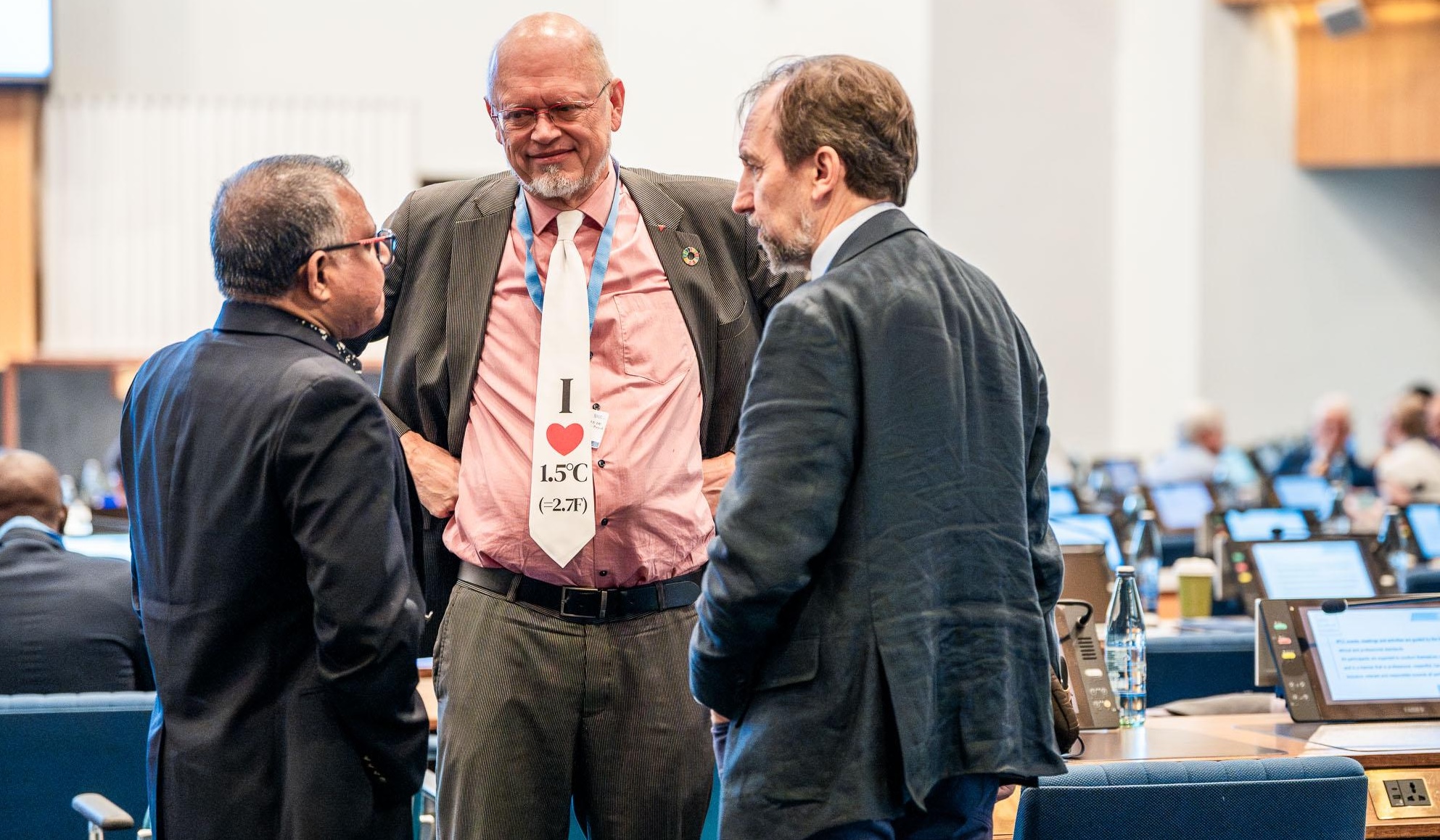
During the weekend, government officials and scientists alike expressed disappointment over the inability to reach a compromise before some delegates from developing countries and small island states had to leave the week-long meeting in Ethiopia to catch flights home.
The disagreement – which has persisted since early 2024 – turns on whether the three key parts of the AR7 assessment should all be published before the conclusion of the UN’s next Global Stocktake of global climate action, which is due to be completed in late 2028.
The IPCC issued a statement after the close of the session, saying that “key agenda items” – the timelines for the three AR7 reports, as well as the IPCC budget – remain open and under discussion. It said the IPCC’s plenary session and its deliberations on the pending agenda “will resume at the earliest opportunity”, giving no further details of when.
IPCC Chair Jim Skea told delegates in closing remarks that recent months had been some of the most turbulent for the climate science panel and that, if there were stronger words than “profound disappointment” he would use them, according to a summary published by the Earth Negotiators Bulletin (ENB). IPCC discussions happen behind closed doors.
IPCC scientists remained committed
In an open letter, issued on Monday, a group of nearly 120 scientists – from a total of 664 AR7 authors – said they “stand committed to continue working to deliver the AR7 reports in a manner that is rigorous, timely and inclusive, in line with our mandate to be policy-relevant”.
“An assessment that arrives after the decisions it is meant to inform cannot serve its purpose,” they emphasised. “The second Global Stocktake in 2028 is such a decision point, and the world should not have to face it without the IPCCʼs latest assessment.”
Europe, small islands and the least developed countries, plus many Latin American and developed nations, want the IPCC to meet this deadline, arguing that the findings from the UN climate science body are irreplaceable in the UN climate policy-making process.
However, around a dozen developing countries plus Russia have argued that the reports should come later in order to allow for greater research input from the Global South – something that, in their view, would make the findings fairer. They also claim that a shorter timeline would put excessive pressure on experts.
-
Who shapes climate science? The equity question facing the IPCC
Early completion of the next global climate science assessment reports risks excluding research from the Global South, which is key to ensuring the findings are fair -
Governments that support climate science must stand firm against naysayers
The IPCC is meeting to decide the timing of its next major report, as some countries try to delay it and weaken the case for faster emissions cuts


The most vocal of this group at last week’s meeting were India and Saudi Arabia, according to the ENB summary and a developed country diplomat. Critics see this push for a longer timeline as an excuse to deprive government decision-makers of the latest science and ease pressure on emerging economies to raise their ambition, particularly on cutting emissions.
Commenting on last week’s meeting, France’s ambassador for climate negotiations Benoît Faraco said a broad coalition of developed and developing countries from all five continents, “united in their support for science and the timeline proposed by scientists”, had withstood pressure “from a few countries” seeking to slow down the process of adopting the IPCC reports.
He added that France would not back down and would “continue to fight tirelessly for science, protect the integrity of information, and convince our partners that without the best available scientific data, we will be less effective in tackling climate change and protecting our populations”.
Inclusivity proposal stalled
In a bid to unlock a solution for the AR7 timeline, countries discussed ways to improve the inclusivity of the IPCC’s work. One option put on the table was for the IPCC to expand its funding for delegates from developing countries to attend some or all of its sessions from one to two participants, according to the ENB summary and a delegate speaking to Climate Home News.
That would increase the costs for the IPCC to complete AR7 by up to a quarter, according to an assessment shared by the secretariat. The panel’s budget is under severe strain and its officials have warned that, without additional voluntary contributions, it risks running out of money before it can deliver on this assessment cycle.
Climate Home News understands that some of the IPCC’s traditional donors – which mainly include European countries, Japan and Australia – indicated a willingness to support funding for an additional developing country participant. But without an agreement over the budget or the timeline for the reports, that option was ultimately not adopted.
‘Disappointed and worried’
The three reports are managed by working groups that collate and draw overall findings from the latest scientific studies and data on the physical effects of global warming around the world, how to adapt to it, and pathways for cutting planet-heating emissions in order to meet the temperature goals of the Paris Agreement.
Winston Chow, an urban climate professor at Singapore Management University who co-chairs Working Group II on adaptation, wrote in a LinkedIn post that he was “disappointed and worried” for the IPCC authors who have worked “extraordinarily hard” to assess the relevant climate science over the past two years.
He said he shared their concern that “the rigour, time and goodwill they’ve invested are now being put at risk by the Panel’s stalemate”.
As science comes under attack at UN talks, climate movement splits over how to respond
For Working Group II, a meeting for 250 experts writing that report is scheduled for January 2027, followed by the approval of a special report on cities and climate change in Singapore next March.
But because the IPCC’s budget has not been confirmed due to uncertainty about the AR7 schedule, travel support for those researchers is at risk, wrote Chow. “If they cannot participate, our assessments will lose vital expertise, perspectives and scientific breadth, and the collective effort of our authors will be undermined,” he warned.
Scientific work continues
Despite the political holdups, he – together with French climate scientist Robert Vautard, co-chair of Working Group 1 – agreed with IPCC head Skea who told the IPCC’s closing session on Friday: “The engine room of the IPCC is working, and it’s healthy.”
Vautard commented in a separate post on LinkedIn after it ended: “The boat is at full steam.” Working groups I and II are due to start revising the first drafts of their reports, while Working Group III on reducing emissions is finalising its first draft which will be out soon, he wrote.
“The most exciting two years of the cycle are ahead, for the authors. The momentum in the engine room is here and now. Trust the engine room!” he added.
The IPCC and some scientists report that progress has been made towards achieving an equitable balance of authors from the Global North and the Global South.
The group of researchers who signed the open letter on Monday noted that “inclusivity is at the heart of how we work”, with author teams bringing together experts from developed and developing countries with diverse backgrounds and at different stages of their careers.
Plea to overcome political differences
The signatories include several scientists from some of the countries opposed to the alignment of all IPCC reports with the Global Stocktake.
“We are committed to an assessment in which the knowledge, experience and priorities of every region are fully reflected, a commitment we share with the leadership of the IPCC.
Equity is