

 Here’s a brief conversation between me and my colleague Gary Tulie in Buckinghamshire, England (pictured) that I hope readers find interesting. Gary has been a huge supporter of 2GreenEnergy since its launch 16 years ago, and contributed an entire chapter to my fourth book on environmental sustainability: “Bullish on Renewable Energy.”
Gary:
I think Trump is going to encounter serious problems with his tariffs. Fair enough to use sanctions and tariffs on a rogue regime to encourage them to respect human rights and international law, but impose tariffs on everyone? As the US found out last time, they first reciprocate, then do business with each other rather than the US. And in the case of Canada, the people are so angry they are actively boycotting US products and choosing not to visit the US.
Europe meanwhile is increasingly seeing the US as an unreliable ally and whilst Europe is increasing defense spending in view of the Russian threat, they are now far more likely to buy European equipment rather than typically more expensive US equipment which often is no better than the European equivalents. Tariffs in short will likely significantly reduce the US share of international business, drive trading partners to set up protocols that do not use the US dollar (making US borrowing more expensive) and simultaneously creating abrupt interruptions to US aid which admittedly needs an audit to ensure effectiveness. This weakens US soft power giving an opening for China, India, the EU etc. to become relatively more influential.
As I read recently there is a fundamental difference in mentality. US emphasises freedom to whereas Europe emphasises freedom from e.g. freedom from fear of guns, freedom from being exposed to hate speech, untested chemicals etc.
Craig:
Makes sense. One (just one) of Trump’s ugliest characteristics is his complete lack of self-awareness and interest in listening to others.
This “freedom to/freedom from” duality has not hurt us too much until now, with Trump in the mix.
Gary:
Pretty sure some of the things that Trump has said would have got him in hot water this side of the Atlantic – slander, libel, hate speech and the like resulting in civil court cases, injunctions, and very possibly criminal cases which would have been heard promptly without fear or favour by an independent judiciary not beholden to any political party, and which is expected to display political neutrality interpreting written and case law to decide cases.
Craig:
Yes, that’s the scariest part of Trump; he seems to have avoiding being held accountable for outright criminal behavior, and I’m sure that wouldn’t fly in your part of the world.
Gary:
I believe he was quite shocked in I think it was The Netherlands to be asked some very searching direct questions with zero deference. Similar happened with the BBC when he tried refusing to answer a BBC reporter’s questions expecting the deference he has come to expect in the US, and all the other European journalists refused to ask any further questions.









Some may find the claim at left compelling.
But consider Japan, China, the Czech Republic, Denmark, Norway, Sweden, and Finland that are almost completely atheist. The other nations in Western Europe have also steadily moved away from religion.
Have they “lost their countries,” or is this a present-day scare tactic directed by fear-mongers, just as it has been since the Dark Ages?
Renewable Energy
Is It Odd that Many Words in English are Supernumerary? Or Is that Superfluous? Extraneous? Unnecessary?
Not at all.
English has an uncountable thousands of words it doesn’t need. If you don’t believe me, check out “A Word a Day,” and learn the meanings of words that are completely useless. The last two days brought us:
- April 14: Flocculent (adjective: having a fluffy, woolly texture).
- April 13: Impetrate (verb: to obtain by request or entreaty).
Maybe this impressed people a century ago, but if I wrote that a sheep was flocculent, I think you’d be rolling your eyes.
While some English speakers 400 years ago were discovering gravity, developing calculus, using newly minted telescopes to explore our solar system, and refining our understanding of logic as originally put forth by Aristotle, others were inventing words for groups of animals.
Sure, it’s useful to have words like “pack” (for dogs), “herd” (for cows and horses), “flock” (for birds), and perhaps a few others. But what about a group of owls (a parliament), flamingos (a flamboyance), or ferrets (a business)? And that’s just the beginning.
By contrast, Spanish has too few words, IMO. For those interested, here are the 15+ possible meanings in English of the verb “llevar.” As someone who made an honest attempt to learn the language, I’d go into panic mode when someone would say something with any conjugation of that verb. S***! Is he talking about wearing something, Giving someone a ride? Bringing something? Getting along well with someone? Stealing something?
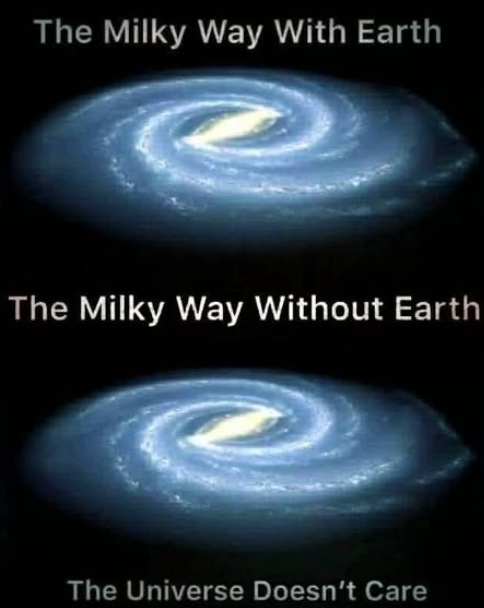 If you believe that a loving God has a plan for you, and is steadily guiding you towards happiness, then you disagree with the assertion here.
The rest of us are forced to admit that the universe is cooly indifferent to us and the outcome of our lives here on Earth.
This doesn’t mean, btw, that our lives are meaningless, but it does compel us to create our own meaning as we make our choices as we go along.
Another point to be made here is that there is no “galactic cavalry” that is going to come charging in, guns ablazing, to save us from the criminal insanity of the Trump administration.

Maine Presses Pause on Large Data Centers. Will Other States Follow Its Lead?
OpenAI Hits Pause on $40B UK AI Project: Energy Costs Shake Data Center Economics
U.S. Uranium Mining Returns: UEC Launches First New Mine in a Decade
-
Climate Change8 months ago
Guest post: Why China is still building new coal – and when it might stop
-
Greenhouse Gases8 months ago
Guest post: Why China is still building new coal – and when it might stop
-

 Greenhouse Gases2 years ago
嘉宾来稿:满足中国增长的用电需求 光伏加储能“比新建煤电更实惠”
-
Climate Change2 years ago
Bill Discounting Climate Change in Florida’s Energy Policy Awaits DeSantis’ Approval
-

 Climate Change2 years ago
嘉宾来稿:满足中国增长的用电需求 光伏加储能“比新建煤电更实惠”
-
Climate Change Videos2 years ago
The toxic gas flares fuelling Nigeria’s climate change – BBC News
-

 Renewable Energy6 months ago
Sending Progressive Philanthropist George Soros to Prison?
-

 Carbon Footprint2 years ago
US SEC’s Climate Disclosure Rules Spur Renewed Interest in Carbon Credits