

Unions in Spain are calling for a new just transition strategy that goes beyond plant closures to revive the fabric of life in affected regions, linking public services with jobs and investment.
“When a power plant closes in a rural area, you don’t just lose jobs,” said Manuel Riera of UGT, one of Spain’s largest unions. “You risk losing the life of the place – the families, the neighbours, the school, the bus line. To keep people rooted, we have to rebuild whole economies.”
The end goal is to safeguard workers, diversify rural economies, and keep families rooted.
Spain’s breakthrough: dialogue and territorial pacts
Spain is among the few countries to have managed coal closures through negotiated territorial pacts. Since 2018, 15 agreements have been signed between national, regional and local governments in areas hit by mine and power plant shutdowns. The government also reached tripartite accords with unions and coal companies, guaranteeing solutions for affected workers.
“For the first time, workers and their communities had a seat at the table. It demonstrated that a just transition is possible and that social dialogue with trade unions must be the first step” Riera said. “That gave people dignity in a moment of loss.”
These frameworks funded retraining, supported job-creating projects and ensured public participation. They became an international reference for how social dialogue can guide decarbonisation.
A just transition for renewables: Why COP30 must put people before power
Lessons learned: from energy to social transition
But the experience has also exposed key limits. Job creation alone has not been enough to sustain rural life.
“Again and again we heard: in addition to employment, what decides if families stay is whether there is transport, housing, health care, education,” Riera said. “That is what keeps a territory alive. We have to move from an energy transition to a social transition.”
Judit Carreras Garcia, director of the Instituto para la Transición Justa (ITJ), reflected on the government’s efforts to respond to these challenges:
“Over the years, we have sought to make the just transition a reality through concrete policies and actions — walking the talk through a wide range of measures that include employability schemes, training, funding lines for job-creating business initiatives, just transition energy tender grids, municipal support programmes and environmental restoration,” she explained.
“All of them aim at minimising the impacts of decarbonisation and optimising outcomes based on participation and social dialogue. This effort has come with its own challenges — from managing timing gaps to addressing very different territorial starting points — but our commitment remains firm.”
Both unions and government acknowledge that anticipation is crucial: closures must be aligned with new opportunities, and support must adapt to vastly different territorial realities – from regions facing depopulation to those with stronger infrastructure.

The next phase for just transition
UGT is now working with its federations to shape Spain’s next Just Transition Strategy (2026–2030). Visits to pact areas, including Aragón, where a coal plant closed in 2020, reveal a rising sense of frustration.
“People are tired of waiting,” Riera said. “We have projects on paper, but they don’t see them materialising. Without effective coherent planning, workers retrain and then have to move to Madrid or Barcelona. That is not territorial justice.”
The unions’ demand: keep the territorial approach, but expand it across ministries and sectors, ensuring that services and infrastructure grow alongside jobs.
For Indian women workers, a just transition means surviving climate impacts with dignity
Behind the technical debates lies a deeper fear: the hollowing out of rural Spain, where thousands of villages have already lost their young people and their future. A mishandled transition could accelerate that trend.
“This is not only about jobs,” Riera said. “It is about whether towns survive at all. When a power station shuts, it’s not just the jobs inside the gates that disappear. The bus stops running, the school risks closing, the clinic can’t keep going, housing starts to deteriorate. Families leave, and a town empties. And once they leave, they rarely come back.”
Sharing lessons internationally
In September, Riera met unions from around the world to share Spain’s experience. His message was simple: we must fight for social dialogue and territorial agreements, but these are the beginning — not the end — of a just transition.
“If decisions are only made in the capital, they miss what life is like in a village. What Madrid sees as energy policy, a small town sees as survival: will there still be a bus, a clinic, a school? That is why workers and communities must always be in the room.”
For Riera, the work that goes into the just transition is also a chance to imagine something new.
“We can use this moment not just to protect people from loss, but to renew rural life — to make villages places where families want to stay, where children can imagine their future. This is about dignity, but also about love: love of place, love of community, love of life itself.”
“Water is worth more than lithium,” Indigenous Argentine community tells COP30
A call for Belém – and beyond
Now in Belém for COP30, Riera is bringing a clear message to world leaders: Spain’s experience shows that the just transition must be built from the ground up. The Belém Action Mechanism that has been proposed, he argues, should require cross-sector transition plans – not just energy policies; guarantee participation from workers and communities; and secure public finance capable of delivering not only jobs but the services that sustain life around them.
“The Global South faces the same challenge: how to transition without abandoning people. Without public finance, that is impossible,” he said. “If we treat the just transition as a bargaining chip, we betray them. But if we take it seriously, we can create hope — from Spain to Brazil, from Santander to Belém.”
“This is not only about closing coal or opening renewables,” he added. “It is about whether people can imagine a future for their children. That is what the just transition means.”
The post COP30: Spain’s unions say just transition means renewing communities beyond jobs appeared first on Climate Home News.
COP30: Spain’s unions say just transition means renewing communities beyond jobs

Next week, diplomats from around the world will descend on Yerevan, Armenia, to negotiate a series of decisions under the UN Convention on Biological Diversity (CBD).
Between 19 and 30 October, 196 parties will gather to hammer out the precise wording of the dozens of legal texts that make up the decisions under the Conference of the Parties (COP) to the CBD.
This year’s summit is particularly significant, as it marks the halfway point between the agreement of the Kunming-Montreal Global Biodiversity Framework and the deadline for achieving its targets.
The CBD has found that countries are currently not on track to meet 22 out of the framework’s 23 targets.
During the fortnight, delegates will also be negotiating decisions relating to the two supplemental protocols to the CBD: the Cartagena Protocol, which covers biosafety; and the Nagoya Protocol, which covers access and benefit-sharing for the use of genetic resources.
(The Cartagena and Nagoya Protocols, which are each governed by a “meeting of the parties”, or “MOP”, have fewer parties than the CBD as a whole, with 173 and 141, respectively.)
Carbon Brief is tracking the progress of countries towards consensus on dozens of negotiating texts using the interactive table below.
The tracker includes texts from the COP, as well as the MOPs for the Cartagena and Nagoya protocols. It also includes draft decisions from the most recent subsidiary body meetings, as these form the starting point for the negotiations in Yerevan.
The CBD has three subsidiary bodies: the subsidiary body on scientific, technical and technological advice (SBSTTA), the subsidiary body on implementation (SBI) and the subsidiary body on article 8(j) and other provisions (SB8J).
SB8J focuses on issues related to the Indigenous peoples and local communities. It was established at COP16 in Cali, Colombia, in 2024.
The first two columns of the interactive tracker list the topic of each agenda item and the relevant body, with subsequent columns including dates, page counts and links to the original documents.
The table is searchable and can be sorted using the arrows in the header.
Areas of disagreement in UN draft texts are denoted by square brackets. Counting the brackets in a particular iteration of a text therefore gives a sense of how far parties are from reaching consensus.
The bracket column is colour-coded, with dark green indicating a low number of brackets and red indicating a high number of brackets remaining.
Texts can also present parties with choices using “options” or alternatives (“alt”), which are counted together in the sixth column of the table.
The key discussions in Yerevan will centre around two agenda items in particular. The first is the global review, which will assess progress towards the GBF and make recommendations for accelerating action.
The second is finance, which can be separated into two parts: resource mobilisation and the financial mechanism. On resource mobilisation, biodiverse global south countries are likely to push for an increased amount of international finance for conservation.
Disagreement over the creation of the financial mechanism led to the suspension of COP16 in Cali in October 2024, as parties failed to find agreement on the mobilisation of finance before the end of the summit.
Global south countries want the establishment of a separate financial mechanism under the control of the CBD; global north countries largely prefer to maintain the existing mechanism, which sits under the Global Environment Facility.
At the resumed session of COP16 in Rome in early 2025, countries agreed on a roadmap that would lead to the establishment of a permanent mechanism.
related
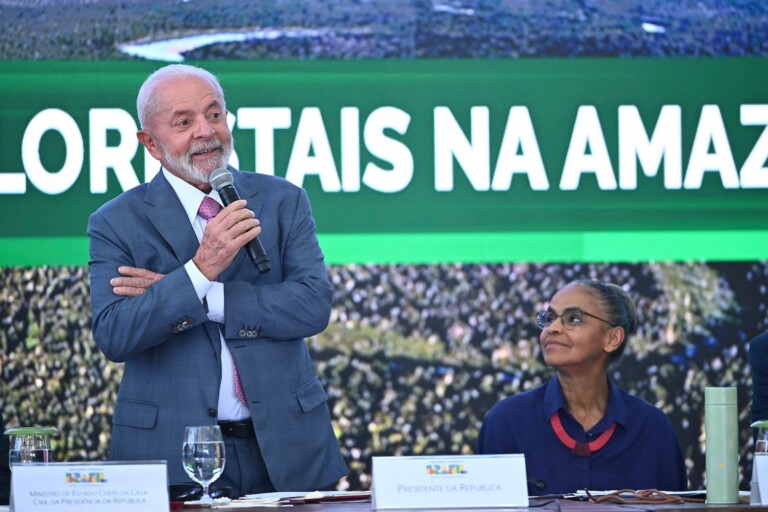
Analysis: Lula presidency saved at least 20,000km2 of Brazilian Amazon since 2022
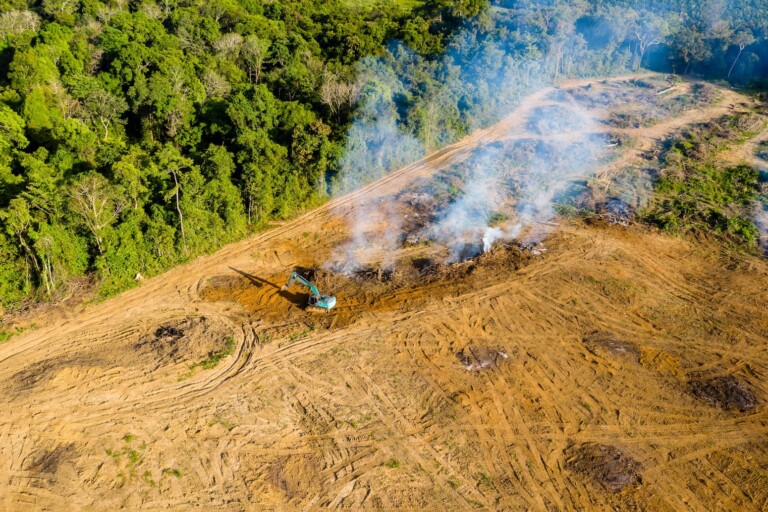
Why land-use emissions have fallen by a third this century – in six charts

Analysis: 84% of nations miss deadline to identify ‘nature-harming’ subsidies by 2025
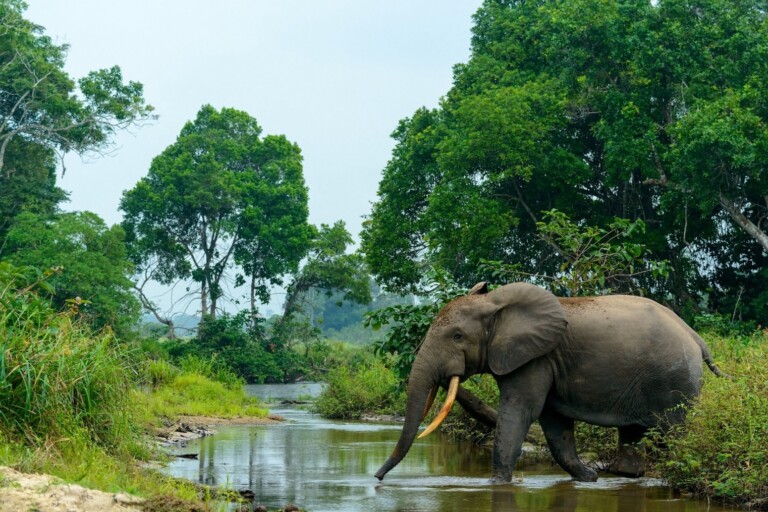
UK withdraws millions in funding from world’s second-largest rainforest in Congo
The post Interactive: Tracking negotiating texts at the COP17 biodiversity summit appeared first on Carbon Brief.
Interactive: Tracking negotiating texts at the COP17 biodiversity summit
A beacon of love
On an outer island of Fiji, two thousand nautical miles from Sydney, is a shining light of hope and resilience for our troubled world.
The island of Kioa is home to a Tuvaluan community who migrated from their atoll of Vaitupu in the late 1940s. It is a land of warm hearts, big smiles, and deep cultural roots; a place where the sound of a conch still summons the island together, where islanders paddle out to fish in carved outrigger canoes, and healthy happy children walk barefoot to school.
Here, culture is life. Kioans live sustainably through their traditional knowledge and practices. The island is alive with song, dance and the rhythms of a life tied to the tides, the winds, and the seasons.
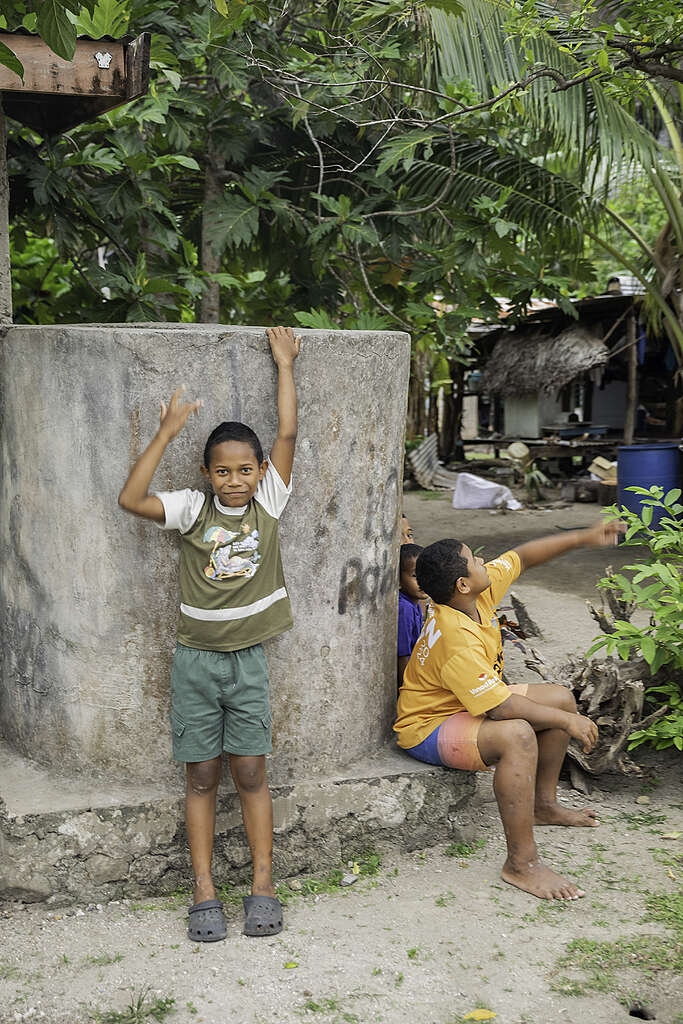
Facing the future
Greenpeace has been lucky to have a relationship with Kioa for a number of years now, and we are continually learning from this remarkable community.
Last week, as part of our Voyaging Oceania project, we returned to the island. Our purpose was twofold —- to carry messages from the island to leaders gathering in Nadi this week for the Pacific Pre-COP, and to support the Kioa community in their efforts to improve water security for the island.
Unlike Tuvalu itself, with its eight atolls, Kioa is a mountainous, forested and richly fertile island. It will remain habitable far into the future. Kioans did not initially migrate from Vaitupu due to climate change, but the move was prophetic. They now have a lifeboat.
However, even Kioa faces challenges on our rapidly warming planet, in particular when it comes to water. Climate change is shifting once reliable rainfall patterns. On top of this, the island is already feeling the effect of this year’s intensifying El Niño event, which for Fiji means reduced rainfall and prolonged dry spells.
Right now, fresh water has to be carefully rationed, and is only available for a few hours a day. During last week’s visit aboard our campaigning ship Oceania, Greenpeace was privileged to work with the Kioa community on a new solar-powered water distribution project for the island.
Designed and led by the island, the project involves using a solar pump to move water from a reliable source to a storage tank and then using gravity to distribute the water around the village.
It was a lesson in how local knowledge and ingenuity can be the backbone of today’s climate solutions. To build a dam around the source, the local community knew the exact spot where they could gather gravel at low tide to mix with the cement. They took only what was needed, knowing that all resources must be carefully conserved. Kioa has no roads and no machinery, and it was an all-of-island effort to carry the materials up to the project site, including many heavy bags of sand and rock.
Such projects truly bring to life the vision of a resilient, locally-led, fossil fuel free Pacific.