

Welcome to Carbon Brief’s DeBriefed.
An essential guide to the week’s key developments relating to climate change.
This week
Finance and 1.5C dominate talks
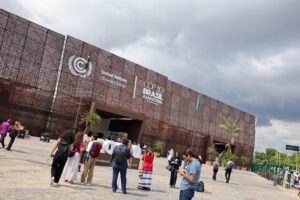
AGENDA ADOPTED: Negotiations at the COP30 UN climate talks began in the Brazilian city of Belém this week, attended in person by Carbon Brief’s Daisy Dunne, Josh Gabbatiss and Anika Patel. The Brazilian hosts scored an unexpected early win by dodging an “agenda fight” over proposals to add various contentious issues to the official docket. Despite the neat footwork, four issues kept off the agreed agenda – climate finance; emissions reporting; trade measures; ambition and 1.5C – still loom large, having merely been diverted into “presidency consultations”.
PRESIDENCY PROMISES: By Wednesday, the presidency was promising “good news” at a plenary later that day, which had been due to offer an update on progress with the four extra items. Instead, it ended abruptly, with COP30 president André Corrêa do Lago promising to say more at another plenary scheduled for tomorrow. It remains unclear how the presidency intends to deal with these thorny issues, leaving the COP rumour-mill in full swing.
MINISTERIAL MAGIC: Aside from the extra issues, the official agenda at COP30 already has more than 100 items to contend with, including how to track progress on adaptation and how to ensure a “just transition” as emissions-cutting measures are implemented. (You can follow them all via the Carbon Brief text tracker.) While draft texts have started to emerge, many items remain stalled, with persistent divisions along familiar lines (see below). Negotiators will be hoping that ministers arriving over the weekend are primed to unlock progress. Brazil has appointed pairs of these politicians to push for deals in key areas.
Around the world
- Ethiopia has said it will host COP32 after beating out a bid from Nigeria, Reuters reported. Turkey and Australia are still in deadlock over who should host COP31, with a decision due by the end of these talks, BBC News reported.
- China will not contribute to Brazil’s Tropical Forest Forever Facility, Bloomberg reported, while Devex said two multilateral development banks are considering paying in. More than $5.5bn has been pledged so far, which BusinessGreen noted is “well short” of a $25bn target. The fund was labelled a “false solution” by some Indigenous and civil society groups.
- After Brazilian president Luiz Inácio Lula da Silva called for a “roadmap” away from fossil fuels ahead of COP’s opening, rumours are swirling over how this might take shape. A new declaration spearheaded by Colombia and a roadmap with backing from a number of countries, including Denmark, the UK, France, Kenya and Germany, are being floated as possible options.
- China is currently among the countries pushing for “provision of finance from rich countries and unilateral trade measures” to be included on the agenda, reported Climate Home News. Chinese delegation head Li Gao told Agence France-Presse it is “crucial” for developed countries to fulfil their $300bn commitment.
- Dozens of Indigenous protesters forced their way into COP’s blue zone on Tuesday night, expressing anger at a lack of access to the negotiations, Reuters said. On Friday, a peaceful protest blocked the entrance to the blue zone, causing lengthy queues as delegates were forced to use a side door.
344%
The rise in the global use of solar from 2024 to 2035 under “stated policies”, according to Carbon Brief’s analysis of the latest World Energy Outlook from the International Energy Agency.
Latest climate research
- The 2025 Global Carbon Budget, covered in detail by Carbon Brief, finds that CO2 emissions from fossil fuels and cement will rise 1.1% in 2025 | Earth System Science Data
- In its November 2025 update, Climate Action Tracker says that its projections of global warming by 2100 have “barely moved” in four years | Climate Action Tracker
- The AI server industry in the US is unlikely to meet its 2030 net-zero goals “without substantial reliance on highly uncertain” carbon offsets | Nature Sustainability
(For more, see Carbon Brief’s in-depth daily summaries of the top climate news stories on Monday, Tuesday, Wednesday, Thursday and Friday.)
Captured

China’s carbon dioxide emissions have “now been flat or falling for 18 months” since March 2024, analysis for Carbon Brief has found, due, in particular, to the transport, cement and steel sectors. The analysis has been covered widely in publications including China’s Global Times, the New York Times, Financial Times, Reuters, Bloomberg and on the frontpage of the Guardian.
Spotlight
What to expect from COP30 talks
This week, Carbon Brief’s expert team walk through what is happening with the biggest issues being negotiated at COP30.
‘Cover text’
Can you judge a COP by its cover text? At COP, the presidency has the option to pull together a new negotiated “cover text”, an overarching political overview of decisions agreed at the summit, along with other issues not on the agenda that it wants to draw attention to.
COP30 president André Corrêa do Lago might have dismissed a catch-all “cover decision” as a “last-minute solution” ahead of COP and dodged the question since, but other parties have been less shy in hinting that a cover text is, indeed, coming.
Cover decisions are often the product of fraught negotiations, high stakes, too little time and too many parties to accommodate.
This year, there is added pressure to address what is happening in the wider world outside the “negotiations” and to politically signal that the UN climate process is alive and making progress, despite the withdrawal of the US.
What elements could go into it? As a member of the “BASIC” group of nations comprising Brazil, South Africa, India and China, trade measures could find a place. But ideas pushed by Brazilian president Lula for new “roadmaps” away from fossil fuels and deforestation might find a place. Finance, however, could be much trickier to fit in.
Adaptation
One of the key expected outcomes of COP30 is agreement on a list of 100 indicators that can be used to measure progress under the “global goal on adaptation” (GGA). After two years of work by experts, negotiations got underway with a suggested list that had been whittled down from nearly 10,000 possible indicators.
Despite the focus on the GGA by the COP30 presidency and others, division has quickly emerged around the timeline for the adoption of the indicators. The African Group has notably requested a two-year work programme to further refine the list, while other parties are pushing for the indicators to be adopted in Belém as planned.
On Wednesday, an informal note was published that compiled elements for a draft decision. Significantly, for the first time under the GGA, this included a call for developed countries to “at least triple their collective provision” of adaptation finance by 2030, with a target to reach $120bn. This echoed a suggested target originally set out by the negotiating group of least developed countries (LDCs), supported by the African Group, Arab Group and the Association of Latin America and the Caribbean (AILAC) countries.
Just transition and mitigation work programmes
Over the past year, civil society groups have been calling for the establishment of a mechanism to enact the agreed UNFCCC principles of a “just transition”. This gained momentum on Wednesday within negotiations of the just transition work programme (JTWP), when the G77 and China called for the development of the “Belem Action Mechanism” (BAM).
Chile, the Alliance of Small Island States (AOSIS), India and other developing countries supported the mechanism. However, Norway, the UK, Australia and Japan pushed back. Other long-standing points of contention have also raised their heads, including around unilateral trade measures and references to fossil fuels and aligning to global temperature goals.
Within the mitigation work programme (MWP) talks, negotiators are looking to build on two dialogues held this year. The main themes at COP30 are the links between the MWP and the global stocktake (see below) and the future of the programme itself.
Old divisions have emerged in negotiations, focused predominantly on the mandate of the MWP and the potential development of a digital platform as part of its continuation.
UAE dialogue
The landmark outcome of the first “global stocktake”, agreed at COP28 in Dubai, called on all countries to contribute to a “transition away from fossil fuels”. It also mandated a “UAE dialogue” on “implementing the global stocktake outcomes”.
Two years later, countries remain deadlocked over what this dialogue should discuss. Many want it to cover all parts of the stocktake, including the energy transition, while others want an exclusive focus on climate finance. They also disagree on whether the dialogue should have substantive outcomes, including a formal process to keep discussing the issues raised.
Having failed to reach agreement at COP29 last year, the latest draft text shows parties are just as far apart in Belém, nearly halfway into the summit.
Finance
Climate finance for developing countries does not occupy a high-profile position in the formal COP30 negotiations. Yet, as demonstrated by its role in adaptation talks and the agenda dispute, finance still has the potential to derail proceedings.
Ahead of the conference, the COP30 and COP29 presidencies released their “Baku to Belém roadmap”, exploring how finance could be ramped up to $1.3tn by 2035.
An influential group of experts also released new analysis showing a “feasible path” to this goal, leaning on private finance. They said this work would provide a “valuable signal” to those in the finance sector.
However, with no position in the Belém negotiations, it was unclear how – or whether – the roadmap would be taken forward by governments beyond COP30.
Instead, finance negotiators have been occupied with technical matters, but these still show signs of division. For example, some developing-party groups have pushed back against an EU priority goal to extend a “dialogue” about “making finance flows consistent” with climate objectives.
Watch, read, listen
UNDER THREAT: The Bureau of Investigative Journalism told the story of Kim Rebholz – an environmentalist who was threatened for his work curbing illegal logging in Democratic Republic of Congo’s mangrove parks.
SPOTLIGHT ON STARMER: YouTuber Simon Clark has published a video of himself interviewing prime minister Keir Starmer about the UK’s actions on climate and nature, at COP30 and domestically.
INSIDE COP:Outrage and Optimism is running a “special edition” podcast series in partnership with the COP30 presidency, bringing “exclusive, behind-the-scenes access” to the conference.
Coming up
- 14-21 November: UN Climate Change conference (COP30) heads into its crucial second week in Belém
- 15 November: Informal stocktaking plenary of COP30 talks by the Brazilian presidency
- 17 November: Launch of the Global Methane Status Report
Pick of the jobs
- International Energy Agency, intern, China programme | Stipend: €1,000/month. Location: Paris
- Channel 4, sustainability production executive | Salary: £48,125. Location: Bristol, Glasgow or Leeds, UK
- World Bank, environmental specialist | Salary: “GF” grade. Location: Yaounde, Cameroon
- Greenpeace, climate and energy campaigner | Salary: Unknown. Location: Bangkok, Thailand
DeBriefed is edited by Daisy Dunne. Please send any tips or feedback to debriefed@carbonbrief.org.
This is an online version of Carbon Brief’s weekly DeBriefed email newsletter. Subscribe for free here.

The post DeBriefed 14 November 2025: COP30 DeBriefed: Finance and 1.5C loom large at talks; China’s emissions dip; Negotiations explained appeared first on Carbon Brief.

Next week, diplomats from around the world will descend on Yerevan, Armenia, to negotiate a series of decisions under the UN Convention on Biological Diversity (CBD).
Between 19 and 30 October, 196 parties will gather to hammer out the precise wording of the dozens of legal texts that make up the decisions under the Conference of the Parties (COP) to the CBD.
This year’s summit is particularly significant, as it marks the halfway point between the agreement of the Kunming-Montreal Global Biodiversity Framework and the deadline for achieving its targets.
The CBD has found that countries are currently not on track to meet 22 out of the framework’s 23 targets.
During the fortnight, delegates will also be negotiating decisions relating to the two supplemental protocols to the CBD: the Cartagena Protocol, which covers biosafety; and the Nagoya Protocol, which covers access and benefit-sharing for the use of genetic resources.
(The Cartagena and Nagoya Protocols, which are each governed by a “meeting of the parties”, or “MOP”, have fewer parties than the CBD as a whole, with 173 and 141, respectively.)
Carbon Brief is tracking the progress of countries towards consensus on dozens of negotiating texts using the interactive table below.
The tracker includes texts from the COP, as well as the MOPs for the Cartagena and Nagoya protocols. It also includes draft decisions from the most recent subsidiary body meetings, as these form the starting point for the negotiations in Yerevan.
The CBD has three subsidiary bodies: the subsidiary body on scientific, technical and technological advice (SBSTTA), the subsidiary body on implementation (SBI) and the subsidiary body on article 8(j) and other provisions (SB8J).
SB8J focuses on issues related to the Indigenous peoples and local communities. It was established at COP16 in Cali, Colombia, in 2024.
The first two columns of the interactive tracker list the topic of each agenda item and the relevant body, with subsequent columns including dates, page counts and links to the original documents.
The table is searchable and can be sorted using the arrows in the header.
Areas of disagreement in UN draft texts are denoted by square brackets. Counting the brackets in a particular iteration of a text therefore gives a sense of how far parties are from reaching consensus.
The bracket column is colour-coded, with dark green indicating a low number of brackets and red indicating a high number of brackets remaining.
Texts can also present parties with choices using “options” or alternatives (“alt”), which are counted together in the sixth column of the table.
The key discussions in Yerevan will centre around two agenda items in particular. The first is the global review, which will assess progress towards the GBF and make recommendations for accelerating action.
The second is finance, which can be separated into two parts: resource mobilisation and the financial mechanism. On resource mobilisation, biodiverse global south countries are likely to push for an increased amount of international finance for conservation.
Disagreement over the creation of the financial mechanism led to the suspension of COP16 in Cali in October 2024, as parties failed to find agreement on the mobilisation of finance before the end of the summit.
Global south countries want the establishment of a separate financial mechanism under the control of the CBD; global north countries largely prefer to maintain the existing mechanism, which sits under the Global Environment Facility.
At the resumed session of COP16 in Rome in early 2025, countries agreed on a roadmap that would lead to the establishment of a permanent mechanism.
related
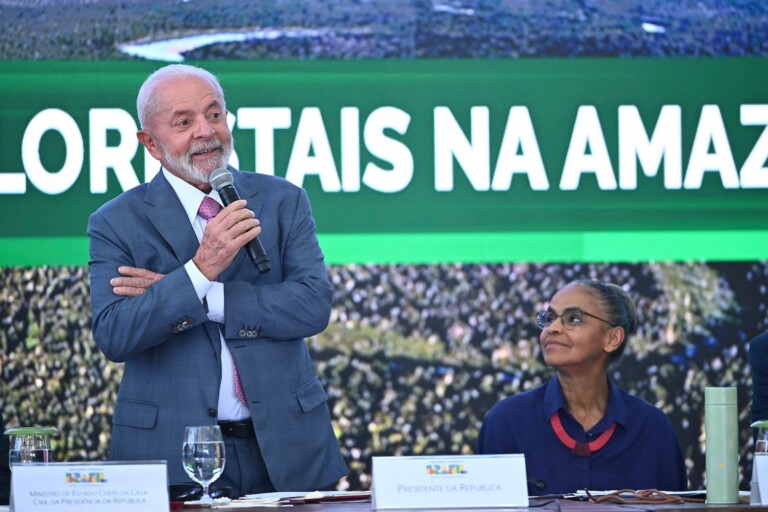
Analysis: Lula presidency saved at least 20,000km2 of Brazilian Amazon since 2022
Why land-use emissions have fallen by a third this century – in six charts
Analysis: 84% of nations miss deadline to identify ‘nature-harming’ subsidies by 2025
UK withdraws millions in funding from world’s second-largest rainforest in Congo
The post Interactive: Tracking negotiating texts at the COP17 biodiversity summit appeared first on Carbon Brief.
Interactive: Tracking negotiating texts at the COP17 biodiversity summit
A beacon of love
On an outer island of Fiji, two thousand nautical miles from Sydney, is a shining light of hope and resilience for our troubled world.
The island of Kioa is home to a Tuvaluan community who migrated from their atoll of Vaitupu in the late 1940s. It is a land of warm hearts, big smiles, and deep cultural roots; a place where the sound of a conch still summons the island together, where islanders paddle out to fish in carved outrigger canoes, and healthy happy children walk barefoot to school.
Here, culture is life. Kioans live sustainably through their traditional knowledge and practices. The island is alive with song, dance and the rhythms of a life tied to the tides, the winds, and the seasons.