

Friday, March 14, I had the privilege of speaking at the Sustainability Institute’s (SI) Home Energy Makeover event in Charleston County, SC. Thanks to the homeowner, Ms. Daniels, funding from the Wells Fargo Foundation, the Sustainability Institute, and its contractors, Ms. Daniels’ home received energy efficiency improvements and a solar system with a modeled energy savings of 72%. This will take her bills from about $350 to about $90 per month. This initiative demonstrates what can be accomplished with energy efficiency and renewables.
How did this happen?
A couple of years ago, Ms. Daniels attended a local market and talked to someone from Dominion Energy South Carolina about her high energy bills. They told her about SI. She contacted SI, and they came out and conducted an energy assessment. One year later, SI contacted her and stated that her home was perfect for this Home Energy Makeover opportunity.
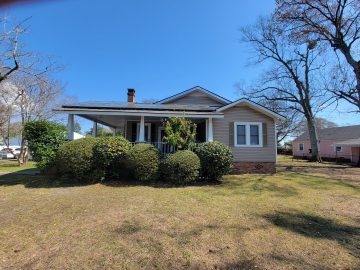
Improvements included
Ms. Daniels’ home received top-to-bottom energy efficiency upgrades including:
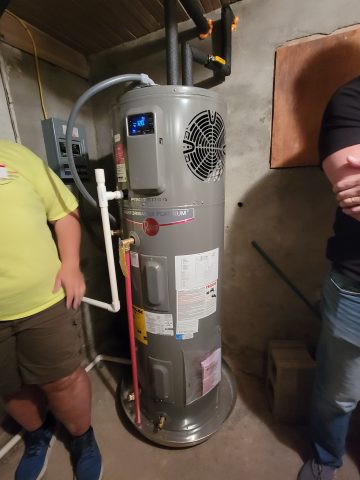
- ENERGY STAR appliances – washer, dryer, stove/oven, refrigerator
- Electric heat pump water heater
- Heat pump with rigid ductwork and sump pump
- Attic insulation and air sealing
- 5 kW solar system
- Basic weatherization – weather stripping, gasketing, door sweeps
- Home Energy Monitor to track and manage energy use
Low-income residents are in need
Energy Burden refers to the percentage of income required to pay for electricity in a home. A 6% energy burden is considered high, and according to the National Renewable Energy Lab’s State and Local Planning for Energy Platform, the area where Ms. Daniel’s home is located has an energy burden of 6.74%, and surrounding areas are close to 8-9%.
In Charleston County, just by making energy efficiency upgrades, homeowners have the potential to save almost $600 each year in energy bill reductions. If we look at this statewide, low-income residents throughout South Carolina have the possibility of saving even more. There is so much potential, and we can do more to help our communities. Between low-quality housing stock and low/fixed income, there is a lot of need.
Take this statewide
Wouldn’t having this type of program throughout South Carolina be great? That has been a dream of mine and many in South Carolina, and it’s time for it to become a reality. With proper funding and a trained workforce, we can greatly improve homes in this same fashion. It will take a coordinated effort amongst diverse stakeholders such as non-profits, advocacy organizations, utilities, and others. I hope this model inspires you to invest in South Carolina communities to reduce energy burdens so residents can live in healthy, efficient homes.
For more energy efficiency data, see SACE’s “Energy Efficiency in the Southeast” report.
The post SC Home Energy Makeover – Let’s Take This Statewide!! appeared first on SACE | Southern Alliance for Clean Energy.

 Here’s proof (as if any were needed) that Trump understands that he’s despised and knows that his claims that he’s “respected around the world” are total bullshit.
 What Seneca said here is as true today as it was 2000 years ago.
When I was a boy, I predicted that the advancements of science would eventually put an end to religion, but it appears I was wrong.
Dwindling educational standards and pounding levels of propaganda have brought us to the point that 42% of Americans reject the scientific finding that human activity is causing climate change. These are probably the same idiots who believe that that vaccinations are dangerous.
 Are you seriously blaming this military catastrophe on Hegseth, rather that the criminal sociopath who appointed him?



-
Climate Change1 year ago
Guest post: Why China is still building new coal – and when it might stop
-

 Greenhouse Gases2 years ago
嘉宾来稿:满足中国增长的用电需求 光伏加储能“比新建煤电更实惠”
-
Greenhouse Gases1 year ago
Guest post: Why China is still building new coal – and when it might stop
-

 Climate Change2 years ago
嘉宾来稿:满足中国增长的用电需求 光伏加储能“比新建煤电更实惠”
-

 Renewable Energy11 months ago
Sending Progressive Philanthropist George Soros to Prison?
-
Climate Change2 years ago
Bill Discounting Climate Change in Florida’s Energy Policy Awaits DeSantis’ Approval
-
Greenhouse Gases1 year ago
嘉宾来稿:探究火山喷发如何影响气候预测
-

 Carbon Footprint2 years ago
US SEC’s Climate Disclosure Rules Spur Renewed Interest in Carbon Credits